Rank #1 in Cable Machines & Functional Trainers
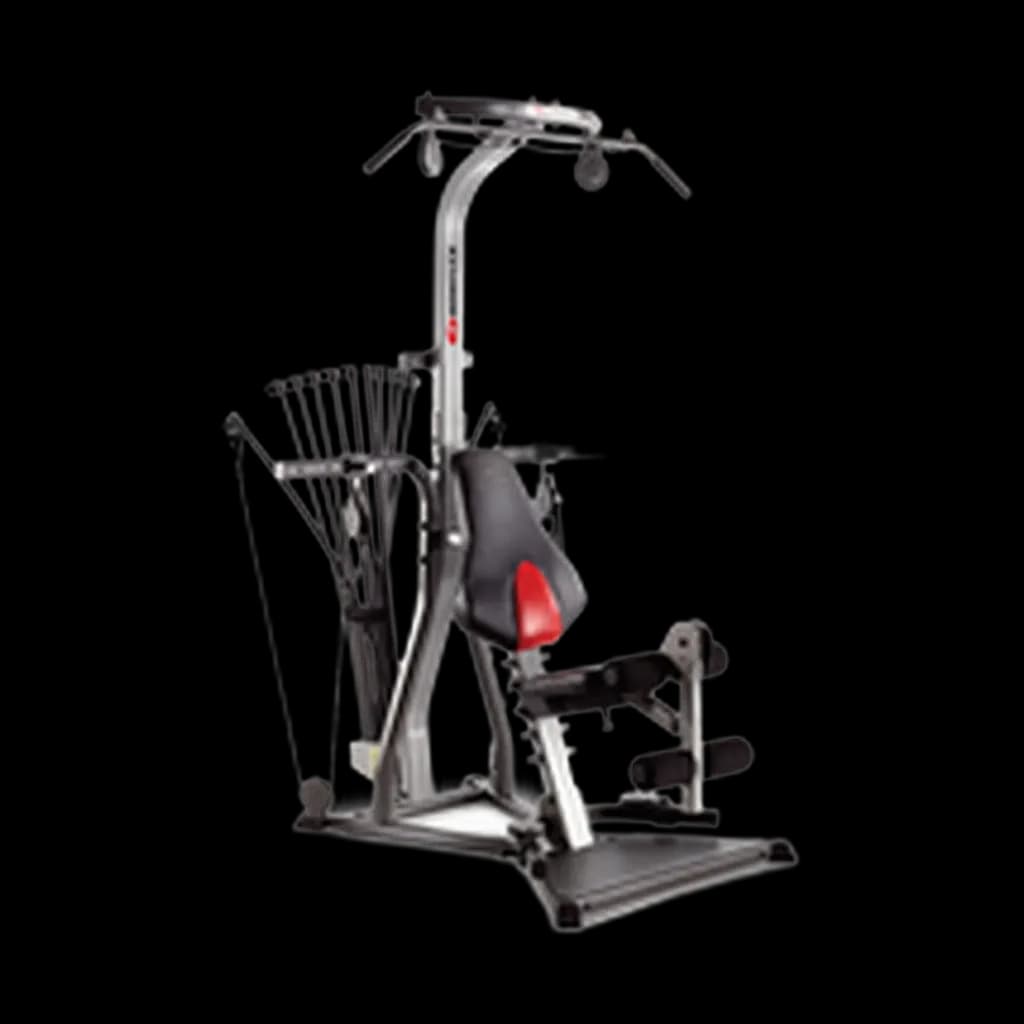
Bowflex Xceed Home Gym
by Bowflex
Score
A mainstream cable home gym. Power Rod resistance (not stacks), 65+ exercises, compact footprint — best for general fitness rather than serious lifting.
- General fitness and toning at home, especially for beginners and intermediate users who value compact footprint, low joint impact, and a wide exercise catalog over heavy free-weight loading.
- You want to build serious muscle mass, you already squat or deadlift heavy free weights, or you find the rod resistance curve unnatural compared to weight stacks or plates.
About 8 ft by 6.5 ft of floor space plus 7 ft of vertical clearance. Most users add a 3 ft buffer on the front for cable travel and standing exercises.
hard — Two to three hours solo. The instructions stretch across 60+ pages, and the Power Rod installation requires careful threading of cables through pulleys. Two people speed the work and reduce the risk of mis-routed cables that fail under load months later.
Cable home gyms are mid-tier strength equipment. Buy after the bench and after a primary cardio piece. The Xceed specifically substitutes for a rack and stack but not for free weights.
Strengths
- ↑Compact footprint
- ↑210 lb Power Rod resistance
- ↑65+ exercises
- ↑Available on Amazon Prime
Weaknesses
- ↓Power Rods aren't a free-weight feel
- ↓Resistance peaks at lockout
- ↓Not for advanced lifters
What owners actually complain about
Synthesized from owner reviews and community threads. Paraphrased, not quoted.
- Power Rod resistance curve peaks at lockout, opposite of how free weights load most lifts
- 210 lb base resistance maxes out beginners within a year of consistent training
- Cables and pulleys require occasional re-routing to maintain smooth travel
- Power Rods can bend permanently after years of use and the company has limited replacement pricing
- Switching exercises requires manual cable swaps that add 30 to 60 seconds between sets
Buyer sentiment
Based on 535 user mentionsBuyers praise assembly, quality, home use and performance. Mixed feedback on value for money and durability.
Verdict: A quiet, compact, joint-friendly home gym that carries a beginner-to-intermediate from zero through general conditioning — but not a platform for serious barbell strength.
Specs that matter
| Spec | Value |
|---|---|
| Resistance | Power Rod (glass-fiber composite) |
| Base resistance | 210 lb (310/410 lb upgrades) |
| Exercises | 65+ |
| Frame | Welded steel, powder-coat |
| Bench | Folds for storage |
What you get
- Deep catalog — honest 65+ exercises, full-body 3x/week
- Truly quiet — no metal-on-metal, apartment-friendly
- Joint-friendly curve — light at the bottom of the rep
What you give up
- Resistance ceiling — 210 lb base caps intermediate presses within a year
- Unfamiliar curve — rods get heavier as they stretch, unlike free weights; hard solo assembly
Buy it if you want a compact full-body station and don't lift heavy free weights. Skip it if you're a strength athlete or want barbell carryover.
Independent reviewers report the rod resistance curve feels least natural during compound presses, where free weights load difficulty earlier in the range.
Full specs
- Resistance
- 210 lb (upgradable to 410 lb)
- Exercises
- 65+
- Footprint
- 8' x 6.5'
Common questions
Can I build muscle on a Bowflex Xceed?
Yes, up to a moderate level. The 210 lb base resistance covers most users for one to two years of consistent training before the loading becomes a ceiling for compound movements. Adding the 310 or 410 lb upgrade extends the runway. Serious hypertrophy beyond intermediate level needs free weights.
How does the resistance feel different from weights?
Power Rods load progressively, meaning the resistance increases as you stretch them. A bench press on the Xceed is lightest at the bottom and heaviest at lockout. Free weights are roughly constant through the range. Some users prefer one feel; many lifters find the rod curve unnatural at first.
Will the rods wear out?
Yes, eventually. After several years of consistent use the rods can take a permanent set and lose some of their original resistance. Bowflex sells replacements at a meaningful price. Owners who plan a 10-year lifecycle should factor in one set of replacement rods.
Can the squat station replace a real squat?
No. The Xceed squat station is a cable-based hip-hinge pattern, not a barbell squat. It develops lower-body strength up to a moderate level but does not load the legs the way a barbell does. Serious leg development requires barbell squats or a real leg press.
Is the footprint really 8 by 6.5 ft?
That is the unit footprint. Add about 3 ft of front clearance for cable travel and standing exercises. The folding bench helps reduce the storage footprint when not in use but does not change the in-use clearance.
Sources & references
- Independent reviewBowflex Xceed Independent Review
- Independent reviewPower Rod vs Weight Stack Comparison
- ResearchVariable Resistance Training Research
- ResearchHome Gym Selection Guide
- CommunityBowflex Owner Community Discussion
- ManufacturerBowflex Xceed Product Specifications
Full buying guide
Best Cable Machines for Home Gyms in 2026: Body-Solid Wins
Read the full ranking →Related Cable Machines & Functional Trainers guides
Other cable machines & functional trainers we rate
Ranked alternatives from the same category, with our score and the current price.
The budget cable station. 150 lb selectorized stack, dual cables, compact L-frame — a starter machine that gets the job done under $500.
Wall-mounted plate-loaded cable for tight spaces. Adjustable pulley, no stack to rattle, and it bolts flat against a wall — apartment gym savior.
The home cable machine pros recommend. Dual 160 lb stacks, 2:1 ratio, 19 pulley positions, lifetime structural warranty — built like the gym version.
Bolts onto a Force USA MyRack to add dual-cable functionality without buying a second machine. The smartest dollar-per-feature play if you already own the rack.
Rep's answer to Rogue Monster Lat. Bolts to a PR-4000 and turns it into a dual cable station. The home gym hack of the year on r/homegym.