Best Barbells & Bumper Plates 2026
The 45 lb Olympic bar and a starter set of bumper plates are the foundation of any strength program — squats, deadlifts, presses, rows.
Prices and availability verified Sep 12, 2026
Most home lifters are best served by the Rogue Ohio Bar plus a 230 lb Rep Fitness bumper set — that combo handles 95% of programs without overspending.
190K PSI tensile, dual knurl marks, lifetime warranty — the default home-gym barbell.
Synergee's Olympic bar is the CrossFit-leaning value pick — needle bearings instead of bushings give it noticeably more sleeve...
Best first barbell under $200 — 28.5mm shaft, no centre knurl, snap-ring sleeves and a 1,000 lb test rating you will never reach at home.
The bar will whip badly under 200 lb, the plates aren't bumper-rated so you can't drop them, and the diameter usually isn't true Olympic. You'll replace everything within a year.
Amazon pick
Our #1 (Rogue Ohio Bar)isn't available on Amazon — this is.
The highest-ranked pick below that we can price and link today. Same research, same Gym Score, no change to the ranking.
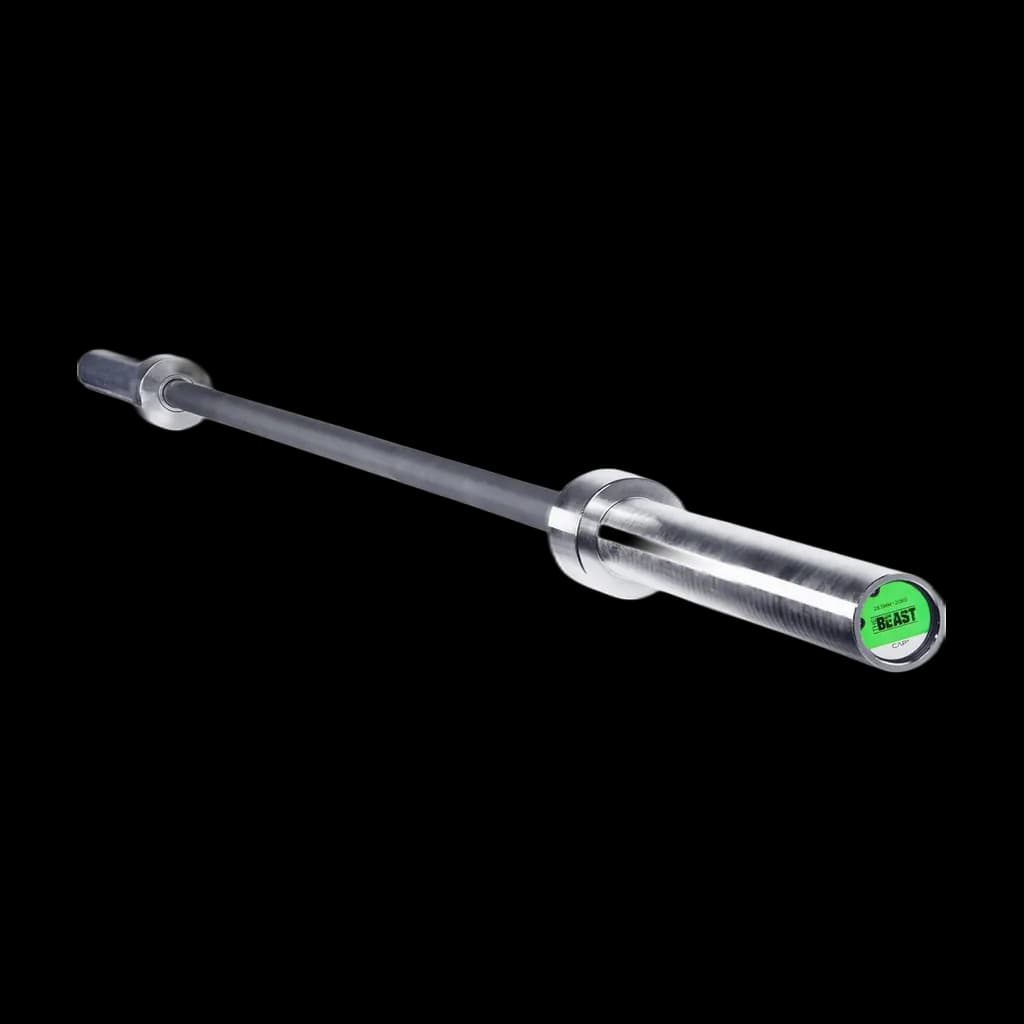
#2 CAP Barbell The Beast Olympic Bar
The Beast is what most people actually buy as their first 'real' barbell, and it earns the love. 28.5mm shaft, no center knurl, snap-ring sleeve construction. The 1000 lb test rating is more than any home lifter will load in this lifetime. The knurl is milder than Rogue's — fine for high-rep work, less ideal for max deadlifts without chalk. Fit-and-finish loses to Rogue and Rep, but at less than half the price it's the bar that delivers 80% of the experience for under $200.
Median tensile strength across the picks: 190,000 PSI. Top picks cluster at 190K-205K PSI with bushing or composite sleeves.
A 1500 lb tensile strength rating doesn't mean the bar will hold 1500 lb statically — it's a metallurgical strength measure. The number that matters for safety is the 'static load' or 'test load' rating, which is usually 1/3 of tensile.
r/homegym overwhelmingly recommends starting with a Rogue Ohio or Rep Deep Knurl as the 'buy once, cry once' bar, paired with a Rep or Fringe Sport bumper set. Cap and Yes4All bars get a pass for sub-200 lb beginners but most posters say lifters who plan to push past 300 lb regret the savings.
- Rogue Ohio Bar — The reference standard. Spin holds up after 5+ years of daily use, knurl is aggressive without shredding palms.
- Rep Fitness Bumper Plates — Tight diameter tolerance (450mm ±1mm), low odor for virgin rubber, hooks 100K+ owner cycles without dishing.
- Generic Amazon 'CAP-style' kit bars — Whip badly past 225 lb, sleeves seize within a year, and the included 'bumpers' are usually crumb rubber that cracks at the hub.
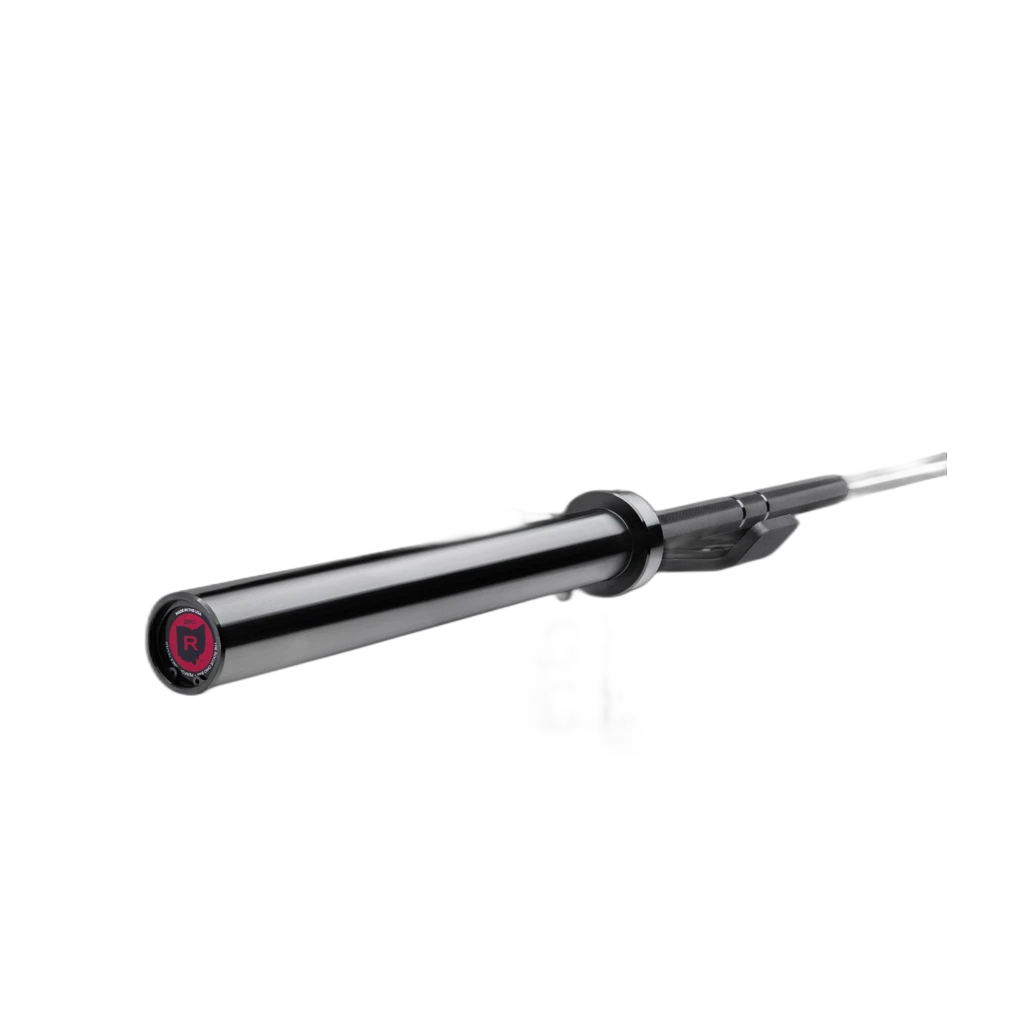
- ✓190,000 PSI tensile — well above the 150K PSI floor that separates real bars from gym-class garbage
- ✓Dual knurl marks (Olympic + power) without a center knurl — works for cleans and high-rep bench equally
- ✓Bronze bushings deliver a smooth, controlled spin (not bearing-fast, but right for mixed work)
- −Brand-direct only — no Amazon listing, freight shipping required
- −Cerakote and Stainless variants run ~$100-200 above the Black Oxide base price
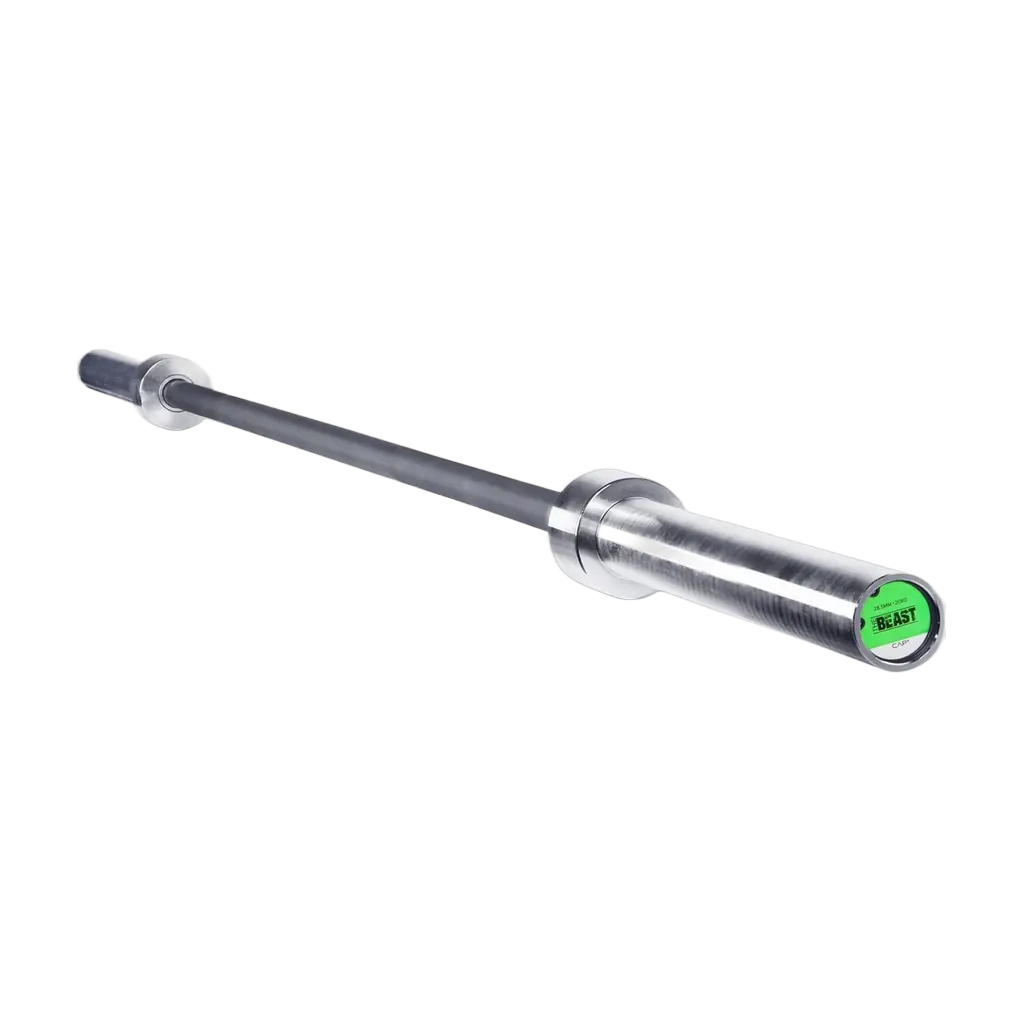
- ✓Less than half the price of premium bars
- ✓1000 lb test rating, 110K PSI tensile
- ✓Solid for any home lifter under 400 lb total loads
- −Knurl noticeably milder than premium bars
- −Sleeves use snap rings (less serviceable)
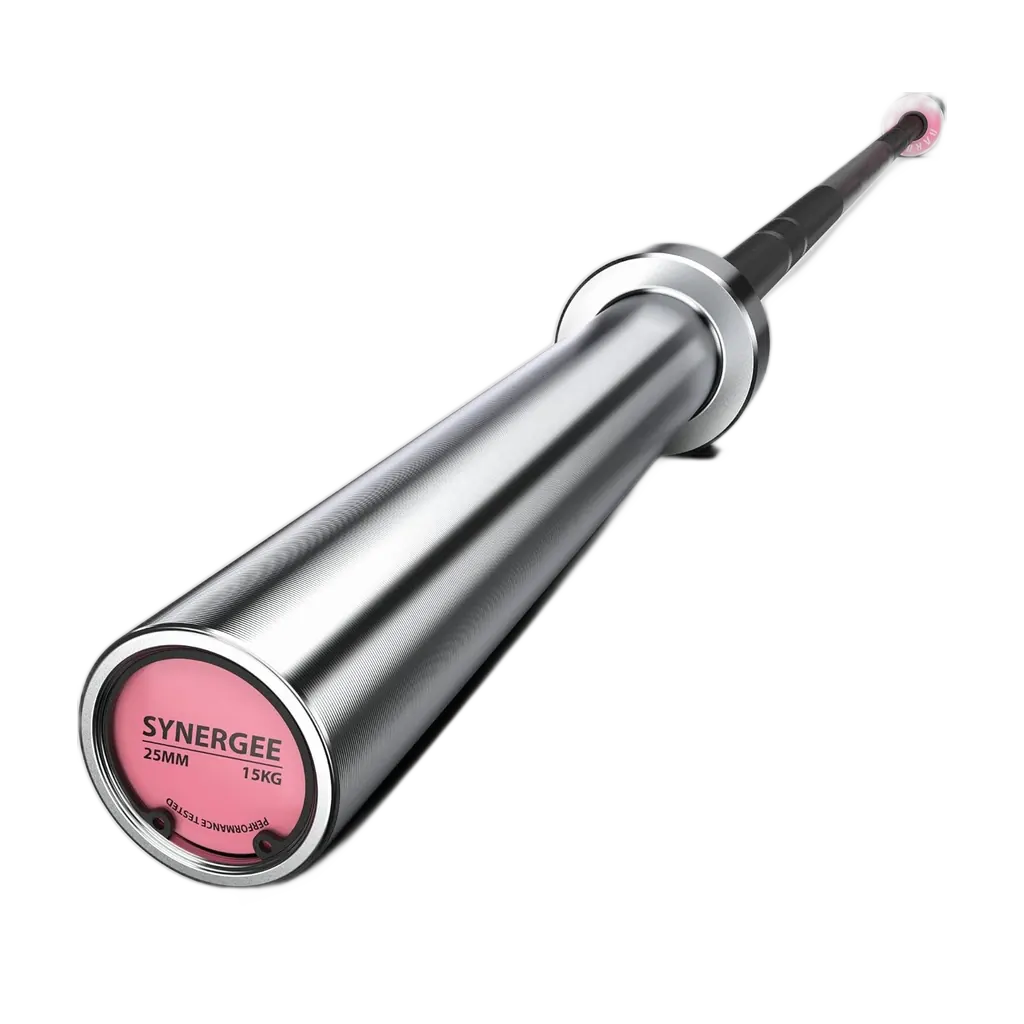
- ✓Needle bearings — best sleeve spin under $250
- ✓190K PSI tensile rating
- ✓No center knurl — comfortable for cleans
- −Bearing longevity inconsistent across owners
- −Knurl can feel inconsistent batch-to-batch
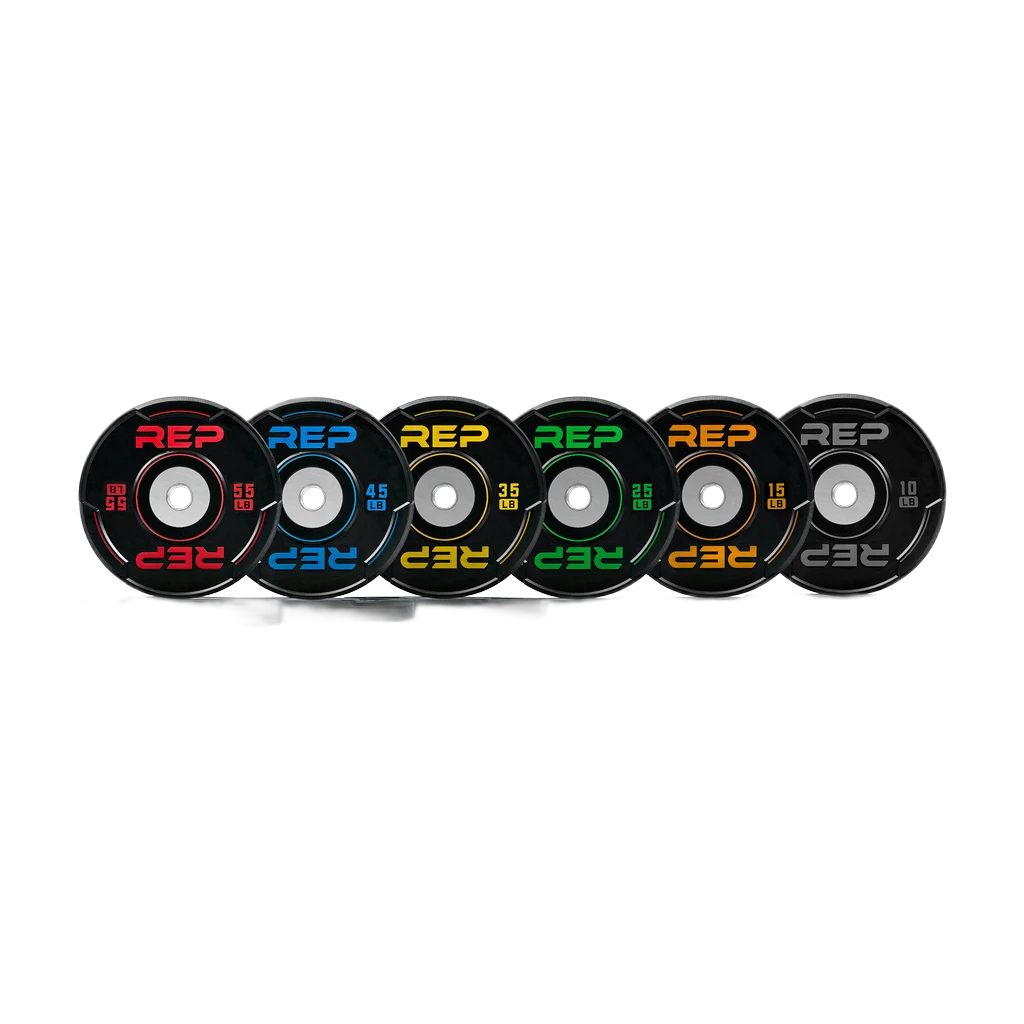
- ✓IWF color-coded — fast visual ID across the platform
- ✓2% weight tolerance (improved from 3% on the original sport bumpers)
- ✓~10% quieter dead bounce than v1 — apartment/upstairs-friendly
- −Proprietary durometer — REP won't publish the Shore A number
- −10 + 15 lb plates only carry a 6-month warranty (consistent with category, but worth noting)
- ✓Solid rubber with a steel insert, not a shelled or filled plate
- ✓Low bounce, so a dropped bar stays roughly where you dropped it — the property that matters most in a garage
- ✓Sold by the pair and by the set, so you buy only the jumps you need
- −A training bumper, not a competition plate — thicker per pound than an IWF-spec disc, so a heavy bar runs out of sleeve sooner
- −Rubber smell is real for the first few weeks in a closed room
Amazon prices checked Sep 12, 2026. Amazon prices change often — the listing is authoritative.
Our ranked picks
Scored on 5 dimensions. How we score →
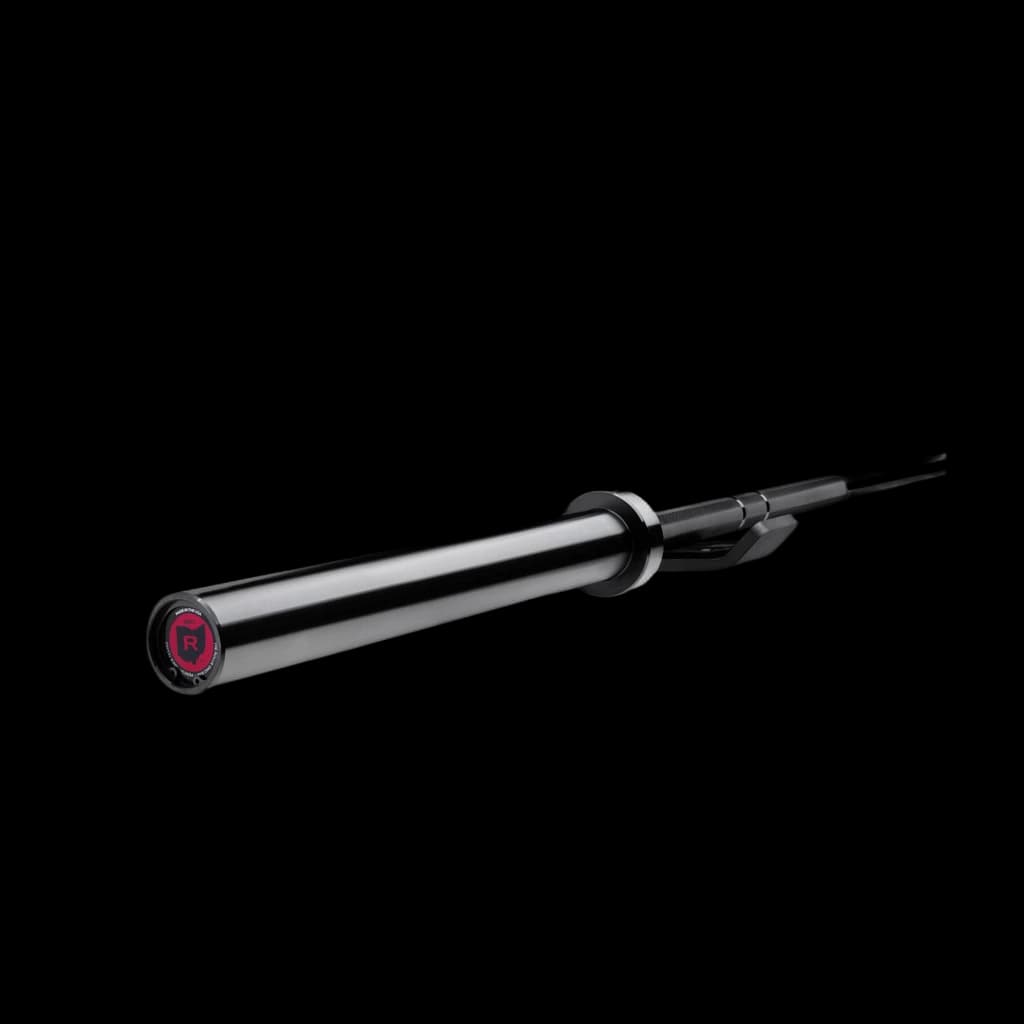
Rogue's flagship 20 kg multi-purpose bar — 190K PSI tensile, dual knurl marks for Olympic + powerlifting, bronze bushings, 16.4" loadable sleeve, lifetime warranty against bending. The default home-gym barbell that gets recommended on r/homegym across roughly every "what bar do I buy" thread.
- + 190,000 PSI tensile — well above the 150K PSI floor that separates real bars from gym-class garbage
- + Dual knurl marks (Olympic + power) without a center knurl — works for cleans and high-rep bench equally
- + Bronze bushings deliver a smooth, controlled spin (not bearing-fast, but right for mixed work)
- + Lifetime warranty against construction and bending — the longest in the category
- + 5 finish options (Black Oxide / Black Zinc / E-Coat / Cerakote / Stainless)
- − Brand-direct only — no Amazon listing, freight shipping required
- − Cerakote and Stainless variants run ~$100-200 above the Black Oxide base price
- − 16.4" loadable sleeve is shorter than some IWF-spec bars (limits big plate stacks above ~600 lb)
- − Made-in-USA premium — the same spec from a Chinese OEM is half the price (though Rogue's QC and warranty cover the delta)
- Weight
- 20 kg / 44 lb
- Tensile strength
- 190,000 PSI
- Sleeve length
- 16.4" loadable
- Sleeve construction
- Bronze bushings
- Knurl
- Dual marks, no center knurl
- Warranty
- Lifetime against bending
Gym Score breakdown ▸
The Beast is what most people actually buy as their first 'real' barbell, and it earns the love. 28.5mm shaft, no center knurl, snap-ring sleeve construction. The 1000 lb test rating is more than any home lifter will load in this lifetime. The knurl is milder than Rogue's — fine for high-rep work, less ideal for max deadlifts without chalk. Fit-and-finish loses to Rogue and Rep, but at less than half the price it's the bar that delivers 80% of the experience for under $200.
- + Less than half the price of premium bars
- + 1000 lb test rating, 110K PSI tensile
- + Solid for any home lifter under 400 lb total loads
- + Available on Amazon Prime
- − Knurl noticeably milder than premium bars
- − Sleeves use snap rings (less serviceable)
- − Black zinc finish wears in 2-3 years
- Bar Weight
- 20 kg (44 lb)
- Diameter
- 28.5mm
- Tensile Strength
- 110,000 PSI
- Test Rating
- 1000 lb
- Sleeve Type
- Snap ring
- Center Knurl
- No
Gym Score breakdown ▸
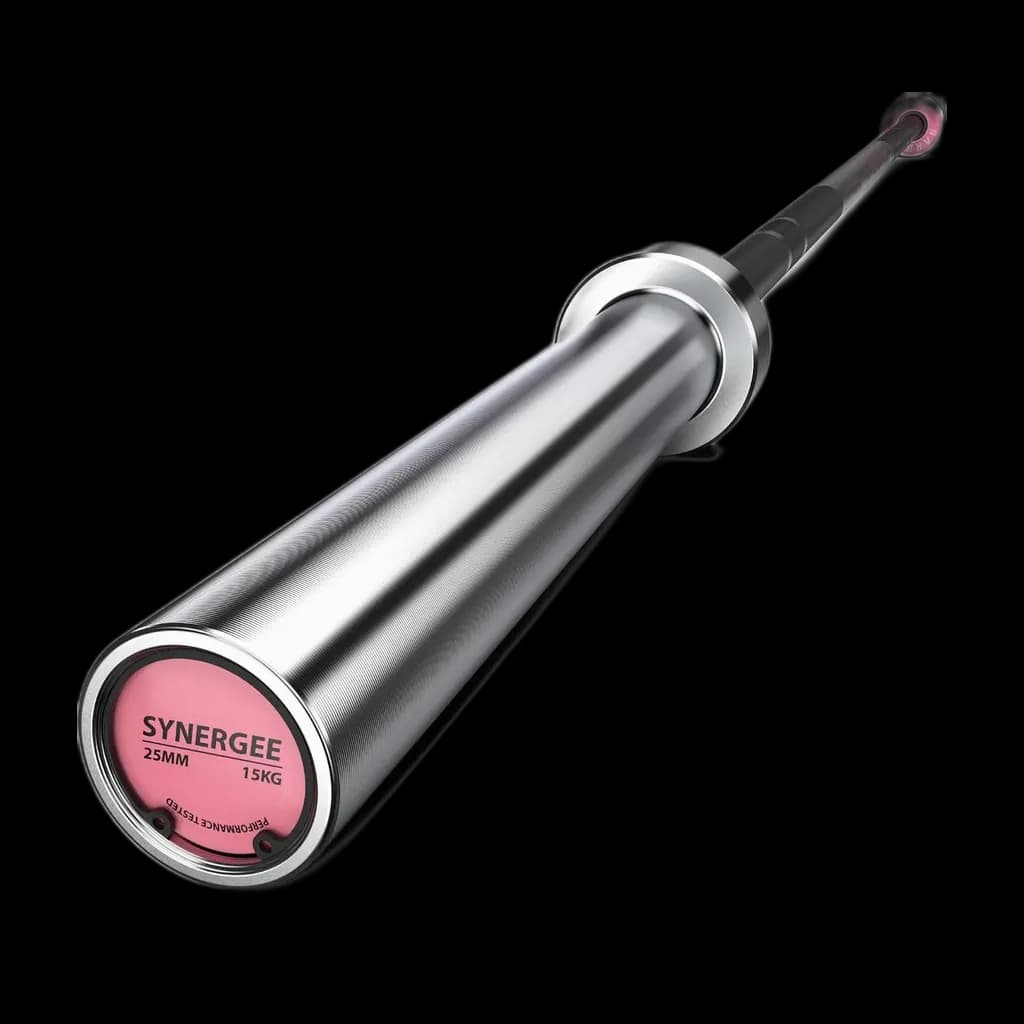
Synergee's Olympic bar is the CrossFit-leaning value pick — needle bearings instead of bushings give it noticeably more sleeve spin than the CAP Beast, which matters if you're cleaning and snatching. 190K PSI tensile is genuinely competitive with Rogue, and the 1000 lb capacity is plenty. Knurl is medium-aggression, no center knurl. Where it loses ground: long-term spin durability is hit-or-miss, with some owners reporting the bearings slowing within 2 years of high-volume Oly work.
- + Needle bearings — best sleeve spin under $250
- + 190K PSI tensile rating
- + No center knurl — comfortable for cleans
- + Black phosphate finish resists corrosion well
- − Bearing longevity inconsistent across owners
- − Knurl can feel inconsistent batch-to-batch
- − Not suited for max-effort powerlifting
- Bar Weight
- 20 kg (44 lb)
- Diameter
- 28mm
- Tensile Strength
- 190,000 PSI
- Sleeve Type
- Needle bearing
- Knurl
- Medium
- Center Knurl
- No
Gym Score breakdown ▸
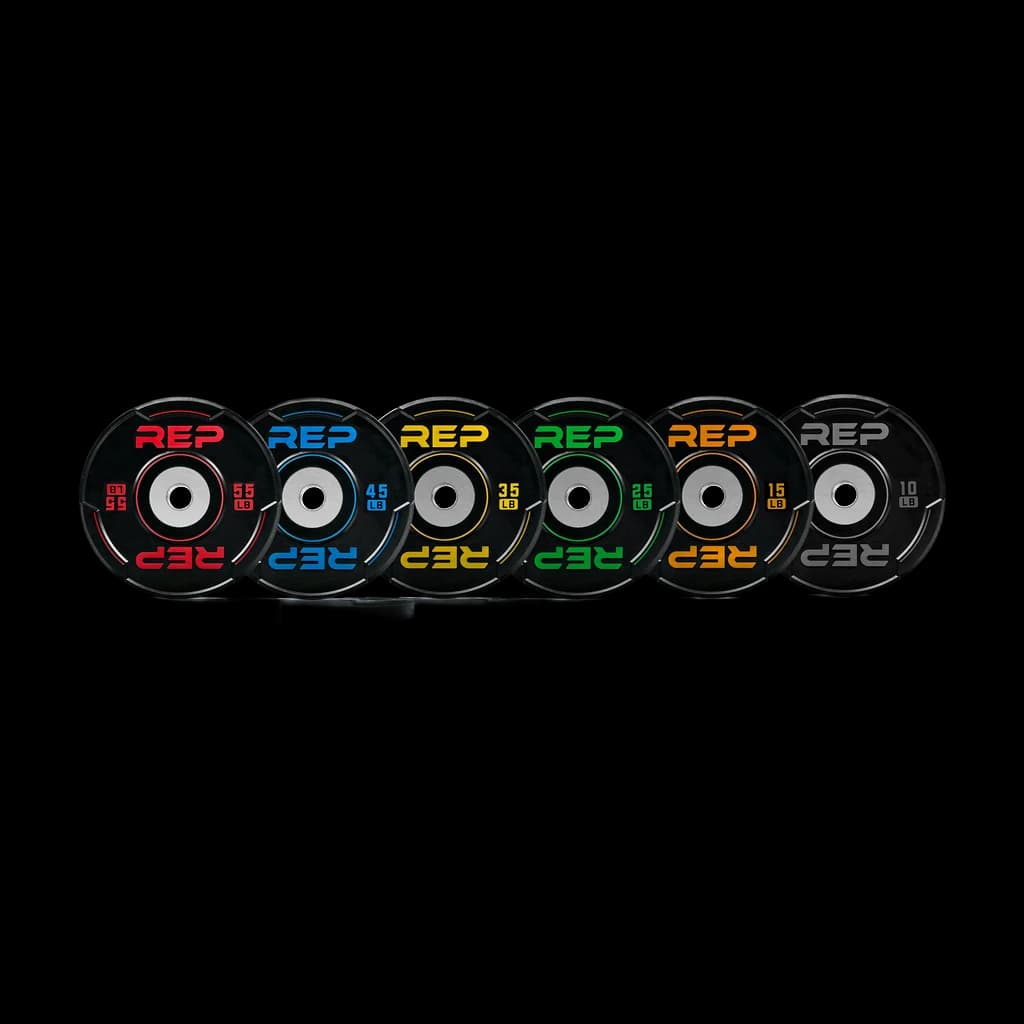
REP's V2 bumper redesign tightened weight tolerance from 3% to 2% and dropped dead-bounce noise by ~10% versus the original sport bumpers. IWF color-coded, with an orange 15 lb pair that fixes the 10-to-25 lb jump. Currently listed under "clearance" branding on REP's site as the line transitions.
- + IWF color-coded — fast visual ID across the platform
- + 2% weight tolerance (improved from 3% on the original sport bumpers)
- + ~10% quieter dead bounce than v1 — apartment/upstairs-friendly
- + Orange 15 lb pair fills the 10→25 lb gap that most sport sets ignore
- + 3-year home warranty on 25-55 lb plates (1-year commercial)
- − Proprietary durometer — REP won't publish the Shore A number
- − 10 + 15 lb plates only carry a 6-month warranty (consistent with category, but worth noting)
- − Brand-direct only — no Amazon listing, ships freight LTL
- − Listed as "clearance" — may indicate a rev coming or end-of-line, verify before bulk ordering
- Steel insert
- Stainless
- Weight options
- 10 / 15 / 25 / 35 / 45 / 55 lb pairs
- Color coding
- IWF + orange 15 lb pair
- Weight tolerance
- ±2%
- Warranty
- 3-yr home (25-55 lb), 6-mo (10-15 lb)
- Origin
- Brand-direct only
Gym Score breakdown ▸
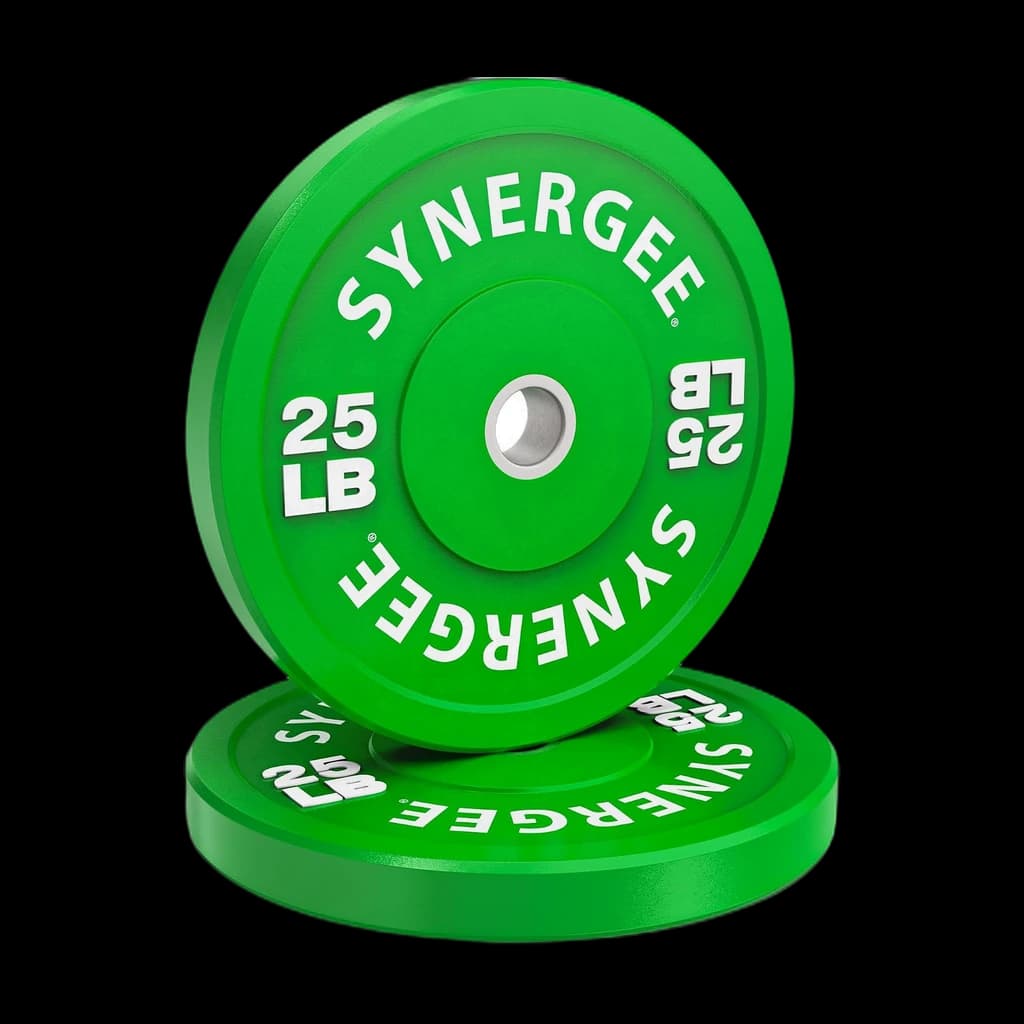
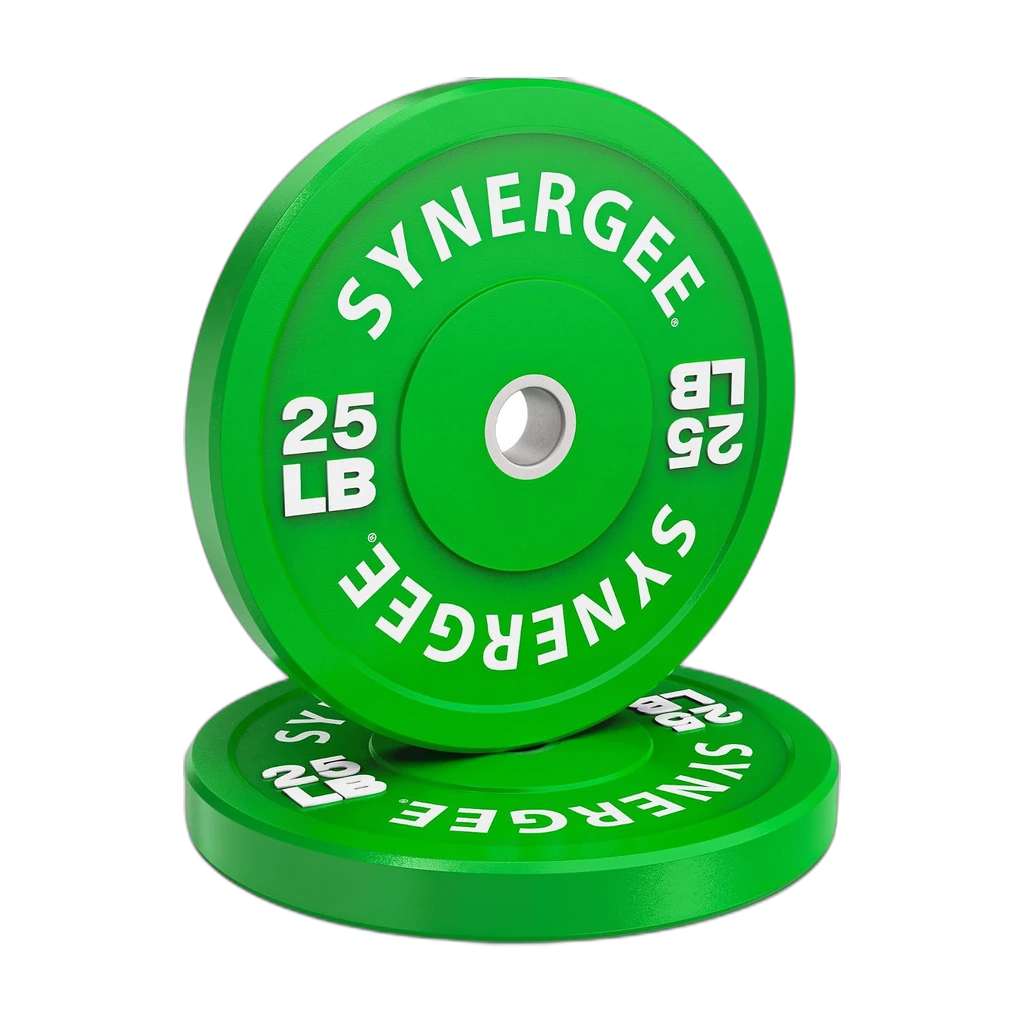
The plate that pairs with the Synergee bar already ranked in this category, and the reason it earns a place is boring in the right way: solid rubber, a steel insert, a 2-inch collar opening, and a low bounce that keeps a dropped bar where you can predict it. Synergee sells it by the pair and by the set, so you buy the jumps you actually need rather than a fixed 160 lb package with two plates you will not use for a year. It is not a competition plate and Synergee does not sell it as one — the thickness is closer to a training bumper than an IWF disc, so a heavily loaded bar runs out of sleeve sooner.
- + Solid rubber with a steel insert, not a shelled or filled plate
- + Low bounce, so a dropped bar stays roughly where you dropped it — the property that matters most in a garage
- + Sold by the pair and by the set, so you buy only the jumps you need
- + 2-inch collar opening fits any Olympic, powerlifting or hex bar sleeve
- + Sold by the brand and fulfilled by the retailer, so returns are straightforward
- − A training bumper, not a competition plate — thicker per pound than an IWF-spec disc, so a heavy bar runs out of sleeve sooner
- − Rubber smell is real for the first few weeks in a closed room
- − Buying pair-by-pair costs more per pound than a single bundled set
- − Synergee publishes no durometer or drop-count rating, so bounce and lifespan are described rather than specified
- Type
- Solid rubber bumper plate
- Insert
- Steel
- Collar opening
- 2 in
- Diameter
- 17.5 in
- Thickness
- 1.77 in (25 lb plate)
- Material
- Rubber polymer
Gym Score breakdown ▸
Buying guide
For the bar, look at tensile strength (190K PSI is the modern minimum for serious lifters), shaft diameter (28.5mm for Olympic lifts, 29mm for hybrid, 30mm for power), and sleeve rotation (needle bearings for cleans, bushings for power lifts). For plates, virgin rubber bumpers bounce far less and last longer than recycled crumb rubber, and IWF-spec plates are 450mm in diameter so they load to the right pulling height. Avoid sets that bundle ‘Olympic’ plates with 1-inch holes — those won't fit a real Olympic bar.
Bumper plates vs iron plates
The question is not which is better, it is whether you will ever let go of the bar.
| Bumper plates | Cast iron / steel plates | |
|---|---|---|
| Can you drop them? | Yes — that is the entire point | No, not without cracking a floor or a plate |
| Space on the sleeve | Thick; a 45 lb bumper eats sleeve fast, so heavy pulls run out of room | Thin; you can load far more weight on the same bar |
| Noise | Dull thud, kinder to a shared wall | Loud clang, and they chip |
| Loaded height | IWF-spec 450mm sets the bar at competition pulling height whatever the weight | Small plates leave the bar too low until you add 45s |
| Cost per pound | Higher | Lower |
Buy bumpers if you clean, snatch, or deadlift where dropping is realistic, and iron if you squat, press and lower the bar under control — or split it: a pair of bumpers for the outside of the sleeve, iron behind them for the loading.
Work out cost per pound before you compare sets. Divide the total set price by its total weight, not by the number of plates — sets are advertised in pairs, in kilos and in ‘lb of plates plus a bar’, and the only number that compares across them is dollars per pound. Bumpers cost meaningfully more per pound than cast iron; that gap is what you are paying for the ability to drop the bar, so pay it only if you will.
Trap bars
A trap bar (hex bar) puts you inside the load instead of behind it. The pull sits closer to a squat than a conventional deadlift, the shear on the lower back drops, and most people move more weight on day one — which is why it is the standard loaded-carry and jump implement in team-sport gyms.
What separates them: open vs closed back (open lets you walk through it for carries and lunges, closed is stiffer), high and low handles (high handles shorten the range and suit stiff hips or long femurs; low handles are the honest full-range pull), sleeve length (short sleeves cap you at three or four plates a side), and handle diameter (fat handles turn it into a grip exercise whether you wanted that or not). We don't currently score a trap bar, so this is the decision rule rather than a pick: if the conventional deadlift hurts your back or your programme leans on carries, the trap bar is the bar to add second, after a straight bar — never instead of one.
Barbells & Bumper Plates guides
In-depth reads to go with the rankings above.
What we didn’t pick
Popular home-gym options we evaluated and passed on, with the specific reason each one fell short of our top picks.
- Sub-$150 'Olympic' barbells from Amazon import brands
Whip and tensile-strength ratings below 110,000 PSI are documented bend risks under deadlifts above 315 lb. r/powerlifting and r/homegym consistently recommend the $250+ tier (Rogue Ohio, Bells of Steel, REP Deep Knurl) as the genuine entry point.
- REP Fitness V2 bumper plates (older configuration)
May 25 catalog audit flagged REP V2 bumpers as recommended in body content but not in our current catalog. REP has cycled through V1 / V2 / V3 / current bumper revisions — awaiting fresh ASIN verification on the current SKU before adding.
Your next step
Want the long-form reasoning behind these picks?
Planning the whole barbell setup?
A 7-foot bar overhangs the rack by a foot each side. The planner lays out bar, rack, and plate storage in your real floor plan so nothing collides.