Best Barbell and Plates for Home Gyms 2026: Rogue Ohio Wins
The Rogue Ohio Bar is the best barbell for home gyms in 2026, and Rep V2 bumpers are the plate standard. Plus when a trap bar wins, and bumper vs iron.
Evidence snapshot · Updated September 1, 2026
The evidence-backed answer
Rep Fitness Bumper Plates V2 is our default pick for the scope of this guide: 190k PSI tensile, medium knurl, hybrid whip. The default barbell for 95% of home lifters.
Scope: 3 shortlisted products compared using published specifications, owner-feedback signals, value and category-specific performance. The matched catalog records represent 3,720 owner ratings. This is research synthesis, not hands-on testing.
| Product | Rating | Current price context |
|---|---|---|
| Rep Fitness Bumper Plates V2 | 4.8/5 | ~$1.59/lb |
| CAP Barbell The Beast Olympic Bar | 4.6/5 | $149.00 |
| Synergee Bumper Plates | 4.6/5 | $134.95 |
How GymScored is paid: Amazon Associates commission plus brand-direct affiliate (Rogue / REP / Titan when approved). No sponsored placements, no paid reviews, no pay-to-rank. Picks are ranked by the Gym Score formula and nothing else. Read the full disclosure.
Rogue Ohio Bar plus Rep V2 bumpers is the canonical home gym setup. Rep Deep Knurl Power Bar EX for powerlifters. CAP Beast for tight budgets.
| Product | Rating | Pros | Cons | Price | |
|---|---|---|---|---|---|
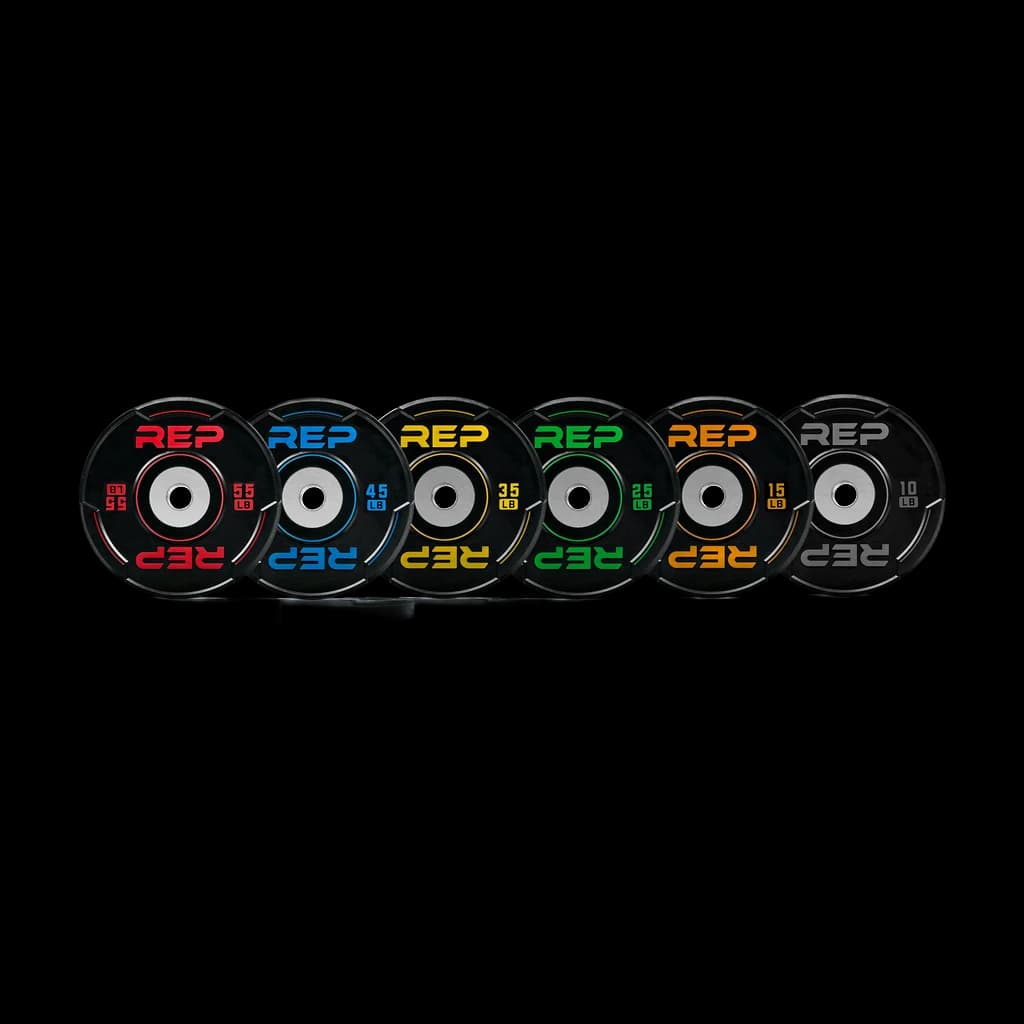 The home-gym bumper plate standard. Dense urethane, accurate weight, fits any 50mm sleeve. | 4.8 | Pros
| Cons
| ~$1.59/lb | Sold direct by Repfitness |
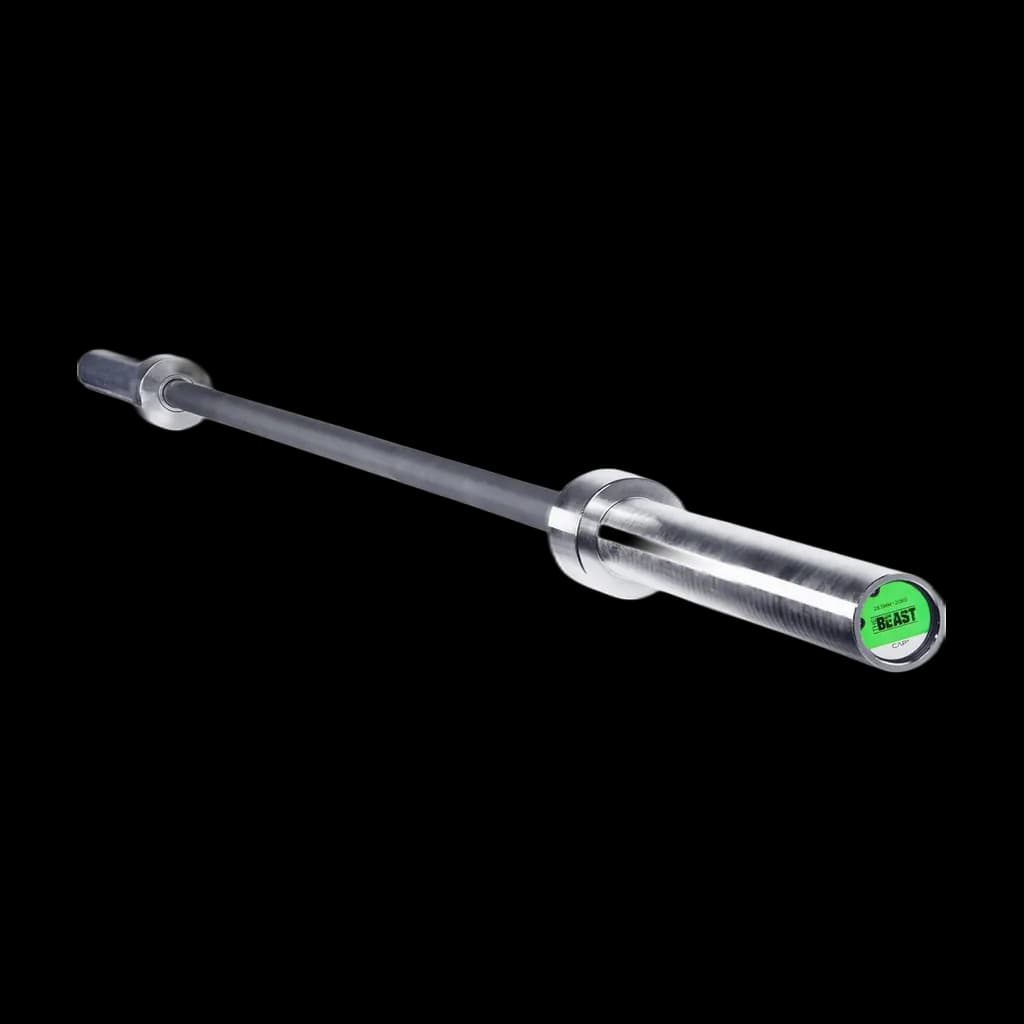 Honest budget pick. Lower tensile than Rogue but holds 700 lb without complaints. ↑ Quality↑ Value for moneyBased on 1,851 buyer mentions | 4.6 Gym Score 91 | Pros
| Cons
| $149.00 | Buy on Amazon |
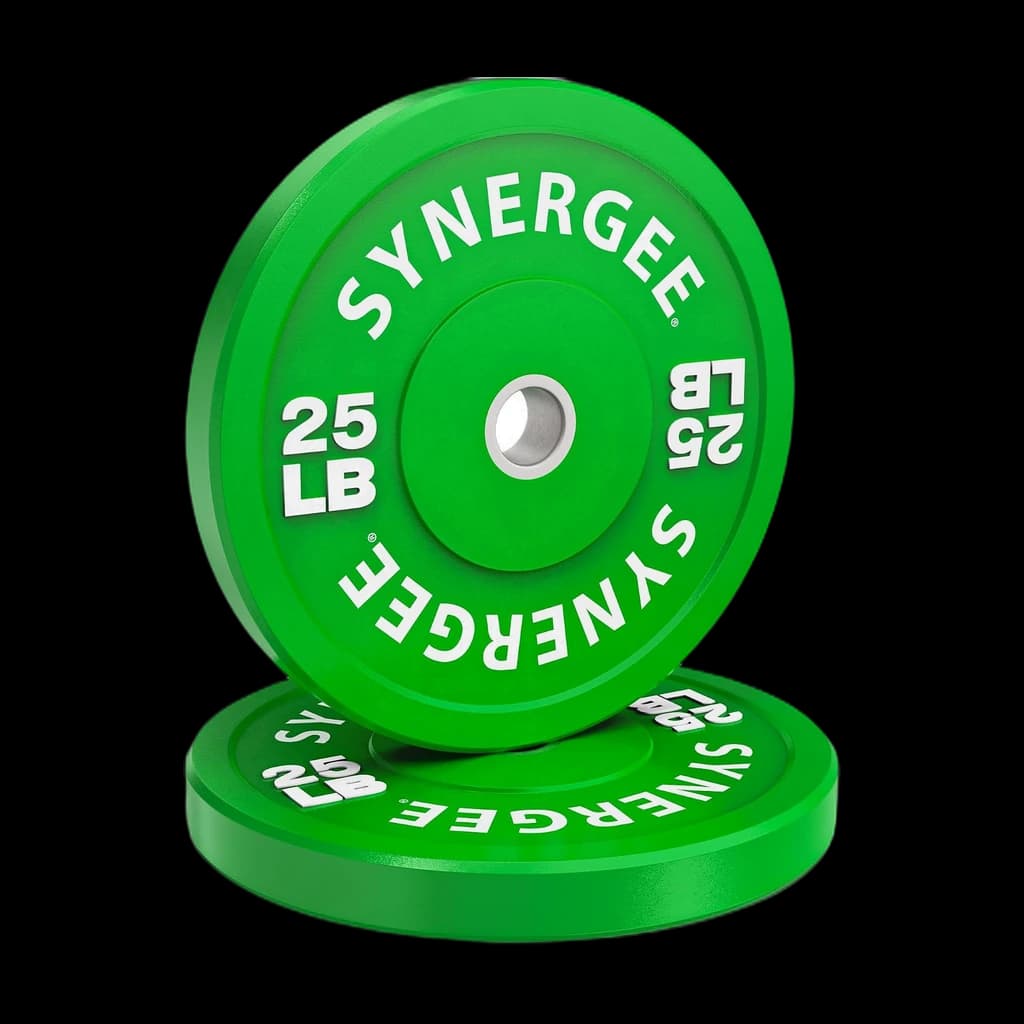 Solid rubber with a steel insert, sold by the pair so you buy the jumps you actually need instead of a fixed boxed set. | 4.6 Gym Score 88 | Pros
| Cons
| $134.95 | Buy on Amazon |
Amazon prices checked Sep 12, 2026. Amazon prices change often — the listing is authoritative.
Top picks spec comparison
Specs Amazon listings rarely aggregate side-by-side. Sourced from manufacturer data.
| Product | Type | Tensile Strength | Knurl | Sleeve |
|---|---|---|---|---|
| Rogue Ohio Bar | Hybrid | 190,000 PSI | Medium-aggressive | Bushings |
| Rep Deep Knurl Power Bar EX | Power bar | 200,000 PSI | Aggressive (IPF) | Bushings |
| CAP Barbell The Beast | Olympic | 110,000 PSI | Medium | Bushings |
| Rogue Ohio Power Bar | Power bar | 205,000 PSI | Aggressive (IPF) | Bushings |
| Synergee Games Barbell | Hybrid | 190,000 PSI | Medium | Composite bushings |
Pick by situation
Decide by your situation, not the generic ranking.
| If | You want | Pick |
|---|---|---|
| Budget under $300 | First bumper set for a home gym doing occasional deadlift drops | Yes4All Olympic Bumper Plates |
TL;DR — should you read this?
- The Rogue Ohio Bar is the right barbell for almost everyone. 190k PSI tensile, hybrid whip, medium-aggressive knurl — the genre default for good reason.
- Rep V2 Bumper Plates are the home-gym plate standard. Dense urethane, ±1% weight tolerance, lifetime warranty.
- Skip sub-$200 big-box barbells. The 110k PSI rating is fine until you miss a deadlift; then the bend is permanent.
- Bushings vs bearings: bushings for 95% of home lifters, bearings only if you're training the Olympic lifts seriously.
- Knurl is the spec people skip. Aggressive knurl bites the hand for deadlifts; passive knurl slips. Medium is the right middle.
Our pick
190k PSI tensile, medium knurl, hybrid whip. The default barbell for 95% of home lifters.
What separates a serious bar from a wobbly one
Three specs decide whether a bar will outlast your house: tensile strength, knurl pattern, and sleeve mechanism.
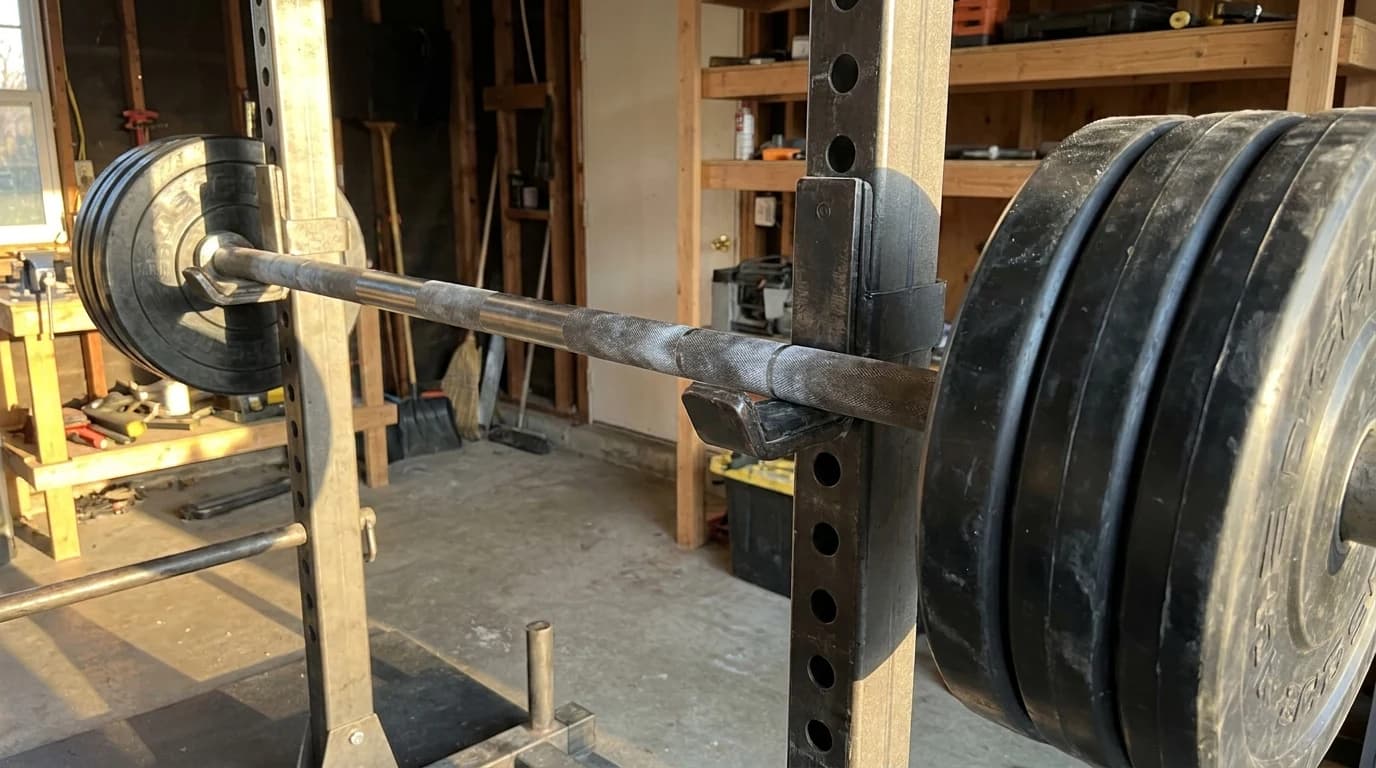
Tensile strength, measured in PSI, is the bar's resistance to permanent deformation under load. A 190k PSI bar bends elastically and springs back; a 110k PSI bar bends elastically until it doesn't. Knurl — the diamond pattern cut into the grip zones — determines how the bar feels in a sweaty hand. The sleeve mechanism decides how the sleeves rotate under fast lifts.
You almost certainly need less bar than the internet says
The lifters who actually need a 220k+ PSI competition bar are powerlifters squatting north of 500 lb. The lifters who actually need bearings are Olympic lifters cleaning over 200 lb. Everyone else — meaning the home-gym audience — is buying a competition bar to flex, not to lift. The NSCA position statements on resistance training program design make no equipment claim past "sufficient capacity for progressive overload."
Rule of thumb: every bar ranked below is rated 700-1500 lb static. A 400 lb deadlifter is loading at 30-60% of rated capacity. The bar isn't the failure point — the lifter is.
The picks, ranked
| Bar | Price | Tensile | Knurl & sleeve |
|---|---|---|---|
| Rogue Ohio Bar | ~$310 | 190k PSI | Medium-aggressive, bushings |
| Rep Deep Knurl Power Bar EX | ~$429 | — | IPF-spec aggressive, stiff whip |
| CAP Beast Olympic Bar | ~$149 | 110k PSI | Medium-aggressive, bushings |
| Rogue Ohio Power Bar | ~$345 | 205k PSI | IPF-spec, very little whip |
| Synergee Games Barbell | ~$249 | 190k PSI | Composite bushings |
1. Rogue Ohio Bar — ~$310 — Best for most home lifters
The hybrid bar that does everything reasonably well. Medium-aggressive knurl, bushings, 200,000+ owners. If you don't know what bar you need, this is the bar. The Olympic Bearing version ($370) is the upgrade for clean-and-jerk practice; the Cerakote finishes ($345) add corrosion resistance for humid garages.
2. Rep Fitness Deep Knurl Power Bar EX — ~$429 — Best for powerlifting
Stiffer whip and aggressive knurl built for max-effort squats and bench. The IPF-spec knurl bites into the hand for unmissable grip on heavy deadlifts. Pay the premium if your training rotates around squat and bench maxes; skip it if you do any Olympic lift practice.
3. CAP Beast Olympic Bar — ~$149 — Best honest budget pick
The 110k PSI tensile is the catch — enough for working lifts up to 400-500 lb but it won't survive missed deadlift drops at higher weights. Medium-aggressive knurl, adequate bushings, available on Amazon Prime. The right first bar if you'll outgrow it intentionally in 2-3 years.
4. Rogue Ohio Power Bar — ~$345 — Best for stiff-whip max-effort training
The squat-and-bench specialist. Very little whip, IPF-spec knurl. Sleeve length is shorter than the standard Ohio Bar, so plate capacity drops, but the stiffness is the spec for one-rep-max work. Not a clean-and-jerk bar.
5. Synergee Games Barbell — ~$249 — Best mid-tier alternative to Rogue
190k PSI matches the Ohio Bar at a discount. Composite bushings (slightly noisier sleeve rotation) and the smaller brand ecosystem are the tradeoffs. Build quality sits closer to the Rogue tier than the CAP tier.
Plates — the other half of the buy
| Plate | Cost | Best for |
|---|---|---|
| Rep Fitness V2 Bumper | ~$1.59/lb | The home-gym standard: dense urethane, ±1% tolerance, lifetime warranty |
| Rogue Black Bumper | ~$1.85/lb | Same job, brand premium |
| Synergee Bumper Plates | $134.95 / 25 lb pair | Building the stack one jump at a time — solid rubber, steel insert, low bounce |
| CAP iron | ~$1.00/lb | Low-bail movements — bench, overhead press |
Choose bumpers if:
- You'll do any Olympic lifting, or train alone where bailing matters
- You want the floor and the bar end caps to survive a missed deadlift
- Noise is a factor — bumpers thud, iron rings
Iron is fine if:
- Your training is benching and overhead pressing, where nothing gets dropped
- You want the loudest ring per dollar, which is genuinely part of the ritual
- Budget is the binding constraint
The trap bar is the second bar worth owning
Nothing above is a hex or trap bar, and for a lot of home lifters that is the bar they should buy second — sometimes first. The trap bar loads a deadlift with the hands beside the hips instead of in front of them, which shortens the moment arm at the lower back and moves demand toward the quads. For anyone deadlifting alone, in a low-ceilinged basement, or working around a cranky back, that is a meaningfully different lift rather than a novelty.
Buy a trap bar if:
- The deadlift is the lift your back complains about, and you still want to pull heavy.
- You want farmer's carries and jumps without buying dedicated implements.
- You train alone and want a pull that is easier to bail out of.
Skip it if:
- You are training for a powerlifting meet, where the straight-bar deadlift is the contested lift.
- Your rack and platform space is already tight — a trap bar is awkward to store on end.
The one spec to check before you buy: the sleeves must be full-size Olympic, not a 1-inch stub. A hex bar with standard sleeves will not take your bumper plates without adapters, which defeats the point.
Bumpers or iron, decided by what you drop
The plate table above is the whole decision, but the framing that resolves it is drop behaviour, not price per pound. Rep Fitness Bumper Plates V2 are dense urethane that lands flat and dead, bought direct from Rep rather than through a retailer; CAP iron rings, chips at the rim, and transmits everything straight into the slab.
If you would rather build the stack a pair at a time than commit to a freight-shipped set, Synergee Bumper Plates are the buyable version of the same idea: solid rubber with a steel insert, a 2-inch collar opening and a low bounce that keeps a dropped bar roughly where you dropped it, sold by the pair at $134.95 for the 25 lb jump. They are a training bumper rather than a competition disc — thicker per pound, so a heavily loaded bar runs out of sleeve sooner — and Synergee publish no durometer or drop-count rating, so the low-bounce behaviour is described rather than specified.
What the research actually says
- Progressive overload needs equipment that scales past your current strength. A bar that maxes out at your squat is an upgrade cycle, not a purchase (ACSM resistance training framework).
- Strength training reduces all-cause mortality and improves bone density. The CDC physical activity benefits page covers the public-health case; the barbell is the most efficient implement for the strength dose.
- The bar is rarely the failure point under normal home loading. A 1,000 lb static bar is rated for roughly 3-4x the working weight of most home lifters, well within elastic limit (NSCA articles on equipment selection).
- Sleeve rotation matters for ballistic lifts, not for squats. Bearings spin faster under whip, which helps in cleans and snatches. For squats and bench the sleeves barely turn, and bushings are equivalent.
What the research does not support: that a Cerakote finish "prevents rust." It slows oxidation in humid conditions without eliminating it. What actually prevents bar rust is wiping the bar down with a dry cloth after sweaty sessions.
What to skip
- Sub-$150 big-box "Olympic" barbells. Tensile rating is often unpublished, which is its own answer. Knurl wears off in 18 months, sleeves seize inside two years.
- Bars marketed as "competition" without IPF or IWF certification. The label is decoration. The real test is published tensile rating, knurl spec, and warranty.
- Plastic or vinyl-coated "training plates" for adults. They bend, crack, and the listed weight is rarely accurate. Iron or bumpers — pick one.
- Hex or trap bars sold without a real Olympic sleeve — see the trap-bar section above for why the sleeve is the spec that matters.
How to actually buy this
- Pick your bar by training style. General fitness plus dabbling in Olympic lifts: Rogue Ohio Bar. Pure powerlifting: Rep Deep Knurl or Rogue Ohio Power Bar. Beginner unsure of progression: CAP Beast, and upgrade in 2 years.
- Budget the plate stack. A starter set of 260 lb runs $400-500 in bumpers, $250-350 in iron. Buy the bar and plates as one purchase — splitting them usually means cheaping out on plates.
- Get the right collars. Cheap spring collars slip under deadlift load. Lock-jaw style collars ($30/pair) lock tight every set without fighting.
- Think about flooring. A bumper-plate setup needs a 6x8' or 8x8' plywood plus horse-stall-mat platform. Drops on bare concrete eventually crack the concrete or chip the plates.
- Never store the bar loaded. Long-term loaded storage induces permanent bend, even in a good bar. Strip the bar after every session.
How we evaluated
We scored each bar on Tensile & Build (PSI, knurl, sleeve mechanism), Versatility (whip, stiffness, knurl aggression) and Capacity & Warranty. Plate sets scored on Material, Tolerance and Warranty. Specs come from manufacturer data sheets; owner reports are paraphrased from r/homegym, r/powerlifting and r/weightroom. We do not perform physical product testing. See /methodology for the rubric.
Frequently Asked Questions
Do I need a 190k PSI bar?+
If you'll squat or deadlift over 500 lb, yes. Below that, a 165k PSI bar like the CAP Beast holds up fine. The 190k PSI rating is insurance against permanent bend if you drop a heavy missed lift.
Bumper plates or iron plates?+
Bumpers if you'll do any Olympic lifting, miss deadlifts, or care about your floor. Iron if you only do controlled bench/squat reps and have rubber flooring underneath. For most home gyms, bumpers.
Is the Rogue Ohio Bar overkill for beginners?+
No - it's the bar you grow into. The bend, knurl, and sleeve quality are all noticeable from day one, and the bar will outlast your training career. Buying cheap means buying twice.
How much should I spend on my first bar?+
$150-300 covers the smart range. Below $150 you're buying knurl wear and sleeve seizing inside two years. Above $400 you're paying for specialized features (competition certification, exotic finishes) most home lifters don't need.
Do I need different bars for different lifts?+
Not for the first 5+ years of training. A hybrid bar like the Rogue Ohio covers everything. Specialized bars (power bars, deadlift bars, squat bars) make sense once you're chasing meet-specific maxes and the equipment-specific feel matters.
What's the deal with cerakote finishes?+
Cerakote is a ceramic-polymer coating sprayed on the bar shaft. It improves corrosion resistance and adds color but doesn't change the bar's mechanical properties. Worth the $30-50 premium for humid garages or basements; not necessary for climate-controlled rooms.
Sources & Research
- IPF — International Powerlifting Federation equipment specsstandards
- r/weightroom — Barbell longevity reportscommunity
- NSCA — NSCA Position Statementsauthority
- NSCA — Latest Strength and Conditioning Articlesauthority
- Current Sports Medicine Reports — Resistance Training for Health and Performanceresearch
- CDC — Benefits of Physical Activityauthority
Related reviews
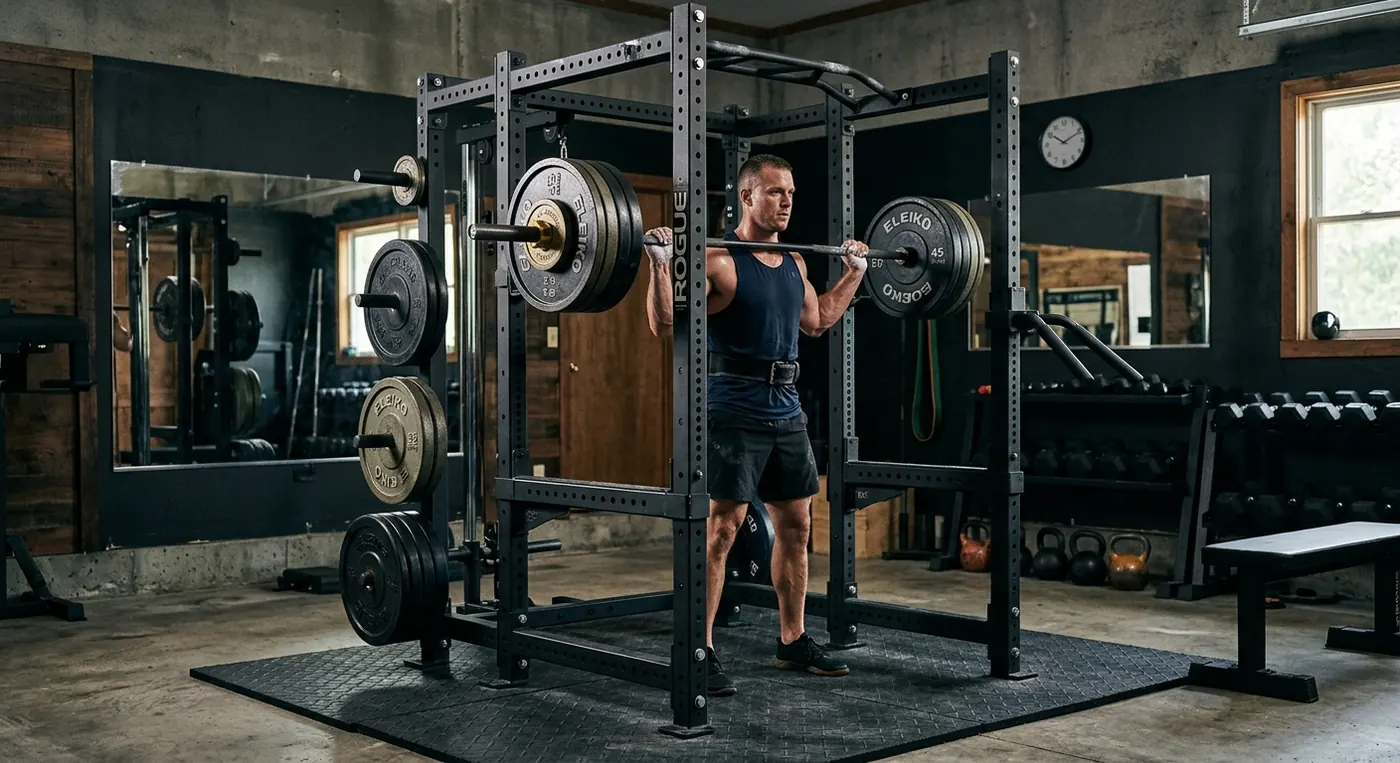
Best Power Racks for a Home Gym in 2026
The Rep PR-4000 is the best home gym power rack of 2026 at under $900. We scored 12 racks on build quality and footprint; Rogue R-4 is the lifetime pick.
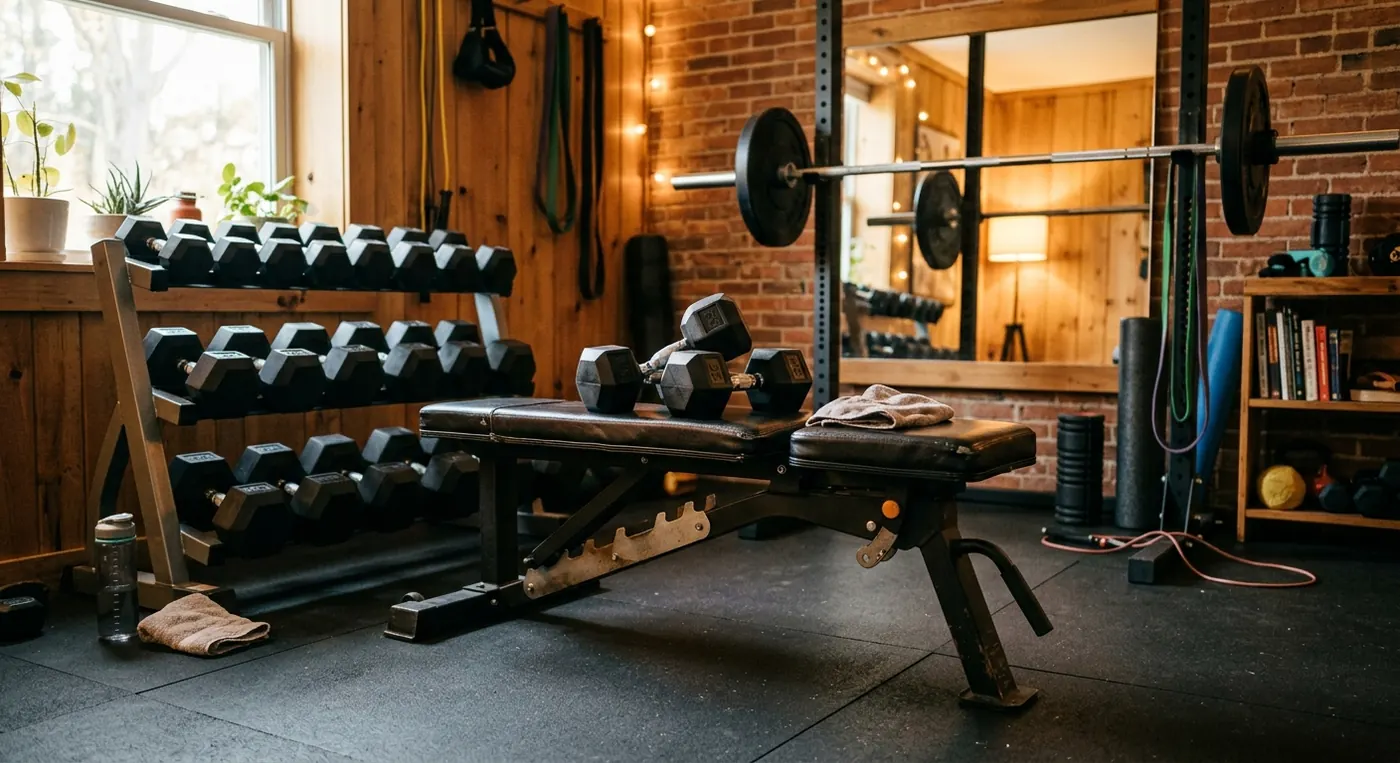
Best Weight Benches for a Home Gym
The Rep AB-5200 is the best weight bench under $400; the Rogue AB-3 is the lifetime pick. We scored 8 benches on stability, adjustability, and pads.
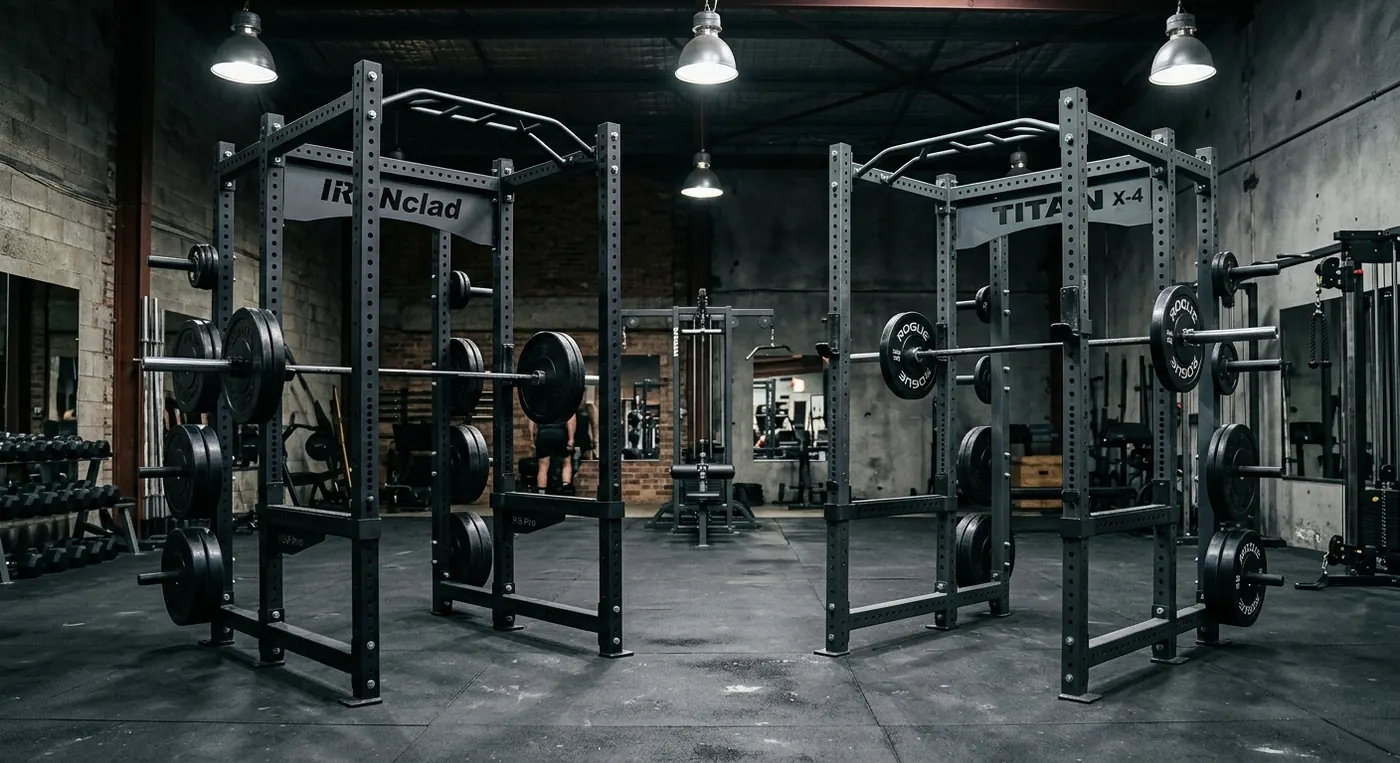
Rep PR-4000 vs Rogue R-4: Which Power Rack Wins in 2026?
Rep PR-4000 vs Rogue R-4: the PR-4000 runs 3x3 inch 11-gauge uprights, the R-4 runs 2x3 inch, and the R-4 ships with the attachments Rep charges for. How to pick.
Hilly Shore Labs
Editorial teamThe independent product research team behind GymScored. Every recommendation is researched, never hands-on tested — rankings come from manufacturer specifications, published standards, and aggregated buyer sentiment.
163 products scored across 26 home gym categories, each on the same 5-dimension Gym Score formula.
See the scoring methodology and who we are.
Affiliate disclosure: GymScored is a participant in the Amazon Services LLC Associates Program. We earn from qualifying purchases at no extra cost to you. Full disclosure →