 Best Budget
Rank #2 in Cold Plunges
The Cold Pod
by The Cold PodBuy later
Score
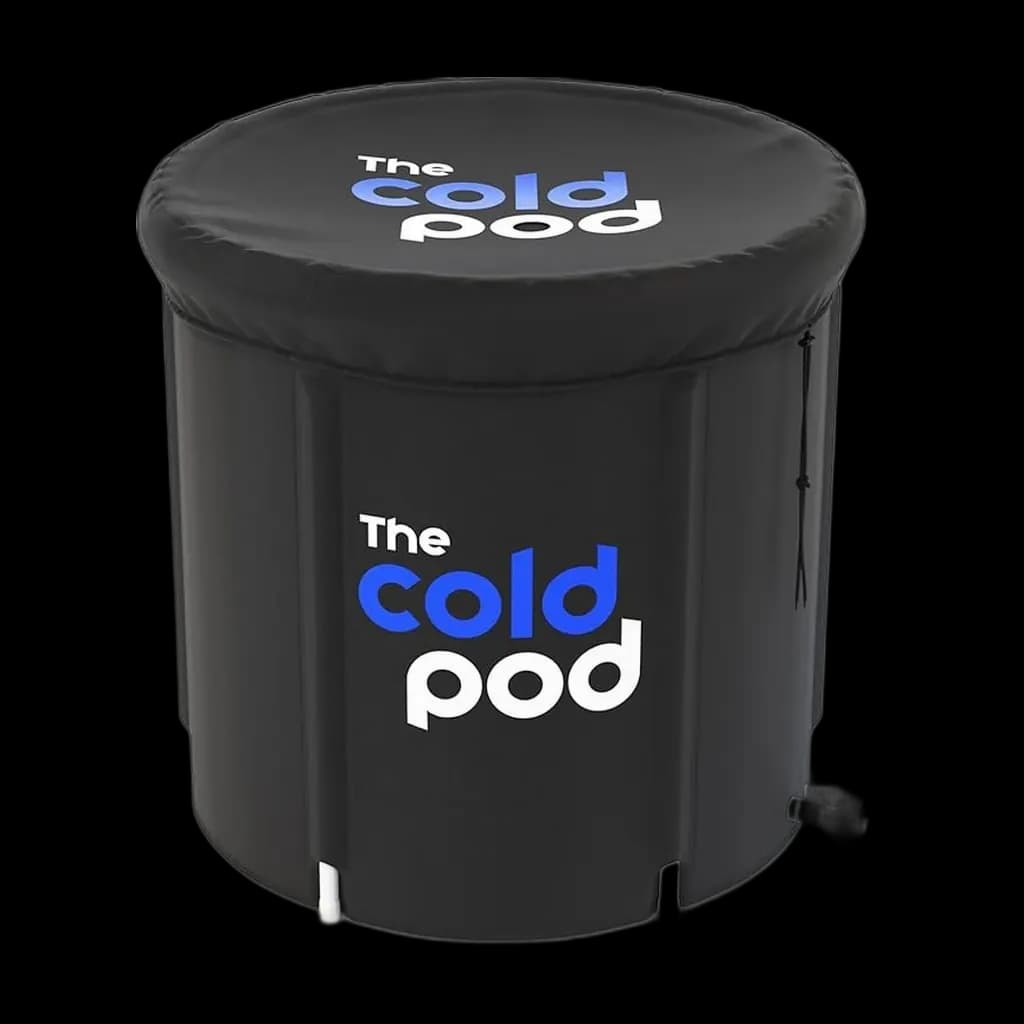
The gateway plunge. Inflatable, under $100, no chiller. Treat it as a ritual-starter, not a forever tool. Needs ozone and ice management.
- Absolute beginners who want the lowest-cost cold therapy experiment
- Single-use or event-based recovery (post-marathon, weekend training camps)
- Travelers or renters who need a fully packable cold tub
- Buyers who explicitly understand this is a starter, not a long-term tool
- Garage spaces where a permanent setup is not yet justified
- You are pregnant or trying to conceive without OB clearance
- You have a heart condition, blood pressure issues, or arrhythmia without cardiologist sign-off
- You have Raynaud's phenomenon, cold urticaria, or known cold sensitivity
- You plan to use this daily for more than 8-12 weeks (durability is the constraint)
- You expect the water to stay cold without ice every session
Roughly 28 by 28 by 28 inches set up. Stores in a backpack-sized bag (around 14 by 14 by 6 inches). Level floor or pad required. No electrical.
easy — Inflate the upper ring with an included hand pump (3-5 minutes). The base unfolds. Total setup under 10 minutes from package to ready-to-fill.
Cold immersion blunts strength training adaptations within roughly 4 hours of resistance work. Use post-cardio, on rest days, or schedule cold sessions away from the main lift window.
Strengths
- ↑Quality
- ↑Easy To Set Up
- ↑Size
- ↑Functionality
Weaknesses
- ↓Leakage
What owners actually complain about
Synthesized from owner reviews and community threads. Paraphrased, not quoted.
- Inflatable ring deflates noticeably over 24-48 hours and needs topping up
- No insulation, so water warms within 2-3 hours indoors at room temperature
- Daily ice requirement (no chiller, no temperature retention)
- Vinyl base shows visible wear within 3-6 months of daily use
- Drain valve is small and slow (10-15 minutes to fully empty)
Buyer sentiment
Based on 245 user mentionsBuyers praise quality, easy to set up, size and functionality. Mixed feedback on durability and temperature retention. Some flag leakage.
Verdict: The cheapest way to test cold therapy — a $100 inflatable tub that answers whether you'll actually stick with cold immersion before spending real money.
Specs that matter
| Spec | Value |
|---|---|
| Capacity | ~55 gallons |
| Interior diameter | ~28 in (tight over 6'2") |
| Insulation/chiller/filter | None |
| Expected life | 6–12 months regular use |
| Target temp | ~50–59°F (with 30–40 lb ice) |
What you get
- Lowest-friction entry — $100 test of your own discipline
- Same physiological effect — water hits the same temp as a $4,000 plunge
- Packable — inflatable, stores away
What you give up
- No temp hold — warms in 2–3 hrs; drain and refill each session
- Durability — vinyl ring isn't built for years of daily use
Buy it if you want a 90-day experiment. Skip it if you expect a year of daily use — upgrade to an Ice Barrel 500 or chiller.
NIH/ACSM literature is mixed: reduced perceived soreness, no evidence for fat loss/testosterone, and cold immersion within ~4 hrs of resistance training blunts hypertrophy. Pregnancy, heart disease, arrhythmia, and Raynaud's require physician clearance.
Full specs
- Type
- Inflatable barrel
- Capacity
- ~55 gal
- Insulation
- None
Common questions
Is this a real cold plunge?
Mechanically yes, in that you can fill it with cold water and ice and immerse yourself. Functionally, it is a short-term tool. The lack of insulation means each session requires fresh ice, and the inflatable construction limits long-term durability.
How much does it cost to run weekly?
Roughly $15-25 in ice for 3 sessions per week. Plus a few dollars for ozone tabs or hydrogen peroxide for sanitation. Plus the time cost of refilling and draining for every session.
How long will it last?
Owner reports on r/Coldplunge are consistent: 4-9 months of daily use before the vinyl shows wear or the inflatable ring stops holding pressure reliably. At under $100 this is expected, not a defect.
Safety considerations?
Cold immersion is a real cardiovascular stress event in the first 30-60 seconds. The Mayo Clinic and NIH flag pregnancy, heart conditions, blood pressure issues, arrhythmia, Raynaud's, and cold urticaria as conditions requiring physician clearance before starting. Treat the first session as a medical event, not a wellness ritual.
Can I leave water in it for multiple sessions?
Not safely past 48 hours without active sanitation. Stagnant cold water grows bacteria within 2-3 days. Drain after each session or at minimum daily, rinse, and add ozone or hydrogen peroxide if reusing within 24 hours.
Should I get this or the Polar Recovery Tub?
Both are starter-tier. The Polar Tub is structurally sturdier (rigid frame versus inflatable) and tends to last longer. The Cold Pod packs smaller for travel. For home use, the Polar Tub is the slightly better pick.
Sources & references
Full buying guide
Best Cold Plunges for Home Use
Read the full ranking →Other cold plunges we rate
Ranked alternatives from the same category, with our score and the current price.
The ice-and-go alternative. No chiller, so you buy or make ice. Good insulation keeps a 3-bag ice dump at 45°F for 24 hours.
The coldest setpoint in the category: a 28°F floor, 150-gallon tub, ozone plus UV sanitation, on a standard 12-amp GFCI plug. The current-generation Pro costs nearly twice what Plunge asks, so it is the pick only if that floor or the Sun Home sauna ecosystem matters to you.
Plunge's original tub — sold for a while as the Evolve XL, now simply The Plunge. Ships with the Pro Chiller Gen 2, a 20-micron filter plus ozone, a 39°F floor and about 105 gallons. Plug-and-play means no chlorine, no ice hauling, just a cold tub waiting.
The upgrade pick, now in its third generation. 37°F floor and heats to 104°F for contrast work, 0.5 HP chiller, dual-stage filtration plus ozone, app control, 5-year limited warranty. For buyers who want the most complete spec sheet in the category.