 Premium Pick
Rank #1 in Smart Trainers
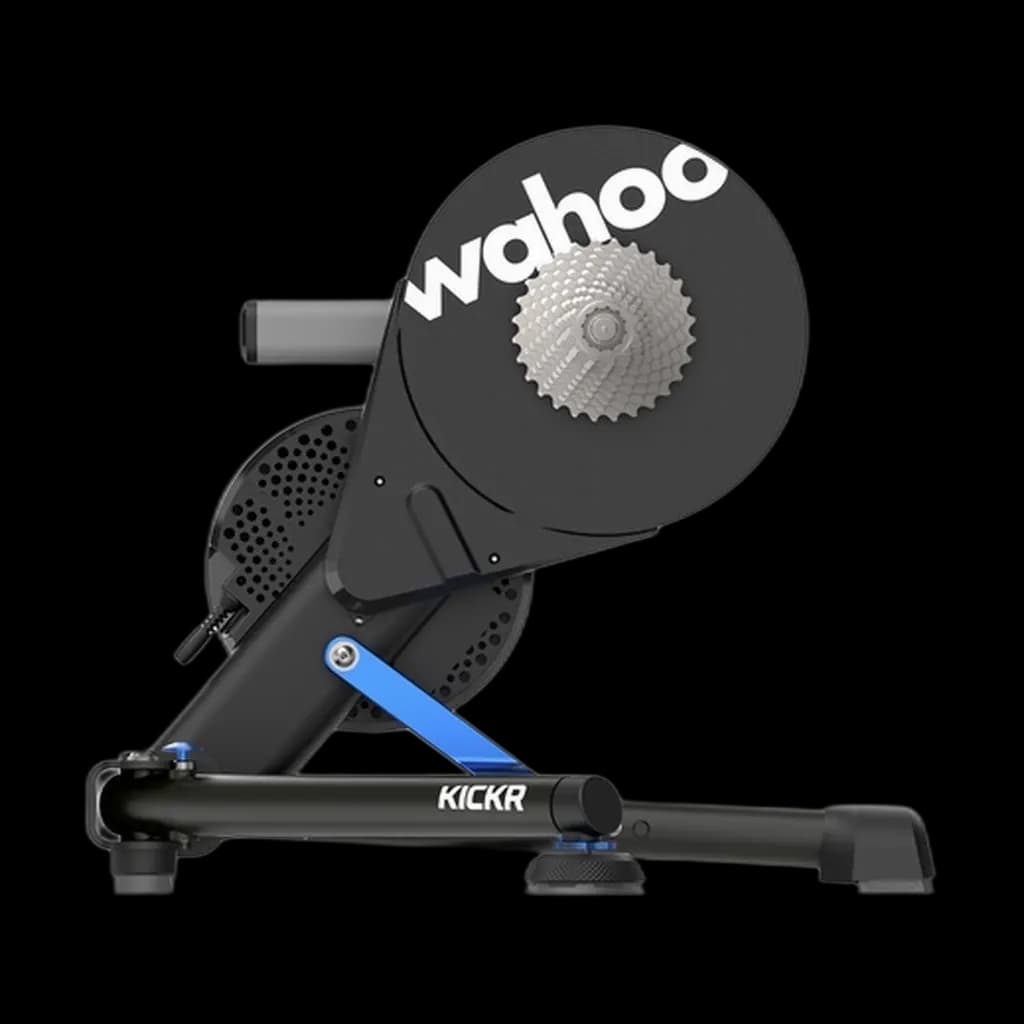
Wahoo Kickr V6
by Wahoo FitnessBuy later
Score
The benchmark direct-drive smart trainer. ±1% accuracy, 20% simulated gradient, and the new WiFi-direct streaming cuts Bluetooth/ANT+ dropouts on Zwift. If you ride seriously, this is the answer.
- Serious road or gravel cyclists who race Zwift, TrainerRoad, or Rouvy multiple times a week
- Riders coming off wheel-on trainers who want quieter, more accurate power numbers
- Households on shared WiFi who have suffered Bluetooth dropouts mid-race
- Cyclists training with a structured plan and a coach who needs trustworthy power data
- Riders who want a single trainer that handles road, MTB, and cross bikes via swapped cassettes
- You ride fewer than once a week or only do casual spinning
- You do not own a bike with a removable rear wheel and a modern cassette
- Your training space is in a shared apartment where 47 lb of metal cannot be moved easily
- You are on a sub-$800 budget and would be better served by a Kickr Core or wheel-on Snap
About 6 ft long by 4 ft wide for the trainer and bike, plus 2 to 3 ft of fan and sweat-mat clearance in front. A 7 ft by 5 ft footprint is comfortable.
moderate — Trainer ships mostly preassembled with an 11-speed 11-28 cassette preinstalled, per Wahoo. A chain whip and lockring tool are only needed if your drivetrain calls for a different cassette.
A direct-drive smart trainer makes sense only after a rider has a structured training app subscription and a bike that fits properly. Earlier in the journey, a wheel-on trainer or rollers covers the same job for far less money.
Strengths
- ↑±1% power accuracy
- ↑20% simulated gradient
- ↑WiFi-direct streaming
- ↑Quiet belt drive
- ↑Works with every major app
Weaknesses
- ↓Stock cassette not CUES/LinkGlide compatible
- ↓Heavy (47 lb)
- ↓Premium price
What owners actually complain about
Synthesized from owner reviews and community threads. Paraphrased, not quoted.
- Firmware updates have occasionally introduced ANT+ FE-C handshake regressions that required a factory reset
- WiFi-direct streaming works well in Zwift but is still inconsistent in some third-party apps
- 47 lb chassis is awkward to move and the carry handle bites into hands during stair climbs
- Quiet by trainer standards but the bike drivetrain itself is now the loudest thing in the room
Buyer sentiment
Based on 21 user mentionsBuyers praise performance and functionality. Mixed feedback on connectivity.
Verdict: The default benchmark direct-drive smart trainer for structured-training cyclists who race on Zwift.
Specs that matter
| Spec | Value |
|---|---|
| Power accuracy | ±1% |
| Max power | 2,200 W |
| Max gradient | 20% |
| New feature | WiFi-direct streaming, 47 lb |
What you get
- Top accuracy — ±1%, repeatable FTP across weeks
- WiFi-direct — ends Bluetooth dropouts on Zwift
- Full app support — ANT+ FE-C + Bluetooth FTMS + WiFi, rock-solid ERG mode
What you give up
- 11-speed stock cassette — Shimano CUES/LinkGlide riders need a different one
- Firmware quirks — WiFi-direct inconsistent outside Zwift; 47 lb, awkward carry handle
Buy it if you ride indoors 2x+/week and follow structured plans. Skip it if you're casual — a Kickr Core or used V4 covers 90% for less.
Owners report ERG mode holds target wattage within a watt or two even through cadence transitions, which is the entire point for sweet-spot and threshold work.
Full specs
- Drive Type
- Direct-drive
- Accuracy
- ±1%
- Max Gradient
- 20%
- Max Power
- 2,200 W
- Connectivity
- WiFi, ANT+ FE-C, Bluetooth FTMS
Common questions
Does the Wahoo Kickr V6 work with Zwift on Apple TV?
Yes. The Kickr V6 pairs with Apple TV over Bluetooth FTMS, and the WiFi-direct path is supported in Zwift on iOS, macOS, Windows, and Apple TV in current firmware.
Do I need to buy a cassette separately for the Kickr V6?
No. Wahoo lists the current KICKR with an 11-speed 11-28 cassette preinstalled. Wahoo notes the stock cassette is incompatible with Shimano CUES/LinkGlide drivetrains, so riders on those systems need a different cassette plus a chain whip and lockring tool.
How loud is the Kickr V6 in an apartment?
The trainer itself is belt-driven and quiet at the hub. Most of the audible noise comes from the bike's drivetrain and the rider's fan. Owners on upper floors usually add a thick rubber mat to dampen vibration.
Will the Kickr V6 fit a mountain bike or gravel bike?
Yes, with the right adapters. Wahoo ships 142x12 mm thru-axle compatibility, and 12x148 Boost MTB axles are supported with a Wahoo Boost adapter sold separately.
Is the ±1% power accuracy good enough for FTP testing?
Yes. ±1% is at the high end of consumer direct-drive trainers and is widely considered acceptable for structured training and Zwift racing categories.
What is the difference between Kickr V6 and Kickr Core?
Both now have WiFi. The V6 adds a Direct Connect port, higher accuracy (±1% vs ±2%), higher max gradient (20% vs 16%), higher max power (2,200 W vs 1,800 W), and includes Wahoo's axis feet for side-to-side movement. The Core is otherwise mechanically similar at a lower price.
Sources & references
- Independent reviewWahoo Kickr V6 In-Depth Review— DC Rainmaker
- ManufacturerKickr V6 Product Specifications— Wahoo Fitness
- CommunityKickr V6 owner discussion thread— r/Zwift
- ResearchSmart Trainer Power Accuracy Standards— DC Rainmaker
- ResearchACSM Guidelines for Exercise Testing— ACSM
Full buying guide
Best Smart Trainers for Indoor Cycling in 2026: Wahoo Kickr Wins
Read the full ranking →Other smart trainers we rate
Ranked alternatives from the same category, with our score and the current price.
The KICKR's smaller sibling: ±2% accuracy, 16% simulated gradient, WiFi, Bluetooth and ANT+, and an 11-speed cassette preinstalled. For most riders this is the smart-trainer sweet spot.
The calibration-free pick. Magnet-drive (no belt to replace), simulates real road feel — cobbles, gravel, downhill drive — with motion plates that mimic real bike sway. Premium price, niche audience, devoted fans.
Elite's current direct-drive listing, at the affordable end of this category. Elite state ±2.5% power accuracy, which is the number that decides whether a trainer is usable for structured training.
The budget entry point. At $259.99 this is roughly a third of the Kickr and it is the pick for finding out whether you will actually use an indoor trainer before spending four figures.
Zwift's own-brand direct-drive trainer. Single-cog Cog system (no cassette swap), ±2.5% accuracy, deeply integrated with Zwift Play and Zwift Ride. The cheapest credible direct-drive entry into Zwift.