 Premium Pick
Rank #2 in Rowing Machines
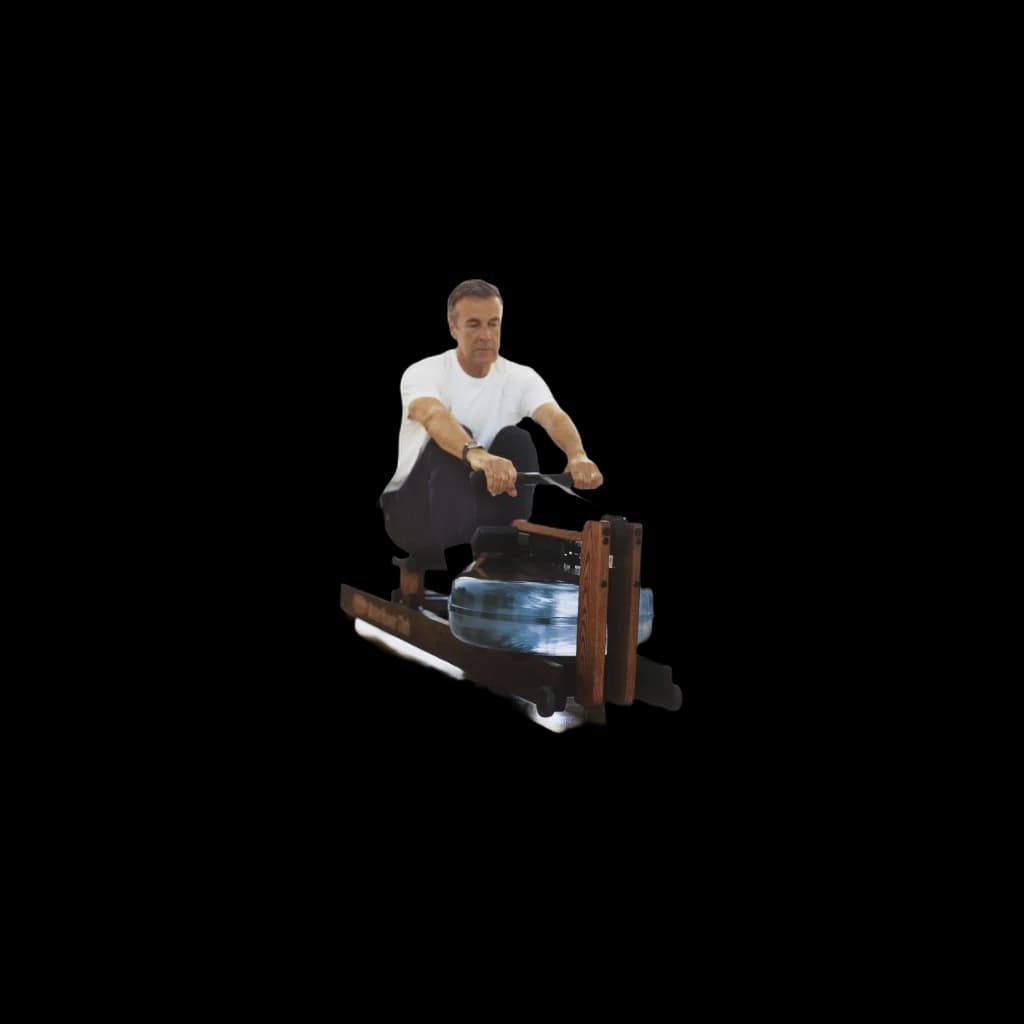
WaterRower Club Rowing Machine
by WaterRowerBuy later
Score
The rower your designer friend will approve of. Real water tank, ash wood frame, genuinely stunning. Stroke feel is smoother than air, tracking is less precise than Concept2.
- Buyers who want their rower to look like furniture in a living room
- Rowers who prefer the smoother feel of water resistance over air
- Tall users up to 6 foot 5 who fit the longer ash hardwood rail
- Households where quiet, wave-like resistance noise is preferred over fan whoosh
- You need PM5-level data precision for serious competitive training
- You will not maintain the water tank with chlorine tabs to prevent algae
- You want the absolute cheapest rower with the longest service life
- You have hardwood floors and worry about water sloshing during transport
About 84 inches long by 22 inches wide in use. Stores vertically at 84 inches tall by 22 inches wide, occupying about 22 by 22 inches of floor footprint. 8-foot ceiling required for vertical storage.
moderate — Plan 60 to 90 minutes. The ash frame is pre-finished and the tank ships dry, so you fill it with the provided pump after assembly. Two-person job for tipping the assembled machine upright.
A premium rower is a furniture-grade purchase that should follow your decision on strength setup, since it commits visible floor space in a living room and competes with seating for the room budget.
Strengths
- ↑Beautiful hand-finished wood
- ↑Water resistance is quiet & smooth
- ↑Stores vertically
Weaknesses
- ↓Less precise tracking than PM5
- ↓Water tank can grow algae without tabs
- ↓More expensive than Concept2
What owners actually complain about
Synthesized from owner reviews and community threads. Paraphrased, not quoted.
- Water tank grows algae within months if chlorine tabs are not added every 6 months
- Monitor is more basic than the Concept2 PM5 and does not produce comparable watts data
- Wood frame can creak with humidity swings, particularly in unheated basements
- Heavier than a Concept2 when filled with water, making moving between rooms awkward
- Price premium over Concept2 is for aesthetics, not training quality, which surprises some buyers
Buyer sentiment
Based on 245 user mentionsBuyers praise quality, workout, assembly and quiet operation. Mixed feedback on value for money.
Verdict: The rower that looks like furniture and feels like rowing on water — the price premium over a Concept2 buys aesthetics and feel, not performance.
Specs that matter
| Spec | Value |
|---|---|
| Frame | Hand-finished ash hardwood |
| Resistance | Polycarbonate water tank, ~4.5 gal |
| Monitor | S4 (distance, time, SPM, intensity, HR; calculated watts) |
| Storage | 84 in tall vertical, ~22 x 22 in footprint |
| Fits | Tall users up to 6'5" |
| Price | ~$1,200–1,500 (vs ~$990 Concept2 RowErg) |
What you get
- Furniture-grade looks — belongs in a living room
- Flowing water feel — softer recovery phase than air
- Quieter through walls — lower-pitched wave sound
What you give up
- Price + data — premium over Concept2; S4 lacks standardized watts for benchmarking
- Maintenance — chlorine tablets every 6 months or risk algae
Buy it if you want your rower to look like furniture and have space to display it. Skip it if you want to benchmark 2K splits — get the Concept2.
Owners who add chlorine every 6 months report clear water indefinitely; those who skip it get cloudy or green water within a year.
Full specs
- Resistance Type
- Water
- Frame
- Ash hardwood
- Stores
- Vertically
Common questions
Is the WaterRower quieter than a Concept2?
Yes, the water tank produces a softer wave-like sound versus the Concept2 fan whoosh. Both register similar overall decibels at hard strokes, but the WaterRower sound is lower-pitched and tends to carry less through walls. Apartment dwellers still report it is audible to downstairs neighbors at hard splits.
Do I need to add anything to the water?
Yes, the included chlorine tablets should go in every 6 months to prevent algae and bacterial growth. Owners who skip this report cloudy or green water within a year. Tap water is fine; distilled is unnecessary.
How does training data compare to Concept2?
The S4 monitor on the WaterRower is functional but less precise than the PM5. Strokes per minute, distance, and time are all tracked, but the calorie and watts calculations are derivative rather than measured. Competitive rowers prefer the Concept2 for this reason.
Can the wood frame handle a basement environment?
Owners in dehumidified basements report no issues over many years. Damp basements with humidity above 70 percent can cause the ash to creak or develop minor splits at joints. A dehumidifier addresses this completely.
How does the stroke feel compared to a Concept2?
The water resistance scales linearly with effort, similar to air, but the recovery feels smoother and more flowing. Owners describe it as the closest indoor approximation of rowing on water. Concept2 feels more mechanical; WaterRower feels more organic.
Sources & references
- ResearchACSM principles of rowing-based conditioning— ACSM
- CommunityWaterRower vs Concept2 long-term owner discussion— r/Rowing
- Independent reviewWaterRower Club review and durability notes— Garage Gym Reviews
- Independent reviewWirecutter best rowing machines coverage— Wirecutter
- ResearchNIH on rowing for cardiovascular and joint health— NIH
Full buying guide
Best Rowing Machines for Home Use in 2026
Read the full ranking →Other rowing machines we rate
Ranked alternatives from the same category, with our score and the current price.
The default answer for 40+ years. PM5 monitor, air resistance, 20-year service life. The only rower you see in every CrossFit box, college crew, and Olympic training center.
The premium guided experience. Magnetic resistance, 22" HD touchscreen, filmed-on-water workouts. Worth it if you'll use the classes — the content is the product.
Every other rower ranked here is a four-figure machine, which left the category with nothing to point a first-time buyer at. This is that machine: a dual-rail magnetic rower with sixteen resistance levels, a 45.7-inch slide rail and a 300 lb frame rating, at roughly a fifth of what the top of this page costs. Magnetic resistance does not load harder the faster you pull, so it will never feel like a RowErg and it cannot give you a comparable split — but it is quiet enough for an apartment, it stores on end, and the stroke is smooth. Treat it as the honest entry point, not as a cheaper Concept2.
Game-ified rowing with a water-resistance base. Workouts feel like boat races against AI opponents. Fun for people who hate structured classes.
NordicTrack RW900
The class-driven rower for the iFIT ecosystem. 22" rotating touchscreen, magnetic + air resistance, trainer-controlled drag. The Hydrow alternative if you already pay for iFIT.