 Best Budget
Rank #7 in Adjustable Dumbbells
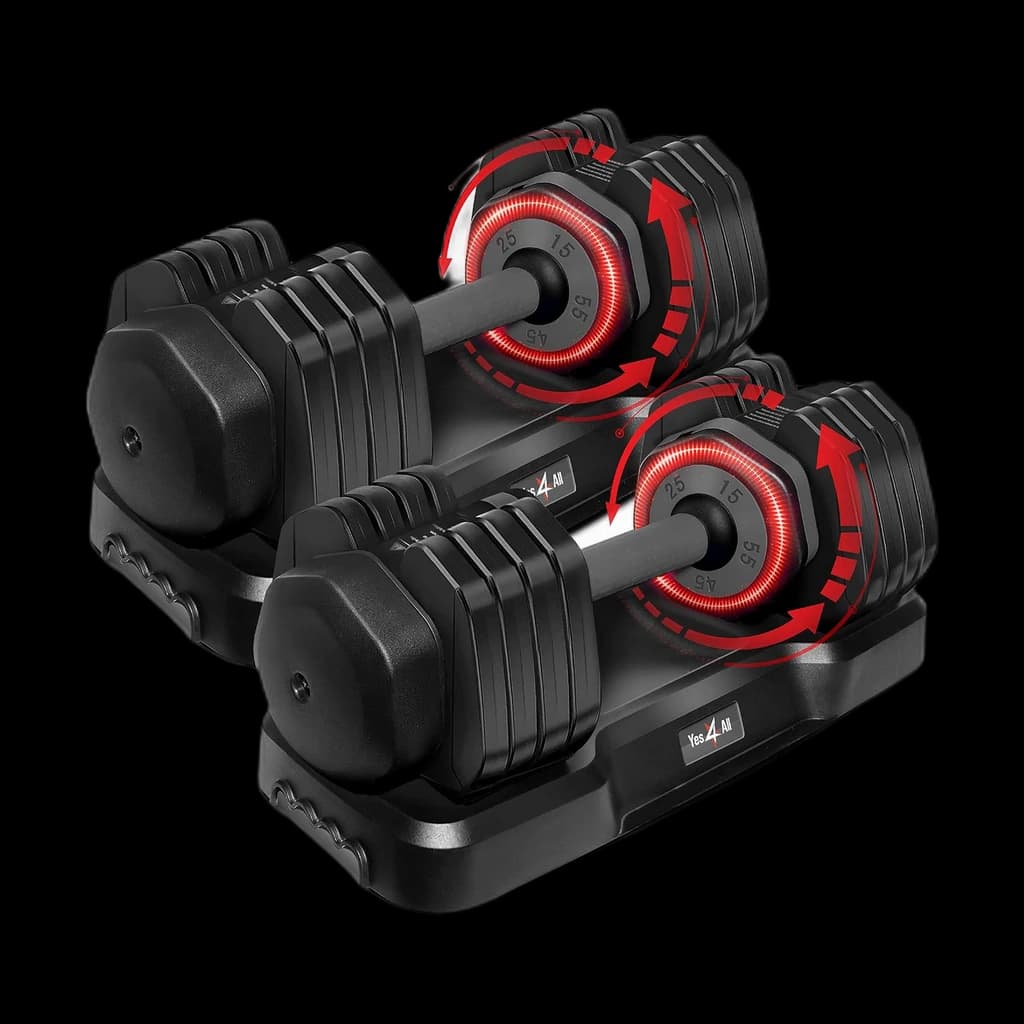
Yes4All Adjustable Dumbbells
by Yes4All
Score
Old-school screw-collar adjustable dumbbells. Slow to change, but indestructible cast iron, infinitely customizable, and under $100 for 50 lb total. The 'forever' budget pick.
- Budget-focused home lifters who want indestructible cast iron at the lowest possible price and are willing to accept slow screw-collar weight changes. Best for someone who already does longer rest periods between sets and is not running tempo-based circuits.
- You do circuit training where weight changes need to happen in seconds, you want a clean modern look in your home gym, or you need quiet operation in a shared-space apartment.
Storage takes about 24" x 18" of shelf or floor space for the plate inventory. A simple plate rack or shelf protects the floor from rust and keeps plates organized.
easy — No real assembly. Screw the collars onto the handles, slide the plates on, tighten the outer collars. Plan 2 minutes per dumbbell per weight change. Some owners apply a thin coat of mineral oil to the cast iron periodically to prevent surface rust, especially in humid garages.
Budget adjustable dumbbells are an early-stage piece for lifters who do not yet need the speed of selector-dial sets. They fit between the barbell purchase and the dedicated bench, giving the lifter unilateral capability at low cost.
Strengths
- ↑Cast Iron
- ↑Cheapest Path To Adjustable
- ↑Infinitely Customizable
Weaknesses
- ↓Screw-Collar Swap Is Slow
- ↓Loud
What owners actually complain about
Synthesized from owner reviews and community threads. Paraphrased, not quoted.
- Slow weight changes, 30 to 60 seconds per dumbbell with 4 collar removals and replates
- Cast iron plates can rust if stored in humid conditions, requires periodic oiling
- Loud when stacking plates or setting dumbbells down, not apartment-friendly
- 1 inch standard plates are less common than Olympic plates, so plate variety is limited
Buyer sentiment
Based on 25 user mentionsBuyers praise Cast Iron and Cheapest Path To Adjustable. Some flag Screw-Collar Swap Is Slow.
Verdict: Indestructible cast-iron screw-collar adjustables at the lowest possible price — the right entry point for the budget-constrained lifter who can absorb slow weight changes.
Specs that matter
| Spec | Value |
|---|---|
| Construction | Steel handles, cast iron plates, threaded collars |
| Plate standard | 1-inch (not Olympic-compatible) |
| Weight-change time | 60-90 sec full change |
| Price | Under $100 usable starting inventory |
What you get
- Indestructible — no plastic cradles, dials, or electronics; functions in 50 years with basic care
- Lowest price — 4-6x cheaper than selector-dial sets like Bowflex SelectTech
- Unilateral training — full dumbbell-pair capability the barbell can't replicate
What you give up
- Slow swaps — 60-90 sec to change weight; unworkable for circuits, supersets, or drop sets
- Rust + noise + bulk — needs mineral-oil wipe in humidity, a stall mat for noise, and ~24x18 in storage vs Bowflex's compact footprint
Buy it if budget is your main constraint and you train straight sets with 2-3 min rest. Skip it if you can afford selector-dial sets and value speed, or already own Olympic plates you want to share.
Reasonable path: start with Yes4All for 1-2 years while building the rest of the gym, then upgrade to a selector-dial format when budget allows.
Full specs
- Weight Range
- Up to 200 lb (set dependent)
- Handle Size
- 14"
- Plate Type
- Standard 1"
- Material
- Cast iron
Common questions
Full buying guide
Best Adjustable Dumbbells in 2026
Read the full ranking →Other adjustable dumbbells we rate
Ranked alternatives from the same category, with our score and the current price.
For the 5-90 lb crowd. Pin-based, compact footprint, expandable with add-on kits. Not pretty, but they'll last 30 years.
10-90 lb adjustable single dumbbell — the widest range in the consumer-tier dial category. Same dial mechanism as the 552 but heavier internals and a larger handle. Sold as a single unit (need two for a pair); JHTNA still ships them under the Bowflex name post-Chapter-11.
The premium pick. All-metal construction, compact like a real dumbbell, twist-and-lift adjustment in 1 second. Feels like training, not operating a machine.
The default answer since 2001. 5-52.5 lb range in 2.5 lb increments, dial-adjust mechanism that's been refined for 20+ years. Not sexy — reliable.
Solid mid-range dial-adjust dumbbell. Goes from 5 to 88 lb in one unit with a double safety lock and anti-slip steel handle. Better build than budget competitors at a fair price.