Do You Need a Smart Mirror, or Just a Wall Mirror?
A smart fitness mirror and a plain wall mirror do two different jobs. Which one your home gym needs, the safety glass to look for, and when to skip both.
For most home lifters, a plain wall mirror is enough: it shows your form, costs $60 to $250 once, and never charges a fee. A smart or connected mirror's real product is its class membership, and most of its value vanishes when you cancel. Buy a connected mirror only if you will genuinely use the live or on-demand classes. The spec that actually matters on any gym mirror is the glass: choose tempered or vinyl safety-backed 1/4-inch glass, because a cheap decorative mirror over moving weights is not federally required to be safety glass at all.
How GymScored is paid: Amazon Associates commission plus brand-direct affiliate (Rogue / REP / Titan when approved). No sponsored placements, no paid reviews, no pay-to-rank. Picks are ranked by the Gym Score formula and nothing else. Read the full disclosure.
A plain wall mirror exists to show your form; a smart mirror exists to sell you classes. If you lift on your own program and just want to check technique, a tempered or safety-backed wall mirror does that job once, for life, with no fee. Only buy a connected mirror if you will actually use its classes, because most of its value disappears the day you cancel. And whatever glass you hang over moving weights, make it safety glass, not the cheapest big-box mirror.
Wall mirror vs. smart mirror at a glance
Pick the reflection for form work; pay the premium only for classes you will use.
| Factor | Plain wall mirror | Smart / connected mirror |
|---|---|---|
| Up-front cost | ~$60 to $250 | ~$700 to $2,000+ |
| Ongoing cost | None | Monthly membership |
| Core job | See your form | Stream classes / on-screen coaching |
| Value if you cancel | Unchanged | Drops to a limited screen |
| Best for | Anyone who lifts on their own program | People who attend classes weekly |
The short version
A connected fitness mirror and a plain wall mirror solve two different problems, and most home lifters buy the wrong one. A wall mirror exists so you can see your form. A smart mirror exists to sell you classes. If your goal is to watch your bar path, fix a squat, or check that your shoulders are square, a $60 to $200 wall mirror does that job perfectly and forever. The smart mirror's value is the instruction and the live classes, and those are mostly locked behind a monthly membership.
The decision is not really "mirror vs. mirror." It is "do I want a reflective surface, or do I want a streaming fitness subscription that happens to be shaped like a mirror?" Get that framing right and the rest is easy.
Key takeaways
- A plain wall mirror is enough for form. Seeing your reflection is all a mirror has to do for technique work. No mirror, smart or not, corrects you in real time the way a coach does.
- The smart mirror's real product is the membership. Connected mirrors lose most of their value when you cancel, dropping to a stripped-down screen. That recurring fee, not the glass, is the cost that matters.
- Safety glass is the spec to actually care about. A wall mirror over a workout area should be tempered or safety-backed. A cheap big-box mirror often is neither, and it is not federally required to be.
- What most people get wrong: they pay a connected-mirror premium to "see their form," which a $100 wall mirror already does. You are paying for AI coaching and classes, so only buy one if you will use those.
What each one is actually for
| Plain wall mirror | Smart / connected mirror | |
|---|---|---|
| Core job | See your reflection and form | Stream classes, show on-screen coaching |
| Cost | ~$60 to $250, one time | ~$700 to $2,000+ plus a monthly membership |
| Works if you stop paying | Always | Drops to a limited screen, loses most features |
| Fixes your form | You watch and self-correct | Some give rep counts or cues; not a substitute for a coach |
| Best for | Anyone who lifts and wants to check technique | People who want guided classes and will use them weekly |
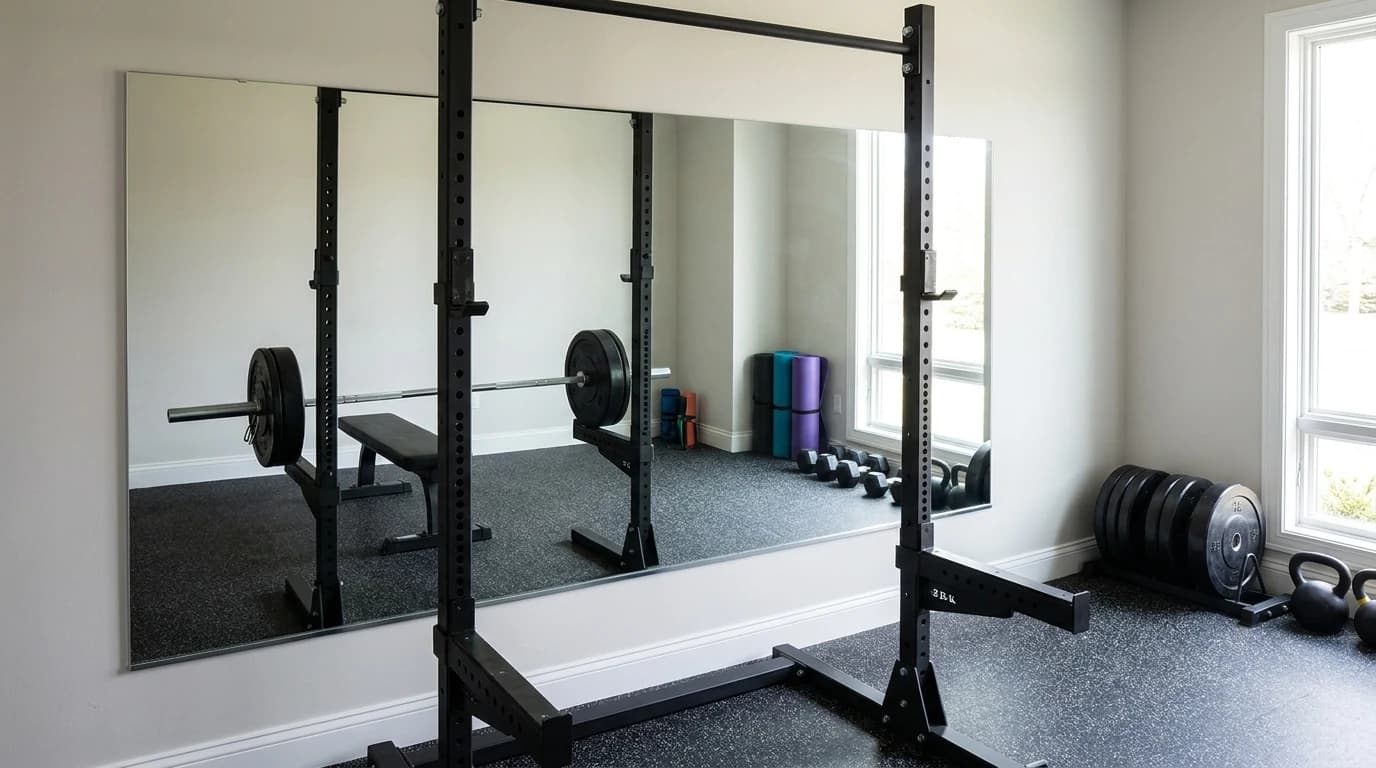
Reading the two columns
If you mostly follow your own program and just want eyes on your movement, the left column wins outright. If you genuinely want a streaming studio on the wall and will show up for classes, the right column can be worth it. The trap is buying the expensive one for the cheap one's job.
We cover the connected options in the smart mirrors roundup, including the Echelon Reflect and Tempo Move. No current smart mirror is sold new on Amazon by its maker, so every connected option there is bought brand-direct. Before you commit to any connected machine, read which home gym machines secretly need a subscription so the ongoing fee is not a surprise.
What a mirror does and does not do for form
Form work in front of a mirror is real and useful, but its limits are worth stating plainly.
What a mirror genuinely gives you:
- Live visual feedback from the front, while you are moving.
- A read on whether your knees cave or your shoulders sit level.
- A view of whether the bar travels straight.
What a mirror cannot do, at any price:
- Show you the side view. Most lifting faults (back rounding on a deadlift, hips shooting up on a squat) are easiest to see from the side, which a front-facing mirror hides. A phone propped on a tripod recording from the side beats any mirror for this.
- Tell you when you are wrong. A mirror is passive. You still have to know what good looks like. A smart mirror with rep counting adds cues, but even those are not a coach.
- Help during heavy effort. On a hard set you should be looking at a fixed point and bracing, not studying your reflection. Mirrors help most while you are learning a pattern at light load, less so under maximal strain.
Worth knowing: a mirror is a learning aid, not a correction system. That is true of the $100 one and the $1,500 one. The expensive glass does not see your form better.
The spec that actually matters: safety glass
This is the part big-box shoppers skip, and it is the one with a real injury risk. A large mirror mounted over an area where you swing kettlebells or drop dumbbells can be hit. What happens when it breaks depends entirely on the glass.
Two things make a gym mirror safer
- Tempered glass is roughly four times stronger than ordinary annealed glass and, when it does break, fractures into small rounded fragments instead of long shards.
- Safety backing is a vinyl film bonded to the back of the mirror that holds the pieces together if the glass shatters, so they do not scatter across the floor.
The standard that does not cover you
Here is the catch most people miss. The U.S. federal safety-glazing standard, 16 CFR Part 1201, only requires impact-resistant glazing in specific architectural products: storm doors, doors, bathtub and shower enclosures, and sliding patio doors. A standalone wall-mounted mirror is not on that list, so a cheap decorative mirror is not legally required to be safety glass at all.
The relevant voluntary standard for safety glazing, ANSI Z97.1, does cover mirror glazing and tests how it behaves when broken, which is why purpose-built gym mirrors advertise compliance and bargain mirrors stay silent about it.
| Spec | Gym-grade mirror | Typical big-box mirror |
|---|---|---|
| Glass thickness | 1/4 inch (6mm), distortion-free | Often 1/8 inch (3mm), distorts at size |
| Break behavior | Tempered or safety-backed | Usually neither |
| Federally required to be safety glass | No, but built to ANSI Z97.1 | No |
| Distortion across a wide panel | Minimal | Noticeable warping |
The trap: silence about the glass is the answer. A listing that never mentions tempering or safety backing is telling you it has neither. Look for tempered or vinyl safety-backed, 1/4-inch glass — per industry sourcing guides, that is the floor for a commercial fitness mirror, and the safety backing is described as non-negotiable for any space where impact is possible.
So which should you buy?
Three clean cases
- Buy a plain wall mirror if you lift on your own program, want to check technique, and do not want a recurring fee. Get tempered or safety-backed 1/4-inch glass, sized so you can see your full body. This is most home lifters.
- Buy a smart mirror if you specifically want live or on-demand classes, will actually attend them weekly, and have budgeted the monthly membership as part of the cost, not an afterthought.
- Buy neither if your form problem is really a side-view problem. A phone on a cheap tripod recording each working set, then reviewing it, beats both mirrors for catching deadlift and squat faults.
The clean rule: pay for the mirror's reflection, not its software, unless you will genuinely use the software. And whatever you mount over moving weights, make it safety glass.
Sources
Frequently Asked Questions
Do you need a special mirror for a home gym, or is any mirror fine?+
Any reflective mirror will show your form, but the spec that matters for safety is the glass. Over an area where you swing or drop weights, choose tempered or vinyl safety-backed 1/4-inch glass so it fractures into small fragments or holds shards together if it breaks. A standalone wall mirror is not covered by the federal architectural glazing standard (16 CFR 1201), so a cheap decorative mirror is not required to be safety glass. That is the main reason gym-grade mirrors cost more than big-box ones.
Does a smart mirror actually fix your form better than a regular mirror?+
Not really. Both show you your reflection so you can self-correct. Some smart mirrors add rep counts or on-screen cues, but those are not a substitute for a coach, and they do not see your form better than plain glass. You are paying the connected-mirror premium for classes and instruction, not for a clearer reflection. If form is your only goal, a wall mirror, or a phone recording you from the side, does the job for far less.
What happens to a smart mirror if you stop paying the membership?+
It drops to a stripped-down state and loses most of what made it worth buying: live and on-demand classes, guided programs, and most metrics. The hardware keeps working as a screen, but the experience you paid the premium for goes away. That recurring fee, not the glass, is the real cost of a connected mirror, so budget it as part of the purchase rather than an afterthought.
What is the best way to actually check my lifting form at home?+
Use a phone on a cheap tripod to record each working set from the side, then review it. Most common faults, like rounding on a deadlift or hips rising too fast on a squat, are easiest to see from the side, which a front-facing wall mirror hides. A mirror is a good learning aid for front-view cues at light load, but a side-view video beats any mirror, smart or plain, for catching the faults that cause injuries.
Sources & Research
Your next step
Ready to choose a mirror?
Related reviews
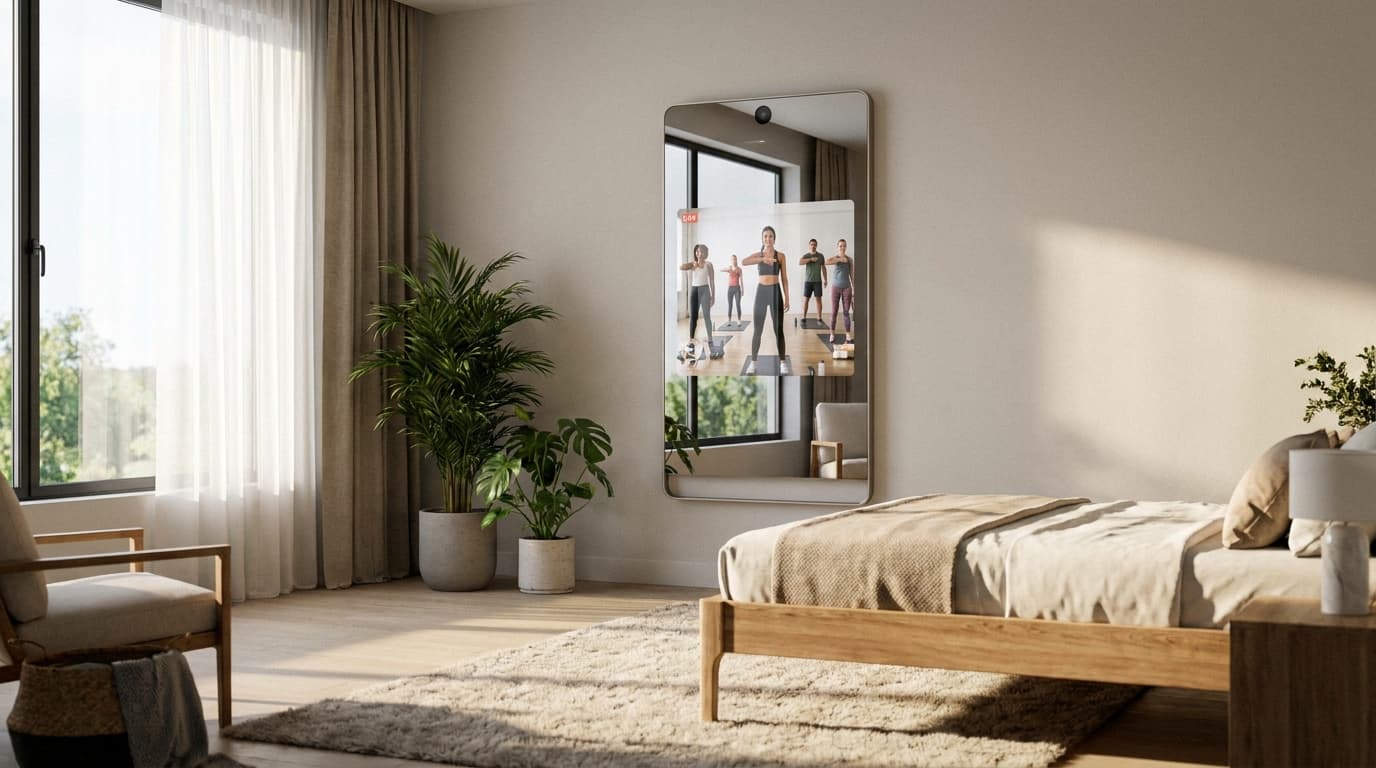
Best Smart Mirrors for Home Workouts in 2026: Tempo Wins
Tempo Move is the best smart mirror for strength; the Lululemon Studio Mirror is discontinued. Three mirrors scored on hardware, buyability and value.
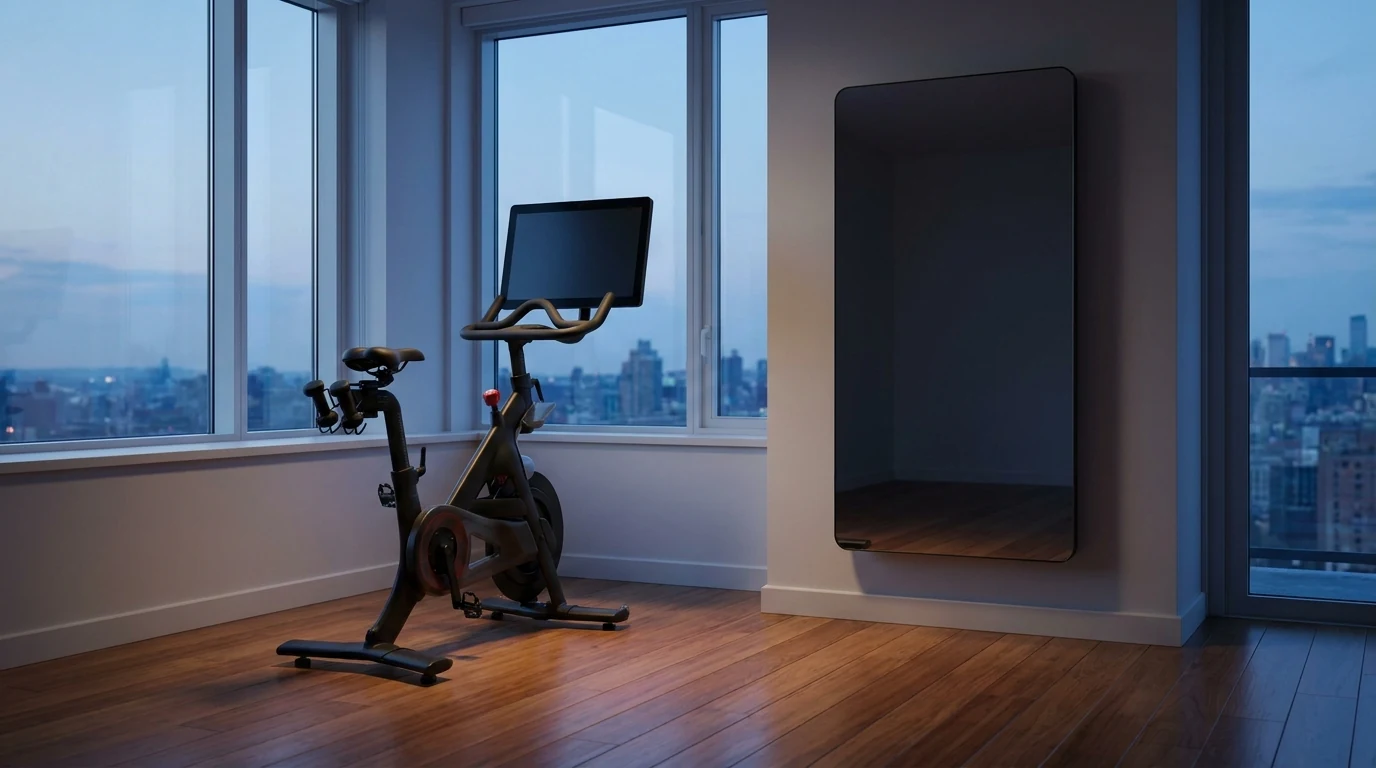
Which Home Gym Machines Secretly Need a Subscription?
Some home gym machines work forever without a fee; others lose their best features the day you cancel the subscription. What you own when you stop paying.
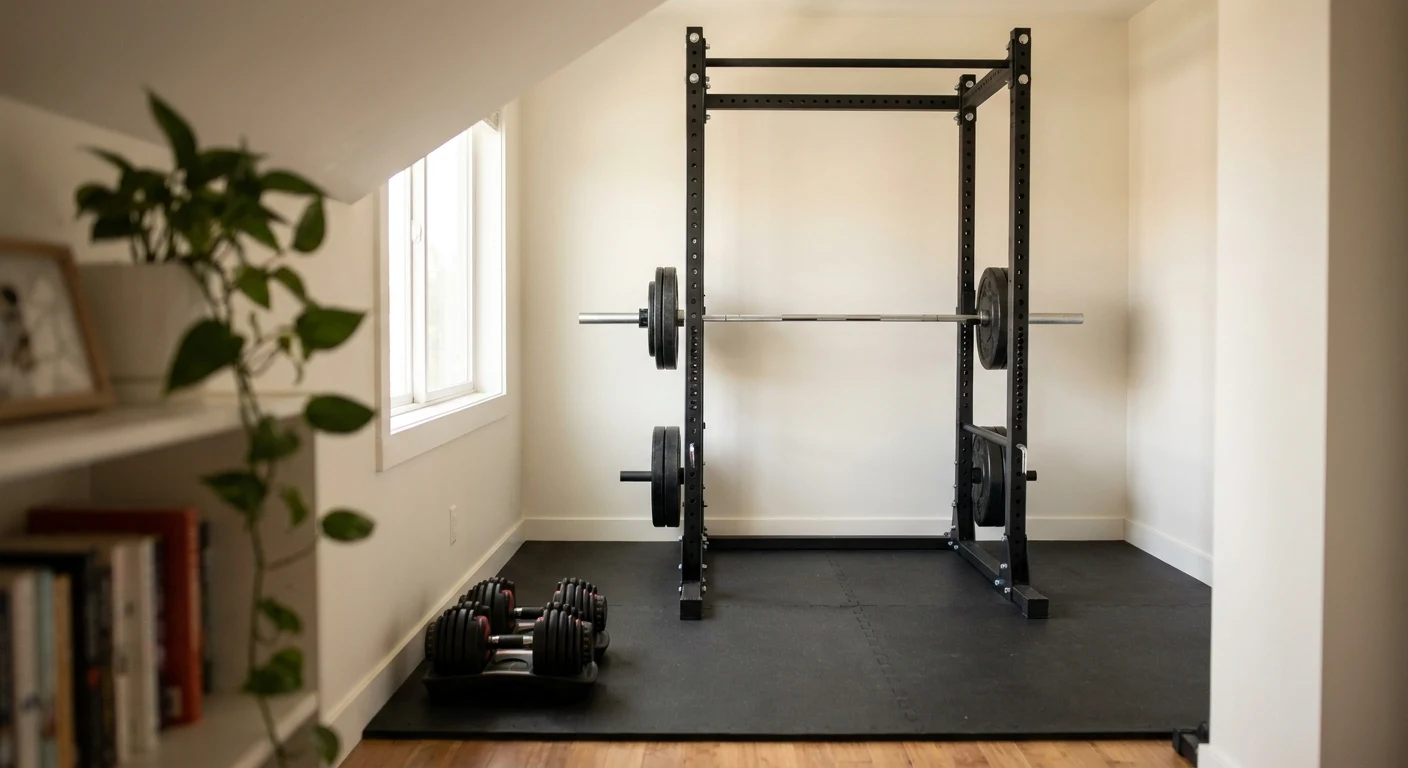
How to Plan a Home Gym in a Small Space (Without Wasting Money)
Plan a small-space home gym goal-first: real equipment footprints, ceiling-height math, the buy order that avoids waste, and what beginners over-buy.
Hilly Shore Labs
Editorial teamThe independent product research team behind GymScored. Every recommendation is researched, never hands-on tested — recommendations draw on manufacturer specifications and available published research. Category order is editorial; the Gym Score is a separate comparison aid.
170 listed products across 26 home gym categories. Scores use category criteria, value and owner-rating inputs; missing evidence limits what a score can tell you.
See the scoring methodology and who we are.
Affiliate disclosure: GymScored is a participant in the Amazon Services LLC Associates Program. We earn from qualifying purchases at no extra cost to you. Full disclosure →