How to Plan a Home Gym in a Small Space (Without Wasting Money)
Plan a small-space home gym goal-first: real equipment footprints, ceiling-height math, the buy order that avoids waste, and what beginners over-buy.
Pick your training goal first, then measure ceiling clearance, not just floor footprint. Buy in order: rack + bar + plates, then a bench, then one cardio piece, accessories last. A 6 × 8 ft corner fits a rack, barbell and plates if the bar runs along the 8-ft wall.
How GymScored is paid: Amazon Associates commission plus brand-direct affiliate (Rogue / REP / Titan when approved). No sponsored placements, no paid reviews, no pay-to-rank. Picks are ranked by the Gym Score formula and nothing else. Read the full disclosure.
Decide your goal first, then measure clearance — not just footprint. Buy in order: rack and bar, then bench, then one cardio piece, accessories last. A 6 × 8 ft corner holds a full strength setup if your ceiling clears the rack. Skip the screen; your phone is the screen.
How much space common equipment actually needs
Dimensions from manufacturer spec sheets and manuals. Clearance, not footprint, is usually the constraint.
| Equipment | Footprint (L x W) | Height / clearance | Source |
|---|---|---|---|
| Power rack (Rogue Bolt-Together R-3) | 53" x 34" (24" depth) | 90 3/8" tall; pull-up bar at 7'6"; must be bolted down | Rogue |
| Rower (Concept2 RowErg) | 96" x 24" | 9 ft x 4 ft in use; separates into two pieces | Concept2 |
| Air bike (Rogue Echo Bike) | 55" x 29.5" | 52.25" tall; minimal overhead | Rogue |
| Treadmill (NordicTrack 1750) | 77.3" x 37" | 59.5" tall; 8 ft behind + 2 ft each side | NordicTrack |
TL;DR — plan before you buy
- Pick your goal first, then the equipment list — not the other way around. The CDC's adult target is 150 minutes of moderate activity a week plus muscle-strengthening on 2+ days. A rack and a barbell cover the strength half; one cardio piece covers the rest. Most small-space waste comes from buying for a goal you don't actually have.
- Measure clearance, not just footprint. A power rack like Rogue's Bolt-Together R-3 takes 53 × 34 inches of floor, but it stands 90 3/8 inches tall with the pull-up bar at 7 ft 6 in. Low ceilings, not floor space, are what kill most garage and basement builds.
- Buy in order: rack + bar + plates → bench → one cardio piece → accessories. This sequence gets you to full compound lifts on day one and avoids the classic over-buy.
- One multi-use piece beats three single-use ones in a tight room. Adjustable dumbbells, a folding rack, and a rower that separates for storage do the work of a much bigger gym.
- Run your exact room through the free GymScored planner — it places real equipment into your square footage and flags clearance problems before you spend a dollar.
The honest baseline: a 6 × 8 ft corner can hold a rack, a 7-ft barbell and plates if the bar runs along the 8-ft wall. You do not need a spare room. You need a plan and a tape measure.
Step 1: Decide what you're actually training for
Before any tape measure comes out, answer one question: strength, cardio, or general health? It changes everything downstream.
The CDC's adult guidelines are the cleanest target to design against: 150 minutes of moderate-intensity aerobic activity per week (or 75 minutes vigorous), plus muscle-strengthening on 2 or more days. That's the whole spec. A barbell and a rack satisfy the strength half. A single cardio machine — or even just a jump rope and the stairs — satisfies the rest.
What this means for a small room: you almost never need both a full strength rig and a big cardio machine to hit the guideline. People who buy both, then a cable stack, then a vibration plate, end up with a cluttered room and a machine that sits idle. Pick the half you'll actually use and build it well. If a barbell doesn't suit the room, a pair of adjustable dumbbells and a bench is a complete strength setup too.
Step 2: Do the square-footage math (with real numbers)
Equipment footprints are smaller than people fear. Clearance is the number that matters. Here are dimensions pulled straight from manufacturer spec sheets — not estimates.
| Equipment | Footprint | Height / clearance note | Source |
|---|---|---|---|
| Power rack (Rogue Bolt-Together R-3, 24-in depth) | 53" × 34" | 90 3/8" tall; pull-up bar at 7'6"; must be bolted to the floor | Rogue |
| Rower (Concept2 RowErg) | 96" × 24" | Needs 9 ft × 4 ft with clearance for use; separates into two pieces | Concept2 |
| Air bike (Rogue Echo Bike) | 55" × 29.5" | 52.25" tall; minimal overhead | Rogue |
| Treadmill (NordicTrack Commercial 1750) | 77.3" × 37" (folds to 44.2" long) | 59.5" tall; 8 ft behind and 2 ft each side in use | NordicTrack, manual |
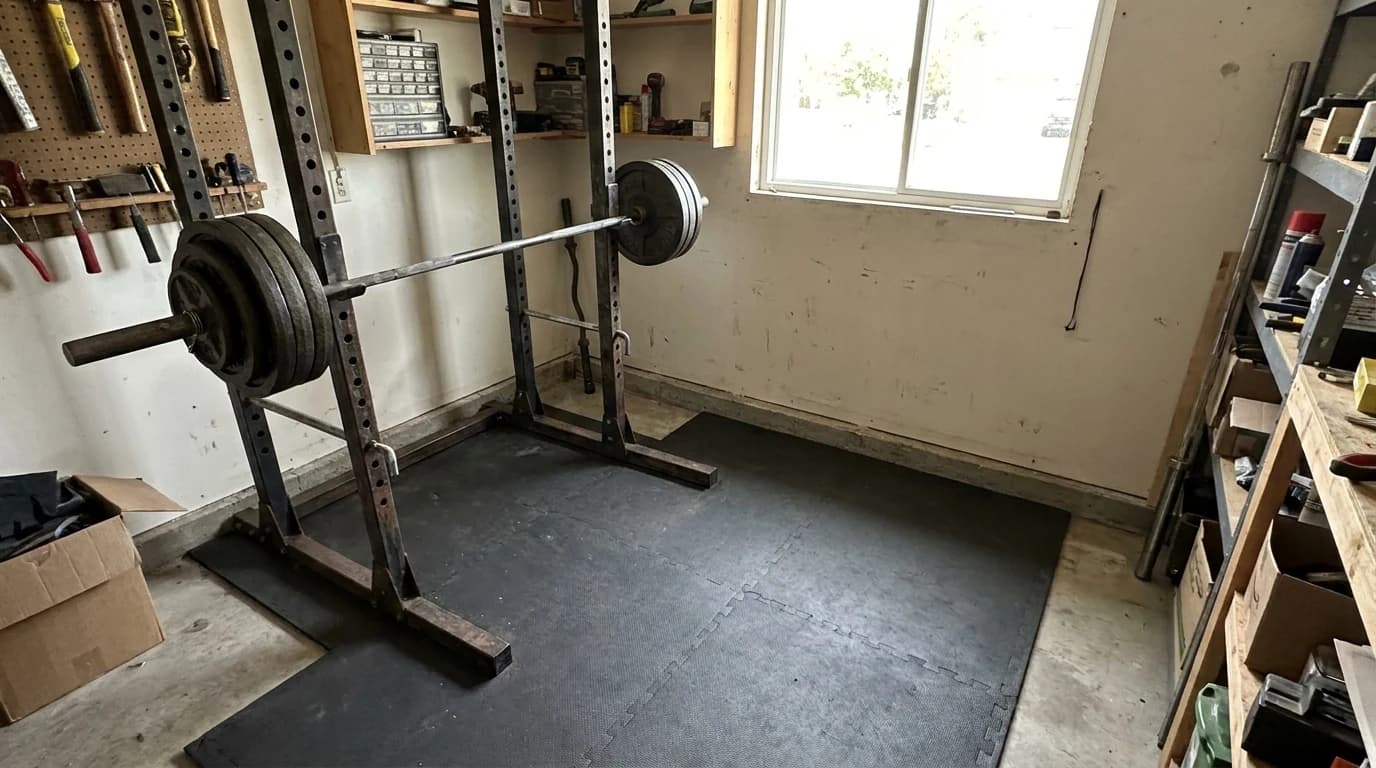
A rack's floor footprint (~12 sq ft) is small. The constraint is the 90-inch height plus pressing clearance. Measure your bar's overhead path before you buy.
The rower is the sneaky space hog in use. 96 inches long means it wants a 9-foot lane — but it separates into two pieces for storage, 25 × 33 × 54 inches with standard legs. Don't stand the assembled machine on end; Concept2 warns it can tip over and damage the frame. Our RowErg dimensions and storage guide has the full numbers.
Treadmills need more than their footprint. NordicTrack's US manual for the Commercial 1750 calls for 8 feet behind the belt and 2 feet on each side while running; the folded size is for storage only. Our home treadmill guide covers the electrical side too.
What most people get wrong: they plan around the footprint on the product page and forget the active envelope. A rack at 53 × 34 inches sounds like it fits a closet — until you rack a 7-foot barbell (it overhangs the uprights on each side) and try to press overhead.
Ceiling height is the silent dealbreaker
Do the math from the bar up. The R-3's pull-up bar sits at 7 ft 6 in, and at the top of a pull-up your head is well above the bar — so on a standard 8-ft ceiling most lifters will hit it. Standing overhead presses need your full reach plus the bar. A quick test: stand where you'll lift and reach a broomstick straight overhead. If it touches the ceiling, design around it: landmine presses, seated pressing, and a doorway or wall-mounted pull-up bar instead of the rack's.
Step 3: The buy-order that avoids waste
Each tier is a usable gym on its own
Spend in this sequence. Each tier is usable on its own, so you're never stuck with half a gym.
- Rack + barbell + plates. This is the foundation. Squat, bench, press, deadlift, rows — the entire compound-lift menu lives here. Start your build at the power racks and barbells & plates categories.
- An adjustable bench. Unlocks pressing variations and turns the rack into a full strength station. See weight benches.
- One cardio piece — and only one. A rower, air bike, or treadmill, chosen by what you'll actually do. Rowers and air bikes win on small-space storage.
- Accessories last. Bands, a pull-up bar, kettlebells, flooring. These are cheap to add later and easy to over-buy early.
Don't buy a screen. Mirrors and tablet-on-a-machine "smart" systems are the highest-markup, lowest-need item in a small home gym. Your phone runs most fitness apps and props on a cheap stand.
Step 4: What beginners over-buy
From scanning what people regret in home-gym communities, the pattern is consistent.
What gets bought too early:
- A second cardio machine that becomes a clothes rack within a month.
- A cable/functional trainer before they've outgrown a rack and bands — and the cable movements need far more room than the frame (see how much space a functional trainer needs).
- Heavy fixed dumbbells, because a full rack of pairs is a wall of steel.
- Premium flooring wall-to-wall.
What does the same job in less space:
- Bands and the rack you already own, until you genuinely outgrow them.
- One pair of adjustables, which replaces a whole rack of fixed pairs in the space of one. See adjustable dumbbells.
- A few 3/4"-thick stall mats under the rack and platform, for a fraction of the cost.
Step 5: Multi-use picks for a small footprint
In a tight room, every piece should earn its square footage twice:
- Adjustable dumbbells — one pair, a full range of weights, the footprint of a shoebox.
- A folding wall-mounted rack — folds against the wall when not in use and reclaims the floor between sessions. It still needs the same ceiling height to use.
- A rower or air bike — the rower separates for storage and the Echo Bike takes about 11 square feet, while covering all your conditioning.
- A barbell + plates + adjustable bench — the single most space-efficient strength package that exists.
Step 6: Noise, flooring, and the landlord problem
What keeps the build alive in a rental
If you rent or share walls, these four calls matter most:
- Flooring does double duty: 3/4" rubber stall mats (or interlocking tiles) protect the floor, deaden dropped-weight noise, and steady the rack. Lay them under the rack and the lifting zone, not the whole room. Browse gym flooring.
- Don't drop bumpers in an apartment. Even on mats, deadlift drops transmit through floors and ceilings. Lower the bar under control, or use lighter technique work — your downstairs neighbor will notice the difference more than your numbers will.
- Bolt-down vs. free-standing: some racks must be anchored — Rogue says the Bolt-Together R-3 must be bolted to the floor before use, which most leases won't allow. Renters should buy a rack the maker sells as free-standing, or skip the rack for adjustables and a bench.
- Cardio noise varies wildly: air bikes are loud (it's a giant fan), magnetic rowers are quiet. If shared walls are a concern, that alone can decide your cardio piece.
Plan it against your actual room
The fastest way to avoid every mistake above is to lay your equipment into your real dimensions before buying. The GymScored planner does exactly that — pick your goal, enter your space, and it returns a layout to check against each model's manual.
We research rather than test: dimensions come from Rogue, Concept2 and NordicTrack spec pages and manuals checked October 15, 2026.
Sources
- CDC — Physical Activity Guidelines for Adults
- Concept2 — RowErg specifications
- Concept2 — moving and storing machines safely
- Rogue Fitness — Bolt-Together R-3 dimensions and anchoring
- Rogue Fitness — Echo Bike specifications
- NordicTrack — Commercial 1750 dimensions
- NordicTrack — Commercial 1750 owner's manual (NTL15809.0)
Frequently Asked Questions
How small a space can a real home gym fit in?+
A rack's floor footprint is only about 12 sq ft, so a 6 × 8 ft corner can hold a rack, a 7-ft barbell and plates if the bar runs along the 8-ft wall. The real constraint is ceiling height, so measure it against the rack before you buy.
What ceiling height do I need for a power rack?+
Start from the rack's height and the pull-up bar. Rogue's Bolt-Together R-3 stands 90 3/8 inches with the bar at 7 ft 6 in, and your head rises well above the bar at the top of a pull-up, so on an 8-ft ceiling most lifters will hit it. Under that, use landmine and seated pressing and a separate pull-up bar.
What should I buy first for a small home gym?+
Rack, barbell, and plates first - that single package covers every compound lift. Add an adjustable bench second, one cardio piece third, and accessories last. This order is usable at every stage so you never own half a gym.
What do beginners waste money on?+
A second cardio machine that becomes a clothes rack, a cable trainer bought too early, heavy fixed dumbbells instead of one adjustable pair, and wall-to-wall premium flooring when a few stall mats under the rack would do.
Can I store a Concept2 RowErg upright?+
Not assembled. Concept2 warns it can tip over and damage the frame. Separate the monorail from the front end instead; with standard legs the two pieces take 25 by 33 by 54 inches.
Can I have a home gym in an apartment?+
Yes, with the right choices: a rack the maker sells as free-standing (some, like the Bolt-Together R-3, must be bolted down), 3/4 inch rubber mats under the lifting zone, controlled lowering instead of dropping bumpers, and a quiet cardio piece like a magnetic rower over a loud air bike.
Sources & Research
- CDC — Physical Activity Guidelines for Adultsauthority
- Concept2 — RowErg specificationsmanufacturer
- Concept2 — Moving and storing machinesmanufacturer
- Rogue Fitness — Bolt-Together R-3 dimensions and required anchoringmanufacturer
- Rogue Fitness — Echo Bike specificationsmanufacturer
- NordicTrack — Commercial 1750 dimensionsmanufacturer
- NordicTrack — Commercial 1750 owner's manual (US model NTL15809.0)manufacturer
Your next step
Gear that suits a tight footprint.
Related reviews
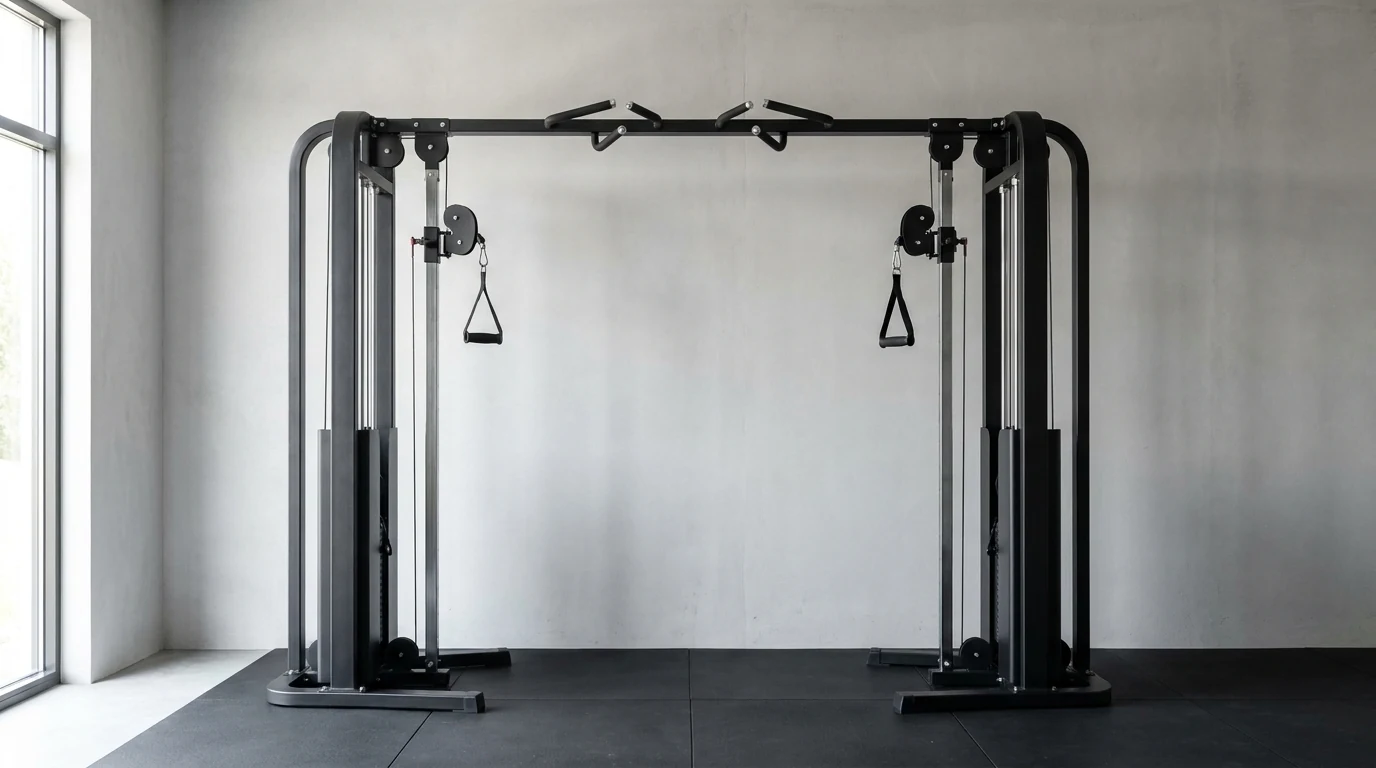
How Much Space Does a Functional Trainer Need?
A functional trainer needs working clearance, not just its footprint: budget an 8x10 ft floor, the cable arc, and ceiling height before you buy.
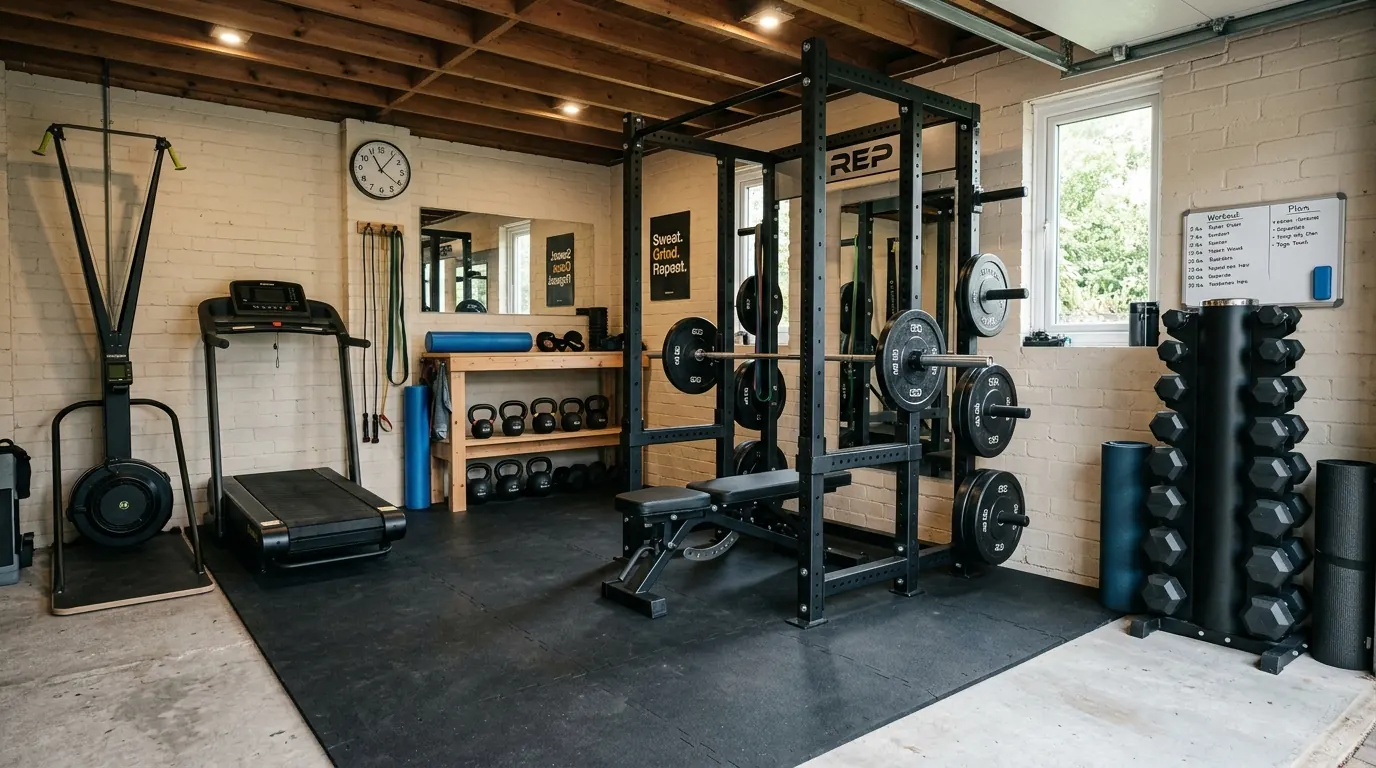
How to Build a Home Gym on Any Budget
Five complete home gym builds at $500, $1,500, $3,500, $7,500, and $15,000 - what to buy first, what to add later, and what to skip at every budget level.
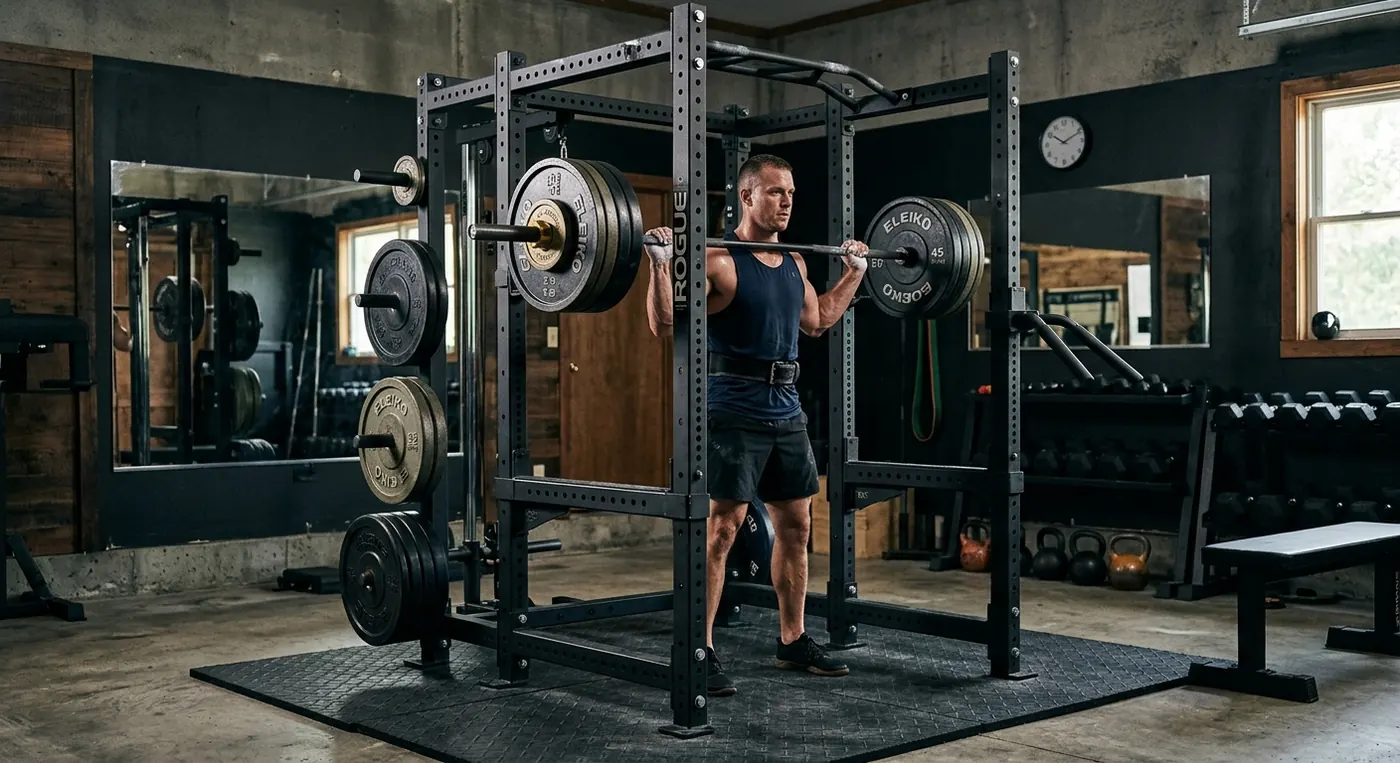
Best Power Racks for a Home Gym in 2026
The Rep PR-4000 is the best home gym power rack of 2026 at under $900. Five racks ranked on build quality and footprint; Rogue R-4 is the lifetime pick.
Hilly Shore Labs
Editorial teamThe independent product research team behind GymScored. Every recommendation is researched, never hands-on tested — recommendations draw on manufacturer specifications and available published research. Category order is editorial; the Gym Score is a separate comparison aid.
170 listed products across 26 home gym categories. Scores use category criteria, value and owner-rating inputs; missing evidence limits what a score can tell you.
See the scoring methodology and who we are.
Affiliate disclosure: GymScored is a participant in the Amazon Services LLC Associates Program. We earn from qualifying purchases at no extra cost to you. Full disclosure →