 Best Value
Rank #1 in Treadmills
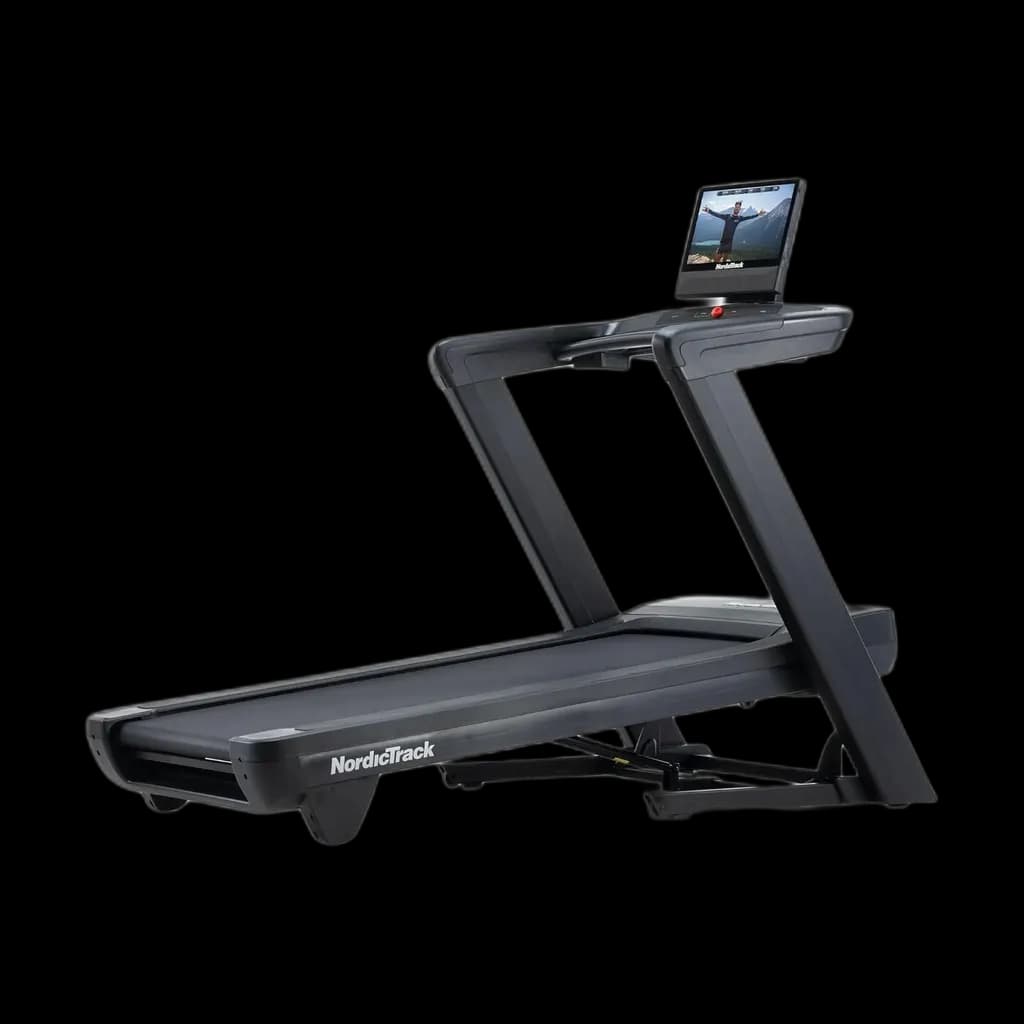
NordicTrack Commercial 1750
by NordicTrackBuy later
Score
A balanced iFIT treadmill for runners: a 16-inch pivoting touchscreen, -3% to 12% incline, 12 mph top speed and a 22 x 60 inch belt on a 4.25 CHP motor, per NordicTrack — and it folds.
- Marathon trainees who need a 60-inch deck for full-stride running
- Households where two or more people run weekly and want shared iFIT profiles
- Hybrid users who want guided incline workouts and follow-along trainer content
- Buyers stepping up from a budget treadmill that bogged down at speed
- You refuse to pay any subscription and want a fully usable machine on day one
- You live in an upstairs apartment with downstairs neighbors and thin floors
- Your only space is under a low 7-foot ceiling and you are over 6 feet tall
- You want a no-tech treadmill with simple manual buttons and a small LCD
NordicTrack lists the footprint at 77.3 inches long by 37 inches wide (59.5 inches tall). Leave at least 24 inches of clear runoff behind the deck, and plan for an 8-foot ceiling for runners above 5 foot 10.
moderate — Two-person job for unboxing because the deck weighs over 200 pounds. Expect 90 to 120 minutes with most fasteners pre-attached; the console arm and shroud are the only real bolt-up steps.
A serious treadmill is the centerpiece of a cardio-first home gym and should follow your decision on strength priorities, since it claims more square footage than any single rack and incline frame combined.
Strengths
- ↑4.25 CHP motor
- ↑22" x 60" belt
- ↑16" pivoting touchscreen
Weaknesses
- ↓Ifit Subscription Near-Required
- ↓Folding Hinge Eventual
What owners actually complain about
Synthesized from owner reviews and community threads. Paraphrased, not quoted.
- iFIT lockouts after subscription lapse remove guided incline and resistance auto-adjust, leaving manual mode functional but stripped down
- Folding hinge develops play after 12 to 24 months of frequent fold and unfold cycles, especially in basements with humidity swings
- Console freezes and stale firmware updates require holding the power button for hard reboots roughly once per month
- Belt slippage under heavier runners above 220 pounds at sustained 8 mph, usually traced to factory belt tension that needs adjusting in the first 90 days
- Cooling fan is underpowered for hour-long incline sessions and most owners report adding a standalone floor fan
Buyer sentiment
Based on 25 user mentionsBuyers praise 3.5 Chp Motor and 60" Deck. Some flag Ifit Subscription Near-Required.
Verdict: The default iFIT treadmill for serious basement/ground-floor runners who'll use iFIT — deepest feature set in its window.
Specs that matter
| Spec | Value |
|---|---|
| Motor | 4.25 CHP |
| Deck | 22 x 60 in |
| Incline | -3% to 12% |
| Screen | 16-inch pivoting touchscreen |
| iFIT | ~$39/mo family plan |
What you get
- 22 x 60 inch belt — full running length
- iFIT auto-adjust — trainers control incline/speed mid-workout
- Wide incline range — downhill to steep hill simulation
What you give up
- Subscription dependency — ~$470/yr; touchscreen is stripped without it
- Folding hinge wear — daily folding develops play within a year
Buy it if you'll run iFIT on a ground floor and want max features for the price. Skip it if you refuse subscriptions (Sole F80) or live above neighbors.
Plan for it: budget the subscription, don't fold daily, and add a floor fan — the stock cooling fan is underpowered for hour-plus sessions.
Full specs
- Motor
- 4.25 CHP (lifetime motor warranty)
- Deck Size
- 22" x 60"
- Top Speed
- 12 mph
- Incline
- -3% to 12%
- Display
- 16" pivoting HD touchscreen
Common questions
Can I use the Commercial 1750 without an iFIT subscription?
Yes, manual mode works without a subscription. You can set speed and incline directly with the side controls. What you lose is the trainer-guided sessions, auto incline and speed adjustment, and the workout library on the touchscreen. Many owners run it subscription-free for a year or more without issue.
Will the Commercial 1750 fit through a standard doorway?
The deck width is 35 inches, which clears most 36-inch interior doorways with the console laid flat. Older homes with 30-inch interior doors require removing the door from its hinges. The console arm detaches if needed but most owners do not need to remove it.
How loud is it for upstairs apartment use?
Owners report it is unsuitable for apartments above neighbors. The motor itself is quiet, but foot strikes carry through floor joists. A 3/4 inch rubber mat plus 1/2 inch interlocking tiles underneath reduces but does not eliminate the issue. Walking at low speed is tolerable; running is not.
Is the motor enough for a 250-pound runner?
NordicTrack rates the current Commercial 1750 at 4.25 CHP with a 400 lb user capacity and a lifetime motor warranty, so a 250 lb runner is well inside the maker rating.
Does the deck require lubrication?
Yes, NordicTrack recommends silicone lubrication every 150 miles or three months, whichever comes first. The deck has a self-lube channel in newer models but owners report manual application extends belt life considerably. Lubricant is widely available for under $15.
Sources & references
- ManufacturerNordicTrack Commercial 1750 — product page and specifications— NordicTrack
- ResearchAmerican College of Sports Medicine physical activity guidelines— ACSM
- CommunityNordicTrack Commercial 1750 long-term owner thread— r/treadmills
- Independent reviewBest treadmills overall coverage— Wirecutter
- ResearchNIH overview of treadmill exercise and cardiovascular outcomes— NIH
Full buying guide
Best Treadmill for Home Runners in 2026
Read the full ranking →Related Treadmills guides
Other treadmills we rate
Ranked alternatives from the same category, with our score and the current price.
NordicTrack's entry T Series runner: a 10-inch tilting touchscreen, 0–12 mph, 0–12% incline, a 20 x 60 inch deck and adjustable SelectFlex cushioning, and it folds. Best for walkers and moderate runners who want iFIT's guided workouts.
iFIT-enabled mid-tier runner. 3.25 CHP motor, 60" deck, 14" touchscreen, 12% incline / 3% decline. The NordicTrack 1750's lower-priced sibling — same iFIT ecosystem, slightly slimmer spec.
Decline training at -5% is the genuinely rare feature here — real downhill work for hilly-race prep. At the $2,999.99 the listing currently asks, though, it is hard to justify against 3.5 CHP rivals at half the money.
The folding-flat treadmill. 10" thick when folded, fits under most beds. 1.75 CHP — walker/light-jogger only — but the form factor is the value here.
Best class content of any treadmill, period. The tradeoff is a smaller deck (59"), 3.0 CHP motor, and $49.99/mo All-Access membership to unlock the whole reason you bought it.