 Best Budget
Rank #3 in Treadmills
NordicTrack T Series 10
by NordicTrackBuy next
Score
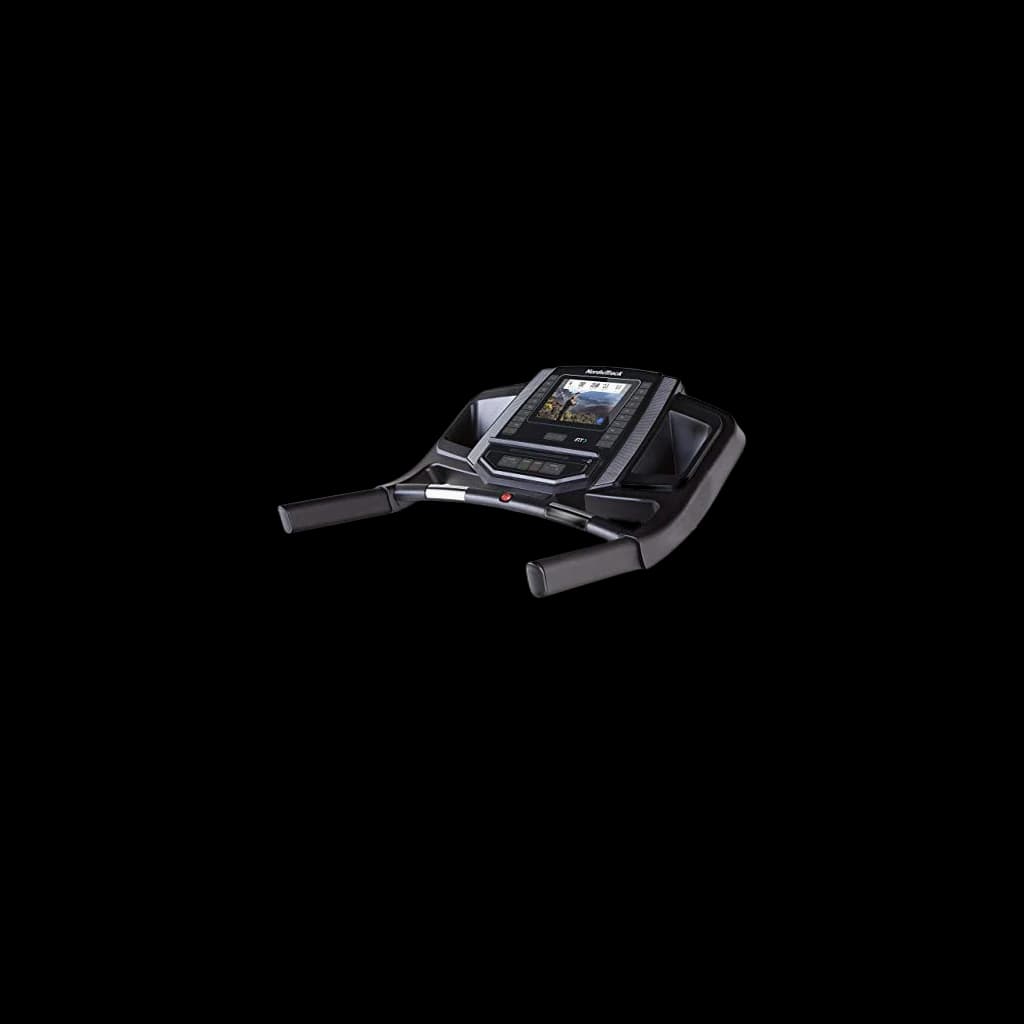
NordicTrack's entry T Series runner: a 10-inch tilting touchscreen, 0–12 mph, 0–12% incline, a 20 x 60 inch deck and adjustable SelectFlex cushioning, and it folds. Best for walkers and moderate runners who want iFIT's guided workouts.
- First-time treadmill buyers running 3 to 5 miles a few times a week
- Casual exercisers who want a real folding treadmill at NordicTrack's entry level
- Walkers and joggers who want iFIT's guided workouts with auto-adjusting speed and incline
- Households that need fold-away storage when not in use
- You run 20-plus miles a week or plan to train for a marathon
- You want decline training (incline runs 0–12%, no decline)
- You want a frame warranty longer than 10 years
- You won't pay for iFIT — auto-adjust, ActivePulse and streaming need the Pro membership
The listing gives 75.1 inches long by 34.3 inches wide (58.4 inches tall). Leave 18 to 24 inches of runoff behind the deck. It folds with assisted lowering; check the folded height against your space.
easy — Most fasteners and the deck are pre-attached. Plan 45 to 60 minutes with a helper for the unboxing and console arm. Single-person assembly is possible but awkward.
An affordable treadmill is a sensible second purchase after dumbbells and a bench, since it covers cardio without claiming as much footprint commitment as a $2,000 machine.
Strengths
- ↑3.0 CHP motor
- ↑20" x 60" deck
- ↑Adjustable SelectFlex cushioning
- ↑Folds with assisted lowering
Weaknesses
- ↓10-year frame warranty (not lifetime)
- ↓Guided features need an iFIT Pro membership
- ↓No decline
What owners actually complain about
Synthesized from owner reviews and community threads. Paraphrased, not quoted.
- Durability draws more negative than positive mentions in owner reviews on the listing
- Assembly experiences are mixed — some owners find it easy, others struggle
- Noise level gets mixed feedback
- 10-year frame warranty is shorter than the lifetime frame coverage some competitors offer
Buyer sentiment
Based on 1,595 user mentionsBuyers praise quality, value for money, workout and ease of use. Mixed feedback on reliability and assembly. Some flag durability.
Verdict: NordicTrack's entry folding treadmill — a full 60-inch deck and a 10-inch touchscreen for casual runners who want iFIT's guided workouts.
Specs that matter
| Spec | Value |
|---|---|
| Motor | 3.0 CHP |
| Deck | 20 x 60 in |
| Speed / incline | 0–12 mph / 0–12% |
| Screen | 10-inch tilting touchscreen |
| Max user weight | 325 lb |
| Warranty | 10-yr frame, 2-yr motor and parts, 1-yr labor |
What you get
- Full-length deck — 60 inches, room for a running stride
- Adjustable cushioning — SelectFlex goes from soft to firm
- Folding frame — assisted lowering, rolls away
What you give up
- iFIT dependency — auto-adjust, ActivePulse and streaming need the Pro membership
- No decline — incline only, 0–12%
Buy it if you run 3–5 miles a few times a week and want guided workouts. Skip it if you are training for a marathon or want decline work — step up to the Commercial 1750.
Full specs
- Display
- 10-inch tilting touchscreen
- Top Speed
- 12 mph
- Incline
- 0–12%
- Frame
- Folding
- Deck
- 20" x 60"
- Motor
- 3.0 CHP
- Max User Weight
- 325 lb
- Warranty
- 10-yr frame, 2-yr motor and parts, 1-yr labor
Common questions
Is the 20 x 60 inch deck long enough for running?
The listing gives a 20 x 60 inch deck, the same 60-inch length as the Sole F80 and the NordicTrack Commercial 1750, so stride length is not the limit for most runners.
What warranty does it carry?
The listing gives 10 years on the frame, 2 years on the motor and parts and 1 year on labor. The Commercial 1750 carries a lifetime motor warranty, and Sole covers the F80's frame and motor for life.
Is the 3.0 CHP motor enough for running?
It is NordicTrack's entry motor size; the listing rates the T Series 10 for speeds up to 12 mph and users up to 325 lb. Heavier daily runners who want more headroom should look at the Commercial 1750's 4.25 CHP motor.
Does it work with running apps?
Through iFIT: the listing says workouts sync to Strava, Garmin Connect and Apple Health via the iFIT app, with an iFIT Pro membership required.
How loud is it for apartment use?
Any treadmill carries foot-strike impact through the floor, so apartment dwellers above neighbors should expect noise at running pace whatever the machine; a dense mat underneath helps. Owner feedback on this model’s noise level is mixed.
Sources & references
- ResearchACSM physical activity guidelines for adults— ACSM
- Independent reviewWirecutter best treadmills coverage— Wirecutter
- ResearchEffects of Exercise to Improve Cardiovascular Health (review)— NIH
Full buying guide
Best Treadmill for Home Runners in 2026
Read the full ranking →Related Treadmills guides
Other treadmills we rate
Ranked alternatives from the same category, with our score and the current price.
A balanced iFIT treadmill for runners: a 16-inch pivoting touchscreen, -3% to 12% incline, 12 mph top speed and a 22 x 60 inch belt on a 4.25 CHP motor, per NordicTrack — and it folds.
iFIT-enabled mid-tier runner. 3.25 CHP motor, 60" deck, 14" touchscreen, 12% incline / 3% decline. The NordicTrack 1750's lower-priced sibling — same iFIT ecosystem, slightly slimmer spec.
Decline training at -5% is the genuinely rare feature here — real downhill work for hilly-race prep. At the $2,999.99 the listing currently asks, though, it is hard to justify against 3.5 CHP rivals at half the money.
The folding-flat treadmill. 10" thick when folded, fits under most beds. 1.75 CHP — walker/light-jogger only — but the form factor is the value here.
Best class content of any treadmill, period. The tradeoff is a smaller deck (59"), 3.0 CHP motor, and $49.99/mo All-Access membership to unlock the whole reason you bought it.