How to Build a Home Gym on Any Budget
Five complete home gym builds at $500, $1,500, $3,500, $7,500, and $15,000 - what to buy first, what to add later, and what to skip at every budget level.
Buy in this order: bar + plates + rack first, bench second, cardio third, accessories last. Skip the screen — your phone runs every fitness app for free.
How GymScored is paid: Amazon Associates commission plus brand-direct affiliate (Rogue / REP / Titan when approved). No sponsored placements, no paid reviews, no pay-to-rank. Picks are ranked by the Gym Score formula and nothing else. Read the full disclosure.
Spend on the rack and the bar before anything else. Add cardio second. Add accessories last. Don't buy a screen — your phone is the screen.
Five home-gym builds, by budget
| Budget tier | What you get | Strength coverage | Cardio coverage |
|---|---|---|---|
| $500 | Adjustable dumbbells + bench + bands + pull-up bar | ~80% upper / ~50% lower | Bands + bodyweight only |
| $1,500 | Budget rack + bar + 300 lb plates + bench + mats | Full compound lifts | None |
| $3,000 | REP PR-4000 + Rogue bar + 400 lb plates + AB-5200 + Schwinn IC4 | Full strength | Bike + bodyweight |
| $5,000 | Rogue R-4 + Rogue bar + 500 lb plates + Echo Bike + Concept2 RowErg + recovery | Full strength | Bike + rower + intervals |
| $10,000+ | Adds specialty bars + cable trainer + cold plunge | Maximum redundancy | Maximum modalities |
TL;DR — should you read this?
- Buy in this order: rack + barbell + plates first, bench second, cardio third, accessories last. Most home-gym regret comes from the order, not the products.
- A complete starter strength setup is achievable at $1,500. A complete strength + cardio + recovery setup is achievable at $3,000-$5,000.
- The single biggest money-saving lever is buying plates and bars used. Plates do not degrade. Bars hold value if not abused.
- Skip the smart mirror. Skip the subscription bike unless you'll actually use the content. Skip every sub-$300 power rack.
What separates good from bad in a home-gym build
The structural pieces — power rack, barbell, plates — are the long-life items. A well-built 11-gauge rack with 3"×3" uprights and a quality 28.5mm power bar will outlast a treadmill by a factor of three. That's where the budget should concentrate.
Accessories, cardio, and "smart" gear are short-life items. Treadmill motors burn out in 5-10 years. Subscription bikes become $2,000 paperweights when the app shuts down. Smart mirrors are a category that didn't survive the post-2022 fitness contraction.
Rule of thumb: put the money where the service life is. Rack, bar and plates are decade-scale purchases. Cardio and electronics are consumables — buy them cheap enough that replacing them isn't a crisis.
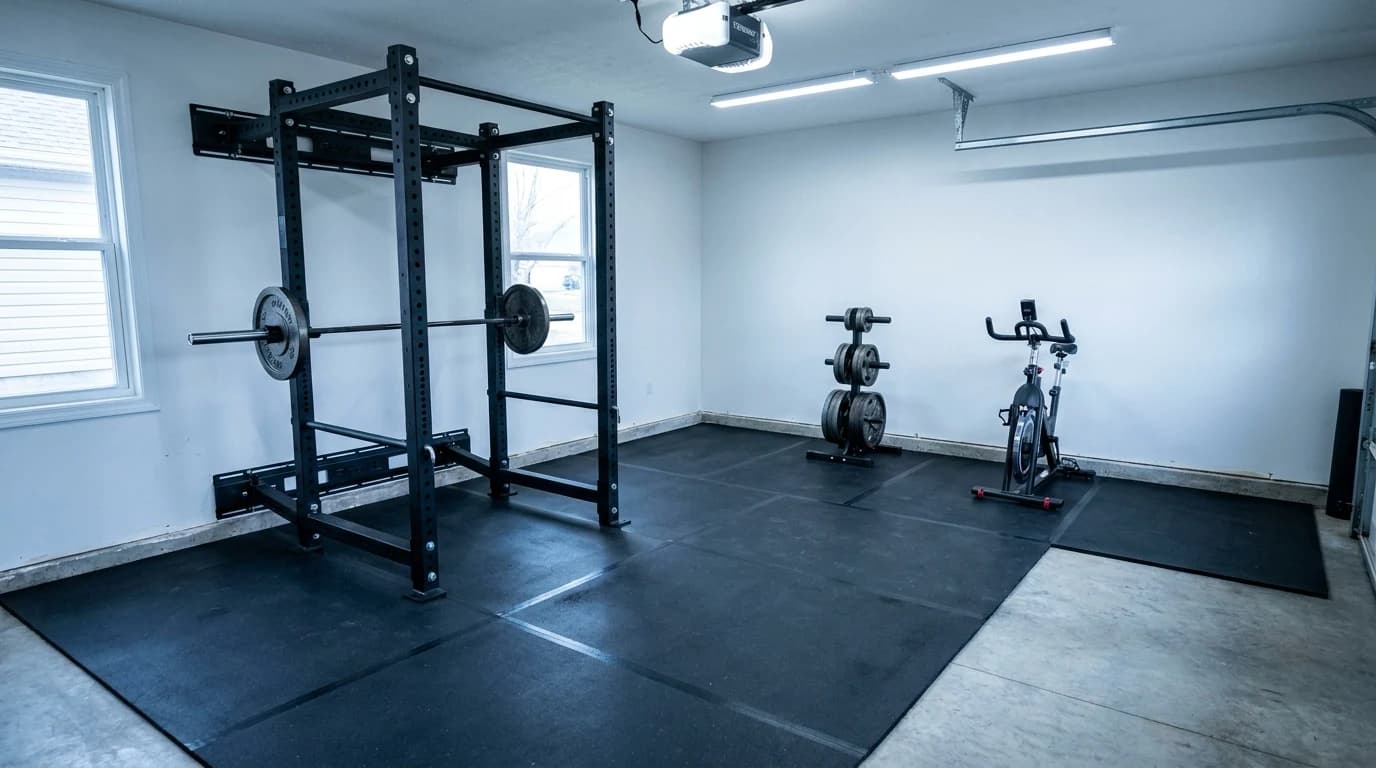
ACSM-aligned training guidelines recommend a mix of 150+ minutes of moderate aerobic activity per week and resistance training on 2+ non-consecutive days for all major muscle groups. Your home gym needs to support both. The $500-$1,500 builds focus on resistance; cardio comes in at $3,000+.
The picks, ranked by budget
| Build | Approx. total | What it actually gets you |
|---|---|---|
| $500 | ~$580 | Adjustable dumbbell pair, bench, bands, pull-up bar — no barbell |
| $1,500 | ~$1,482 | Rack, bar, 300 lb of plates, bench, mats — all four compound lifts |
| $3,000 | ~$3,122 | PR-4000 rack, 400 lb of plates, IPF-spec bench, indoor bike |
| $5,000 | ~$4,569 | Rogue rack, air bike, RowErg, recovery gun, premium flooring |
| $10,000+ | varies | Specialty bars, cable trainer, BikeErg, cold plunge |
1. The $500 build — apartment-friendly, no barbell
- Bowflex SelectTech 552 adjustable dumbbells ($164.50 each) — sold one dumbbell at a time on Amazon, so budget for two; replaces 15 pairs of fixed dumbbells, adjustable 5-52.5 lb.
- FLYBIRD adjustable bench ($120) — flat, incline, decline; folds for storage.
- Resistance band set with door anchor ($35) — covers pulls, rows, face-pulls.
- Doorway pull-up bar ($25) — surprisingly load-bearing on modern door frames.
Covers ~80% of upper body and ~50% of lower body. Squats and deadlifts beyond 110 lb (the dumbbell pair max) are out. This is the apartment-without-a-garage tier.
2. The $1,500 build — first real strength setup
- Titan T-3 or Bells of Steel Hydra rack ($499) — 11-gauge, 3"×3", honest budget exception.
- 7-foot 28.5mm power bar ($179) — 1,500 lb tested capacity.
- 300 lb plate set ($420) — Cap or Rogue Echo bumper or iron, buy used if possible.
- Adjustable bench from Rep AB-3000 ($229) — flat/incline, holds 1,000 lb.
- Stall mats from Tractor Supply ($60 × 2) — 3/4" rubber, protects concrete and joints.
- Resistance band set ($35) — for warm-ups and accessory work.
Total: ~$1,482. Everything needed for the four compound lifts (squat, bench, deadlift, overhead press). Add cardio later. This is the most-recommended starter build on r/homegymsales for a reason.
3. The $3,000 build — strength + cardio sweet spot
Upgrade from the $1,500 build, swap and add:
- REP PR-4000 power rack ($849) — 11-gauge 3"×3", Westside spacing.
- 7-foot bar upgraded to a Rogue Ohio or Cap Beast Bar ($295).
- 400 lb plate set ($600) — Cap Cast Iron or Rogue Echo bumpers.
- REP AB-5200 bench ($329) — IPF-spec width, 1,000 lb capacity.
- Schwinn IC4 indoor bike ($795.99) — Bluetooth, Peloton-app compatible.
- Stall flooring + plyo box accessories ($150).
Total: about $3,000. Real strength + cardio in one room. The PR-4000 will outlast every other piece by a decade. This is the build most home-gym owners report stopping at for years.
4. The $5,000 build — full strength + cardio + recovery
Upgrade from the $3,000 build:
- Rogue R-4 rack (~$990) — lifetime warranty, USA-made, max accessory ecosystem.
- 7-foot Rogue Ohio Bar ($295) and 500 lb Rogue Echo plate set ($800).
- Rogue Echo Bike ($795) — air bike, the HIIT workhorse.
- Concept2 RowErg ($990) — 20-year service life, PM5 monitor.
- Theragun Prime or Hypervolt Go ($299) — recovery.
- Premium 3/8" Rogue rubber flooring ($400).
Total: ~$4,569. This is the "I'm done buying gym equipment" budget for most home lifters.
5. The $10,000+ dream build
For completeness, the dream tier adds:
- Specialty bars (safety squat bar, trap bar, Swiss bar) ($600-$900).
- Force USA G3 or Tonal all-in-one cable trainer ($2,995) — only if cable work is non-negotiable.
- Concept2 BikeErg (about $1,100 direct from Concept2) — second cardio modality.
- Pull-up tower with monkey bars and dip station ($400).
- Cold plunge from a budget cooler conversion ($400) or a Plunge unit ($4,990).
Most home gyms past $10,000 are buying redundancy, not training capacity. Diminishing returns kick in fast above $5,000.
What the research actually says
- Compound barbell training across squat, bench, deadlift, and overhead press produces the largest strength and hypertrophy adaptations per unit training time for novices and intermediates per current NSCA position statements (nsca.com).
- The current Physical Activity Guidelines recommend 150-300 minutes/week of moderate aerobic activity OR 75-150 minutes/week of vigorous, plus muscle-strengthening on 2+ days/week (health.gov).
- Resistance training intensity prescription by perceived exertion is feasible at home without coaching supervision (PMID 37458822).
- Used Olympic plates show no measurable degradation in load-bearing or balance even after a decade of use. Rust is cosmetic; iron mass doesn't change.
- What the research does NOT support: the claim that any specific subscription platform (Peloton, iFIT, Tonal app) measurably improves training outcomes vs equivalent self-directed programming at matched volume. Adherence varies; physiological adaptation at matched stimulus does not.
What to skip
- Sub-$300 power racks. False economy — 12-gauge or 14-gauge steel flexes under load. Save $700 more and buy the Titan T-3 or Bells of Steel Hydra.
- Sub-2.5 CHP "running" treadmills. Motors burn out in 12-18 months under daily running.
- Smart mirrors at $1,500+. A phone running YouTube does the same job for free. The category contracted post-2022; software-support windows are uncertain.
- Subscription-locked bikes if you won't open the app. A $200 Schwinn AC + Bluetooth heart rate monitor does most of the job.
- Hydraulic-piston rowers. Leak within 12 months. Don't replicate real rowing resistance.
- The 24-piece "complete home gym" combo on Amazon for $199. Bar is cast iron not steel, plates are concrete-filled, bench creaks at 200 lb.
How to actually buy this — the order rule and the used market
The order rule: rack, then bar, then plates, then bench, then cardio, then accessories. A treadmill in a room without a rack is a closet. A rack without plates is an art installation.
The frustrating thing about home gyms isn't the products, it's the sequence people buy them in. The used market is where the order rule gets cheap — but only for some categories.
Buy used and save 30-50%:
- Plates — they hold value indefinitely and don't degrade.
- Barbells — fine secondhand if they haven't been abused.
- Where to look: r/homegymsales, Facebook Marketplace, Craigslist.
Buy new, every time:
- Benches — welds are the failure point and you can't see them.
- Racks bought sight-unseen — inspect the welds in person or don't buy.
- Treadmills more than 4 years old.
The room comes before the receipt
A 10'×10' room fits the $1,500-$3,000 build with usable floor space. Power rack footprint is ~4'×4'. Bar at full extension needs 7' of width. Cardio adds another 4'×7'.
Floor protection: 3/4" rubber stall mats from Tractor Supply ($60 each) protect concrete and reduce noise transmission. For wood subfloors, add 3/4" plywood under the mats — without it, deadlifts will telegraph to the floor below.
Lighting and ventilation: garages are typically under-lit for serious training. A pair of 4-foot LED shop lights ($30 each) transforms the visibility. A box fan or wall-mount fan ($30-60) makes summer training tolerable; a small space heater handles winter.
Storage is what keeps the gym usable
Bar storage: vertical bar holders ($30) or wall-mounted bar racks ($60) keep barbells off the floor and prevent warping. Horizontal storage on plate-tree pegs is fine short-term, but bars left supported only at the sleeves can develop minor whip over years.
Plate organization: weight tree or rack-mounted weight pegs. Plates loose on the floor become trip hazards and floor damage. Adding 6 weight pegs to a power rack runs $40-80; a freestanding weight tree is $80-120.
The progression principle: start with the $500 or $1,500 tier even if you can afford the $5,000 tier. Most home-gym regret comes from buying everything at once and discovering 40% of it sits unused. The progressive-purchase approach lets training drive equipment buys, not the other way around.
Timing the big pieces around a sale? Our Black Friday home gym deals guide covers which brands actually discount, how to read Amazon's list-price claims, and the return rules for heavy freight.
How we chose / methodology
These builds follow a build-order priority that maximizes per-dollar training stimulus: structural strength equipment first (because it lasts decades), cardio second (because it's the cardiovascular dose lever), accessories last. Product picks favor 11-gauge 3"×3" rack construction, 28.5mm bars rated 1,000+ lb, and air or magnetic resistance cardio that doesn't depend on a subscription. See our methodology page for the full scoring approach.
Sanity-check the plan against your room
Before you spend tier-one money, run your budget and room dimensions through the free GymScored home gym planner. It sequences the same rack-first buy order from this guide into your actual square footage and flags anything that will not clear your ceiling or walls.
Sources
- NSCA position statements on resistance training — nsca.com
- Physical Activity Guidelines for Americans — health.gov
- ACSM Physical Activity Guidelines — acsm.org
- Home-based resistance training feasibility — PMID 37458822
- CDC adult activity guidelines — cdc.gov
Frequently Asked Questions
Should I buy used?+
Yes — for plates and bars especially. Plates don't degrade. Used Olympic plates on Facebook Marketplace are 30-50% cheaper than new.
What flooring do I need?+
3/4" rubber stall mats from Tractor Supply ($60/mat) protect concrete. For wood subfloors, add plywood under the mats.
Should I buy plates new or used?+
Used. Olympic plates do not measurably degrade with use — iron mass is iron mass. Used plates on Facebook Marketplace and r/homegymsales sell for 30-50% under new pricing. Inspect for rust (cosmetic) and severe edge dings (rare). Bumper plates are slightly more risk-sensitive because the rubber can dry-rot if stored outdoors.
What's the minimum room size for a real home gym?+
10' × 10' is the practical minimum for the $1,500-$3,000 build. Power rack footprint is ~4' × 4'; barbell at full extension needs ~7' of width; cardio adds another 4' × 7'. Ceiling height of 8' is enough for most setups; 9'+ is needed for overhead pressing without ducking.
Do I need rubber flooring under the rack?+
Yes for any concrete floor. 3/4" rubber stall mats from Tractor Supply ($60 each) protect the concrete and reduce noise. On wood subfloors, add 3/4" plywood beneath the mats — without it, deadlifts will telegraph to the floor below.
Is the Rogue Ohio Bar worth $295 over a Cap bar at $179?+
Yes if you'll be lifting for years. Rogue's spec is 28.5mm shaft, IPF-spec knurl, 1,500 lb tensile strength, lifetime warranty. Cap bars are functional but the knurl is less consistent and the bushing/sleeve quality varies. The price gap is real but the cost-per-decade favors Rogue.
Sources & Research
- r/homegym — Used market threadscommunity
- r/homegymsales — Used gear marketplacecommunity
- HHS Physical Activity Guidelines — Physical Activity Guidelines for Americans, 2nd ed.authority
- ACSM — Physical Activity Guidelinesauthority
- NSCA — NSCA position statementsauthority
- CDC — Adult Activity Guidelinesauthority
- PubMed — Home-based isometric resistance training feasibility using RPEresearch
Your next step
The three categories most budget builds start with.
Related reviews
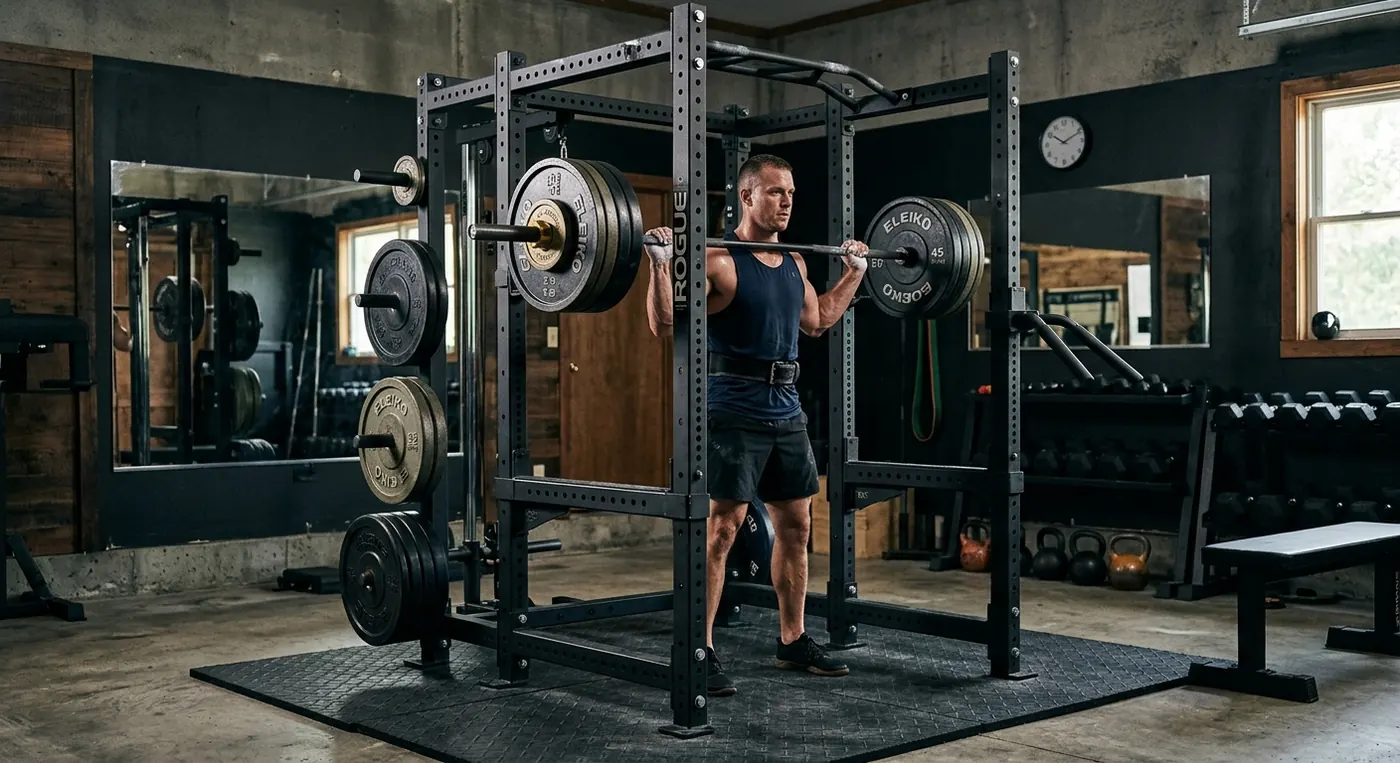
Best Power Racks for a Home Gym in 2026
The Rep PR-4000 is the best home gym power rack of 2026 at under $900. Five racks ranked on build quality and footprint; Rogue R-4 is the lifetime pick.
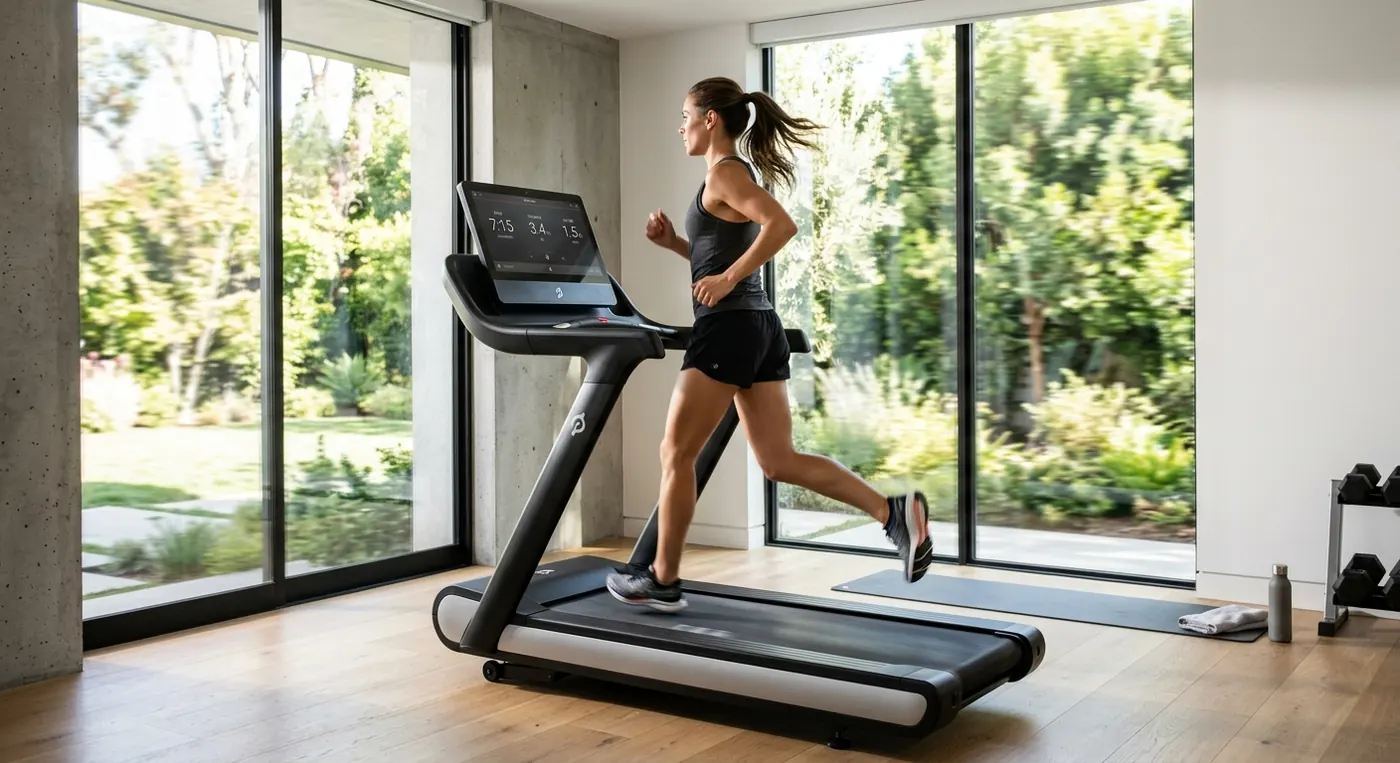
Best Treadmill for Home Runners in 2026
The NordicTrack Commercial 1750 is the best running treadmill of 2026; the T Series 10 is the value runner and the MERACH is the incline pick. Seven decks scored.
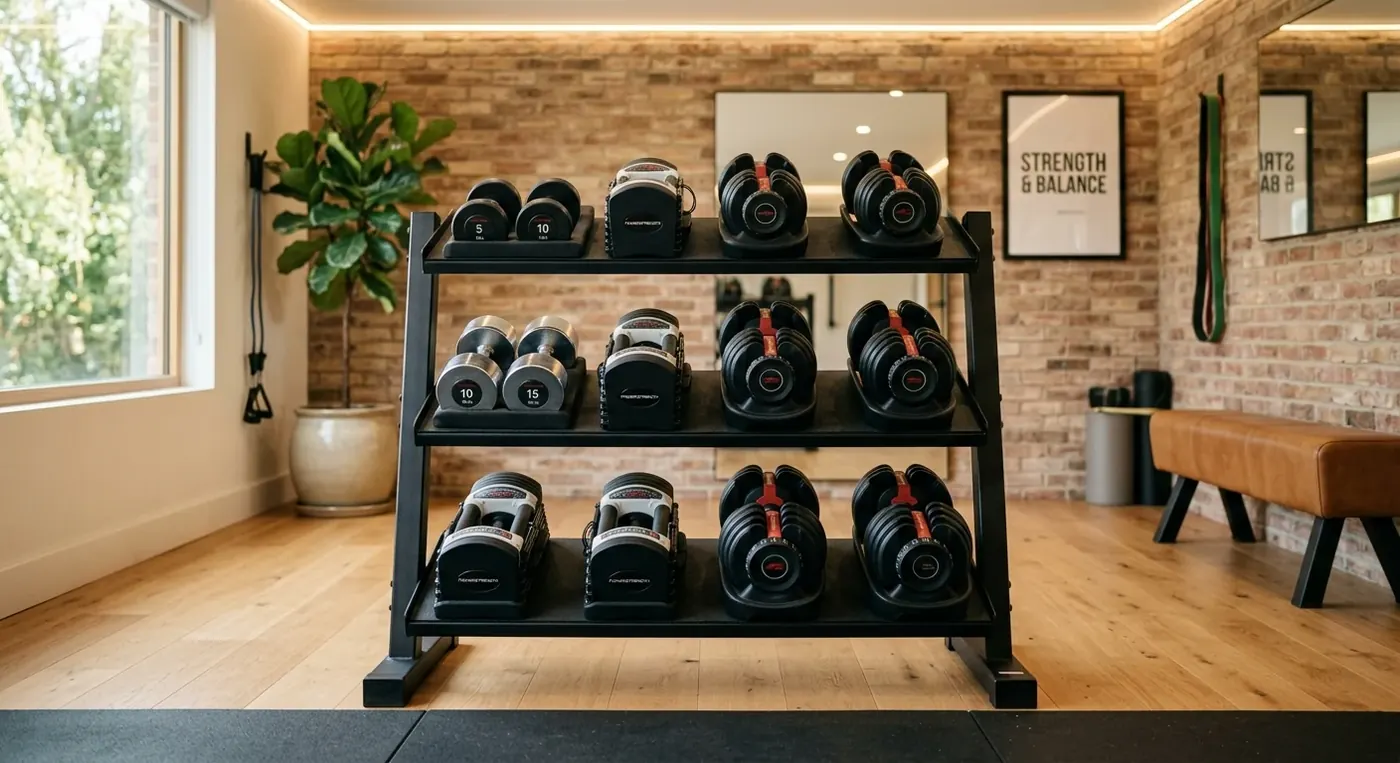
Best Adjustable Dumbbells in 2026
PowerBlock Pro 50 is the default; Bowflex 1090 has the 10-90 lb range, NÜOBELL 80 the feel. Five adjustable dumbbell sets ranked on mechanism and build.
Hilly Shore Labs
Editorial teamThe independent product research team behind GymScored. Every recommendation is researched, never hands-on tested — recommendations draw on manufacturer specifications and available published research. Category order is editorial; the Gym Score is a separate comparison aid.
170 listed products across 26 home gym categories. Scores use category criteria, value and owner-rating inputs; missing evidence limits what a score can tell you.
See the scoring methodology and who we are.
Affiliate disclosure: GymScored is a participant in the Amazon Services LLC Associates Program. We earn from qualifying purchases at no extra cost to you. Full disclosure →