Best Treadmill for Home Runners in 2026
The NordicTrack Commercial 1750 is the best running treadmill of 2026; the T Series 10 is the value runner and the MERACH is the incline pick. Seven decks scored.
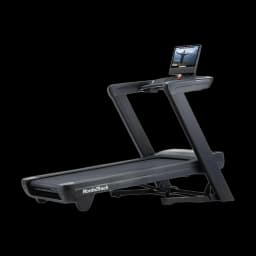
- 3.5 Chp Motor
- 60" Deck
- 12" Hd Touchscreen
Evidence snapshot · Updated September 1, 2026
The evidence-backed answer
NordicTrack Commercial 1750 is our default pick for the scope of this guide: A 3.5 CHP motor and a 60-inch deck — the two specs that decide whether a treadmill survives daily running — with iFIT optional rather than required.
Scope: 4 shortlisted products compared using published specifications, owner-feedback signals, value and category-specific performance. The matched catalog records represent 36,498 owner ratings. This is research synthesis, not hands-on testing.
| Product | Rating | Current price context |
|---|---|---|
| NordicTrack Commercial 1750 | 4.6/5 | $1,999.00 |
| NordicTrack T Series 10 | 3.8/5 | $999.00 |
| NordicTrack T Series 6.5 S Treadmill | — | $799.00 |
| MERACH Treadmill with 15/18% Auto Incline | — | $449.99 |
How GymScored is paid: Amazon Associates commission plus brand-direct affiliate (Rogue / REP / Titan when approved). No sponsored placements, no paid reviews, no pay-to-rank. Picks are ranked by the Gym Score formula and nothing else. Read the full disclosure.
Best balance: NordicTrack Commercial 1750 (3.5 CHP, 60-inch deck, iFIT optional). Best value: NordicTrack T Series 10. Best incline per dollar: MERACH. Sole F80 is still the no-subscription answer, but it has no linkable listing right now.
| Product | Rating | Pros | Cons | Price | |
|---|---|---|---|---|---|
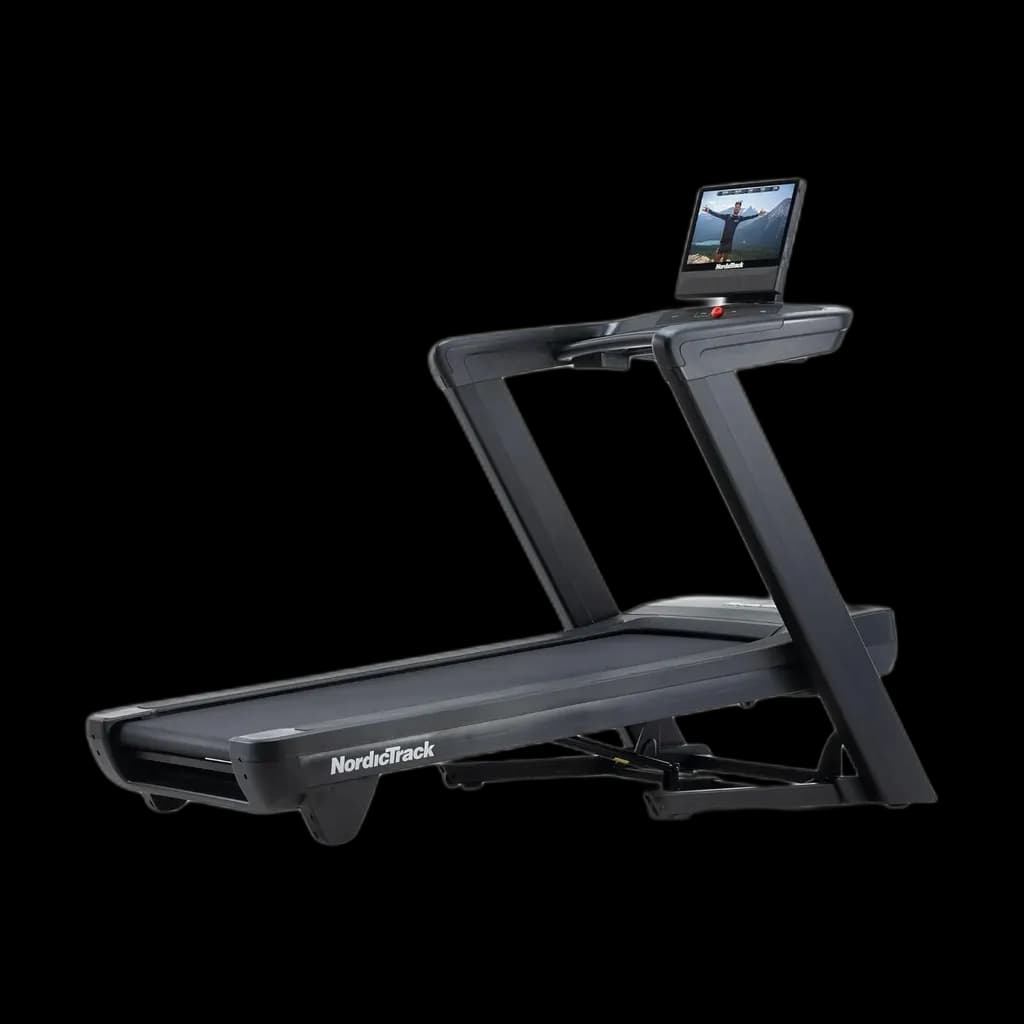 Best software + motor combo under $2,000. iFIT integration is the differentiator. ↑ 3.5 Chp Motor↑ 60" Deck↓ Ifit Subscription Near-RequiredBased on 25 buyer mentions | 4.6 Gym Score 85 | Pros
| Cons
| $1,999.00 | Buy on Amazon |
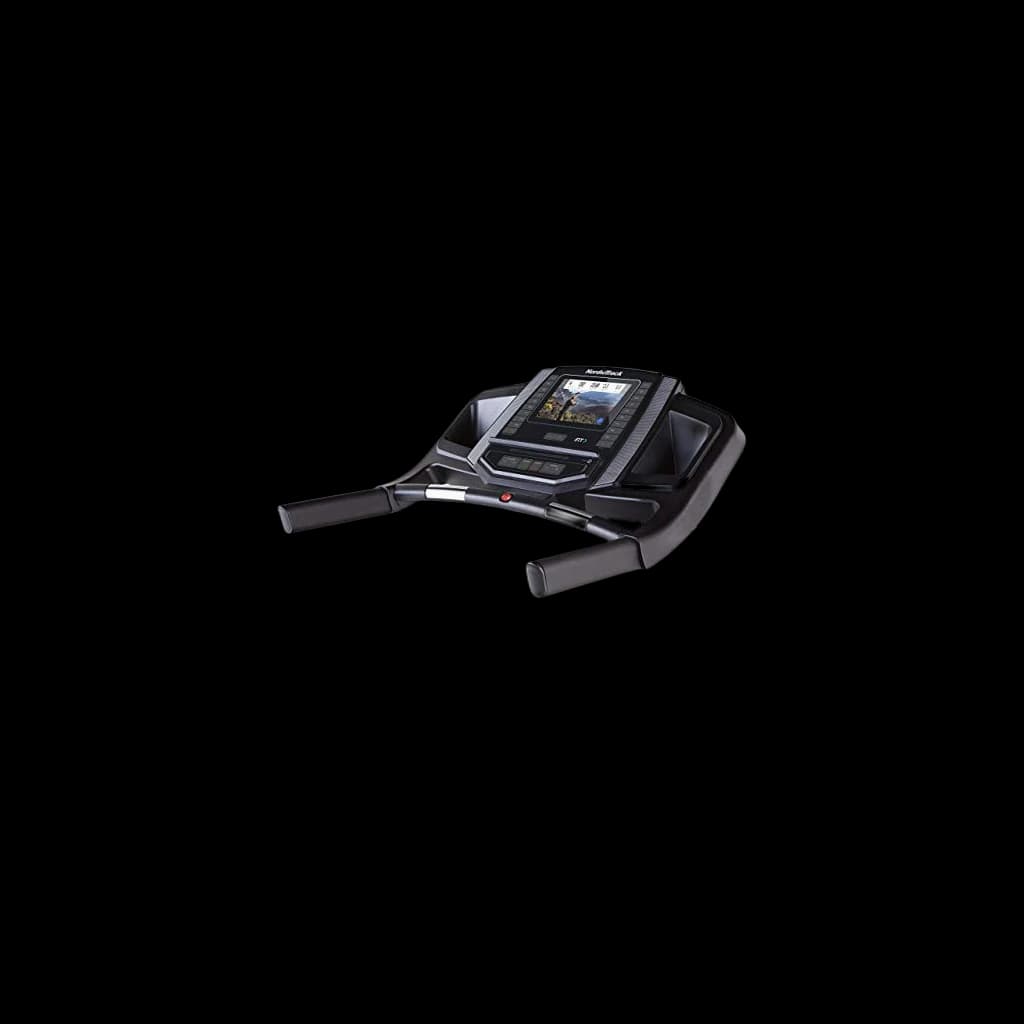 The current NordicTrack budget runner: a 10-inch tilting touchscreen, folding frame, 12 mph top speed, and 0–12% incline at about $999. Best for walkers and moderate runners who value guided workouts. ↑ Quality↑ Value for money↓ DurabilityBased on 1,595 buyer mentions | 3.8 Gym Score 73 | Pros
| Cons
| $999.00 | Buy on Amazon |
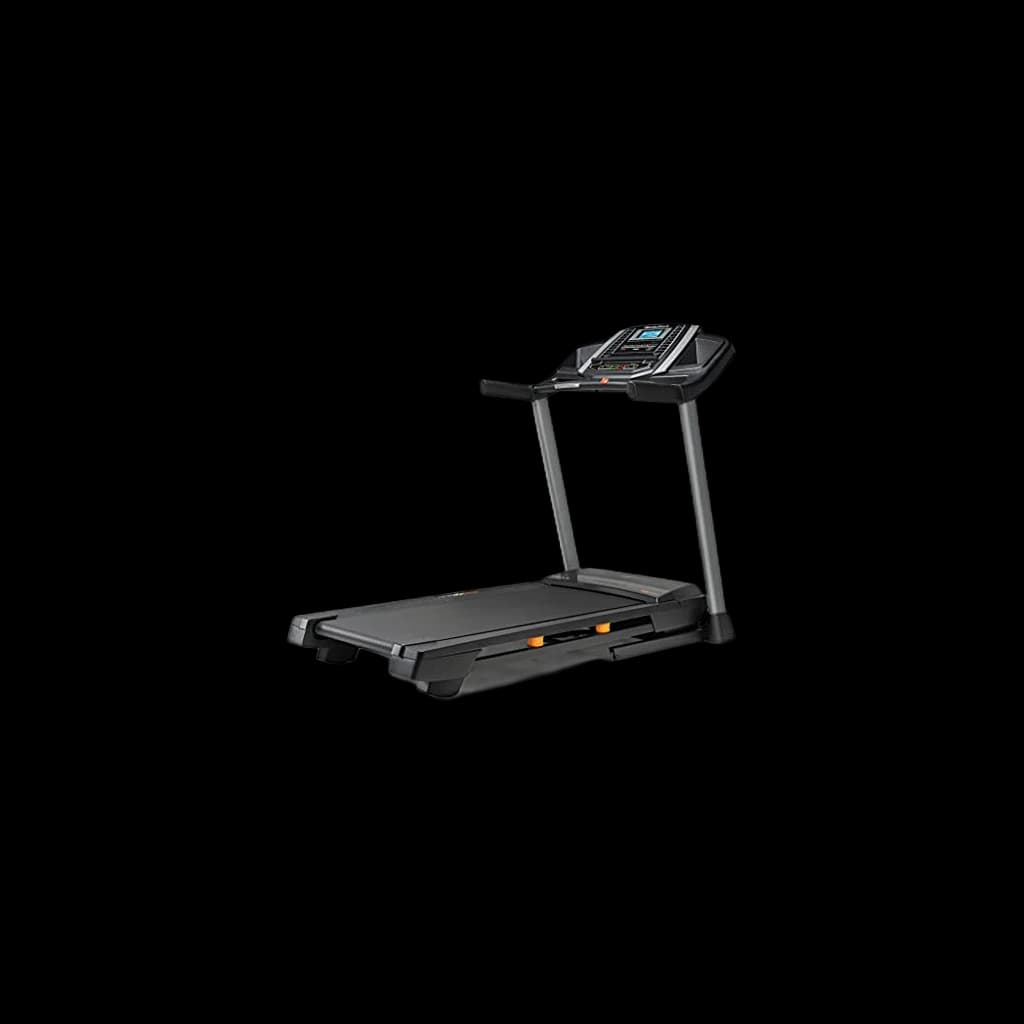 The entry point into the NordicTrack line this roundup already recommends. Same folding deck and iFIT compatibility as the 1750 above it, at roughly half the price — the trade is motor size and deck length. | Gym Score 76 | Pros
| Cons
| $799.00 | Buy on Amazon |
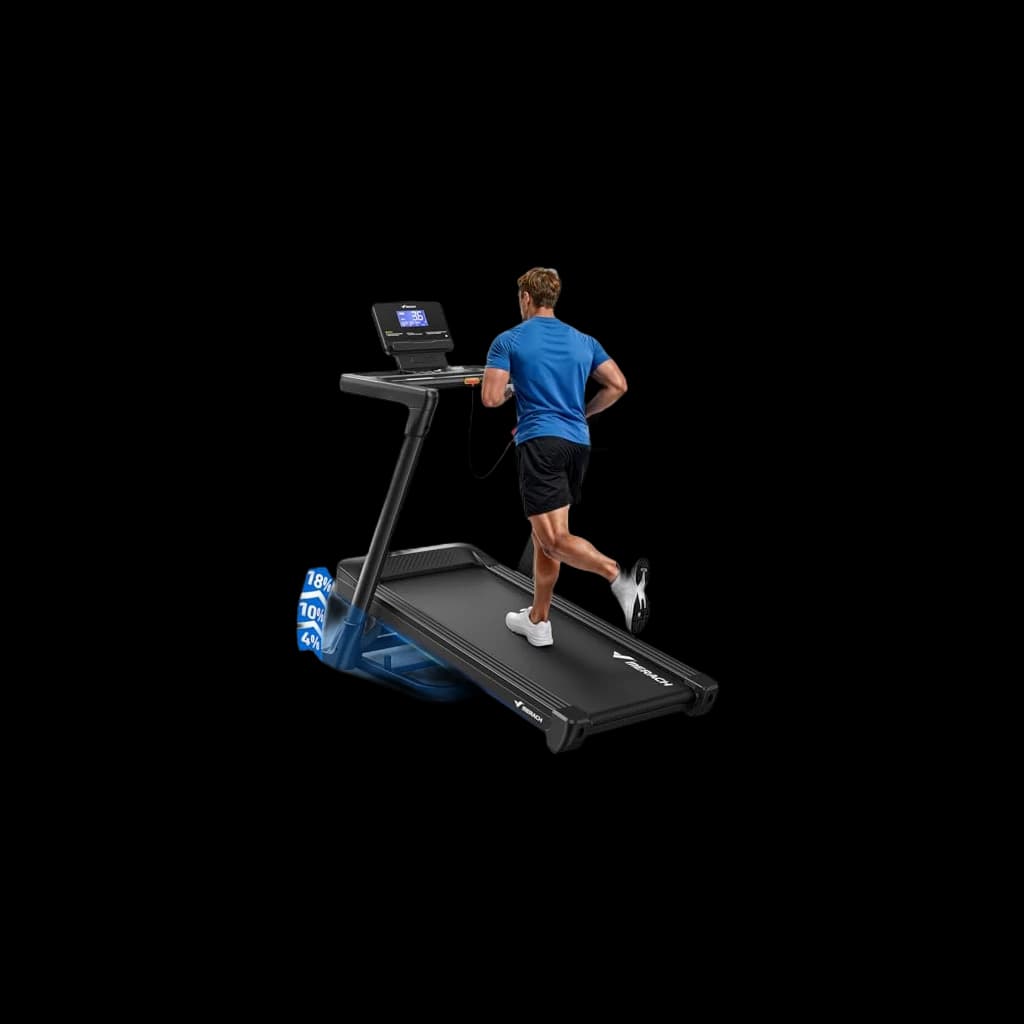 The value pick for incline work. MERACH state auto incline to 15-18% on a wide belt, which is a steeper grade than most treadmills at twice the price offer. | Gym Score 74 | Pros
| Cons
| $449.99 | Buy on Amazon |
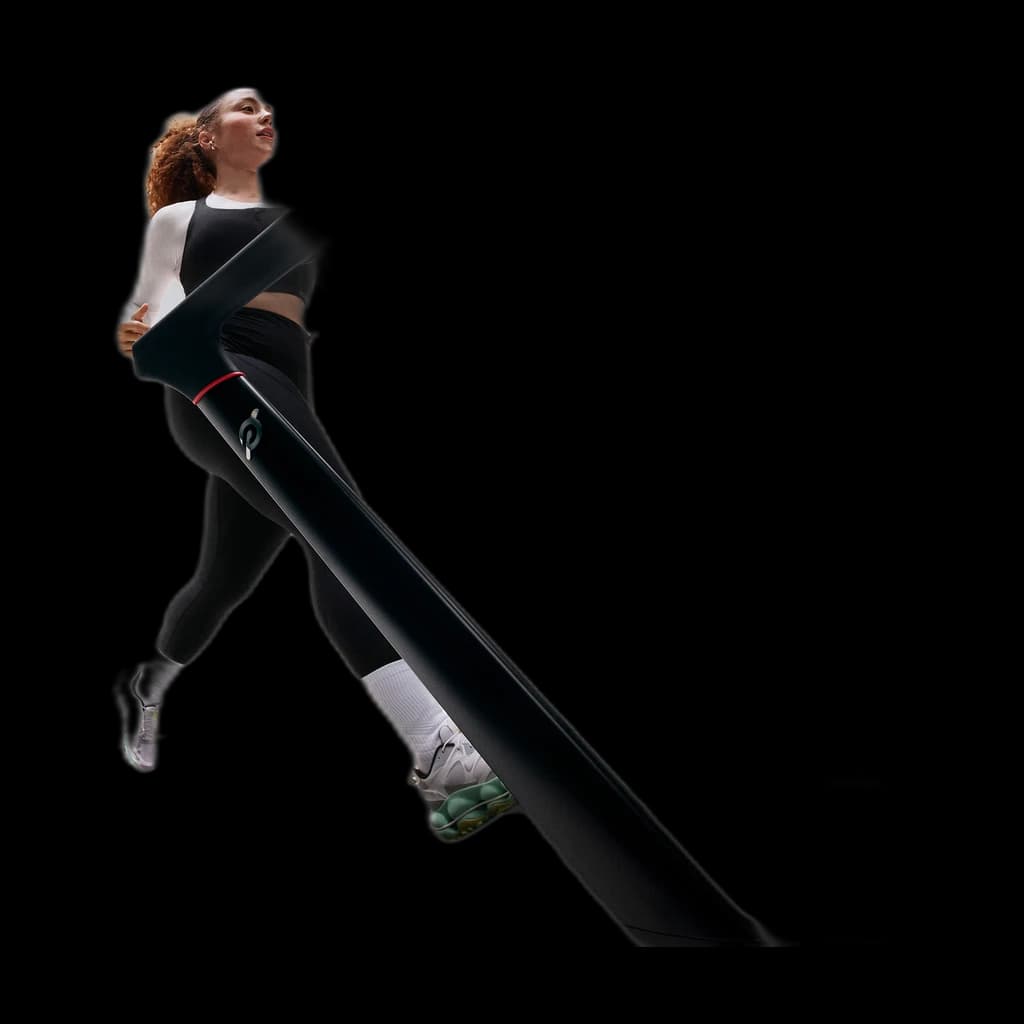 A 23.8-inch touchscreen, a slat belt that feels closer to ground than a polymer belt, and the deepest class library in the category — locked behind an All-Access membership for the bulk of its features. | 4.2 Gym Score 78 | Pros
| Cons
| $3,295.00 | Buy on Amazon |
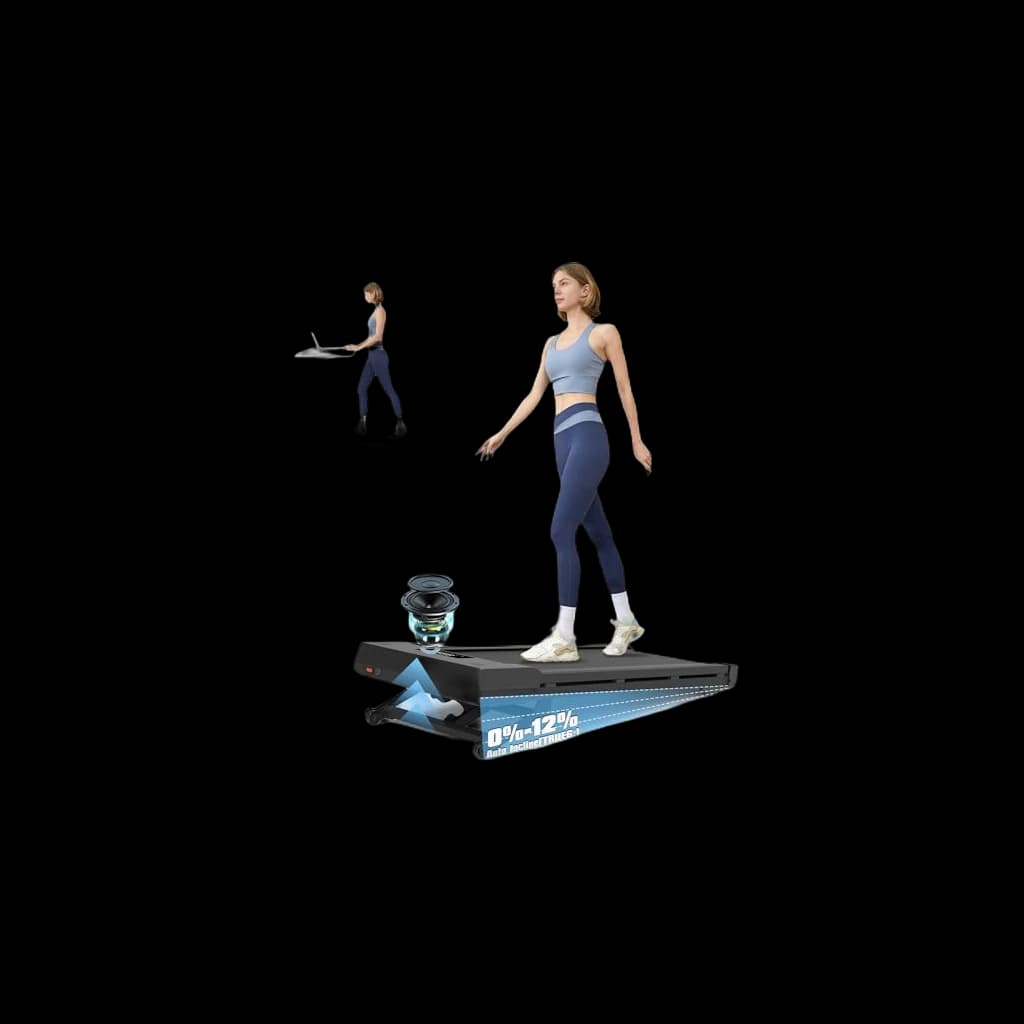 Not a running deck, and included as the honest cheaper answer: if your mileage is walking and incline work rather than genuine running, this does that job at a fraction of a treadmill's price and footprint. | Gym Score 78 | Pros
| Cons
| $258.99 | Buy on Amazon |
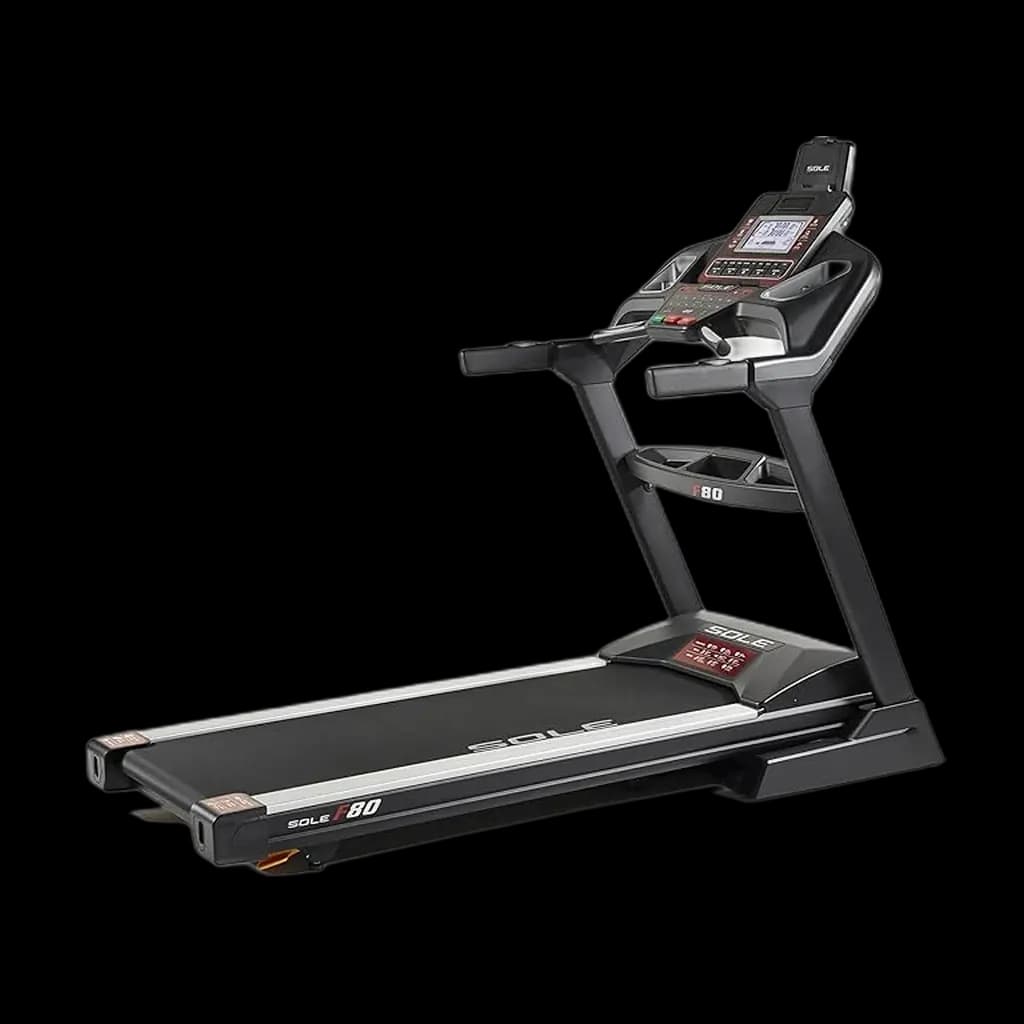 Still the no-subscription workhorse — same motor class and deck length as the 1750, with a lifetime frame warranty. We could not find a first-party listing for it on the verification date, so this page does not link it as a buy option. ↑ Quality↑ Build Quality↓ WeightBased on 284 buyer mentions | 4.0 Gym Score 74 | Pros
| Cons
| — | No stable offer |
Amazon prices checked Sep 12, 2026. Amazon prices change often — the listing is authoritative.
Treadmill specs that matter for running
Motor, deck, incline and display, as the manufacturers state them. Listings and prices re-verified 2026-09-01.
| Product | Motor | Deck / belt | Top speed | Incline | Display |
|---|---|---|---|---|---|
| NordicTrack Commercial 1750 | 3.5 CHP | 60 in | 12 mph | -3% to 15% | 12 in touchscreen |
| NordicTrack T Series 10 | 3.0 CHP | Folding frame | 12 mph | 0-12% | 10 in tilting touchscreen |
| NordicTrack T Series 6.5 S Treadmill | Entry NordicTrack | Folding frame | Not published | Not published | iFIT compatible |
| MERACH Treadmill with 15/18% Auto Incline | Not published | Wide belt | Not published | 15-18% auto | Not published |
| Peloton Tread | Not published | Slat belt | Not published | Not published | 23.8 in touchscreen |
| Sole F80 | 3.5 CHP | 60 in | 12 mph | 0-15% | Basic LCD |
| PACEROCKER Walking Pad | Walking pad | Under-desk deck | Walking speeds | 9 levels to 12% | Remote |
Total cost of ownership
Three-year treadmill cost, not just checkout price
Scenario re-checked 2026-09-01. Hardware uses the verified listing price; subscriptions are shown separately because iFIT is optional on the NordicTrack decks. Delivery, tax and repairs vary by location.
| Product | Hardware | Required / likely extras | Subscription (3 yr) | Estimated 3-year cost | Replacement / warranty context |
|---|---|---|---|---|---|
| NordicTrack Commercial 1750 | $1,999.00 | Floor mat: ~$50-$100 | $0 optional; ~$1,404 at $39/mo | $2,049-$3,503 | Connected console adds software dependency; check current parts and labour terms |
| NordicTrack T Series 10 | $999.00 | Floor mat: ~$50-$100 | $0 optional; ~$1,404 at $39/mo | $1,049-$2,503 | Budget folding frame; better suited to walking and moderate running |
| MERACH Treadmill with 15/18% Auto Incline | $449.99 | Floor mat: ~$50-$100 | $0 | $500-$550 | No subscription; less established brand support than NordicTrack or Sole |
Pick by situation
Decide by your situation, not the generic ranking.
| If | You want | Pick |
|---|---|---|
| Walking and incline only | People whose mileage is brisk walking rather than genuine running, in a fraction of the footprint | PACEROCKER Walking Pad with 12% Auto Incline |
| Under $1,000 | First-time buyers running three to five miles a few times a week | NordicTrack T Series 10 |
| Daily running | Runners training for road races who need a 60-inch deck for full-stride running | NordicTrack Commercial 1750 |
TL;DR — should you read this?
- The NordicTrack Commercial 1750 is the best-balanced home runner. A 3.5 CHP motor, a 60-inch deck and a 12-inch touchscreen, with iFIT pushy but optional.
- The T Series 10 is the value answer at half the money if your mileage is three to five miles a few times a week.
- The motor spec that matters is CHP (continuous duty), not peak. Most budget decks quoting "3.5 HP" are quoting peak; the continuous rating is far lower and they burn out under daily running.
- Cushioned decks do not meaningfully reduce running-injury risk. Mileage, footwear and gait load far more than belt cushioning.
- Folding treadmills save less floor space than walking pads. If apartment fit is the deciding constraint, read the walking pad guide instead.
Our pick
A 3.5 CHP motor and a 60-inch deck — the two specs that decide whether a treadmill survives daily running — with iFIT optional rather than required.
Our picks at a glance
| Pick | Who it is for | Key spec | Price |
|---|---|---|---|
| NordicTrack Commercial 1750 — best overall | Daily runners training for road races | 3.5 CHP; 60-inch deck; -3% to 15% incline | $1,999.00 |
| NordicTrack T Series 10 — best value | Three to five miles, a few times a week | 3.0 CHP; folding; 12 mph; 0-12% incline | $999.00 |
| NordicTrack T Series 6.5 S — entry point | The same ecosystem at the bottom of the range | Folding deck; iFIT compatible | $799.00 |
| MERACH Auto Incline — best incline per dollar | Hill work without a premium deck | 15-18% auto incline per MERACH; wide belt | $449.99 |
| Peloton Tread — best class library | Content-driven training | Slat belt; 23.8-inch screen; membership required | $3,295.00 |
| PACEROCKER Walking Pad — if you only walk | Walking and incline, not running | 9 incline levels to 12%; under-desk footprint | $258.99 |
Picks and prices verified 2026-09-01. The Sole F80 is still the honest no-subscription recommendation, but it had no linkable listing on that date, so this page describes it without a buy link.
What separates good from bad in this category
Three specs decide whether a treadmill survives daily running.
| Spec | The threshold | What it actually predicts |
|---|---|---|
| Motor CHP | 3.0 for jogging, 3.5+ for daily running | Longevity. Lower-rated motors run hot under sustained load and the windings fail |
| Deck length | 60 in for runners over 5'10"; 55 in is the practical floor | Stride ceiling. Shorter decks are walker territory |
| Frame mass | 250 lb assembled minimum | Stability. Lighter frames flex perceptibly above 8 mph |
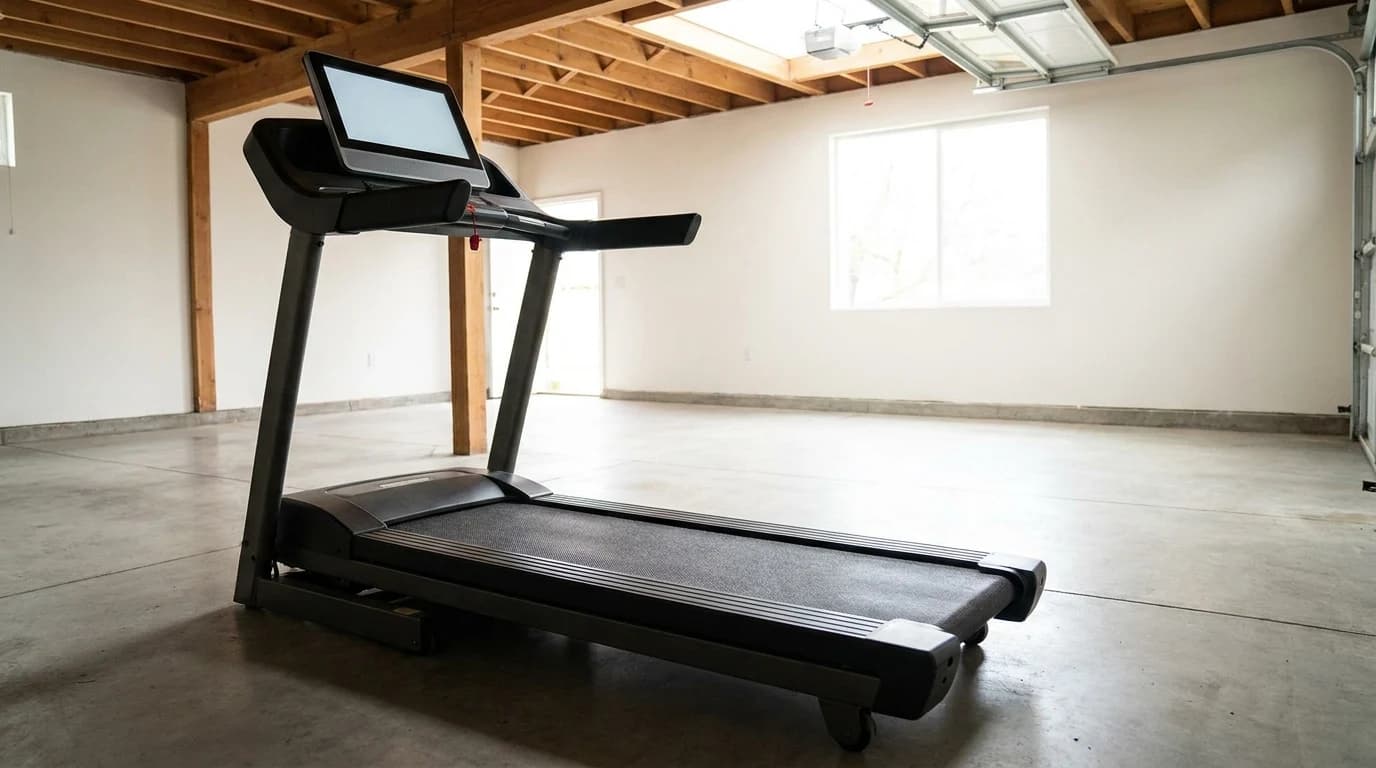
The spec sheet lies in a predictable direction
Manufacturers can legally advertise peak horsepower, so the biggest number on the box is usually the least useful one. Where a manufacturer publishes CHP at all, that is the number to read; where they publish nothing, assume the worst.
Specs that predict how long the machine lasts:
- Continuous-duty horsepower, not peak
- Assembled frame weight
- Belt thickness — two-ply on serious running decks
- Motor and frame warranty length
Specs marketed hard that do not:
- Peak horsepower ratings
- Deck cushioning sold as injury prevention
- Hand-grip heart-rate sensors
- Fold-mechanism convenience on a light frame
Incline is the cheapest way to make a cheap deck useful
The single biggest change in this category is that steep auto-incline has arrived at the bottom of the price range. MERACH state 15-18% auto incline on a deck costing a fraction of the premium machines — and grade, not speed, is what turns a modest motor into a hard session. If your budget is under $500 and you want real training stimulus, buy grade rather than horsepower.
Safety is a standard, not a feature
ASTM F2115 sets safety requirements for treadmills, including a prominently labelled, user-accessible stop switch that decelerates the belt. Any reputable home treadmill meets it. The CPSC's NEISS database is the public record of consumer-product injuries in the US, and treadmills appear in it every year.
Worth knowing: the emergency clip is the cheapest safety feature on the machine and the most commonly ignored. Clip it on every session, and keep the floor behind the belt clear.
The picks, ranked
1. NordicTrack Commercial 1750 — $1,999.00 — Best for most home runners
The modern default. A 3.5 CHP motor pulls a 60-inch deck to 12 mph across a -3% to 15% incline range. The 12-inch touchscreen runs iFIT, which auto-adjusts speed and incline to follow trainer-led routes — genuinely good content, and a monthly commitment only if you want it. Roughly 300 lb of frame mass keeps the unit planted at pace. The folding hinge is the most common complaint after year five.
2. NordicTrack T Series 10 — $999.00 — Best value
A 10-inch tilting touchscreen, a 3.0 CHP motor, 12 mph top speed and 0-12% incline on a folding frame, at roughly half the 1750. The deck is shorter and the warranty is 10 years on the frame rather than lifetime. For anyone not running daily, that is the right set of compromises.
3. NordicTrack T Series 6.5 S Treadmill — $799.00 — Best entry point
The bottom of the NordicTrack range, with the same folding deck and iFIT compatibility as the machines above it. The trade is motor size and deck length, so it suits shorter strides and walking-to-jogging mileage rather than sustained running.
4. MERACH Treadmill with 15/18% Auto Incline — $449.99 — Best incline per dollar
MERACH state auto incline to 15-18% on a wide belt — a steeper grade than most decks at several times the price. That makes it the cheapest way to buy real training stimulus. The honest caveats: less established brand support than NordicTrack or Sole, and the specifications are the manufacturer's, since we do not test.
5. Peloton Tread — $3,295.00 — Best for content-driven training
A 23.8-inch touchscreen, studio-grade production, and a slat belt that feels closer to running on ground than the polymer belts everyone else uses. Most of the features sit behind the All-Access membership. Worth it if Peloton's library is what gets you running; heavily overspecified if you will just put on a podcast.
6. PACEROCKER Walking Pad with 12% Auto Incline — $258.99 — If your mileage is walking
Not a running deck, and included as the honest cheaper answer. If your training is brisk walking and incline work rather than genuine running, this does that job at a fraction of the price and footprint of everything above it.
7. Sole F80 — the no-subscription pick we cannot currently link
Same motor class and 60-inch deck as the 1750, with a lifetime frame warranty, a basic display and a tablet holder so you bring your own content. It remains the right recommendation for anyone allergic to subscriptions — but on the verification date there was no first-party listing to send you to, so this page names it without a buy link rather than pointing you at a reseller we cannot vouch for.
What the research actually says
- A 60-inch deck is the practical floor for runners over 5'10". Below that, stride mechanics change measurably; overground and treadmill running already differ in kinematics and kinetics at matched speed (Riley 2008, Med Sci Sports Exerc, PMID 18460996).
- Continuous-duty horsepower, not peak, predicts motor longevity. Peak figures can be several times the continuous rating; CHP is what the motor sustains indefinitely.
- Treadmill and overground running produce near-identical cardiovascular load at matched velocity with a small incline, per long-standing ACSM exercise-testing protocols. The incline compensates for the absence of air resistance.
- Chest-strap heart-rate accuracy beats hand-grip sensors by a wide margin. The grip sensors built into most treadmills are calibration toys — see our heart rate monitor guide.
What the research does not support: cushioned decks meaningfully reduce running-injury rates. Work on running-injury determinants and on shoe midsole hardness (van Gent 2007, PMID 17473005; Theisen 2014, PMID 24043665) consistently finds that mileage progression, prior injury and gait drive risk far more than surface cushioning. A softer deck is not injury insurance.
What to skip
- Any treadmill claiming 3.5 HP under $800. That is peak, not continuous.
- Manual treadmills marketed for running. Curved manual decks are excellent for sprints and finishers, but for a 45-minute zone-2 session motorised is the right tool.
- Treadmills without a safety clip. ASTM F2115 requires an accessible stop switch. If a unit ships without one, return it.
- Folding units under 200 lb total weight. Light frames flex at speed and the fold hinge is the failure point.
- Models with thin belts. Thin belts stretch within months and the motor compensates by drawing more current.
How to actually use this / Buying guide
- Under $500: walkers and incline work. The MERACH, or the PACEROCKER if you never intend to run. Do not buy a $500 "running treadmill" — it is not one.
- $750-$1,000: casual runners. The T Series 6.5 S or the T Series 10. Good for three brisk sessions a week.
- $1,500-$2,500: daily runners. The Commercial 1750, or the Sole F80 if you find a listing you trust. A 3.5 CHP motor, a 60-inch deck and real frame mass.
- $2,500 and up: content-driven. The Peloton Tread, if the class library is genuinely what will get you on the belt.
Measure before you order: allow at least 3 feet behind the treadmill for a safe dismount, and check the circuit — treadmills want a dedicated 20-amp line if the household already draws heavy concurrent loads.
How we chose
GymScored ranks treadmills on motor longevity (CHP and warranty length), deck size and quality, frame stability, software value and cost, and owner satisfaction in long-tail reviews at three years and beyond. See /methodology for the full rubric. We do not operate a test facility and never claim hands-on running data; rankings synthesise manufacturer engineering specs, ACSM and ACE exercise guidance, the ASTM F2115 safety standard, CPSC injury data, and aggregated long-term owner reports. Listings and prices were re-verified 2026-09-01.
Treadmills versus walking pads — different categories
If you are shopping for a desk-walking machine rather than a running treadmill, those are different products. Walking pads cap at walking speed, run quietly and slide under a standing desk; running treadmills do neither. WFH Lounge covers the under-desk side: best under-desk treadmills 2026.
Frequently Asked Questions
Is 2.5 CHP enough for running?+
Marginal. 3.0 CHP is the safe floor for jogging; 3.5 CHP is the floor for daily running.
Do I need iFIT or Peloton?+
No. iFIT is optional on the NordicTrack decks and the MERACH has no subscription at all — the machines run without an app. The Peloton Tread is the exception: most of what you are paying for sits behind its membership.
What's the difference between CHP and peak HP?+
CHP is the horsepower the motor can deliver continuously without overheating. Peak HP is a momentary burst rating. Manufacturers legally advertise either, so a budget treadmill labeled "3.5 HP" often means 3.5 peak and ~2.0 continuous. Only CHP predicts longevity.
Do I need a 60-inch deck if I'm short?+
If you're under 5'8" and only walking or light jogging, a 55-inch deck is fine. For runners taller than 5'10" or anyone running faster than 8 mph, 60 inches is the practical floor — stride mechanics break down on shorter decks at speed.
How much room do I need around a treadmill?+
ASTM F2115 and most manufacturer manuals call for clearance behind the unit — plan for at least 3 feet. Falls happen rearward, and the safety clip should drop you onto open floor rather than a wall.
Which treadmills on this page can I actually buy today?+
Six of the seven. The Commercial 1750, T Series 10, T Series 6.5 S, MERACH, Peloton Tread and PACEROCKER all resolved to live listings when this page was verified on 2026-09-01. The Sole F80 did not, so it is described but not linked.
Sources & Research
- PubMed — Riley 2008 — kinematic and kinetic comparison of overground and treadmill running (Med Sci Sports Exerc, PMID 18460996)research
- PubMed — van Gent 2007 — incidence and determinants of lower-extremity running injuries (Br J Sports Med, PMID 17473005)research
- PubMed — Theisen 2014 — midsole hardness of cushioned shoes and running-injury risk (Br J Sports Med, PMID 24043665)research
- ASTM — ASTM F2115 Standard Specification for Treadmillsstandard
- CPSC — CPSC National Electronic Injury Surveillance System (NEISS) injury datastandard
- ACSM — ACSM's Guidelines for Exercise Testing and Prescriptionauthority
- American Council on Exercise — ACE — exercise library and treadmill running mechanicsauthority
Related reviews
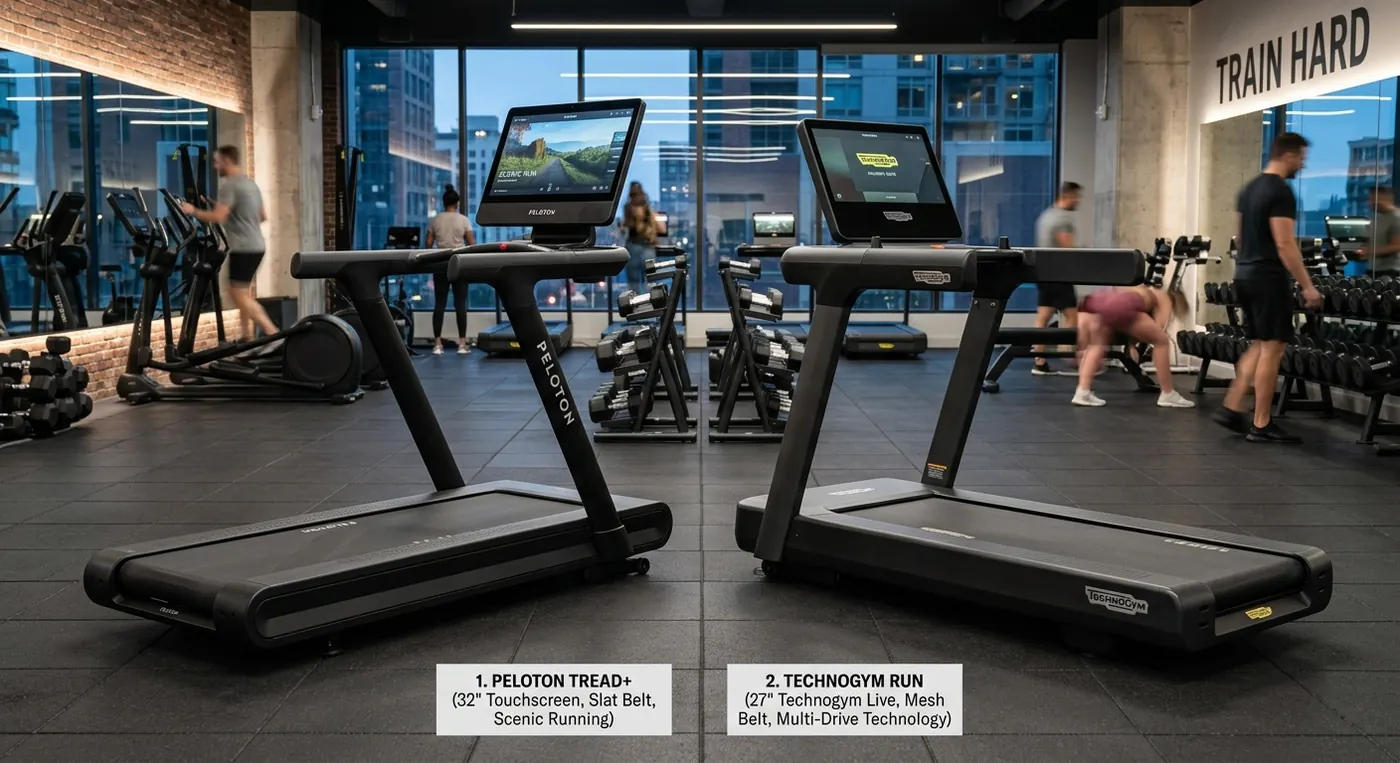
NordicTrack Commercial 1750 vs Peloton Tread: Which Treadmill Wins?
NordicTrack 1750 wins on hardware; the Peloton Tread wins on content polish. We compare both treadmills on motor, deck, software, and price to settle it.
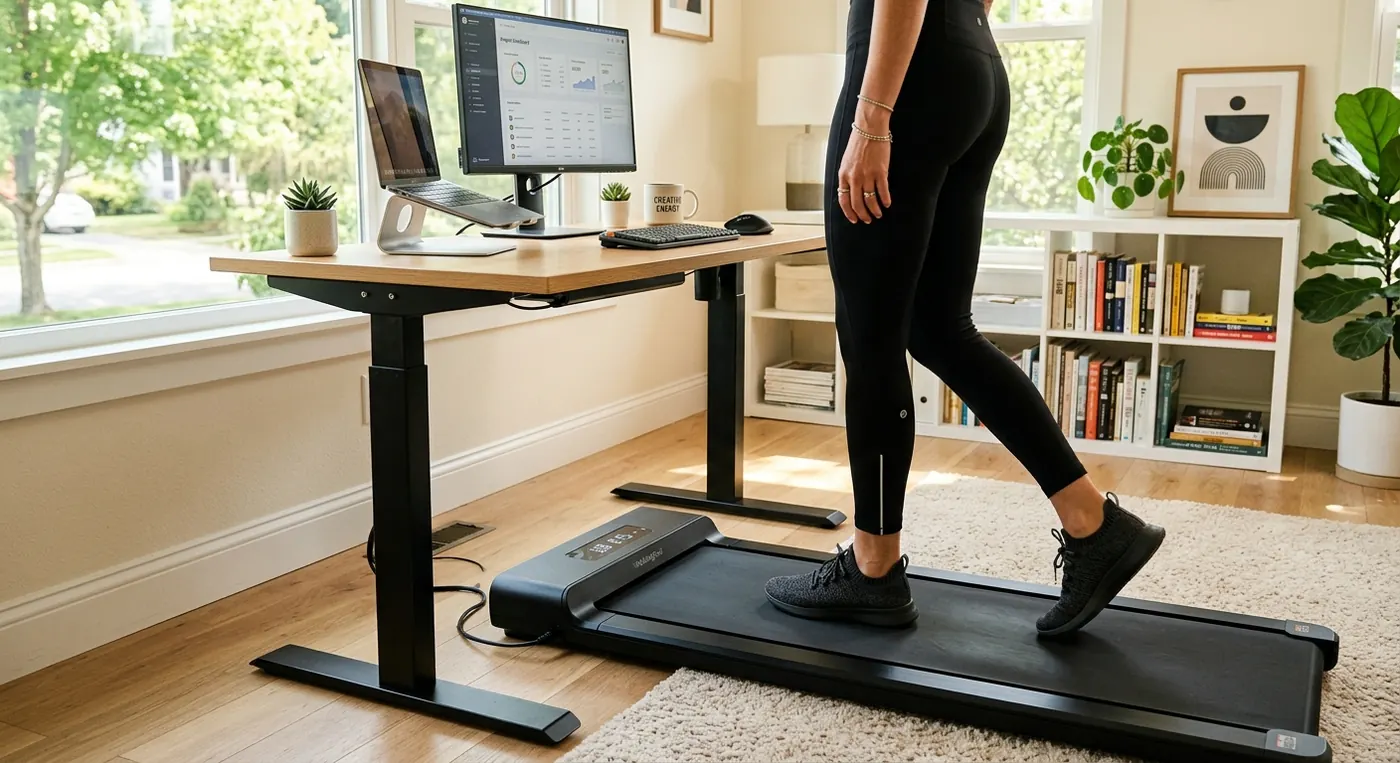
Best Walking Pads to Use Under a Standing Desk
The WalkingPad C2 is the best under-desk walking pad for its fold-in-half design; the UREVO E4W is the value pick. Five pads compared on height and belt.
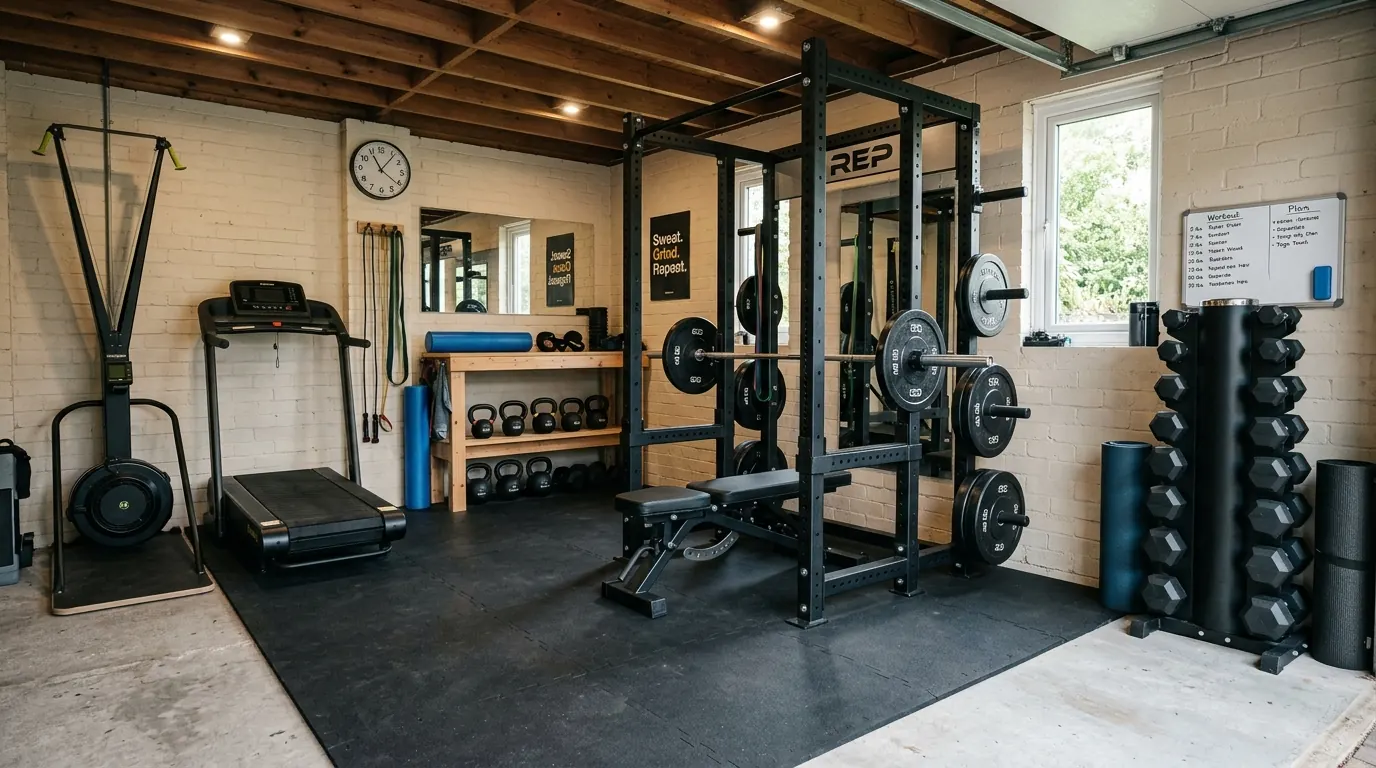
How to Build a Home Gym on Any Budget
Five complete home gym builds at $500, $1,500, $3,500, $7,500, and $15,000 - what to buy first, what to add later, and what to skip at every budget level.
Hilly Shore Labs
Editorial teamThe independent product research team behind GymScored. Every recommendation is researched, never hands-on tested — rankings come from manufacturer specifications, published standards, and aggregated buyer sentiment.
163 products scored across 26 home gym categories, each on the same 5-dimension Gym Score formula.
See the scoring methodology and who we are.
Affiliate disclosure: GymScored is a participant in the Amazon Services LLC Associates Program. We earn from qualifying purchases at no extra cost to you. Full disclosure →