NordicTrack Commercial 1750 vs Peloton Tread: Which Treadmill Wins?
NordicTrack 1750 wins on hardware; the Peloton Tread wins on content polish. We compare both treadmills on motor, deck, software, and price to settle it.
How GymScored is paid: Amazon Associates commission plus brand-direct affiliate (Rogue / REP / Titan when approved). No sponsored placements, no paid reviews, no pay-to-rank. Picks are ranked by the Gym Score formula and nothing else. Read the full disclosure.
NordicTrack 1750 wins on hardware-per-dollar and is the smart-money pick. Peloton Tread wins if Peloton's content library is what gets you on the machine — and only then.
| Product | Owner rating | Key specs | Pros | Cons | Price | Buy |
|---|---|---|---|---|---|---|
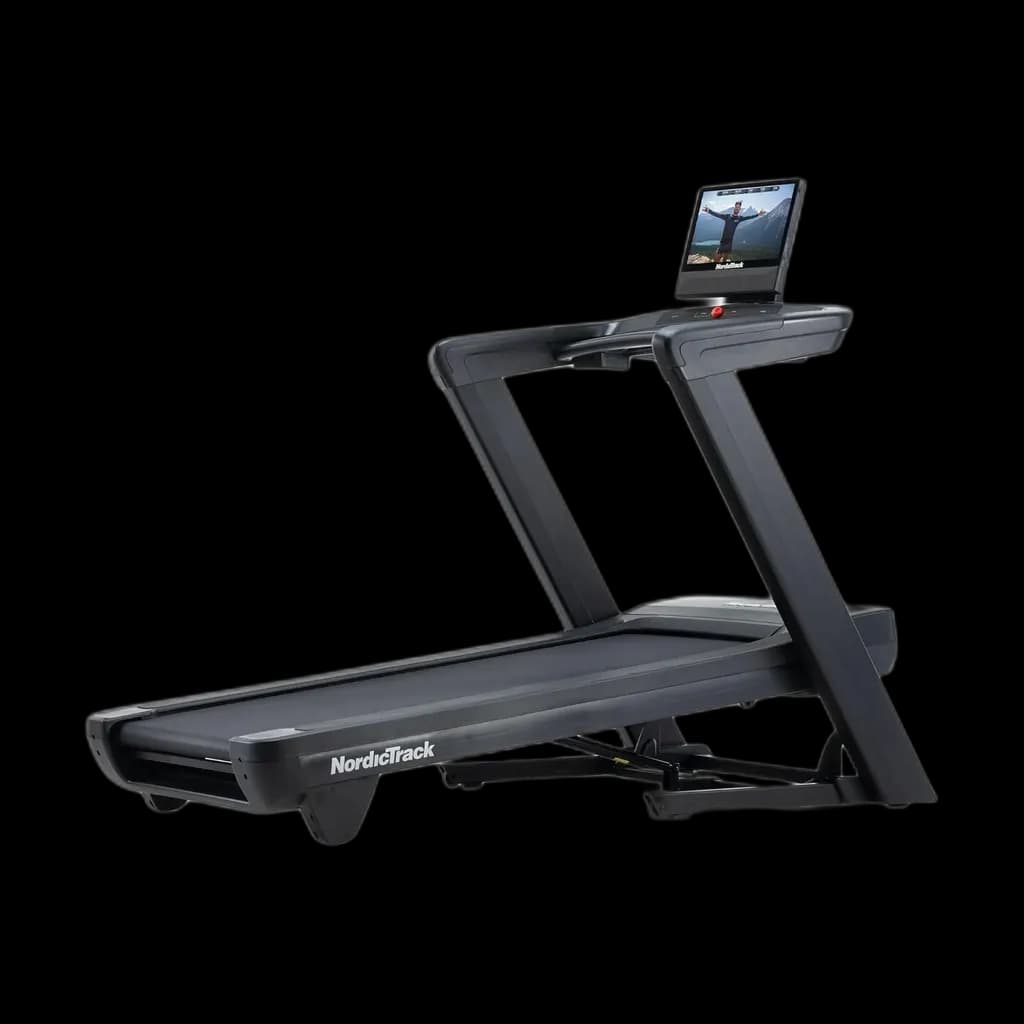 4.25 CHP motor, 22 x 60" belt, 16" pivoting HD screen with iFIT. ↑ 4.25 CHP motor↑ 22" x 60" belt↓ Ifit Subscription Near-RequiredBased on 25 buyer mentions | Owner rating Gym Score 76 | Key specs
| Pros
| Cons
| $1,999.00 | Buy on Amazon |
 3 HP AC motor, 20 x 59" belt, 24" HD swivel screen (Peloton's listing) with Peloton studio content. ↑ Live Classes↑ Incline Range↓ Subscription RequiredBased on 25 buyer mentions | Owner rating Gym Score 72 | Key specs
| Pros
| Cons
| $3,295.00 | Buy on Amazon |
Amazon prices checked Oct 17, 2026. Amazon prices change often — the listing is authoritative.
Spec showdown: NordicTrack Commercial 1750 vs Peloton Cross Training Tread
| Spec | NordicTrack 1750 | Peloton Cross Training Tread |
|---|---|---|
| Motor | 4.25 CHP | 3 HP AC |
| Deck length | 60" | 59" |
| Deck width | 22" | 20" |
| Max speed | 12 mph | 12.5 mph |
| Incline range | -3% to 12% | 0% to 12.5% |
| Screen | 16" HD (pivoting) | 24" HD (swivels) |
| Subscription | iFIT optional, ~$39/mo | Required for full use, $49.99/mo |
| Weight capacity | 400 lb | 300 lb |
| Folding | Yes (SpaceSaver) | No |
Pick by training and budget
Decide by your situation, not the generic ranking.
| If | You want | Pick |
|---|---|---|
| Best value, incline training | You want a 60" deck, incline/decline, and iFIT for far less | NordicTrack Commercial 1750 |
| Peloton ecosystem | You're already in Peloton or want its live studio classes on a 24" swivel screen | Peloton Cross Training Tread |
| Marathon / full-stride mileage | The 60" deck and 4.25 CHP motor handle higher weekly mileage | NordicTrack Commercial 1750 |
TL;DR
- The 1750 wins for most home runners. A higher motor rating (4.25 CHP vs Peloton's 3 HP AC), a longer and wider deck (22 x 60 in vs 20 x 59 in), a folding frame, and a much lower price (on Amazon today: $1,999.00 vs $3,295.00).
- The Peloton Cross Training Tread wins on one axis only: studio-grade guided content. Its 24" swivel screen and instructor library are unmatched, but the value depends on whether you'll actually use the $49.99/month All-Access membership (Peloton's price since October 2025).
- Without an iFIT subscription, the 1750 still works as a normal treadmill. The Peloton Tread requires a membership to unlock most of its content and class-driven incline features.
- Pick NordicTrack if you want hardware-per-dollar. Pick Peloton if guided classes are the only thing that gets you running.
Spec showdown
| Spec | NordicTrack Commercial 1750 | Peloton Cross Training Tread |
|---|---|---|
| Motor | 4.25 CHP | 3 HP AC |
| Deck length | 60" | 59" |
| Deck width | 22" | 20" |
| Max speed | 12 mph | 12.5 mph |
| Incline | -3% to 12% | 0% to 12.5% |
| Screen | 16" HD (pivoting) | 24" HD (swivels) |
| Subscription | iFIT optional ($39/mo) | Peloton All-Access required for full use ($49.99/mo) |
| Amazon price today | $1,999.00 | $3,295.00 |
| Weight capacity | 400 lb | 300 lb |
| Folding | Yes (SpaceSaver hydraulic) | No |
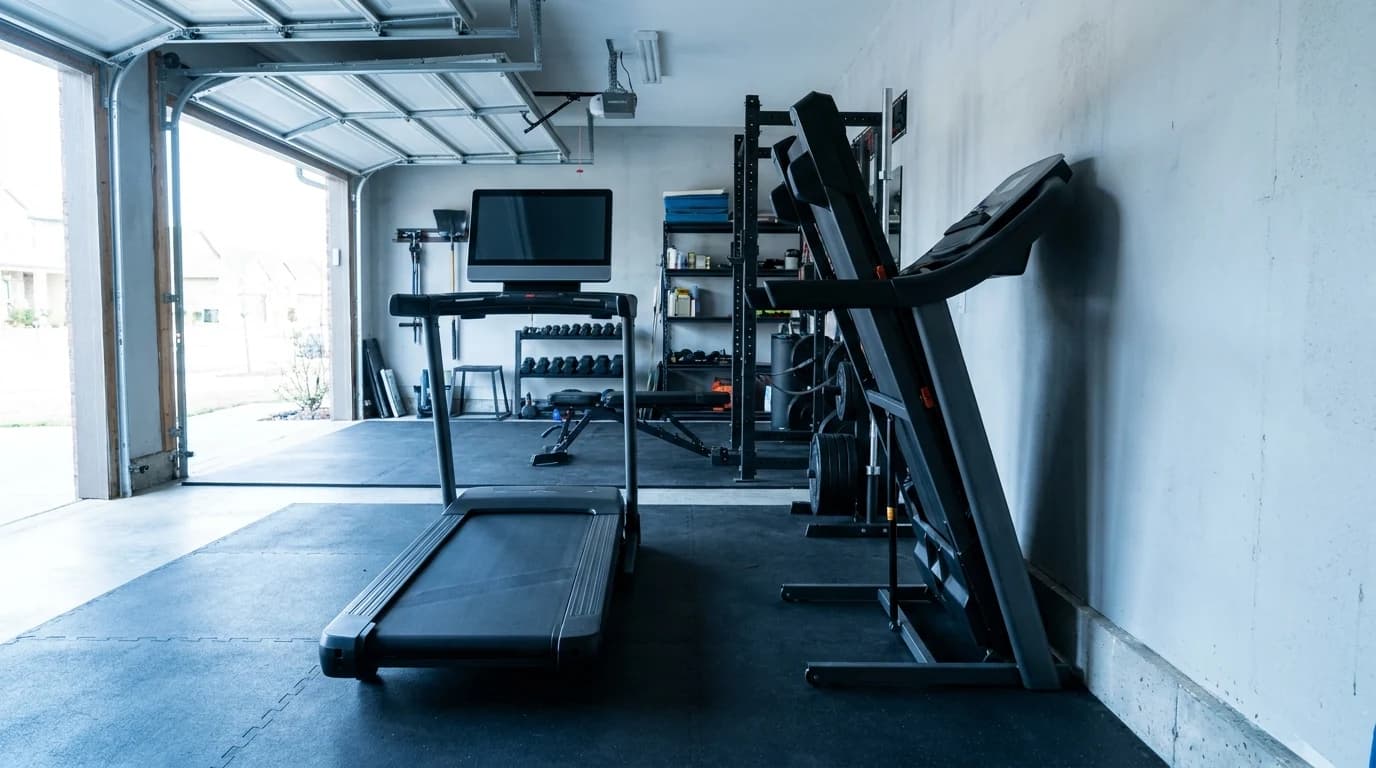
The motor rating is the spec that matters most for running. Continuous horsepower (CHP) is the output the motor is built to sustain, not a brief surge. NordicTrack rates the 1750 at 4.25 CHP; Peloton lists a 3 HP AC motor for the Tread. AC and DC ratings are not perfectly like-for-like, so read the gap as directional rather than exact.
Rule of thumb: compare continuous ratings, never peak horsepower. Peak horsepower on a box is a surge number, not a durability number.
Where NordicTrack wins
Hardware per dollar is lopsided
A higher motor rating, an extra inch of deck length and 2" of deck width — plus folding — at a far lower price is not a small gap. Bigger motor matters most for heavier runners and high-incline interval work where deck speed has to fight more resistance from a loaded belt.
It works standalone, and it folds
Skip iFIT and the 1750 still runs every speed and incline setting in manual mode — NordicTrack's iFIT FAQ says you can always use the treadmill that way and that the subscription is not mandatory. You're paying for the hardware, not renting access to it.
The deck folds up when not in use, which matters in apartments and shared rooms where the treadmill can't dominate the floor plan. The 16" screen also pivots for floor work — yoga, mobility, kettlebell flows. That is no longer a NordicTrack-only feature: Peloton's current Cross Training Tread has a 24" screen that swivels too. The Peloton does not fold.
Where Peloton wins
Content is in a different league
Instructors are studio-trained, music licensing covers current pop, and the class library is large enough that you won't repeat for months. NordicTrack's iFIT library is decent but not a Peloton clone — production polish and live-class availability are noticeably below.
Class-driven auto-incline is also more tightly produced. Peloton instructors call incline and speed changes that the deck auto-executes. NordicTrack's iFIT Trainer Control does the same, but the cadence of cues is less polished, and the trainer-led incline grade transitions feel less synced to music beats.
The screen and the membership math
The 24" screen is the larger and more immersive of the two, and it swivels off the deck for strength and floor classes, which is how Peloton sells the Tread as a cross-training machine rather than a running-only one.
And if you already have a Bike or Bike+ on a single membership, adding the Tread inherits the membership at no extra cost. That changes the per-month math considerably.
Who should buy which
Pick NordicTrack if:
- You have an existing running habit and need durable hardware, not motivation.
- You're price-sensitive and don't want a roughly $600/year subscription locked into your gym.
- You'll use the treadmill 3+ times weekly with minimal guided content.
- You need to fold the deck for floor space.
Pick Peloton if:
- You've owned a Peloton Bike or Bike+ and use the app daily — content cross-credit makes the membership a deal.
- Guided classes are the only thing that gets you on the deck. Hardware that sits unused is the worse buy regardless of price.
- A large, swiveling screen for off-deck classes genuinely matters to you.
- You're already paying for All-Access and the Tread is the natural next purchase.
What the research actually says
- The continuous rating, not peak horsepower, is the comparable motor number. Manufacturers often advertise peak HP (the brief surge max); the continuous rating is what the motor is designed to sustain. Neither brand publishes failure-rate data, so treat any precise lifespan claim you read as a guess.
- Both decks are full running length. At 59 and 60 inches they leave room for a running stride; sub-50-inch walking pads are built for walking, not running.
- Aerobic exercise dose for cardiovascular benefit is 150-300 minutes/week at moderate intensity per current Physical Activity Guidelines (HHS, 2018). Treadmill choice is a small variable in this equation — adherence is the large one.
- Surface cushioning has a small, measurable effect. In a lab study, running unshod on a treadmill belt topped with 10 mm of midsole foam lowered metabolic cost by about 1.6%, while 20 mm made no significant difference (Tung, Franz & Kram 2014, PMID 24441213).
- Brand cushioning claims are marketing, not data. NordicTrack sells RunnersFlex cushioning and Peloton describes a cushioned belt; neither publishes impact-reduction figures we can compare. Neither is a substitute for varied-surface running.
What the research does NOT support: the claim that a smart-screen treadmill improves training outcomes vs an equivalent dumb treadmill at matched volume. Adherence improves with engagement, but no peer-reviewed evidence shows the screen itself changes VO2 max or pace adaptations.
What to skip
- Walking-class motors sold as "running" treadmills. If the continuous rating is low or missing, buy it for walking only.
- Hydraulic-only incline (no motor). You have to manually re-set the deck. Slows interval work to a crawl.
- Touchscreen treadmills under $1,500. The screen budget came out of the motor and frame budget. Either the deck flexes or the motor is undersized.
- No-name "Peloton clones" with off-brand subscription apps. App library shrinks as the company pivots; you're left with a $1,500 paperweight with a dead screen.
Sources
- Physical Activity Guidelines for Americans, 2nd ed. — health.gov
- ACSM Physical Activity Guidelines — acsm.org
- Tung, Franz & Kram 2014, metabolic cost of cushioning during running — PMID 24441213
- NordicTrack iFIT FAQ (manual mode without a membership) — nordictrack.com
- Peloton Tread specifications — onepeloton.com
- Peloton membership price change, October 2025 — Retail Dive
- DC Rainmaker (connected-fitness resource hub) — dcrainmaker.com
Frequently Asked Questions
Can I use the Peloton app on a NordicTrack?+
Yes — the Peloton app works on any device. You'd just lose the auto-incline integration that's specific to the Peloton Tread.
Is the iFIT subscription required?+
Not strictly — the 1750 works as a standard treadmill without it. But the trainer-led incline/speed control is what most people pay for.
Does the Peloton Tread work without a subscription?+
Partially. Peloton says the All-Access Membership is required to access all Peloton content and applicable features, including instructor-driven incline and speed. That is why we count the $49.99/month as effectively required.
Is the iFIT subscription on the 1750 worth it?+
Only if you'll use trainer-led auto-incline/speed classes regularly. The 1750 works fully as a standard treadmill without iFIT — all speeds, all inclines, on-device workout storage. The subscription buys the guided-content layer, not the hardware functionality.
Are the older Peloton Tread+ models safe?+
The Tread+ (larger slat-belt model) was recalled in 2021 after entrapment incidents and re-released with safety modifications. The current Peloton Tread (regular belt) is unaffected by that recall. Verify model and recall status before buying used.
Which treadmill is better for serious running training?+
The NordicTrack 1750 — higher motor rating, longer and wider deck, no subscription dependency. Serious runners typically pair the hardware with their own programming (Strava, Garmin, coach), not a subscription content platform.
Sources & Research
- r/treadmills — Owner reportscommunity
- HHS Physical Activity Guidelines — Physical Activity Guidelines for Americans, 2nd ed.authority
- ACSM — Physical Activity Guidelinesauthority
- PubMed (Tung, Franz & Kram) — A test of the metabolic cost of cushioning hypothesis during unshod and shod runningresearch
- Peloton — Peloton Tread product page — 23.8" swivel screen, 59 x 20 in belt, 3 HP AC motorstandard
- DC Rainmaker — DC Rainmaker — connected-fitness coverage (resource hub)review
- NordicTrack — iFIT FAQ — treadmill usable in manual mode; subscription not mandatorymanufacturer
- Retail Dive — Peloton raises membership pricing ahead of holidays (Oct 1, 2025): All-Access $44 to $49.99news
Related reviews
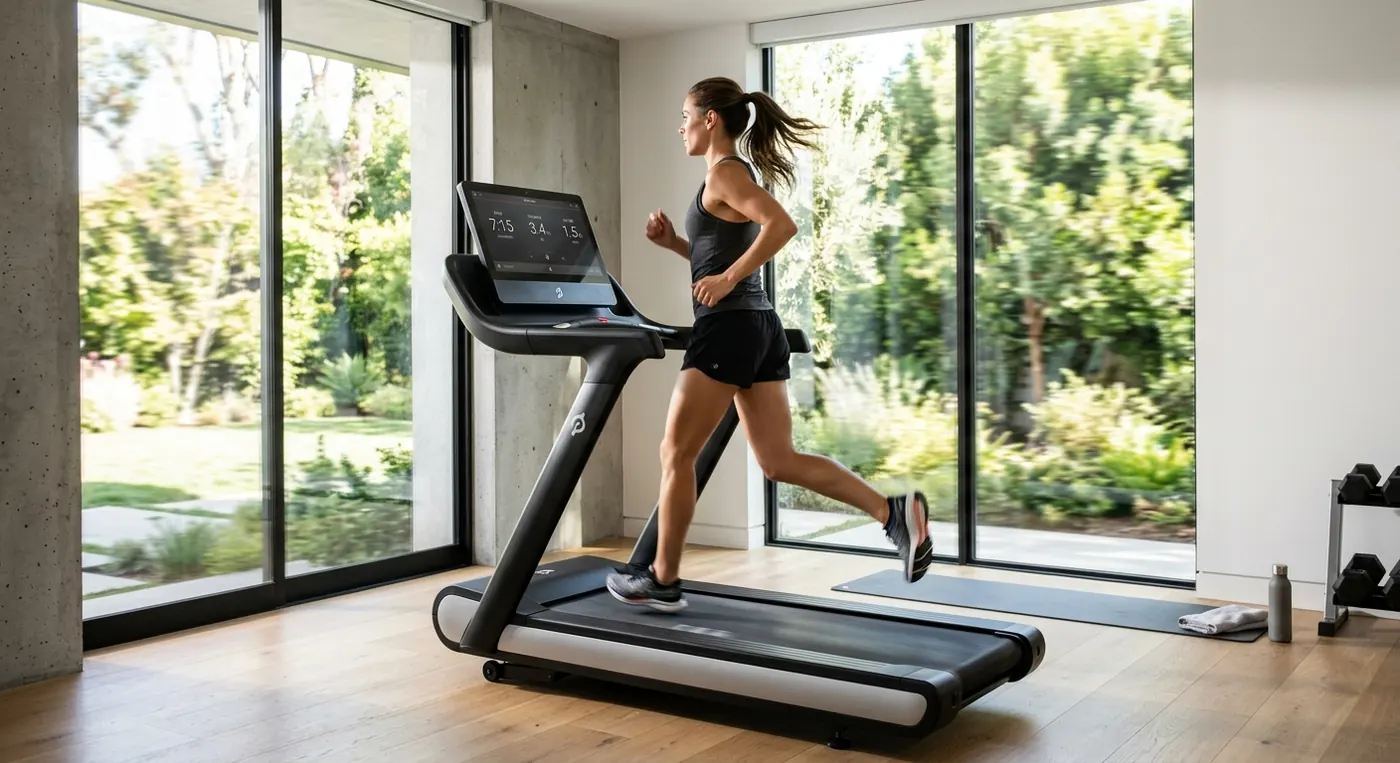
Best Treadmill for Home Runners in 2026
The NordicTrack Commercial 1750 is the best running treadmill of 2026; the T Series 10 is the value runner and the MERACH is the incline pick. Seven decks scored.
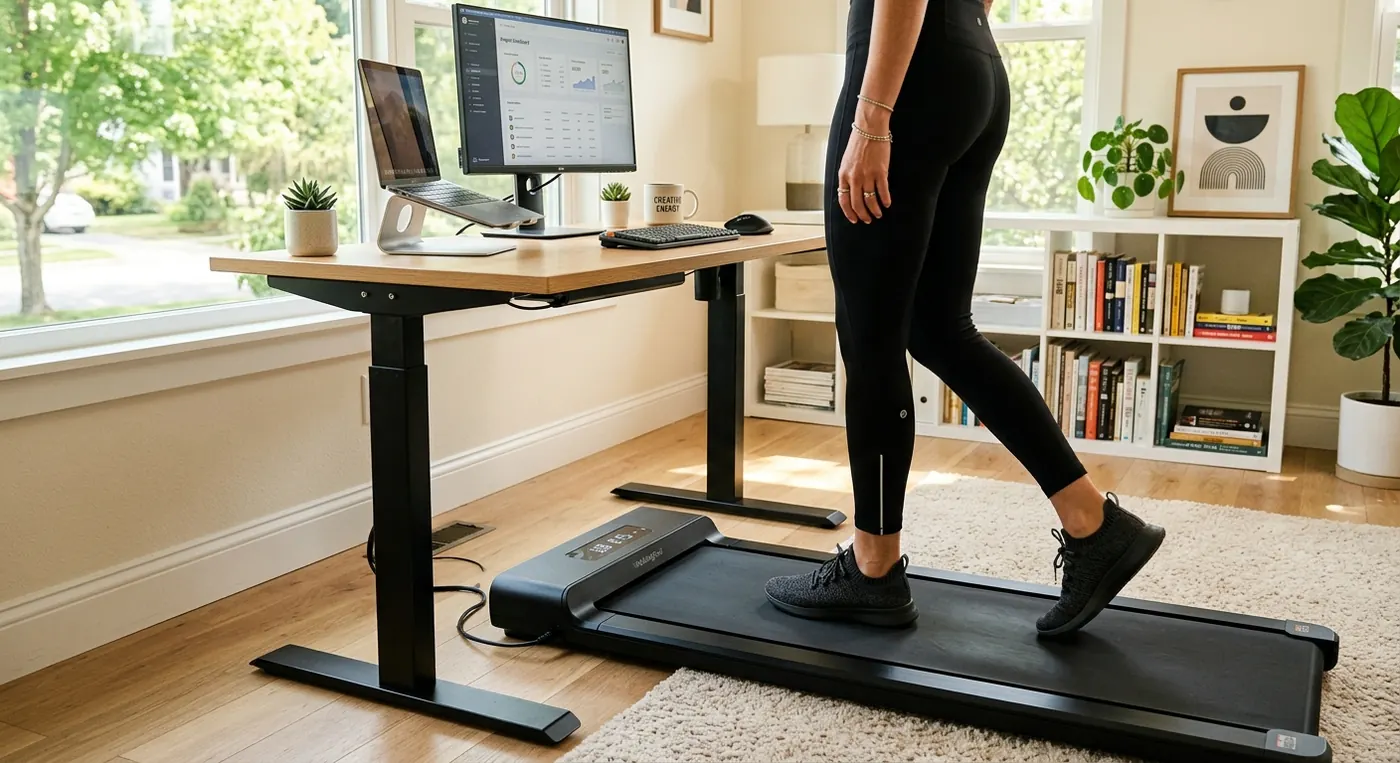
Best Walking Pads to Use Under a Standing Desk
The WalkingPad C2 is the best under-desk walking pad for its fold-in-half design; the TRAILVIBER adds incline. Five pads compared on height and belt.
Hilly Shore Labs
Editorial teamThe independent product research team behind GymScored. Every recommendation is researched, never hands-on tested — recommendations draw on manufacturer specifications and available published research. Category order is editorial; the Gym Score is a separate comparison aid.
170 listed products across 26 home gym categories. Scores use category criteria, value and owner-rating inputs; missing evidence limits what a score can tell you.
See the scoring methodology and who we are.
Affiliate disclosure: GymScored is a participant in the Amazon Services LLC Associates Program. We earn from qualifying purchases at no extra cost to you. Full disclosure →