 Best Value
Rank #1 in Exercise Bikes
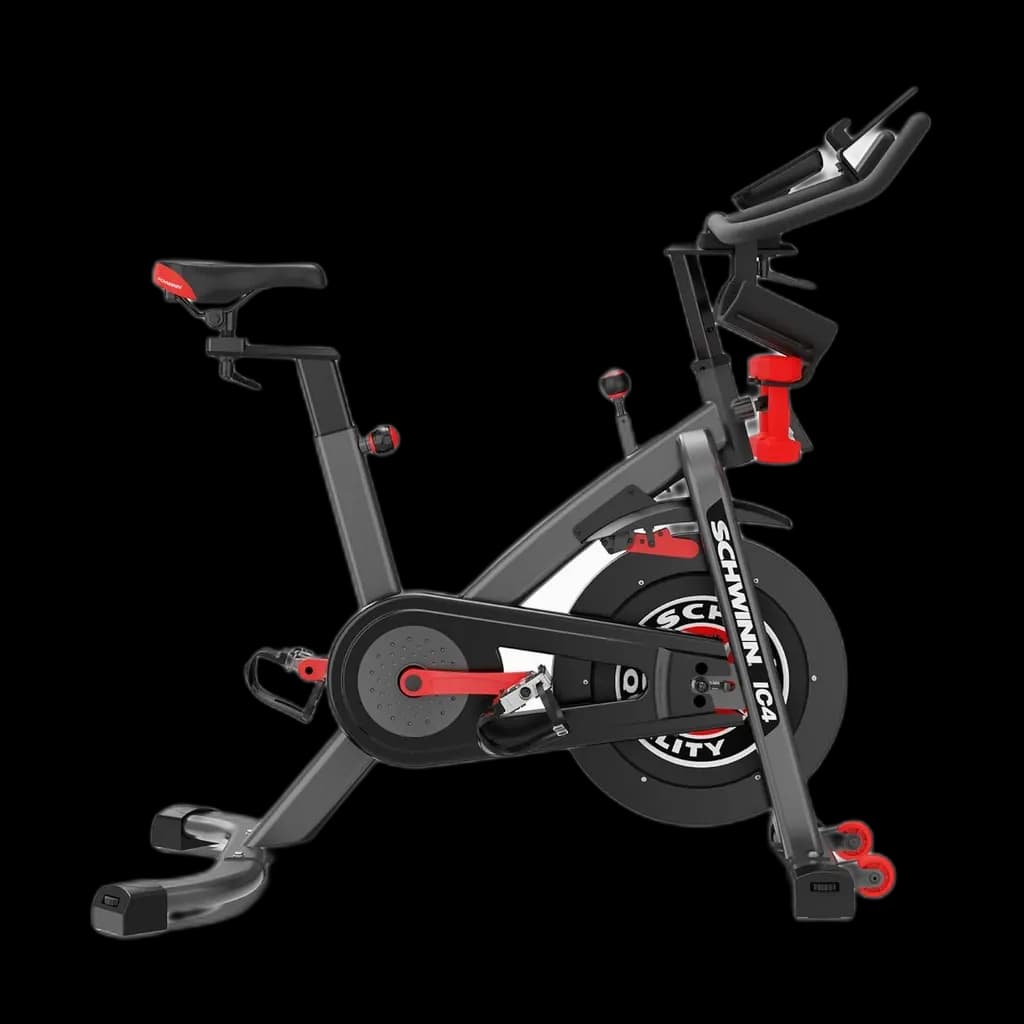
Schwinn IC4
by SchwinnBuy next
Score
The Peloton alternative. Bluetooth FTMS broadcasting, dual-sided SPD pedals, magnetic resistance — rides along with the Peloton app, and pairs with Zwift or any app that reads Bluetooth FTMS.
- Peloton-curious buyers who want the classes without Peloton hardware
- Riders who already own SPD cycling shoes and want a real bike feel
- Households that share a tablet or iPad and do not need a built-in screen
- Apartment dwellers who need near-silent magnetic resistance
- You want auto-adjusting resistance synced to instructor cadence
- You require a built-in touchscreen and do not want to BYO tablet
- You weigh more than 300 pounds, the rated user weight ceiling
- You want explicit Peloton hardware integration with leaderboard auto-sync
About 50 inches long by 22 inches wide. 8-foot ceiling typically sufficient for seated and standing positions. Compact footprint that fits in most apartments and corners.
easy — Most parts pre-attached. Plan 30 to 45 minutes solo. Tools and instructions included; the most demanding step is mounting the handlebars and seat post.
An indoor cycle is a low-footprint, low-noise cardio choice that fits well early in a home gym build, especially for apartments where treadmills and rowers are unworkable.
Strengths
- ↑Rides along with Peloton app classes
- ↑Bluetooth FTMS
- ↑Dual-sided SPD pedals
- ↑Magnetic resistance
Weaknesses
- ↓No touchscreen (use your iPad)
- ↓100 resistance levels via dial (not auto)
- ↓Shipping can be delayed
What owners actually complain about
Synthesized from owner reviews and community threads. Paraphrased, not quoted.
- Resistance is manual via dial, not auto-adjusting, so instructor cues require you to turn the knob yourself
- The Peloton app cannot read the IC4’s resistance or output, so owners follow Peloton cues by feel and leaderboard numbers are not comparable
- Console is basic LCD with no streaming capability, requiring a tablet for class content
- Shipping delays from Schwinn and Bowflex parent have been reported during high-demand periods
- Seat is firm and many riders swap to a more padded saddle or add a gel cover
Buyer sentiment
Based on 2,729 user mentionsBuyers praise quality, assembly, sturdiness and value for money. Mixed feedback on noise level and functionality.
Verdict: The Peloton experience without the Peloton hardware premium — studio classes via the app as a ride-along, if you don't need auto-resistance.
Specs that matter
| Spec | Value |
|---|---|
| Flywheel | 40 lb, perimeter-weighted |
| Frame rating | 300 lb |
| Connectivity | Bluetooth FTMS |
| Pedals | Dual-sided SPD + toe cage |
| Noise | Under 50 dB |
What you get
- Studio-class experience — Peloton App classes as a ride-along, plus Apple Fitness+ and Echelon
- Quietest cardio — magnetic resistance, apartment-friendly above neighbors
- Dual-sided SPD pedals — uncommon at this price; clip in or use a toe cage
What you give up
- Manual resistance — you turn the dial when the instructor calls a number (no auto-adjust)
- No built-in screen — bring your own tablet (factor ~$300 if you don't own one)
Buy it if you want studio classes, already own a tablet, and don't need auto-resistance. Skip it if you want auto-resistance and a built-in touchscreen (NordicTrack S22i).
The Peloton-app instructor experience is identical; manual dial-turning becomes muscle memory within a few weeks. Note: the Peloton app does not read the IC4's resistance or output, so Peloton leaderboard numbers are not comparable.
Full specs
- Resistance
- Magnetic (100 levels)
- Connectivity
- Bluetooth FTMS
- Pedals
- SPD + toe cage
- Flywheel
- 40 lb perimeter-weighted
Common questions
Does the Peloton app work with the IC4?
As a ride-along, yes. Peloton's App One membership ($12.99 a month, per Peloton) streams its classes on any bike, but on a non-Peloton bike the app does not read the bike's resistance or output; Peloton says App+ can show cadence from a separate Bluetooth cadence sensor. For live power and resistance data, pair the IC4 with an app that reads Bluetooth FTMS, such as Zwift.
Why no built-in screen?
Leaving out a touchscreen keeps the price well below Peloton's. The bike includes a tablet mount above the handlebars, and most owners use an iPad or Android tablet they already own.
Are the SPD pedals compatible with my cycling shoes?
Yes, the pedals are dual-sided with SPD on one side and toe cage on the other. Standard 2-bolt SPD cycling shoes clip in directly. Toe cage side fits regular sneakers or running shoes.
How noisy is it for an apartment?
Magnetic resistance is near-silent. The flywheel produces minimal noise even at high cadence. This is one of the quietest cardio machines for apartment use, far quieter than a treadmill or air rower.
Will it support a 300-pound rider?
The user weight rating is 300 pounds. Owners at 280 to 290 report stable use with no frame flex. Riders close to the 300 limit should expect more frequent calibration of the resistance dial and seat post tightening.
Sources & references
- ResearchACSM indoor cycling cardiovascular benefit notes— ACSM
- CommunitySchwinn IC4 versus Peloton long-term owner discussion— r/homegym
- Independent reviewSchwinn IC4 review and durability assessment— Garage Gym Reviews
- Independent reviewWirecutter best indoor cycles coverage— Wirecutter
- ResearchNIH on stationary cycling for cardiovascular fitness— NIH
Full buying guide
Best Exercise Bikes for Home Gym Use
Read the full ranking →Related Exercise Bikes guides
Other exercise bikes we rate
Ranked alternatives from the same category, with our score and the current price.
The incline/decline spin bike. -10% to +20% tilt adjusts terrain mid-ride, auto via iFIT. Closest analog to an outdoor ride without leaving the basement.
For cyclists training indoors. True road-bike fit, simulates gear shifts, drops into Zwift and TrainerRoad natively. Not a studio class bike.
The premium option. Auto-resistance, 23.8" HD rotating screen, the best-in-class class catalog. The question isn't quality — it's whether you'll use the $49.99/mo All-Access membership.