How Much Space Does a Functional Trainer Need?
A functional trainer needs working clearance, not just its footprint: budget an 8x10 ft floor, the cable arc, and ceiling height before you buy.
Plan around the working clearance, not the footprint. A full-size dual-pulley functional trainer has a frame roughly 5 to 6 feet wide by 3 to 5 feet deep, but you need a usable floor area of about 8 by 10 feet because you stand in front of and beside the machine and pull cables into a wide arc. Add 2 to 3 feet on each side and 3 to 4 feet in front for movements like cable flyes and woodchoppers. Ceiling height is the real dealbreaker: the frame is 80 to 93 inches tall, and a full pull-up over the bar needs about 100 inches (8 feet 4 inches) of clearance. Compact units fit roughly 8 by 9 feet, and a rack-mounted cable attachment shares a power rack's footprint instead of claiming new floor.
How GymScored is paid: Amazon Associates commission plus brand-direct affiliate (Rogue / REP / Titan when approved). No sponsored placements, no paid reviews, no pay-to-rank. Picks are ranked by the Gym Score formula and nothing else. Read the full disclosure.
A functional trainer's listed footprint tells you where the steel sits, not whether you can train. The number that decides if it fits is the working clearance: about 8 by 10 feet of usable floor for a full-size unit, 2 to 3 feet on each side and 3 to 4 feet in front for the cable swing arc, and roughly 100 inches (8 feet 4 inches) of ceiling if you want pull-ups. Tape the working box on your floor, mime your widest movement, and measure your ceiling before you buy. If it does not fit, a compact dual-pulley trainer or a rack-mounted cable attachment keeps the cable function without the clearance demand.
Cable clearance by movement
Plan for your widest movement, not your average one. The fly and the woodchopper claim the most lateral room; a wall or rack inside that arc stops the rep no matter how much front clearance you have.
| Movement | Where you stand | Extra clearance to budget |
|---|---|---|
| Lat pulldown / seated row | Centered, at or inside the frame | Footprint is enough |
| Cable curl / triceps pushdown | Just in front of one tower | ~2 ft in front |
| Standing chest press | Stepped forward, facing away | 3 to 4 ft in front |
| Cable fly (low or high) | Outside the frame, arms wide | 2 to 3 ft each side |
| Woodchopper / rotational | Side-on, rotating through an arc | 3 ft to the swinging side |
| Pull-ups (if equipped) | Under the bar | ~100 in of ceiling |
The short version
The number on a functional trainer's spec sheet is its frame footprint, and that number is what gets people in trouble. A machine that lists as 5 feet wide does not fit in a 5-foot space, because you do not stand inside the frame to use it. You stand in front of it, off to the side, and pull cables out into an arc. What decides whether the machine works in your room is the working clearance, not the footprint.
For a typical full-size dual-pulley trainer, plan on a usable floor area of about 8 by 10 feet and a ceiling around 8 feet 4 inches for pull-ups. If you only have a corner, a compact or rack-mounted cable setup is the honest answer; compare those on our all-in-one home gyms and cable machines pages.
Key takeaways
- The footprint is the smallest number that matters. The frame is roughly 4 to 6 feet wide and 3 to 5 feet deep, but add 2 to 3 feet on each side and 3 to 4 feet in front to actually move through cable exercises.
- Plan for an 8 by 10 foot usable area for a full-size unit, about 8 by 9 feet for a compact one. That figure already includes the room you move in.
- Ceiling height is the dealbreaker, not the floor. Trainers stand 80 to 93 inches tall, and a full pull-up over the bar needs about 100 inches (8 feet 4 inches). A 7-foot basement rules out overhead work.
- What most people get wrong: they measure the frame, confirm it fits the wall, buy the machine, then find they cannot do a cable fly because the handle hits a rack three feet away. The cable's swing arc, not the frame, is the real boundary.
Footprint vs working clearance
Three sizes, and you have to clear all three
Every spec sheet is honest about the steel and a lie about the room. A cable machine is a movement tool: the handle travels through an arc several feet out and to the side, and your body needs room to step in, brace, and follow through. Three sizes are in play, and you have to clear all three.
| Measurement | What it is | Typical full-size number |
|---|---|---|
| Frame footprint | The steel base, what the spec sheet lists | 5 to 6 ft wide x 3 to 5 ft deep |
| Working clearance | Footprint plus standing/swing room around it | ~8 ft wide x 10 ft deep (usable) |
| Overhead clearance | Ceiling for the tallest movement | ~100 in (8 ft 4 in) for pull-ups |
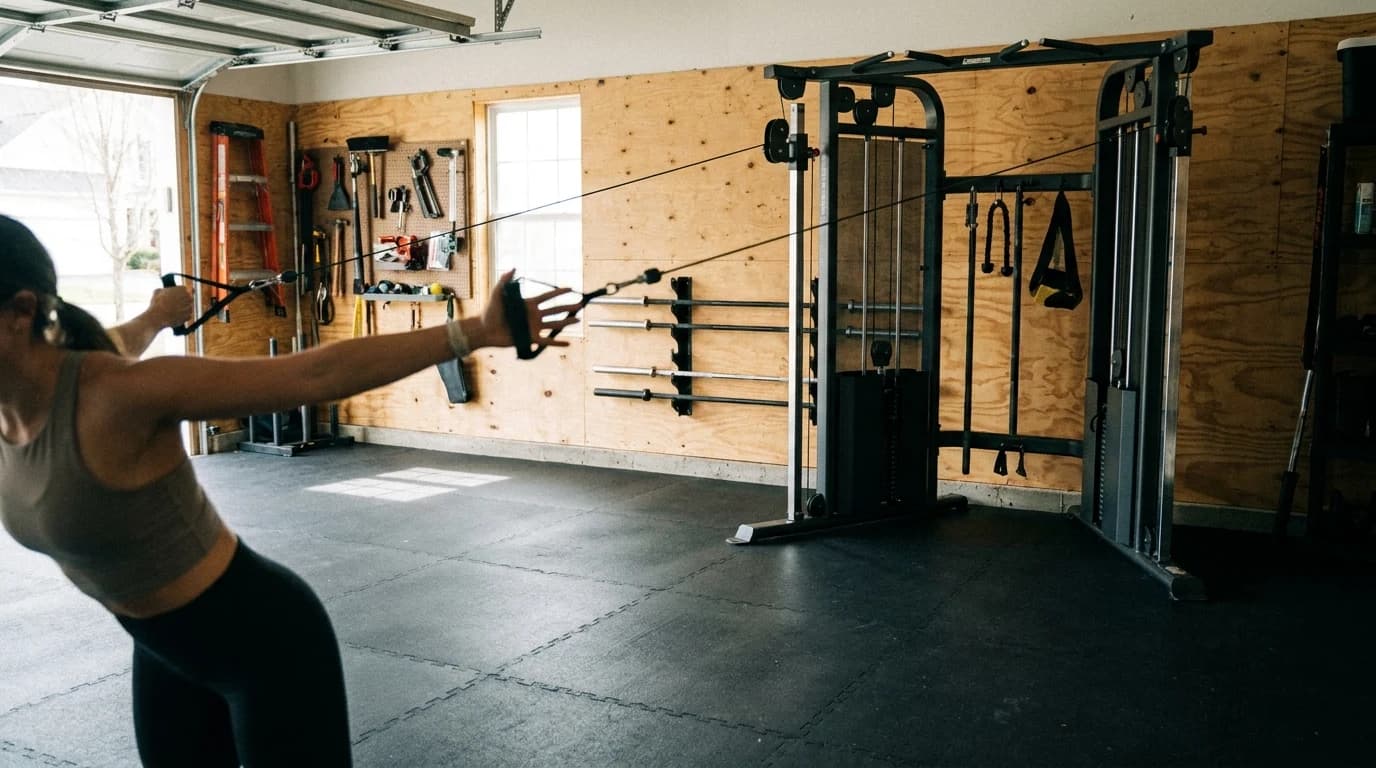
Force USA notes that on a full-size trainer the pulley uprights sit 48 inches apart, and that to open a wide cable fly you stand outside the cage and pull the handles past the frame.
The clearance each movement needs
Different cable movements claim different amounts of space. A straight-down lat pulldown barely needs more than the footprint; a standing fly or a woodchopper wants the most lateral room of anything you will do. Plan for your widest movement, not your average one.
| Movement | Where you stand | Extra clearance to budget |
|---|---|---|
| Lat pulldown / seated row | Centered, at or inside the frame | Footprint is enough |
| Cable curl / triceps pushdown | Just in front of one tower | ~2 ft in front |
| Standing chest press | Stepped forward, facing away | 3 to 4 ft in front |
| Cable fly (low or high) | Outside the frame, arms wide | 2 to 3 ft each side |
| Woodchopper / rotational | Side-on, rotating through an arc | 3 ft to the swinging side |
| Pull-ups (if equipped) | Under the bar | ~100 in of ceiling |
The two movements that catch people out
Fits inside roughly the footprint:
- Lat pulldown and seated row, where you sit centered under the pulley.
- Curls and pushdowns, which stay in front of one tower.
Needs a wide horizontal arc:
- The cable fly, arms opening past the frame on both sides.
- The woodchopper, rotating side-on through its swing.
If a wall, a rack, or a storage tree sits inside that arc, you cannot finish the rep, and no amount of front clearance fixes it. Most guides quote one floor figure and one ceiling figure; very few break clearance down by movement, which is exactly what a buyer planning a real room needs.
Ceiling height is where basements lose
The floor problem is usually solvable: angle the machine, drop a side movement, or move a rack. The ceiling problem is not. The frame stands 80 to 93 inches tall, so a standard 8-foot (96-inch) ceiling clears it but barely. Add a pull-up over the bar and you need around 8 feet 4 inches, which Force USA lists as the minimum for a full pull-up with your head above the bar.
Finished basements are often framed to 7 feet or 7 feet 6 inches, and ductwork drops them further in spots. There the trainer may bolt in and run cables fine for presses, rows, and flyes, but pull-ups and tall overhead pressing are out. Decide whether you can live with that before you buy. Our ceiling height guide has the full clearance math.
Quick rule: measure your ceiling first. Under 8 feet, treat any pull-up bar as decorative and plan around presses and cable work.
Measure before you buy: a worked example
Tape it out in four steps
Do not trust the spec sheet to tell you if it fits. Tape out the real envelope on your floor and stand in it.
- Mark the footprint with painter's tape at the listed width and depth, against the wall where it will live.
- Add the working box: extend the tape 2 to 3 feet past each side and 3 to 4 feet in front. That rectangle is the real requirement.
- Mime your widest movement inside the box (cable fly, woodchopper, arms extended). Your hands should never cross the tape or hit anything.
- Check the ceiling: about 100 inches clear if pull-ups matter.
The trap: a mid-size trainer listed at 56 by 44 inches is not a 56-by-44 problem. Add 30 inches each side and 42 inches in front and your real envelope is roughly 116 inches wide by 86 inches deep (about 9 feet 8 inches by 7 feet 2 inches). That is why the "8 by 10" rule exists.
When the room says no
If your taped-out box does not fit, do not force a full-size trainer into it. Two real alternatives keep the cable function without the clearance demand:
- Compact dual-pulley trainers shrink the frame to ~44 to 53 inches wide and drop the room minimum to roughly 8 by 9 feet. You lose some stack weight and pulley spread, but the movement library stays largely intact.
- Rack-mounted cable attachments bolt a pulley onto a power rack you already own, so the cable shares the rack's footprint instead of claiming new floor. The most space-efficient way to add cables.
Either way, plan the floor first. Our small-space planning guide covers laying out the room so the trainer's working box does not collide with everything else, and the all-in-one roundup compares the compact units that fit tight rooms.
Bottom line
A footprint tells you where the steel sits, not whether you can train. Budget the working clearance instead: about 8 by 10 feet of usable floor for a full-size unit, 2 to 3 feet each side and 3 to 4 feet in front for the cable arc, and roughly 100 inches of ceiling for pull-ups. Tape it out, mime your widest movement, and measure up before you buy.
Test the clearance before you buy
The fastest way to know whether a functional trainer's working envelope fits your room is to lay it out: the free GymScored planner places the machine, its cable arc, and everything else you own into your exact floor plan.
Sources
- Force USA — G3 All-In-One Trainer (pulley uprights 48 in apart; full pull-up needs 8 ft 4 in ceiling; widen a fly by standing outside the cage)
- BodyKore — How Much Space Does a Functional Trainer Require? (footprint ~4 to 6 ft wide x 3 to 5 ft deep, 80 to 93 in tall; plan ~8 by 10 ft usable, ~8 by 9 ft compact)
- GXMMAT — Functional Trainer Cable Machine: Is It Worth The Space? (~84-in ceiling, 6 by 6 ft working area, plus 3 to 4 ft front clearance)
Frequently Asked Questions
How much space do I really need for a functional trainer?+
Plan for a usable floor area of about 8 by 10 feet for a full-size dual-pulley trainer and around 8 by 9 feet for a compact unit. The frame footprint itself is only 4 to 6 feet wide by 3 to 5 feet deep, but you have to add 2 to 3 feet of clearance on each side and 3 to 4 feet in front so you can step into the cable's swing arc and complete movements like flyes and woodchoppers. The footprint on the spec sheet is the smallest number that matters.
What ceiling height do I need for a functional trainer?+
The frame stands 80 to 93 inches tall, so a standard 8-foot (96-inch) ceiling clears the machine itself. To do a full pull-up over the bar with your head above it, you need about 100 inches, or 8 feet 4 inches. A finished basement framed to 7 or 7.5 feet can still run cable presses, rows, and flyes, but pull-ups and tall overhead pressing will not fit. Measure the ceiling before anything else, because the floor problem is usually fixable and the ceiling problem is not.
Why does the footprint number on the spec sheet mislead buyers?+
Because you do not stand inside the frame to use a cable machine. The handle travels through an arc that can run several feet out and to the side, and your body needs room to step in, brace, and follow through. A trainer listed at 5 feet wide will not work in a 5-foot space. The footprint describes the steel, not the room you move in, so a machine that looks like it fits a tight corner usually fails the first cable fly when the handle hits a wall or a rack.
Which cable movements need the most clearance?+
Cable flyes and woodchoppers, because both pull the handle into a wide horizontal arc. A lat pulldown or seated row barely needs more than the footprint, and curls or pushdowns need only about 2 feet in front of one tower. But a standing fly puts your arms wide outside the frame, needing 2 to 3 feet on each side, and a rotational woodchopper sweeps about 3 feet to the swinging side. Plan for your widest movement, not your average one.
What can I use if a full-size functional trainer does not fit?+
Two real alternatives keep the cable function in a smaller space. A compact dual-pulley trainer shrinks the frame to about 44 to 53 inches wide and drops the room minimum to roughly 8 by 9 feet, trading some stack weight and pulley spread for size. A rack-mounted cable attachment bolts a pulley onto a power rack you already own, so the cable shares the rack's footprint instead of claiming new floor; it is the most space-efficient way to add cables to a small home gym.
Sources & Research
- Force USA — G3 All-In-One Trainer (pulley uprights 48 in apart; a full pull-up with head above the bar needs an 8 ft 4 in ceiling; stand outside the cage to widen a cable fly)
- BodyKore — How Much Space Does a Functional Trainer Require? (footprint ~4 to 6 ft wide by 3 to 5 ft deep, 80 to 93 in tall; leave ~2 to 3 ft each side and ~3 ft in front; plan ~8 by 10 ft usable, ~8 by 9 ft compact)
- GXMMAT — Functional Trainer Cable Machine: Is It Worth The Space? (minimum ~84-in ceiling and a 6 by 6 ft working area; footprint ~5 ft wide by 4 ft deep plus 3 to 4 ft of front clearance)
Your next step
Measured the room? Here are the trainers.
Related reviews
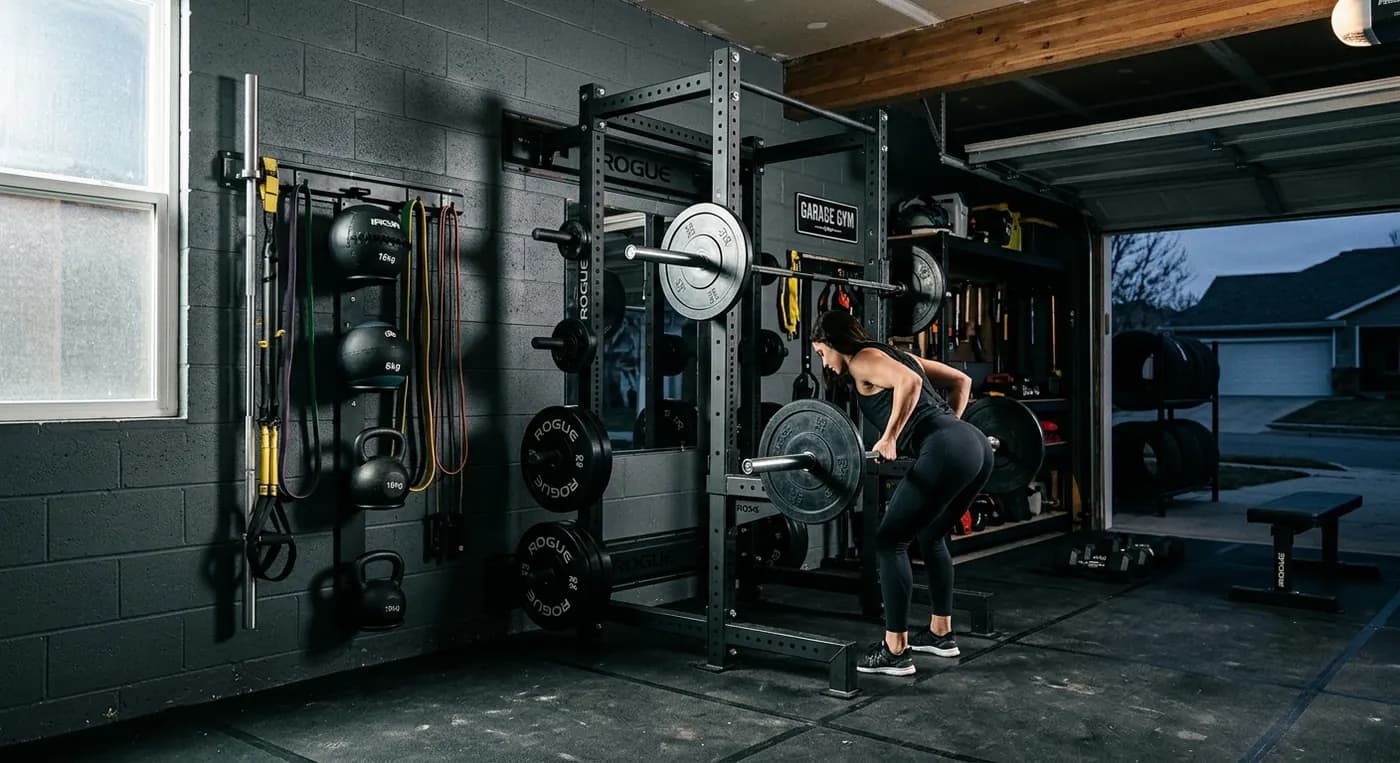
Best All-in-One Home Gyms in 2026
The Major Lutie Smith machine is the best all-in-one home gym you can buy today; the Force USA G3 is the editorial pick but backordered. Seven machines scored.
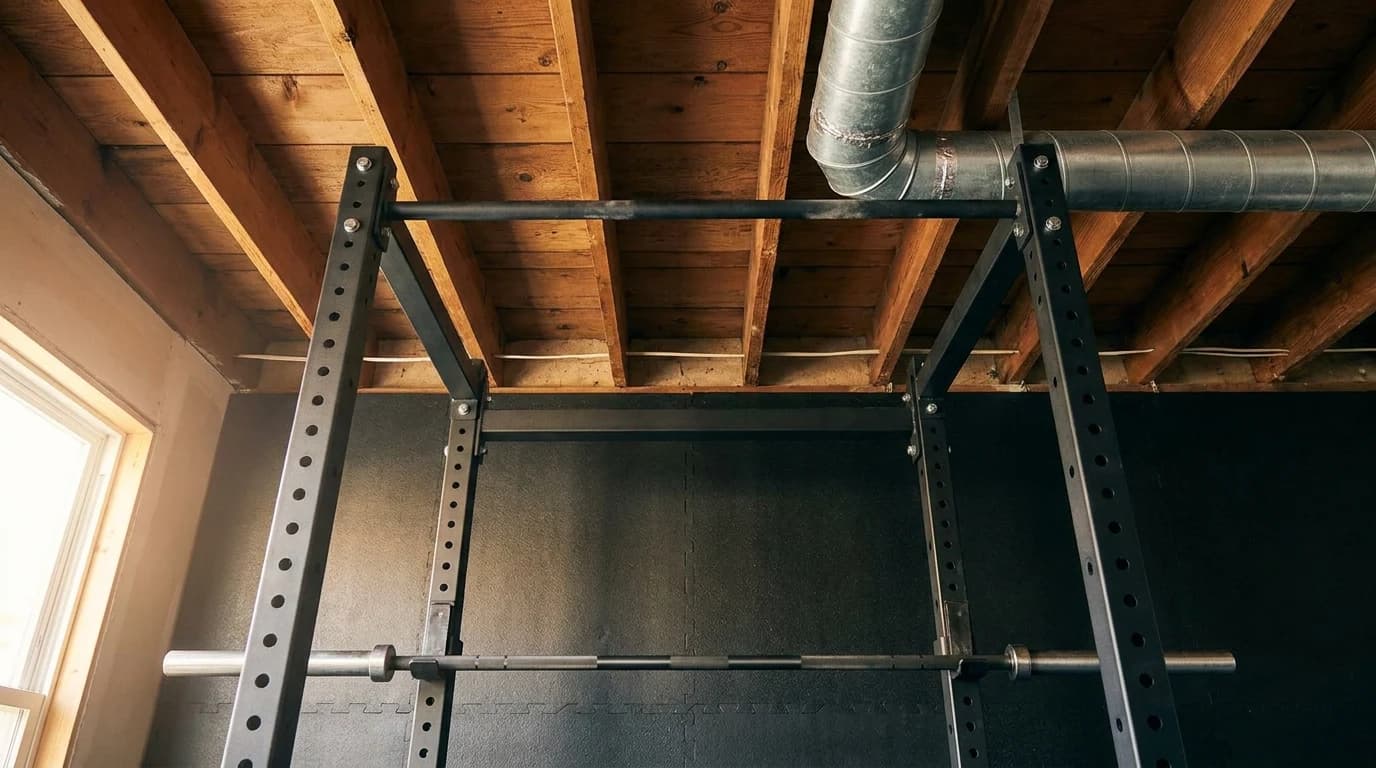
How Much Ceiling Height Do You Need for a Home Gym?
Home gym ceiling height comes down to power rack and overhead clearance math. The numbers you need, and what to do when a basement ceiling sits too low.
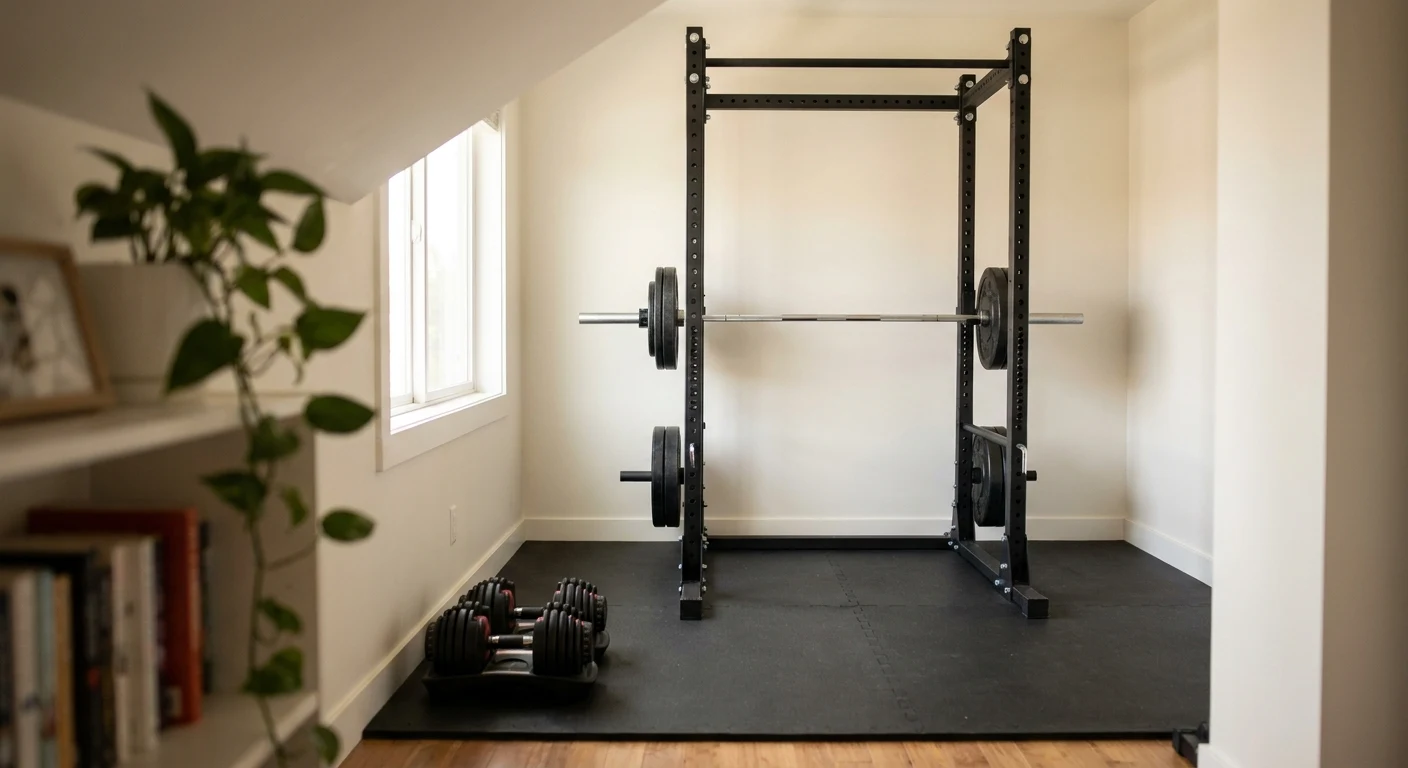
How to Plan a Home Gym in a Small Space (Without Wasting Money)
Plan a small-space home gym goal-first: real equipment footprints, ceiling-height math, the buy order that avoids waste, and what beginners over-buy.
Hilly Shore Labs
Editorial teamThe independent product research team behind GymScored. Every recommendation is researched, never hands-on tested — rankings come from manufacturer specifications, published standards, and aggregated buyer sentiment.
161 products scored across 26 home gym categories, each on the same 5-dimension Gym Score formula.
See the scoring methodology and who we are.
Affiliate disclosure: GymScored is a participant in the Amazon Services LLC Associates Program. We earn from qualifying purchases at no extra cost to you. Full disclosure →