Best Cable Machines for Home Gyms in 2026: Body-Solid Wins
The Body-Solid GDCC210 is the best cable machine for home gyms in 2026. Seven functional trainers scored on movement quality, footprint, and value.
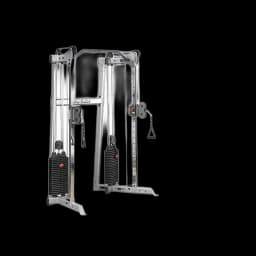
- Dual 160 Lb Stacks
- 2:1 Pulley Ratio
- 19 Height Positions
Evidence snapshot · Updated August 17, 2026
The evidence-backed answer
Body-Solid GDCC210 Functional Trainer is our default pick for the scope of this guide: Dual 210 lb stacks, 1:1 ratio, lifetime warranty. The genre-standard home functional trainer.
Scope: 4 shortlisted products compared using published specifications, owner-feedback signals, value and category-specific performance. The matched catalog records represent 4,200 owner ratings. This is research synthesis, not hands-on testing.
| Product | Rating | Current price context |
|---|---|---|
| Body-Solid GDCC210 Functional Trainer | 4.8/5 | $1,875.00 |
| REP Ares Cable Attachment | 4.8/5 | ~$899 |
| Force USA MyRack Cable Attachment | 4.7/5 | ~$1,199 |
| Bowflex Xceed Home Gym | 4.6/5 | $1,199.99 |
How GymScored is paid: Amazon Associates commission plus brand-direct affiliate (Rogue / REP / Titan when approved). No sponsored placements, no paid reviews, no pay-to-rank. Picks are ranked by the Gym Score formula and nothing else. Read the full disclosure.
Body-Solid GDCC210 if you have the floor space. REP Ares attachment if you already own a power rack. Bowflex Xceed for honest entry-level use.
| Product | Rating | Pros | Cons | Price | |
|---|---|---|---|---|---|
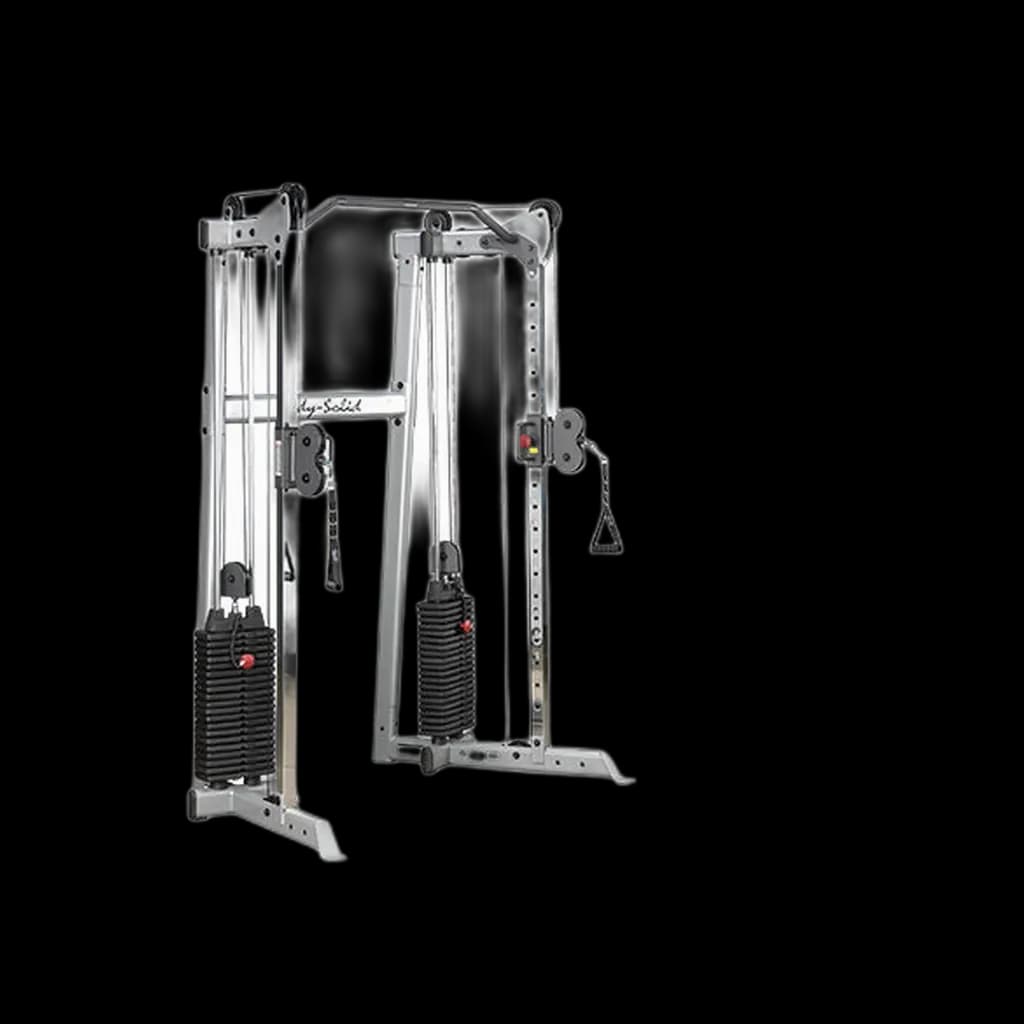 The home functional trainer standard. Dual 210 lb stacks, 1:1 pulley, lifetime warranty. ↑ Dual 160 Lb Stacks↑ 2:1 Pulley Ratio↓ Brand/Dealer-Direct OnlyBased on 25 buyer mentions | 4.8 Gym Score 93 | Pros
| Cons
| $1,875.00 | Buy on Amazon |
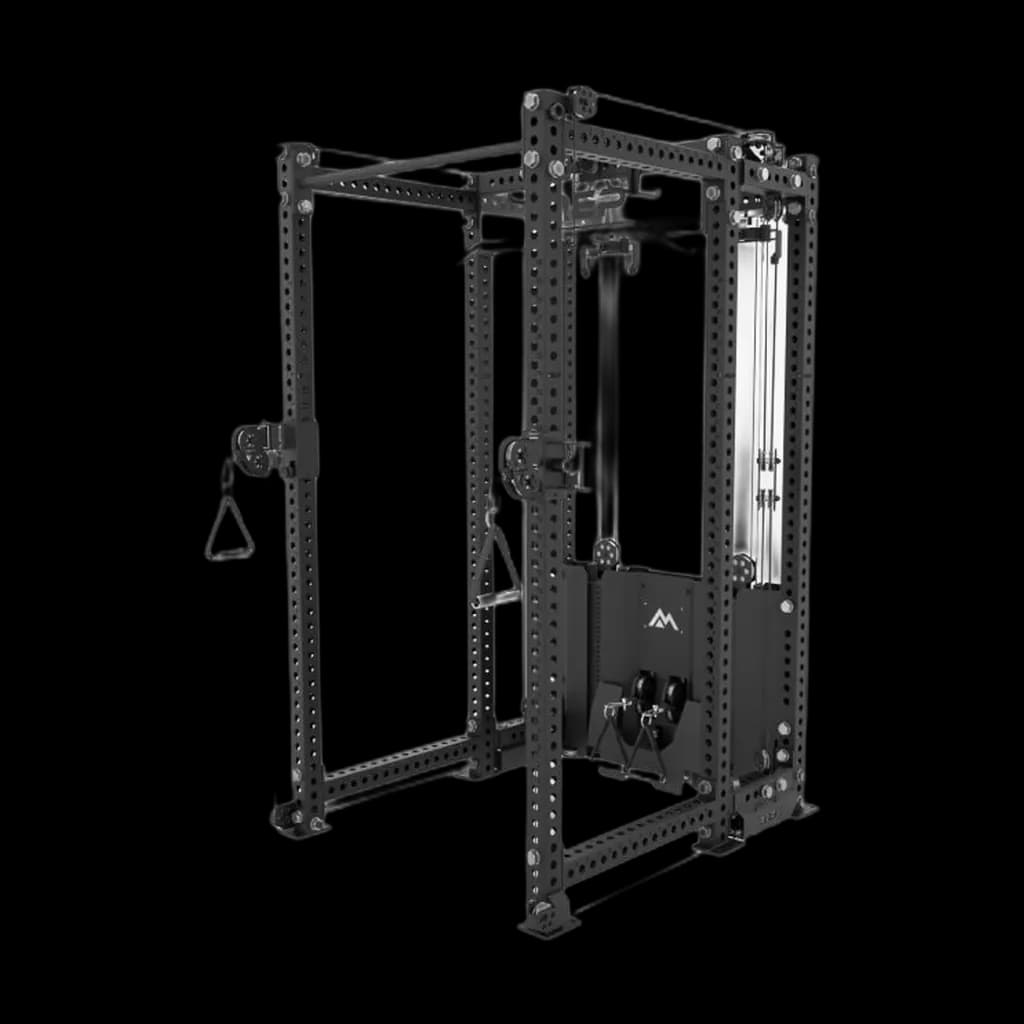 Plate-loaded cable add-on for existing power racks. The smartest buy if you already own a rack. ↑ Modular Dual Cable↑ Compatible With Pr-4000/5000↓ Requires Rep Pr-4000/5000Based on 25 buyer mentions | 4.8 Gym Score 93 | Pros
| Cons
| ~$899 | See our review |
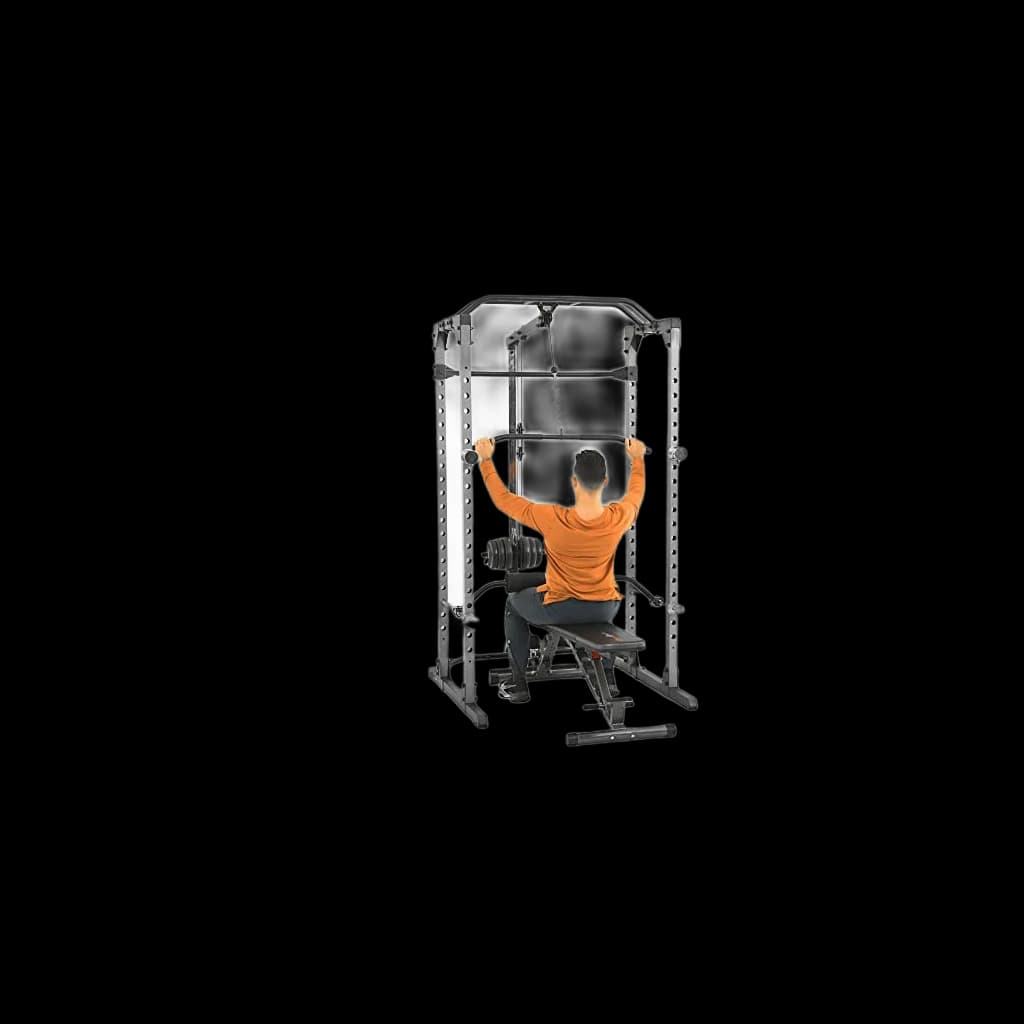 MyRack-specific cable attachment. Same idea as Ares but tied to Force USA's modular rack system. ↑ Adds Cable To↑ Saves Footprint↓ Requires Force UsaBased on 25 buyer mentions | 4.7 Gym Score 91 | Pros
| Cons
| ~$1,199 | See our review |
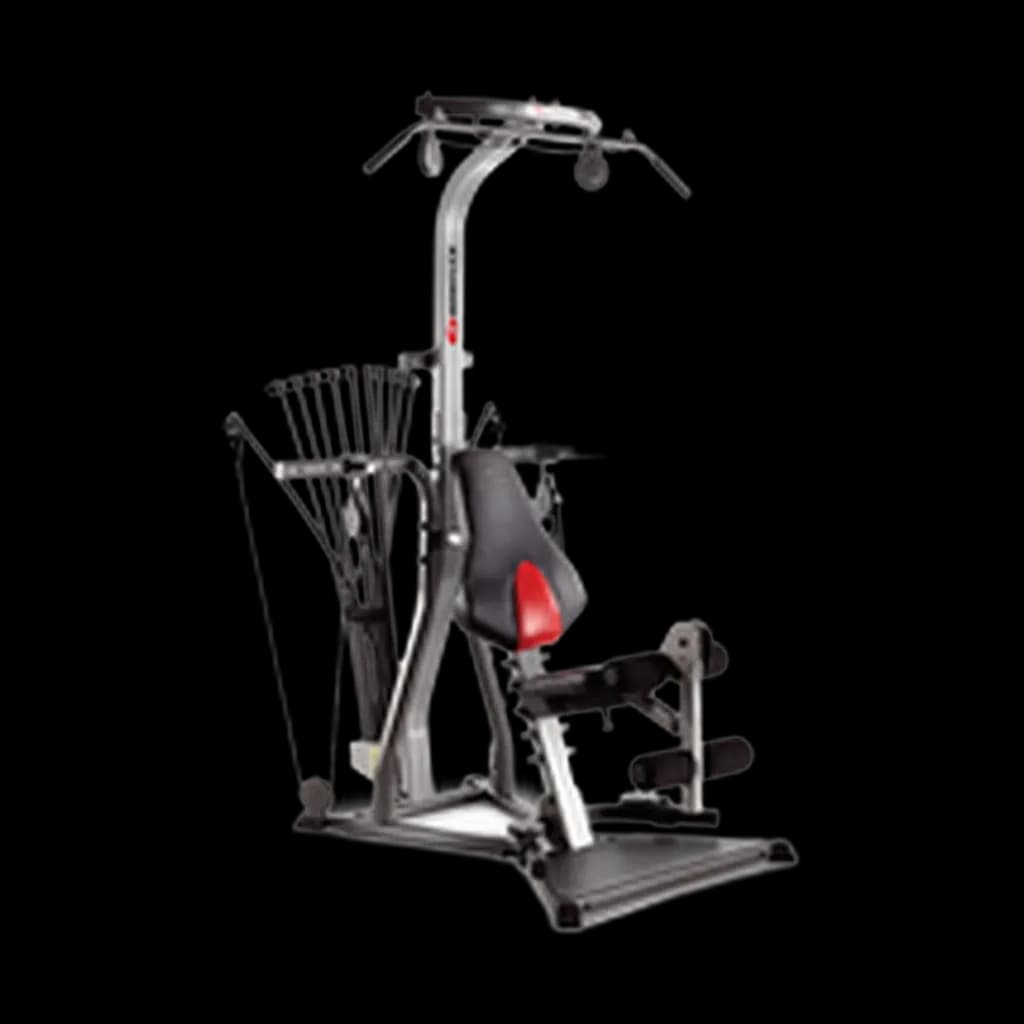 Power rod resistance, 65+ exercises, no plates needed. Honest entry-level pick. ↑ Assembly↑ QualityBased on 535 buyer mentions | 4.6 Gym Score 91 | Pros
| Cons
| $1,199.99 | Buy on Amazon |
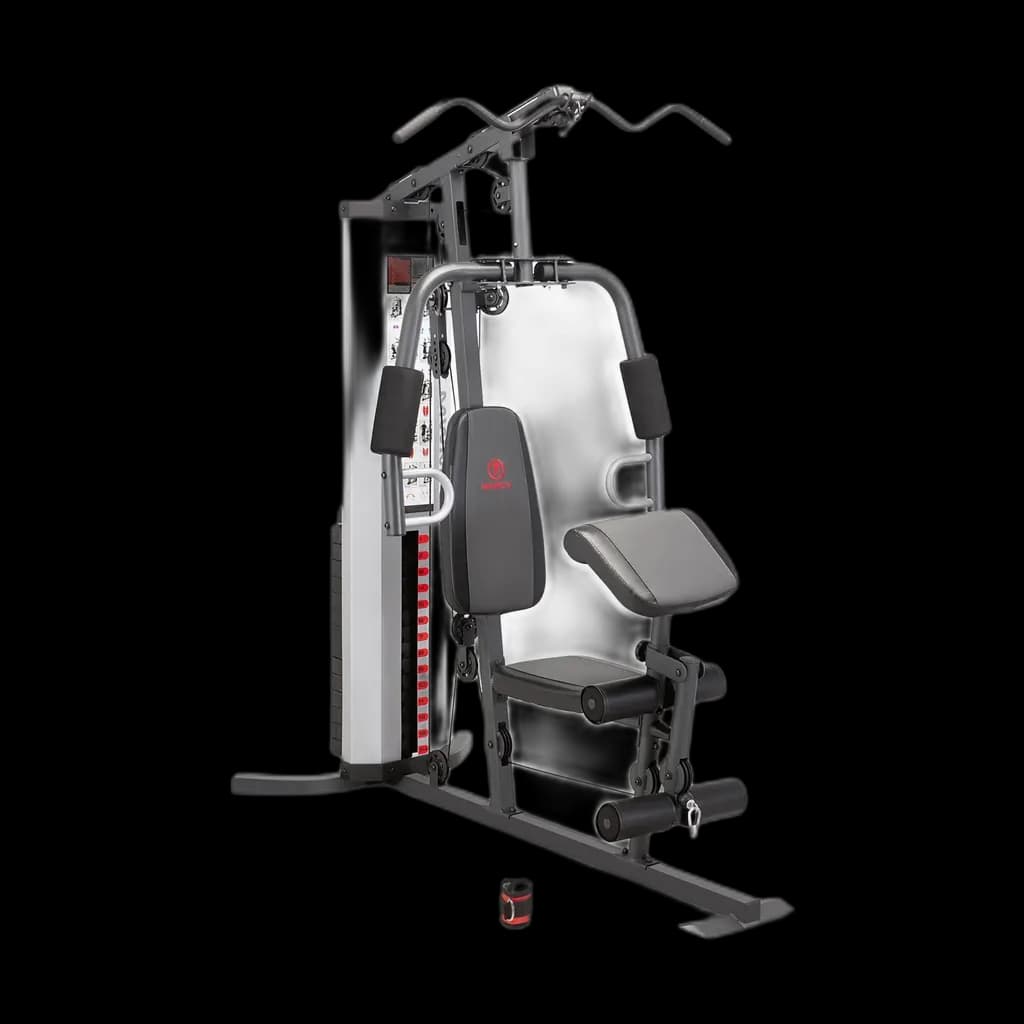 The budget cable station. 150 lb selectorized stack, dual cables, compact L-frame — a starter machine that gets the job done under $500. ↑ Quality↑ Value for money↓ InstructionsBased on 1,030 buyer mentions | 4.5 Gym Score 89 | Pros
| Cons
| $499.99 | Buy on Amazon |
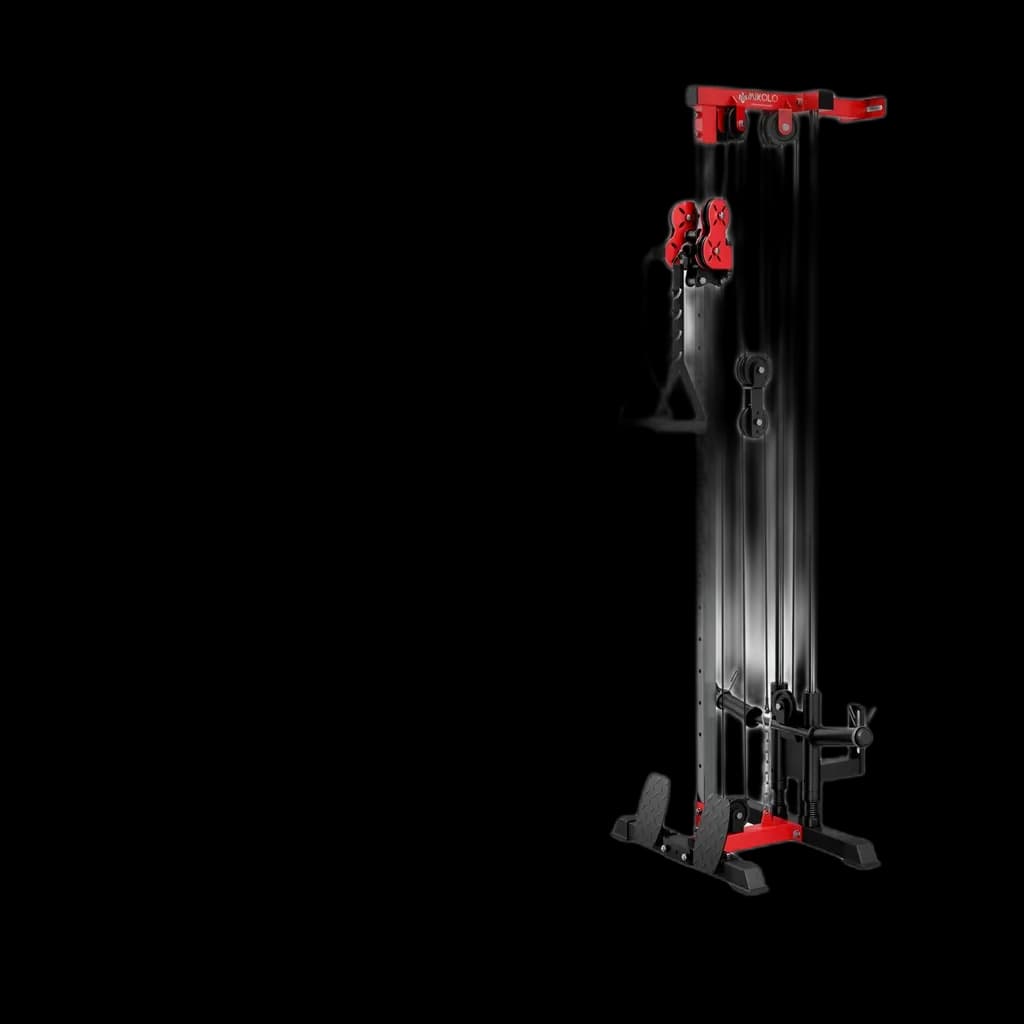 Wall-mounted plate-loaded cable for tight spaces. Adjustable pulley, no stack to rattle, and it bolts flat against a wall — apartment gym savior. ↑ Build Quality↑ Value for moneyBased on 94 buyer mentions | 4.3 Gym Score 83 | Pros
| Cons
| $209.99 | Buy on Amazon |
Amazon prices checked Sep 12, 2026. Amazon prices change often — the listing is authoritative.
Top picks spec comparison
Specs Amazon listings rarely aggregate side-by-side. Sourced from manufacturer data.
| Product | Type | Max Resistance at Handle | Pulley Ratio | Footprint |
|---|---|---|---|---|
| Body-Solid GDCC210 | Dual stack | 210 lb per side | 1:1 | 84ʺ × 50ʺ |
| REP Ares Cable Attachment | Plate-loaded rack add-on | Depends on plates (typically 200+ lb) | 2:1 | Adds 0 sq ft to rack |
| Force USA MyRack Cable Attachment | Plate-loaded rack add-on | Depends on plates | 2:1 | Adds 0 sq ft to rack |
| Bowflex Xceed Home Gym | Power-rod (210 lb rod set) | ~105 lb at handle | 2:1 | 96ʺ × 78ʺ |
| Marcy MWM-988 | Single 150 lb stack | ~75 lb at handle | 2:1 | 68ʺ × 39ʺ |
| Mikolo Wall-Mounted Cable Station | Plate-loaded, wall-mounted | Depends on plates | Typically 2:1 | ~24ʺ wall depth |
| Inspire FT2 | Dual 165 lb stack | 165 lb per side | 1:1 | ~70ʺ × 50ʺ |
Pick by situation
Decide by your situation, not the generic ranking.
| If | You want | Pick |
|---|---|---|
| Budget under $300 | Beginners and budget-focused lifters who want a true cable station at home for high-rep accessory work, lat pulldowns, and tricep pushdowns without committing $1,500+ to a functional trainer. | Marcy MWM-988 Stack Home Gym |
| Premium $700+ | serious / commercial use | Body-Solid GDCC210 Functional Trainer |
TL;DR — should you read this?
- Buy the Body-Solid GDCC210 if you have the floor space and want a real stack-weight functional trainer with a 1:1 pulley ratio and lifetime warranty. This is the genre standard for home buyers.
- Buy the REP Ares Cable Attachment if you already own a 3×3 power rack — it adds 90% of a full functional trainer's movement library for under $1,000.
- Avoid 2:1 pulley machines if you'll use them for heavy rows or low-pulley pulls — the cable feels mushy and the displayed weight is half of what reaches the handle.
- Skip Bowflex-style power-rod systems if you've trained with real cables before; the resistance curve is fundamentally different.
Our pick
Dual 210 lb stacks, 1:1 ratio, lifetime warranty. The genre-standard home functional trainer.
What separates good from bad in this category
Three specs decide everything, and the most important one is the most often buried.
| Spec | What to look for | Why it matters |
|---|---|---|
| Pulley ratio | 1:1 — the load on the stack is the load at the handle | At 2:1, a 200 lb stack delivers 100 lb at the handle and feels soft at the bottom |
| Stack maximum | High enough that half of it still challenges you | A 150 lb stack on a 2:1 system caps usable load at 75 lb |
| Pulley height range | Dual columns, independently adjustable | Face pulls need eye height, rows need low, pushdowns need high |
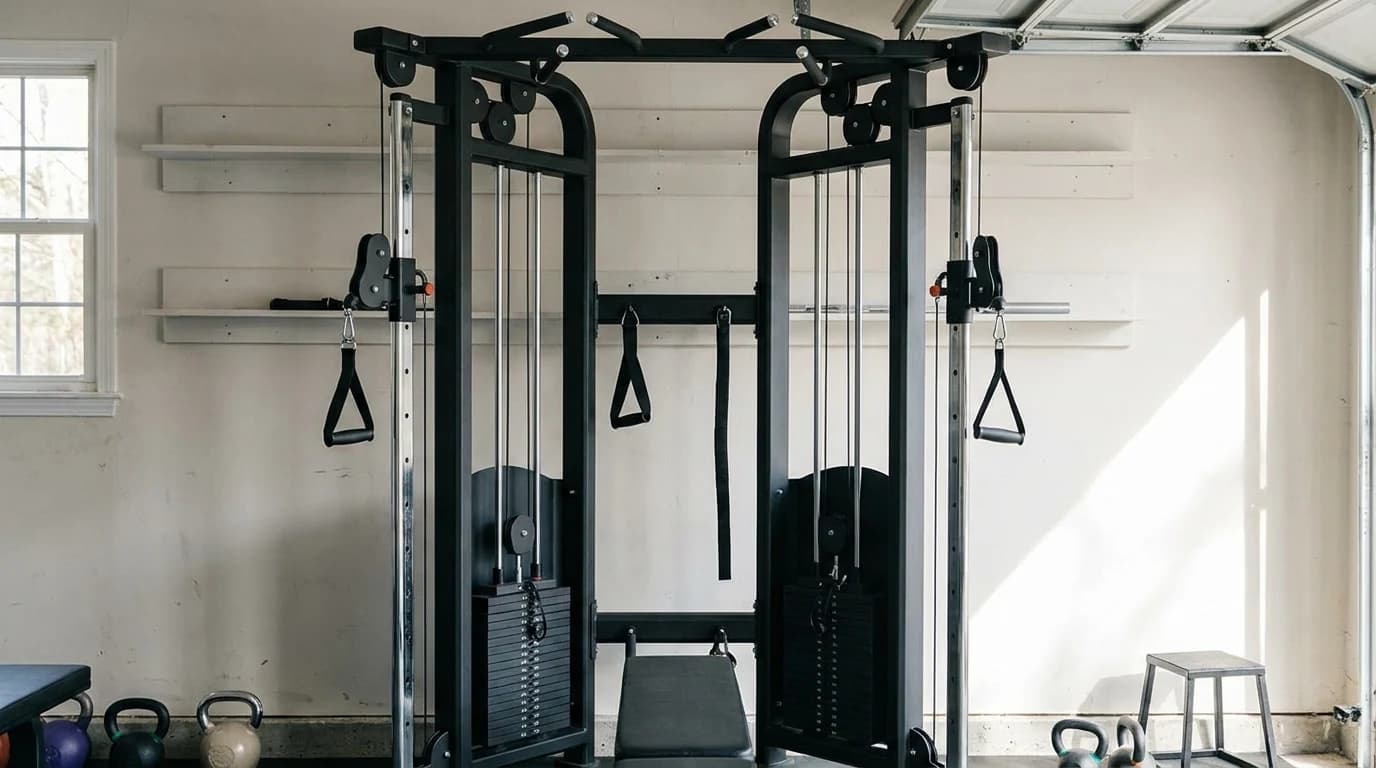
The ratio is the spec that decides your ceiling
A 1:1 ratio (Body-Solid GDCC210) means the load on the stack is the load at the handle. A 2:1 ratio (Bowflex Xceed, Marcy MWM-988) halves it — useful for high-rep accessory work, frustrating for heavy rows. The cable doubles back through a redirecting pulley, which is also why 2:1 cables feel "softer" at the bottom. Most intermediate lifters exceed a 75 lb usable ceiling within months on lat pulldowns.
Pay up for 1:1 when:
- Heavy rows and low-pulley pulls are the point
- You expect to keep progressing past intermediate loads
- Cable feel at the bottom of the rep matters to you
2:1 is fine when:
- Cables are accessory work, not a primary station
- You're loading plates onto a rack attachment to save space and money
- High-rep pushdowns and curls are most of the programming
The trap: if a manufacturer doesn't publish the pulley ratio, assume it's 2:1 and assume your stack is half of what's printed on the sticker.
Cables earn their footprint on biomechanics, not marketing
The ACE Fitness piece on functional fitness covers why cable work earns its space in a serious home gym: the constant tension and free movement plane train patterns that barbells and dumbbells can't reproduce. The cable lets you train against a constant force vector through a curved path, which is closer to how most real-world pulling and pressing forces work than a barbell's fixed bar path.
Cable life is rated in load cycles. Steel cables in quality home machines (Body-Solid, REP, Force USA) are rated for 50,000+ cycles at advertised loads; the cable itself usually outlives the foam padding on the bench.
Worth knowing: cheap home gyms (Marcy budget tier, no-name imports) use thinner cables that fray within 2 years of daily use — the stack outlives the cable, and the cable is the part you cannot easily replace.
The picks, ranked
| Machine | Price | Ratio | Stack | Best for |
|---|---|---|---|---|
| Body-Solid GDCC210 | $1,875.00 | 1:1 | Dual 210 lb | Most buyers with floor space |
| REP Ares | ~$899 | 2:1 | Plate-loaded | Existing rack owners |
| Force USA MyRack Cable | ~$850 | Plate-loaded | Your plates | Force USA rack ecosystems |
| Bowflex Xceed | ~$1,099 | 2:1 | 210 lb power rods | Entry-level all-in-one |
| Marcy MWM-988 | ~$549 | 2:1 | 150 lb | Tight spaces, beginners |
| Mikolo Wall-Mounted | ~$300–$500 | Plate-loaded | Your plates | Ultra-tight spaces |
| Inspire FT2 | ~$3,499 | 1:1 | 165 lb per side | Smoothest cable feel |
1. Body-Solid GDCC210 Functional Trainer — $1,875.00 — Best for most home buyers with floor space
The genre standard. Dual 210 lb weight stacks, 1:1 pulley ratio (real cable feel), 17–19 height-adjustable pulley positions per side, lifetime in-home warranty on the frame. Owners report buying it and not selling it — the durability is real and the modular accessory ecosystem (D-handles, tricep ropes, lat bars, single-arm strap) covers every cable movement worth training. The tradeoffs are footprint (84ʺ × 50ʺ requires roughly a 9×6-foot floor area for safe use) and freight-only delivery (curbside; you handle the trip into the garage).
2. REP Ares Cable Attachment — ~$899 — Best for existing rack owners
Plate-loaded cable attachment that bolts onto a REP, Rogue, or compatible 3×3 power rack. You use your existing plates instead of a dedicated weight stack, which saves $1,500+ and 28 square feet of floor space. The cable column delivers a 2:1 ratio, so plan accordingly when loading. The right buy if you already own a rack and want cable work; the wrong buy if you don't own a rack yet, because the cost of a quality rack plus the Ares exceeds the GDCC210.
3. Force USA MyRack Cable Attachment — ~$850 — Best for Force USA rack ecosystems
The same idea as the REP Ares but designed for the Force USA MyRack platform. Plate-loaded, dual cable column option available, footprint identical to a bare rack. Choose this if you're building a Force USA-centric setup.
4. Bowflex Xceed Home Gym — $1,199.99 — Best entry-level all-in-one with cables
A 210 lb power-rod system, not a true cable machine — the resistance comes from glass-composite rods that flex rather than from a steel weight stack. The handle is connected via a 2:1 cable system. Feels different from a real cable: tension ramps as you stretch the rods, which most lifters notice immediately. Right pick for absolute beginners who want a complete strength station under $1,200; wrong pick for anyone who's used a real cable.
5. Marcy MWM-988 Stack Home Gym — $499.99 — Best for tight spaces
A budget 150 lb stack functional gym in a 68×39ʺ footprint. The 2:1 ratio means 75 lb of usable resistance at the handle, which most lifters outgrow within 18 months. Right pick for total beginners in apartments or as a teen's first machine; wrong pick for anyone past beginner status.
6. Mikolo Wall-Mounted Cable Station — $209.99 — Best for ultra-tight spaces
Wall-mounted, plate-loaded, no stack. The cable system bolts to wall studs and your weight plates load onto a carrier. Cable height is fixed or limited to 2–3 positions depending on model. Right pick when you genuinely have no floor space; wrong pick when you can fit a real functional trainer.
7. Inspire FT2 Functional Trainer — ~$3,499 — Best for buttery-smooth cables
Inspire's signature is pulley feel — the bearings and cable routing produce the smoothest pulldown and row in this price tier. 165 lb per stack (lower than the GDCC210), 1:1 ratio, lighter weight ceiling but better feel. Choose if you've used a commercial Cybex cable column and want that feel at home; skip if maximum load matters more than smoothness.
What the research actually says
- Cable work and barbell work train overlapping but not identical patterns. Cables deliver constant tension through curved paths; barbells and dumbbells deliver gravity-vector loading along straight paths. Both belong in a complete program. Source: ACE Fitness — The Pros and Cons of Functional Fitness.
- Pulley ratio is a real biomechanical variable, not a marketing detail. The 2:1 versus 1:1 distinction changes both the load at the handle and the perceived smoothness of the rep — a documented variable in functional-trainer design. Source: NSCA Kinetic Select — strength program design.
- Cable rows produce comparable mid-back EMG to barbell rows in well-controlled studies. That makes the cable row a legitimate substitute for the barbell row when bar fatigue or lower-back strain matters. Source: NSCA Kinetic Select.
- Muscle-strengthening twice weekly is the floor. The CDC adult guideline calls for all major muscle groups on 2+ days per week. A cable station covers more of those groups in less floor space than a barbell rack alone. Source: CDC Physical Activity Basics — Adults.
- What the research does NOT support: the marketing claim that "functional trainers" produce superior "functional strength" compared to barbells and dumbbells. There's no peer-reviewed evidence that cable-trained athletes outperform barbell-trained athletes on functional tests when total volume and intensity are equated. Cables are excellent. They're not magic.
What to skip
- Any cable machine without a published pulley ratio. If the manufacturer hides the ratio, assume it's 2:1 and assume your stack is half of what's printed on the sticker.
- Power-rod systems if you've trained with real cables. Bowflex and similar rod-based systems will feel wrong from the first rep — the resistance curve doesn't match cables.
- Sub-$400 stack home gyms. The cables fray within 2 years, the foam tears, and the stack pin mechanism breaks. The savings versus a $549 Marcy or a used commercial cable column don't pencil out.
- Dual-pulley machines without independent height adjustment on both sides. If you can't set one column to chest height and the other to floor height independently, you've lost 30% of the movement library you're paying for.
- "All-in-one" machines that combine a rack, Smith, and cables on a single column. The cables on these are typically 2:1 and the stack is 150 lb or less — fine for accessories, frustrating as a primary cable station.
How to actually use this
- Tier 1: Existing rack owner ($899). Add a REP Ares or Force USA MyRack cable attachment. Plate-loaded, 2:1 ratio, fits the rack you already own.
- Tier 2: Dedicated home gym, no rack yet. Buy the Body-Solid GDCC210. Real cables, 1:1 ratio, lifetime warranty, the long-term answer.
- Tier 3: Apartment or basement with low ceilings ($300–$549). Mikolo wall-mount or Marcy MWM-988. Compromise on stack size and pulley ratio in exchange for fitting the space.
- Accessory budget. Plan to spend $100–$200 on attachments — D-handles, tricep rope, lat bar, single-arm strap, ankle cuff. The base machine ships with a few; the rest determine which movements you'll actually program.
Measure the ceiling first: a functional trainer needs 7 feet of clearance for a full lat pulldown plus 4–5 feet of usable floor in front for curls and pushdowns. Measure to the lowest light fixture or duct run, not the ceiling itself.
How we chose / methodology
We weighted pulley ratio and feel (25%), stack maximum (20%), footprint and ceiling clearance requirements (15%), accessory selection (15%), durability based on cable-cycle ratings and owner-reported failure timelines (15%), and price per usable load (10%). The full scoring rubric lives on the /methodology page. rankings come from manufacturer spec sheets, NSCA cable-training programming, ACE Fitness functional-fitness guidance, and owner-reported feedback on r/homegym and r/weightroom.
Frequently Asked Questions
Do I need a real cable stack or is a power rod system fine?+
Power rods (Bowflex) feel different from cables - the resistance ramps as you stretch them, while real cables hold constant tension. Beginners won't notice; intermediates often do.
Can I get away with a rack attachment instead of a full machine?+
If you already own a 3x3 power rack, yes - the REP Ares or Force USA attachment gives you 90% of a full functional trainer at 30% of the price and zero added footprint.
What's the minimum ceiling for a functional trainer?+
7' is the practical floor for the Body-Solid GDCC210 because the high pulley sits near the top of the unit. Sub-7' ceilings make lat pulldowns awkward and sometimes impossible.
Why does pulley ratio matter so much?+
A 2:1 ratio means you pull the cable twice as far but feel half the load. So a 200 lb stack delivers 100 lb at the handle. Good for high-rep work, bad for heavy rows. A 1:1 ratio matches stack weight to handle weight, which feels closer to barbell loading.
Can I retrofit a 1:1 ratio onto a 2:1 machine?+
No, not without re-engineering the cable routing. The ratio is built into the pulley geometry. If you need 1:1, buy a 1:1 machine — don't try to convert.
Do I need dual stacks or is a single stack enough?+
Dual stacks let you train bilateral movements (cable chest fly, cable face pull with two handles) without resetting the load between sides. Single-stack machines force you to swap which pulley you're using mid-set. For dedicated home gyms, dual is worth the cost; for budget setups, single is fine.
Sources & Research
- NSCA — Cable training program designauthority
- REP Fitness — Ares 2.0 Cable Machine Attachment — published specifications (dual 260 lb selectorized stacks, 2:1 cable ratio)manufacturer
- r/homegym — Cable machine owner reportscommunity
- ACE Fitness — The Pros and Cons of Functional Fitnessauthority
- NSCA — Kinetic Select — strength program designauthority
- CDC — Physical Activity Basics — Adultsauthority
Related reviews
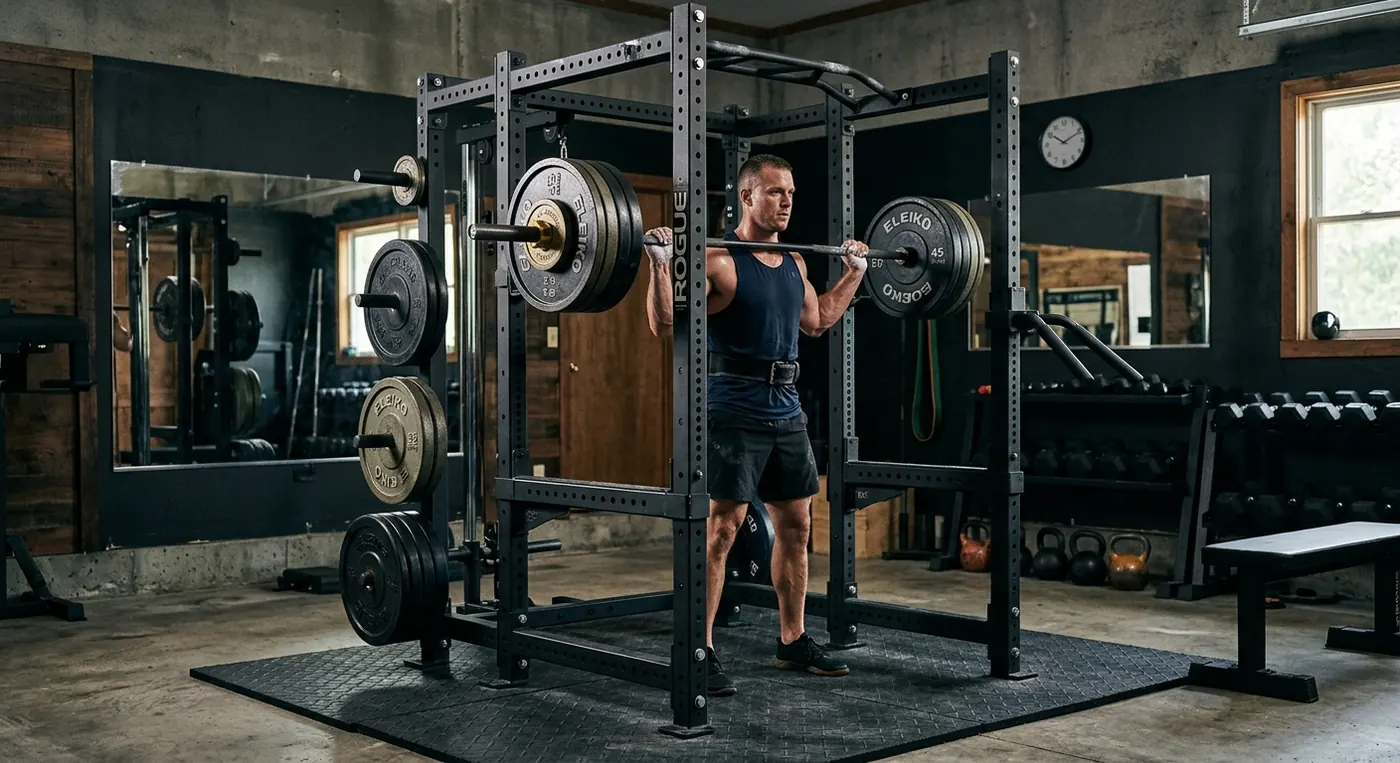
Best Power Racks for a Home Gym in 2026
The Rep PR-4000 is the best home gym power rack of 2026 at under $900. We scored 12 racks on build quality and footprint; Rogue R-4 is the lifetime pick.
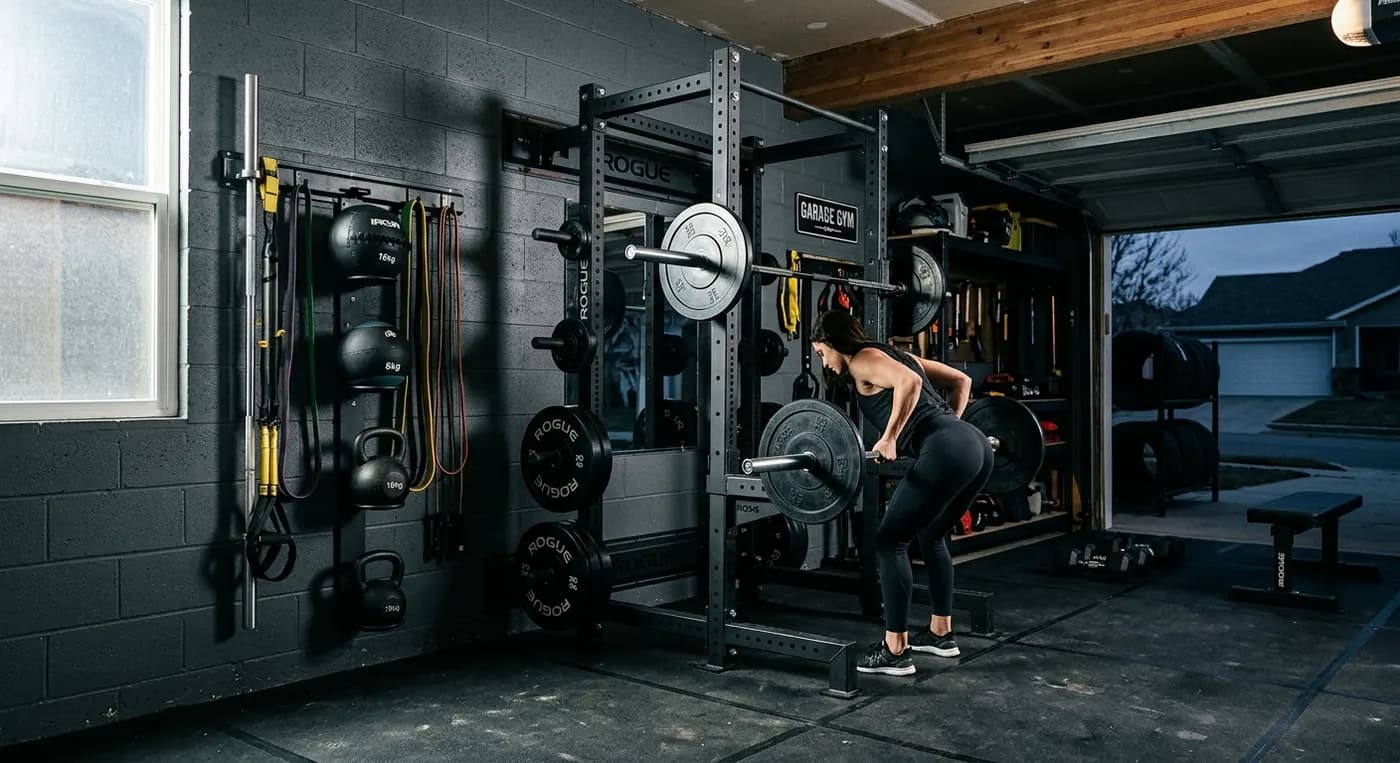
Best All-in-One Home Gyms in 2026
The Major Lutie Smith machine is the best all-in-one home gym you can buy today; the Force USA G3 is the editorial pick but backordered. Seven machines scored.
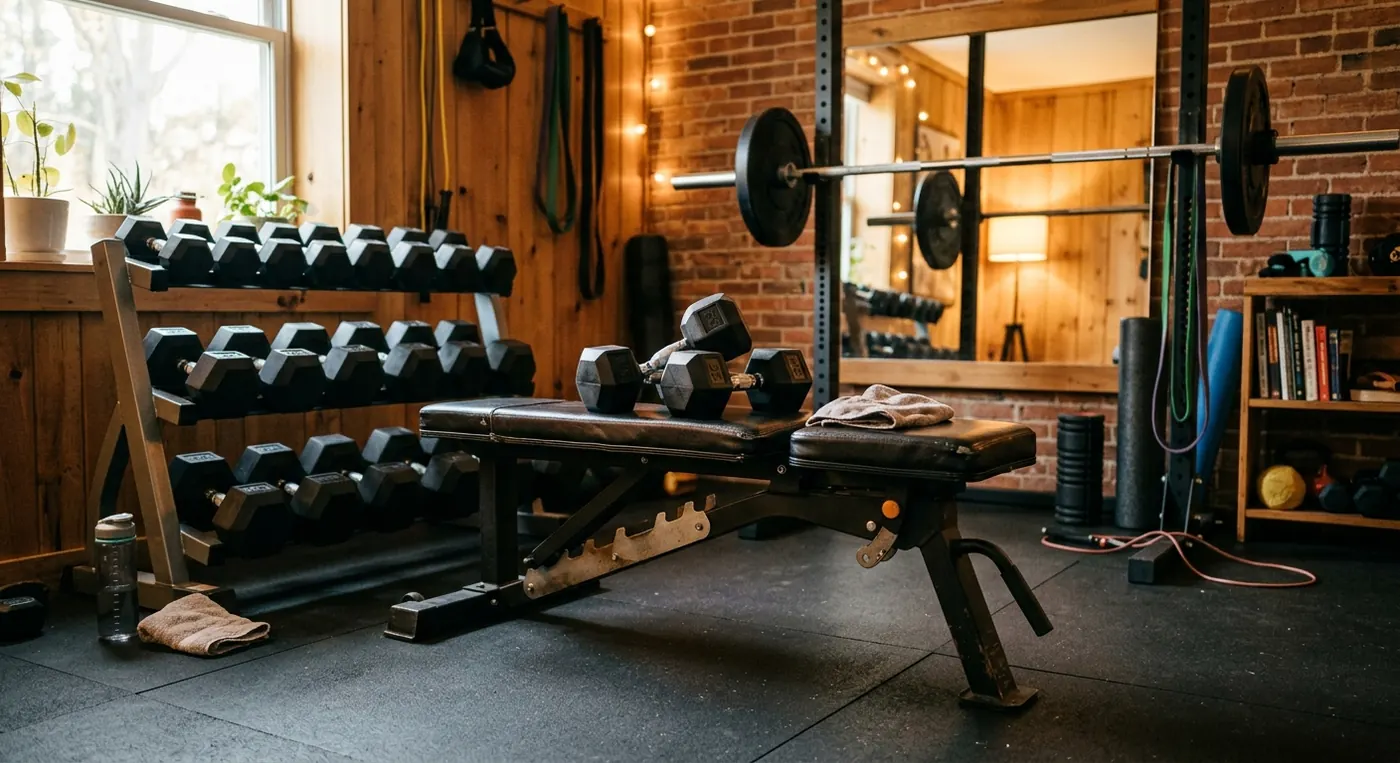
Best Weight Benches for a Home Gym
The Rep AB-5200 is the best weight bench under $400; the Rogue AB-3 is the lifetime pick. We scored 8 benches on stability, adjustability, and pads.
Hilly Shore Labs
Editorial teamThe independent product research team behind GymScored. Every recommendation is researched, never hands-on tested — rankings come from manufacturer specifications, published standards, and aggregated buyer sentiment.
163 products scored across 26 home gym categories, each on the same 5-dimension Gym Score formula.
See the scoring methodology and who we are.
Affiliate disclosure: GymScored is a participant in the Amazon Services LLC Associates Program. We earn from qualifying purchases at no extra cost to you. Full disclosure →