What Happens to Your Smart Gym Machine If the Company Shuts Down?
When a smart gym machine's maker shuts down or the servers die, some machines keep working and some brick. How to tell which yours is before it happens.
Your machine keeps whatever it can run on its own hardware and loses whatever lived in the cloud. Resistance motors, manual modes, and console buttons survive; live classes, saved history, and most guided programming do not. So there are three outcomes, not two: a machine stays fully usable, drops to a basic local mode, or effectively bricks. Plate-loaded equipment and console treadmills with built-in programs are immune. Connected cardio with a real manual mode degrades to a basic ride or run with no saved data. Pure class-streaming screens like the discontinued Lululemon Mirror are the one category where a shutdown can leave you with nothing. The catch: the FTC found 89% of smart-product makers do not disclose how long they will support the device, so you have to test it yourself before you buy.
How GymScored is paid: Amazon Associates commission plus brand-direct affiliate (Rogue / REP / Titan when approved). No sponsored placements, no paid reviews, no pay-to-rank. Picks are ranked by the Gym Score formula and nothing else. Read the full disclosure.
A connected machine keeps its local functions and loses its cloud functions, so shutdown risk depends entirely on whether the core workout needs the cloud. Plate-loaded gear and console machines with built-in programs are effectively immune; connected cardio with a manual mode degrades to a basic ride or run; pure class-streaming screens are the only category where a shutdown can leave you with nothing. You usually cannot learn the support timeline before buying, so test the machine in airplane mode and only buy a screen-first machine if the classes alone are worth the full price.
The shutdown survival chart: what each machine type loses
When the cloud dies, you keep what runs on the hardware and lose what ran on a server. The more the core workout depends on streamed content or software-defined resistance, the more you lose.
| Machine type | If the cloud dies | Shutdown risk |
|---|---|---|
| Smart mirror (class-streaming screen) | Often nothing usable, no local workout | Very high |
| Software-resistance trainer (digital weight) | Motor may run, but guided programming and calibration are cloud-tied | High |
| Connected bike / treadmill / rower with console | Basic manual ride, run, or row; no saved data | Medium |
| Console machine with built-in programs (no app) | Full local workout, unchanged | Very low |
| Plate-loaded all-in-one / barbell / dumbbells | Nothing changes, there is no software | None |
The short version
A connected gym machine does not fail all at once. When the company shuts down, stops paying for its servers, or you cancel the subscription, the machine keeps doing whatever it can do on its own hardware and loses everything that lived in the cloud. Some machines are still genuinely usable afterward. Some become a heavy mirror. The difference is decided before you buy, and almost no brand tells you which one you are getting.
That gap is not a hunch. In a 2024 review of 184 connected products, the Federal Trade Commission found nearly 89% failed to disclose how long they would receive software updates, and warned that when support ends these products "may lose their smart functionality, become insecure, or stop working." For a $1,500–$4,000 fitness machine, that is the whole risk in one sentence.
Key takeaways
- The machine keeps its local functions and loses its cloud functions. Resistance motors, manual modes, and console buttons live on the device. Live classes, your history, leaderboards, and most "guided" programming live on a server you do not control.
- Three outcomes exist, not two. A machine can stay fully usable, drop to a basic local mode, or effectively brick. Which one depends entirely on whether the core workout needs the cloud.
- Plate-loaded and manual-console machines have near-zero shutdown risk. A barbell does not have a server. A treadmill with real console buttons keeps working.
- You usually cannot tell before you buy — so you have to test the product yourself with four questions (below).
What actually happens when the lights go out
"Shutdown" covers three different events that feel the same to you:
- The company goes out of business.
- The company stays in business but kills the product line.
- You simply stop paying.
In all three, the machine loses its cloud connection and falls back to whatever it can run locally.
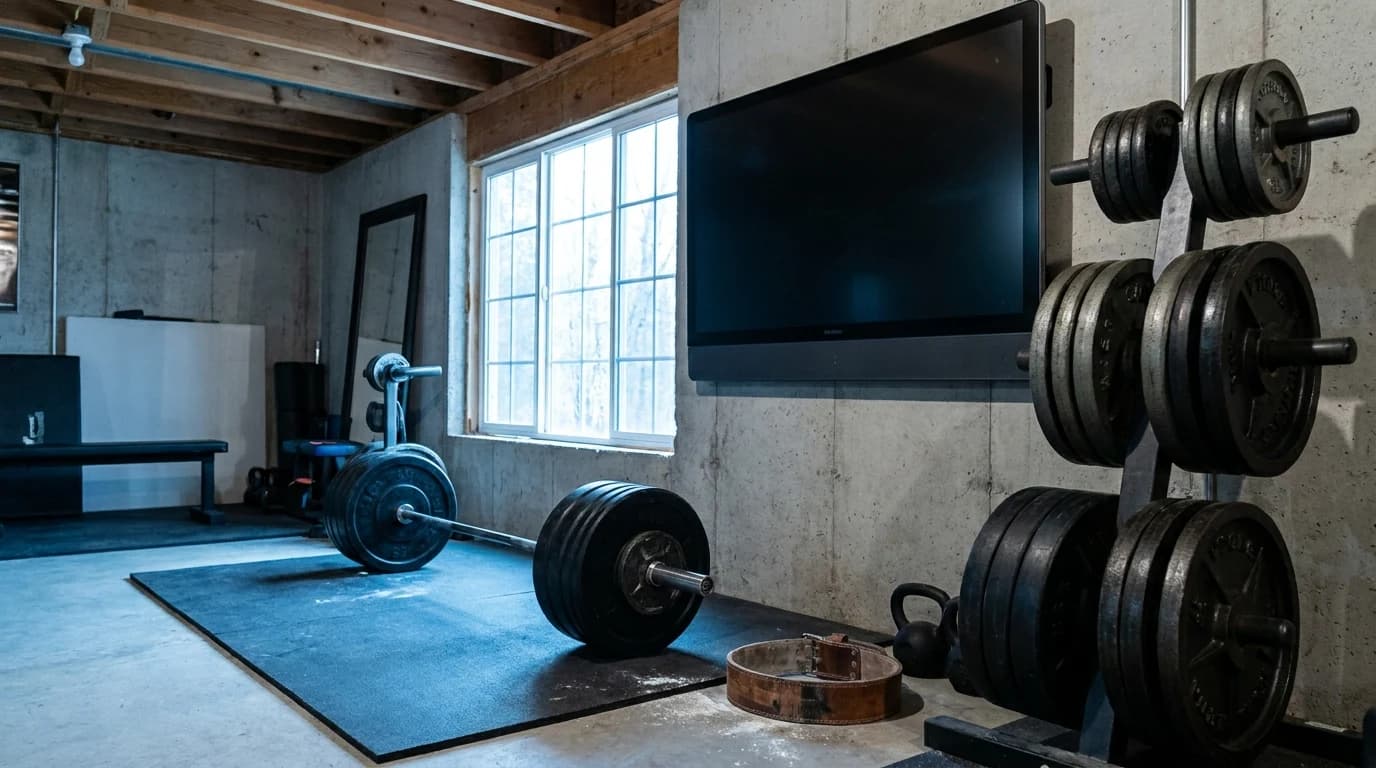
The cautionary tale: a screen with nothing behind it
Per a December 2023 BusinessWire announcement, "Lululemon Studio discontinued Mirror hardware sales and announced it will cease production of new Mirror fitness content after spring 2024." A Mirror was a screen whose entire purpose was streamed classes — once the content stops, there is no "manual mode" to fall back to. That is the worst case, and it is why the smart mirrors category carries the highest shutdown exposure of anything in a home gym.
The middle case, and the boring safe one
Now contrast that with a machine that was designed to work on its own. Peloton, very much still in business, spells out exactly what a Peloton Bike+ does for someone who cancels: the official support page says you keep "3 Pre-recorded Classes" plus "Just Ride… simply ride without instruction," but "no metrics, workouts, or progress will be saved." So the bike still pedals and shows live cadence and resistance — it just stops being a class machine.
And then there is the quiet, boring, shutdown-proof option. The Sole F80 treadmill's owner's manual describes full console operation — Manual mode, five preset programs (Hill, Fat Burn, Cardio, Strength, HIIT), two custom programs, heart-rate programs, and speed/incline buttons — none of which require an app or account. Cancel everything and it is still a complete treadmill.
The shutdown survival chart
Here is how the common machine types degrade. This is about the core workout, not bonus features.
| Machine type | If the cloud dies | Real shutdown risk |
|---|---|---|
| Smart mirror (class-streaming screen) | Often nothing usable — no local workout | Very high |
| Resistance-by-software trainer (digital-weight motor) | Motor may run, but guided programming and "weight" calibration are cloud-tied | High |
| Connected bike / treadmill / rower with console | Drops to a basic manual ride/run/row; no saved data | Medium |
| Console machine with built-in programs (no app needed) | Full local workout, unchanged | Very low |
| Plate-loaded all-in-one / barbell / dumbbells | Nothing changes — there is no software | None |
Rule of thumb: the more the workout itself depends on streamed content or server-calibrated resistance, the more you lose. A Tonal or Tempo Studio leans hard on cloud coaching and software; a NordicTrack Fusion CST ties its guided sessions to a subscription. A rack and a barbell from the all-in-one home gyms and plate-loaded side of the catalog have nothing to lose.
What most people get wrong
The common assumption is "if the company goes under, my expensive machine becomes a brick." That is only true for the screen-and-stream machines.
What survives a shutdown:
- Resistance motors, flywheels, and physical plates.
- Manual mode, quick-start, and hardware speed/incline/resistance controls.
- Programs stored on the console itself.
- Peloton's Just Ride fallback — cancelling does not disable a Peloton Bike+, it just strips it back.
What goes with the servers:
- Live and on-demand classes.
- Your workout history, progress and leaderboards.
- Guided programming and software-calibrated "weight."
- On some machines, accessory pairing that was bundled into the plan.
So most connected cardio gear keeps a usable local mode — you lose the classes and the data, not the ability to train. People also make the opposite mistake: assuming that paying for the subscription is what keeps the hardware alive. It is not.
The trap: you usually cannot find out the support timeline before you buy. The FTC found that 161 of 184 product pages disclosed nothing about support duration, and basic web searches turned up nothing for two-thirds of devices. So the honest framing is not "will this company survive?" (nobody knows) but "if it doesn't, what is left?" — and that you can answer before you pay.
The four-question brick test
Ask before you pay
Before you buy any connected machine, ask the seller — or test the demo unit — these four things. If you cannot get clean answers, treat the machine as high-risk.
- Can it run a complete workout in airplane mode / with the account logged out? Turn off the WiFi and see what the console still does. If the screen goes dead, that is your shutdown future.
- Is the resistance physical or software-defined? Plates and real flywheels survive anything. A motor that needs server calibration does not.
- Are there hardware buttons for speed/incline/resistance and built-in programs? Physical controls are your fallback. A glass touchscreen with no app is just glass.
- Does the brand publish a support/end-of-life policy? Most do not — but the rare ones that do are telling you they expect the hardware to outlive the software.
The honest bottom line
Weight it like any other spec
If shutdown risk worries you, weight it like any other spec. Plate-loaded equipment and console machines with built-in programs are effectively immune — buy those with zero subscription anxiety. Connected cardio with a real manual mode is a reasonable middle ground — you are paying for classes you can lose, on hardware you keep. Pure class-streaming screens are the one category where a shutdown can leave you with nothing, so only buy one if the monthly classes alone are worth the full price and you would not mourn the hardware. Run the four-question test in the store, not after the company's press release.
Sources
- FTC: Smart Products Surveyed Fail to Provide Consumers with Information on How Long Companies will Provide Software Updates (Nov 2024)
- Peloton Support: What Content Can I Access Without A Peloton Membership?
- BusinessWire: Following Mirror Sales Discontinuation, Tonal Announces "Mirror Trade-In" Program (Dec 2023)
- Sole F80 Treadmill Owner's Manual (console programs, no app required)
Frequently Asked Questions
If a fitness company goes out of business, does my machine stop working?+
Not necessarily, and usually not entirely. The machine keeps any function that runs on its own hardware: resistance motors, flywheels, manual modes, and console buttons. It loses what lived on the company's servers: live and on-demand classes, saved workout history, leaderboards, and most guided programming. A barbell or a console treadmill with built-in programs keeps working completely. A screen whose only job was streaming classes is the case where you can be left with nothing.
What happens to a Peloton Bike if I cancel the membership?+
Per Peloton's official support page, a cancelled or unactivated Bike or Bike+ keeps three pre-recorded classes plus 'Just Ride,' which lets you ride without instruction. Metrics like cadence and resistance still display, but no workouts or progress are saved to your profile. So you keep a working stationary bike, you just lose the class library, live classes, and your saved data.
How can I tell if a machine will be usable after a shutdown before I buy it?+
Run a four-question test. One: can it complete a full workout in airplane mode or logged out? Turn off the WiFi at the demo unit and watch the console. Two: is the resistance physical (plates, flywheel) or software-defined? Physical survives anything. Three: are there real hardware buttons and built-in programs, or just a touchscreen? Four: does the brand publish a support or end-of-life policy? The FTC found most do not, which is exactly why you should test the hardware yourself rather than trust the company to outlive the warranty.
Which home gym equipment has no shutdown risk at all?+
Anything without software. Plate-loaded racks, barbells, dumbbells, kettlebells, and plate-loaded all-in-one machines have no server to depend on, so nothing changes if a company folds. Console treadmills, bikes, and rowers with built-in programs that work without an app are also effectively immune, because the workout never needed the cloud in the first place.
Sources & Research
- Smart Products Surveyed Fail to Provide Consumers with Information on How Long Companies will Provide Software Updates (FTC, Nov 2024) — 89% of 184 products failed to disclose software-support duration
- What Content Can I Access Without A Peloton Membership? (Peloton Support) — 3 pre-recorded classes + Just Ride, no saved metrics
- Following Mirror Sales Discontinuation, Tonal Announces "Mirror Trade-In" Program (BusinessWire, Dec 2023) — Lululemon discontinued Mirror hardware sales and content after spring 2024
- Sole F80 Treadmill Owner's Manual — Manual mode, preset programs, and console controls all operate without any app or subscription
Your next step
See how the connected machines we rank score on this risk.
Related reviews
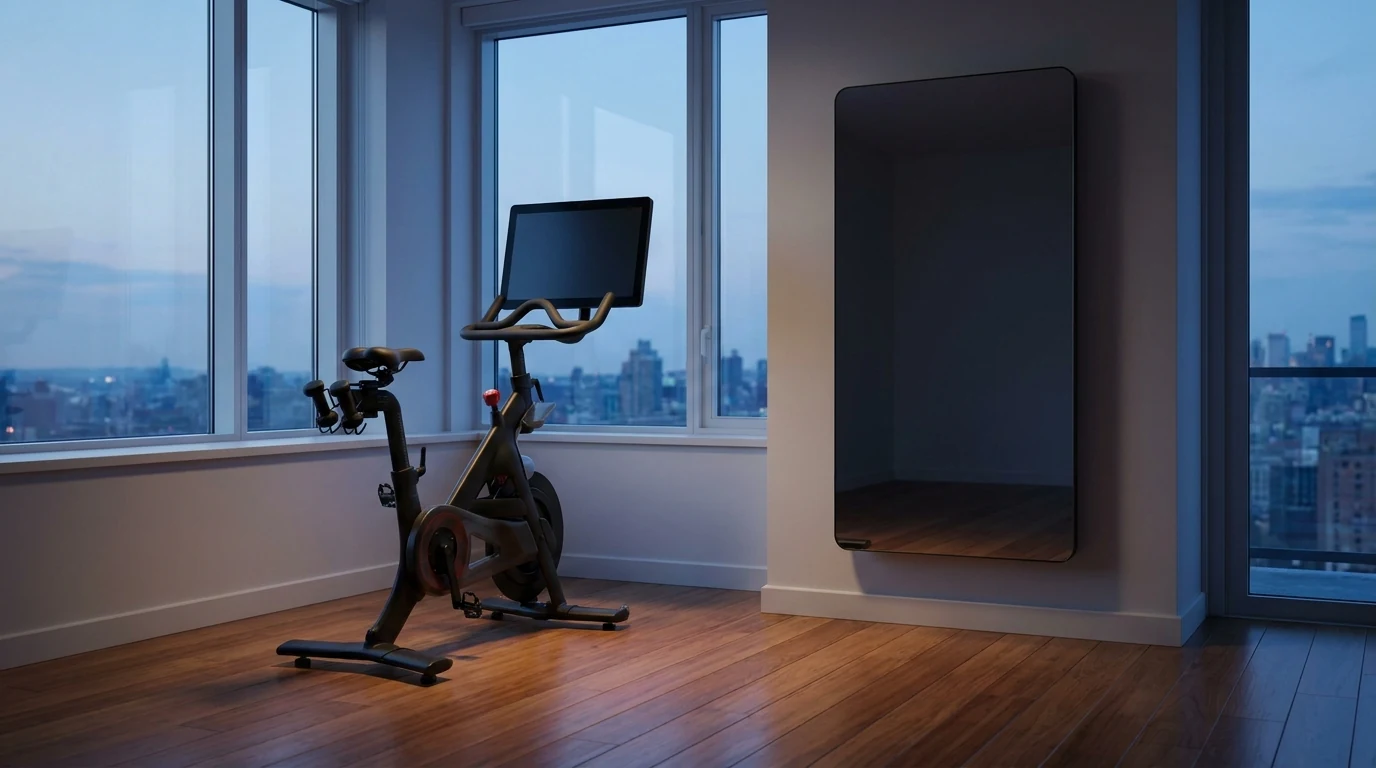
Which Home Gym Machines Secretly Need a Subscription?
Some home gym machines work forever without a fee; others lose their best features the day you cancel the subscription. What you own when you stop paying.

Do You Need a Smart Mirror, or Just a Wall Mirror?
A smart fitness mirror and a plain wall mirror do two different jobs. Which one your home gym needs, the safety glass to look for, and when to skip both.

Best Smart Mirrors for Home Workouts in 2026: Tempo Wins
Tempo Move is the best smart mirror for strength; the Lululemon Studio Mirror is discontinued. Four mirrors scored on hardware, buyability and subscription value.
Hilly Shore Labs
Editorial teamThe independent product research team behind GymScored. Every recommendation is researched, never hands-on tested — rankings come from manufacturer specifications, published standards, and aggregated buyer sentiment.
163 products scored across 26 home gym categories, each on the same 5-dimension Gym Score formula.
See the scoring methodology and who we are.
Affiliate disclosure: GymScored is a participant in the Amazon Services LLC Associates Program. We earn from qualifying purchases at no extra cost to you. Full disclosure →