Rank #1 in Gym Flooring & Mats
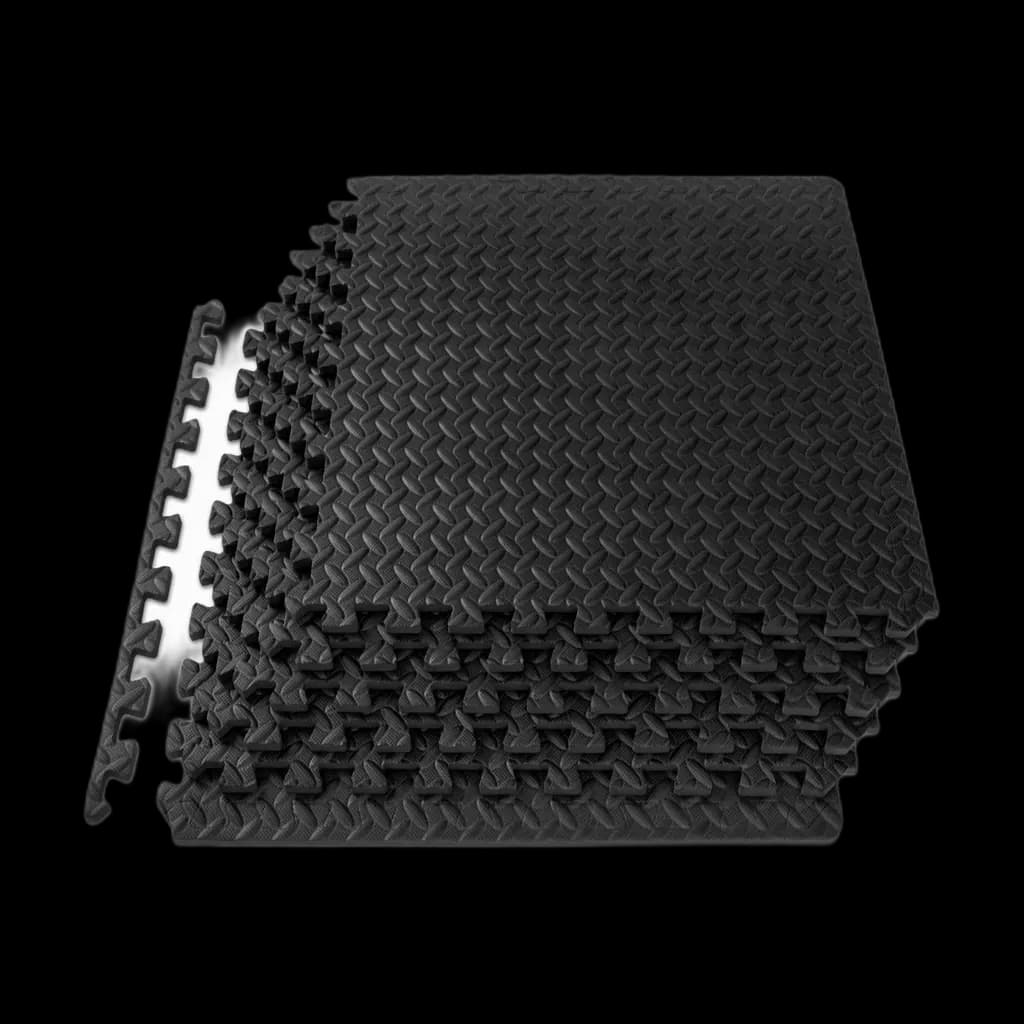
ProsourceFit Puzzle Exercise Mat
by ProsourceFitBuy first
Score
Interlocking 24x24" EVA foam tiles, 1/2" thick, 12 tiles (48 sq ft) per pack. The renter's choice — modular, transportable, no freight cost. Less ideal under iron than stall mats but installs in 10 minutes.
- Renters who need a removable floor and can't bolt or glue anything down
- Apartments above a neighbor where impact attenuation matters more than barbell density
- Home offices that double as cardio and yoga spaces
- Garage gyms running kettlebell, bodyweight, and dumbbell work under 50 lb
- Small footprints (under 100 sq ft) where modular replacement of damaged tiles is the goal
- You drop loaded barbells from the hip or overhead and want the floor to survive
- You roll a heavy power rack or sled across the surface (caster wheels punch and tear edges)
- Hardwood or engineered wood underneath without a vapor barrier (rubber-blend off-gassing can stain finish)
- You need a true commercial look with no visible seams
Each tile covers 4 sq ft (24x24 inch). A 6-pack covers 24 sq ft (roughly a 4x6 platform footprint). A 12-pack covers 48 sq ft, enough for a single-rack home gym with a small lifting zone. Edge border pieces ship in the box and trim the perimeter without leaving a puzzle silhouette.
easy — Tiles snap together by hand in about 10 minutes for a 24 sq ft area. Cutting perimeter tiles to fit walls requires a sharp utility knife and a straightedge; the EVA blend cuts cleanly but the first inch of the blade dulls fast.
Flooring goes down before the rack, bench, and any rolling equipment, since lifting heavy gear later to slip tiles underneath is the single most common install regret.
Strengths
- ↑Quality
- ↑Home Gym Suitability
- ↑Ease Of Assembly
- ↑Functionality
Weaknesses
- ↓Grip
What owners actually complain about
Synthesized from owner reviews and community threads. Paraphrased, not quoted.
- Distinct rubber and EVA smell for the first 3-7 days, peaking in the first 72 hours per VOC research
- Edges separate and creep apart after months of caster wheel traffic or sled drags
- Lower density than true vulcanized rubber: dropping a 20 lb dumbbell produces a noticeable thud and small dent
- Speckled rubber top picks up dust and hair quickly and shows footprints
- Color fades on the lighter shades when placed near a south-facing garage window
Buyer sentiment
Based on 10,751 user mentionsBuyers praise quality, home gym suitability, ease of assembly and functionality. Mixed feedback on durability. Some flag grip.
Verdict: The floor most renters and modular-setup owners actually need — an inexpensive way to protect a subfloor and cushion bodyweight work.
Specs that matter
| Spec | Value |
|---|---|
| Material | High-density EVA foam |
| Size | 24 x 24 x 1/2 in tiles, 12 per pack (48 sq ft) |
| Edges | 4-side puzzle interlock + flat border strips |
| Install (24 sq ft) | ~10 minutes |
| In-scope load | Kettlebell swings under 35 lb, dumbbells, yoga, rower/bike |
What you get
- Cheap + modular — low cost per sq ft, clean rectangular finish
- Solo install — no freight, no helper needed
- Subfloor protection — kills cold concrete and rack noise
What you give up
- Density — dents under dropped barbells, tears at seams under sled drags
- Off-gassing — chemical smell for 3–7 days
Buy it if you're a renter or have a multipurpose room. Skip it if you'll drop loaded barbells — get stall mats or vulcanized rubber.
Research on VOC release from rubber gym flooring puts ~70% of emissions in the first 72 hours, fading over weeks — a window and a box fan handle it.
Full specs
- Thickness
- 1/2"
- Tile Size
- 24" x 24"
- Material
- High-density EVA foam
Common questions
Will the ProsourceFit puzzle mat protect engineered hardwood under a squat rack?
For static rack weight and bodyweight or dumbbell work, yes — the 3/4 inch version distributes load enough to prevent point indentation. For dropped loaded barbells, no. The EVA blend compresses and transmits the impact through to the subfloor, and you risk both denting the hardwood and tearing the tile. Stack a 3/4 inch stall mat over the puzzle tiles in the drop zone if you're committed to lifting on this floor.
How long does the rubber smell last?
Plan on 3 to 7 days of noticeable odor with the garage door cracked or a fan running. Roughly 70 percent of VOC release happens in the first 72 hours, with the curve flattening fast after that. Wiping each tile down with mild soap and warm water before install knocks the smell down faster, and sensitive users sometimes leave the tiles unboxed in a ventilated space for 48 hours pre-install.
Can I leave edge pieces off if I want a clean rectangle?
Yes. ProsourceFit ships flat-edge border strips in the box specifically so the perimeter looks rectangular instead of jagged. Trim them to length with a utility knife if your wall isn't a clean tile multiple.
Why do my tiles keep separating in the middle of the room?
Two usual causes: rolling weight (caster-wheel racks, sleds, treadmills) walks the seams apart over weeks, and uneven concrete creates micro-gaps that propagate. Fix by gluing the perimeter tiles to the floor with double-sided carpet tape (renter-safe) so the field tiles have nothing to migrate toward.
Is 1/2 inch or 3/4 inch the better thickness for a garage gym?
3/4 inch every time if budget allows. The extra 1/4 inch buys meaningfully more impact attenuation for dropped dumbbells and is the difference between feeling concrete through the mat on a heavy step-down versus not. The 1/2 inch is fine for yoga, stretching, and standing cardio on already-flat concrete.
Sources & references
- Independent reviewProsourceFit Puzzle Exercise Mat — full review— Garage Gym Reviews
- ProsourceFit Exercise Puzzle Mat 1/2 in — owner reviews— Home Depot
- ProsourceFit Rubber Top Thick Puzzle Mat 3/4 in — owner reviews— Home Depot
- ResearchRubber Smell in New Gym Flooring: Off-Gassing, VOCs, and How to Clear— GrytFit
- Comparing Rubber Gym Flooring — Rolls, Mats, Tiles— Greatmats
Full buying guide
Best Gym Flooring for Home Gyms in 2026: Stall Mats Win
Read the full ranking →Other gym flooring & mats we rate
Ranked alternatives from the same category, with our score and the current price.
EVA puzzle mat — fine for yoga, cardio, and bodyweight work. Under iron, it crushes. The honest budget option, used correctly.
Interlocking 2 x 2 ft tiles with a recycled-rubber top bonded to closed-cell EVA foam, sold in 3/8-inch and 3/4-inch thicknesses (we link the 10-tile, 3/4-inch, 40 sq ft pack). Grippier and firmer than a plain foam puzzle mat and light enough to lay alone, but the maker says it is not recommended where heavy free weights and weight equipment are used.
Rubber-topped rather than plain EVA foam, which is the difference that matters under a rack or a dropped dumbbell — foam dents permanently, rubber does not.
The middle option: rubber-topped like the SUPERJARE but at half the coverage and half the price, which is the right size for a single rack or treadmill footprint rather than a whole room.