Adjustable vs Fixed Dumbbells for a Small Home Gym
One adjustable dumbbell pair replaces a whole fixed rack in a small home gym - but adjustables can't be dropped. When each type wins, and how to choose.
For a small home gym, adjustable dumbbells win because one pair covers the range of 15-17 fixed pairs in about 2 square feet. Choose fixed dumbbells instead only if you drop weights or do ballistic movements — adjustables cannot survive being dropped. Match the change mechanism (dial, twist, or pin) to your training: dial or twist for fast supersets, pin for durability and warranty.
How GymScored is paid: Amazon Associates commission plus brand-direct affiliate (Rogue / REP / Titan when approved). No sponsored placements, no paid reviews, no pay-to-rank. Picks are ranked by the Gym Score formula and nothing else. Read the full disclosure.
If floor space is your constraint and you train controlled reps, adjustable dumbbells are the obvious pick — one pair replaces 15-17 fixed pairs. Choose fixed only if you drop weights, do ballistic movements, or share a gym with several people. The mechanism (dial, twist, or pin) matters more than the brand: match it to how fast you change weights.
Adjustable vs fixed dumbbells: which fits your home gym?
Adjustables and fixed dumbbells are not interchangeable. The right pick depends on space, how you train, and whether you ever drop a bell.
| Factor | Adjustable dumbbells | Fixed dumbbells |
|---|---|---|
| Floor space | ~2 sq ft for the whole range | 10-12 sq ft for a full set + rack |
| Can you drop them? | No — mechanism breaks on impact | Yes — nothing to break |
| Change speed | 2-30 sec depending on mechanism | Instant — grab the next pair |
| Maintenance | A mechanism that can wear or fail | None |
| Best for | Tight space, controlled reps, solo training | Ballistic work, shared gyms, drop-and-go |
The short version
If your home gym has to fit in a corner, a closet, or under the stairs, one pair of adjustable dumbbells does the job of an entire rack. That space win is the whole reason adjustables exist. But adjustables and fixed dumbbells are not interchangeable, and picking the wrong one for how you train is a six-month regret.
This is the decision framework, not a ranked buyer list. (For specific picks, see the best adjustable dumbbells guide.)
Key takeaways
- Adjustables win on space, full stop. One pair replaces 15-17 fixed pairs in roughly the footprint of a single dumbbell. If floor space is the constraint, the decision is basically made.
- Fixed dumbbells win on durability and speed. No mechanism to break, nothing to dial, and you can drop them. If you train ballistic movements or share a gym, fixed wins.
- The mechanism is the product. Dial, twist, and pin selectors each trade change-speed against durability. Match the mechanism to how you actually train.
- Buy your 18-month strength, not today's. An adjustable that caps below your future working weight becomes a shelf decoration.
The space math (why adjustables exist)
A full fixed dumbbell set running 5-50 lb in 5 lb pairs is ten pairs. Add the heavier pairs most lifters eventually want and you are at 15-17 pairs plus a rack. That rack occupies roughly 10-12 square feet of floor and a few hundred dollars.
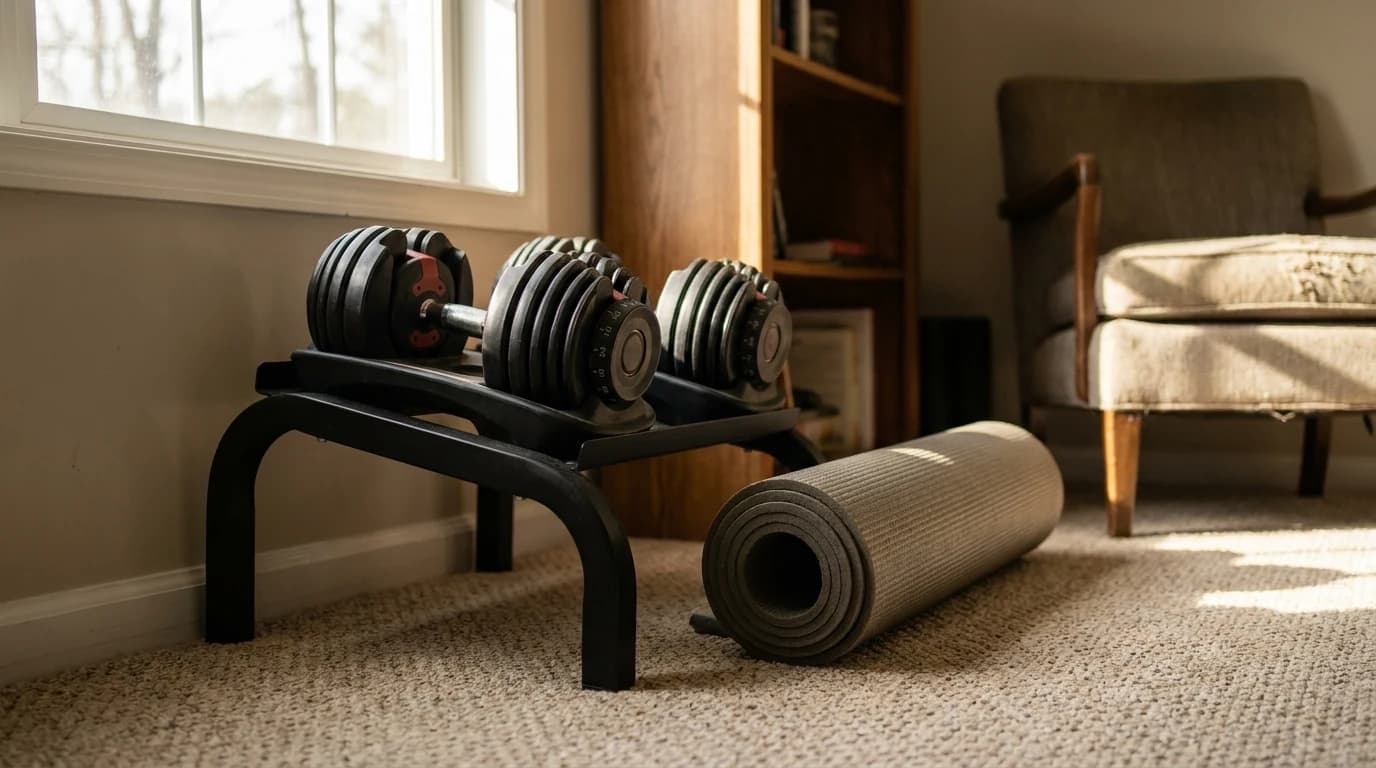
A single pair of adjustable dumbbells covers that same range and sits in about 2 square feet, often on a small stand. For apartment and shared-room gyms that compaction is the only way the equipment fits at all.
Worth knowing: the space saving is also an adherence lever. Equipment that is in the way gets used less than equipment that stays out of the way.
The trade you are making for that footprint is a moving mechanism inside the bell, and that mechanism is where every meaningful difference lives.
The three mechanisms, compared
Adjustable dumbbells change weight one of three ways. The mechanism decides change-speed, durability, and how the bell feels in your hand mid-rep.
| Mechanism | Change speed | Main trade-off |
|---|---|---|
| Dial selector | About 2 seconds | Plastic outer shell is the recurring durability complaint |
| Twist handle | Comparable to a dial | All-metal versions cost more, feel closest to fixed |
| Pin selector | A little slower than a dial | Boxy frame interferes with flyes; most drop-resistant |
Dial selectors keep you moving through supersets
The Bowflex SelectTech line is the reference. Turn a dial at each end to pick up plates, fast enough that it does not break the rhythm of a superset. The outer shell is usually plastic, which is where the durability complaints cluster.
Twist handles feel closest to a real dumbbell
The NÜOBELL 80 is the design everyone copies: rotate the handle itself to lock plates. All-metal versions have no plastic rattle mid-rep.
Pin selectors trade a second for toughness
The PowerBlock Elite USA 90 lb family uses a magnetic or pin selector in a boxy frame. Slower to change, but the most drop-resistant of the three, and it tends to carry the longest warranties. That same boxy shape interferes with movements that bring the bells together, like chest flyes.
When adjustable beats fixed
Adjustables are the right call when:
- Space is the binding constraint. A closet, a corner of a bedroom, a studio apartment. This is the dominant reason people buy them.
- You train mostly controlled reps. Presses, rows, curls, lateral raises, lunges. Anything where the bell stays under control through the whole set.
- You want a wide range without buying a rack. A 5-90 lb pair covers nearly every home dumbbell movement for years.
- Quiet matters. No clanking rack, no metal-on-metal when you re-rack.
When fixed dumbbells beat adjustable
Be honest about your training before you buy. Fixed dumbbells win when:
- You drop weights. No selectorized mechanism survives being dropped. If you do dumbbell snatches, fast thrusters, or anything where bailing is normal, fixed (or kettlebells) is the only safe choice.
- You superset at speed with many people. Grabbing a pre-set bell off a rack is faster than dialing, and a shared gym needs more than one weight available at once.
- You want zero maintenance forever. Fixed dumbbells have nothing to break.
The durability and drop question
This is the single most misunderstood thing about adjustables, so be clear-eyed about it.
The trap: adjustable dumbbells cannot be dropped. The selector is engineered for axial load through the handle during a press, not for the perpendicular shock of hitting the floor.
Manufacturer warranties are written specifically around that distinction, and a dropped bell is the most common way these break.
What the mechanism is built for:
- Controlled presses, rows, and curls
- Lowering under tension on every rep
- Setting the bell down, not releasing it
What kills it, usually inside the first year:
- Dropping from lockout at the end of a hard set
- Ballistic work — snatches, fast thrusters, anything you might bail
- Leaning the bells against a wall instead of a stand
The practical rule: control the bell down on every rep, and add a cheap pair of fixed 25-35 lb dumbbells for any ballistic work.
What the research actually says
- The minimum effective dose is two strength sessions a week. The CDC adult activity guidelines call for muscle-strengthening activity on 2 or more days per week working all major muscle groups. Adjustable dumbbells remove the storage barrier to hitting that dose at home.
- Adaptations track with load and progression, not the brand on the handle. The ACSM resistance training for health and performance framework is built on progressive resistance, which is why the equipment has to scale with the lifter. A bell that caps below your working weight stalls your progress.
- Heavier is not automatically required. Position summaries from the NSCA note that moderate loads taken to a high effort produce hypertrophy comparable to heavier loads, so an 80 lb top end is plenty for most home lifters.
What the research does not support
The idea that adjustable dumbbells give a different training result than fixed. At matched load and volume, the adaptation is the same. You are choosing on footprint, durability, and feel, not on outcomes. Do not pay a premium expecting better gains from the format itself.
How to choose in 60 seconds
- Is space tight? Yes, and you train controlled reps, get adjustables. No, or you drop weights, get fixed.
- Pick your top weight by your 18-month strength. If your one-arm row already pulls 50 lb, get an 80-90 lb pair. New lifter, a 5-52.5 lb pair covers the first year.
- Pick the mechanism by your style. Lots of supersets, get a dial or twist. Heavier singles with rest, a pin selector saves money and lasts longer.
- Budget the stand. Most sets ship without one and live on the floor. A 24-30 inch stand is a back-saving $80-150 extra.
How we evaluated
GymScored ranks home gym gear on build quality, mechanism durability, range, value, and owner-reported failure patterns; see /methodology. We do not run a test lab and do not claim hands-on data. This guide synthesizes manufacturer specifications, CDC and ACSM and NSCA resistance-training literature, and long-term owner patterns from r/homegym and r/HomeGymBrands.
Still weighing the whole room, not just the dumbbells? The free home gym planner builds a complete small-space layout around either choice — enter your square footage and it shows what else fits alongside the pair you pick.
Frequently Asked Questions
Are adjustable dumbbells worth it for a small home gym?+
Yes, if floor space is the constraint. One adjustable pair replaces the range of 15-17 fixed pairs in roughly 2 square feet instead of the 10-12 square feet a fixed set plus rack needs. The space saving is the entire reason to buy them.
Can you drop adjustable dumbbells?+
No. The selector mechanism is built for axial load through the handle during a press, not the perpendicular shock of hitting the floor. A dropped bell is the most common way adjustables break, and manufacturer warranties are written around this. If you train ballistic movements, use fixed dumbbells or kettlebells.
Which adjustable dumbbell mechanism is best?+
It depends on how you train. Dial and twist selectors change weight in about 2 seconds, which suits supersets and drop sets. Pin selectors are a little slower but are the most drop-resistant and tend to carry longer warranties. There is no single best — match it to your style.
Do I need 90 lb adjustable dumbbells?+
Most home lifters never use more than 60 lb on a single dumbbell, so an 80 lb top end is plenty. Buy for where your strength will be in 18 months, not today — a bell that caps below your working weight stalls your progress.
Sources & Research
- CDC — Physical Activity Basics: Adult Activity Guidelines (muscle-strengthening activity on 2 or more days per week, all major muscle groups)
- ACSM — Resistance Training for Health and Performance (progressive resistance framework; equipment must scale with the lifter)
- NSCA — Position Statements (resistance-training guidance; moderate loads to high effort produce comparable hypertrophy)
Your next step
Decided on adjustables? Here's the ranking.
Related reviews
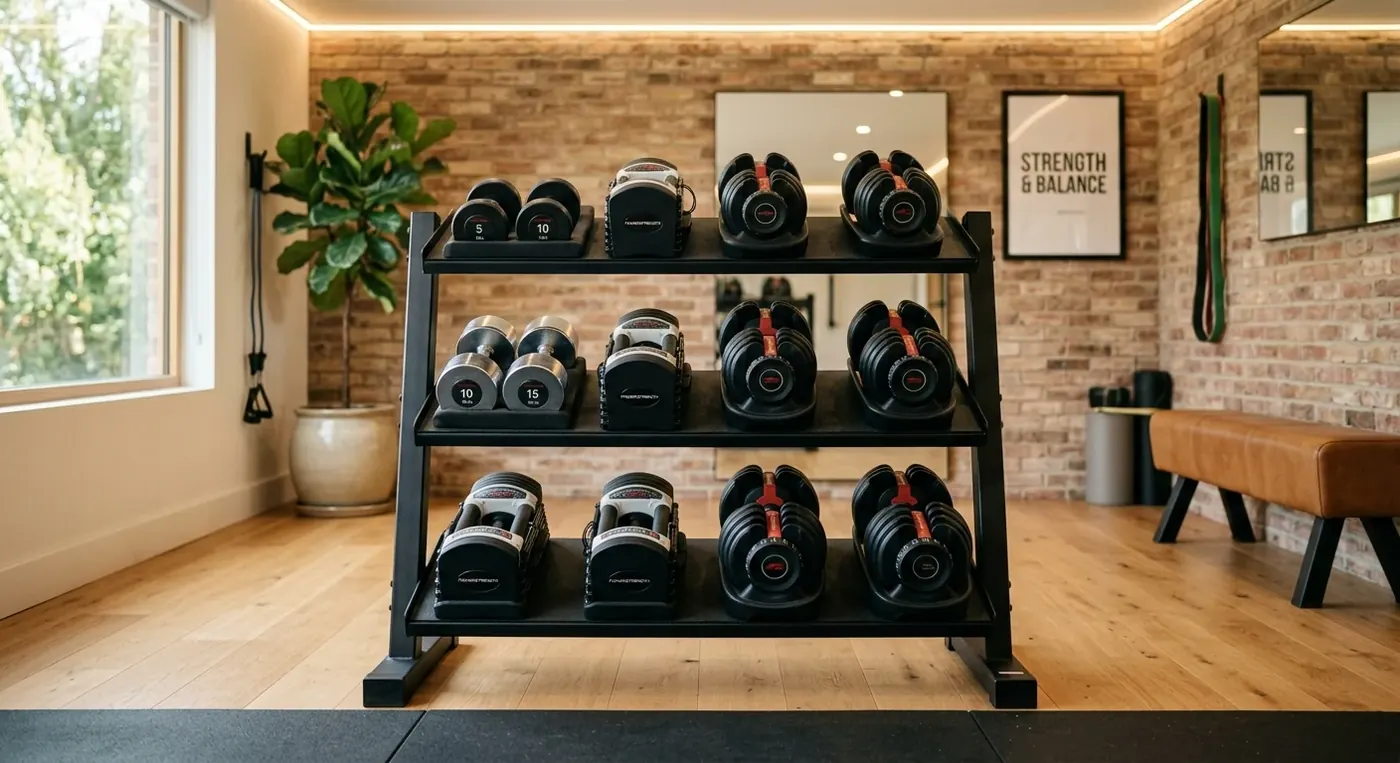
Best Adjustable Dumbbells in 2026
Bowflex 1090 wins on its 10-90 lb range, NUOBELL 80 on feel, PowerBlock on durability. We scored 8 adjustable dumbbell sets on mechanism and build.
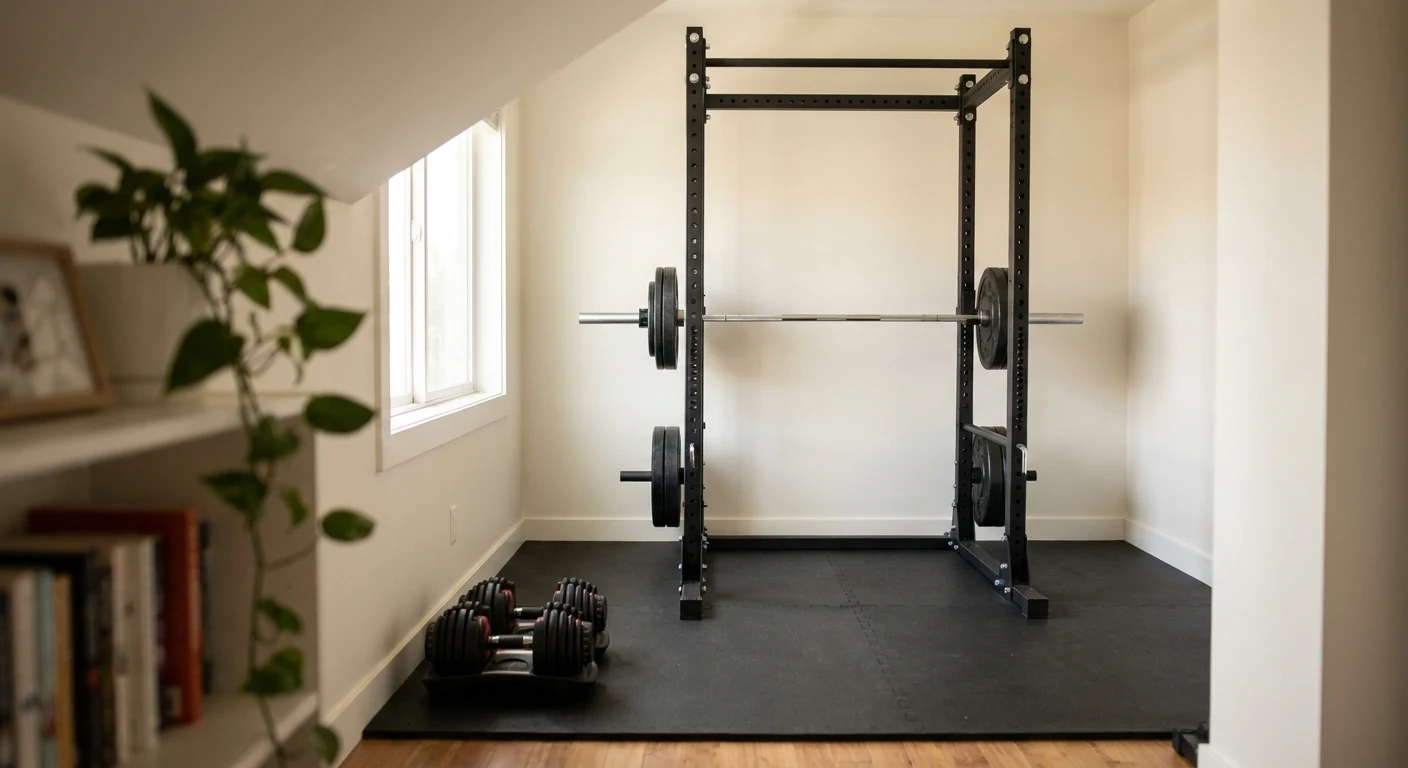
How to Plan a Home Gym in a Small Space (Without Wasting Money)
Plan a small-space home gym goal-first: real equipment footprints, ceiling-height math, the buy order that avoids waste, and what beginners over-buy.
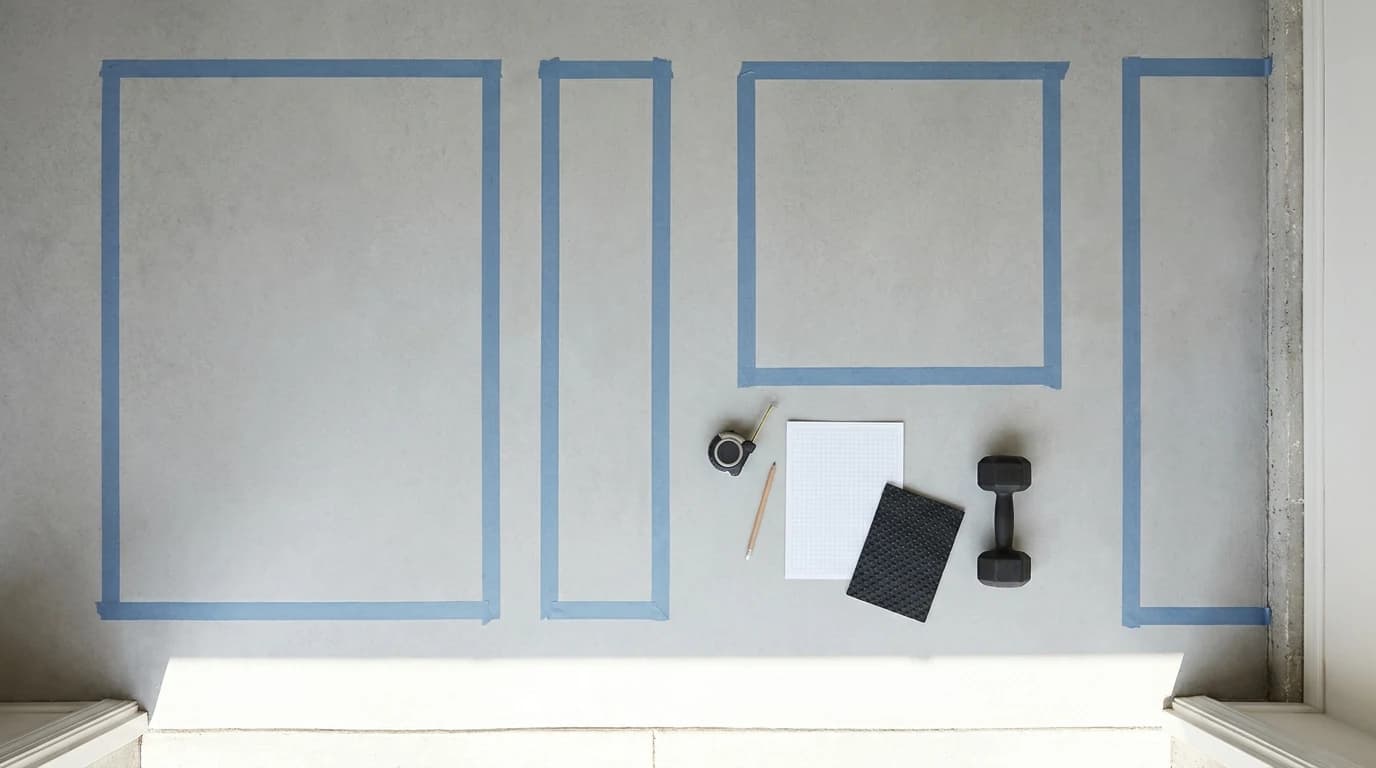
Home Gym Layout Planner: How to Map Your Space Before You Buy
Map your home gym layout before you buy: measure floor space, ceiling height, clearances, noise, and storage so nothing you order fails to fit the room.
Hilly Shore Labs
Editorial teamThe independent product research team behind GymScored. Every recommendation is researched, never hands-on tested — rankings come from manufacturer specifications, published standards, and aggregated buyer sentiment.
163 products scored across 26 home gym categories, each on the same 5-dimension Gym Score formula.
See the scoring methodology and who we are.
Affiliate disclosure: GymScored is a participant in the Amazon Services LLC Associates Program. We earn from qualifying purchases at no extra cost to you. Full disclosure →