Home Gym Layout Planner: How to Map Your Space Before You Buy
Map your home gym layout before you buy: measure floor space, ceiling height, clearances, noise, and storage so nothing you order fails to fit the room.
Measure the usable rectangle, ceiling height, and traffic paths first. Pick one anchor movement, then reserve clearance for that movement before adding storage or cardio. A 6 x 8 ft corner works for dumbbells and bands; an 8 x 10 ft room works for one serious training lane; a 10 x 10 ft garage bay is the comfortable target for a rack, barbell, bench, plates, and flooring.
How GymScored is paid: Amazon Associates commission plus brand-direct affiliate (Rogue / REP / Titan when approved). No sponsored placements, no paid reviews, no pay-to-rank. Picks are ranked by the Gym Score formula and nothing else. Read the full disclosure.
Measure usable space and clearance before you buy. Pick one anchor movement, protect its safety zone, then place storage and secondary equipment around it. Most bad home gyms fail because the footprint fits on paper but the movement path does not.
TL;DR: plan clearances before equipment
A useful home gym layout starts with three numbers: usable floor rectangle, ceiling height, and the one movement you refuse to compromise. Do not start with a shopping cart. Measure the room, subtract doors, storage, cars, low beams, ceiling fans, and traffic paths, then choose the training zone that survives those constraints.
| Space you have | Best layout | What to avoid |
|---|---|---|
| 6 x 8 ft corner | Dumbbells, bench, bands, walking pad | Full rack, 7 ft barbell, treadmill |
| 8 x 10 ft room | Strength corner plus one cardio piece | Two cardio machines |
| 10 x 10 ft garage zone | Rack, bench, barbell, plates, flooring | Buying cardio before flooring |
| Shared apartment room | Fold-away strength kit, quiet cardio | Air bike, dropped weights, cheap treadmill |
The 10-minute layout worksheet
- Measure the hard rectangle. Wall to wall is not enough. Mark the actual usable rectangle after doors, shelves, parked cars, water heaters, and traffic paths.
- Measure ceiling height in the lift zone. Basements and garages often have beams, openers, and ducts. The lowest point wins.
- Pick your anchor movement. Squat, deadlift, row, bike, treadmill, or general strength circuit. The anchor gets the prime real estate.
- Draw the storage zone last. Storage is where home gyms quietly fail. If plates, collars, bands, and handles live in the walkway, the layout is not done.
ACSM's home-gym guidance makes the same first-principles point: choose a space that works long term, then choose equipment that works within it. If space is limited, ACSM points toward multipurpose pieces such as bands, kettlebells, mats, and foam rollers instead of single-use machines.
Clearance rules that matter
The NSCA home-gym facility excerpt is useful because it distinguishes home layouts from commercial gyms. In a smaller home facility, fixed equipment often goes along the perimeter, and the space cushion around equipment may be reduced to 18 inches instead of 3 feet. For open movement activities like calisthenics, kickboxing, or bodyweight work, NSCA gives a 25 to 49 square foot range.
The trap: 18 inches is a walkway cushion, not a barbell safety zone. Use it as the minimum you can live with between fixed pieces, then add room wherever the movement itself is big.
| Zone | Minimum that works | Comfortable target | Why |
|---|---|---|---|
| Bodyweight / mobility | 5 x 5 ft | 7 x 7 ft | Matches the NSCA 25-49 sqft open-movement range. |
| Bench and dumbbell zone | 4 x 6 ft | 6 x 8 ft | Lets you step around the bench without kicking plates. |
| Rack and barbell zone | 8 x 8 ft | 10 x 10 ft | The bar, bench rotation, plates, and walk-around need room. |
| Cardio machine | Footprint plus 18 in | Footprint plus 24-36 in | You need safe mount, dismount, and maintenance access. |
| Storage wall | 12-18 in deep | 24 in deep | Plates and handles need a home outside the walkway. |
Build around one anchor
A layout gets messy when every category gets equal status. Pick one anchor and let the rest serve it.
Strength anchor
Put flooring down first, then place the power rack where the bar can be loaded without crossing a doorway. The weight bench needs a rotation path. Wall storage belongs beside the rack, not behind it.
Cardio anchor
Put the machine where ceiling height, ventilation, and noise make sense. A walking pad can live under a desk or bed. A rower needs pull length and a storage position. A treadmill needs the most permanent clearance and is the hardest piece to hide.
Apartment anchor
Choose quiet, stowable pieces: adjustable dumbbells, resistance bands, a foldable bench, and magnetic cardio if you need it. The best apartment layout is the one that disappears after training.
The noise and neighbor check
Layout is not only geometry. It is sound, vibration, and household conflict. CDC/NIOSH sets a recommended exposure limit of 85 dBA averaged over an eight-hour workday and notes that you often need to raise your voice to be heard at that level.
Rule of thumb: home gyms do not usually create eight-hour exposure, but the benchmark still works as a sanity check — if a machine or impact pattern makes conversation hard from 3 feet away, it is not the right choice for a shared-wall room.
| Constraint | Better layout choice | Skip |
|---|---|---|
| Neighbor below | Rubber floor, controlled lowering, magnetic cardio | Deadlift drops, treadmill running |
| Sleeping child nearby | Bands, dumbbells, quiet bike | Air bike, fan rower, plyometrics |
| Garage heat/cold | Door-side airflow, fan path, dehumidifier zone | Screen-based gear near humidity |
| Shared room | Fold-away kit and wall storage | Permanent rack in the traffic path |
Three sample layouts
1. The 6 x 8 ft starter corner
Best for: renters, beginners, and anyone building under $800.
- Wall side: bands, hooks, small dumbbell stand.
- Floor: foldable bench and mat zone.
- Storage: all pieces return to one wall after use.
- Training: dumbbell strength, bands, mobility, walking pad.
This is not a compromise layout if your goal is consistency. It fails only when you try to force a barbell into it.
2. The 8 x 10 ft spare room
Best for: general fitness with one serious equipment lane.
- Anchor: bench and adjustable dumbbells, or one cardio machine.
- Open floor: 5 x 5 ft kept clear for mobility and warmups.
- Storage: vertical rack or closet shelf.
- Rule: no second cardio machine until the first one is used four days a week.
3. The 10 x 10 ft garage strength bay
Best for: rack, barbell, plates, and bench.
- Flooring covers the entire bay, not just under the rack.
- Rack goes on the back or side wall with bar-loading space on both ends.
- Plate tree sits within one step of the rack but outside the walking path.
- Cardio waits until the strength zone is stable.
What most people get wrong
The common mistake is measuring the footprint and ignoring the movement.
Fits on paper:
- A rack footprint against the wall.
- A treadmill tucked into a corner.
- A bench parked under the rack.
Fails in the room:
- The bar cannot be loaded safely at either end.
- The user has no safe dismount zone.
- There is no room to roll the bench out for dumbbell work.
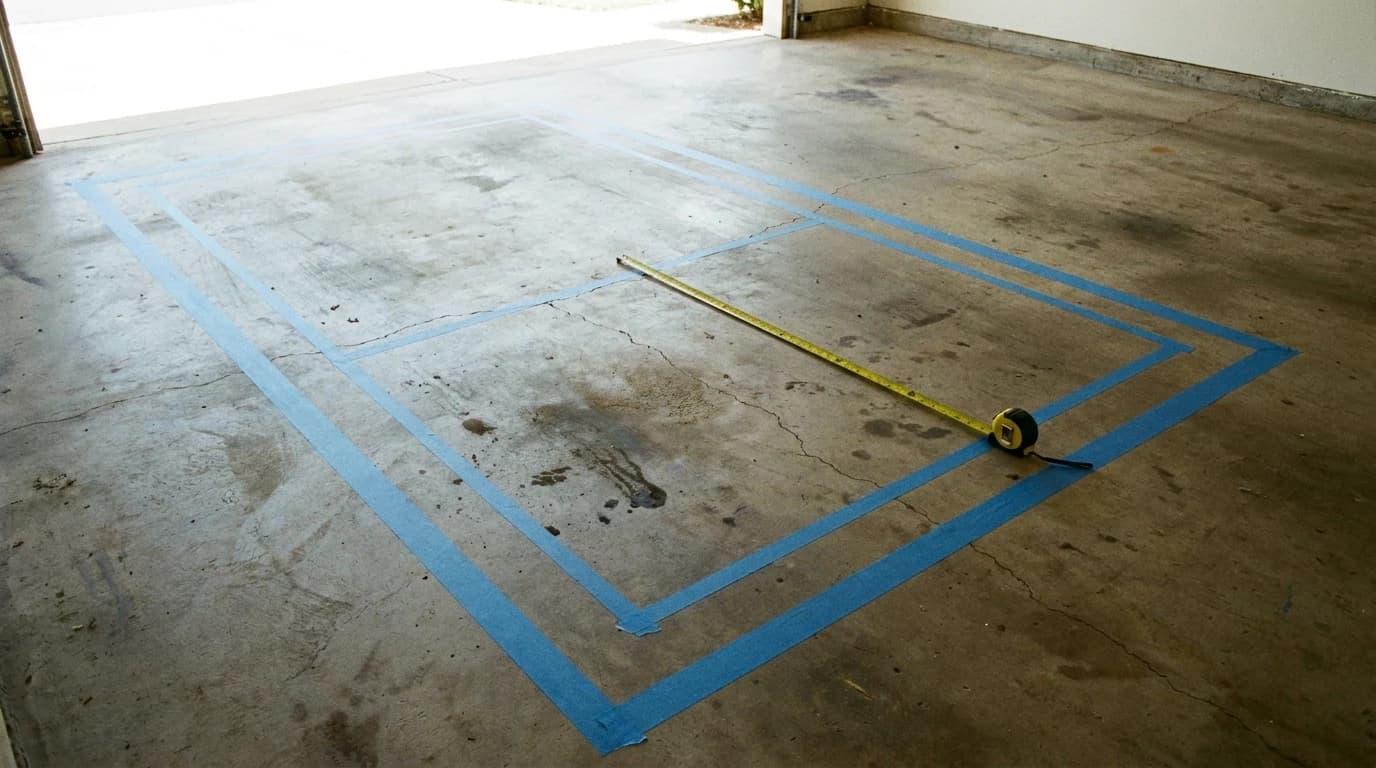
The fix is simple: tape the layout on the floor before buying. Use painter's tape for the equipment footprint, then add clearance tape around it. Walk through a fake session: load plates, set up the bench, grab water, put collars away, and exit the room. If you step over equipment during the simulation, the real layout is too tight.
Skip the graph paper
Everything in this guide — footprints, clearances, walking lanes, storage walls — is exactly what the free GymScored layout planner automates. Enter your room size, goal, and budget, and it returns a placed layout with a shopping list, so you can test three room arrangements in the time it takes to sketch one.
Sources
- ACSM - 3 Essentials for Building a Home Gym (choose the right space first; multipurpose equipment when space is limited)
- NSCA - Setting Up a Home Gym Facility (home layout safety, children/pets/electrical cautions, 18-inch equipment cushion example, 25-49 sqft for open movement)
- CDC/NIOSH - Noise-Induced Hearing Loss (85 dBA recommended exposure limit and practical signs that sound is too loud)
FAQ
What is the minimum space for a home gym?
A 5 x 5 ft open area can support bodyweight, bands, and mobility work. A 6 x 8 ft corner can support dumbbells, a bench, bands, and a walking pad. A barbell rack layout usually wants about 8 x 8 ft minimum and 10 x 10 ft comfortable.
Should a home gym start with cardio or strength equipment?
Start with the equipment tied to your actual goal. If strength is the goal, floor and rack layout come first. If daily movement is the goal, one cardio machine or walking pad can be the anchor. Do not buy both categories at once unless the room clearly supports both.
How much clearance should I leave around equipment?
Use 18 inches as a bare minimum walkway cushion for fixed equipment in tight home layouts, then add more where movement demands it. Barbell loading, treadmill dismounts, bench rotation, and bodyweight work need more room than a static footprint.
What is the best home gym layout for an apartment?
Use a fold-away strength kit: adjustable dumbbells, resistance bands, a foldable bench, and quiet magnetic cardio if needed. Keep everything on one storage wall and avoid impact moves, air-resistance cardio, and any lift you cannot lower under control.
Frequently Asked Questions
What is the minimum space for a home gym?+
A 5 x 5 ft open area can support bodyweight, bands, and mobility work. A 6 x 8 ft corner can support dumbbells, a bench, bands, and a walking pad. A barbell rack layout usually wants about 8 x 8 ft minimum and 10 x 10 ft comfortable.
Should a home gym start with cardio or strength equipment?+
Start with the equipment tied to your actual goal. If strength is the goal, floor and rack layout come first. If daily movement is the goal, one cardio machine or walking pad can be the anchor.
How much clearance should I leave around equipment?+
Use 18 inches as a bare minimum walkway cushion for fixed equipment in tight home layouts, then add more where movement demands it. Barbell loading, treadmill dismounts, bench rotation, and bodyweight work need more room than a static footprint.
Sources & Research
Your next step
Layout settled — now the gear.
Related reviews
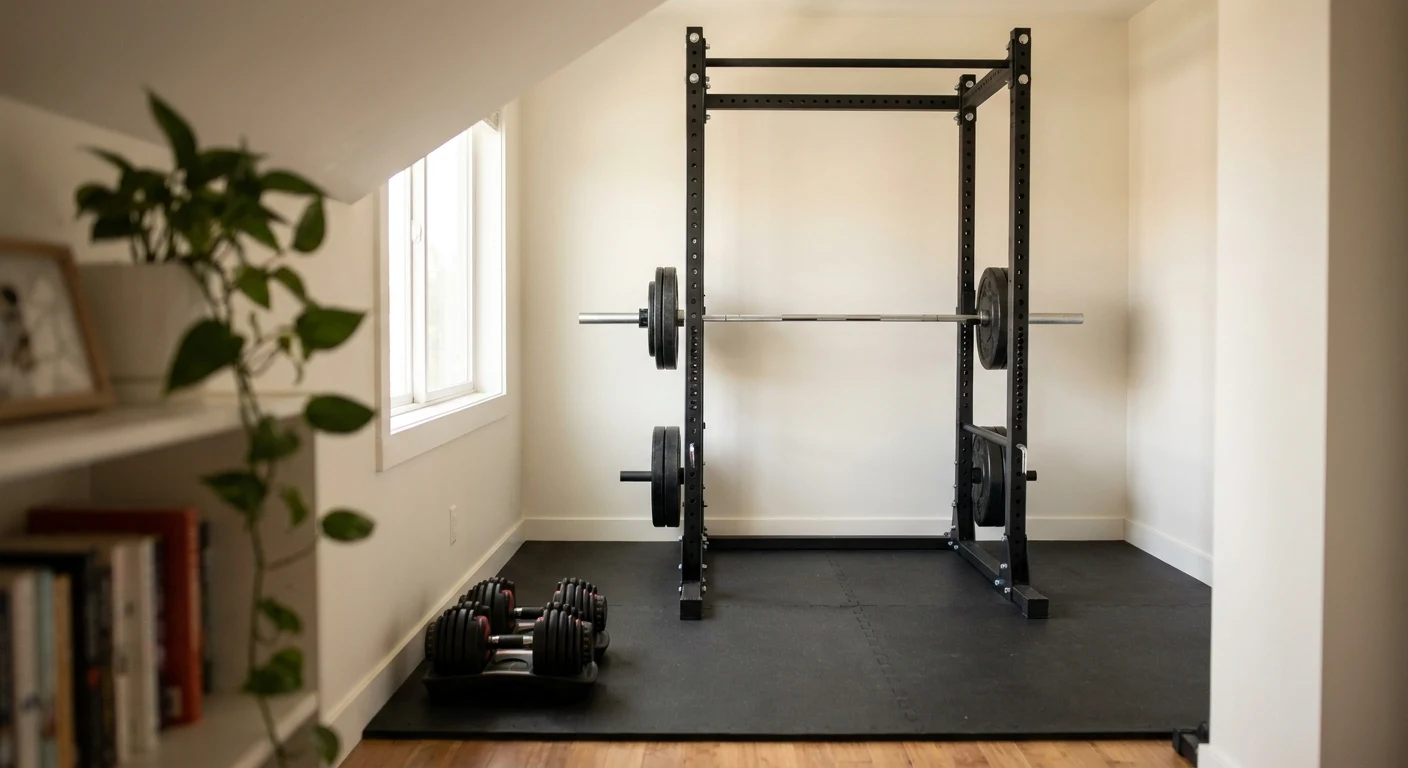
How to Plan a Home Gym in a Small Space (Without Wasting Money)
Plan a small-space home gym goal-first: real equipment footprints, ceiling-height math, the buy order that avoids waste, and what beginners over-buy.
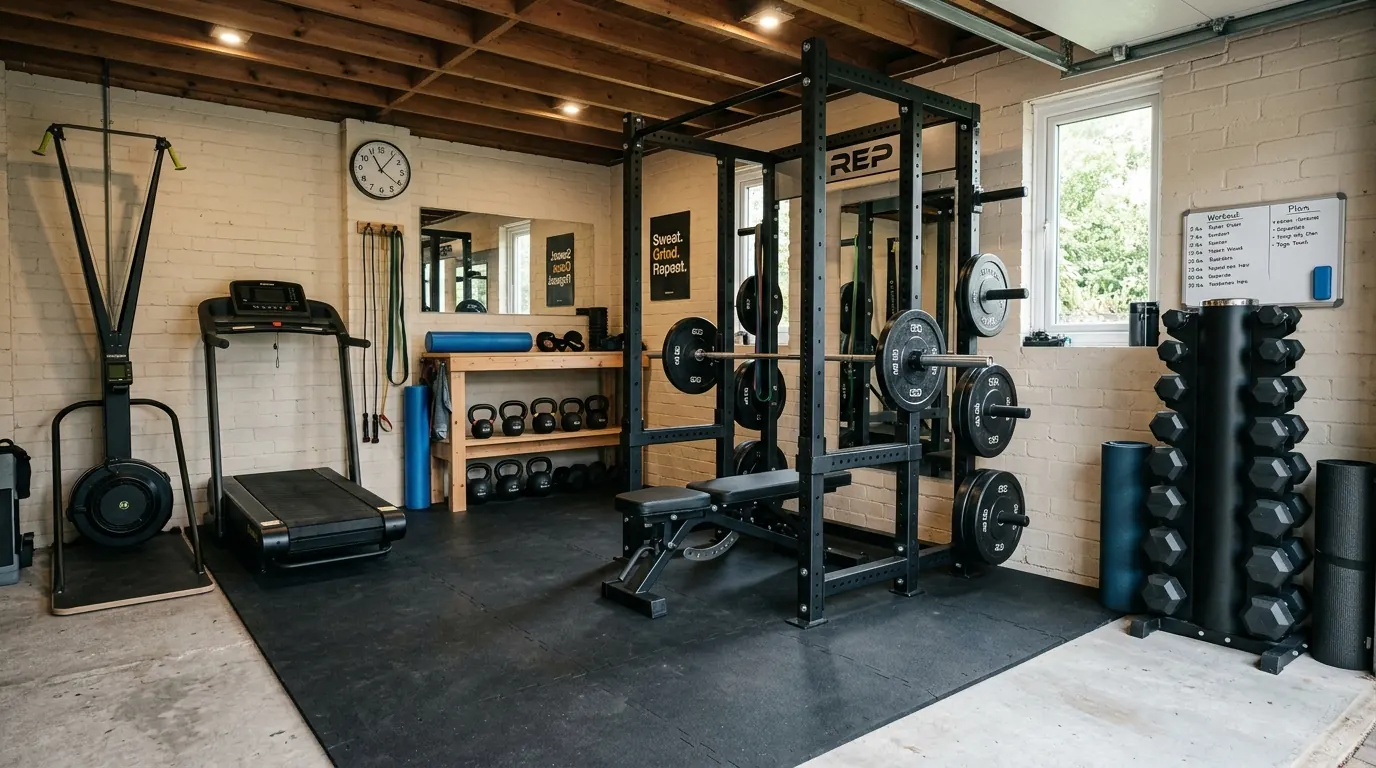
How to Build a Home Gym on Any Budget
Five complete home gym builds at $500, $1,500, $3,500, $7,500, and $15,000 - what to buy first, what to add later, and what to skip at every budget level.
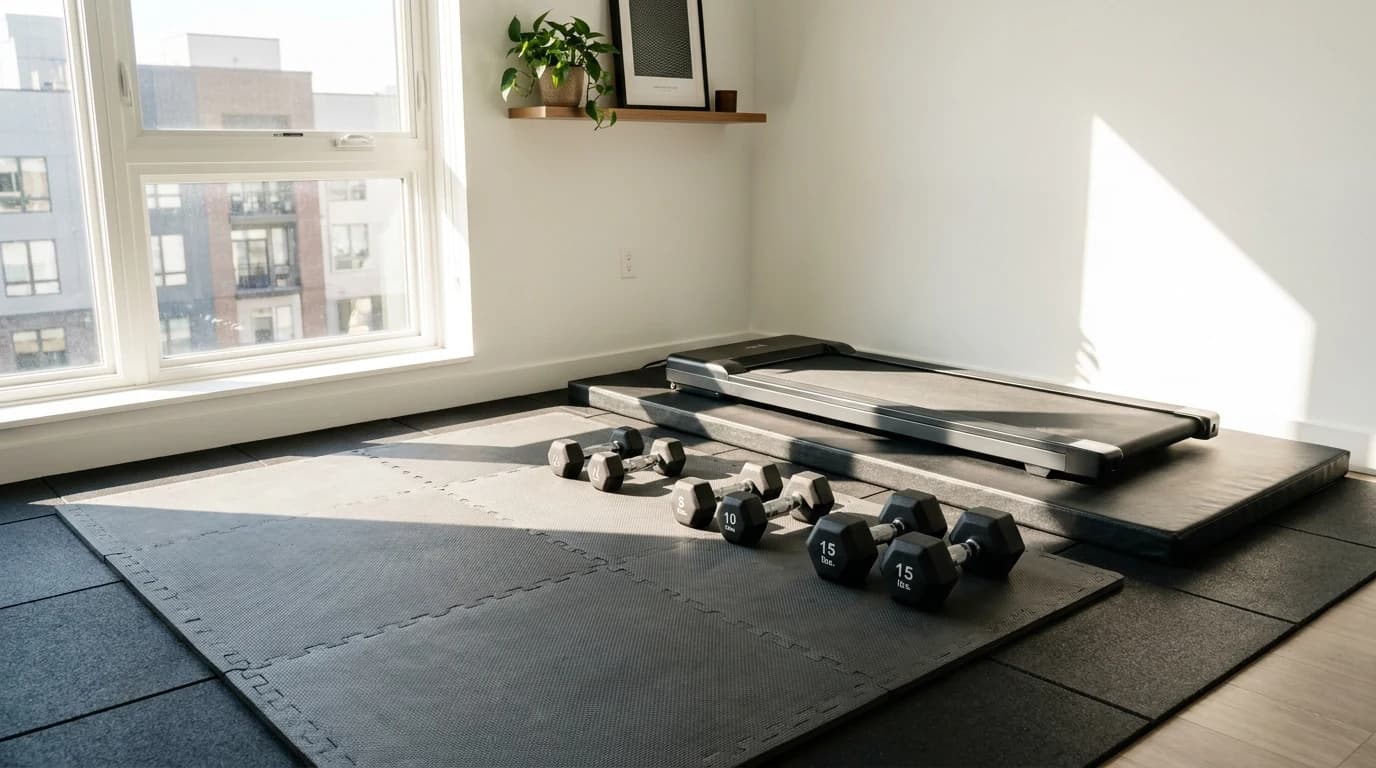
How to Make a Home Gym Quiet (Apartment and Upstairs Fixes)
Most home gym noise is impact, not effort. Layer dense rubber and cushion flooring, isolate cardio, and lower weights under control in an apartment.
Hilly Shore Labs
Editorial teamThe independent product research team behind GymScored. Every recommendation is researched, never hands-on tested — recommendations draw on manufacturer specifications and available published research. Category order is editorial; the Gym Score is a separate comparison aid.
170 listed products across 26 home gym categories. Scores use category criteria, value and owner-rating inputs; missing evidence limits what a score can tell you.
See the scoring methodology and who we are.
Affiliate disclosure: GymScored is a participant in the Amazon Services LLC Associates Program. We earn from qualifying purchases at no extra cost to you. Full disclosure →