How to Make a Home Gym Quiet (Apartment and Upstairs Fixes)
Most home gym noise is impact, not effort. Layer dense rubber and cushion flooring, isolate cardio, and lower weights under control in an apartment.
Target impact, not effort. Almost all home-gym noise complaints come from dropped weights, jumping, and treadmill vibration. Layer flooring (a dense 3/4-inch rubber base for load spreading plus a softer cushion top for jumps), build a lifting platform under anything you drop, place a heavy mat under cardio and keep the belt maintained, and lower weights under control rather than dropping them. Landing from a 300mm box produces ground reaction forces near 4.5 times body weight; coached soft landings cut that to about 3.6x, and compliant flooring lowers peak impact force further. No mat makes a deadlift drop silent through a shared floor, so controlled lowering is the only reliable fix for that one move.
How GymScored is paid: Amazon Associates commission plus brand-direct affiliate (Rogue / REP / Titan when approved). No sponsored placements, no paid reviews, no pay-to-rank. Picks are ranked by the Gym Score formula and nothing else. Read the full disclosure.
Home-gym noise is an impact problem, not a general-loudness one. Dropped weights, jumping, and a treadmill belt cause nearly all complaints. Layer a dense rubber base with a softer cushion top, build a platform under anything you drop, put a heavy mat under cardio, and lower weights under control instead of dropping them. Landing forces reach about 4.5 times body weight from a small box drop, so technique plus compliant flooring is what actually cuts the spike a neighbor feels.
Direct answer: it is impact, not effort, that travels through your floor
Most home-gym noise complaints come from a handful of high-impact moments — dropped weights, jumping, and a treadmill belt — not from the workout itself. Fix those, and an apartment or upstairs gym gets quiet enough to keep the peace.
The single biggest lever is what happens when force hits the floor. In a controlled study, landing from a 300mm box produced ground reaction forces averaging about 4.5 times body weight (Prapavessis & McNair, 1999). That spike is what your downstairs neighbor feels. Soften the landing surface and the landing technique, and you cut the spike at the source.
Key takeaways
- Impact is the problem, not noise in general. A 180-lb person dropping onto the floor can deliver well over 800 lb of peak force. That force becomes structure-borne sound that travels far better than airborne sound.
- Two layers beat one thick layer. A dense rubber base plus a softer top, or a stall-mat-grade flooring layer, absorbs more than a single mat of equal cost.
- Softer, more compliant surfaces lower peak impact force. Cushioning material has been shown to significantly reduce peak ground reaction force during landings (Zhang et al., 2005). The same physics applies to a floor.
- Technique is free and works. The same box-drop study cut landing force from ~4.5x to ~3.6x body weight just by coaching a soft, hip-and-knee landing.
- What the research does NOT support: that any mat makes deadlift drops or bumper-plate slams silent. Thick rubber attenuates impact; it does not eliminate structure-borne transmission through a shared floor.
The four noise sources, ranked by how much trouble they cause
| Source | Why it travels | Best fix |
|---|---|---|
| Dropping loaded barbells | Highest peak impact; pure structure-borne | Lower under control; thick rubber under a platform |
| Jumping / plyometrics | 4-5x body-weight spikes, repeated | Soft landings + cushioned flooring |
| Treadmill / cardio | Continuous belt + motor vibration | Heavy mat under the deck; isolate the legs |
| Dumbbell / kettlebell set-downs | Sharp metallic impact | Set down, never drop; rubber-coated weights |
Rule of thumb: if you only do one thing, address how you put weight down. It solves three of the four rows above for free.
Build a quiet floor in layers
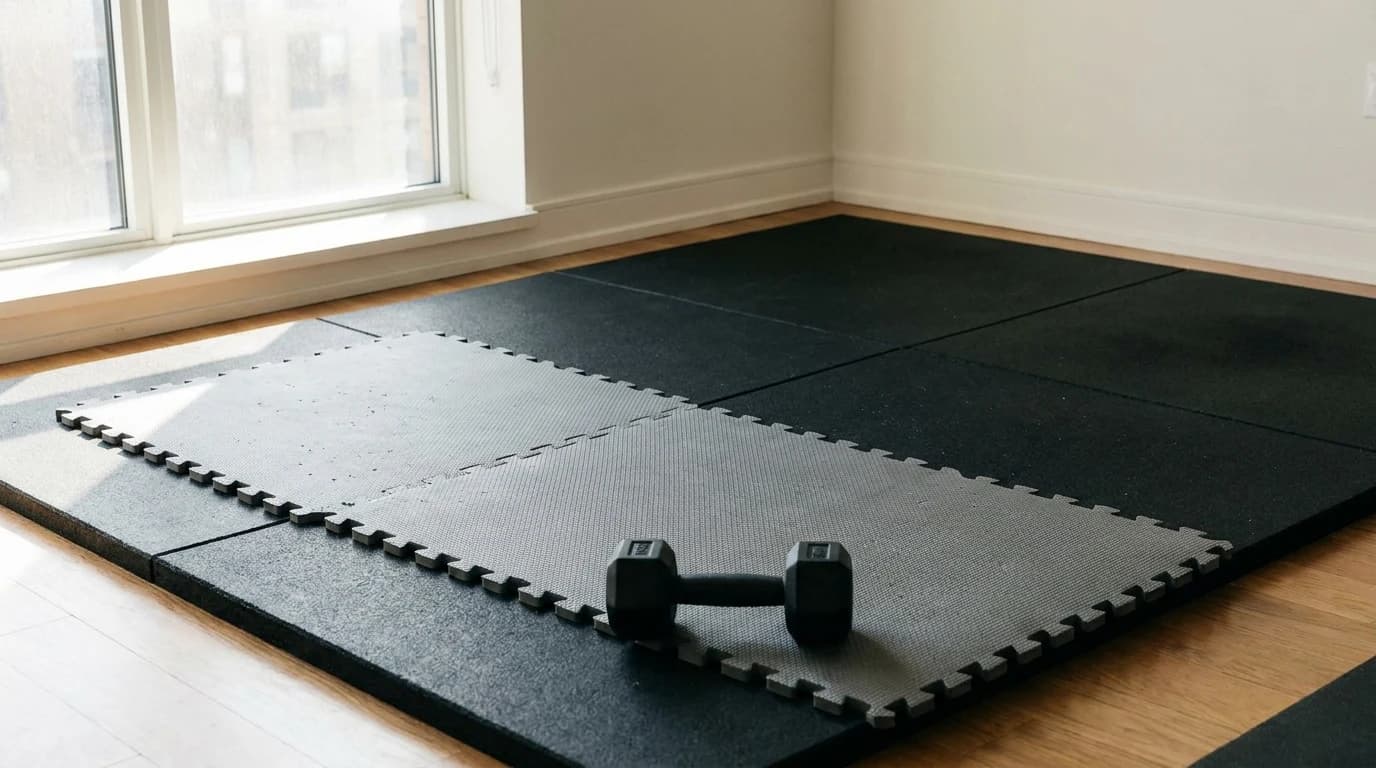
Dense underneath, compliant on top
A single mat is a compromise. Stacking a dense base and a softer top spreads the load and damps the impact better than one slab of the same total thickness.
- Base layer (load spreading): A 3/4-inch dense rubber surface, such as rubber stall mats, takes the brunt of barbell and rack loads. Dense rubber is the workhorse under anything heavy.
- Top layer (cushion): Over the base, a softer puzzle mat or ProsourceFit puzzle mat adds give for jumping and floor work. The give is the point — compliant material lowers the peak force that reaches the slab.
- Lifting platform (for any dropping): If you must drop bumper plates, build or buy a platform: plywood base, rubber landing strips. It localizes the impact and protects both the slab and the room below.
For a clean walkthrough of mat types and thicknesses, our gym flooring guide ranks the options on density, thickness, and price.
Cardio: isolate the machine, not just the room
Break the path from the feet to the floor
Treadmills and bikes make a different kind of noise — continuous vibration from the belt and motor rather than a single slam. The fix is to break the path from the machine's feet to the floor.
Mat under the whole deck. A dense rubber mat under a treadmill damps belt-strike vibration and stops the unit from walking across the floor. Our walking pad guide covers the slimmest low-noise options for an apartment.
Run during waking hours. Continuous machine noise at night is what generates complaints; the same run at 6pm rarely does.
Keep the belt maintained. A dry, mistracked belt is dramatically louder than a clean, lubricated one. This is the cheapest noise fix on the list.
What about a walking pad under a desk?
Walking pads come up constantly in r/Apartmentliving and r/walking, and the threads land in the same place: at walking speed the motor is fairly quiet, and what the flat below notices is footfall thud carried through the floor. WalkingPad's own FAQ says the same, noting that a thud or slam can often be reduced with a treadmill mat under the pad.
- Use a firm mat, not a squashy one. WalkingPad warns that a very soft mat can interfere with the pad's sensor, and its manual says not to set the pad on a soft cushion or thick carpet.
- Keep it to walking pace. Owners in these threads single out jogging intervals as what draws complaints.
- Use it in waking hours, the same rule as any cardio.
- Carry it, don't drag it. Downstairs neighbours in these threads often say moving the pad in and out is louder than walking on it.
Technique: the free attenuator
The four habits that cost nothing
You do not have to buy your way to quiet. The biggest single-rep reduction in floor force comes from how you move.
- Lower weights; do not drop them. Eccentric (lowering) control turns one sharp impact into a gradual load. This alone resolves the loudest source.
- Land soft. Coached soft landings cut peak force by roughly 20% in the box-drop study above — hips back, knees bend, land on the forefoot, absorb.
- Swap the loudest moves. Box jumps can become step-ups; barbell drops can become controlled lowers or a switch to lighter, rubber-coated dumbbells set down by hand.
- Time it. Schedule the high-impact block of your session for daytime, and keep late-evening work to quiet movements like cable work, mobility, and recovery on a foam roller.
A practical quiet-gym setup, start to finish
- Pick the quietest room over a slab or ground floor if you have the option — a basement or garage on grade transmits far less than an upstairs room over a neighbor.
- Lay a dense rubber base across the lifting zone for load spreading.
- Add a cushioned top layer where you jump or do floor work.
- Build or place a platform under anything you might drop.
- Put a heavy mat under cardio and keep the belt maintained.
- Train the technique — control the lowering, land soft, and save loud moves for daytime.
Worth knowing: do all six and you have addressed every row in the noise table. Do just the flooring layers plus controlled lowering, and you have handled roughly 80% of real-world complaints for the price of a couple of mats.
Common mistakes
What people do:
- Buy one thick mat instead of two layers.
- Treat the mat as a license to drop weight.
- Mat the lifting corner and forget the treadmill.
- Put cheap closed-cell foam under heavy equipment.
What works instead:
- Layer dense-plus-soft; it outperforms a single slab for the same money.
- Control the lowering — rubber attenuates, it does not silence structure-borne impact through a shared floor.
- Fix the cardio path, which is often the actual source of nightly complaints.
- Use dense rubber under load, because cheap foam bottoms out and stops absorbing.
Lay out the quiet version of your room
Placement is half of noise control: cardio away from shared walls, the lifting zone over the mats. The free GymScored planner lets you test placements against your real floor plan before you move anything heavy.
Sources
- Prapavessis H, McNair PJ. Effects of instruction in jumping technique and experience jumping on ground reaction forces. J Orthop Sports Phys Ther, 1999 (PMID 10370919) — box-drop landings averaged ~4.5x body weight, reduced to ~3.6x with soft-landing instruction.
- Zhang S, Clowers K, Kohstall C, Yu YJ. Effects of various midsole densities of basketball shoes on impact attenuation during landing activities. J Appl Biomech, 2005 (PMID 16131701) — softer, more compliant material significantly reduced peak ground reaction force during landings.
Frequently Asked Questions
Will rubber flooring make my deadlifts silent for the neighbor below?+
No. Thick rubber attenuates impact and protects the slab, but it does not eliminate structure-borne sound through a shared floor. For dropping specifically, the only reliable fix is to lower the bar under control or use a lifting platform that localizes the impact. Layered flooring handles jumping and general thuds far better than it handles a full drop.
How thick should home gym flooring be in an apartment?+
A 3/4-inch dense rubber base is the workhorse under heavy equipment and dropped loads, and a softer cushion top layer adds give for jumping and floor work. Two layers of dense-plus-soft outperform a single slab of the same total thickness because the soft top lowers the peak force reaching the structure while the dense base spreads the load.
Why does my treadmill bother the people downstairs more than weights?+
A treadmill produces continuous belt-strike and motor vibration rather than a single impact, and continuous noise travels and annoys more, especially at night. Put a dense rubber mat under the whole deck, keep the belt clean and lubricated (a dry belt is much louder), and run during waking hours.
Can technique alone reduce how much noise I make?+
Yes, and it is free. Controlled lowering turns one sharp impact into a gradual load, and coached soft landings cut peak ground reaction force by roughly 20% in a box-drop study. Swapping the loudest moves (box jumps to step-ups, drops to controlled lowers) removes the worst offenders without buying anything.
Sources & Research
- Effects of instruction in jumping technique and experience jumping on ground reaction forces — Prapavessis & McNair, J Orthop Sports Phys Ther 1999 (PMID 10370919)
- Effects of various midsole densities on impact attenuation during landing activities — Zhang et al., J Appl Biomech 2005 (PMID 16131701)
- WalkingPad UK — WalkingPad treadmill FAQ: treadmill mat for thud noise; very soft mats can trigger novice modemanufacturer
- KingSmith — WalkingPad treadmill user manual: flat floor, not a soft cushion or thick carpet (Manuals+ copy)manufacturer
Your next step
Flooring does most of the noise work — here are the picks.
Related reviews
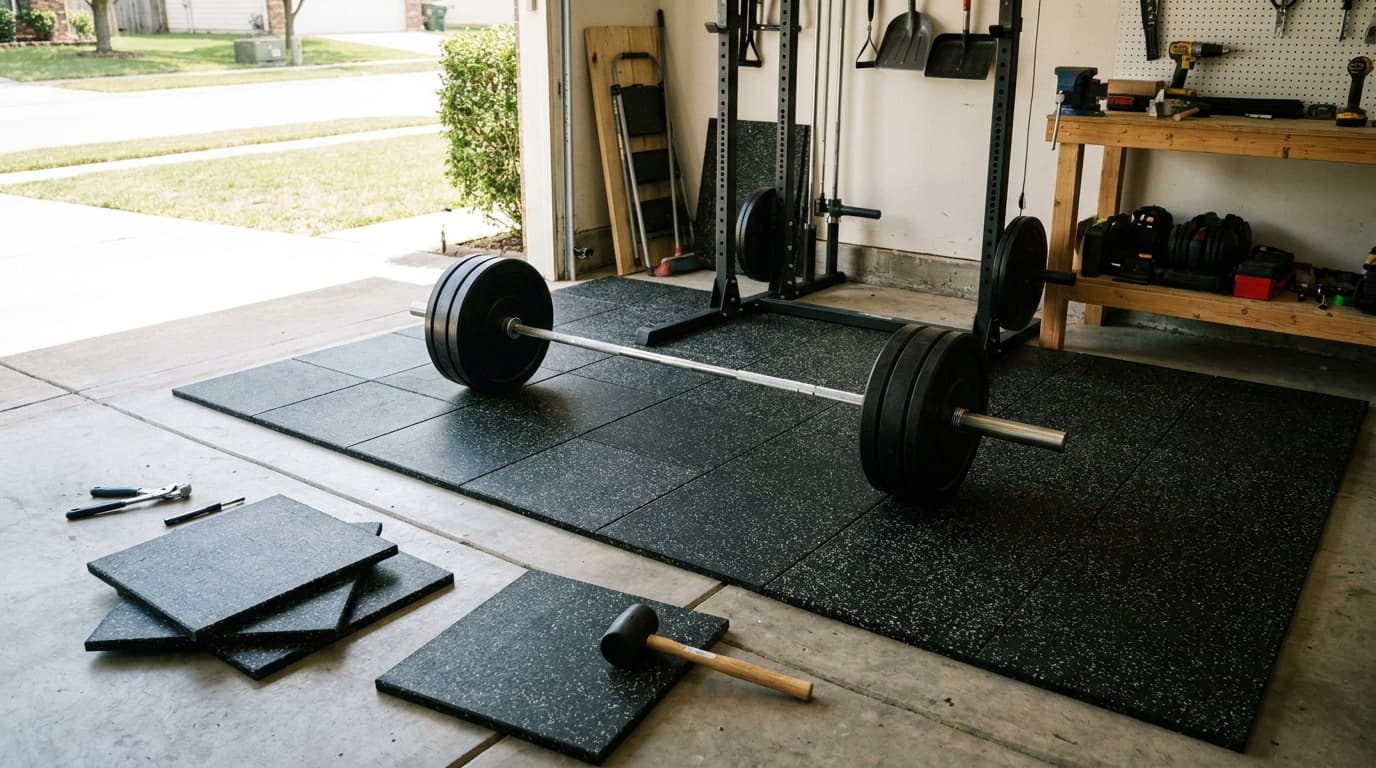
Best Gym Flooring for Home Gyms in 2026: Stall Mats Win
Horse stall mats win best home gym flooring for barbell setups, no contest. We scored 7 flooring options on thickness, durability, and impact reduction.
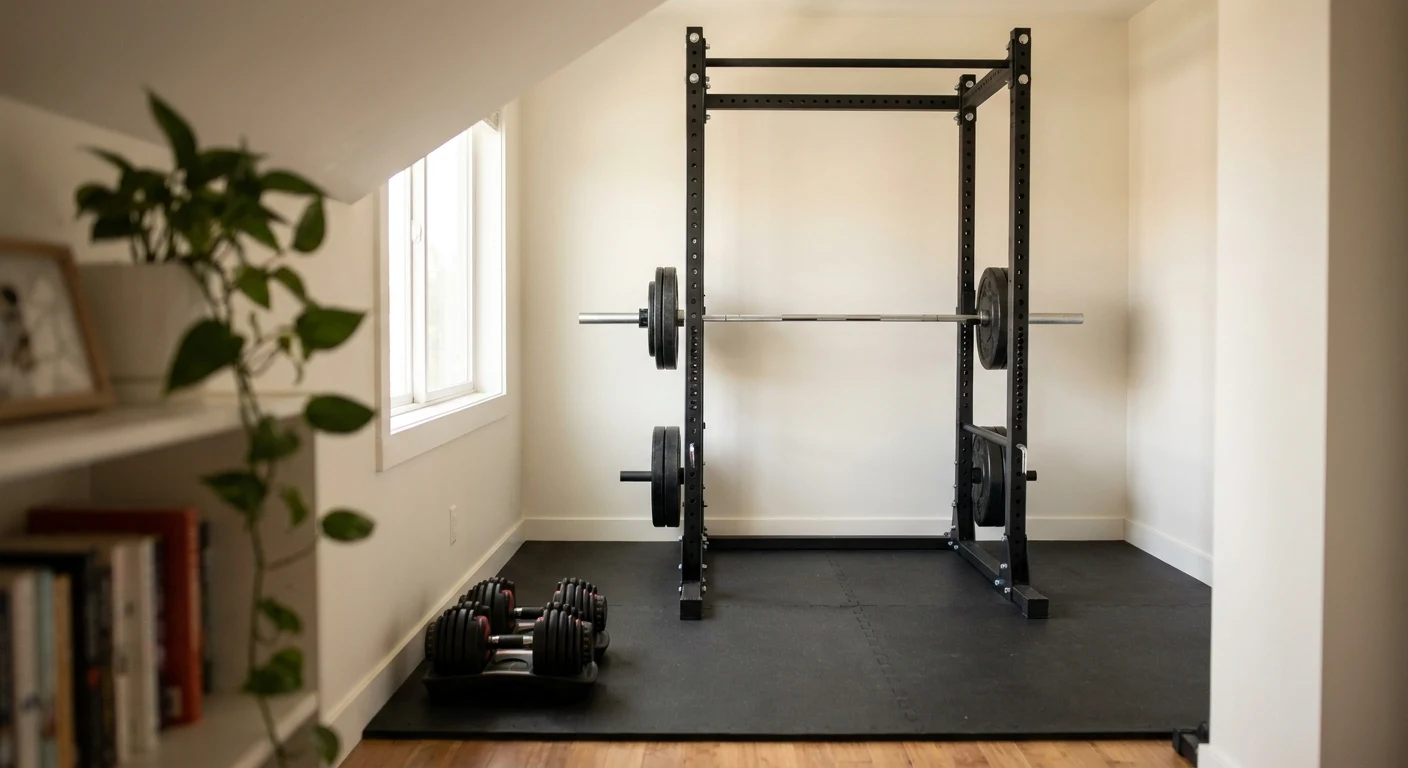
How to Plan a Home Gym in a Small Space (Without Wasting Money)
Plan a small-space home gym goal-first: real equipment footprints, ceiling-height math, the buy order that avoids waste, and what beginners over-buy.
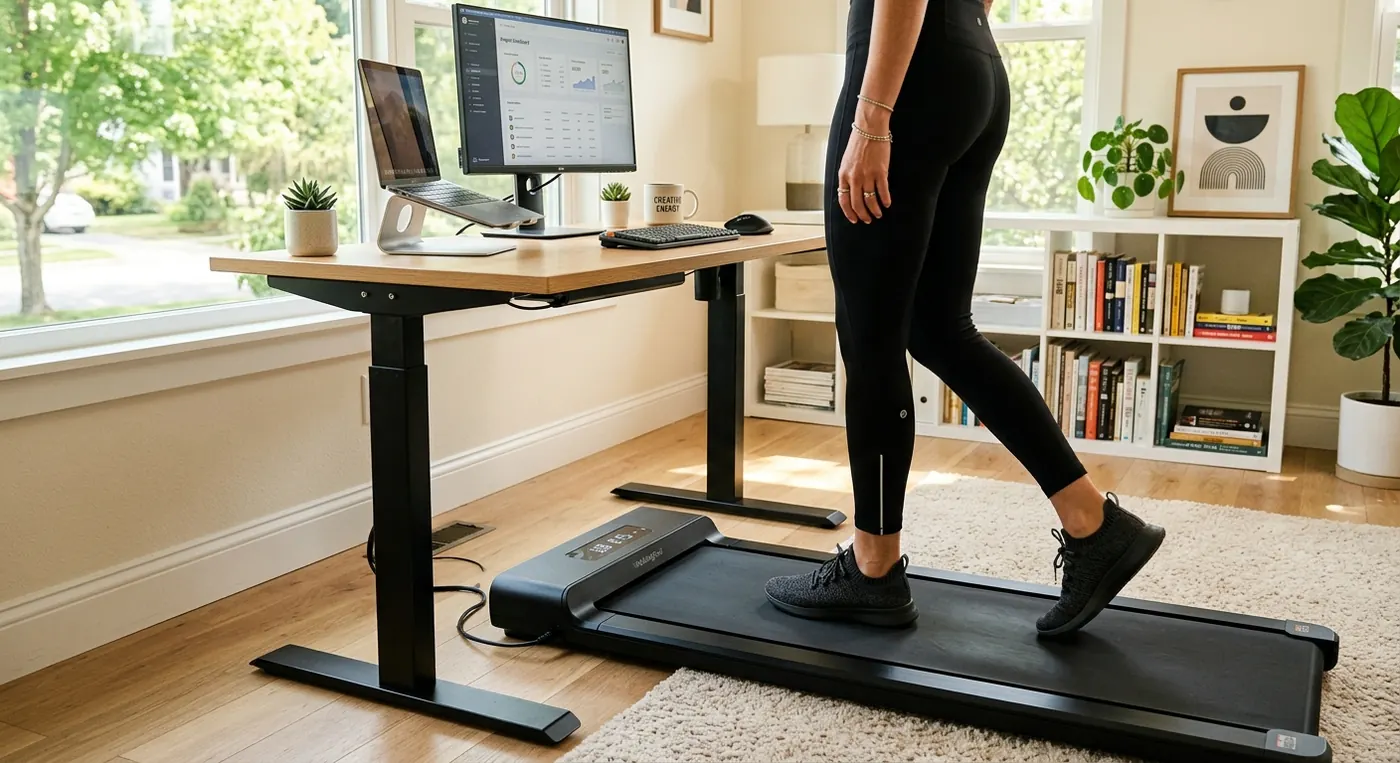
Best Walking Pads to Use Under a Standing Desk
The WalkingPad C2 is the best under-desk walking pad for its fold-in-half design; the TRAILVIBER adds incline. Five pads compared on height and belt.
Hilly Shore Labs
Editorial teamThe independent product research team behind GymScored. Every recommendation is researched, never hands-on tested — recommendations draw on manufacturer specifications and available published research. Category order is editorial; the Gym Score is a separate comparison aid.
170 listed products across 26 home gym categories. Scores use category criteria, value and owner-rating inputs; missing evidence limits what a score can tell you.
See the scoring methodology and who we are.
Affiliate disclosure: GymScored is a participant in the Amazon Services LLC Associates Program. We earn from qualifying purchases at no extra cost to you. Full disclosure →