Cold Plunge Protocol: How Cold, How Long, How Often
A safe cold plunge protocol: what temperature to start at, how long to stay in, weekly frequency, timing around lifting, and what cold does not do.
A sane cold plunge start is 50-59°F for 1-3 minutes, 2-4 days per week, never alone, with gradual entry. Do not plunge right after lifting if hypertrophy is the goal; use rest days, mornings, or several hours after strength work.
How GymScored is paid: Amazon Associates commission plus brand-direct affiliate (Rogue / REP / Titan when approved). No sponsored placements, no paid reviews, no pay-to-rank. Picks are ranked by the Gym Score formula and nothing else. Read the full disclosure.
Start warmer and shorter than social media suggests. For most healthy adults, 50-59°F for 1-3 minutes, 2-4 times per week, is a better first month than chasing misery. If muscle gain is the goal, keep cold plunges away from the post-lift window.
Cold plunge starting protocol
Use the mildest dose that creates a clear cold response while staying controlled.
| Level | Water temp | Duration | Frequency | Best use |
|---|---|---|---|---|
| Beginner | 55-59°F | 1-3 min | 2-3x/week | Adaptation, confidence, safety practice |
| Intermediate | 50-55°F | 2-5 min | 3-4x/week | Recovery habit, heat tolerance contrast |
| Advanced | 45-50°F | 1-3 min | 3-5x/week | Experienced users with strong control |
| Very cold | Under 45°F | 30-90 sec | Occasional only | Not a default; higher cold-shock risk |
Timing by goal
Decide by your situation, not the generic ranking.
| If | You want | Pick |
|---|---|---|
| Muscle gain | Avoid immediately after lifting | Post-exercise cold-water immersion can blunt strength and hypertrophy adaptations in resistance training studies |
| Soreness relief | Use later in the day or on rest days | Cold can reduce perceived soreness without crowding the anabolic window |
| Alertness | Morning or pre-work block | Short cold exposure can be stimulating, but do not make it a breath-holding contest |
Quick answer
A safe cold plunge protocol starts at the mildest dose that makes you breathe deliberately and stay in control: about 55 to 59°F for 1 to 3 minutes, 2 to 3 times per week. Build toward colder or longer only after the gasp reflex is controlled. Never plunge alone, never breath-hold, and do not use cold water to prove toughness.
If muscle gain is your priority, timing matters. Do not plunge right after lifting. Use rest days, mornings, or a later recovery window instead.
The dosing table
Use the table above as a starting range, not a dare. The goal is repeatable cold exposure, not the coldest number your tub can hit.
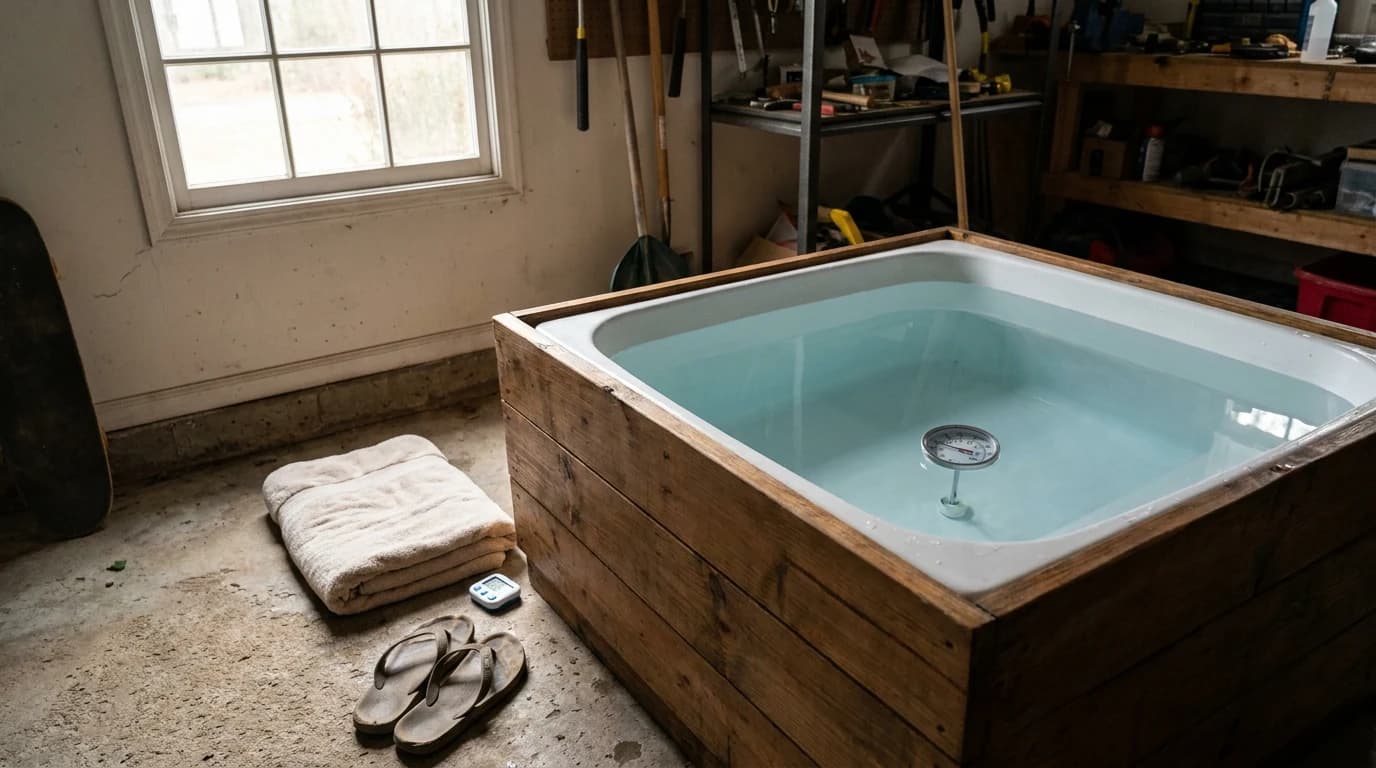
The dose is too aggressive if you notice any of these
If your breathing turns panicky, your hands go numb fast, or you cannot speak calmly, back the temperature up and shorten the time. The practical ceiling for most home users is not "how cold can I make it?" It is "can I enter slowly, breathe under control, and get out safely?"
Rule of thumb: if you cannot hold a calm, full sentence while you are in the water, the dose is too aggressive — warm it up or shorten it before you try again.
The timing trap
Post-lift cold can blunt the adaptation you just earned
Cold plunges after lifting feel productive because they reduce soreness. That does not make them neutral. Roberts and colleagues found that regular cold-water immersion after resistance exercise attenuated muscle hypertrophy and strength adaptations. Earlier Yamane research pointed in the same direction.
That does not mean cold water is useless. It means the goal decides the timing. If you are training for muscle gain, do not place cold exposure in the window where your body is trying to adapt to the lift. If soreness relief matters more than hypertrophy, make that trade knowingly.
Safety rules that matter
- Enter gradually. Cold shock can trigger an involuntary gasp and rapid breathing.
- Keep your head above water. This is not breathwork practice.
- Do not plunge alone, especially below 50°F.
- Get medical clearance if you have heart disease, blood-pressure issues, fainting history, or cold-triggered conditions.
- Exit before shivering becomes intense or coordination drops.
A chiller and tub are equipment. The protocol is what makes them safe. If you still need gear, use the best cold plunge for home guide after you know your temperature target.
What cold plunging does not reliably do
What cold exposure can reasonably give you:
- Alertness after a morning session
- Heat-tolerance contrast
- Lower perceived soreness
- A disciplined recovery ritual you will actually repeat
What people expect from it, and shouldn't:
- Fat loss on its own
- A substitute for sleep
- A rescue for a poorly programmed training block
- Better results simply from going colder
For many lifters, a walk, food, sleep, and progressive programming beat another recovery gadget. For other recovery tools, compare massage guns and infrared saunas.
Bottom line
Start warmer, shorter, and safer. Build consistency before intensity. The best cold plunge protocol is the one you can repeat without panic, without post-lift adaptation interference, and without turning recovery into another max-effort workout.
Frequently Asked Questions
How cold should a cold plunge be for beginners?+
Start around 55-59°F for 1-3 minutes. If you cannot control your breathing, it is too cold or too long for that session.
How often should you cold plunge?+
Two to four sessions per week is a reasonable starting range. The often-repeated 11-minutes-per-week target is a coaching heuristic, not a medical requirement.
Should I cold plunge after lifting?+
Not if your main goal is hypertrophy or strength. Research on cold-water immersion after resistance training shows it can blunt some adaptations. Use rest days, mornings, or wait several hours.
Sources & Research
- PubMed — Post-exercise cold water immersion attenuates acute anabolic signalling and long-term adaptations in muscle to strength trainingresearch
- PubMed — Regular post-exercise cold water immersion attenuates muscular hypertrophy and strength gainsresearch
- PubMed — Cold-water immersion and resistance training adaptations reviewresearch
- PMC — The physiology of accidental hypothermia and cold water immersionsafety
- Huberman Lab — Using Deliberate Cold Exposure for Health and Performanceprotocol
Your next step
Ready to set up the plunge?
Related reviews
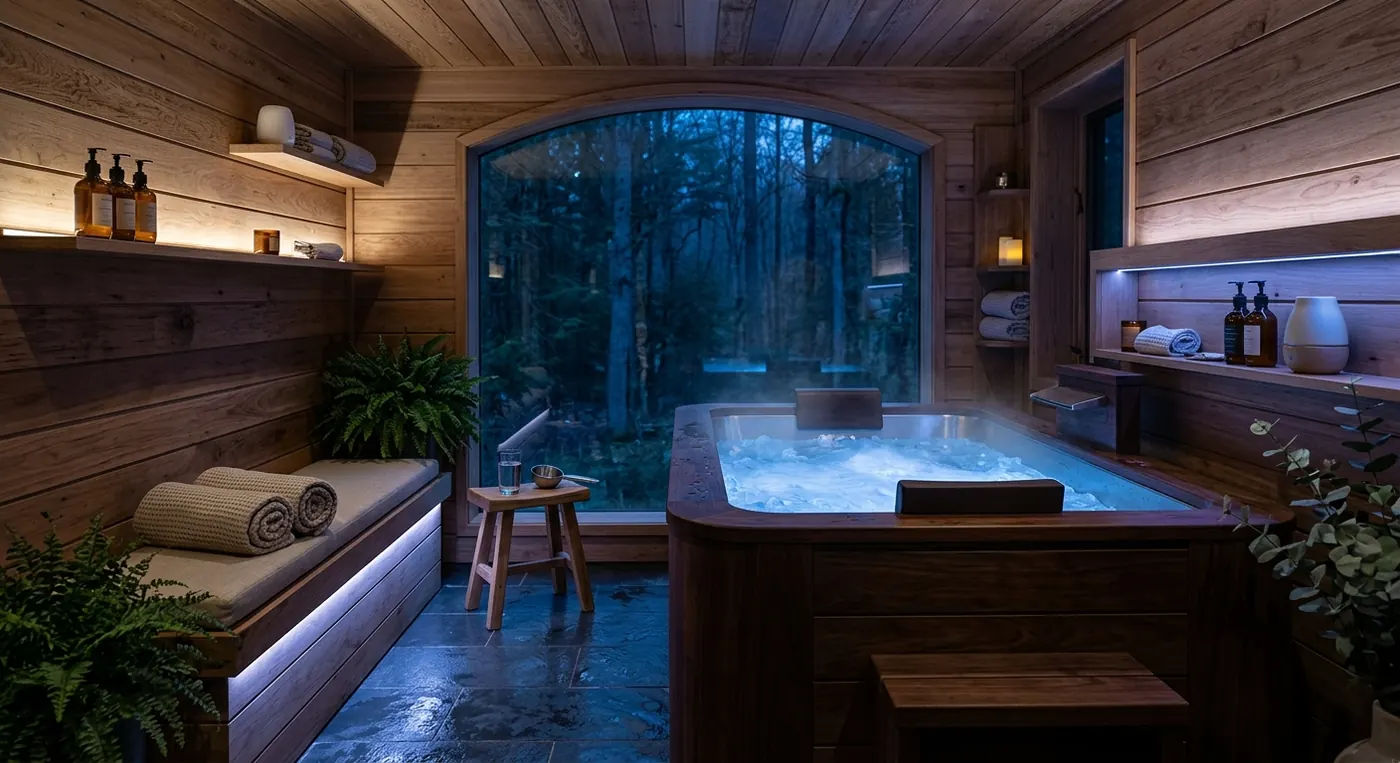
Best Cold Plunges for Home Use
Plunge wins best home cold plunge on its full stack; Ice Barrel on price, Renu Therapy on premium build. Five tubs scored on cooling, hygiene, footprint.
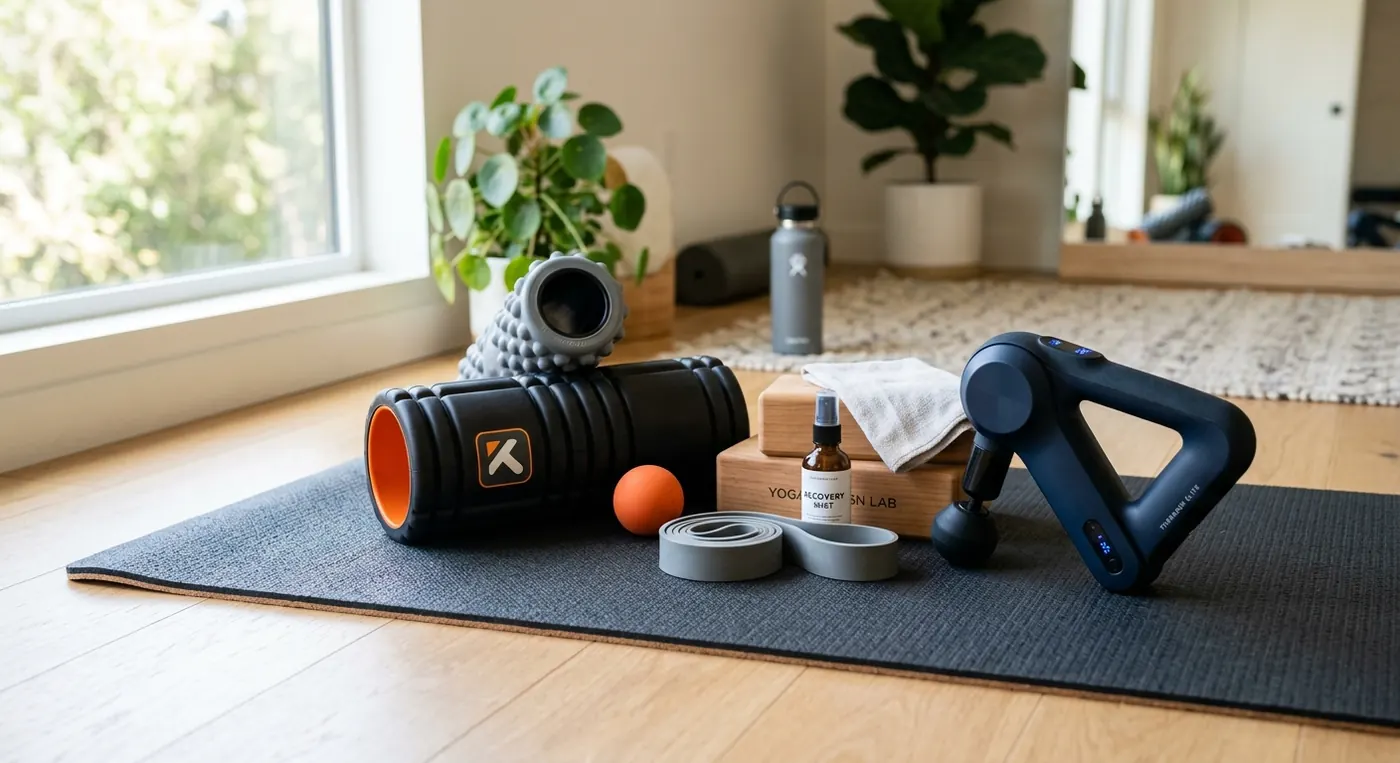
Best Massage Guns for Recovery in 2026
The Theragun Pro is the best massage gun for recovery in 2026; the Hypervolt 2 Pro runs quieter and Bob and Brad C2 wins value under $150. 9 guns scored.
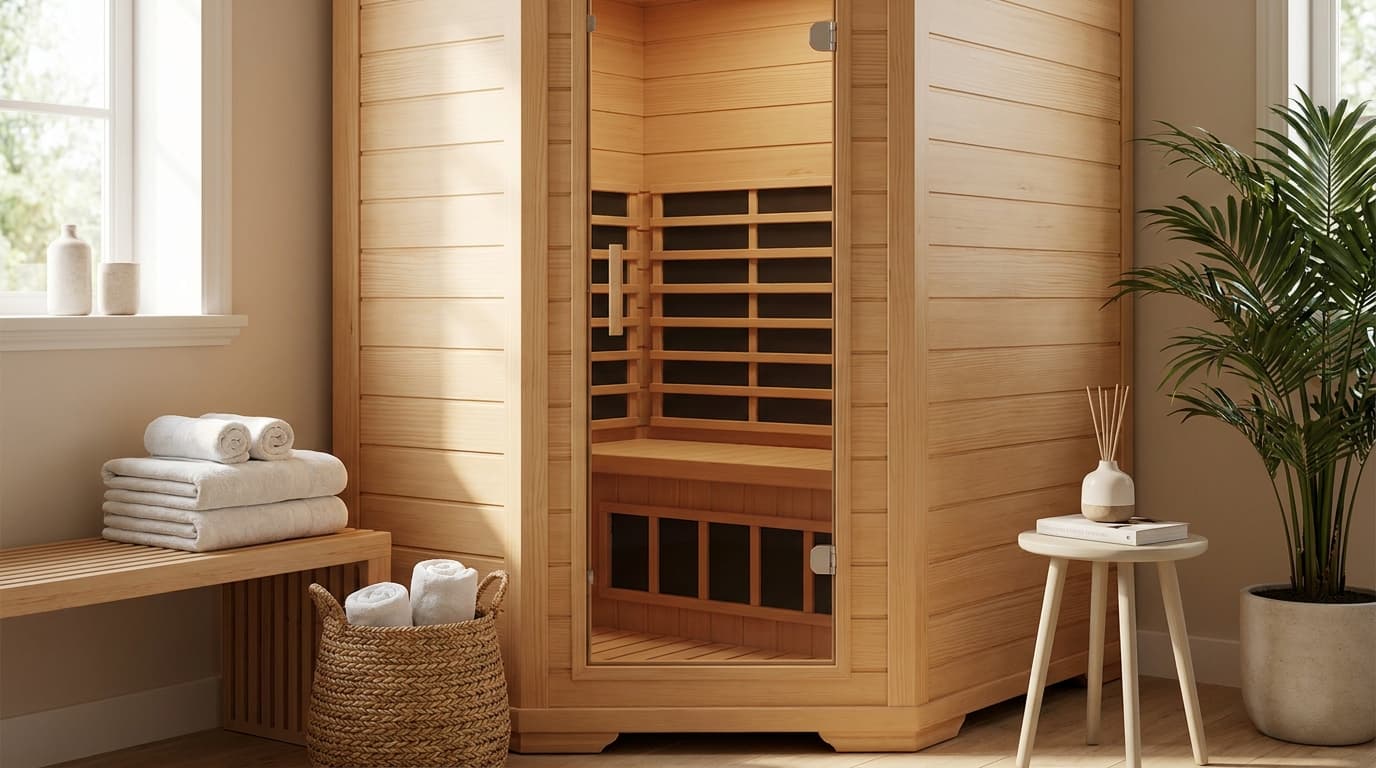
Best Infrared Sauna for Home Use in 2026: HigherDOSE Wins
The HigherDOSE V4 blanket is the best infrared sauna for apartments; the Dynamic Saunas Elite is our 1-person cabin pick. Compared on heat, EMF and build.
Hilly Shore Labs
Editorial teamThe independent product research team behind GymScored. Every recommendation is researched, never hands-on tested — rankings come from manufacturer specifications, published standards, and aggregated buyer sentiment.
161 products scored across 26 home gym categories, each on the same 5-dimension Gym Score formula.
See the scoring methodology and who we are.
Affiliate disclosure: GymScored is a participant in the Amazon Services LLC Associates Program. We earn from qualifying purchases at no extra cost to you. Full disclosure →