Best Massage Guns for Recovery in 2026
The Theragun Prime is our top massage gun for recovery in 2026; the Hypervolt 3 runs quieter and the Bob and Brad C2 wins on value. Four guns ranked.
- 30 lb stall force (therapeutic, not cosmetic)
- 16mm amplitude
- Triangle handle
Evidence snapshot · Updated October 21, 2026
The evidence-backed answer
Theragun Prime (6th Gen) is our default pick for the scope of this guide: The best-balanced gun we rank: a triangle handle that reaches your own back, five speeds and a 120-minute battery (Therabody-stated), and 4.6 stars from 6,810 Amazon ratings.
Scope: 4 shortlisted products compared using published specifications, owner-feedback signals, value and category-specific performance. 4 comparison entries match our catalog. Retailer rating totals are snapshots, not a count of people whose reviews we independently analyzed. This is research synthesis, not hands-on testing.
The side-by-side comparison below carries each shortlisted product's owner rating, price context, pros, cons and buy state in one actionable view.
How GymScored is paid: Amazon Associates commission plus brand-direct affiliate (Rogue / REP / Titan when approved). No sponsored placements, no paid reviews, no pay-to-rank. Picks are ranked by the Gym Score formula and nothing else. Read the full disclosure.
Theragun Prime for the best balance of depth, reach and battery. Hypervolt 3 for the quietest current premium gun. Bob and Brad C2 for budget that doesn't suck.
| Product | Owner rating | Key specs | Pros | Cons | Price | Buy |
|---|---|---|---|---|---|---|
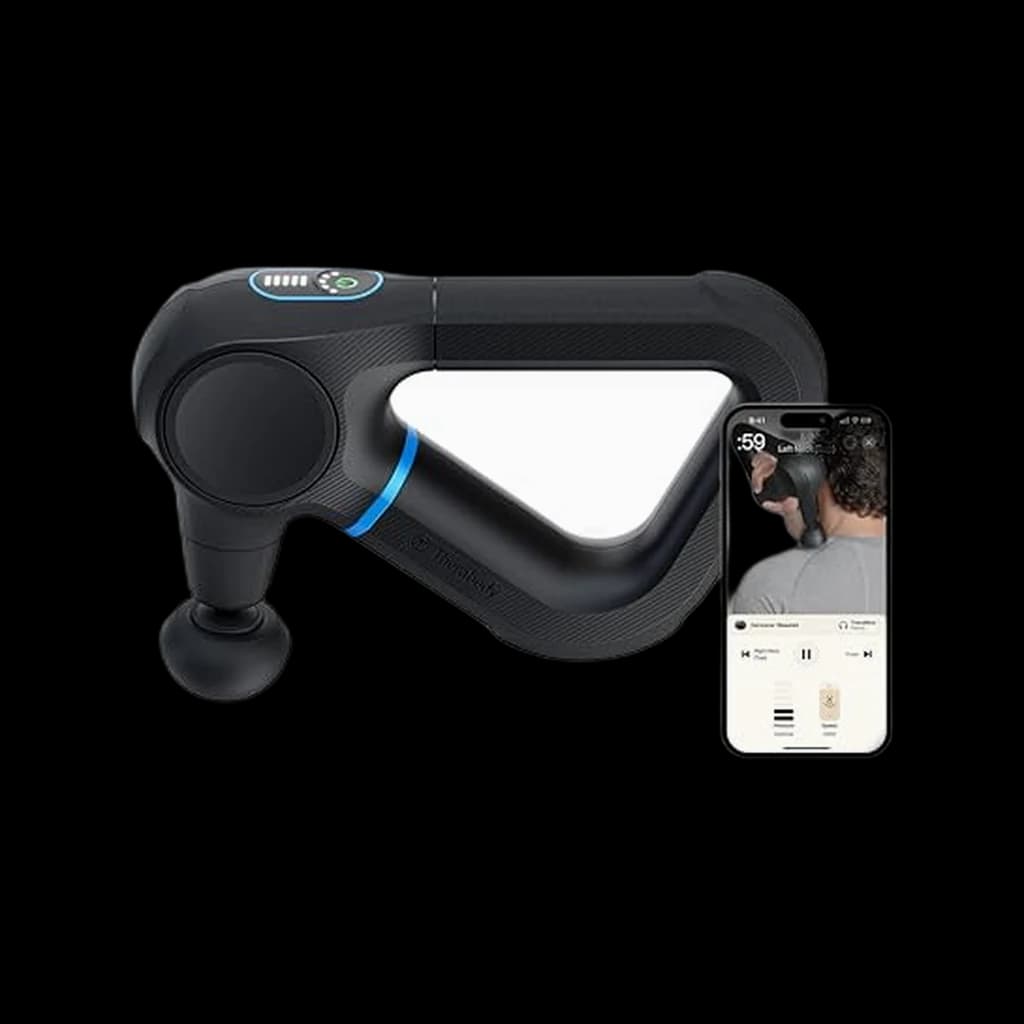 The best-balanced massage gun. A triangle handle that lets you reach your own back, five speeds and a 120-minute battery; our catalog records 16mm amplitude and 30 lb stall force, figures Therabody does not currently republish. ↑ Quality↑ Performance↓ Battery LifeBased on 517 buyer mentions | Owner rating Gym Score 80 | Key specs
| Pros
| Cons
| $329.99 | Buy on Amazon |
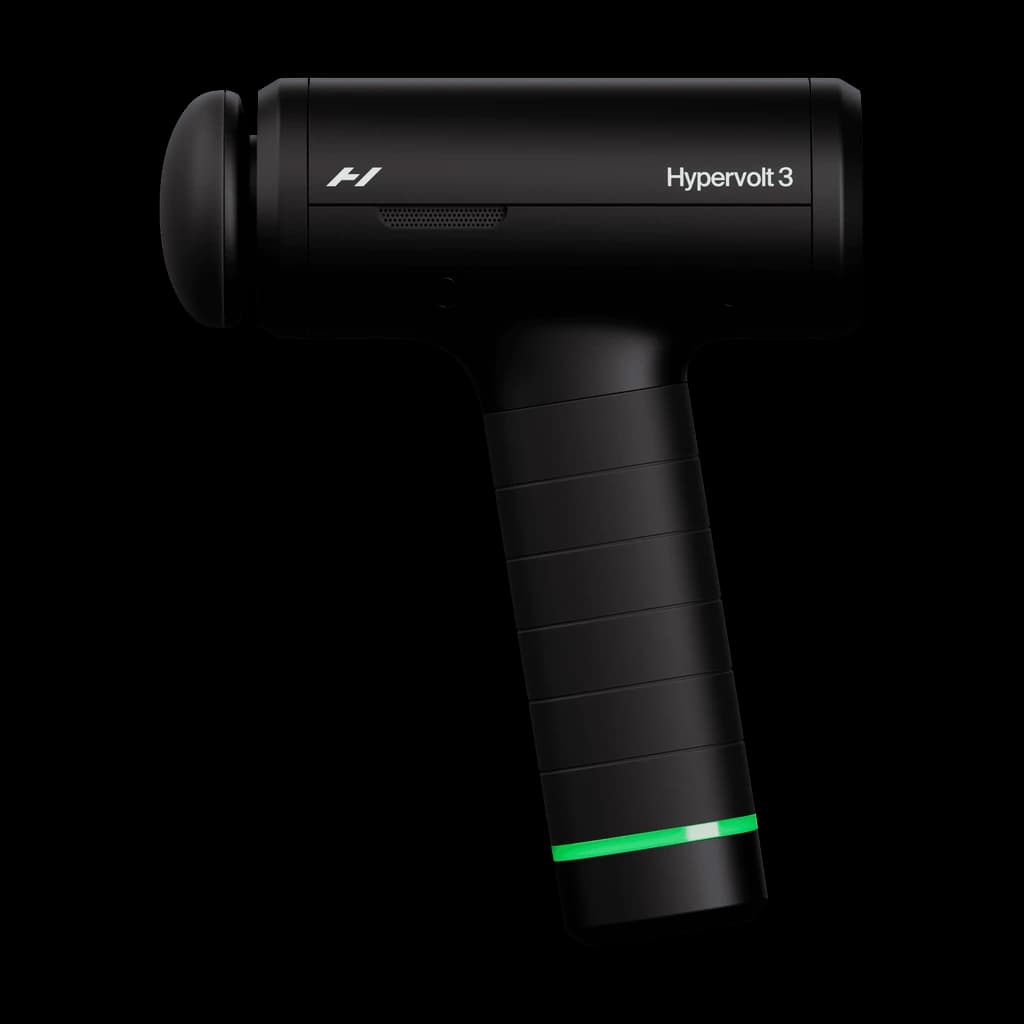 Hyperice's current quiet gun, launched March 2026 to replace the Hypervolt 2: rated at 48 dB, with a heated head and up to 4 hours of battery (Hyperice-stated). Reviews are still thin. | Owner rating Gym Score 73 | Key specs
| Pros
| Cons
| $249.00 | Buy on Amazon |
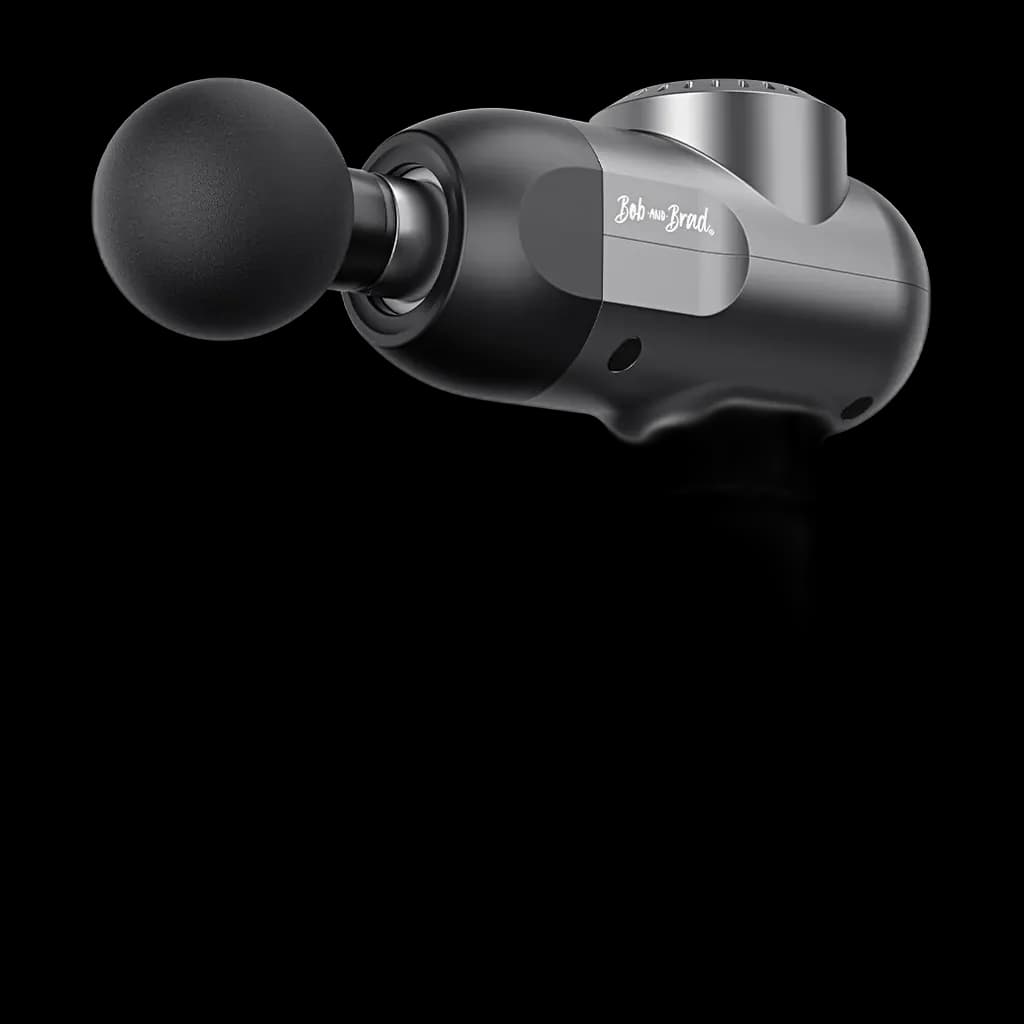 Best sub-$150 massage gun: five speeds, five heads and a 10mm stroke that covers everyday recovery. ↑ Quality↑ EffectivenessBased on 5,722 buyer mentions | Owner rating Gym Score 78 | Key specs
| Pros
| Cons
| $69.94 | Buy on Amazon |
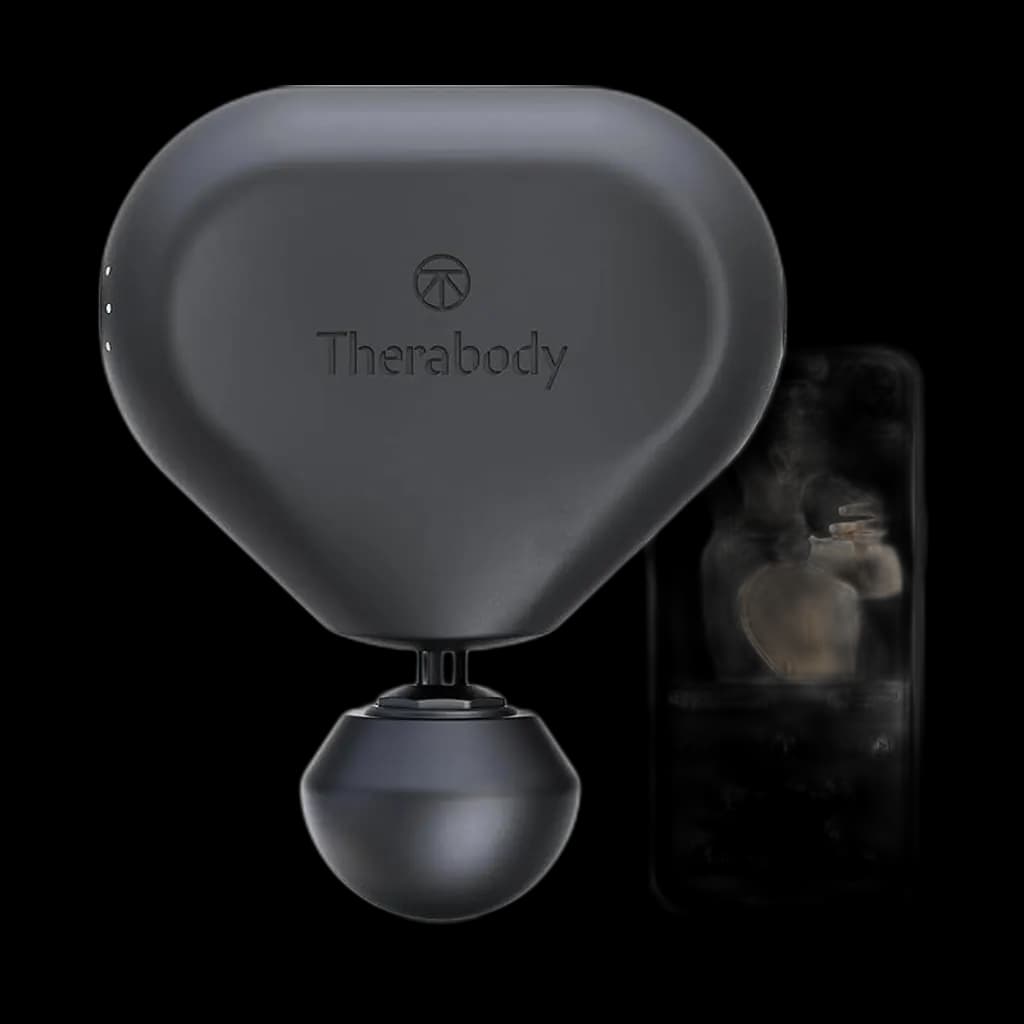 The travel pick. 7mm amplitude (cosmetic-only), 20 lb stall force, fits in a jacket pocket. Not therapeutic — a carry-on luxury. ↑ Functionality↑ Quality↓ Value for moneyBased on 202 buyer mentions | Owner rating Gym Score 79 | Key specs
| Pros
| Cons
| $219.99 | Buy on Amazon |
Amazon prices checked Oct 17, 2026. Amazon prices change often — the listing is authoritative.
Percussion gun spec deltas
Amplitude and stall force determine real therapeutic value, not 'speeds' count. Hyperice and Bob and Brad figures are manufacturer-stated (read 21 October 2026); Theragun amplitude and stall force are our catalog figures, which Therabody does not currently republish. A dash means the maker publishes no figure.
| Product | Amplitude | Stall Force | Noise (dB) | Battery | Weight |
|---|---|---|---|---|---|
| Theragun Prime (6th Gen) | 16mm | 30 lb | — | 120 min | 2.0 lb (32 oz) |
| Hyperice Hypervolt 3 | — | — | 48 dB | Up to 4 hr | 2.0 lb |
| Bob and Brad C2 | 10mm | 45 lb | Under 40 dB | 2,000 mAh | 1.5 lb |
| Theragun Mini | 7mm | 20 lb | — | — | 1.4 lb |
Pick by situation
Decide by your situation, not the generic ranking.
| If | You want | Pick |
|---|---|---|
| Budget | Everyday post-workout recovery at the lowest price | Bob and Brad C2 |
| Travel | Frequent travelers who want a TSA-friendly recovery tool | Theragun Mini |
| Premium | Lifters who want one device for pre-workout activation and post-workout recovery | Theragun Prime |
TL;DR — should you read this?
- The Theragun Prime is our top pick: a triangle handle that reaches your own back, a deep 16mm stroke on our catalog figures, and 4.6 stars from 6,810 Amazon ratings.
- For everyday recovery, the Bob and Brad C2 does the job at a fraction of the Prime's price.
- The Hyperice Hypervolt 3, which replaced the Hypervolt 2 line in March 2026, is the right pick if noise matters — Hyperice rates it at 48 dB.
- Skip no-name sub-$50 guns that sell on speed count and won't publish amplitude or stall force.
- Research suggests percussion devices improve short-term range of motion but the recovery and performance evidence is mixed.
- Honest application: percussion guns are an adjunct to mobility work, not a replacement for sleep, hydration, or protein.
Our pick
The best-balanced gun we rank: a triangle handle that reaches your own back, five speeds and a 120-minute battery (Therabody-stated), and 4.6 stars from 6,810 Amazon ratings.
What separates good from bad in this category
Amplitude is the spec that matters most
Amplitude is how far the head travels on each stroke, and it decides how deep the percussion feels. 16mm reaches into big glute and quad muscles. 10-14mm handles most muscle groups well. A mini's ~7mm is surface-level — fine for forearms and calves, not for dense tissue.
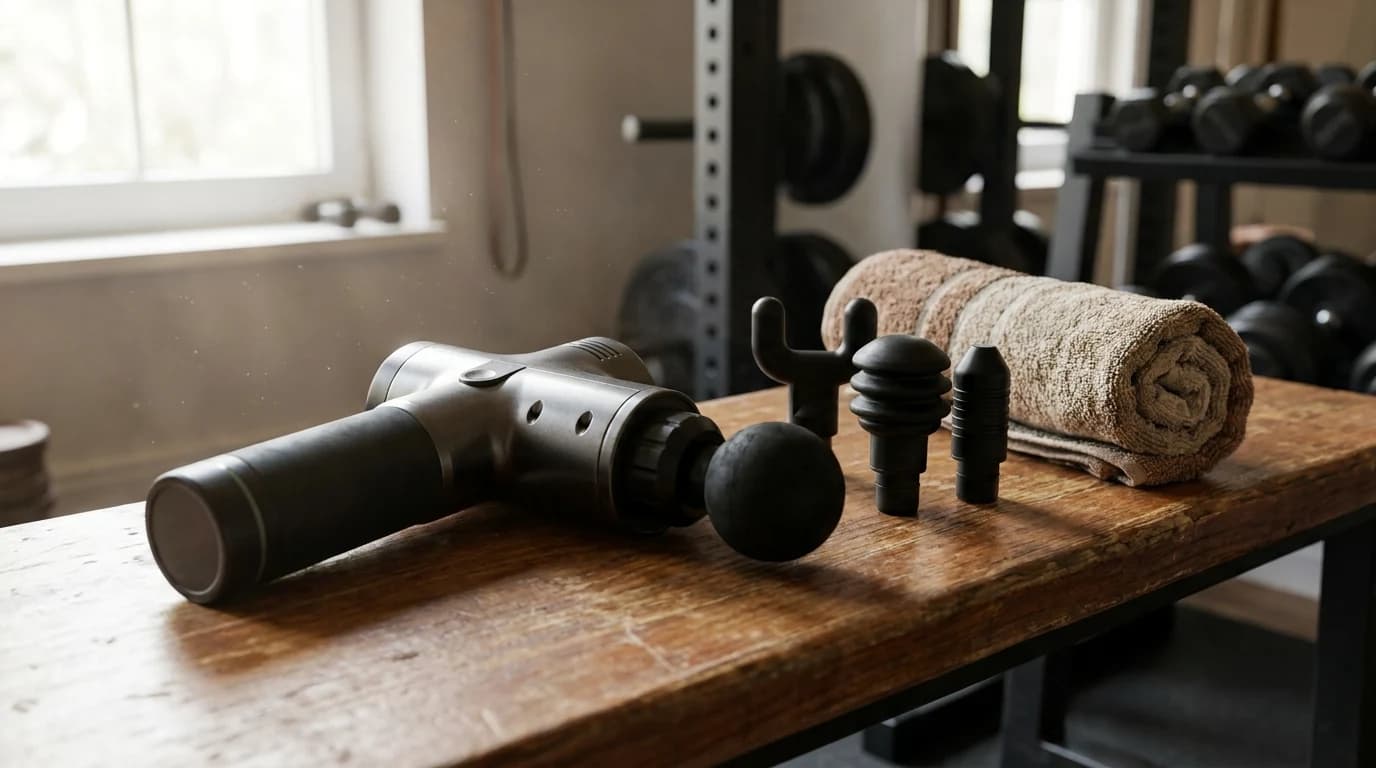
The trap: cheap guns advertise their speed count — 30 speeds, 40 speeds — precisely because amplitude is the number they'd rather not feature.
You need 16mm amplitude if:
- You train heavy multiple times a week
- Your glutes, quads, or lats are dense enough that shorter-stroke guns barely move them
- You're driving the head in with body weight, which is where stall force also matters
10-12mm is plenty if:
- You're targeting calves, forearms, traps, and quads — what most people actually work on
- You'll use the gun 2-3 times a week for general post-workout work
- You'd rather spend the difference on anything else
Stall force is the second metric
Cheap guns slow or stop when you press hard against the head; the percussion bounces off the muscle and the speed drops audibly. The Bob and Brad C2's listing states 45 lb of stall force. Our catalog records the Theragun Prime at 30 lb, which is why it can bog down when you lean your body weight into it.
Noise, weight and battery are why the gun gets used
- Noise: a 65 dB gun won't get used while a partner sleeps or watches TV. Cheap no-name devices often run loud because the motor is unbalanced and the gear train rattles.
- Battery: 2.5 hours is fine for solo use; 4 hours matters for shared households or travel.
- Weight: under 2.5 lb keeps one-handed lat and trap work comfortable. Over 3 lb makes overhead use tiring within 60 seconds.
Treat percussion massage as an adjunct recovery tool, not a primary intervention — the research below is thin. The device only matters if you'll actually use it.
The picks, ranked
| Gun | Price | Amplitude | Stall force | Noise / battery |
|---|---|---|---|---|
| Theragun Prime | $329.99 | 16mm | 30 lb | 120-minute battery, 2.0 lb |
| Hyperice Hypervolt 3 | $249.00 | Not published | Not published | 48 dB, up to 4 hours |
| Bob and Brad C2 | $69.94 | 10mm | 45 lb | Under 40 dB, ~1.5 lb |
| Theragun Mini | $219.99 | 7mm | 20 lb | 1.4 lb |
1. Theragun Prime — $329.99 — Best overall
The triangle handle is the reason it leads: it puts the head on your own traps and mid-back without wrenching a wrist, which is where a pistol grip struggles. Therabody states five speeds, a 120-minute battery and a 32 oz weight, and the Amazon listing reads 4.6 stars from 6,810 ratings. Our catalog records a 16mm stroke, deep enough for glutes and quads. The catch is stall force: at the 30 lb we record, it can bog down when you drive it in with body weight.
2. Hyperice Hypervolt 3 — $249.00 — Best for quiet operation
Hyperice launched the Hypervolt 3 in March 2026 to replace the Hypervolt 2. It rates the QuietGlide motor at 48 dB, includes a heated head attachment, a built-in pressure sensor and up to four hours of battery, and weighs 2.0 lb. Hyperice publishes no amplitude or stall force for it. It is new: 4.3 stars from 56 Amazon ratings as of 21 October 2026, too few to read much into. The pick for shared living space.
3. Bob and Brad C2 — $69.94 — Best for general recovery
The Bob and Brad C2 is the honest budget pick. Its listing states a 10mm stroke, 45 lb of stall force, five speeds, five heads and under 40 dB, at about 1.5 lb, so it is easy to hold on your own back. A plastic body and a shorter stroke are the trade-offs against the premium picks.
4. Theragun Mini — $219.99 — Best for travel
A 2024 model and still Therabody's current travel gun. Our catalog records 7mm of amplitude and 20 lb of stall force, which is surface-level work: fine for forearms and calves on the road, not a substitute for a full-size gun. It fits a jacket pocket, and the listing reads 4.6 stars from 1,988 ratings.
No longer ranked
Earlier versions of this guide led with the Theragun Pro (5th Gen). It is not in our ranked catalog, and on 21 October 2026 its Amazon listing read 4.0 stars from 421 ratings, below our floor. The Ekrin Athletics B37 also left the list: its Amazon listing now serves the newer B37v2, which read 3.8 stars from 41 ratings.
What the research actually says
- Percussion massage improves short-term range of motion. A 2020 randomized study on the Hypervolt found acute gains in plantar-flexor ROM with no performance loss (Konrad et al. 2020, PMID 33239942).
- Practice patterns vary widely among clinicians. A 2021 survey showed inconsistent application protocols and dosing across the field (Cheatham et al. 2021, PMID 35382115).
- Percussion guns sit in the weaker-evidence group of recovery tools. A 2021 narrative review found evidence of improved recovery for compression garments, cold-water immersion and vibratory therapies, but listed percussive gun-assisted therapy among the modalities that lack convincing evidence (Cullen et al., Curr Sports Med Rep 2021, PMID 34234090).
- Head to head, neither cold immersion nor a massage gun beat simple rest. A 2024 three-armed RCT after exhausting eccentric exercise found no significant group effects on soreness, and neither improved performance recovery over 72 hours versus passive rest; the massage-gun group did report less stiffness (Heinke et al., Front Physiol 2024, PMID 39376896).
What the research does not support: that percussion devices accelerate recovery from heavy strength training, prevent DOMS, or break up adhesions. The effect on perceived soreness is real and short-lived; the effect on next-day strength is inconsistent.
What to skip
- No-name percussion guns that publish no amplitude or stall force. If the listing will not state the two specs that matter, assume they are low.
- Guns marketed by speed count rather than amplitude or stall force. "30 speeds" with 8mm amplitude means the head doesn't travel far enough to penetrate dense tissue at any speed.
- Use on the kidneys, carotid, or directly on the lower spine. Stick to large muscle bellies — glutes, quads, calves, lats, traps.
- A mini gun as your only gun. The minis in our catalog list about 7mm of amplitude, well short of a full-size gun. Fine for travel; not a substitute.
- Use on bruised, broken, or recently injured tissue. Percussion delivers real force. Wait for acute inflammation to resolve.
- Any "deep tissue" claim from a gun under $150 that doesn't publish stall force. If the spec sheet hides it, the number is bad.
How to actually use this
- Budget: Bob and Brad C2. A 10mm stroke handles general recovery for most lifters and runners.
- Travel: Theragun Mini, as a second gun for the bag rather than your only one.
- Premium: Theragun Prime when you want the reach and the deeper stroke; Hypervolt 3 for anyone using the gun in shared living space.
The session, in four rules
- 15 seconds to 2 minutes per muscle group. That is Therabody's own range; longer adds nothing.
- Glide slowly along the muscle instead of parking the head on one spot, and spend a little extra time on a tight area.
- Time it to the session. About 30 seconds per area before a workout to warm up; after a run, about a minute each on feet, calves, hamstrings, quads and glutes.
- Press only as hard as feels effective, never painful, and stay off bones and joints. Use the ball head for large muscles and the softer dampener near bony areas.
How we chose
We analyzed amplitude, stall force, noise, battery life, weight, motor specs, owner sentiment on the Amazon listings, and the published research on percussion massage devices. Scoring follows our methodology page: category-specific capability, value, and owner satisfaction. We research rather than test: specs come from manufacturer pages and retailer listings, and usage guidance from Therabody's published instructions.
If you are comparing recovery tools, read the safe cold plunge protocol too. Timing matters more for lifting adaptations than most recovery shoppers realize.
Cheaper alternative
The Theragun Prime is built for lifters who want reach and a deeper stroke, and the triangle handle is what you are paying for. For general recovery, the Bob and Brad C2 is the budget pick: 10mm amplitude, 45 lb stall force, five speeds and five heads, designed by the physical therapists behind the YouTube channel.
Frequently Asked Questions
Is 16mm amplitude necessary?+
Only if you have dense muscle tissue that 12mm guns don't reach. Most recreational athletes do fine with 12-14mm.
How loud are these guns?+
Hyperice rates the Hypervolt 3 at 48 dB, and the Bob and Brad C2's listing states under 40 dB. Therabody does not publish a decibel figure for the Theragun Prime, so we do not quote one.
Will a massage gun help me recover faster between strength workouts?+
Research suggests short-term improvements in range of motion and perceived soreness, but the published evidence on next-day performance metrics is inconsistent. Treat it as a tool that lets you feel readier to train, not as a guaranteed recovery accelerator.
Where should I avoid using a massage gun?+
Skip the kidneys (lower back flank), the carotid region at the front of the neck, the lower spine directly, and any area with broken skin, bruising, or recent injury. Stick to large muscle bellies — glutes, quads, calves, lats, traps.
Is the Theragun Prime worth it over the Bob and Brad C2?+
Only if you want the triangle handle for reaching your own back, the deeper 16mm stroke our catalog records for it, and app coaching. For most recreational users the Bob and Brad C2 captures most of the benefit at a fraction of the price.
Sources & Research
- PubMed — Konrad 2020 — Acute effects of Hypervolt percussive massage on plantar flexor ROM (PMID 33239942)research
- PubMed — Cheatham 2021 — Mechanical Percussion Devices: Survey of Practice Patterns (PMID 35382115)research
- PubMed — Cullen 2021 — Passive Recovery Strategies after Exercise narrative review (PMID 34234090)research
- PubMed — Heinke 2024 — Cold water immersion vs percussive massage RCT (PMID 39376896)research
- Therabody — How to use a Theragun: time per muscle group and techniquemanufacturer
Related reviews
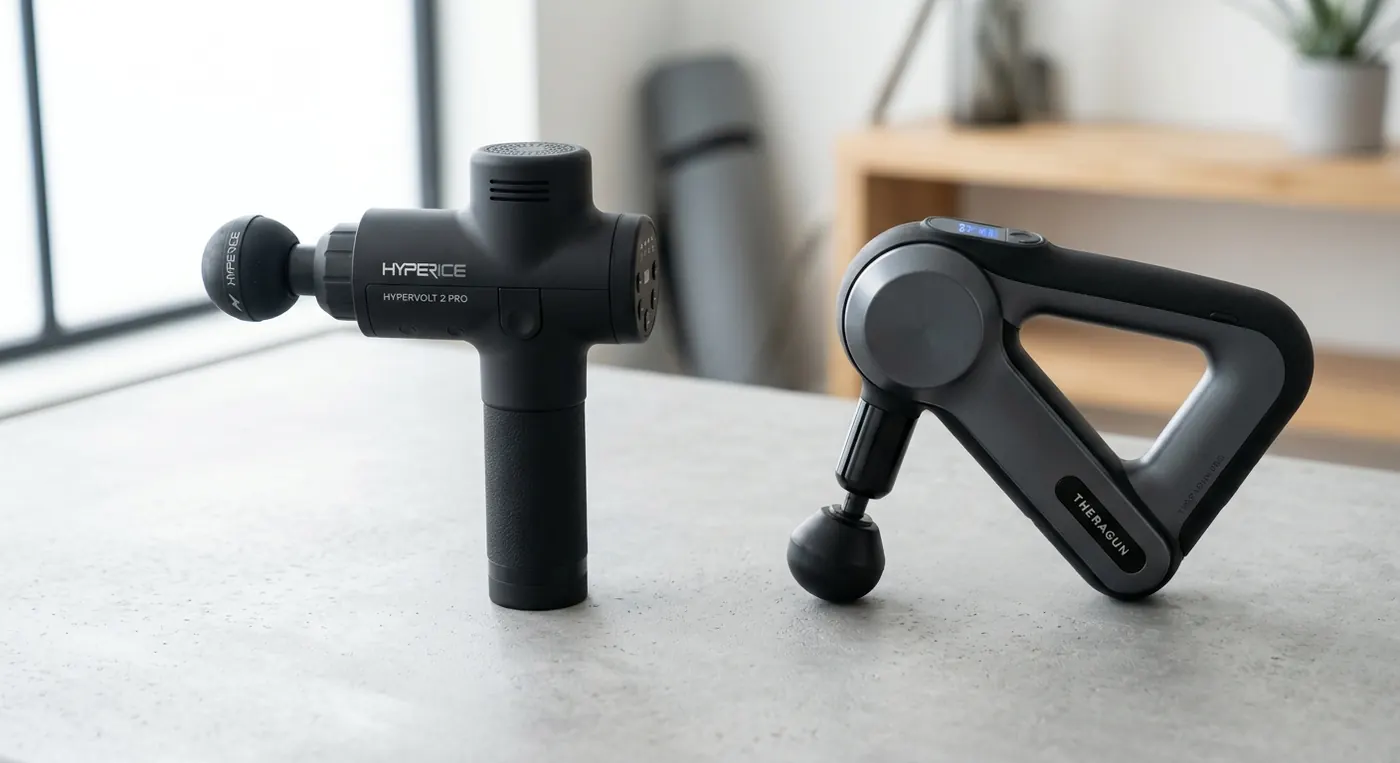
Theragun Pro vs Hypervolt 2 Pro: Which Massage Gun Should You Buy?
Theragun Pro hits deeper with more amplitude; the Hypervolt 2 Pro has a quieter motor. We compare both massage guns on percussion depth, noise, battery.
Best Cold Plunges for Home Use
The Plunge wins best home cold plunge on its full stack; the Lifepro NordPod on value, Renu on premium build. Seven tubs scored on cooling and hygiene.
Hilly Shore Labs
Editorial teamThe independent product research team behind GymScored. Every recommendation is researched, never hands-on tested — recommendations draw on manufacturer specifications and available published research. Category order is editorial; the Gym Score is a separate comparison aid.
170 listed products across 26 home gym categories. Scores use category criteria, value and owner-rating inputs; missing evidence limits what a score can tell you.
See the scoring methodology and who we are.
Affiliate disclosure: GymScored is a participant in the Amazon Services LLC Associates Program. We earn from qualifying purchases at no extra cost to you. Full disclosure →