Rank #4 in Lifting Belts, Wraps & Shoes
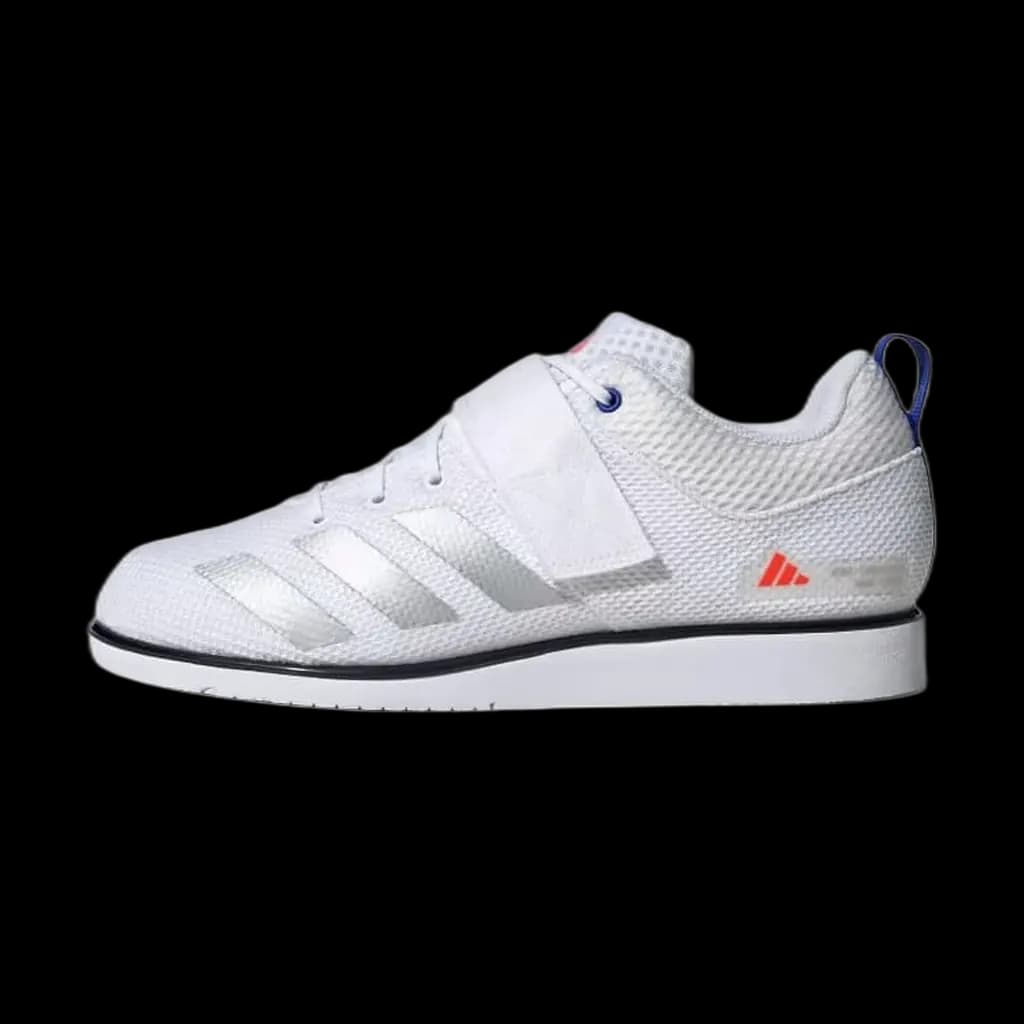
Adidas Powerlift 5 Shoes
by Adidas
Score
The best entry-level lifting shoe. 15mm heel, hard EVA midsole, narrow snug fit — a fraction of Adipower price for 80% of the function. Where every powerlifter starts.
- Powerlifters and general lifters who want a real raised-heel lifting shoe at an accessible price, suited to high-bar back squat, front squat, and Olympic-style lifting practice. Best for narrow-to-medium foot widths.
- You have wide feet, you compete in serious Olympic weightlifting where the 20mm TPU heel of a Romaleos or Adipower is the standard, or you do conventional deadlifts as your primary lift since the raised heel works against you there.
Storage only. A shoe bag or shelf protects the heel from impact when not in use. The shoes do not flex like running shoes and should not be stacked under heavy gear.
easy — No assembly. Out of the box the shoe is ready to use. Some lifters add a thicker insole for arch support, which the stock midsole does not provide aggressively. The single instep strap should be tightened evenly during use, not yanked.
Lifting shoes come in once the lifter is squatting regularly and has identified ankle mobility or heel position as a limiting factor. Typically months 6 to 12 of structured training.
Strengths
- ↑15mm raised heel (good for high-bar squats)
- ↑Hard EVA midsole (won't compress)
- ↑Single-strap secure fit
- ↑Sub-$130
Weaknesses
- ↓Synthetic upper (not leather like Adipower)
- ↓Narrow fit can pinch wide feet
- ↓Not as stiff as TPU heel shoes
What owners actually complain about
Synthesized from owner reviews and community threads. Paraphrased, not quoted.
- Synthetic upper does not have the longevity or feel of leather like the Adipower
- Narrow fit can pinch lifters with wider feet, sizing up half a size helps
- EVA midsole, while hard, is not as stiff as TPU under maximum loads
- Single instep strap can loosen mid-session if not tightened evenly
Buyer sentiment
Based on 154 user mentionsBuyers praise quality, functionality, stability and comfort. Mixed feedback on fit and durability.
Verdict: The accessible entry-level lifting shoe for general home-gym lifters who want a real raised-heel squat platform without the Adipower price.
Specs that matter
| Spec | Value |
|---|---|
| Heel height | 15mm raised |
| Midsole | Hard EVA |
| Strap | Single instep |
| Upper | Synthetic mesh |
| Price | Under $130 |
What you get
- Raised-heel geometry — deeper, more upright squat; compensates for limited ankle dorsiflexion
- Stiff EVA midsole — minimal compression, holds shape for years
- Versatile — front squats, cleans, split squats, lunges
What you give up
- Narrow fit — toe box pinches; size up half a size for medium-wide feet
- EVA not TPU — slight heel compression at max loads vs Adipower/Romaleos
Buy it if you've identified ankle/heel position as a squat limiter and want 80% of a premium shoe at under half the cost. Skip it if you're a competitive Olympic lifter at advanced loads (get the Adipower) or have wide feet.
NSCA guidance: match footwear to the movement — raised heels for squat and Olympic work, flat shoes or barefoot for deadlift.
Full specs
- Heel Height
- 15mm
- Midsole
- Hard EVA
- Strap
- Single instep strap
- Use
- Squats, OL
Common questions
Do I need lifting shoes for squat?
Not strictly, but they help if you have limited ankle mobility, prefer a high-bar squat position, or want a stiff platform under heavy loads. Lifters with excellent ankle mobility and a low-bar style often prefer flat shoes like Chuck Taylors instead.
How does the Powerlift 5 compare to the Adipower?
The Adipower has a leather upper, a slightly higher heel pitch in some versions, and a stiffer midsole. The Powerlift 5 gives you about 80 percent of the function at less than half the price, which is the right tradeoff for most non-competitive lifters.
Can I use these for Olympic lifting?
Yes for snatch and clean practice, particularly at intermediate levels. Competitive Olympic lifters typically prefer the 20mm TPU heel of the Romaleos 4 or Adipower for maximum stiffness, but the Powerlift 5 covers the use case well for most home lifters.
Should I size up or down?
Most lifters report the Powerlift 5 runs true to size or slightly narrow. If you have wider feet, sizing up half a size gives more room without compromising the heel lockdown. Try the shoe before committing if possible.
How long do they last?
With dedicated use for squat and Olympic work, the synthetic upper holds up for 2 to 4 years. The midsole does not compress noticeably even with heavy loading. The strap is the part most likely to need replacement first.
Sources & references
Full buying guide
Best Lifting Accessories in 2026: Inzer Forever Wins
Read the full ranking →Related Lifting Belts, Wraps & Shoes guides
Other lifting belts, wraps & shoes we rate
Ranked alternatives from the same category, with our score and the current price.
Best Amazon-shipped lifting belt. Genuine leather, double-prong buckle, lifetime guarantee. The one you buy when you want a real belt without the Inzer wait.
The crowd-favorite Amazon wrist wrap. Self-locking hook closure (no thumb loop strain), three lengths, 100% no-questions returns. Best balance of stiffness and value.
The Olympic lifter's reference shoe. 20mm TPU heel, dual-strap, glove-tight fit. Used by USA Weightlifting national-team athletes — the gold standard for snatch and clean.
Best-value 7mm neoprene knee sleeves on Amazon. SBD-clone tightness at half the price, IPF-approved, and lifetime-guaranteed. The r/powerlifting beginner default.
Pure magnesium carbonate in 2 oz blocks, a pound to a box. The cheapest genuine fix for a bar slipping out of your hands, and the one grip aid that does not take the work off your forearms.