 Premium Pick
Rank #5 in Lifting Belts, Wraps & Shoes
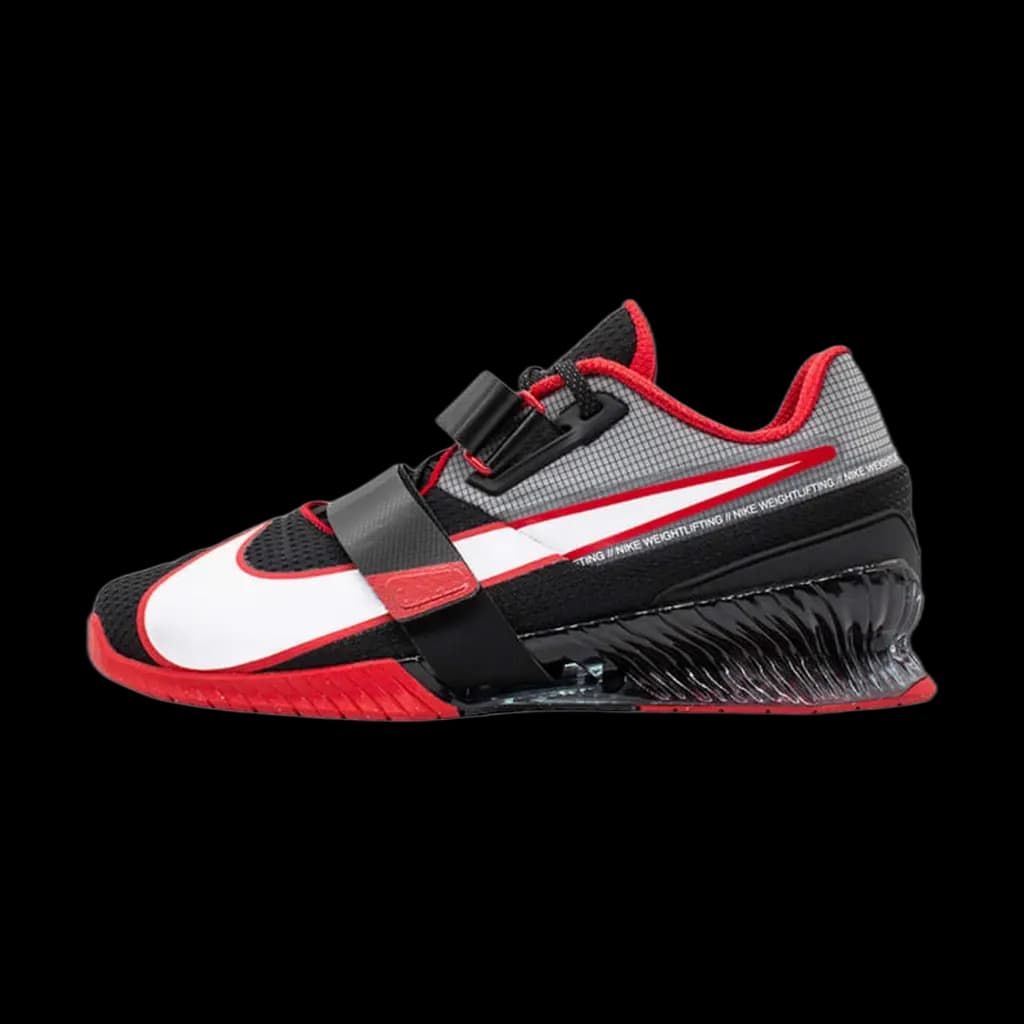
Nike Romaleos 4 Olympic Lifting Shoes
by Nike
Score
The Olympic lifter's reference shoe. 20mm TPU heel, dual-strap, glove-tight fit. Used by USA Weightlifting national-team athletes — the gold standard for snatch and clean.
- Serious Olympic weightlifters, competitive lifters, and advanced trainees who want the stiffest available platform under maximum snatch, clean, and high-bar squat loads. Suits lifters whose feet fit the dual-strap glove-tight design.
- You primarily deadlift, you have wide feet that the dual-strap lockdown will compress uncomfortably, or you train at a level where the Powerlift 5 covers your needs at a third the price.
Storage only. Use the included shoe bag or a dedicated shelf to protect the heel and uppers from impact.
easy — Wide and narrow insoles ship in the box. Pick the one that matches your foot width before first use, since swapping later means re-fitting both straps from scratch. The break-in window is real, plan 3 to 5 sessions of progressively higher loads to let the shoe conform to your foot.
Premium Olympic lifting shoes are an advanced-stage purchase. The lifter should be working at consistent intermediate loads, training Olympic lifts or high-bar squats specifically, and have outgrown the entry-level lifting shoe before stepping up to the Romaleos.
Strengths
- ↑20mm TPU heel (won't compress under any load)
- ↑Dual-strap lockdown
- ↑Wide and narrow insoles included
- ↑Glove-tight fit
Weaknesses
- ↓Pricey
- ↓20mm heel too aggressive for deadlifts
- ↓Break-in pinches
What owners actually complain about
Synthesized from owner reviews and community threads. Paraphrased, not quoted.
- Break-in period pinches the foot in the first 3 to 5 sessions
- 20mm heel is too aggressive for deadlift work, requires a separate flat shoe
- Pricey compared to Powerlift 5 or even Adipower
- Dual-strap can dig if the wrong insole width is chosen
Buyer sentiment
Based on 21 user mentionsBuyers praise quality. Some flag fit.
Verdict: The gold-standard Olympic lifting shoe — a stiff, glove-tight platform for serious lifters who've outgrown entry-level shoes.
Specs that matter
| Spec | Value |
|---|---|
| Heel | 20mm TPU (doesn't compress under load) |
| Straps | Dual instep |
| Insoles | Two widths (wide + narrow) in box |
| Best for | Snatch, clean, high-bar back squat |
What you get
- Maximum stability — TPU won't compress at the catch like EVA
- Custom fit — two insole widths to dial in lockdown
- Even lockdown — dual straps eliminate foot slop
What you give up
- Setup time — both straps need even tensioning
- Break-in — 3–5 stiff sessions; not for deadlifts (heel lengthens ROM)
Buy it if you train Olympic-style at intermediate-plus loads. Skip it if you're a beginner — the Powerlift 5 is the better value.
r/weightlifting consensus: choosing between the Romaleos and Adidas Adipower 5 is a fit preference, not a performance one — wider feet often prefer the Adipower, narrower/medium feet the Romaleos.
Full specs
- Heel Height
- 20mm
- Heel Material
- TPU
- Strap
- Dual
- Use
- Olympic lifting, high-bar squat
Common questions
How does the Romaleos 4 differ from the Adipower 5?
Both are premium Olympic shoes with 20mm TPU heels. The Romaleos has a glove-tight fit with dual straps and ships with two insole widths. The Adipower has a slightly more accommodating fit and a leather upper. Most competitive Olympic lifters pick based on which fits their foot best rather than performance differences, which are small.
Can I use these for powerlifting?
Yes for the squat, particularly high-bar style. The 20mm heel is too aggressive for conventional deadlift, where it lengthens the pull. Competitive low-bar squatters sometimes prefer the lower 15mm heel of a Powerlift or a flat shoe. Bench press is unaffected by shoe choice.
Are they worth the price for a home lifter?
For serious Olympic lifting where the stiffness under maximum loads matters, yes. For general training where the lifter is working at intermediate loads, the Powerlift 5 covers most of the function at a fraction of the cost. The Romaleos is the right pick when you have already trained in lifting shoes for years and are limited by your current shoe's stiffness.
Which insole should I use?
Try the wide insole first if your foot fills your normal athletic shoes at the standard width. Try the narrow if you typically wear a narrow or your foot has noticeable space at the sides in athletic shoes. Pick before first use since switching later means re-fitting both straps.
How long do they last?
Premium Olympic shoes routinely last 5 to 10 years with regular use. The TPU heel is essentially indestructible and the upper holds up well with basic care. The straps and insoles are the parts most likely to need replacement first.
Sources & references
Full buying guide
Best Lifting Accessories in 2026: Inzer Forever Wins
Read the full ranking →Related Lifting Belts, Wraps & Shoes guides
Other lifting belts, wraps & shoes we rate
Ranked alternatives from the same category, with our score and the current price.
Best Amazon-shipped lifting belt. Genuine leather, double-prong buckle, lifetime guarantee. The one you buy when you want a real belt without the Inzer wait.
The crowd-favorite Amazon wrist wrap. Self-locking hook closure (no thumb loop strain), three lengths, 100% no-questions returns. Best balance of stiffness and value.
The best entry-level lifting shoe. 15mm heel, hard EVA midsole, narrow snug fit — a fraction of Adipower price for 80% of the function. Where every powerlifter starts.
Best-value 7mm neoprene knee sleeves on Amazon. SBD-clone tightness at half the price, IPF-approved, and lifetime-guaranteed. The r/powerlifting beginner default.
Pure magnesium carbonate in 2 oz blocks, a pound to a box. The cheapest genuine fix for a bar slipping out of your hands, and the one grip aid that does not take the work off your forearms.