Rank #4 in Vibration Plates
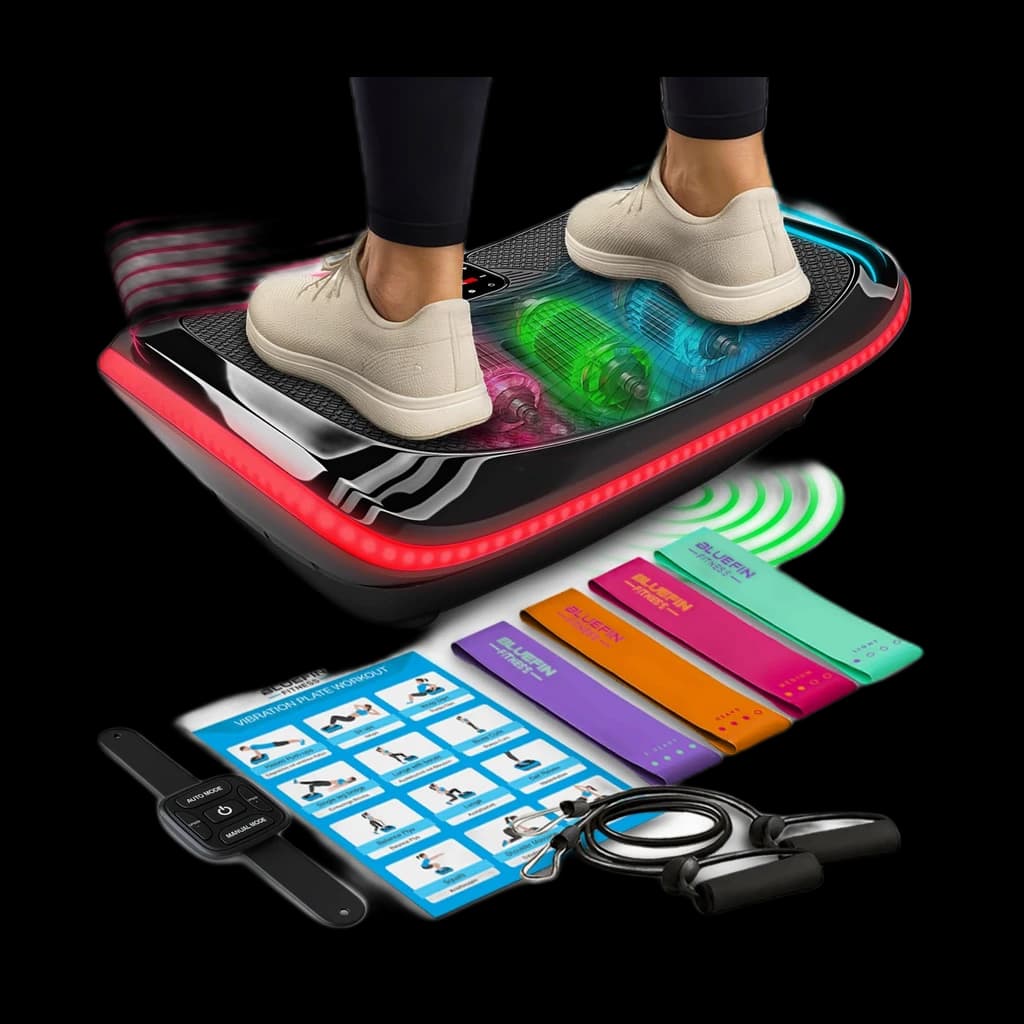
Bluefin Fitness 4D Vibration Plate
by BluefinBuy later
Score
Combines oscillation, linear vibration, and a curved deck. UK brand with strong US presence. Mid-tier sweet spot at ~$400 — more sophisticated motion than LifePro, less than Power Plate.
- Buyers wanting 4D oscillation (combined vertical, side-to-side, and elliptical) at a mid-tier price
- Multi-user households where adjustable speed range (1-99) lets different fitness levels share the unit
- Home users who specifically want Bluetooth speakers integrated into the platform
- Apartment use where the rubber-coated platform reduces floor transmission better than basic consumer plates
- Buyers wanting higher amplitude than Lifepro Waver without stepping up to Power Plate pricing
- You have a pacemaker, defibrillator, or active medical implant , vibration risks device interaction; consult cardiology
- You're pregnant , whole-body vibration is contraindicated throughout pregnancy
- You have severe osteoporosis (T-score below -2.5) without clinician supervision
- You have detached retina, recent eye surgery, or untreated retinopathy
- You expect true tri-planar Power Plate performance , the 4D label describes wave patterns, not the research-protocol-validated tri-planar motion
- Your budget is firm under $400 , the Lifepro Waver delivers similar low-frequency benefits for less
Footprint is approximately 26x16 inches with a height of 6 inches when stationary. Plan on 4x4 feet of clear floor for standing exercise. Hardwood, tile, or sealed concrete required; carpet absorbs vibration. Standard 120V outlet, peak draw approximately 200W during operation.
easy — Ships fully assembled. Plug in, snap on the resistance bands (optional), and operate via the included remote control. The Bluetooth speaker pairs with phone or tablet via the included pairing button. No tools required. Most owners are operational in 5 minutes.
Vibration plates supplement an existing recovery and conditioning routine. Add after foundational strength and cardio gear is in place. Buying this first means the user is chasing a niche tool before establishing primary training habits, which historically leads to the plate being shelved within 6 months.
Strengths
- ↑Oscillation + linear (4D)
- ↑Curved deck design
- ↑Bluetooth speakers built in
Weaknesses
- ↓Not true tri-planar
- ↓265 lb weight cap
What owners actually complain about
Synthesized from owner reviews and community threads. Paraphrased, not quoted.
- 4D marketing is technically combined oscillation patterns, not true tri-planar Power Plate-grade motion
- Bluetooth speakers are low-fidelity and the speaker volume struggles to overcome motor noise
- Remote control batteries are non-standard and replacements can be hard to source
- Platform rubber coating peels at the edges after 12-18 months of barefoot use
- App is available but minimal , no real protocol library compared to Power Plate
- Customer service response times are inconsistent; some owners report multi-week warranty resolutions
Buyer sentiment
Based on 128 user mentionsBuyers praise quality, muscle work, ease of use and sturdiness. Mixed feedback on reliability and noise level. Some flag remote control.
Verdict: A fair mid-tier consumer vibration plate for circulation and balance, but its frequency range is too low for research-protocol strength or bone work.
Specs that matter
| Spec | Value |
|---|---|
| Motion | 4D combined oscillation (side-to-side + vertical) |
| Frequency | Mid-teens Hz (below clinical-research threshold) |
| Speed range | 1–99 |
| Platform | Rubber-coated steel |
| Motor warranty | 1 year |
What you get
- Better motion — more dynamic feel than single-axis plates
- Multi-user range — speed 1–99 suits all fitness levels
- Rubber platform — outlasts plastic, helps damp apartment floors
What you give up
- No research-protocol training — frequency caps the benefit
- Weak extras — Bluetooth audio drowned by motor noise; 18–30 month heavy-use ceiling
Buy it if you have a $350–450 budget and want vibration as a supplement to an existing routine. Skip it if you want Power Plate-class performance or are still building a base routine.
Reviewers note the mid-teens Hz range sits below the 35–50 Hz protocols clinical studies used for muscle and bone benefits.
Full specs
- Type
- 4D (oscillation + linear)
- Speed Range
- 1-180
- User Weight Cap
- 265 lb
Common questions
What does 4D actually mean on the Bluefin?
Bluefin's 4D marketing describes the unit's ability to combine three different oscillation patterns (vertical, side-to-side, and a small elliptical component) plus a time-based intensity sweep. It is not the same as Power Plate's tri-planar simultaneous motion at research-protocol frequencies. The combined pattern feels different than a single-axis plate and is closer to research-validated tri-planar than basic consumer side-to-side units, but it does not match commercial vibration-training equipment at full spec.
Is the Bluetooth speaker worth anything?
Functionally, no. The speakers are low-fidelity, the motor noise of the unit during operation drowns out lower volumes, and most owners ignore the feature within a few sessions and use their own earbuds or external speakers. The Bluetooth integration is a marketing feature, not a use case. If audio is important during vibration sessions, plan on Bluetooth earbuds regardless of which plate you buy.
How does it compare to the Lifepro Waver?
Bluefin runs slightly higher peak amplitude and adds the combined oscillation pattern that the Waver's purely side-to-side motion lacks. Frequency range is similar (low single digits to mid teens). For most users, the experiential difference is modest , both are low-frequency consumer-tier units. The Bluefin runs roughly $50-100 more than the Waver and the upgrade delivers a marginal but real motion-pattern improvement, not a different category of training stimulus.
Can I use it on hardwood without damaging the floor?
Yes, the rubber-coated base distributes weight and dampens vibration into the floor. Some owners place a thin yoga mat or rubber pad underneath as additional protection for finished hardwood. Carpet is the bigger issue , it absorbs effective amplitude rather than damaging the floor. If protecting hardwood is the concern, the Bluefin's base is friendlier than basic plastic-bottomed consumer plates.
How long does the motor last?
Heavy daily users (45-plus minutes per day, 7 days per week) report motor service issues at 18-30 months. Moderate users (15-25 minutes 4 times per week) typically reach 4-5 years before any service is needed. The motor is the primary failure point; the platform itself usually outlives the motor. Bluefin's warranty is 1 year, which is shorter than premium tier and reflects the consumer-grade engineering.
Sources & references
- ResearchWhole-Body Vibration , clinical effects systematic review— NIH / NCBI PMC
- ResearchWhole-Body Vibration Exposure , occupational safety— NIOSH / CDC
- ResearchWhole-Body Vibration , Mayo Clinic overview— Mayo Clinic
- Bluefin 4D , owner discussion and durability reports— r/homegym community consensus
- Mid-Tier Vibration Plate Comparison— Garage Gym Reviews
Full buying guide
Best Vibration Plates for Home Use in 2026: LifePro Waver Wins
Read the full ranking →Other vibration plates we rate
Ranked alternatives from the same category, with our score and the current price.
Oscillating plate with 1-99 speed range and 330 lb user weight cap. The price-to-spec sweet spot for home users — covers recovery, lymphatic, and light strength work at a fraction of a Power Plate's price.
Power Plate's compact home plate: a fixed 35 Hz PrecisionWave vibration with Low/High amplitude, 30- or 60-second timers and a remote. Power Plate describes its vibration as tri-planar rather than side-to-side oscillation. The warranty is 1 year on hardware, electronics and labor.
Budget oscillating plate under $200. Functional but the motor is the floor of acceptable — works for sub-180 lb users in moderate intensity. Acceptable starter plate, replace within 2-3 years.
LifePro Waver Mini
Compact Waver — same brand reliability, smaller footprint, lower weight cap (260 lb). Best for apartments and renters where the full Waver doesn't fit.
LifePro Rumblex Max 4D Vibration Plate
The step up from the entry Waver: three independent motors (oscillation, linear, pulsation) and a 500 lb platform make this the most capable LifePro plate for heavier users and standing strength work, not just seated recovery.