 Premium Pick
Rank #3 in Vibration Plates
Power Plate Personal Power Plate
by Power PlateBuy later
Score
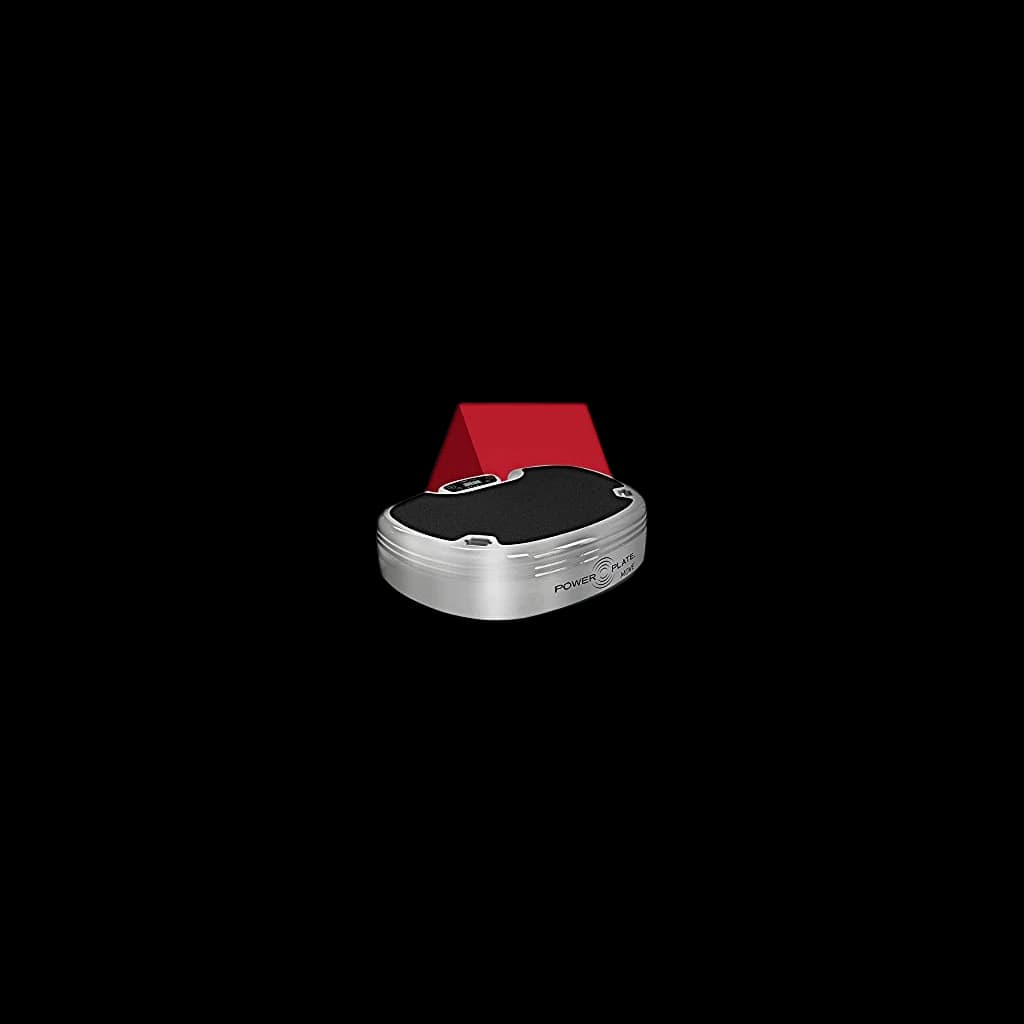
Power Plate's compact home plate: a fixed 35 Hz PrecisionWave vibration with Low/High amplitude, 30- or 60-second timers and a remote. Power Plate describes its vibration as tri-planar rather than side-to-side oscillation. The warranty is 1 year on hardware, electronics and labor.
- Committed vibration-training users who want the Power Plate brand in a plate that stores under a bed
- Home users following a programme built around a 35 Hz setting
- Older adults under clinician supervision for bone density and balance who can afford the premium tier
- Pre-rehab and warm-up applications where 30-second protocols replace longer dynamic warm-ups
- Buyers who have already decided vibration training is worth a premium price
- You have a pacemaker, defibrillator, deep brain stimulator, or other active implant , consult cardiologist; FDA medical-device interactions are real
- You're pregnant , whole-body vibration is contraindicated through pregnancy
- You have severe osteoporosis without clinician supervision , high-amplitude vibration can stress brittle bone
- You have detached retina, recent eye surgery, or untreated retinopathy
- Your budget is under $1,000 , the Lifepro Waver costs a fraction of the price, though it oscillates side to side at much lower frequencies
- You're early in a fitness journey , basic strength and cardio gear should come first
Power Plate lists the platform at 27.5 x 18.7 inches and 6.2 inches tall. Plan on 5x5 feet of clear floor for standing exercise plus arm-raise clearance. Hardwood, tile, or sealed concrete is required , carpet absorbs effective amplitude. It runs on 100-240 V and Power Plate lists 160-185 W in operation.
easy — Ships ready to use: plug it in and run it from the included remote. Power Plate includes a strap set, rubber mat and power cord, and lists a 1-year warranty on hardware, electronics and labor. No tools required.
A vibration plate, even the premium tier, is a recovery and supplementary training tool, not a foundation. Add it after the rack, bench, dumbbells, and a cardio piece are in place. Power Plate as a first home-gym purchase is almost always a sign the buyer is chasing novelty over fundamentals.
Strengths
- ↑Fixed 35 Hz PrecisionWave vibration
- ↑Low/High amplitude settings
- ↑264 lb maximum user load
- ↑Low profile (6.2 in tall, about 40 lb)
Weaknesses
- ↓Premium price for one fixed frequency
- ↓1-year hardware warranty
What owners actually complain about
Synthesized from owner reviews and community threads. Paraphrased, not quoted.
- Price is 4-5x the consumer-tier alternatives and the marginal benefit is real but not 5x larger
Buyer sentiment
Based on 18 user mentionsBuyers praise effectiveness and quality. Some flag value for money.
Verdict: A premium home plate whose fixed 35 Hz sits inside the frequency range vibration research uses — for committed, long-term users.
Specs that matter
| Spec | Value |
|---|---|
| Frequency | 35 Hz, fixed |
| Amplitude | Low / High |
| Max user load | 264 lb |
| Warranty | 1 year (hardware, electronics, labor) |
| Includes | Strap set, rubber mat, remote |
What you get
- Research-range frequency — a fixed 35 Hz, far above consumer 4–14 Hz oscillation plates
- Low-profile storage — 6.2 in tall and about 40 lb
What you give up
- Premium price — the benefit over a Waver isn't proportional to the price gap
- Short warranty — 1 year on hardware, electronics and labor
- Not a primary tool — complements strength work, doesn't replace it
Buy it if you're committed to a multi-year protocol and fit a research-supported population (older adult, post-rehab). Skip it if it's novelty-curious or basics aren't in place.
Mayo Clinic's overview says whole-body vibration, done correctly and under medical supervision when needed, may improve strength and balance in older adults and reduce bone loss — and advises checking with a doctor first, especially during pregnancy or with health problems.
Full specs
- Type
- PrecisionWave harmonic vibration
- Frequency
- 35 Hz (fixed)
- Amplitude
- Low / High
- User Weight Cap
- 264 lb
- Warranty
- 1 year hardware, electronics and labor
Common questions
Is the Personal model the same as commercial Power Plate units in gyms?
No. Power Plate grades the Personal as a consumer model: a fixed 35 Hz frequency with Low/High amplitude, 30- or 60-second timers and a 264 lb maximum load. Power Plate's larger models add settings; the MOVE, for example, offers 30, 35 and 40 Hz. The Personal carries a 1-year warranty on hardware, electronics and labor.
What does tri-planar movement actually mean?
Power Plate uses the term for a platform that vibrates in multiple directions rather than only side to side, which is how most budget oscillating plates such as the Waver move. Power Plate's product page for the Personal describes its system as PrecisionWave harmonic vibration and lists no separate motion spec, so treat tri-planar as the brand's own description rather than a measured figure.
Will it help my osteoporosis?
Possibly, under clinician guidance. Research on vibration and bone density in postmenopausal women under specific protocols (typically 30-50 Hz, 12-24 week programs, 3-5 sessions weekly) has shown modest increases in hip and spine density. Mayo Clinic's position is that it may help certain populations and should be used under medical supervision. The Personal runs at a fixed 35 Hz, inside the range those protocols use; what's missing is the clinician oversight, which a home unit cannot provide. T-score below -2.5 means start with your doctor, not the Power Plate user manual.
How does it compare to the Lifepro Waver for the price difference?
The Power Plate Personal runs at a fixed 35 Hz; the Waver runs 4-14 Hz side-to-side. Different frequency ranges target different physiological responses. Power Plate is closer to a strength-training stimulus and matches research protocols for muscle and bone outcomes. The Waver is closer to a balance and circulation tool. They are not interchangeable. If you want the research-validated muscle and bone benefits, Power Plate's frequency is closer to what was studied. If you want balance, proprioception, and circulation, the Waver does that job for far less.
How long should sessions be?
Research protocols typically run 10-30 minute sessions, 3-5 times per week, with the user performing static holds or dynamic exercises (squats, lunges, planks, push-ups) on the platform rather than just standing. Power Plate's published research uses 30-second to 2-minute exercise sets with rest between. Standing alone for 15 minutes produces minimal benefit beyond circulation. The platform is a multiplier for exercise, not a substitute for it.
Sources & references
- ManufacturerPersonal Power Plate — product page and specifications— Power Plate
- ResearchWhole-Body Vibration , Mayo Clinic clinical overview— Mayo Clinic
- Best Vibration Plates — buyer guide— Garage Gym Reviews
Full buying guide
Best Vibration Plates for Home Use in 2026: LifePro Waver Wins
Read the full ranking →Other vibration plates we rate
Ranked alternatives from the same category, with our score and the current price.
Oscillating plate with 1-99 speed range and 330 lb user weight cap. The price-to-spec sweet spot for home users — covers recovery, lymphatic, and light strength work at a fraction of a Power Plate's price.
Combines oscillation, linear vibration, and a curved deck. UK brand with strong US presence. Mid-tier sweet spot at ~$400 — more sophisticated motion than LifePro, less than Power Plate.
Budget oscillating plate under $200. Functional but the motor is the floor of acceptable — works for sub-180 lb users in moderate intensity. Acceptable starter plate, replace within 2-3 years.
LifePro Waver Mini
Compact Waver — same brand reliability, smaller footprint, lower weight cap (260 lb). Best for apartments and renters where the full Waver doesn't fit.
LifePro Rumblex Max 4D Vibration Plate
The step up from the entry Waver: three independent motors (oscillation, linear, pulsation) and a 500 lb platform make this the most capable LifePro plate for heavier users and standing strength work, not just seated recovery.