 Best Budget
Rank #6 in Pull-up Bars & Dip Stations
Iron Gym Total Upper Body Workout Bar
by Iron GymOptional
Score
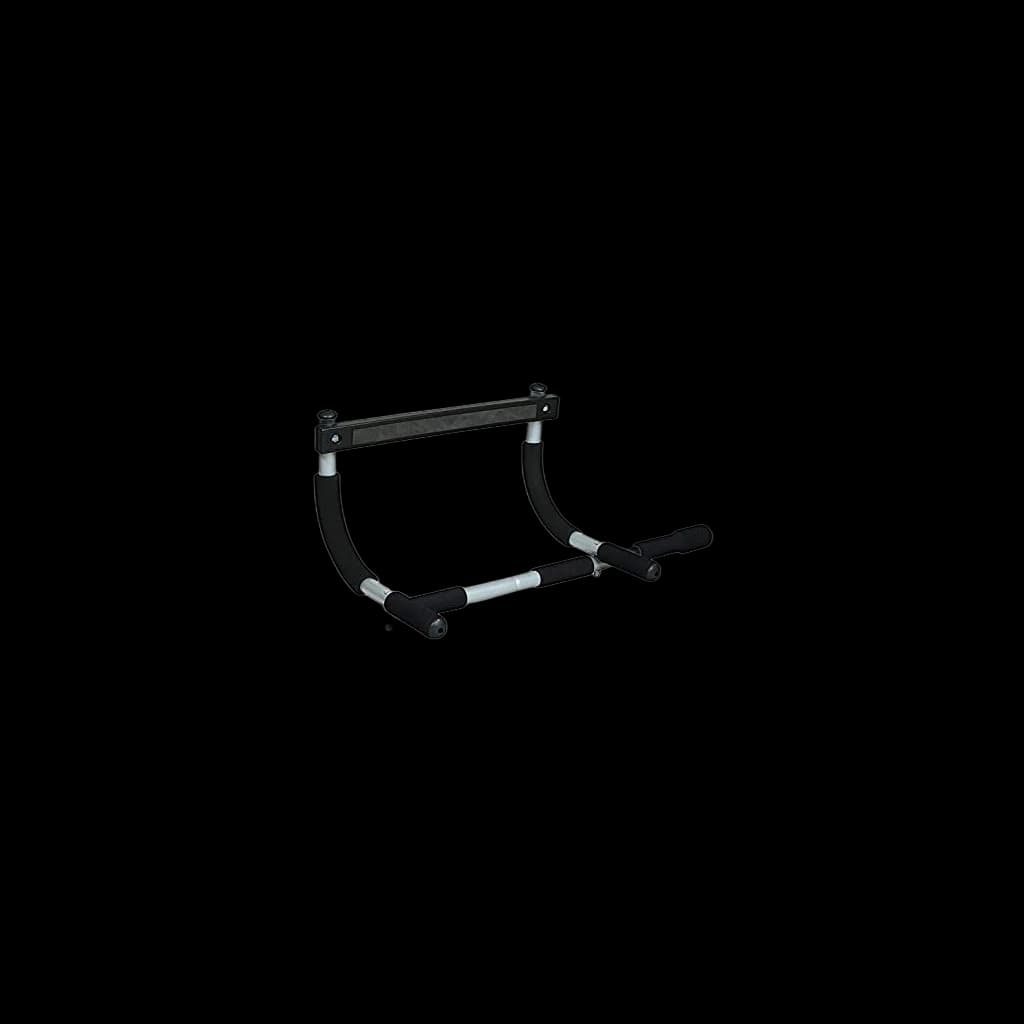
The Iron Gym is the default doorway pull-up bar for a reason: it's $35, it works, and it's the bar that actually gets used because it doesn't require drilling. Three grip positions (wide, narrow, neutral), 300 lb capacity, fits doorways 24-32 inches. The leverage design means it locks tighter the more weight you put on it. Limitations: the foam grips wear out in 1-2 years (replaceable) and aggressive kipping can crack door trim. For renters and beginners, it's the right answer. For weighted pull-ups or anyone over 250 lb, upgrade to the Sportsroyals or a wall-mount. The current Amazon listing was unavailable when checked 2026-07-11, so we do not link it as a buy option.
- Renters and apartment dwellers who can't drill
- Lightweight users (under 200 lb) who want a no-commitment pull-up bar
- Beginners testing whether vertical pulling becomes part of their training
- Travel and dorm setups where install-and-uninstall is required
- Your doorway is wider than 32 in or narrower than 24 in
- Your door trim is less than 1.5 in or more than 3.5 in deep
- You do weighted pull-ups (300 lb capacity is body weight only)
- You kip pull-ups (the bar can crack door trim or pop off)
Mounts in any standard doorway 24 to 32 in wide with at least 1.5 in of trim depth. Zero footprint when removed. Storage footprint when off the door: about 32 x 10 x 6 in (it's a flat bar with handle bumps).
easy — Out of the box assembly takes 5 to 10 minutes with a Phillips driver. Assemble fully before mounting. Once mounted, no further setup is needed. The leverage design means the bar locks tighter as you hang from it; no screws into trim are required.
For a budget-first beginner home gym, the Iron Gym is often the first equipment purchase. It costs $35, requires no commitment, and immediately enables pull-ups, the most-bang-per-buck upper body exercise. Layer dumbbells and a bench on top of this and you have a workable starter setup.
Strengths
- ↑$35 and no drilling — apartment-friendly
- ↑Three grip positions
- ↑Locks tighter under load (leverage design)
- ↑Massive review base with proven track record
Weaknesses
- ↓Foam grips wear out in 1-2 years
- ↓Hard kipping can crack door trim
- ↓Not rated for weighted pull-ups
What owners actually complain about
Synthesized from owner reviews and community threads. Paraphrased, not quoted.
- Foam grips wear out within 1 to 2 years of regular use; replacement foam tubing from a hardware store is the standard fix
- Hard kipping pull-ups can crack the door trim where the leverage hooks press
- Not rated for weighted pull-ups; adding a weight vest above 30 to 40 lb has caused failures in owner reports
- The bar can occasionally slip if the door frame is non-standard (narrow or angled trim)
- Mounting and dismounting frequently wears the contact pads, eventually requiring replacement
Buyer sentiment
Based on 8,132 user mentionsBuyers praise quality, assembly, functionality and sturdiness. Mixed feedback on fit and stability.
Verdict: The default doorway pull-up bar — cheapest tool-free way to start training pulls, for renters and beginners.
Specs that matter
| Spec | Value |
|---|---|
| Price | ~$35 |
| Doorway width | 24–32 in |
| Trim depth needed | 1.5–3.5 in |
| Grip positions | 3 (wide, neutral, chin-up) |
| Lifespan | 5+ years regular use |
What you get
- Tool-free install — leverage hooks, under a minute
- 3 grips — enables chin-up-to-pull-up progression
- Proven durability — 5+ years, user-repairable foam/pads
What you give up
- No ballistic moves — leverage unloads on kipping or sudden release
- Trim-dependent fit — flat/shallow modern trim may not grip; thin grips fatigue hands
Buy it if you're a renter or beginner testing pull-up training. Skip it if you do kipping/weighted pull-ups or have non-standard doorway trim.
The leverage design relies on continuous downward load; if force reverses mid-rep the bar can shift or pop off — which is why the manufacturer warns against ballistic movements.
Full specs
- Weight Capacity
- 300 lb
- Doorway Width
- 24-32 in
- Trim Width
- Up to 3.5 in
- Grip Positions
- 3 (wide, narrow, neutral)
- Mounting
- Leverage (no screws)
Common questions
Will the Iron Gym damage my doorway?
Under normal use, no. The contact pads on the door-side leverage hooks distribute load across the trim. Under abusive use (kipping, dynamic swings, dropping suddenly off the bar) the leverage force can spike high enough to crack older or thinner door trim. The bar's design is the right one for strict pull-ups; it's the wrong one for CrossFit-style ballistic work.
Why doesn't it need screws?
The bar uses a leverage principle. The portion that extends into the door frame is supported by two contact points: one on the wall side of the trim and one on the room side. When you hang from the bar, your weight creates a moment that pulls the bar tighter into the trim. The harder you pull down, the more secure the bar gets. This is also why the system fails for kipping (the dynamic load can momentarily unload the leverage and the bar shifts).
What's the maximum body weight it can hold?
Manufacturer rating is 300 lb body weight under static load (controlled pull-ups). Owner reports consistently support this rating. The bar is not rated for kipping or dynamic loads at any weight, and is not rated for weighted pull-ups (vest or belt added) at any total load above body-weight-only.
How long does the foam grip last?
1 to 2 years for regular users. The foam is closed-cell padding wrapped around the steel grip bars. Replacement is straightforward: cut the old foam off, slide on standard foam grip tubing from any hardware store (under $5), and you're done.
Can I leave it in the doorway permanently?
Yes. Many owners do exactly that. The bar produces minor compression marks on the door trim over time, but no structural damage. If you rent and need to preserve the trim perfectly, dismount weekly or use a small towel between the leverage hooks and trim for cushioning.
Sources & references
- ResearchDoorway Pull-Up Bar Safety— American Council on Exercise
- Independent reviewIron Gym long-term review— Garage Gym Reviews
- Independent reviewBest Doorway Pull-Up Bars Tested— BarBend
- CommunityIron Gym 10-year owner thread— r/homegym
- ResearchPull-Up Programming and Progression— NSCA
- ResearchVertical Pull Biomechanics— NIH/NCBI
Full buying guide
Best Pull-Up Bars for Home Gyms in 2026: Sportsroyals Wins
Read the full ranking →Related Pull-up Bars & Dip Stations guides
Other pull-up bars & dip stations we rate
Ranked alternatives from the same category, with our score and the current price.
The Sportsroyals Power Tower is the best square-foot return on investment in any home gym. 450 lb weight capacity, pull-up bar with multiple grip positions, dip handles, knee-raise pad, push-up grips, all in a footprint smaller than a recliner. 8 height adjustments accommodate users from 5'2" to 6'8". The thickened commercial steel doesn't wobble even on weighted dips. Where it loses points: assembly takes 1-2 hours and the included hardware is mediocre (consider upgrading the bolts). Once built, it's the kind of equipment you don't think about until something else breaks.
The ProsourceFit is the Iron Gym's main competitor in the doorway-bar category, with one structural difference worth caring about: the multi-grip layout includes two parallel grips that the Iron Gym lacks, which lets you do neutral-grip pull-ups (easier on shoulders for many lifters). 300 lb rated, fits 24-36 inch doorways. Same caveats as any leverage-mount bar — fine for users under 250 lb in homes with hardwood trim, sketchy in apartments with cheap composite trim. Good Iron Gym alternative if neutral grip matters to you.
Steel power tower with a built-in bench and rack plus a guided smart workout app.
The fix for the doorway bar's real problem: doorway bars limit how tall you can be and how hard you can kip. A joist mount bolts to the structure, and Fitarc state a 440 lb capacity.
The widest bar here at 48 inches, which is what makes wide-grip pull-ups possible — a doorway bar physically cannot give you that span.