Yes4All Competition Kettlebell
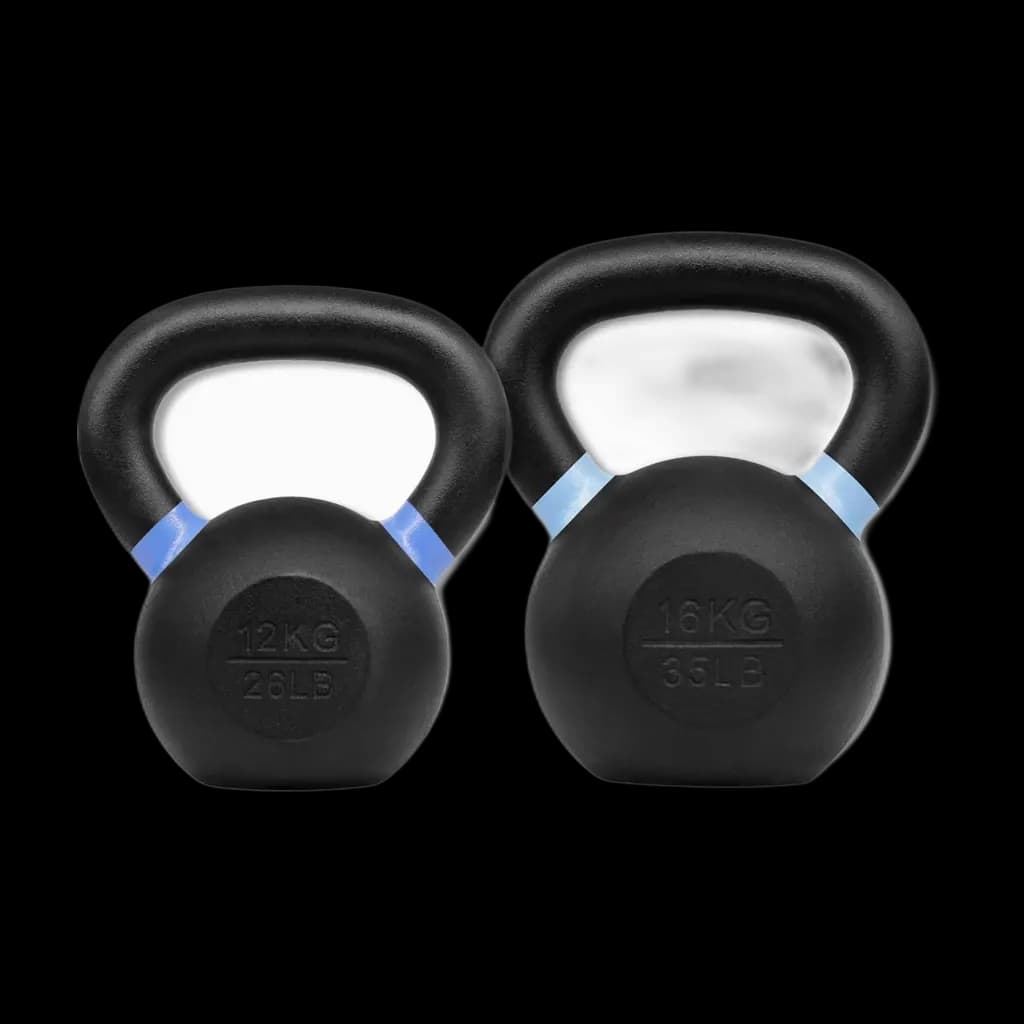
If you've decided you want competition-style ('pood') kettlebells — same handle diameter and same body size at every weight — Yes4All's powder-coated competition bell is the cheapest serious option. The IKFF-spec 33mm handle is the right thickness for high-rep snatches, and the uniform body size means your technique doesn't shift when you change weights. Where it loses ground: paint chips at the corners of the handle window after heavy chalk use, and the powder coat varies slightly bell-to-bell in batch.
Gym Score breakdown
Composite of build quality, durability, value, performance, and owner satisfaction. Calibrated per category.
- Sport kettlebell athletes training for IKFF/IUKL competition formats
- High-rep snatch and long-cycle programs (10 minute sets)
- Lifters who want uniform body size at every weight for consistent technique
- Buyers who want a serious competition bell at well under Rogue or Kettlebell Kings prices
- You do traditional hard-style training (variable handle scaling is part of the system)
- You want one bell to do everything (uniform 33mm handle on a light bell feels overbuilt)
- You hate the color-coded paint aesthetic
- You need extreme weight tolerance (premium competition bells are tighter)
Same as standard kettlebells: 12 x 12 in storage spot, 6 x 6 ft swing zone with 9 ft overhead. Competition bells take slightly more storage room because the uniform body is large even at light weights.
easy — No assembly. Out of box ready. Check the handle for paint touch-up needs at the handle window edge; minor paint shedding at the corners during shipping is common and cosmetic.
Competition kettlebells are specialty accessories. They're the right tool for sport kettlebell athletes and the wrong tool for general home training. Buy after foundational equipment and only if your training is genuinely sport-focused.
Strengths
- + True competition geometry — uniform body size
- + 33mm handle suits high-rep snatches
- + Color-coded by weight per IKFF standard
- + Half the price of Kettlebell Kings competition line
Weaknesses
- − Paint chips at the handle window edges over time
- − Coating thickness varies slightly batch-to-batch
- − Heavier bells (44+ lb) ship slow even with Prime
What owners actually complain about
Synthesized from owner reviews and community threads. Paraphrased, not quoted.
- Paint chips at the handle window edges over months of use, particularly where the bell rests on the floor or rack
- Coating thickness varies batch to batch, which affects handle diameter by 0.5 to 1mm at the same labeled weight
- Heavier bells (44+ lb) often ship slowly even with Prime
- Color coding follows IKFF standard but doesn't always match other competition bell brands exactly
- Hollow shell construction on light weights produces a slight rattle on hard impacts (no structural issue, just audible)
What 'competition' actually means
Competition kettlebells are a different product than hard-style kettlebells, not just a fancy version. The sport of kettlebell lifting (governed by the IKFF and IUKL) specifies bell geometry to ensure athletes can train the same technique at every weight as they progress. The two key specs are uniform handle diameter (33mm at every weight) and uniform body size (the bell's outer dimensions are identical at 9 lb, 53 lb, and 70 lb).
For traditional kettlebell training, these specs are overkill. For sport kettlebell training, they're the entire point.
The handle
The 33mm uniform handle is the most distinctive feature. On a 53 lb bell it feels slightly thinner than a hard-style bell of the same weight. On a 26 lb bell it feels normal. On a 9 lb bell (sometimes used for technique practice) it feels normal. The uniform diameter means your snatch hand pattern works identically at every weight, which matters when you're doing 100+ rep sets and grip fatigue compounds.
The body geometry
Uniform body size means a 9 lb competition bell is the same external dimensions as a 70 lb competition bell. The light bells are hollow shells; the heavy bells are dense cast iron. This produces an unusual visual: a light bell that looks comically large for its weight. For training purposes, the consistency matters. The rack position (where the bell sits on the forearm during cleans and presses) is identical across weights, so technique doesn't shift as you progress.
Color coding
IKFF and IUKL both specify color coding by weight: yellow for 8 kg, blue for 12 kg, red for 16 kg, etc. Yes4All follows the IKFF coloring, which is the most common standard. The paint is industrial powder coat applied over the steel shell. Owner reports describe paint chipping at the handle window edges and at the bell's resting points over time. The chipping is cosmetic; the steel underneath is unaffected.
Build quality and tolerance
The handle and welding are the key build points on competition bells, and Yes4All's are solid. Owner reports going back 4 to 5 years describe handles that haven't shown any structural issue under heavy sport-kettlebell volume. The hollow shell construction on lighter weights creates a slight rattle on hard impacts (the internal weighting material can shift fractionally), but this doesn't affect lift mechanics or durability.
Weight tolerance is meaningfully better than the standard Yes4All powder-coated line: typically within plus or minus 1.5% of label, which is tight enough for sport-kettlebell training that isn't tracked to the gram.
Compared to Kettlebell Kings competition
The premium alternative is Kettlebell Kings or Rogue competition kettlebells, both running roughly 2x the price. The premium tier wins on paint quality, weight tolerance (plus or minus 0.5% vs Yes4All's 1.5%), and overall fit and finish. The Yes4All offering is the legitimate budget tier of the competition category, not a knockoff. Athletes serious enough to count grams compete with premium bells; everyone else gets 90% of the value at 50% of the price with Yes4All.
Hollow shell rattle
This is the one issue that consistently surfaces in r/kettlebell threads. Lighter competition bells (9 to 26 lb) have a hollow steel shell with internal weighting (sand or shot) to hit the labeled weight. Heavy impacts (dropping the bell after a snatch finish) can shift the internal material slightly, producing an audible rattle. The rattle doesn't affect lift mechanics, and the bell remains structurally sound for years.
Who should buy these
Sport kettlebell athletes, anyone training programs that prescribe competition-style bells (Aleksandr Khvostov's GS programming, IKFF certification prep), and lifters who genuinely prefer the uniform handle and body for their technique. Skip these if you're training traditional hard-style or if you want a single multipurpose bell at one weight.
Full specs
- Material
- Cast iron core, hollow shell on lighter weights
- Coating
- Powder coat
- Handle Diameter
- 33mm (uniform)
- Body Size
- Uniform across weights
- Available Weights
- 9-70 lb
Common questions
What's the difference between competition and hard-style kettlebells?
Two things. First, competition bells have a uniform 33mm handle diameter at every weight. Hard-style bells scale handle diameter with weight (32mm light, 38mm heavy). Second, competition bells have uniform body size at every weight; hard-style bells get visibly larger as weight increases. Competition geometry suits high-rep snatch and long-cycle sport; hard-style suits swing, get-up, and press.
Should I buy competition kettlebells if I don't compete?
Usually no. The uniform handle is overbuilt for a 26 lb bell and the uniform body shape makes light bells look comically large. Competition bells make sense if you're training sport kettlebell programming or you specifically prefer the uniform feel. For traditional kettlebell training, hard-style bells are the right choice.
Are Yes4All competition bells as good as Kettlebell Kings competition?
Build quality is roughly 80% of Kettlebell Kings at 50% of the price. The handle dimensions, color coding, and uniform body are all genuine competition spec. The paint and handle finish are noticeably less premium. For training, the gap is minor. For actual competition where small details matter, premium bells edge out.
Why are the lighter competition bells hollow?
Uniform body size at every weight requires displacing material somehow. Light competition bells (9 to 26 lb) are hollow steel shells; heavier bells (53+ lb) are solid cast iron. The hollow construction produces a slight rattle on hard impacts but doesn't affect lift mechanics. The handle and weld points are robust.
Can you use competition kettlebells for swings and get-ups?
Yes. The uniform 33mm handle is actually friendly for swings (most lifters find 33mm comfortable). For get-ups, the larger body on light bells means you have to rest the bell higher on the wrist, which takes a session or two to adapt to. Competition bells work fine for general training; they're just optimized for sport.
Sources & references
- Sport Kettlebell Lifting: Physiology and Performance— NIH/NCBI
- Competition vs Hard-Style Kettlebell Comparison— Garage Gym Reviews
- Best Competition Kettlebells— BarBend
- Yes4All competition bell user thread— r/kettlebell
- NSCA Kettlebell Programming Guidelines— NSCA
- Kettlebell Sport Training Principles— American Council on Exercise