Best Air Bike for Home Gyms in 2026: Assault Bike vs BikeErg
The Assault AirBike Classic is the best air bike for home gyms in 2026; the Concept2 BikeErg wins for cyclists. Six fan bikes scored on build and noise.
- Chain Drive —
- Original Crossfit Air Bike
- Steel Fan
Evidence snapshot · Updated September 1, 2026
The evidence-backed answer
Assault AirBike Classic is our default pick for the scope of this guide: The conditioning standard at every CrossFit affiliate. Chain drive, brutal fan resistance, near-indestructible build.
Scope: 4 shortlisted products compared using published specifications, owner-feedback signals, value and category-specific performance. The matched catalog records represent 9,760 owner ratings. This is research synthesis, not hands-on testing.
| Product | Rating | Current price context |
|---|---|---|
| Assault AirBike Classic | 4.6/5 | ~$799 |
| Concept2 BikeErg | 4.8/5 | $1,449.99 |
| Schwinn AirDyne AD7 | 4.3/5 | $999.99 |
| Marcy Fan Exercise Bike (NS-1000) | 4.3/5 | $229.99 |
How GymScored is paid: Amazon Associates commission plus brand-direct affiliate (Rogue / REP / Titan when approved). No sponsored placements, no paid reviews, no pay-to-rank. Picks are ranked by the Gym Score formula and nothing else. Read the full disclosure.
Assault AirBike Classic for HIIT and conditioning. Concept2 BikeErg for cyclists or quiet apartments. Schwinn AirDyne AD7 for zone-2 cardio without the noise.
| Product | Rating | Pros | Cons | Price | |
|---|---|---|---|---|---|
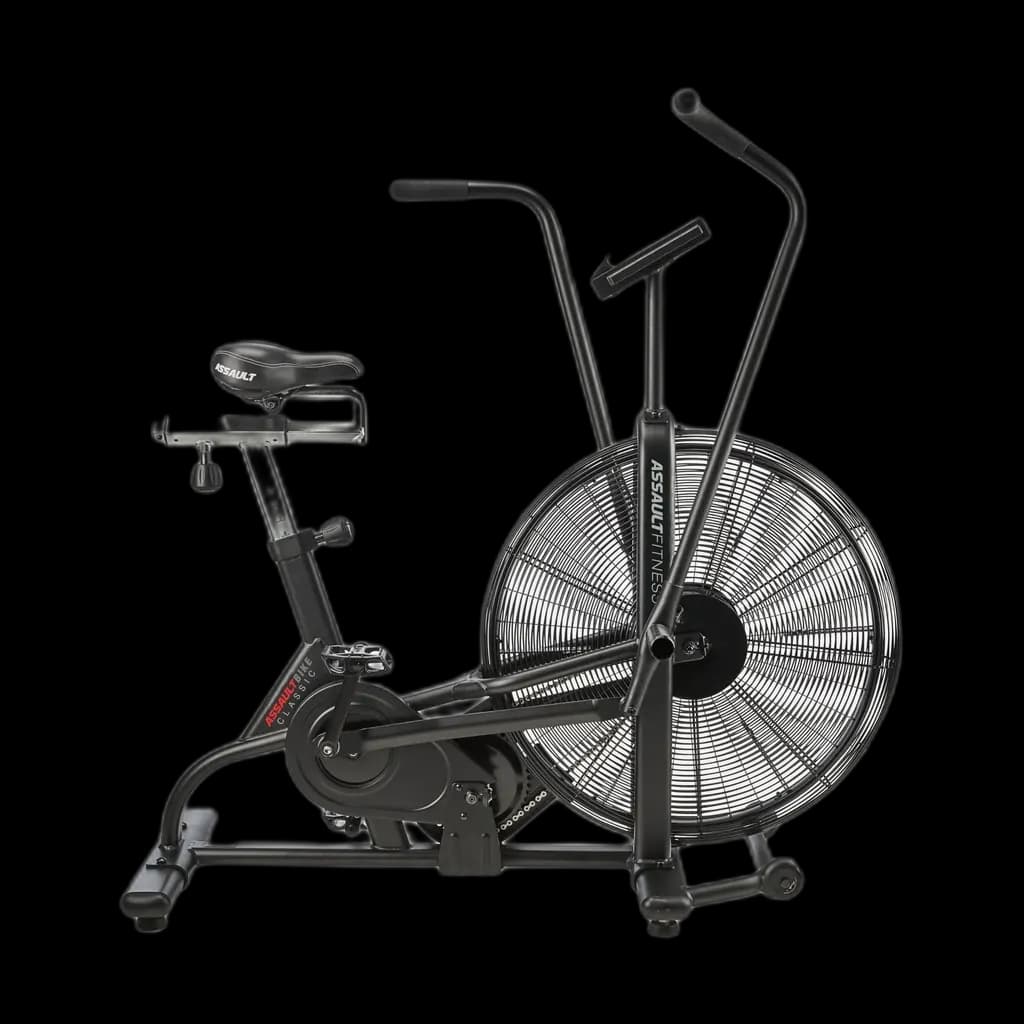 The CrossFit-affiliate default. Chain drive, big fan, will outlast most home gyms. ↑ Chain Drive —↑ Original Crossfit Air Bike↓ Chain Drive IsBased on 25 buyer mentions | 4.6 Gym Score 91 | Pros
| Cons
| ~$799 | See our review |
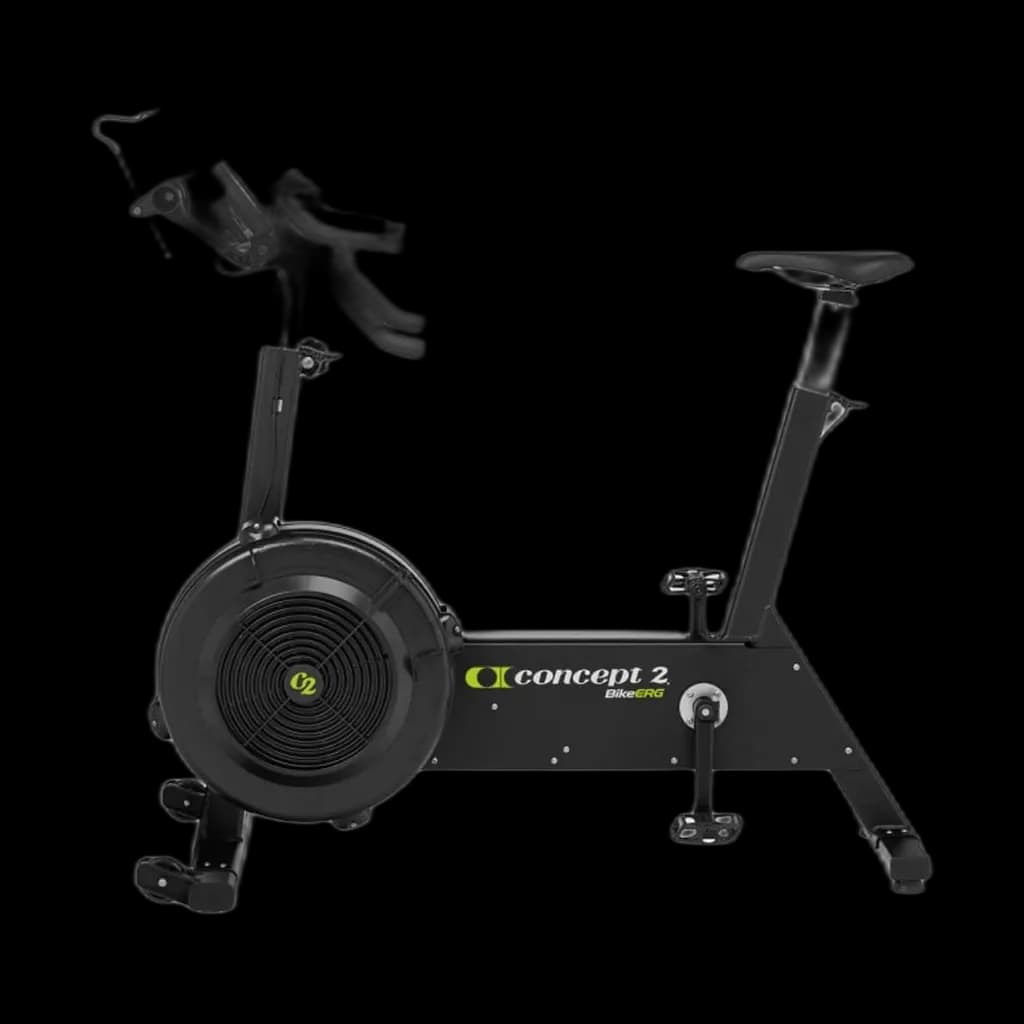 The cyclist's air bike. Flywheel with damper, watt-accurate, near silent. ↑ Pm5 Monitor↑ Damper For Resistance Feel↓ Brand-Direct OnlyBased on 25 buyer mentions | 4.8 Gym Score 94 | Pros
| Cons
| $1,449.99 | Buy on Amazon |
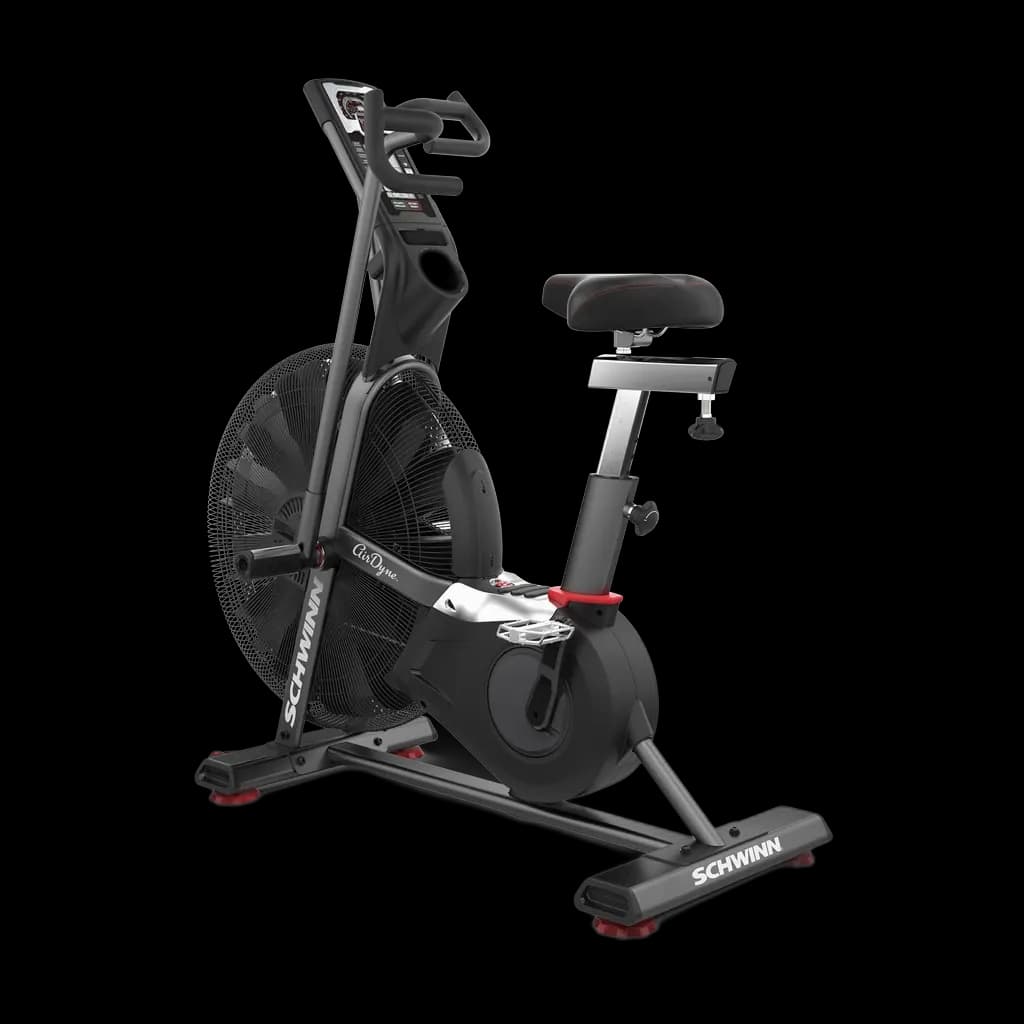 The zone-2 workhorse. Single-stage belt-fan that lasts 15+ years with zero maintenance. ↑ Quality↑ Assembly↓ DurabilityBased on 2,426 buyer mentions | 4.3 Gym Score 86 | Pros
| Cons
| $999.99 | Buy on Amazon |
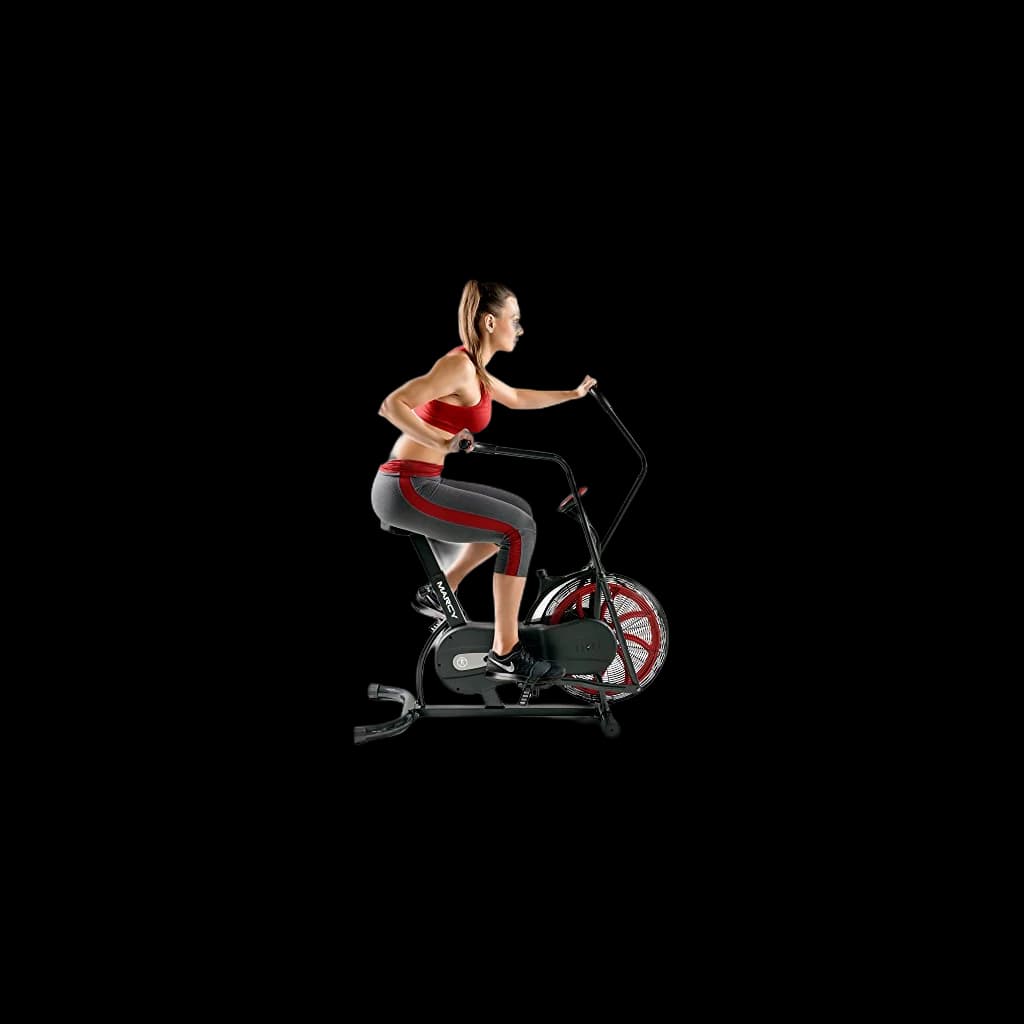 The budget entry into air bikes. The Assault and Concept2 units here run past $1,000; the Marcy delivers the same air-resistance principle — harder you pedal, harder it pushes back — for a quarter of that. | 4.3 Gym Score 82 | Pros
| Cons
| $229.99 | Buy on Amazon |
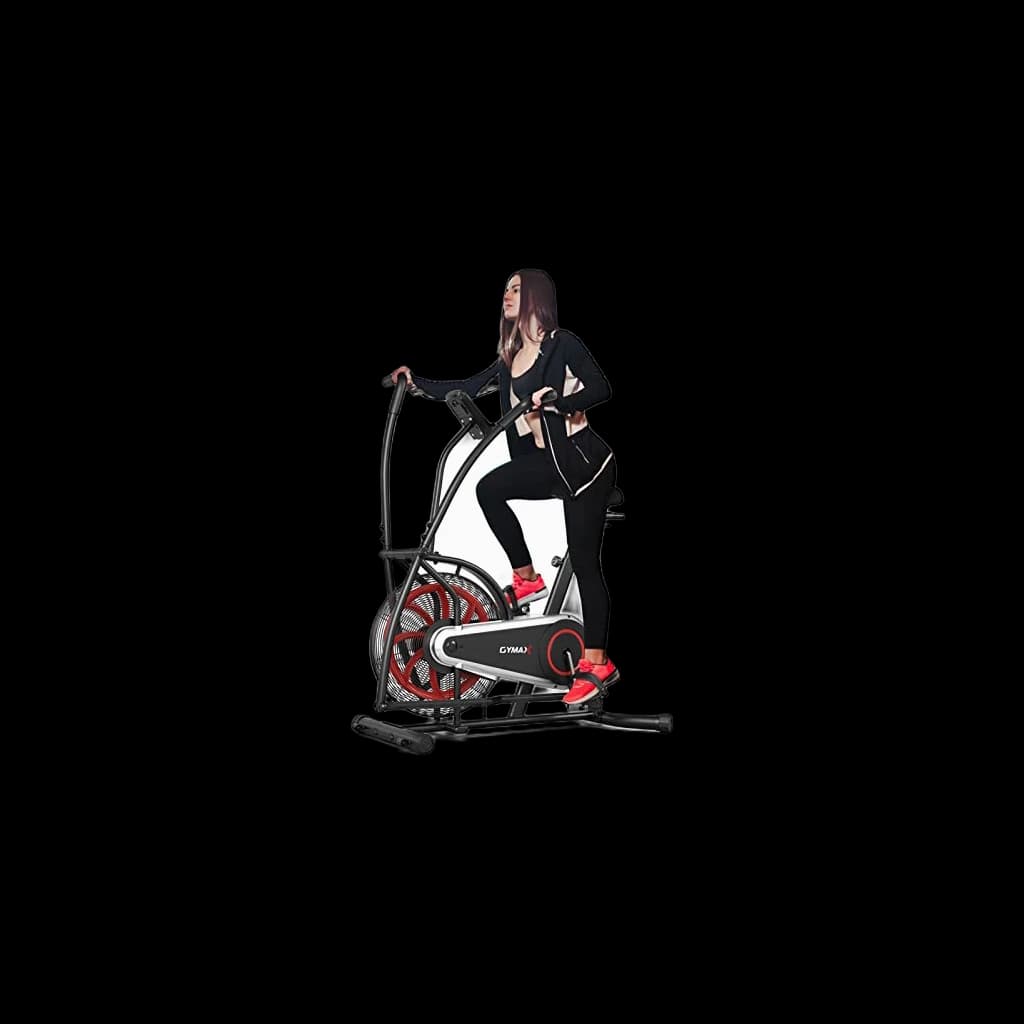 The cheapest air bike in this roundup, with dual-action handlebars so the upper body works too — the feature that separates an air bike from a stationary cycle. | 4.2 Gym Score 82 | Pros
| Cons
| $239.99 | Buy on Amazon |
Amazon prices checked Sep 12, 2026. Amazon prices change often — the listing is authoritative.
Air bike spec matrix
Drive type, weight capacity, and connectivity differ widely.
| Product | Resistance | Drive | Console | Weight Cap |
|---|---|---|---|---|
| XTERRA AIR650 | Air | Belt | Multi-function LCD | 300 lb |
| Sunny SF-B2618 | Air + magnetic | Belt | LCD | 270 lb |
| Marcy AIR-1 | Air | Chain | LCD | 300 lb |
Pick by situation
Decide by your situation, not the generic ranking.
| If | You want | Pick |
|---|---|---|
| Budget under $300 | budget-conscious buyer | Sunny Health & Fitness SF-B2618 Air Bike |
| Sweet spot $300-700 | Smart shoppers comparing Schwinn AD7 alternatives at lower price | XTERRA Fitness AIR650 |
| Premium $700+ | CrossFit and HIIT athletes who need a bombproof bike | Assault AirBike Classic |
TL;DR — should you read this?
- The Assault AirBike Classic is the conditioning standard. Chain drive, 27" fan, near-indestructible build, the bike you'll see at every well-equipped CrossFit affiliate.
- The Rogue Echo Bike is the quieter belt-drive alternative at the same tier. Belt over chain mostly comes down to apartment noise tolerance.
- The Concept2 BikeErg is the cyclist's air bike. Flywheel + damper instead of a fan, watt-accurate to Wahoo KICKR levels, ANT+/Bluetooth for Zwift and TrainerRoad.
- Air bikes are not magic cardio. They're a brutal interval tool because resistance self-regulates with effort — but they're not cardiovascularly superior to other modalities at matched intensity.
- They're big and don't fold. Typical footprint is 50" long by 25" wide. Plan space before buying.
- Air bike, fan bike and assault bike are the same machine. "Assault bike" is a brand name that became the generic term, the way people say Hoover for a vacuum. If a listing says fan bike, it is competing with the Assault, not with a spin bike.
Our pick
The conditioning standard at every CrossFit affiliate. Chain drive, brutal fan resistance, near-indestructible build.
What separates good from bad in this category
Three specs decide an air bike's real value: drive system, fan engineering, and frame mass.
Drive system: chain feel versus belt silence
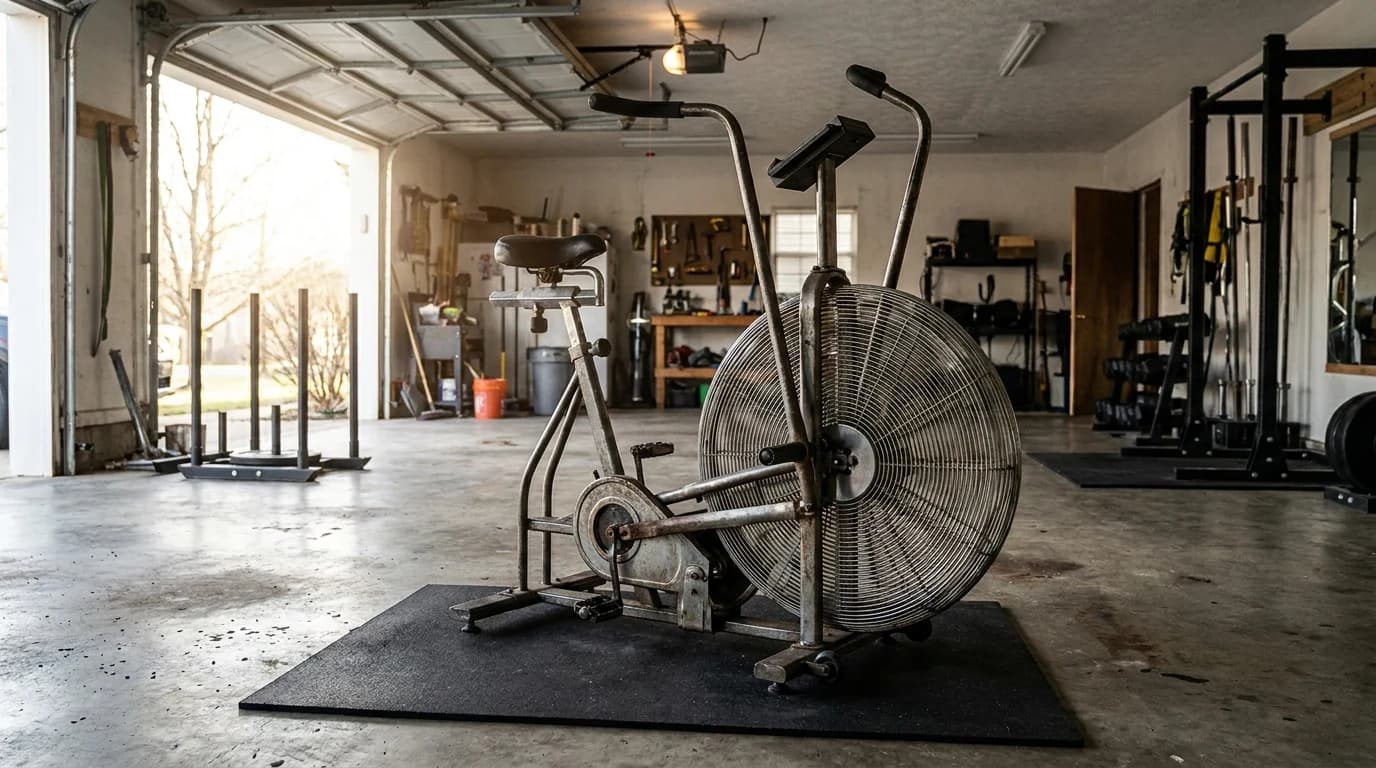
The Assault AirBike Classic uses a chain drive with stainless steel chain guards. It feels mechanical and immediate at the pedal, which is part of why competitive athletes prefer it for intervals — but chains stretch with use and need lubrication every few months. The Rogue Echo Bike uses a belt drive that runs near-silent and requires zero maintenance over the bike's lifetime. The Schwinn AirDyne AD7 uses a single-stage belt-and-fan design that's been in continuous production with iterative refinement for decades. The Concept2 BikeErg is the outlier: a flywheel with a damper instead of a fan, more linear resistance, dramatically quieter than any fan-driven bike.
Chain drive is the right call if:
- You want the immediate, mechanical bite at the pedal that competitive athletes prefer for intervals
- Noise is not a constraint in your space
- You don't mind lubricating the chain every few months
Belt drive is the right call if:
- You train in an apartment or a shared house and noise is the binding constraint
- You want zero drivetrain maintenance over the bike's life
- You can live with slight belt slip at peak effort
Fan engineering sets the ceiling, not the floor
Buckley and colleagues' work on air-resistance exercise testing (and the broader VO2max literature) confirms that air-resistance flywheels scale cubically with rotational speed.
Rule of thumb: pedal twice as fast and the resistance is roughly eight times higher. That's why there's no resistance dial — the rider sets resistance by effort.
A beginner and an elite athlete can train on the same bike without changing a single setting, because each gets back exactly what they put in. Larger fan diameter (Assault Classic and Rogue Echo at 27"; AirDyne AD7 at 26") increases peak resistance for serious intervals.
Frame mass is the spec nobody shops on
Lighter frames (under 90 lb assembled) walk across the floor under hard intervals. The Assault Classic comes in at about 98 lb; the Rogue Echo at about 127 lb. Frame stability at sprint effort is one of the main reasons commercial gyms favor those two over budget alternatives.
The picks, ranked
| Bike | Price | Resistance & drive | Footprint (L×W×H) |
|---|---|---|---|
| Assault AirBike Classic | ~$799 | 27" fan, chain | 50×23×50" |
| Rogue Echo Bike | ~$795 | 27" fan, belt | 59×30×53" |
| Concept2 BikeErg | $1,449.99 | Flywheel + damper | 48×24×40" |
| Schwinn AirDyne AD7 | $999.99 | 26" fan, belt | 49×26×53" |
| Marcy NS-1000 | $229.99 | Smaller fan, lighter frame | Varies |
| GYMAX Fan Bike with LCD Monitor | $239.99 | Smaller fan, lighter frame | Varies |
1. Assault AirBike Classic — ~$799 — Best overall, conditioning default
The affiliate-standard bike. 27" fan, chain drive, steel frame, near-indestructible. Console displays watts, distance, calories, time, and RPM. Owners report 10+ years of regular use with chain lube every few months. The honest cons: the chain is loud at sprint RPM (think shop fan at full), the bike weighs 100+ lb so moving it is a project, and the seat is utilitarian — most owners upgrade to a gel pad.
2. Rogue Echo Bike — ~$795 — Best for quieter intervals
27" fan, belt drive, heavy 127 lb frame. Quieter than the Assault at any given effort because the belt eliminates chain noise. Marginally less "brutal" feeling at peak because the belt drive has slight slip — debatable whether that matters. Console is comparable to the Assault. The right pick if you live in an apartment; the Assault is the right pick if you don't.
3. Concept2 BikeErg — $1,449.99 — Best for cyclists
Flywheel-and-damper instead of a fan. Resistance is more linear, so you get less of the cubic scaling that makes fan bikes brutal at peak. The PM5 monitor exposes watts at the same accuracy as a Wahoo KICKR (typically within 2-3%), with ANT+ and Bluetooth FTMS for Zwift and TrainerRoad. Most compact footprint in the category. The right pick if you're cross-training as a cyclist or value watt-accurate data.
4. Schwinn AirDyne AD7 — $999.99 — Best for lower-impact use
26" fan, single-stage belt-and-fan drive, dual-action handlebars. Lower-impact than the Assault or Echo, and a frequent pick for older lifters doing zone-2 cardio rather than HIIT. Console exposes watts, RPM, time, distance, calories. 15+ year service life from owner reports.
5. Marcy Fan Exercise Bike and GYMAX Fan Bike with LCD Monitor — the budget tier
Lighter frames, smaller fans, less mass at the flywheel. Adequate for two or three moderate sessions a week, and the right call if you are testing whether you will actually use an air bike before committing to the tier above. Do not expect Assault- or Echo-level peak resistance or service life.
A note on this tier specifically: it churns. Budget fan bikes appear and disappear from Amazon faster than any other category on this site, and several models that were the obvious budget pick a year ago no longer have a live listing at all. Buy the one that is in stock when you are ready rather than hunting a model name you read about.
What the research actually says
- Air resistance scales with the cube of fan speed. This is the source of the self-regulating property — there's no resistance dial because the rider sets resistance by effort.
- HIIT protocols (30s on / 30s off, 4-minute Tabata variants) produce cardiovascular adaptations equivalent to or exceeding longer steady-state work in time-matched studies, per ACSM HIIT position statements and Gibala's body of work on interval training.
- Air bikes recruit more muscle mass per stroke than spin bikes because dual-action handlebars involve the upper body. NSCA and ACSM references support the cardiovascular load increase from upper-body involvement during cycling.
- The BikeErg's PM5 measures power directly from flywheel angular velocity and a calibrated drag factor, which is why its watt output is comparable to a Wahoo KICKR. Most fan-bike consoles estimate watts from RPM curves, which is less precise.
- Air bike workouts produce high RPE at moderate VO2. The brutal feel is partly perception, partly the high muscle-mass recruitment.
What the research does not support: that air bikes are a magic cardio machine. At matched percentage of VO2max, adaptations track similarly across modalities, and most home users pedal at 60-70% effort — which any quality stationary bike can match.
What to skip
- Air bikes under $400. Frame mass too low to stay planted at peak intervals, fan diameter too small for serious resistance.
- Belt-drive bikes with stamped-steel frames. The Assault and Echo work because the frames are heavy. Cheap belt-drive bikes flex at the bottom bracket at sprint effort.
- Air bikes without watt display. RPM alone doesn't communicate effort across riders or sessions. Watts is the universal unit; demand it.
- "Fan + magnetic" hybrid resistance. Magnetic resistance ruins the self-regulating fan property by adding a baseline drag floor. Pick one resistance system.
How to actually use this / Buying guide
- Tier 1, the budget tier: light or occasional use. Marcy and GYMAX. Adequate frames for 2-3 sessions per week. Skip if you'll train daily.
- Tier 2 ($795-999): The default tier. Assault Classic for the chain-drive brutal feel; Rogue Echo for quiet belt-drive equivalents; AirDyne AD7 for low-impact and zone-2. All three deliver commercial-gym-class durability.
- Tier 3 ($1,100+): Specialty. Concept2 BikeErg for watt-accurate data and cyclist cross-training. Smaller footprint, quieter, but less brutal at peak effort.
Floor mats are useful for hardwood — vibration over months will scuff the finish. Most owners report no need to bolt the bike down; frame mass alone keeps it planted.
For HIIT programming, 8-12 minutes of work most days is a meaningful weekly dose. A sample protocol: 10-15 seconds all-out, 45-90 seconds easy spin, 8-12 rounds. Two days per week is enough cardiovascular signal for most lifters who train strength as the primary modality.
How we chose
GymScored ranks air bikes on drive system durability, fan engineering and peak resistance, frame mass and stability, monitor accuracy, footprint, and owner-reported service life across multiple years. See /methodology for the full rubric. We do not operate a test facility and do not claim hands-on data; rankings synthesize manufacturer engineering specs, ACSM and NSCA cardiovascular testing literature, peer-reviewed HIIT efficacy work, and long-term owner reports from r/homegym, r/crossfit, and r/Concept2.
Frequently Asked Questions
Are air bikes worth it for cardio?+
Yes, if you're doing intervals. The fan resistance scales with effort, so they punish hard pedaling and go easy when you back off. For steady-state zone-2 cardio they're overkill - any spin bike or BikeErg works.
How loud are air bikes?+
Chain-drive bikes like the Assault Classic are loud at peak RPM - think shop fan at full speed. Belt-drive bikes (Rogue Echo, AirDyne AD7) are noticeably quieter. The Concept2 BikeErg is by far the quietest because it uses a flywheel, not a fan.
Do air bikes work for tall riders?+
Most accommodate up to 6'5" with seat at max. The BikeErg is the most adjustable. Riders over 6'5" should check seat-post extension specs before buying.
What's the actual noise difference between chain and belt drive?+
At moderate effort both are comparable. At sprint RPM, chain-drive bikes like the Assault Classic produce a noticeable mechanical whir on top of the fan noise — roughly equivalent to a shop fan at full speed. Belt-drive bikes like the Rogue Echo eliminate the mechanical component, leaving just fan noise. If you live in an apartment, belt drive is the easier choice.
Are air bikes good for steady-state cardio?+
They work, but they're overkill. Air bikes shine in intervals where the self-regulating fan resistance punishes hard efforts. For zone-2 steady-state cardio, any quality spin bike or the BikeErg delivers the same cardiovascular work with less perceived difficulty and less noise.
Will an air bike fit in my apartment?+
Plan for at least 6×4 feet of floor space with the bike in use. The bike itself is roughly 50" long by 25" wide; you'll want a foot of clearance on each side for dismount and a treadmill mat under hardwood. Air bikes don't fold and weigh 90-130 lb.
How does the Concept2 BikeErg compare to a Wahoo KICKR?+
Different categories — the BikeErg is a standalone air-style stationary bike, the KICKR is a smart trainer your own road bike attaches to. For watt accuracy, both are within 2-3% of each other. Pick the BikeErg if you don't have a road bike or want a quiet, low-maintenance machine; pick the KICKR if you already own a road bike you want to ride indoors.
Sources & Research
- ACSM — High-intensity interval training guidelinesauthority
- Barbend — Best air bikesreview
- r/crossfit — Air bike community discussioncommunity
- ACSM — ACSM position stand on high-intensity interval trainingauthority
- NSCA — NSCA Essentials of Strength Training and Conditioningauthority
- Concept2 — BikeErg specifications and PM5 monitor documentationmanufacturer
- Bluetooth SIG — Bluetooth FTMS specificationstandard
Related reviews
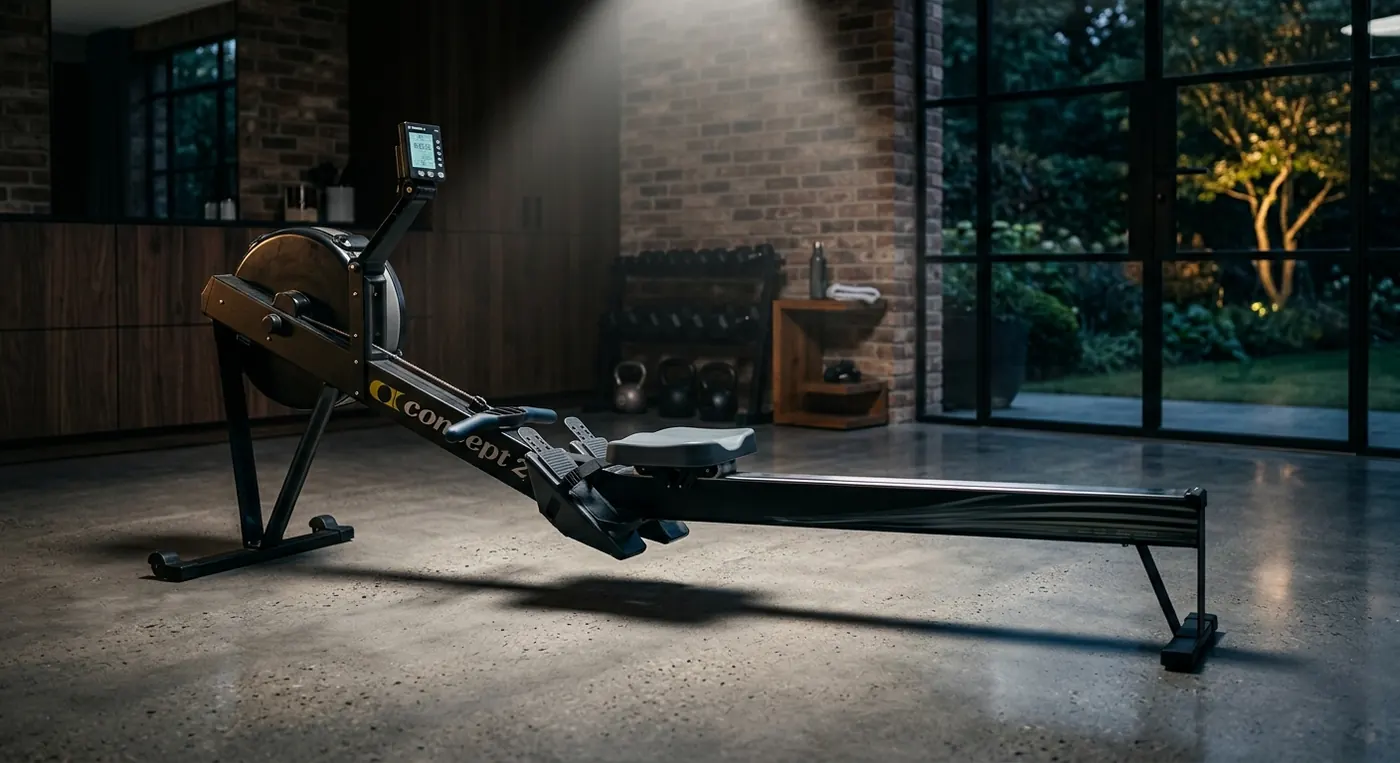
Best Rowing Machines for Home Use in 2026
The Concept2 RowErg is the best rowing machine of 2026. We scored 9 rowers on data, durability, and community; nothing has beaten it since 1981.
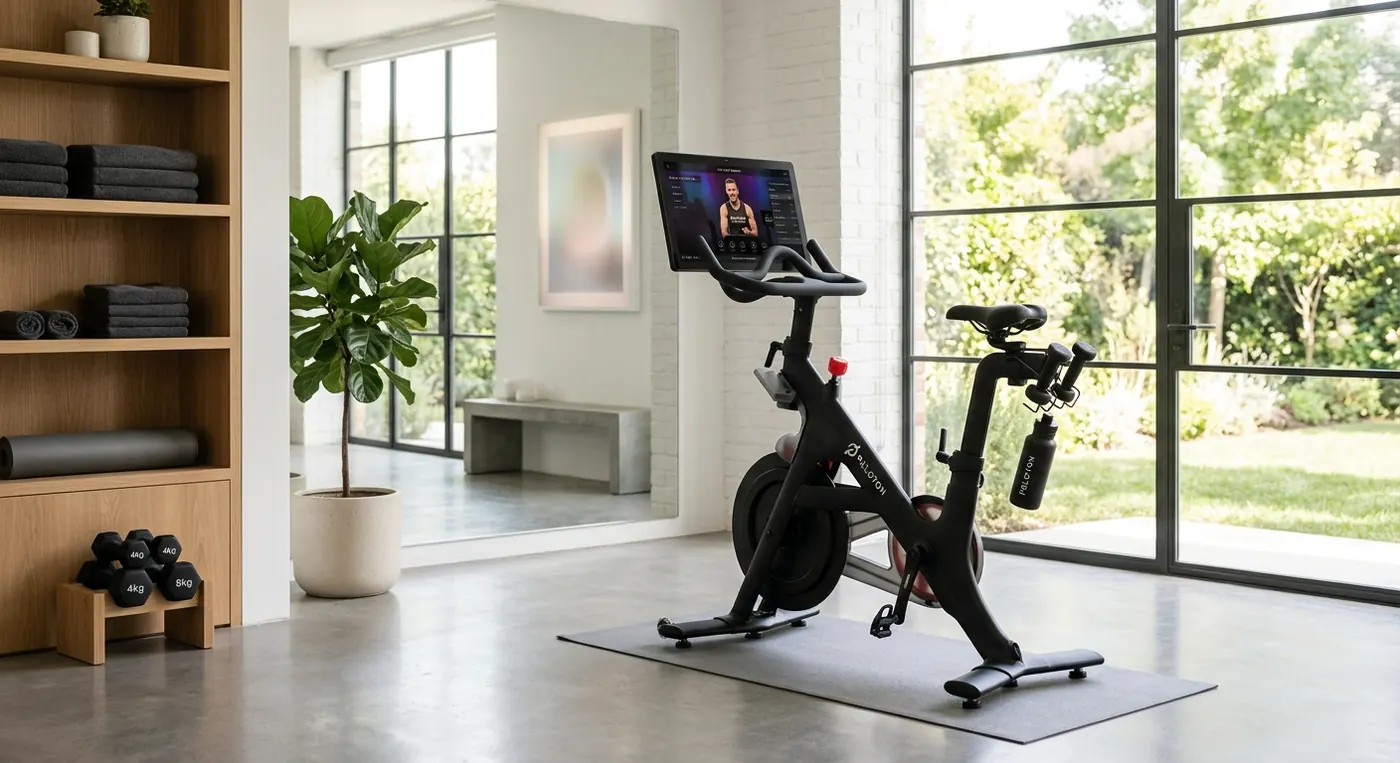
Best Exercise Bikes for Home Gym Use
The Schwinn IC4 is the best exercise bike under $1,000, with full Peloton-app support; Peloton Bike+ leads the premium tier. 11 bikes scored on ride feel.
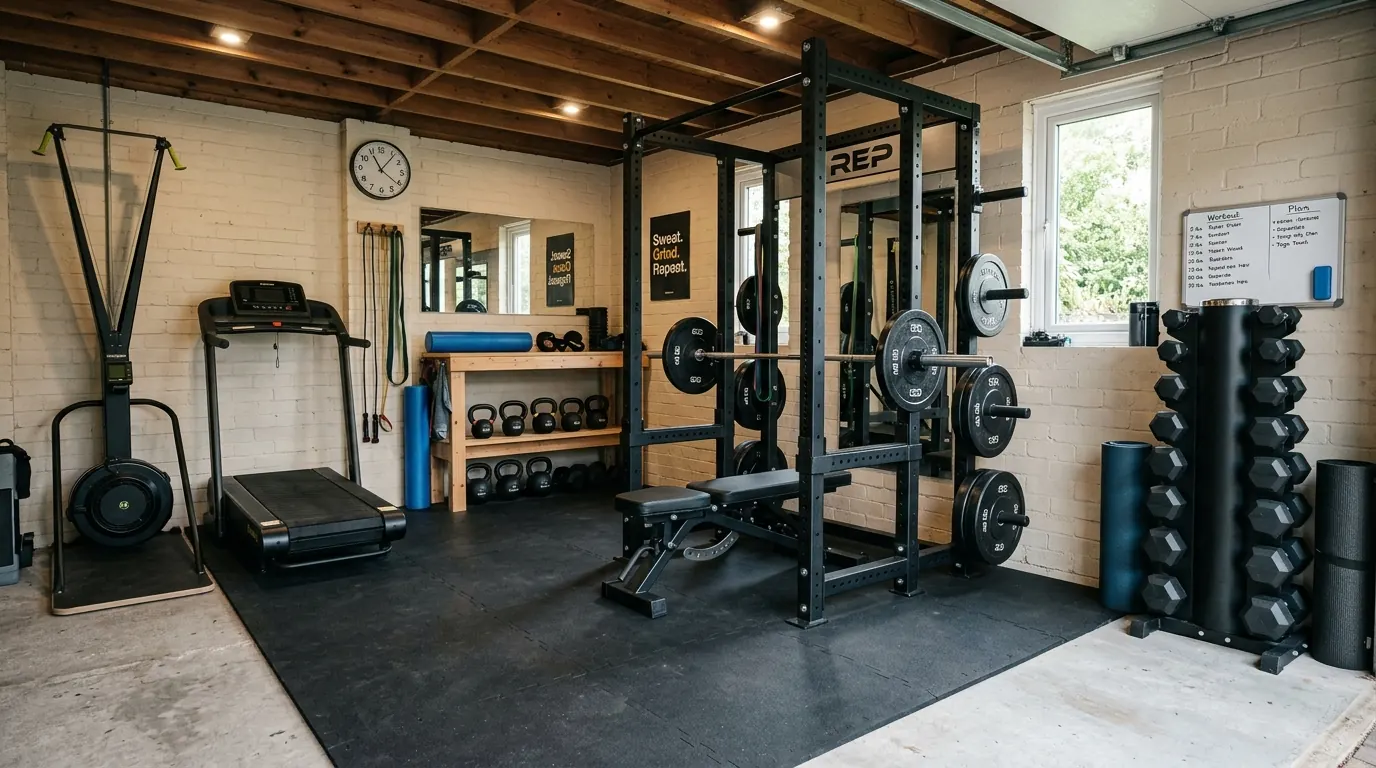
How to Build a Home Gym on Any Budget
Five complete home gym builds at $500, $1,500, $3,500, $7,500, and $15,000 - what to buy first, what to add later, and what to skip at every budget level.
Hilly Shore Labs
Editorial teamThe independent product research team behind GymScored. Every recommendation is researched, never hands-on tested — rankings come from manufacturer specifications, published standards, and aggregated buyer sentiment.
163 products scored across 26 home gym categories, each on the same 5-dimension Gym Score formula.
See the scoring methodology and who we are.
Affiliate disclosure: GymScored is a participant in the Amazon Services LLC Associates Program. We earn from qualifying purchases at no extra cost to you. Full disclosure →