Do You Actually Need Knee Sleeves for Lifting?
Whether you actually need knee sleeves for lifting at home: what the science says they do and don't do, plus how to pick a thickness without overpaying.
You do not need knee sleeves to lift, but many lifters like them. A neoprene sleeve adds warmth and light compression that makes heavy squats feel more comfortable and confident, especially in a cold home gym. What it does not do is make you stronger: a 2026 force-velocity-power study found no significant strength difference between sleeve densities, and a knee proprioception study found no benefit in healthy joints. So choose thickness for warmth and snugness, not for a strength promise. A 5mm sleeve, sized snug, suits almost everyone training at home.
How GymScored is paid: Amazon Associates commission plus brand-direct affiliate (Rogue / REP / Titan when approved). No sponsored placements, no paid reviews, no pay-to-rank. Picks are ranked by the Gym Score formula and nothing else. Read the full disclosure.
Buy knee sleeves for warmth, compression comfort, and confidence on heavy squats, not for a stronger lift. The research shows no measurable strength or proprioception benefit in healthy lifters, and thicker sleeves do not add more. A 5mm pair, sized snug, is the right first buy for almost everyone training at home.
Knee sleeve thickness: what each is actually for
Thickness changes warmth and snugness, not strength. Pick for how you train, then size snug.
| Thickness | Best for | Tradeoff |
|---|---|---|
| 3mm | CrossFit, high-rep, running, jumping | Least warmth and compression, easiest to move in |
| 5mm | General lifting (the default all-rounder) | Warm and snug without feeling like a cast |
| 7mm | Heavy, low-rep powerlifting-style squats | Warmest and tightest, but stiff for high reps |
The short version
Knee sleeves are a comfort and warmth tool, not a strength upgrade. If your knees feel cold, achy, or unsteady on squats, a snug neoprene sleeve adds warmth and a reassuring squeeze that helps many lifters move with more confidence. But no sleeve will meaningfully add to your max, and a thicker sleeve will not add more.
The controlled research shows no measurable strength or proprioception benefit in healthy lifters. So buy a sleeve for how it feels, not for what it promises, and skip the upsell to the thickest pair.
If you train at home, sleeves are one of the cheapest pieces of gear you can add to your lifting accessories. They are also one of the easiest to overbuy.
What knee sleeves actually do
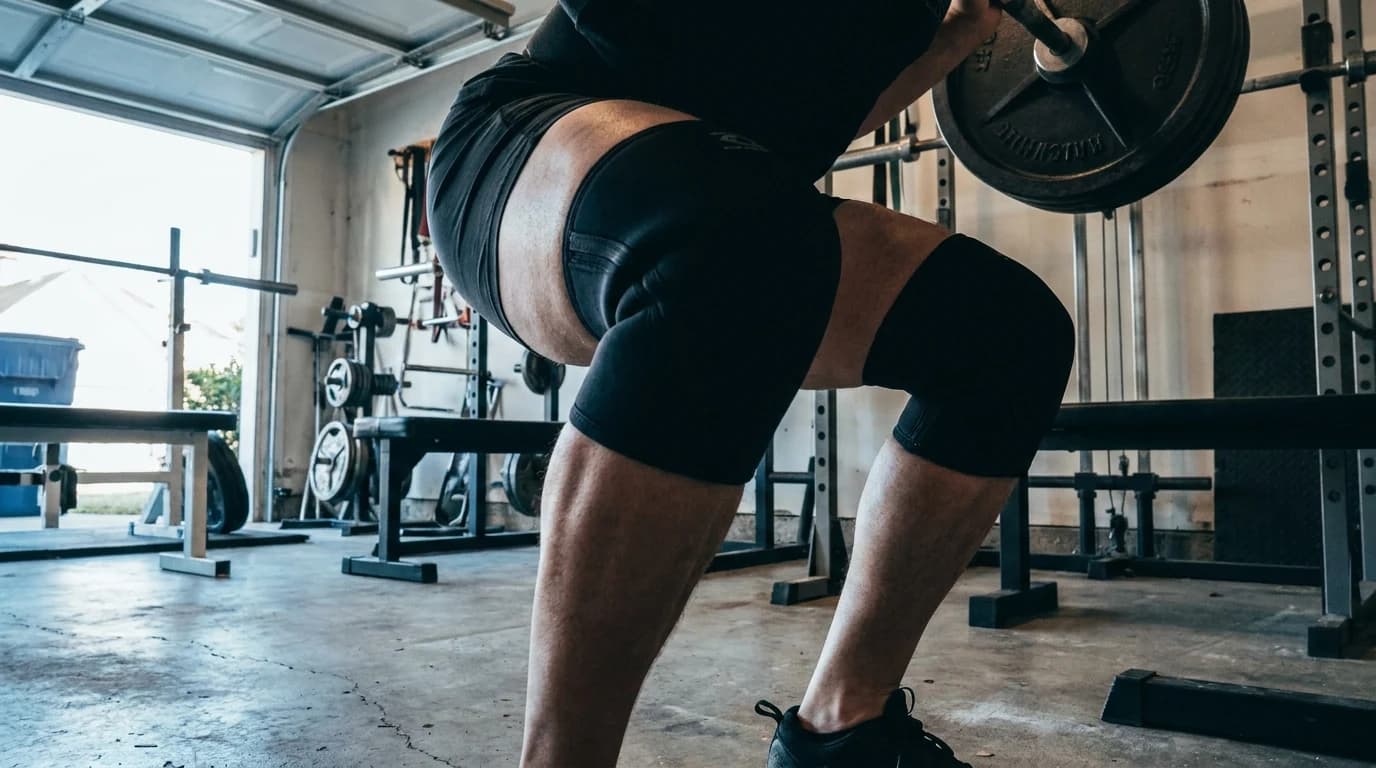
A knee sleeve is a cylinder of neoprene that you pull over the joint. It does three real things:
- Warmth. Neoprene traps heat around the joint, which is why sleeves feel best in a cold garage gym and on heavy squat days.
- Compression. The snug fit gives a light, even squeeze that many lifters describe as feeling more "stable," even though it is not adding mechanical support.
- Confidence. That warmth-plus-squeeze feeling can make a heavy single feel less daunting. Real, but psychological.
A sleeve is not a brace, and the rulebook says so
The International Powerlifting Federation rulebook is explicit: an approved sleeve "may not be such as to provide any appreciable support or rebound to the lifter's knees." That is the whole legal point of a sleeve versus a knee wrap — wraps store and return elastic energy out of the hole of a squat, sleeves do not.
Worth knowing: knee sleeves are gear for comfort and warmth. Knee wraps are gear for adding weight to a squat. If you are buying sleeves expecting a wrap's pop, you bought the wrong thing.
What the research does NOT support
This is where most product pages quietly mislead you. Three common claims do not hold up.
"Sleeves add to your lift"
A 2026 study in the Journal of Functional Morphology and Kinesiology put resistance-trained men through an incremental back squat in low-density versus high-density sleeves and modeled their full force-velocity-power profile. The result: no statistically significant differences in maximal force, velocity, or power between the two sleeve densities (p > 0.05, effect sizes d ≤ 0.37). Thicker stiffer sleeves trended very slightly higher but did not cross a meaningful threshold.
"Thicker (7mm) sleeves make you stronger than 5mm"
Same study, same answer. Density did not produce systematic performance changes. A 7mm sleeve is warmer and snugger, not a strength device.
"Sleeves improve your proprioception"
A study in The Knee tested knee braces and sleeves on healthy young athletes and found "no statistically significant change in the threshold of detection of passive knee movement" — concluding knee supports "do not influence either positively or negatively knee proprioception of uninjured active subjects." If your knees are healthy, a sleeve is not sharpening your sense of joint position.
Good reasons to buy a pair:
- Your gym is cold and your knees know it.
- Heavy squats leave the joint achy afterwards.
- The squeeze makes a max attempt feel less daunting.
Reasons that don't survive the data:
- You want a bigger squat out of the box.
- You think 7mm will do what 5mm won't.
- You want sharper joint awareness from a support.
So who should buy them?
| Your situation | Knee sleeves worth it? |
|---|---|
| Cold garage or basement gym | Yes, warmth alone is worth it |
| Heavy squats leave knees achy | Yes, compression and warmth feel good |
| You like the confidence on max attempts | Yes, the feeling is real even if the strength gain is not |
| You want a stronger squat | No, this is a programming and recovery problem, not a gear problem |
| Diagnosed knee injury or instability | Ask a clinician; a sleeve is not a brace |
| You train in a warm room, knees feel fine | Optional, mostly a comfort preference |
If your goal is a bigger squat, the lever is training, not neoprene. See progressive overload at home and how often to train each muscle.
How to choose thickness
Since thickness does not change strength, treat it as a warmth-and-snugness dial:
| Thickness | Best for | Tradeoff |
|---|---|---|
| 3mm | CrossFit, high-rep, running, jumping | Thin warmth, easy to move in, slips off less but compresses least |
| 5mm | General lifting, the all-rounder | The default — warm and snug without feeling like a cast |
| 7mm | Heavy, low-rep powerlifting-style squats | Warmest and tightest, but stiff and harder to bend in for high reps |
A 5mm pair is the right first buy for almost everyone training at home. Go 7mm only if you squat heavy and low-rep and like a very tight fit. Go 3mm if your training is fast and gymnastics-style.
Fit matters more than brand
A sleeve that is too loose does nothing, and one that is too tight cuts off circulation in five minutes. Measure your leg per the maker's chart — most use thigh circumference about 4 inches above the kneecap — and size down for a snug "you have to work to pull it on" fit, not up.
The trap: sizing up because the chart is borderline. A correctly sized 5mm sleeve feels firm, but should never leave your calf numb or your knee pins-and-needles by your third set.
Sleeves vs. wraps, in one line
- Sleeves: warmth, compression, comfort. Wear them set after set. Legal in raw/classic lifting. Do not add to your max.
- Wraps: elastic bands cranked tight per attempt to store and return energy. They genuinely add weight to a squat, they are uncomfortable, you loosen them between attempts, and they put you in the "equipped" class. Most home lifters do not need them.
The bottom line
Knee sleeves are a small, cheap, genuinely nice-to-have. Buy a 5mm pair if your knees are cold or achy or you just like the squeeze, size them snug, and ignore any claim that a thicker sleeve will move more weight — the data says it will not. For a closer look at one popular pair, see our Stoic knee sleeves review, and browse the full lifting accessories category for the rest of your kit.
Frequently Asked Questions
Do knee sleeves actually make you stronger?+
No, not meaningfully. A 2026 study in the Journal of Functional Morphology and Kinesiology compared low-density and high-density knee sleeves during incremental back squats and found no statistically significant differences in maximal force, velocity, or power (p > 0.05). Sleeves add warmth, compression, and confidence, but they are not a strength device. By rule, an approved sleeve may not provide any appreciable support or rebound, which is what separates it from a knee wrap.
Are 7mm knee sleeves better than 5mm?+
Not for strength. The same 2026 study found sleeve density did not produce systematic changes in force, velocity, or power. A 7mm sleeve is warmer and tighter, which suits heavy low-rep squatting, while 5mm is the comfortable all-rounder and 3mm is best for high-rep or athletic training. Choose thickness for warmth and snugness, not for a performance boost.
Do knee sleeves improve knee stability or joint awareness?+
Not in healthy knees. A study in The Knee tested braces and sleeves on uninjured young athletes and found no significant change in their ability to detect passive knee movement, concluding knee supports do not influence proprioception in uninjured subjects. The stable feeling sleeves give is largely warmth and compression, not improved joint awareness. If you have a diagnosed injury, talk to a clinician rather than relying on a sleeve.
What size knee sleeve should I buy?+
Measure your thigh circumference about 4 inches above the kneecap and follow the maker's chart, then favor a snug fit. A correctly sized sleeve takes effort to pull on and feels firm, but should never make your calf numb or your knee tingle by your third set. When between sizes, size down for compression, not up.
What is the difference between knee sleeves and knee wraps?+
Sleeves are neoprene cylinders worn for warmth and compression that do not add to your lift, and they are legal in raw and classic lifting. Wraps are elastic bands cranked tight before each attempt to store and return energy, genuinely adding weight to a squat but putting you in the equipped class. Most home lifters want sleeves, not wraps.
Sources & Research
- Effects of Knee Sleeve Density on Theoretical Neuromuscular Capacities Derived from the Force-Velocity-Power Profile in the Back Squat (J Funct Morphol Kinesiol, 2026; PMID 41718175)
- The effect of knee brace and knee sleeve on the proprioception of the knee in young non-professional healthy sportsmen (The Knee, 2013; PMID 23726648)
- IPF Technical Rules Book (January 2023) — Knee sleeve specifications: single-ply neoprene, max 7mm thickness, max 30cm length, no appreciable support or rebound
Your next step
Ready to buy sleeves?
Related reviews
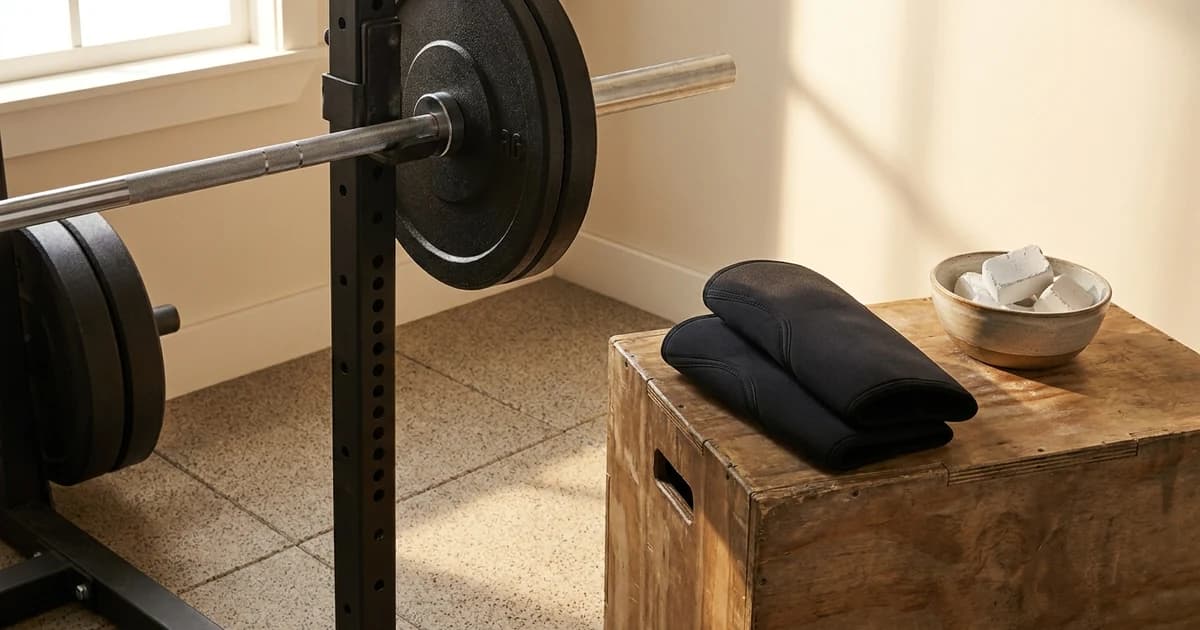
Stoic Knee Sleeves Review: Who Should Buy the 7mm Pair?
Stoic 7mm knee sleeves fit home-gym lifters on a budget. A researched review of the squat carryover, competition caveats, and who should skip the pair.
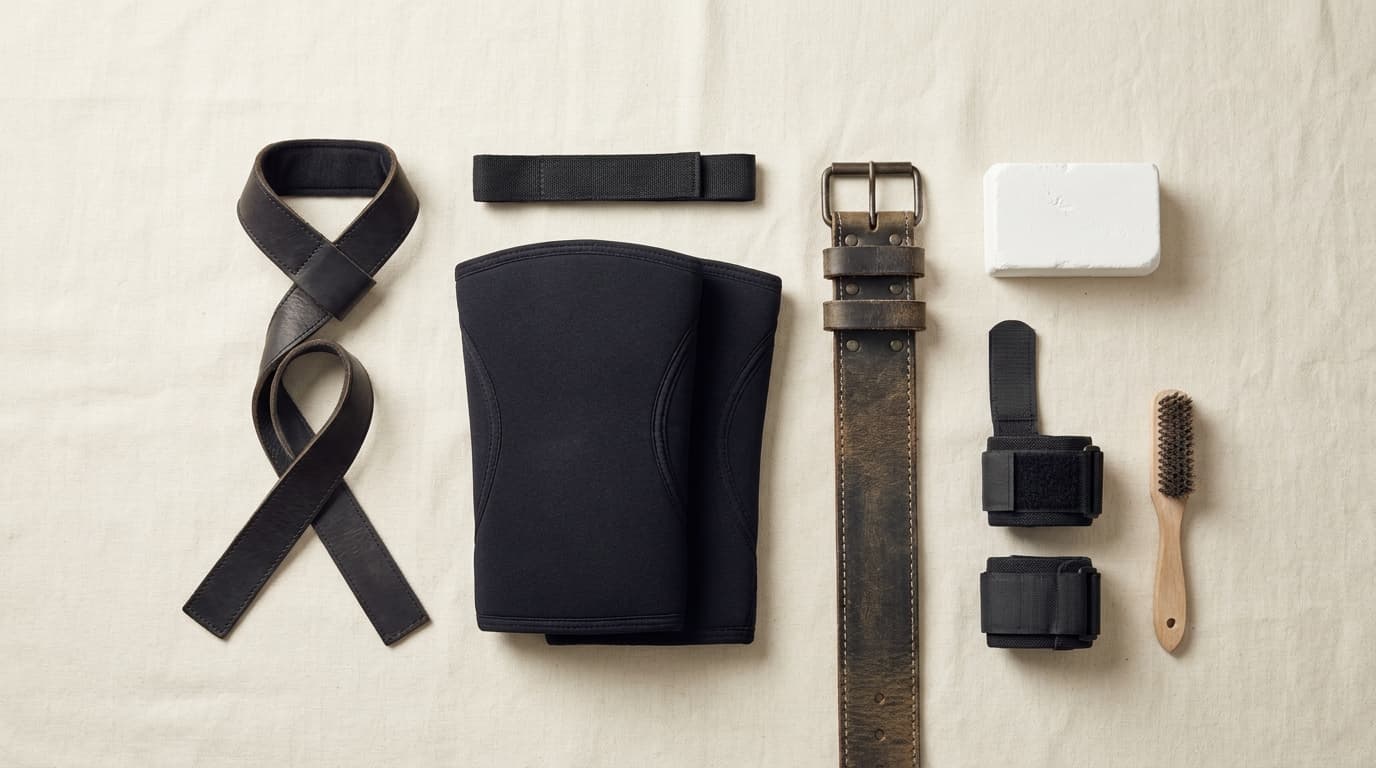
Best Lifting Accessories in 2026: Inzer Forever Wins
The Inzer Forever is the lifetime lifting belt; Element 26 makes the default wrist wraps. Seven lifting accessories scored on durability, function, value.
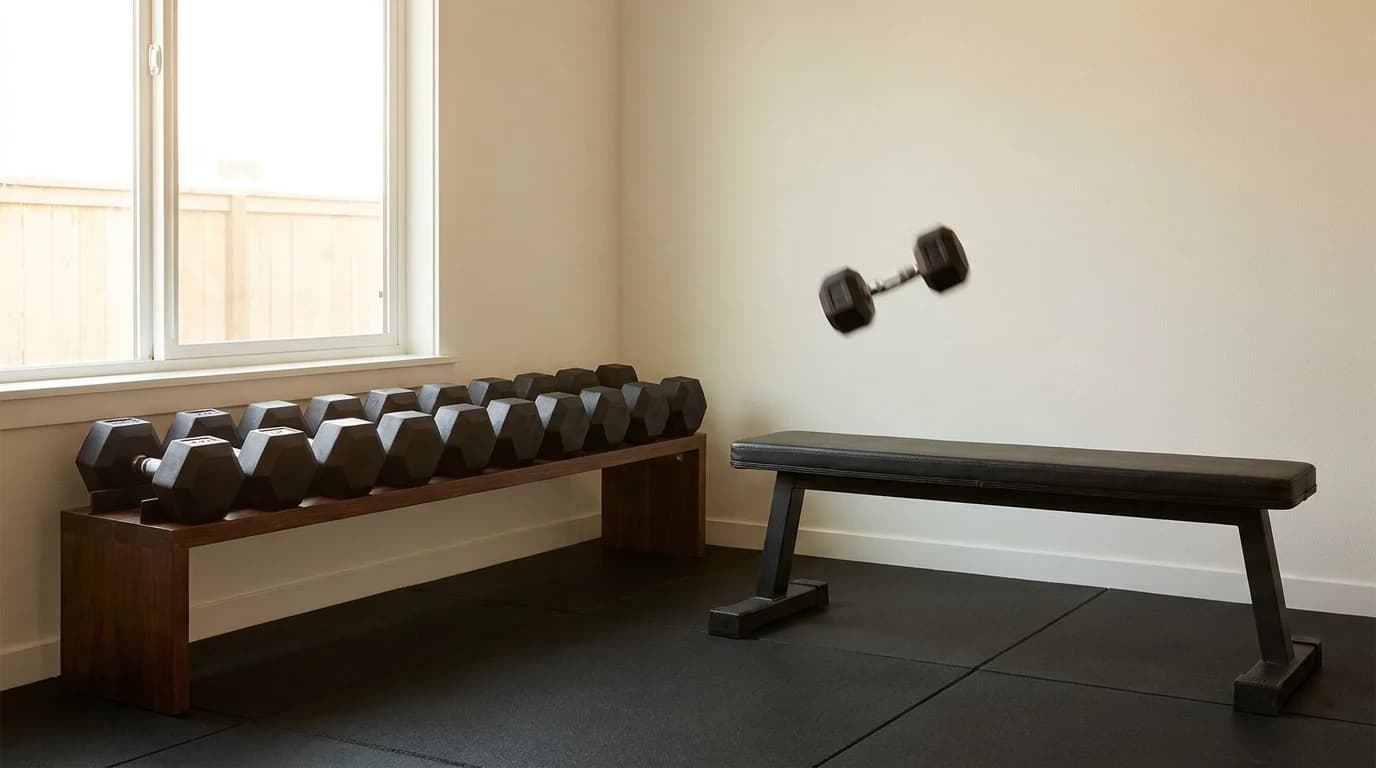
Progressive Overload at Home Without Adding Weight
Progressive overload without adding weight: progress with reps, sets, tempo, range, and rest when the next dumbbell jump is too big. The full method.
Hilly Shore Labs
Editorial teamThe independent product research team behind GymScored. Every recommendation is researched, never hands-on tested — rankings come from manufacturer specifications, published standards, and aggregated buyer sentiment.
163 products scored across 26 home gym categories, each on the same 5-dimension Gym Score formula.
See the scoring methodology and who we are.
Affiliate disclosure: GymScored is a participant in the Amazon Services LLC Associates Program. We earn from qualifying purchases at no extra cost to you. Full disclosure →