How Often Should You Train Each Muscle at Home?
About twice a week per muscle, says the research - but once weekly volume is equal, frequency barely matters. How to set your volume and split at home.
For most home lifters, train each major muscle group about twice a week. A 2016 volume-equated meta-analysis found 2x/week beats 1x/week for muscle growth. But a 2019 follow-up showed that once total weekly sets are equal, frequency itself does not significantly change growth. So set your weekly volume first (roughly 10+ hard sets per muscle for growth), then split it across two or more sessions. Frequency is a tool for distributing volume, not a magic dial. A 4-day Upper/Lower split is the easiest way to hit every muscle twice a week at home.
How GymScored is paid: Amazon Associates commission plus brand-direct affiliate (Rogue / REP / Titan when approved). No sponsored placements, no paid reviews, no pay-to-rank. Picks are ranked by the Gym Score formula and nothing else. Read the full disclosure.
Train each major muscle group about twice a week. Volume-equated research shows 2x/week beats 1x/week for growth, but once total weekly sets are matched, the exact frequency is a preference call. Set your weekly volume first, split it across two or more sessions, and pick a routine you can repeat. At home, a 4-day Upper/Lower split is the cleanest way to park every muscle at twice a week without a six-day commitment.
Quick answer: train each muscle 2x per week
For most home lifters, hitting each major muscle group about twice a week is the sweet spot. A 2016 meta-analysis (Schoenfeld, Ogborn & Krieger) of volume-equated studies found that training a muscle twice a week beats once a week for growth.
There is a catch most "optimal frequency" advice misses: once your weekly volume is matched, the exact number of days you split it across barely matters. Frequency is a tool for fitting your sets into the week, not a magic dial.
Key takeaways
- Twice a week is the floor for growth. Volume-equated research shows 2x/week per muscle produces superior hypertrophy to 1x/week.
- Frequency mostly distributes volume. A 2019 follow-up found that when total sets are equal, weekly frequency does not significantly change muscle growth — pick the split you will actually stick to.
- Volume is the real driver. More hard weekly sets per muscle means more growth, in a graded dose-response — roughly 0.37% more gain per added set.
- The minimum-effective dose is low. The CDC's muscle-strengthening guideline is just 2+ days a week covering all major groups — easy to clear at home.
- What the research does NOT support: that training a muscle 4, 5, or 6 times a week is inherently better than twice. The benefit comes from the volume those extra sessions add, not from the sessions themselves.
Why twice a week wins (and why three isn't clearly better)
The second growth window is the whole argument
Muscle protein synthesis — the building response to a hard session — is elevated for roughly 24 to 72 hours, then returns to baseline. Train a muscle once a week and it spends most of the week back at baseline. Hit it twice and you catch a second growth window. That is the mechanistic case behind the 2016 meta-analysis, which directly compared 1, 2, and 3 days per week on a volume-equated basis.
Worth knowing: the same authors' 2019 review concluded that once weekly volume is held constant, frequency itself is not the deciding factor. Higher frequency helps mainly because it lets you fit in more quality sets without grinding through 25 sets of chest in one brutal session.
| Frequency per muscle | Best for | Evidence verdict |
|---|---|---|
| 1x / week | Time-crunched maintenance | Works, but beaten by 2x for growth |
| 2x / week | Most people, beginner to intermediate | The reliable sweet spot |
| 3x+ / week | Advanced lifters spreading high volume | Fine, but no clear edge over 2x at equal volume |
How frequency, volume, and split fit together
Think of it as a budget. Your weekly volume per muscle (hard sets) is the spending limit; frequency is how many shopping trips you make to spend it. The dose-response review found growth keeps climbing with volume up to a point, so the priority order for a home program is:
1. Set weekly volume first. A practical starting range for growth is roughly 10 or more hard sets per muscle per week. Beginners grow on less; that is the floor, not a target everyone needs to max out.
2. Then divide by 2 (or more) sessions. Splitting 12 weekly sets into two 6-set sessions is gentler and lets each set stay high-quality versus cramming all 12 into one workout.
3. Pick a split you can repeat. The 2019 data says the split is a preference call once volume is set.
| Days you train | Practical split | Frequency per muscle |
|---|---|---|
| 2 | Two full-body days | ~2x everything |
| 3 | Full-body x3, or Push/Pull/Legs once | 2-3x / 1x |
| 4 | Upper/Lower x2 | ~2x everything |
| 5-6 | Push/Pull/Legs x2 | ~2x everything |
The default that fits a home gym
A home gym makes the 4-day Upper/Lower the easy default: it parks every major muscle at twice a week without demanding a six-day commitment.
What this means for a home setup
Movement patterns are how you distribute frequency
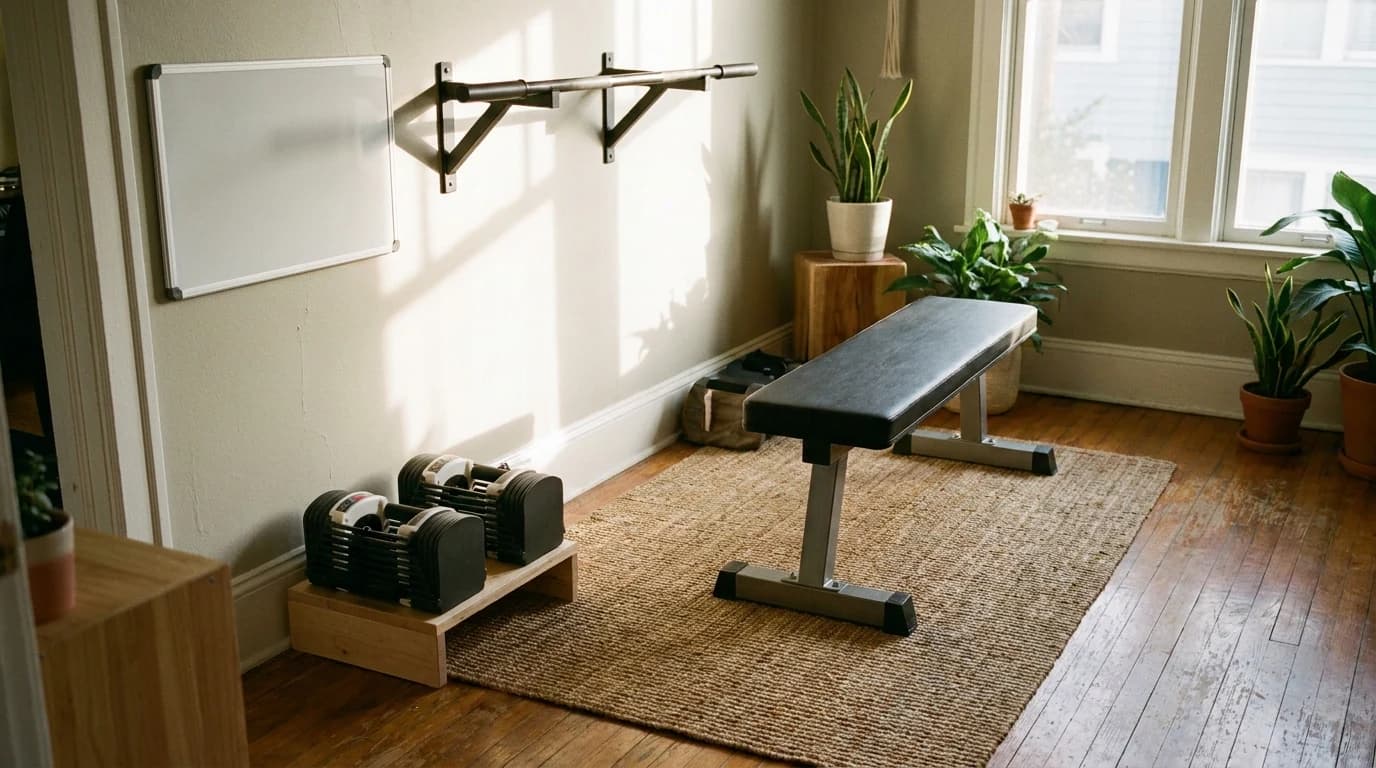
You do not need a commercial-gym machine wall to train each muscle twice a week. A compact kit covers the major movement patterns, and movement patterns are how you actually distribute frequency:
- Push — a flat weight bench plus adjustable dumbbells covers chest, shoulders, and triceps.
- Pull — a pull-up bar and dumbbell rows cover back and biceps.
- Legs — a loaded barbell in a power rack, or goblet squats with a kettlebell, cover quads, hamstrings, and glutes.
- Backup volume — resistance bands add cheap extra sets for arms and shoulders on a second weekly pass.
Run Upper one day and Lower the next, repeat twice across the week, and every group lands its two sessions. That is the whole program — no fancy frequency scheme required.
Recovery: the limit that frequency advice ignores
Frequency only helps if you recover between sessions. The same muscle needs roughly 48 hours before its next hard session, which is exactly why a 2x/week-per-muscle layout (with a rest day between repeats of the same group) works so well.
The trap: pushing to high daily frequency without managing total volume just trades growth for fatigue. The CDC's "2 or more days a week" is a floor for general health, not a ceiling — but for a busy home lifter, two well-recovered sessions per muscle beats six rushed ones.
What the research does and does not support
Supported:
- Two sessions per muscle per week outgrows one, at matched volume.
- More hard weekly sets per muscle produces more growth, along a graded dose-response.
- Once weekly sets are set, the split is a preference call.
Not supported:
- "More frequency always means more muscle." Not at equal volume. The 2019 meta-analysis is explicit on this.
- "You must train every muscle every day to grow." The evidence floor is twice a week, and even once a week produces real growth — just less than twice.
- "Once a week is enough to maximize growth." It is enough to maintain and to satisfy the CDC minimum, but the volume-equated data favors splitting your sets across two sessions.
Sources
- Schoenfeld, Ogborn & Krieger (2016), Sports Medicine — resistance training frequency and hypertrophy meta-analysis (PMID 27102172)
- Schoenfeld, Grgic & Krieger (2019), Journal of Sports Sciences — how many times per week should a muscle be trained (PMID 30558493)
- Schoenfeld, Ogborn & Krieger (2017), Journal of Sports Sciences — dose-response of weekly volume and muscle mass (PMID 27433992)
- CDC — Physical Activity Guidelines for Adults
Frequently Asked Questions
How many times per week should I train each muscle?+
About twice a week for most people. A 2016 meta-analysis of volume-equated studies found that training a muscle group twice a week produces superior growth to once a week. Beyond that, a 2019 review showed that once your total weekly sets are equal, training three or more times per week per muscle does not reliably add growth.
Is training a muscle once a week enough?+
Once a week builds real muscle and satisfies the CDC's minimum of two muscle-strengthening days per week across all major groups (you would just need two different sessions). But for maximizing growth, the research favors splitting your sets across two sessions per muscle rather than one.
Does frequency or volume matter more for muscle growth?+
Volume. The dose-response research shows muscle growth scales with the number of hard weekly sets per muscle. Frequency mainly helps by letting you fit that volume in without cramming every set into one exhausting session. Set your weekly volume first, then choose a frequency that distributes it comfortably.
What is the best home gym split for hitting each muscle twice a week?+
A 4-day Upper/Lower split is the cleanest option: two upper-body days and two lower-body days places every major muscle at roughly twice-weekly frequency without a six-day commitment. A 3-day full-body routine also works well for beginners and time-crunched lifters.
Sources & Research
- Effects of Resistance Training Frequency on Measures of Muscle Hypertrophy: A Systematic Review and Meta-Analysis — Schoenfeld, Ogborn & Krieger, Sports Medicine 2016 (PMID 27102172)
- How many times per week should a muscle be trained to maximize muscle hypertrophy? A systematic review and meta-analysis — Schoenfeld, Grgic & Krieger, Journal of Sports Sciences 2019 (PMID 30558493)
- Dose-response relationship between weekly resistance training volume and increases in muscle mass — Schoenfeld, Ogborn & Krieger, Journal of Sports Sciences 2017 (PMID 27433992)
- Physical Activity Guidelines for Adults — Centers for Disease Control and Prevention
Your next step
Hitting each muscle twice a week needs adjustable load.
Related reviews
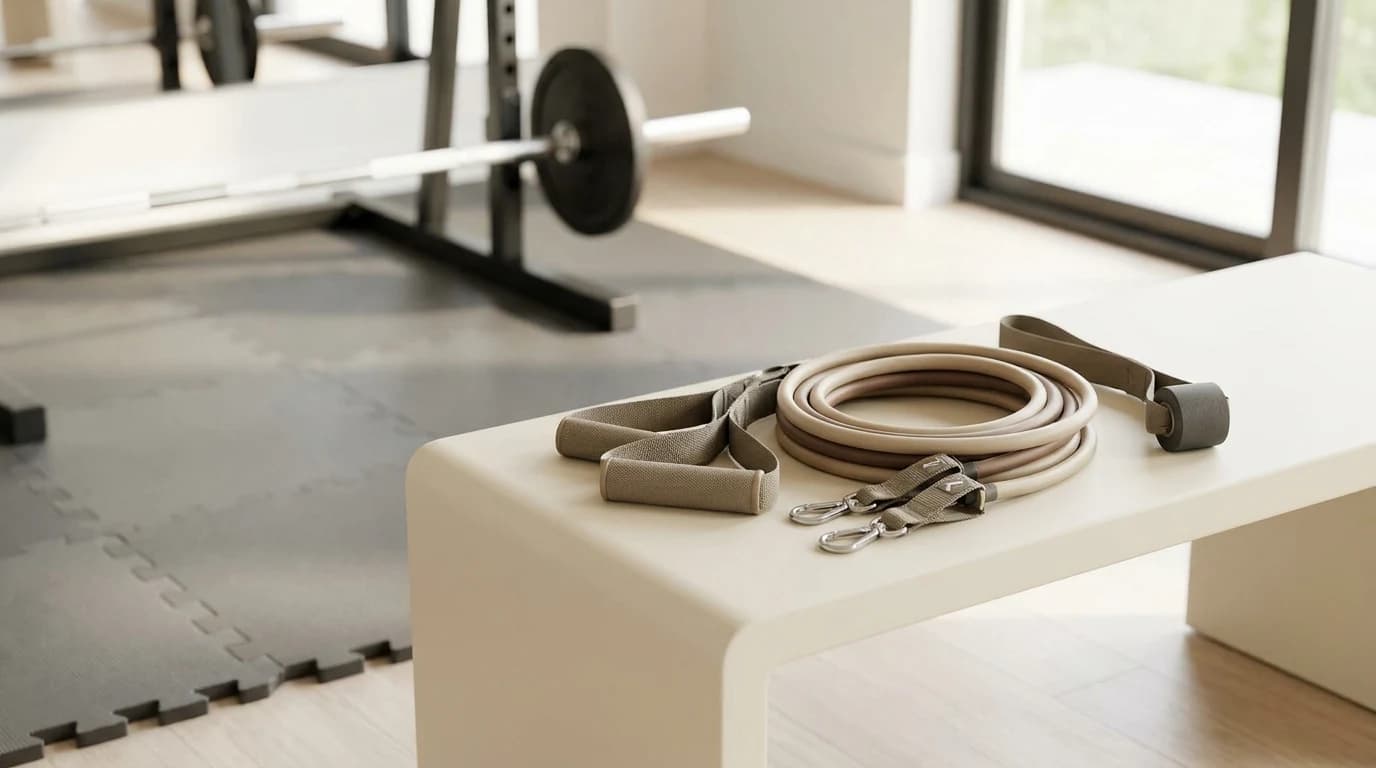
Do Resistance Bands Actually Build Muscle? The Science
Yes - meta-analyses show resistance bands match free weights for strength in most lifters. The evidence, the mechanism, the hard ceiling, and how to train.
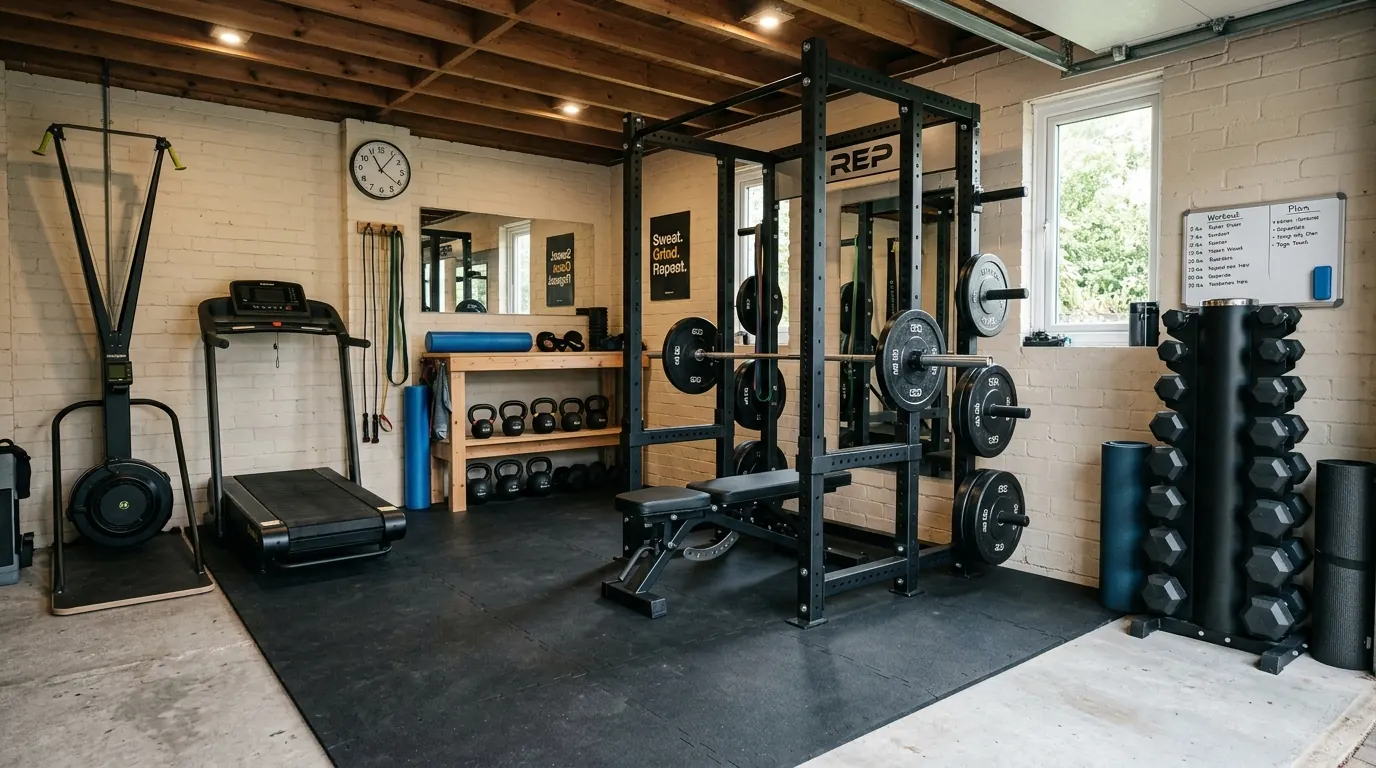
How to Build a Home Gym on Any Budget
Five complete home gym builds at $500, $1,500, $3,500, $7,500, and $15,000 - what to buy first, what to add later, and what to skip at every budget level.

How to Use Heart Rate Zones for Home Cardio (the Right Way)
Set heart rate zones from your max HR, spend most home cardio time moderate with some vigorous work, and skip the fat-burning-zone myth. The simple system.
Hilly Shore Labs
Editorial teamThe independent product research team behind GymScored. Every recommendation is researched, never hands-on tested — recommendations draw on manufacturer specifications and available published research. Category order is editorial; the Gym Score is a separate comparison aid.
170 listed products across 26 home gym categories. Scores use category criteria, value and owner-rating inputs; missing evidence limits what a score can tell you.
See the scoring methodology and who we are.
Affiliate disclosure: GymScored is a participant in the Amazon Services LLC Associates Program. We earn from qualifying purchases at no extra cost to you. Full disclosure →