How to Use Heart Rate Zones for Home Cardio (the Right Way)
Set heart rate zones from your max HR, spend most home cardio time moderate with some vigorous work, and skip the fat-burning-zone myth. The simple system.
Estimate your max heart rate as about 220 minus your age, then train by two bands: moderate at 50-70% of max and vigorous at 70-85% (per the American Heart Association). Spend most cardio in the moderate band and some vigorous to hit the CDC's weekly target of 150 minutes moderate OR 75 minutes vigorous. Use a chest strap for accurate zone tracking. Disregard the 'fat-burning zone' sticker on cardio machines: peak fat oxidation sits near 63% VO2max, but total energy burned over time, not the per-session fat-vs-carb ratio, drives fat loss.
How GymScored is paid: Amazon Associates commission plus brand-direct affiliate (Rogue / REP / Titan when approved). No sponsored placements, no paid reviews, no pay-to-rank. Picks are ranked by the Gym Score formula and nothing else. Read the full disclosure.
Set your zones off estimated max heart rate (about 220 minus your age). The American Heart Association puts moderate intensity at 50-70% of max HR and vigorous at 70-85%. Spend most of your cardio moderate and some vigorous to hit the CDC's 150-minutes-moderate-or-75-minutes-vigorous weekly target. Use a chest strap, not a wrist or grip sensor, to hold a zone accurately. And ignore the fat-burning-zone label: fat oxidation does peak at a moderate intensity (about 63% VO2max in trained men), but total calories burned over weeks, not the per-session fuel ratio, is what reduces stored fat.
Direct answer: use percent of max HR, not the "fat-burning zone"
Set your zones off your estimated max heart rate (about 220 minus your age), train most of your cardio at 50-70% (moderate) and some at 70-85% (vigorous), and ignore the "fat-burning zone" sticker on your machine. The American Heart Association puts moderate intensity at 50-70% of max HR and vigorous at 70-85%. A chest strap like the Polar H10 reads accurately enough to actually hold a zone; wrist optical sensors drift during intervals. That is the whole system. The rest is knowing how much time to spend where.
Key takeaways
- Estimate max HR as 220 minus your age. It is a rough average, not a personal measurement, but it is good enough to set zones.
- Moderate = 50-70% of max HR. Vigorous = 70-85%. Per AHA. These are the only two intensity bands you need to manage.
- Hit the CDC weekly target: 150 min moderate OR 75 min vigorous per week. Vigorous counts double, so the budgets are interchangeable.
- A chest strap beats a wrist monitor for zone work. Optical wrist sensors lag and undershoot during rapid HR changes; a strap tracks the chest electrical signal directly.
- What the research does NOT support: the idea that you must stay in a low "fat-burning zone" to lose fat. Total energy burned, not the fat-vs-carb fuel ratio, drives fat loss over time.
How to set your zones in two minutes
You do not need a lab test to start. Use the age formula, then anchor to two bands.
| Step | What to do | Example (age 40) |
|---|---|---|
| 1. Estimate max HR | 220 minus your age | 220 - 40 = 180 bpm |
| 2. Moderate zone | 50-70% of max | 90-126 bpm |
| 3. Vigorous zone | 70-85% of max | 126-153 bpm |
| 4. Easy/recovery | below 50% | under 90 bpm |
The AHA's own chart lands in the same place: a 40-year-old's target zone is 90-153 bpm against a 180 bpm max. If you want a more personal number, the heart-rate-reserve (Karvonen) method factors in your resting HR, but for home cardio the age formula is enough to start.
If the number and your breathing disagree, trust your breathing. Moderate should let you talk but not sing. Vigorous should not let you hold a conversation.
How much time to spend in each zone
Spend against the weekly budget
The CDC recommendation is the budget you are spending against: 150 minutes of moderate-intensity OR 75 minutes of vigorous-intensity aerobic activity per week, plus 2 days of strength work. Vigorous minutes count double, so the two budgets are interchangeable.
- Mostly moderate (Zone 2-ish): 5 sessions of 30 min on a treadmill, bike, or rower at a pace where you can talk but not sing. Easiest to recover from; do the bulk here.
- A little vigorous: 2-3 short sessions where you are breathing too hard to hold a conversation. Three 25-min vigorous sessions clears the entire weekly aerobic target.
- Recovery/easy: anything below 50% max. It does not count toward the target, but it is not wasted either.
A week that clears the target
Three 30-min moderate sessions plus two 20-min harder sessions covers the guideline with room to spare.
The "fat-burning zone" myth, killed with the actual data
Cardio machines label a low-intensity band the "fat-burning zone" because at low intensity a higher percentage of the calories you burn comes from fat. That part is true. The conclusion drawn from it is wrong.
The part of the claim that is real
Fat oxidation does peak at a moderate intensity. In a study of trained men, maximal fat oxidation occurred at about 63% of VO2max and then fell off as intensity climbed toward maximum (Achten and Jeukendrup, 2003). So there is a real intensity where you burn fat fastest per minute.
What the fat-oxidation data actually establishes:
- There is an intensity at which fat is burned fastest per minute, and it sits in the moderate range rather than the easy one.
- Fuel mix genuinely shifts with intensity, so the label on the console is not made up.
- The effect was measured within single exercise bouts, which is the window it describes.
What it does not establish, despite the sticker:
- It is about fuel mix during the session, not bodyfat over weeks. Burning a higher fraction of fat in one workout does not mean you end the month leaner.
- Higher intensity burns more total calories in less time. A larger total deficit, sustained over weeks, is what reduces stored fat, regardless of which fuel powered any single session.
- The "zone" is narrow and individual. The same study found a large person-to-person spread in where peak fat oxidation sits, so a one-size sticker on a treadmill cannot find yours.
The trap: picking workouts to stay inside a low "fat-burning" band usually just means doing easier, shorter cardio. Train at an intensity you can sustain and repeat, accumulate the weekly minutes, and the fuel ratio takes care of itself.
What gear you actually need
A monitor that holds a reading, and nothing else
You need exactly one thing to train by heart rate: a monitor that holds a reading during effort changes.
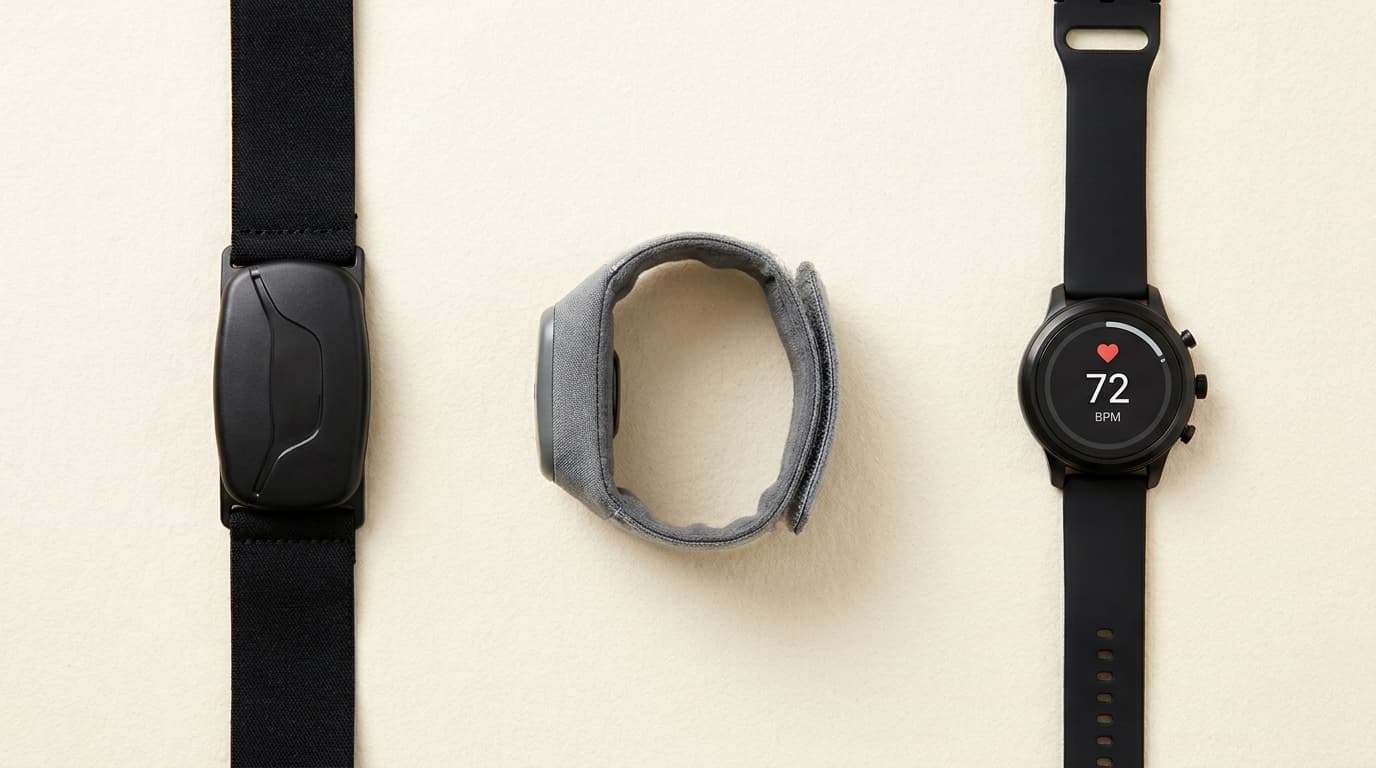
- Chest strap (recommended): A Polar H10 or the budget Polar H9 reads the chest's electrical signal and stays accurate through intervals. Best choice for zone work.
- Sport watch: A Polar Vantage V3 bundles GPS, zone alerts, and recovery metrics if you want one device. Optical wrist HR is fine for steady-state but undershoots during fast changes.
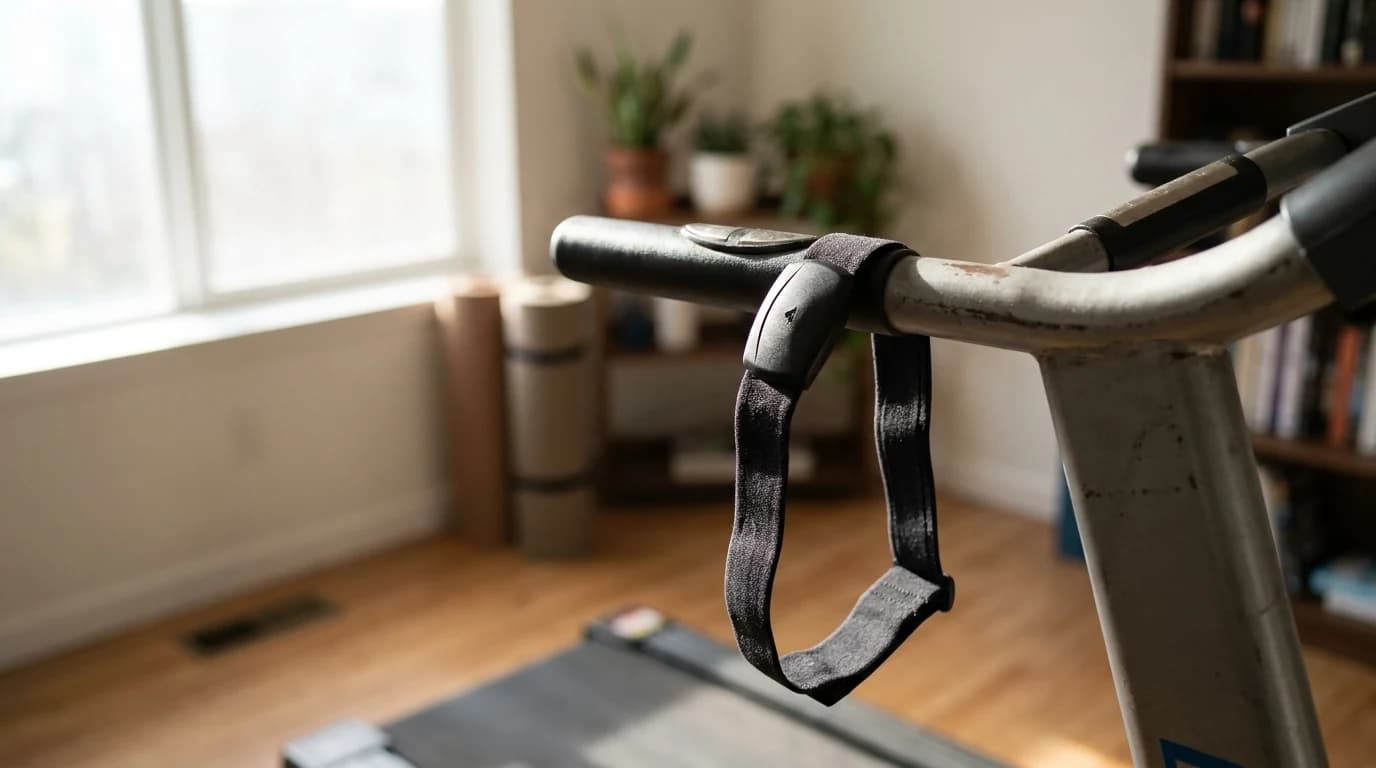
- Skip: machine grip sensors. They force you to hold the handles, sample intermittently, and read low. They are a rough check, not a training tool.
If you are choosing a device, our heart rate monitors guide ranks straps and watches on accuracy and connectivity.
Common mistakes
- Treating 220 minus age as exact. It is an average with real scatter. Use it to start, then adjust by feel: moderate should let you talk, vigorous should not.
- Living in one zone. All-easy never challenges the system; all-hard never lets you recover. Split moderate and vigorous across the week.
- Chasing a HR number on a wrist sensor mid-interval. The lag makes you push too hard correcting for a stale reading. Use a strap or judge by breathing.
Sources
- American Heart Association, Target Heart Rates Chart (50-70% moderate, 70-85% vigorous, max HR about 220 minus age)
- CDC, Physical Activity Guidelines for Adults (150 min moderate OR 75 min vigorous weekly, plus 2 days strength)
- Achten J, Jeukendrup AE. Maximal fat oxidation during exercise in trained men. Int J Sports Med, 2003 (PMID 14598198) — maximal fat oxidation at about 63% VO2max, declining toward high intensity
Frequently Asked Questions
How do I calculate my heart rate zones?+
Estimate your maximum heart rate as about 220 minus your age, then take 50-70% of that for the moderate zone and 70-85% for the vigorous zone, following American Heart Association guidance. For a 40-year-old that is a max near 180 bpm, a moderate zone of roughly 90-126 bpm, and a vigorous zone of roughly 126-153 bpm.
Is the fat-burning zone real?+
Partly. Fat oxidation genuinely peaks at a moderate intensity (about 63% of VO2max in trained men in a 2003 study) and a higher percentage of calories comes from fat at low intensity. But that is about which fuel you burn during the session, not how much bodyfat you lose over weeks. Higher intensity burns more total calories in less time, and total energy deficit over time is what reduces stored fat.
Do I need a chest strap or is a wrist monitor fine?+
For zone training a chest strap like the Polar H10 is better because it reads the chest's electrical signal and stays accurate during rapid intensity changes. Optical wrist sensors lag and undershoot during intervals, though they are acceptable for steady-state cardio. Machine grip sensors are the least reliable and should be treated as a rough check only.
How much heart-rate-zone cardio should I do per week?+
The CDC recommends 150 minutes of moderate-intensity OR 75 minutes of vigorous-intensity aerobic activity per week, plus muscle-strengthening on 2 days. Vigorous minutes count double, so the budgets are interchangeable. A practical week is three 30-minute moderate sessions plus two 20-minute vigorous ones.
Sources & Research
Your next step
Need a strap or watch to train the zones?
Related reviews
Best Heart Rate Monitors in 2026: Polar H10 Wins
The Polar H10 chest strap is the best heart rate monitor of 2026; Garmin owners should buy the HRM 200 and the COOSPO H6 is the budget answer. Five monitors scored.
Best Treadmill for Home Runners in 2026
The NordicTrack Commercial 1750 is the best running treadmill of 2026; the T Series 10 is the value runner and the MERACH is the incline pick. Seven decks scored.
How to Build a Home Gym on Any Budget
Five complete home gym builds at $500, $1,500, $3,500, $7,500, and $15,000 - what to buy first, what to add later, and what to skip at every budget level.
Hilly Shore Labs
Editorial teamThe independent product research team behind GymScored. Every recommendation is researched, never hands-on tested — rankings come from manufacturer specifications, published standards, and aggregated buyer sentiment.
163 products scored across 26 home gym categories, each on the same 5-dimension Gym Score formula.
See the scoring methodology and who we are.
Affiliate disclosure: GymScored is a participant in the Amazon Services LLC Associates Program. We earn from qualifying purchases at no extra cost to you. Full disclosure →