Do Resistance Bands Actually Build Muscle? The Science
Yes - meta-analyses show resistance bands match free weights for strength in most lifters. The evidence, the mechanism, the hard ceiling, and how to train.
Yes. A 2019 meta-analysis of 8 studies found no significant difference in strength gains between elastic resistance bands and conventional weights for upper-limb (p=0.52) or lower-limb (p=0.48) strength. Bands build real muscle for beginners through intermediates. They only fall short at the top end, where advanced lifters need loads stacked tubes can't deliver.
How GymScored is paid: Amazon Associates commission plus brand-direct affiliate (Rogue / REP / Titan when approved). No sponsored placements, no paid reviews, no pay-to-rank. Picks are ranked by the Gym Score formula and nothing else. Read the full disclosure.
Yes, for most people. A 2019 meta-analysis of 8 studies found no significant difference in strength gains between bands and free weights (upper limb p=0.52, lower limb p=0.48). Bands build real muscle through tension and progressive overload. The limit is the top end: advanced lifters chasing a maximal barbell total eventually need loads stacked tubes can't deliver.
Quick answer: yes, for most people
Resistance bands build real muscle and strength for most home lifters. A 2019 meta-analysis of 8 studies (Lopes et al., SAGE Open Medicine) found no significant difference in strength gains between elastic bands and conventional weights for either the upper body (SMD = 0.09, p = 0.52) or lower body (SMD = -0.11, p = 0.48). In plain terms: across the pooled trials, neither method won. Where bands fall short is the top end — advanced lifters chasing maximal strength eventually need loads that stacked tubes can't deliver.
Key takeaways
- Strength gains are statistically tied with free weights in the published trials, for beginners through intermediates.
- The mechanism is tension and progressive overload, not the tool. Muscle responds to a hard enough stimulus repeated over time, whether that tension comes from steel or rubber.
- Bands have a hard ceiling. Once you outgrow ~150 lb of stacked tube tension on compound lifts, adding load gets awkward, and the ACSM's progression model calls for steady 2-10% load jumps you eventually can't make with bands alone.
- They cover the CDC's strength half easily. Two band sessions a week clears the muscle-strengthening guideline (2+ days/week) for nearly everyone.
- What the research does NOT support: the claim that bands are equivalent to a barbell for an advanced lifter trying to add 100 lb to a squat. The trials that showed parity used beginner-to-intermediate populations and submaximal loads.
What the research actually shows
The headline study is Lopes et al. (2019), a systematic review and meta-analysis registered with PROSPERO (CRD42016042152). It pooled 8 controlled trials comparing elastic resistance (tubes and Thera-Bands) against conventional devices (weight machines and dumbbells), measuring muscular strength.
| Outcome | Standardized mean difference | 95% CI | p-value | Verdict |
|---|---|---|---|---|
| Upper-limb strength | 0.09 | -0.18 to 0.35 | 0.52 | No difference |
| Lower-limb strength | -0.11 | -0.40 to 0.19 | 0.48 | No difference |
A confidence interval that straddles zero with a p-value near 0.5 means the data could not distinguish the two methods. The authors' conclusion is direct: elastic resistance "is able to promote similar strength gains to conventional resistance training, in different population profiles and using diverse protocols."
A second meta-analysis lands in the same place
de Lima et al. (2020, Physical Therapy) pooled 8 trials on 332 people with COPD and found elastic resistance training produced benefits similar to conventional resistance training for muscle strength. Two independent reviews, same finding: the rubber works.
The honest framing: "similar strength gains" is a real, replicated result — but it was measured in beginners, older adults, and clinical populations using moderate loads. That is exactly who most home-gym buyers are. It is not a study of powerlifters.
Why bands build muscle (the mechanism)
Muscle doesn't know what's pulling on it
It responds to mechanical tension held through a challenging range, repeated to near-fatigue, progressed over weeks. That's the stimulus. A barbell delivers it with gravity; a band delivers it with stored elastic energy. The ACSM progression position stand frames the requirement as progressive overload — novices growing on 8-12 rep-max loads, advancing toward heavier work over time — and bands satisfy that requirement until the loads get very high.
Ascending resistance is the one real difference
Tension increases as the band stretches, so the hardest point is at full contraction — the opposite of a free weight, where leverage is often worst at the bottom. For most movements this is a feature, not a bug, and it's why band work feels different from dumbbells even at matched difficulty.
Where bands win and where they fall short
The parity finding has limits worth naming plainly.
Bands are genuinely enough for:
- General health and the CDC's twice-weekly strength guideline
- Hypertrophy in the beginner-to-intermediate range
- Rehab and older-adult training, where the trials were run
- Travel and compact setups where a rack is not an option
Bands fall short for:
- Maximal strength at the top end. A serious squatter or deadlifter needs hundreds of pounds. Stacked tube systems top out around 150 lb of combined tension — fine for presses, rows, and curls, short for heavy lower-body compounds.
- Precise, repeatable load steps. ACSM's model calls for 2-10% jumps once you can beat a target by a rep or two. Plates let you add 2.5 lb cleanly; bands jump in coarser increments and the tension-per-stretch curve makes "exactly +5%" hard to dial in.
- Loaded eccentrics and pause work, which are harder to control with elastic recoil pulling you back.
The trap: reading "similar strength gains" as "bands replace heavy iron forever." None of the shortfalls above matter for general health or the beginner-to-intermediate range. They matter a lot if your goal is a competition total.
How to actually train with bands
If you're buying bands to build muscle, train them like weights, not like a warm-up:
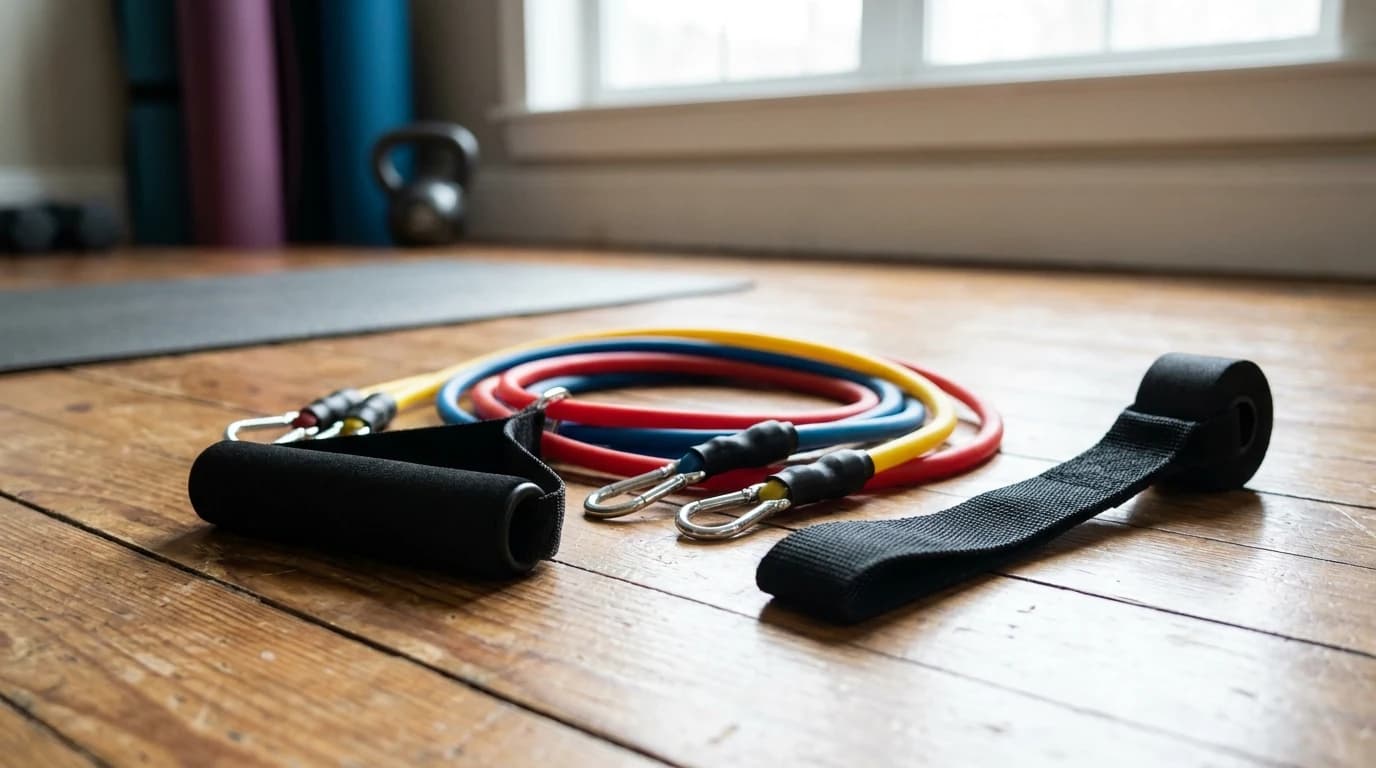
- Pick a system with stackable tension. A kit like the Bodylastics stackable set clips multiple tubes to one handle so you can climb to ~150 lb — enough to keep most lifts in a hard 8-12 rep zone.
- Anchor for the big patterns. A door anchor unlocks rows, pulldowns, and presses, which is where most of your muscle-building volume should live. Browse the full lineup on the resistance bands category page.
- Progress on purpose. Add a band, shorten your stance, or slow the eccentric when a weight gets easy — that's your version of adding a plate.
- Train 2+ days a week to clear the CDC strength guideline, and take most sets close to failure.
Bottom line
For beginners, intermediates, older adults, rehab, and anyone building a compact or travel-friendly setup, bands build muscle on par with weights in the published evidence — and they cost a fraction of a rack. The one group the research does not cover is advanced lifters chasing a maximal barbell total; for them, bands are a supplement, not a substitute. Buy the bands, train them hard, and add iron later only if your goals demand the load.
Sources
- Lopes JSS, et al. Effects of training with elastic resistance versus conventional resistance on muscular strength: A systematic review and meta-analysis. SAGE Open Medicine, 2019. PMID 30815258 (PMCID PMC6383082).
- de Lima FF, et al. Elastic Resistance Training Produces Benefits Similar to Conventional Resistance Training in People With Chronic Obstructive Pulmonary Disease: Systematic Review and Meta-Analysis. Physical Therapy, 2020. PMID 32750124.
- American College of Sports Medicine. Position Stand: Progression Models in Resistance Training for Healthy Adults. Med Sci Sports Exerc, 2009. PMID 19204579.
- Centers for Disease Control and Prevention. Physical Activity Guidelines for Adults.
Frequently Asked Questions
Do resistance bands build muscle as well as weights?+
For most people, yes. A 2019 systematic review and meta-analysis of 8 controlled trials found no statistically significant difference in strength gains between elastic resistance and conventional weights. The gap only appears for advanced lifters chasing maximal loads that bands can't supply.
How much resistance do bands provide?+
Stackable tube systems clip multiple bands to one handle and reach roughly 150 lb of combined tension. That covers presses, rows, curls, and pulldowns in a hard rep range, but falls short of the hundreds of pounds a heavy squat or deadlift demands.
Can you only use bands to build a physique?+
Beginners and intermediates can build noticeable muscle with bands alone by training to near-failure 2+ days a week and progressing the tension. Advanced lifters typically need to add free weights for continued maximal-strength gains.
Why does band tension feel different from dumbbells?+
Bands provide ascending resistance: tension rises as the band stretches, so the hardest point is at full contraction. Free weights are often hardest at the bottom of a movement. Same muscle stimulus, different resistance curve.
Sources & Research
- Effects of training with elastic resistance versus conventional resistance on muscular strength: A systematic review and meta-analysis (Lopes et al., 2019)
- Elastic Resistance Training Produces Benefits Similar to Conventional Resistance Training in People With COPD (de Lima et al., 2020)
- ACSM Position Stand: Progression Models in Resistance Training for Healthy Adults (2009)
- CDC Physical Activity Guidelines for Adults
Your next step
Ready to pick a band set?
Related reviews
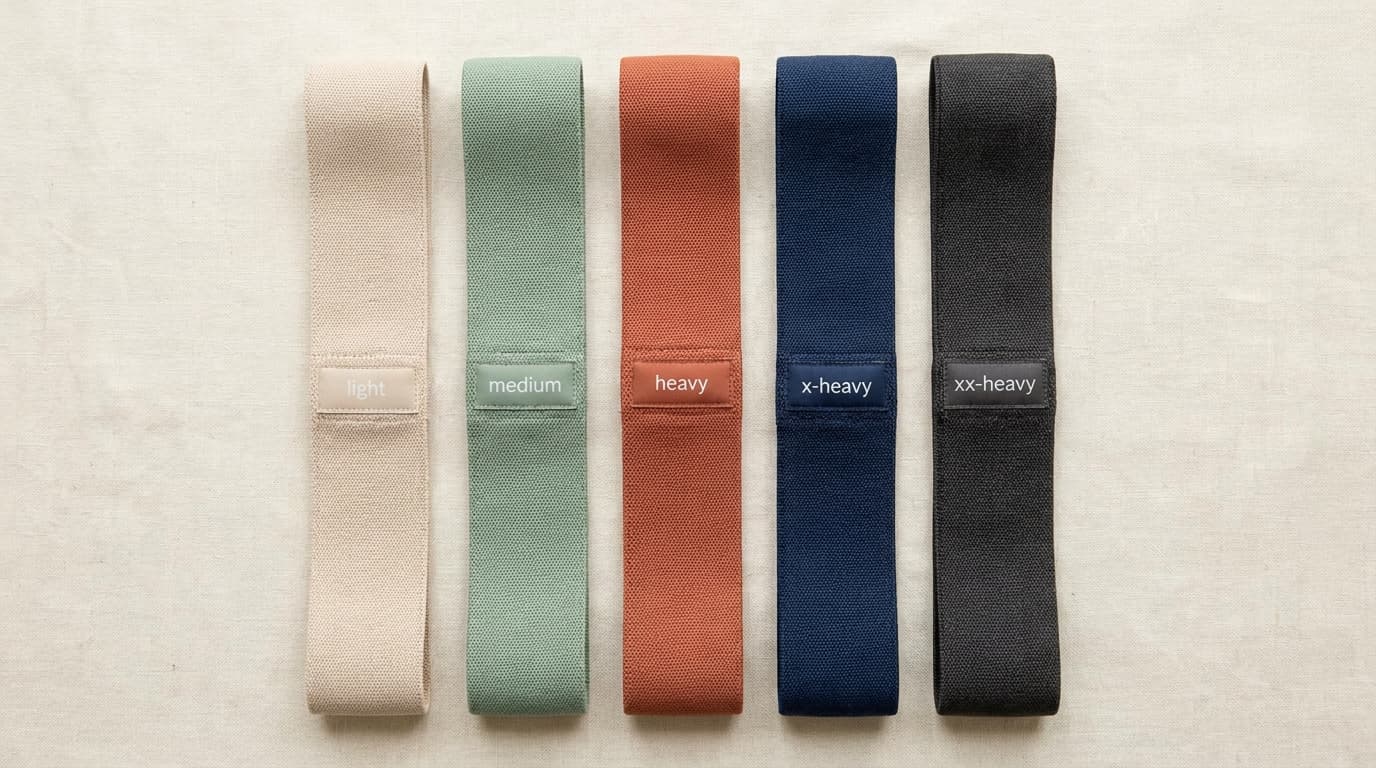
Best Resistance Bands for Home Gyms in 2026: Bodylastics Wins
Bodylastics wins best resistance bands for home gyms with its stackable tube system; Rogue Echo tops premium loops. Six systems ranked on durability.
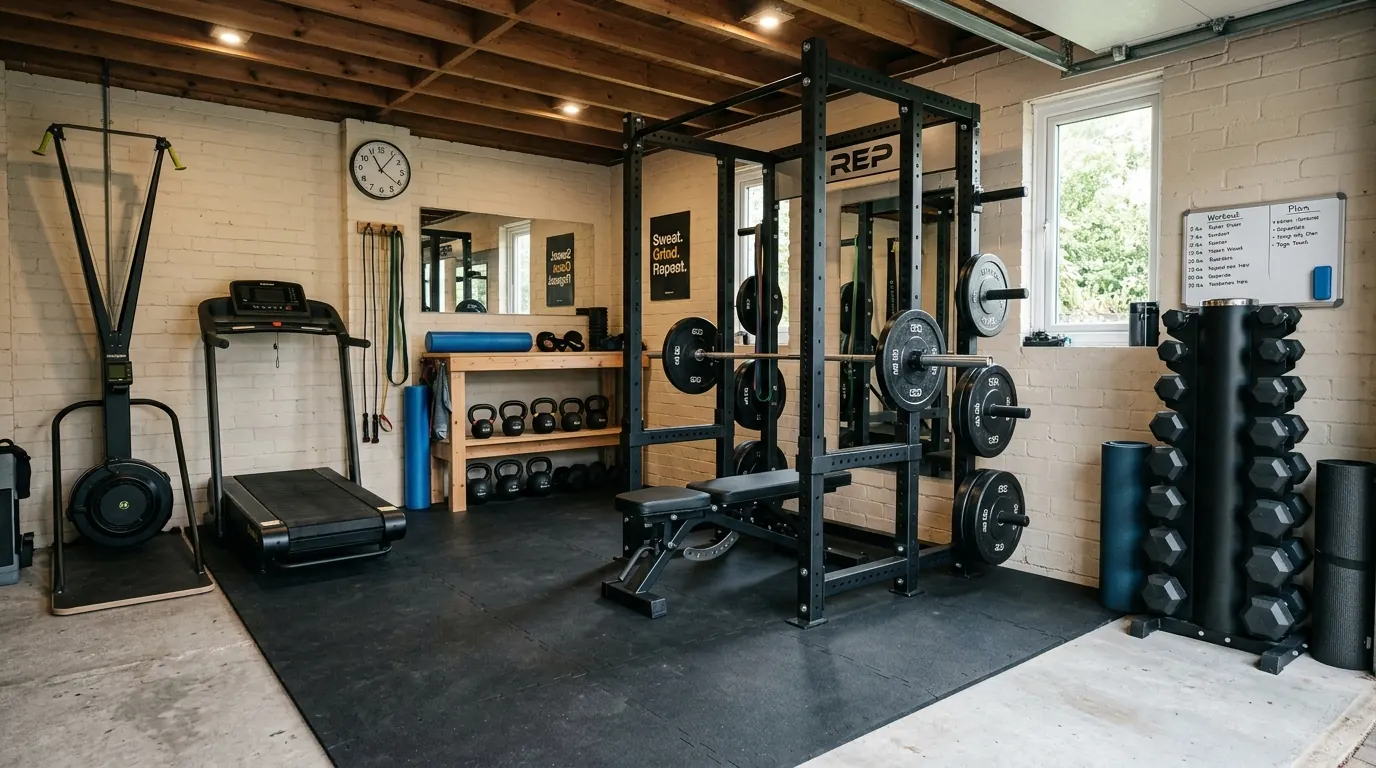
How to Build a Home Gym on Any Budget
Five complete home gym builds at $500, $1,500, $3,500, $7,500, and $15,000 - what to buy first, what to add later, and what to skip at every budget level.
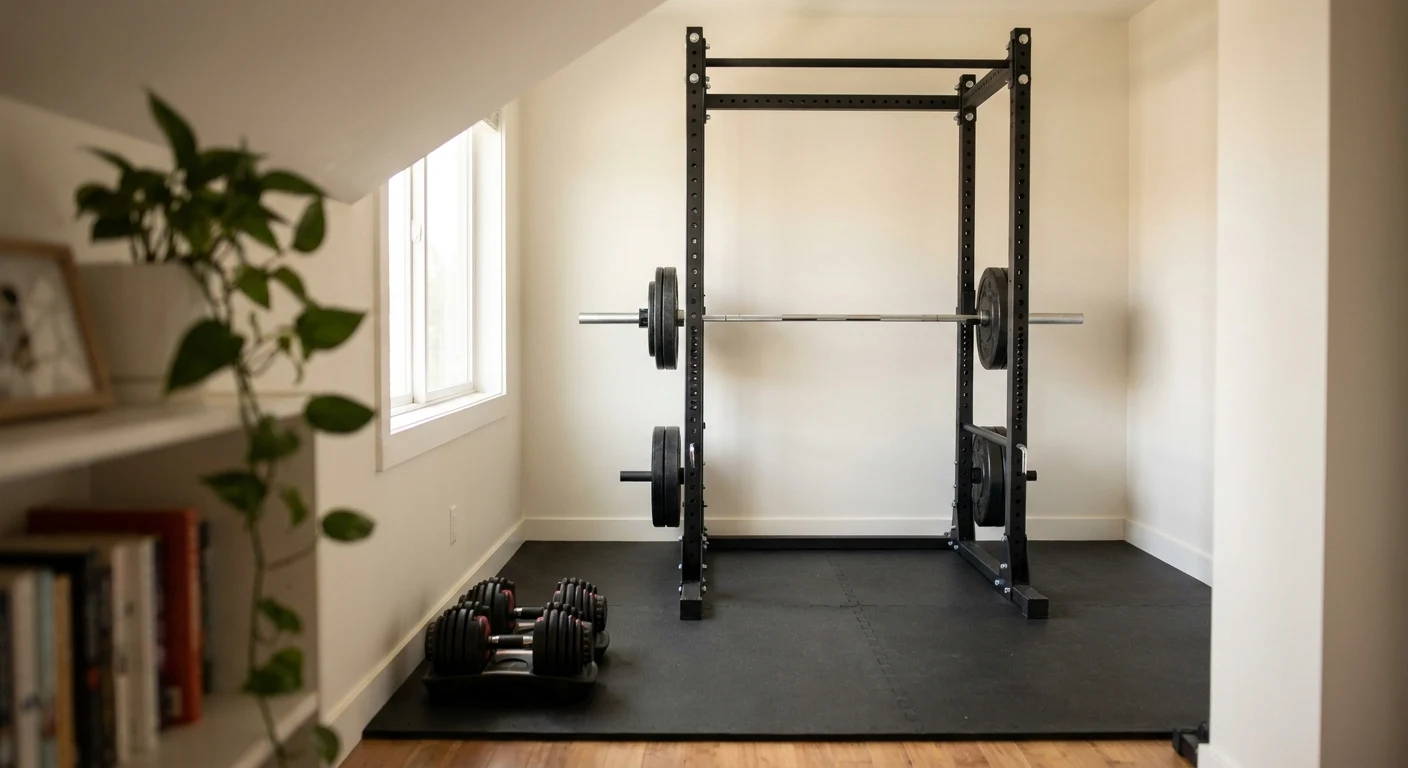
How to Plan a Home Gym in a Small Space (Without Wasting Money)
Plan a small-space home gym goal-first: real equipment footprints, ceiling-height math, the buy order that avoids waste, and what beginners over-buy.
Hilly Shore Labs
Editorial teamThe independent product research team behind GymScored. Every recommendation is researched, never hands-on tested — recommendations draw on manufacturer specifications and available published research. Category order is editorial; the Gym Score is a separate comparison aid.
170 listed products across 26 home gym categories. Scores use category criteria, value and owner-rating inputs; missing evidence limits what a score can tell you.
See the scoring methodology and who we are.
Affiliate disclosure: GymScored is a participant in the Amazon Services LLC Associates Program. We earn from qualifying purchases at no extra cost to you. Full disclosure →