Best Resistance Bands for Home Gyms in 2026: Bodylastics Wins
Bodylastics wins best resistance bands for home gyms with its stackable tube system; Rogue Echo tops premium loops. Seven systems scored on durability.
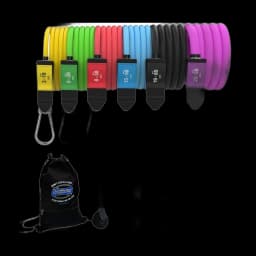
- Snap-guard anti-whip inner cord
- Stackable up to 96+ lb (XT goes 300+)
- Replaceable parts
Evidence snapshot · Updated August 17, 2026
The evidence-backed answer
Bodylastics Stackable Resistance Bands Set is our default pick for the scope of this guide: Stackable tube system, up to 150 lb resistance, includes handles, anchor, and door anchor. The default home band kit.
Scope: 4 shortlisted products compared using published specifications, owner-feedback signals, value and category-specific performance. The matched catalog records represent 5,663 owner ratings. This is research synthesis, not hands-on testing.
| Product | Rating | Current price context |
|---|---|---|
| Bodylastics Stackable Resistance Bands Set | 4.7/5 | $61.97 |
| TRX GO Suspension Trainer | 4.8/5 | $139.95 |
| Fit Simplify Resistance Loop Bands | 4.6/5 | $9.98 |
| TRX PRO 4 Suspension Trainer | 4.8/5 | $229.95 |
How GymScored is paid: Amazon Associates commission plus brand-direct affiliate (Rogue / REP / Titan when approved). No sponsored placements, no paid reviews, no pay-to-rank. Picks are ranked by the Gym Score formula and nothing else. Read the full disclosure.
Bodylastics for the default tube system. Rogue Echo for premium loop bands. TRX GO for suspension. Fit Simplify for cheap mini bands you replace yearly.
| Product | Rating | Pros | Cons | Price | |
|---|---|---|---|---|---|
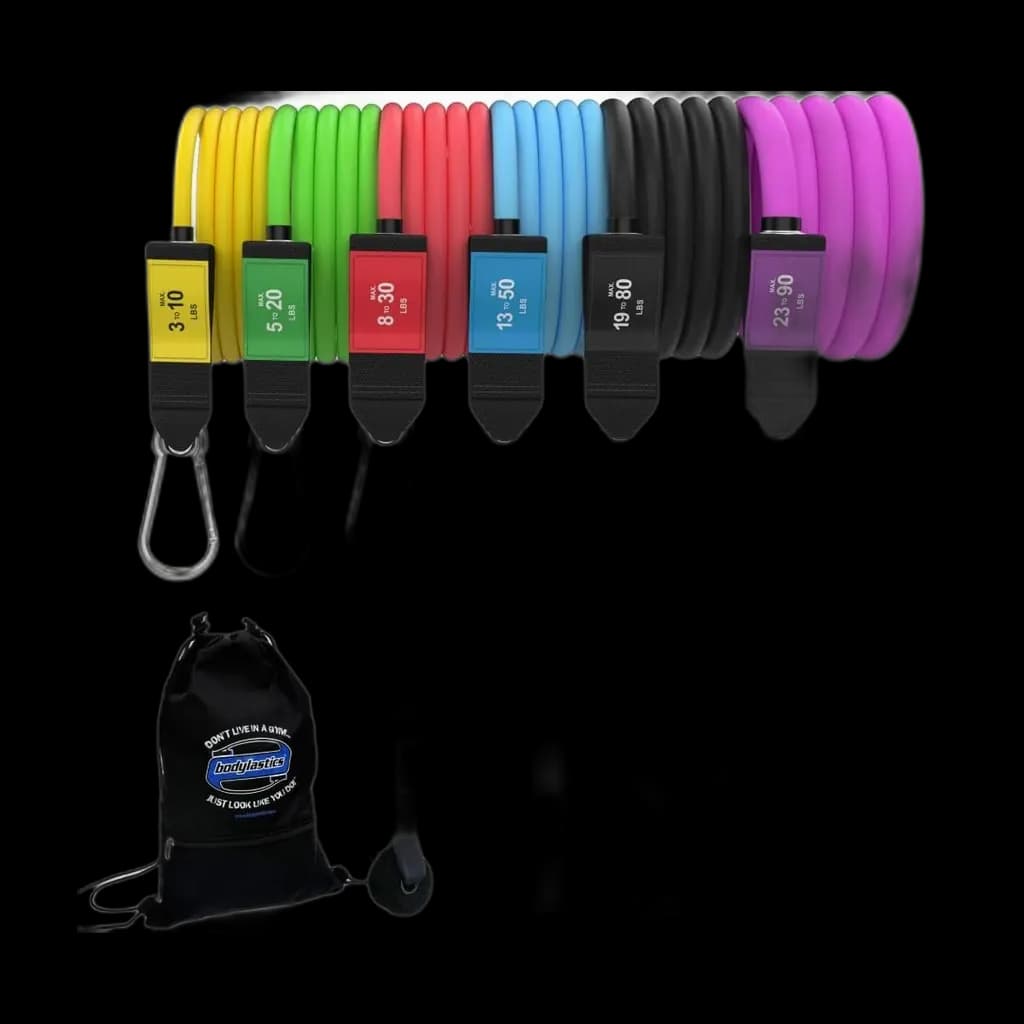 The default home tube-band kit. Stackable up to 150 lb, includes handles, anchor, and travel bag. ↑ Quality↑ Workout PerformanceBased on 2,239 buyer mentions | 4.7 Gym Score 93 | Pros
| Cons
| $61.97 | Buy on Amazon |
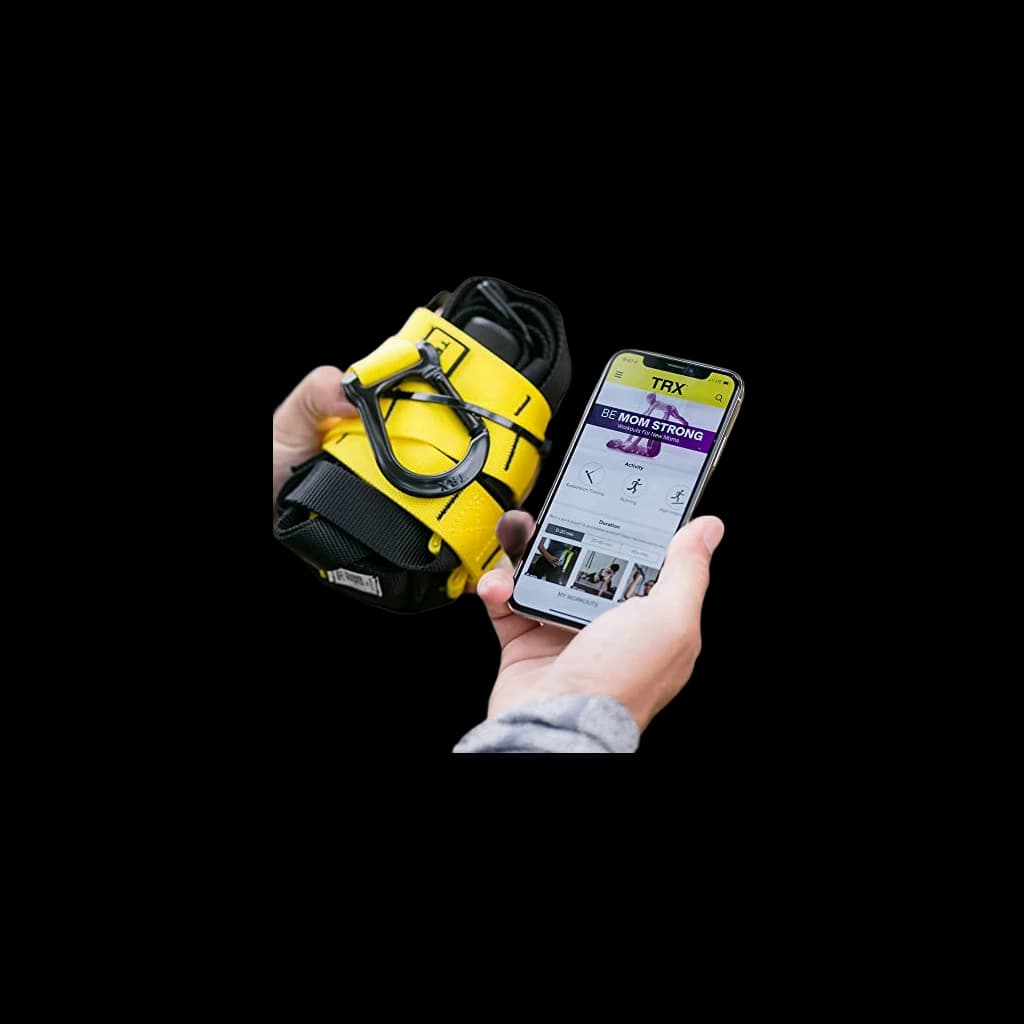 The suspension training standard. Bodyweight resistance at any anchor point. ↑ Quality↑ Workout PerformanceBased on 1,240 buyer mentions | 4.8 Gym Score 95 | Pros
| Cons
| $139.95 | Buy on Amazon |
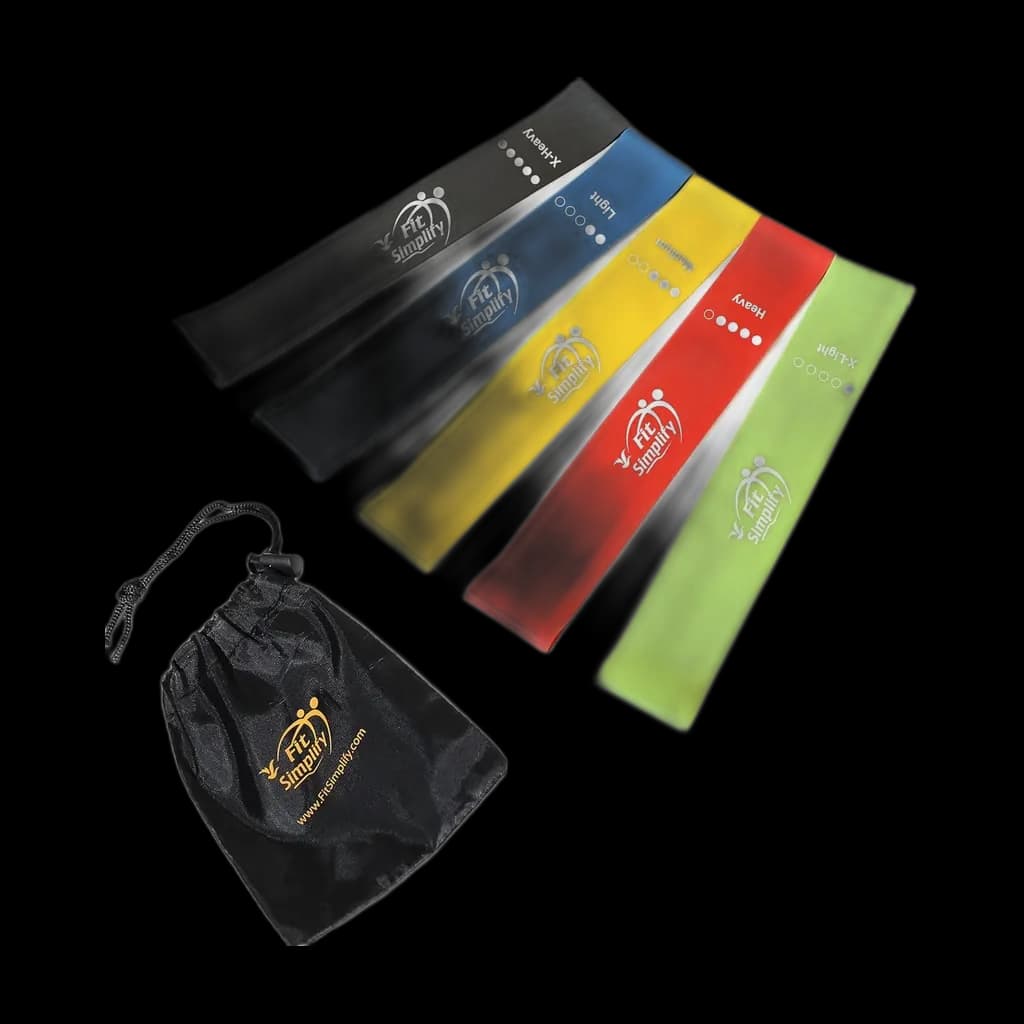 The default mini-loop kit. 5 levels for glute activation, warm-ups, and rehab. ↑ Quality↑ Value for money↓ StabilityBased on 21,669 buyer mentions | 4.6 Gym Score 92 | Pros
| Cons
| $9.98 | Buy on Amazon |
 The flagship TRX. Heavier-duty fabric than the GO, padded foot cradles, and a 350 lb capacity — what trainers buy for clients. ↑ Quality↑ EffectivenessBased on 358 buyer mentions | 4.8 Gym Score 94 | Pros
| Cons
| $229.95 | Buy on Amazon |
Amazon prices checked Sep 12, 2026. Amazon prices change often — the listing is authoritative.
Top picks spec comparison
Specs Amazon listings rarely aggregate side-by-side. Sourced from manufacturer data.
| Product | Resistance Range | Style | Anchor System |
|---|---|---|---|
| Bodylastics Stackable Resistance Bands | Up to ~150 lb stacked | Tube + handle, clip-stackable | Door anchor + handles + ankle straps included |
| Rogue Echo Resistance Bands | ~25–175 lb per band, peak | Continuous latex loop | Loop over rack, post, foot, or partner |
| TRX GO Suspension Trainer | Bodyweight at variable angle | Suspension straps | Overhead anchor required (joist, rack, door anchor) |
| Fit Simplify Mini Bands | ~5–30 lb per band, peak | 12ʺ fabric or latex mini loop | No anchor — used on limbs |
| WODFitters Resistance Bands | ~10–175 lb per band, peak | Continuous latex loop | Loop over rack, post, foot |
Pick by situation
Decide by your situation, not the generic ranking.
| If | You want | Pick |
|---|---|---|
| Budget under $300 | Glute work, warm-ups, lateral band activation, and physical therapy patterns where light-to-medium resistance is the entire point. | Fit Simplify Resistance Loop Bands |
| Premium $700+ | Travelers, road warriors, and beginners who want a name-brand suspension trainer at the lowest TRX price point and do not need the heavier-duty PRO 4 fabric. | TRX GO Suspension Trainer |
TL;DR — should you read this?
- Buy the Bodylastics Stackable set if you want one tube-band kit that covers curls, presses, rows, and pulldowns up to about 150 lb of stacked resistance. This is the right pick for most home users.
- Buy Rogue Echo Resistance Bands (loop) if you already own a power rack and want band-assisted pull-ups, deadlift assistance, or accommodating resistance work.
- Add a TRX GO suspension trainer separately if you travel — it does what bands can't.
- Skip the "5-band rainbow loop set" from no-name Amazon brands if you weigh over 180 lb; the latex thins out at the seams and snaps within a year of daily use.
Our pick
Stackable tube system, up to 150 lb resistance, includes handles, anchor, and door anchor. The default home band kit.
What separates good from bad in this category
Three things actually matter:
- Material. Latex stretches further with less force decay over time but breaks down faster in UV. TPE is more dimensionally stable but feels stiffer at low stretch.
- Tube vs loop. A geometry choice, not a quality tier.
- Stackability. What separates a beginner kit from a long-term kit — a stackable system combines five 30-lb tubes into 150 lb rather than capping at the heaviest single tube.
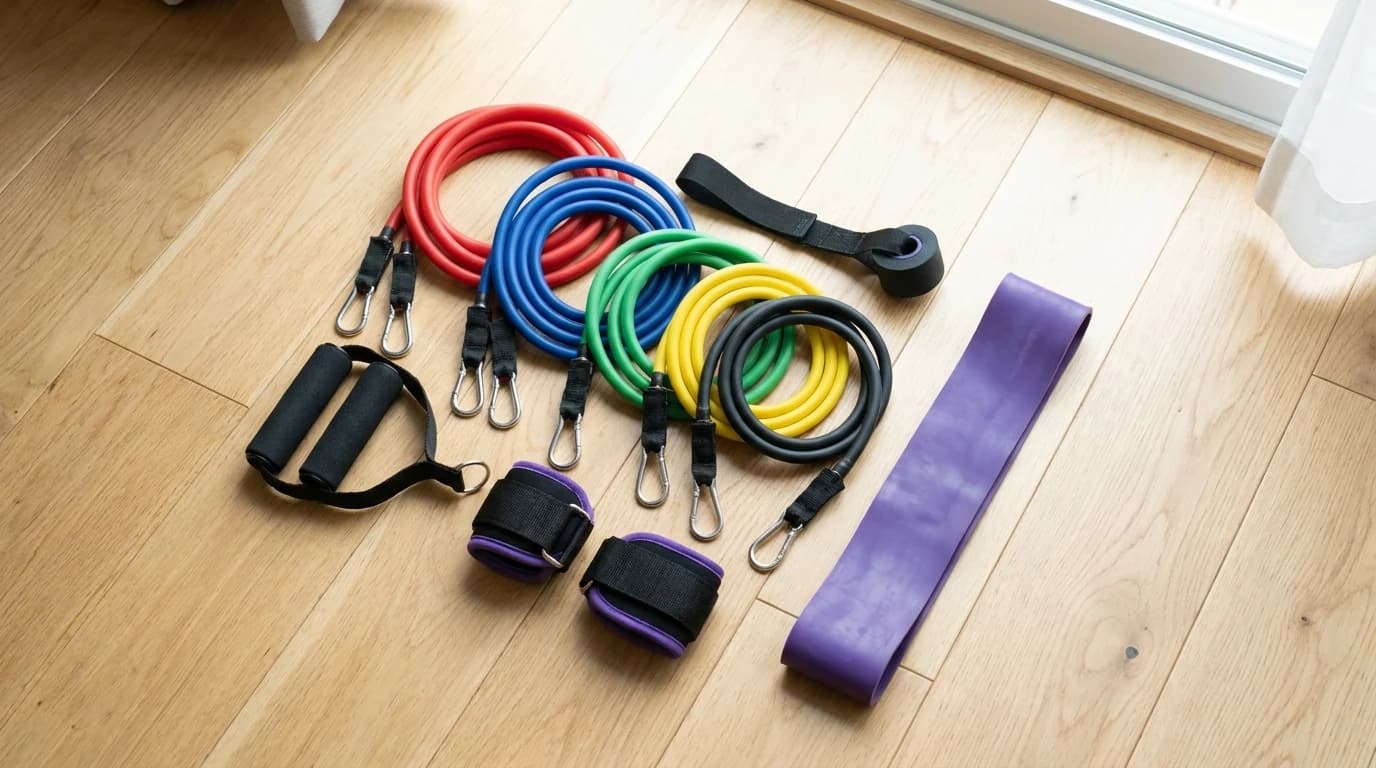
Tube bands with handles are right if:
- Your training is curls, presses, rows, and pulldowns
- You want fast transitions between resistance levels via clip-on stacking
- You're working from a door anchor rather than a rack
Loop bands are right if:
- You already own a rack and want band-assisted pull-ups or deadlift assistance
- You want everything tube bands do, plus squats and deadlifts
- You're doing accommodating-resistance work on barbell lifts
Worth knowing: a 40-lb loop band does not deliver 40 lb across the whole range of motion. It delivers roughly 40 lb at peak stretch and dramatically less at the start. That's genuinely useful — the band gets harder where you're strongest — but don't compare band ratings to dumbbell weights.
The peer-reviewed picture: elastic resistance training produces strength gains comparable to free-weight training in untrained and recreationally trained populations, but the equivalence breaks down at high absolute loads. The PubMed body of work includes studies showing comparable EMG activation between bands and dumbbells in upper-body pressing; lower-body comparisons are murkier. The ACE Fitness resistance-band training piece covers the same caveat.
The picks, ranked
| Set | Price | Type | Resistance |
|---|---|---|---|
| Bodylastics Stackable | $61.97 | Clip-on tubes | ~150 lb stacked |
| Rogue Echo Bands | ~$40–$130 per band | Loop | ~25 lb to ~175 lb at peak |
| TRX GO | ~$130 | Suspension trainer | Bodyweight at any angle |
| WODFitters | ~$25–$50 per band | Loop | Heavy end comparable to Rogue |
| Fit Simplify Mini Loops | $9.98 | 12ʺ mini loop | Maxes around 30 lb |
1. Bodylastics Stackable Resistance Bands Set — $61.97 — Best for most home users
The default kit: five clip-on tubes plus handles, ankle straps, a door anchor, and a travel bag. The clip-on system is the differentiator — you snap tubes together rather than swapping them, so transitions between heavy and light sets take seconds. The internal Snap Guard cord prevents whip-back when a tube eventually breaks, an industry-rare safety feature. The handle joint is the wear point; expect to replace tubes every 3–5 years of daily use.
2. Rogue Echo Resistance Bands — ~$40–$130 per band — Best for rack owners
Loop bands from "monster mini" up to "average." The latex is markedly thicker than competitor bands at the same rated tension, which means longer life and more consistent force curves. Right pick if you already own a power rack. Buy individually rather than in a set so you only own the resistance levels you actually need.
3. TRX GO Suspension Trainer — $139.95 — Best for travel and bodyweight angles
Not a resistance band — a suspension trainer using your bodyweight at adjustable angles. Anchor it overhead and you have rows, push-ups, pistol-squat assistance, and core work from vertical to horizontal. Wrong pick without a sturdy overhead anchor; the included door anchor works for light use but flexes on hollow-core interior doors.
4. Fit Simplify Resistance Loop Bands — $9.98 — Best budget loop set
The mini loop bands every physical therapist uses for glute activation, monster walks, and clamshells, in five rated tensions. Right pick as a supplement to a real band kit; wrong pick as a standalone strength tool.
5. WODFitters Resistance Bands — ~$25–$50 per band — Best for CrossFit-style work
Loop bands designed for kipping pull-up assistance, mobility, and band-resisted barbell work. Comparable to Rogue Echo at the heavy end with slightly less durability at the light end.
What the research actually says
- Elastic resistance produces strength gains comparable to free weights in untrained populations. Multiple controlled trials show similar 8–12-week outcomes between band-based and dumbbell-based training in beginners. Source: PubMed.
- Bands match dumbbell EMG activation in upper-body pressing at matched perceived effort. Source: PubMed.
- Bands are first-line in rehab and reactivation, not just home gyms — especially shoulder, hip, and ankle rehab where free weights are too coarse a stimulus. Source: ACE Fitness.
- Accommodating resistance has real powerlifting backing. Band-resisted bench and deadlift are documented methods for breaking sticking points by loading the lockout phase. Source: NSCA Kinetic Select.
What the research does not support: that bands equal free weights for maximal strength in trained lifters. Once you squat 1.5× bodyweight or bench bodyweight, the 150–250 lb peak-tension ceiling constrains progressive overload. Bands become a supplement, not the primary tool.
What to skip
- No-name "5-band rainbow loop set" under $15. The latex thins at the seams, force decay is rapid, and they snap within 6 months of daily use.
- Tube bands with all-plastic handles. The tube-to-handle joint is the failure point; metal-collared handles last 3–5× longer.
- Door-anchor-only setups for users over 220 lb. Hollow-core doors flex under heavy band tension and the anchor pops out. Anchor to a ceiling joist or a rack.
- "Heavy-duty" Amazon-only brands that don't disclose latex layer count. Quality loop bands list ply count and layer thickness. "Natural latex" alone is hiding something.
- Buying a 5-band set when you only need 2. Most home users live on the medium and heavy levels.
How to actually use this
- Tier 1: Travel or apartment-only ($60). Bodylastics Stackable kit covers presses, curls, rows, and pulldowns. Add a TRX GO ($130) for bodyweight angle work.
- Tier 2: Existing home gym with a rack ($80–$200). Buy 2–3 Rogue Echo loop bands individually. Skip the tube system unless you specifically want handles for curls.
- Tier 3: Rehab and accessory layer ($40 add-on). Add a Fit Simplify mini-band set to whatever you own. The price is trivial and the activation drills are real.
Two habits that double band lifespan
- Store them dark. Latex degrades fast in UV and ozone. Keep bands in a drawer or opaque bin, away from sunlight and motorized equipment — electric motors generate ozone. Bands stored in a sunny window last roughly half as long as bands in a closet.
- Replace before catastrophic failure. A band snapping under tension can welt skin or take out an eye. Inspect for thinning, glossy spots, or seam separation every 2–3 months. When in doubt, replace.
How we chose / methodology
We weighted resistance range and stackability (25%), material quality and rated lifespan (25%), anchor versatility (20%), durability based on owner-reported failure timelines (20%), and price per total resistance unit (10%). The full scoring rubric lives on the /methodology page. Ratings come from manufacturer spec sheets, owner-reported failure patterns across r/homegym, r/bodyweightfitness, and r/fitness, the published peer-reviewed studies on elastic-resistance training, and the ACE Fitness continuing-education program for band-based training.
Frequently Asked Questions
Are resistance bands enough to build muscle?+
For beginners and intermediates, yes - up to about 150 lb of band resistance trains the same patterns as free weights. For advanced lifters needing 200 lb+ of squatting load, bands are a supplement, not a substitute.
Tube bands or loop bands?+
Loop bands are more versatile (anchor anywhere, no joint to break) and cheaper. Tube bands are better for curls and tricep extensions where handles matter. Most home gyms benefit from owning both.
How long do bands last?+
Quality bands (Rogue Echo) last 3-5 years of daily use. Cheap mini bands (Fit Simplify) last 1-2 years. Always have a spare on hand - they snap without warning when they're ready to go.
How long do quality resistance bands actually last?+
Daily-use latex loop bands (Rogue Echo, Fit Simplify) last 3–5 years stored in a closet or drawer. Tube bands (Bodylastics) fail first at the handle joint, typically 3–4 years. UV exposure and ozone cut lifespan in half — keep bands out of sunny windows and away from motors.
Can resistance bands replace a barbell for squats and deadlifts?+
Not past the beginner stage. Bands cap at roughly 150–250 lb of peak tension and deliver constant tension only at full stretch. Once you can squat 1.5× bodyweight, the band ceiling constrains progress. Bands work as a supplement to barbell work, not a substitute.
Is a 'stackable' band system worth the extra cost?+
If you'll train more than one resistance level — yes. Stackable systems (Bodylastics) let you combine tubes for resistance changes in seconds. Single-tube systems force you to swap hardware between sets, which means people stay at one resistance level out of laziness.
Sources & Research
- NSCA — Resistance band training researchauthority
- NCBI — Band training studiesresearch
- r/bodyweightfitness — Community band threadscommunity
- PubMed — Resistance band strength training — research aggregateresearch
- PubMed — Elastic resistance bench press EMG — research aggregateresearch
- ACE Fitness — Resistance Band Training: The Good, the Bad, and the Stretchyauthority
- NSCA — Kinetic Select training articlesauthority
Related reviews
Best Pull-Up Bars for Home Gyms in 2026: Sportsroyals Wins
The Sportsroyals Power Tower is the best freestanding pull-up bar; the SELEWARE 48-inch bar wins wall-mount. Six bars scored on stability, span and install.
Best Power Racks for a Home Gym in 2026
The Rep PR-4000 is the best home gym power rack of 2026 at under $900. We scored 12 racks on build quality and footprint; Rogue R-4 is the lifetime pick.
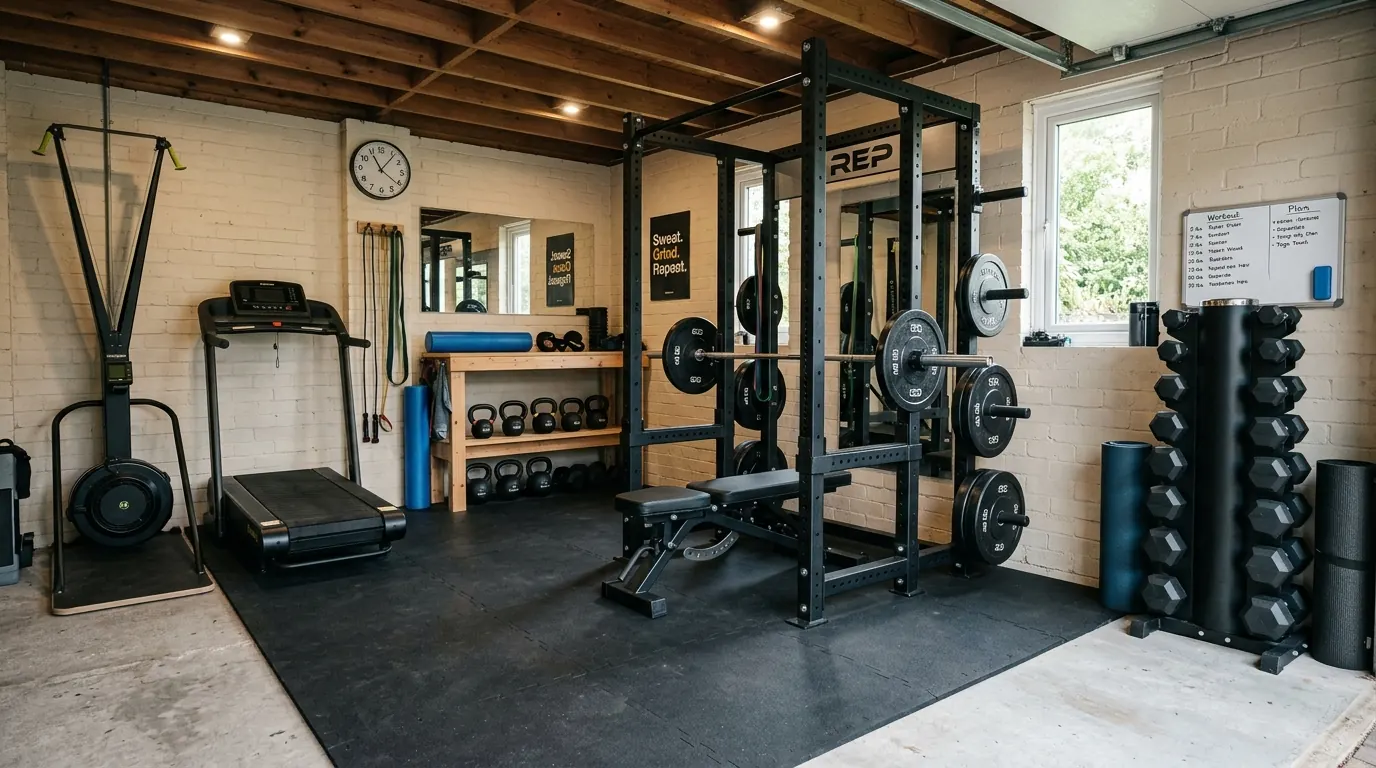
How to Build a Home Gym on Any Budget
Five complete home gym builds at $500, $1,500, $3,500, $7,500, and $15,000 - what to buy first, what to add later, and what to skip at every budget level.
Hilly Shore Labs
Editorial teamThe independent product research team behind GymScored. Every recommendation is researched, never hands-on tested — rankings come from manufacturer specifications, published standards, and aggregated buyer sentiment.
163 products scored across 26 home gym categories, each on the same 5-dimension Gym Score formula.
See the scoring methodology and who we are.
Affiliate disclosure: GymScored is a participant in the Amazon Services LLC Associates Program. We earn from qualifying purchases at no extra cost to you. Full disclosure →