Is Your Garage Gym Too Hot to Train In Safely?
A hot garage gym is more than uncomfortable. The warning signs, when to stop training, and the cheapest fixes that make a sweatbox usable again.
A garage gym gets risky when the heat index (temperature plus humidity), not the raw temperature, climbs into the danger zone. OSHA flags rising risk around an 80F heat index and serious risk at 90F and above. The two failure modes to know: heat exhaustion (heavy sweating, nausea, dizziness, clammy skin) means stop, cool down, and rehydrate now; heat stroke (confusion, body temp over 104F, skin that is hot and may stop sweating) is a medical emergency. To train safely in a hot garage, move airflow with fans, open the door, hydrate before and during, train in the cooler morning or evening hours, and cut intensity or stop when symptoms start.
How GymScored is paid: Amazon Associates commission plus brand-direct affiliate (Rogue / REP / Titan when approved). No sponsored placements, no paid reviews, no pay-to-rank. Picks are ranked by the Gym Score formula and nothing else. Read the full disclosure.
An unconditioned garage can run 10-20 degrees hotter than outside, and a hard session adds its own heat load. Watch the heat index, not the thermometer: humidity is what tips a workout from sweaty to dangerous. Learn the line between heat exhaustion (heavy sweating, nausea, dizziness) and heat stroke (confusion, hot skin, sweating stops) and stop at the first. The cheapest fixes that actually move the needle are airflow, hydration, and timing your training for the cooler hours.
TL;DR: watch the heat index, not the thermometer
An unconditioned garage can sit 10 to 20 degrees hotter than the air outside, and a hard set adds its own internal heat. The number that actually predicts danger is the heat index (temperature plus humidity), not the temperature on the wall. OSHA flags rising risk around an 80F heat index and serious risk at 90F and above.
The good news: the fixes that move the needle most are cheap, and the warning signs are easy to read once you know them.
Key takeaways
- Humidity is the hidden variable. Sweat only cools you when it evaporates. In humid air it can't, so 88F at 70% humidity is more dangerous than a dry 95F.
- Know the two failure modes. Heat exhaustion (heavy sweat, nausea, dizzy, clammy) is a stop-now signal. Heat stroke (confusion, hot skin, sweating may stop) is a 911 emergency.
- Airflow is the best dollar you'll spend. OSHA lists increased air movement and AC as the engineering controls that make a warm space safer, because moving air boosts sweat evaporation.
- Timing beats gear. A garage is coolest at dawn and stays hot into the night, so shifting a hard session earlier often does more than any fan.
- What the research does NOT support: "pushing through" to toughen up. Acclimatization comes from gradual, managed exposure with reduced intensity, not from grinding a max-effort session in a sweatbox.
Read the warning signs before you start a set
The line you cannot cross
Your body gives clear, escalating signals. The line you cannot cross is the jump from exhaustion to stroke: at that point your cooling system has failed and minutes matter. The CDC notes core temperature can hit 106F within 10 to 15 minutes once heat stroke begins.
| Stage | What you feel | What to do |
|---|---|---|
| Overheating | Flushed, sweating hard, slowing down | Lengthen rest, sip water, cut intensity |
| Heat exhaustion | Nausea, dizziness, weakness, clammy skin, heavy sweat | Stop now. Cool down, rehydrate, move to shade or AC |
| Heat stroke | Confusion, slurred speech, hot skin, sweating may stop, body temp 104F+ | Emergency — call 911. Cool aggressively while waiting |
Rule of thumb: notice the trend, not the moment. If your rest periods keep stretching, your heart rate won't settle, or you feel queasy, you are already in the overheating zone and one bad set from exhaustion.
Why a garage is its own microclimate
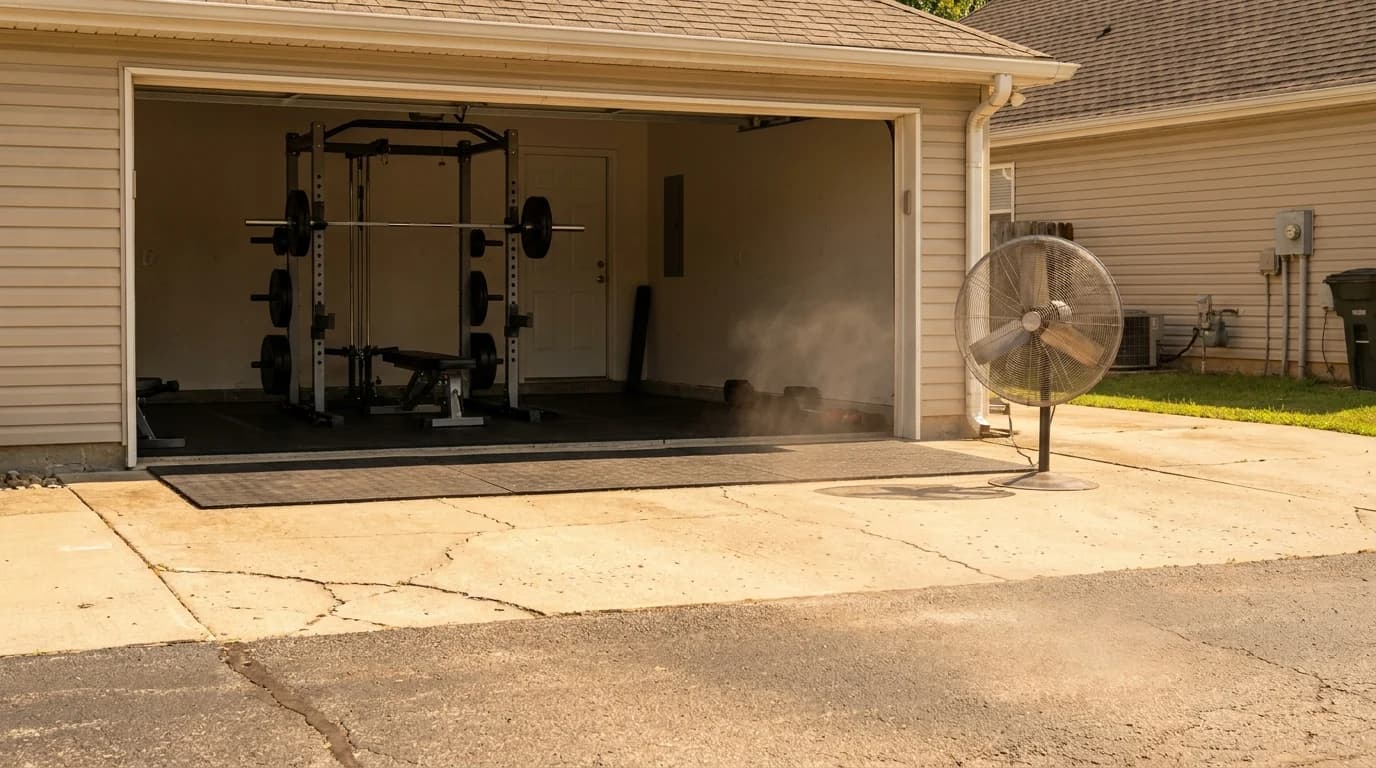
A garage is a heat trap by design: a big sun-facing door, a concrete slab that soaks up and re-radiates heat, an uninsulated metal roof, and usually no ventilation. OSHA explicitly warns that indoor heat is a real hazard and that a weather report cannot tell you the conditions inside a building — you have to measure the space itself.
You are the second heat source
Resistance training and conditioning generate metabolic heat, which is why an "environmental" problem becomes an "exertional" one fast. A cheap hygrometer or the free NIOSH/OSHA Heat Safety Tool app (it calculates heat index) tells you far more than your wall thermometer does.
The cheap fixes that actually work, ranked
Airflow first, hardware last
You don't need to spend on a mini-split before you've tried the basics. In rough order of value per dollar:
- Move air. Open the garage door for cross-ventilation and aim a fan at yourself. Evaporative cooling is your main defense during exercise, and a fan amplifies it. This is the highest-leverage, lowest-cost fix.
- Time it right. Train in the early morning or after sundown. An unconditioned garage lags the outdoor low, so dawn is your coolest window.
- Hydrate on a schedule, not on thirst. Drink before you start and sip during. OSHA's rule of thumb is small, frequent amounts; for sessions over an hour, add electrolytes. Don't wait until you're thirsty.
- Acclimatize gradually. Tolerance builds over several days of managed heat exposure. Start with shorter, lower-intensity sessions and build up rather than diving into a hot-day PR attempt.
- Then spend on cooling. If the basics aren't enough, a portable AC, a mini-split, or insulating the door is the next tier. A protective rubber gym floor also blunts the slab's radiant heat slightly and protects equipment from sweat corrosion.
When to stop, full stop
Manage it in place when:
- You're flushed and sweating hard but steady — lengthen rest, sip water, cut intensity.
Stop the session immediately when:
- Nausea, a headache that won't clear, or dizziness shows up.
- Your heart rate refuses to come down between sets.
Those are heat-exhaustion signals, and the fix is rest and fluids, not willpower.
If it looks like heat stroke, stop treating it as a training problem
If anyone shows confusion, stops sweating despite the heat, or has hot skin, call emergency services and start cooling. Research on field treatment of exertional heat stroke finds cold-water immersion is the most effective rapid cooling method — a cold shower or a tub of cold water beats a fan once stroke is suspected.
What most people get wrong
The myth is that a hot garage just makes you "sweat more and burn more," so it's a bonus. It isn't. The extra sweat is fluid loss, not fat loss, and dehydration degrades strength and endurance well before it becomes dangerous.
Worth knowing: heat doesn't make training more effective, it makes the same training riskier and lower-quality. Manage the environment so you can train well, then let the work do the work.
A home gym you can actually use year-round beats a sweatbox you avoid four months a year.
Sources
Frequently Asked Questions
How hot is too hot for a garage gym workout?+
There is no single safe temperature, because humidity matters as much as heat. OSHA uses the heat index (which combines temperature and humidity) and flags rising risk around 80F and serious risk at 90F and above. A 95F garage at 30 percent humidity feels very different from 88F at 70 percent humidity. Judge by the heat index and by how your body responds, not by the thermometer alone.
What is the difference between heat exhaustion and heat stroke?+
Heat exhaustion is the body responding to fluid and salt loss: heavy sweating, nausea, dizziness, weakness, and cool clammy skin. It is a stop-now warning. Heat stroke is the emergency stage: the body can no longer cool itself, core temperature can pass 104F, the skin gets hot, and sweating may stop, often with confusion or slurred speech. Heat stroke needs immediate emergency care and aggressive cooling.
Do fans actually help in a hot garage?+
Yes, within limits. Moving air increases evaporative cooling from sweat, which is your main cooling pathway during exercise. OSHA lists increased airflow and air conditioning as engineering controls that make a warm space safer. Fans help most when humidity is moderate; in very humid air, sweat evaporates poorly and a fan does less. Opening the garage door for cross-ventilation plus a fan is the cheapest meaningful upgrade.
Should I just train earlier or later instead?+
Often that is the single best fix. An unconditioned garage lags outdoor temperature, so it is usually coolest in the early morning and stays hot well into the evening. Shifting a hard session to the morning, reducing intensity, and taking more rest between sets are all proven heat-management strategies. Acclimatizing over several days also raises your tolerance.
Sources & Research
- Heat-related Illnesses — CDC / NIOSH (heat stroke vs heat exhaustion signs and thresholds)
- Heat — Overview: Working in Outdoor and Indoor Heat Environments — OSHA (heat index, humidity, WBGT, airflow controls, acclimatization)
- Recommended water immersion duration for the field treatment of exertional heat stroke — Flouris et al., European Journal of Applied Physiology 2024 (PMID 37552243)
Your next step
Ready to kit out the garage?
Related reviews
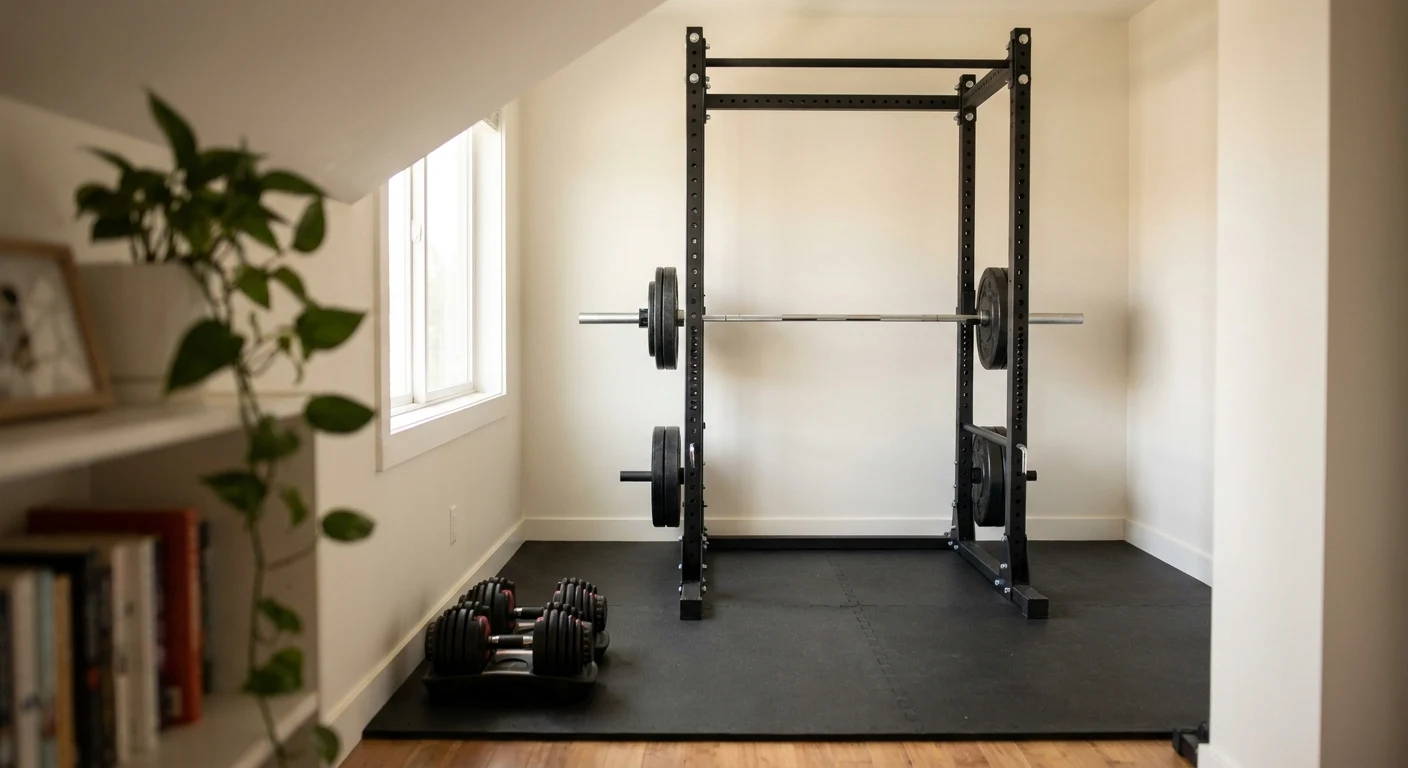
How to Plan a Home Gym in a Small Space (Without Wasting Money)
Plan a small-space home gym goal-first: real equipment footprints, ceiling-height math, the buy order that avoids waste, and what beginners over-buy.
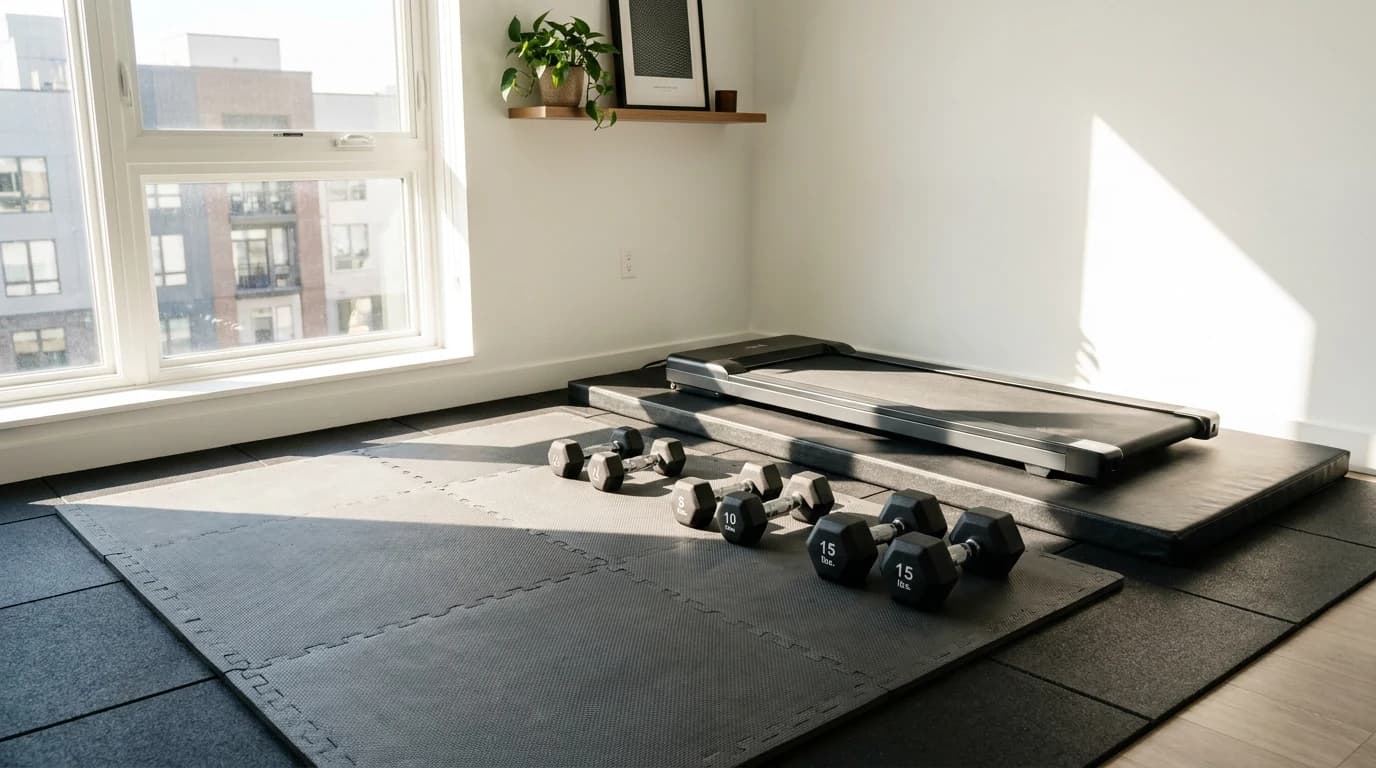
How to Make a Home Gym Quiet (Apartment and Upstairs Fixes)
Most home gym noise is impact, not effort. Layer dense rubber and cushion flooring, isolate cardio, and lower weights under control in an apartment.
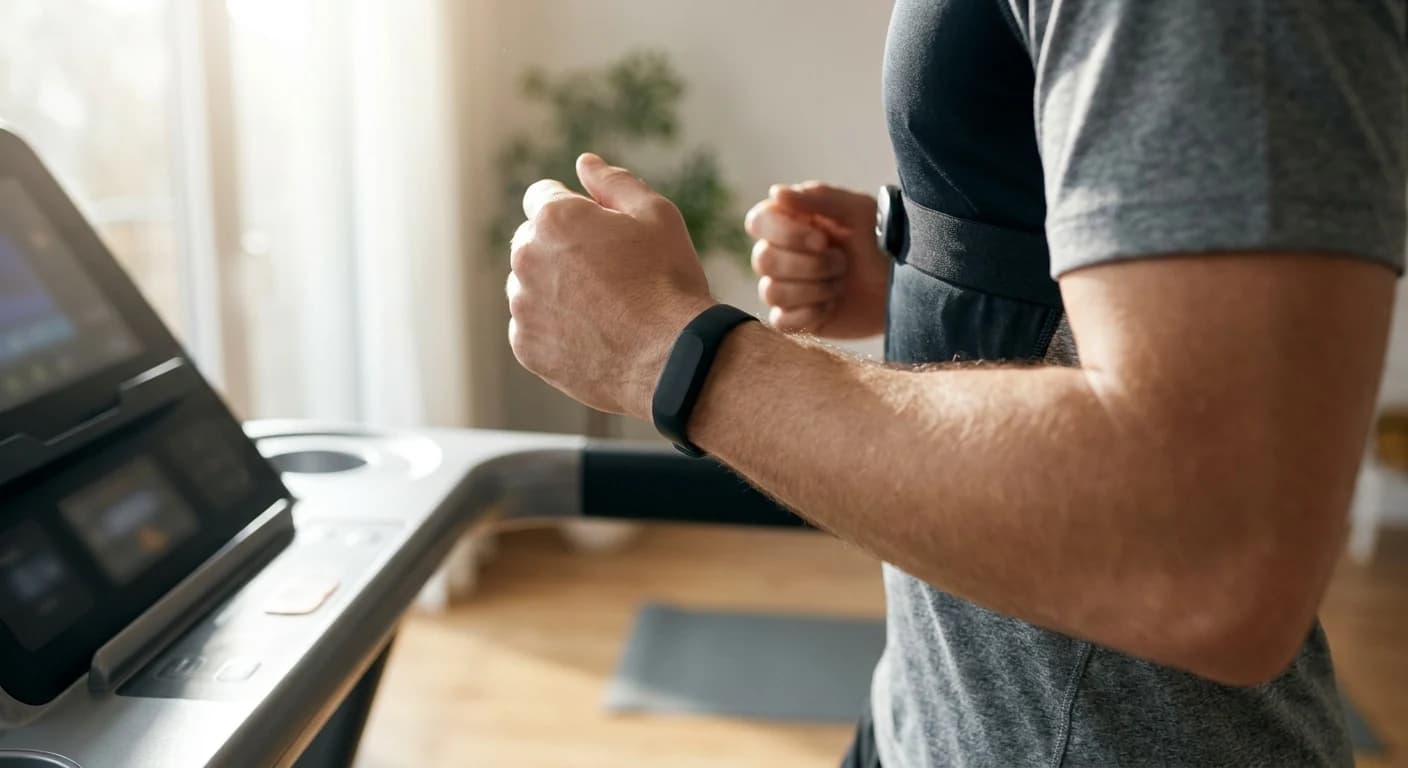
How to Use Heart Rate Zones for Home Cardio (the Right Way)
Set heart rate zones from your max HR, spend most home cardio time moderate with some vigorous work, and skip the fat-burning-zone myth. The simple system.
Hilly Shore Labs
Editorial teamThe independent product research team behind GymScored. Every recommendation is researched, never hands-on tested — recommendations draw on manufacturer specifications and available published research. Category order is editorial; the Gym Score is a separate comparison aid.
170 listed products across 26 home gym categories. Scores use category criteria, value and owner-rating inputs; missing evidence limits what a score can tell you.
See the scoring methodology and who we are.
Affiliate disclosure: GymScored is a participant in the Amazon Services LLC Associates Program. We earn from qualifying purchases at no extra cost to you. Full disclosure →