Sauna and Cold Plunge: A Contrast Protocol That Holds Up
How to run sauna and cold plunge contrast rounds: heat and cold minutes, how many rounds, which end to finish on, home setups, and who should skip it.
A sane contrast session is 10-15 minutes of heat, then 1-3 minutes in 50-59°F water, repeated two or three times, two or three days a week. Never go below 40°F or past five minutes in the cold, never plunge alone, and keep the cold half at least four hours away from strength training if muscle growth is the goal.
How GymScored is paid: Amazon Associates commission plus brand-direct affiliate (Rogue / REP / Titan when approved). No sponsored placements, no paid reviews, no pay-to-rank. Picks are ranked by the Gym Score formula and nothing else. Read the full disclosure.
Start at 10-15 minutes of heat and 1-3 minutes at 50-59°F, two or three rounds, two or three days a week. Contrast therapy beats passive rest for soreness and ties with every other recovery method tested against it, so build the habit around equipment you will actually use rather than around a protocol number.
A starting contrast session, round by round
Ceilings to walk up to, not floors to start from. The cold range follows Cleveland Clinic's published guidance: 50-59°F for beginners, never below 40°F, never longer than five minutes.
| Round | Heat | Cold | Between | What it is for |
|---|---|---|---|---|
| Round 1 | 10-15 min | 1-2 min at 55-59°F | 2-3 min, dry and dressed | Learning the gasp reflex without fighting it |
| Round 2 | 10-15 min | 1-3 min at 50-59°F | 2-3 min | Where most sessions should end for the first month |
| Round 3 (optional) | 10-15 min | 1-3 min at 50-59°F | Finish here | Only once the first two rounds feel routine |
| Whole session | 20-45 min of heat | 3-8 min of cold total | 30-45 min door to door | 2-3 sessions a week is a normal starting dose |
Which end to finish on
Decide by your situation, not the generic ranking.
| If | You want | Pick |
|---|---|---|
| Muscle growth is the goal | Keep the cold at least four hours from lifting, which usually means finishing warm on training days | End warm |
| Morning alertness on a rest day | The cold half is acutely stimulating, so finishing cold leaves you switched on | End cold |
| Winding down for sleep | Finish in the heat and let your body cool passively afterwards | End warm |
| No strong preference | No controlled trial isolates the end state, so pick the one you will repeat | Either |
Quick answer
Contrast therapy is heat and cold alternated in rounds. A defensible starting session is 10 to 15 minutes of heat, then 1 to 3 minutes in water at 50-59°F, repeated two or three times, two or three days a week. That structure is what the supervised studies use, and it is mild enough that nothing about it depends on toughing anything out.
What the research supports is modest: less next-day soreness, a cardiovascular exposure that tracks well in Finnish population data, and a ritual most people repeat. What it does not support is detoxification, fat loss, or faster muscle growth. And if hypertrophy is your goal, the cold half has to stay away from your lifting window.
What the research actually supports
Every claim below carries an evidence tag, because the gap between the strongest and weakest findings in this niche is enormous and almost nobody marks it.
Frequent sauna bathing tracks with lower cardiovascular mortality — [mixed]. The Finnish Kuopio cohort followed 2,315 middle-aged men for a median of 20.7 years. Compared with one sauna session a week, men reporting 4 to 7 sessions a week had an adjusted hazard ratio for sudden cardiac death of 0.37 (95% CI 0.18-0.75), with similar trends for fatal coronary and cardiovascular disease. Sessions longer than 19 minutes carried a hazard ratio of 0.48 (0.31-0.75) against sessions under 11 minutes (Laukkanen et al., JAMA Internal Medicine 2015). It is observational, single-cohort, all-male, and describes traditional Finnish sauna. Men who sauna four times a week are not a random sample of men. Treat it as a strong signal in one population, not a dose prescription.
Contrast water therapy beats doing nothing for soreness, and ties with everything else — [mixed]. The systematic review that pooled this literature found 18 controlled trials, all of which it judged to be at high risk of bias. Pooled data from 13 of them showed contrast therapy improved muscle soreness and reduced strength loss at every follow-up point out to 96 hours compared with passive recovery. But against cold water immersion alone, warm immersion, compression, active recovery or stretching, there was little evidence of a superior treatment, and the authors noted the effect magnitudes may matter most to elite athletes (Bieuzen, Bleakley & Costello, PLoS One 2013).
That is the honest headline: contrast is better than sitting still, and roughly a wash against the other things you could do instead.
Cold immediately after lifting blunts the adaptation — [strong, for this specific claim]. In a 12-week trial, 21 physically active men strength trained twice a week with either 10 minutes of cold water immersion or active recovery after each session. Strength and muscle mass increased more in the active-recovery group. Type II fibre cross-sectional area rose 17% and myonuclei per fibre 26% in the active group, and not in the cold group (Roberts et al., Journal of Physiology 2015). Cleveland Clinic's guidance puts the practical buffer at roughly four hours from a muscle-building workout.
Cold water is a real hazard, not only a therapy — [strong]. The definitive review of cold water immersion treats it explicitly as both threat and treatment: cold shock, drowning, cardiac events and hypothermia sit on the same page as the recovery claims, and the authors conclude the evidence base varies from credible to "anecdotal speculation" depending on which claim you pick (Tipton et al., Experimental Physiology 2017).
The clinical evidence for dry sauna is thinner than the enthusiasm — [weak]. A systematic review of regular dry sauna interventions found 40 clinical studies covering 3,855 participants, of which only 13 were randomised controlled trials and most enrolled fewer than 40 people. Most reported benefits; the review's own conclusion was that better data is needed on frequency, duration and adverse effects (Hussain & Cohen, 2018).
Claims we could not source at all — [none]. Sweating out toxins. Meaningful fat loss. A lymphatic flush. A specific magic heat-to-cold ratio. If a protocol's selling point is a precise number with no citation behind it, the number was invented.
What a session actually looks like
The table above is a starting shape, not a target to beat. Two anchors from the supervised literature: one Swiss study ran two consecutive 10-minute exposures in an 80°C Finnish sauna followed by a single head-out immersion in 12°C water, and it was well tolerated even by heart failure patients under clinical supervision (Radtke et al., European Journal of Preventive Cardiology 2016). A 2025 study in normotensive women used three consecutive 10-minute sauna exposures separated by 10-minute cooling intervals (Szafraniec et al., Scientific Reports 2025).
Both were supervised, and both used far more heat than a home infrared cabin delivers. Neither is a licence to run 12°C water alone in a garage on week one.
Rule of thumb: leave the heat before you feel light-headed, not after, and leave the cold while you can still speak a calm full sentence. Every dose in the table is a ceiling you walk up to, not a floor you start from.
Ending on heat or cold is a preference, not a finding — [weak]
You will read that finishing cold locks in alertness and finishing warm helps sleep. We cannot find a controlled trial that tests the end-state as an isolated variable, and the contrast review above found no superiority between contrast and its comparators, let alone between orderings within contrast.
What is defensible: the cold half raises blood pressure acutely, so ending cold leaves you stimulated, and ending warm leaves you passively cooling. If you lift, the strong finding above decides for you — put the cold nowhere near the hours after a strength session, which usually means ending warm on training days.
Where the cold numbers come from
Cleveland Clinic's clinician guidance is the most conservative widely published version, and it is the one we follow: do not go below 40°F, start in the 50-59°F range, never exceed five minutes, keep beginner sessions to a minute or two, and start at once or twice a week. Our cold plunge protocol guide has the full dosing ladder by experience level.
Infrared cabins are not the saunas in the studies
This is the single biggest sleight of hand in home-sauna marketing. The Finnish mortality data describes hot-air saunas at roughly 80-100°C. An infrared cabin heats the body directly at a much lower air temperature, and the SereneLife pod that anchors the entry tier is a heated steam box, not infrared at all.
That does not make them useless — it makes the evidence transfer weak. Nobody should quote a Finnish hazard ratio at an infrared blanket. Buy heat equipment because you will use it and it feels good; treat the mortality literature as a reason to believe heat exposure is broadly benign in healthy people, not as a dose you are hitting.
Three home setups, built only from gear we already rank
| Tier | Heat | Cold | The real trade-off |
|---|---|---|---|
| Entry | SereneLife Portable Sauna | The Cold Pod | Steam, not infrared; no chiller, so you buy ice |
| Middle | Dynamic Saunas Andora 2-Person | Ice Barrel 500 | Far-infrared only; still ice-dependent, but insulated |
| High | A full-spectrum 1-person cabin (the Sun Home Solo we used to name here is discontinued) | Sun Home Cold Plunge Pro | Brand-direct only, and the plunge alone is a five-figure purchase |
Entry: a corner, an extension cord and a bag of ice. The SereneLife pod is a plastic-and-fabric steam box with a chair, and it folds away. The Cold Pod is an uninsulated inflatable barrel — the listing describes 88 gallons — with a cover. Neither is a forever purchase. Together they answer the only question that matters before you spend real money: will you actually do this twice a week in February?
Middle: cabin heat, honest cold. The Andora is a genuine two-person Canadian hemlock cabin running carbon far-infrared panels on a 120V circuit, which is why it is the tier most home gyms land on. Its limitation is that it is far-infrared only, with no near or mid emitters. The Ice Barrel 500 is upright, R16-insulated and holds a temperature far better than the inflatable, but there is still no chiller in it — you are buying or making ice, which is a weekly chore, not a one-time cost. If you want to skip that chore, read our home cold plunge guide on chillers before you buy anything.
High: the plumbing-and-electrician tier. Sun Home no longer sells the Solo, the single-person full-spectrum cabin we used to name here (checked 2026-09-23), so compare current cabins in our saunas and infrared rankings. Sun Home's Cold Plunge Pro is still the coldest setpoint we track: a 28°F floor with ozone plus UV sanitation on a standard 12-amp GFCI plug. Sun Home sells brand-direct with rotating promotions, so check the current figure on their pages rather than trusting any number in a review, ours included. Full field: cold plunges and saunas and infrared.
Safety, in the order it will matter to you
- Talk to a doctor first if you have heart disease, high blood pressure, diabetes, peripheral neuropathy, poor circulation, venous stasis, cold agglutinin disease, or if you are pregnant. That list is Cleveland Clinic's, not ours.
- Absolute sauna contraindications are unstable angina, recent myocardial infarction and severe aortic stenosis. Stable coronary disease is generally tolerated (Hannuksela & Ellahham, American Journal of Medicine 2001).
- No alcohol. The same review links alcohol during sauna bathing to hypotension, arrhythmia and sudden death. This is the clearest single rule in the entire literature.
- Never plunge alone, keep your head above water, and enter gradually. Cold shock triggers an involuntary gasp; that reflex is what turns a cold tub into a drowning risk.
- Drink. You lose fluid through sweat in the heat half and you will not feel thirsty in the cold half. Have water beside the tub.
- Get out on symptoms, not on the clock — light-headedness, numb hands, loss of fine motor control, or a breath you cannot steady.
The bottom line
Contrast therapy is worth doing if you enjoy it and it makes you consistent. It is not worth going into debt for, and it is not worth putting between your last set and your body's response to it. Start at 10 minutes of heat and 1 minute of cold, two rounds, twice a week, in the cheapest equipment that will get you through a winter — then upgrade only the half you actually used.
Frequently Asked Questions
How long should you sit in a sauna before a cold plunge?+
Ten to fifteen minutes is a sensible round for a home cabin, and you should leave the heat before you feel light-headed rather than after. Supervised studies of Finnish sauna followed by cold water immersion have used two or three consecutive 10-minute exposures, but those ran at 80°C under clinical supervision, which is hotter than a home infrared cabin and safer than a garage.
How cold should the plunge be in a contrast session?+
Cleveland Clinic's guidance is 50 to 59°F for beginners and never below 40°F, with sessions capped at five minutes and beginners limited to a minute or two. Colder is not better; it just narrows the margin between a controlled breath and a panicked one.
How many rounds of sauna and cold plunge should I do?+
Two or three. Contrast therapy studies compare it against passive rest rather than testing round counts against each other, so there is no evidenced optimum. Two rounds twice a week that you repeat for a year beats four rounds you abandon in March.
Should I end on hot or cold?+
It is a preference, not a finding. We could not locate a controlled trial that isolates the end state as a variable. The one rule with real evidence behind it is about timing rather than order: cold water immersion right after strength training blunted strength and hypertrophy gains over 12 weeks, so on lifting days keep the cold well away from the session, which in practice means finishing warm.
Does contrast therapy actually work better than just a cold plunge?+
The pooled evidence says no. A systematic review of 18 controlled trials found contrast water therapy improved soreness and strength loss compared with passive recovery, but showed little advantage over cold water immersion alone, warm immersion, compression, active recovery or stretching. Contrast is better than doing nothing and roughly a wash against the alternatives.
Who should not do sauna and cold plunge contrast therapy?+
Anyone with unstable angina, a recent heart attack or severe aortic stenosis should not use a sauna. Cleveland Clinic also advises talking to your doctor before cold plunging if you have heart disease, high blood pressure, diabetes, peripheral neuropathy, poor circulation, venous stasis or cold agglutinin disease, or if you are pregnant. Alcohol and sauna bathing together are linked to hypotension, arrhythmia and sudden death, so never combine them.
Does an infrared sauna count for contrast therapy?+
It works as the heat half, but do not carry the Finnish research across to it. The mortality and cardiovascular data describes traditional hot-air saunas at roughly 80 to 100°C, while infrared cabins heat the body directly at a far lower air temperature and portable steam pods are not infrared at all. The heat is real; the evidence transfer is weak.
Sources & Research
- PubMed — Association between sauna bathing and fatal cardiovascular and all-cause mortality events — 2,315 Finnish men, median 20.7-year follow-upresearch
- PubMed — Contrast water therapy and exercise induced muscle damage: a systematic review and meta-analysis — 18 trials, all at high risk of biasresearch
- PubMed — Post-exercise cold water immersion attenuates acute anabolic signalling and long-term adaptations in muscle to strength trainingresearch
- PubMed — Cold water immersion: kill or cure? — review of cold water as both hazard and treatmentsafety
- PubMed — Clinical Effects of Regular Dry Sauna Bathing: A Systematic Review — 40 studies, only 13 randomisedresearch
- PubMed — Acute effects of Finnish sauna and cold-water immersion on haemodynamic variables and autonomic nervous system activity in patients with heart failure — two 10-min 80°C exposures then 12°C head-out immersionresearch
- PubMed — Acute Finnish sauna heating and cold water immersion effects on cardiovascular dynamic response in normotensive women — three 10-min exposures with 10-min cooling intervalsresearch
- PubMed — Benefits and risks of sauna bathing — contraindications include unstable angina, recent myocardial infarction and severe aortic stenosis; alcohol during sauna raises risk of hypotension, arrhythmia and sudden deathsafety
- PubMed — Cardiovascular and Other Health Benefits of Sauna Bathing: A Review of the Evidenceresearch
- Cleveland Clinic — Are 'Cold Plunge' Ice Baths Good for You? — 50-59°F starting range, never below 40°F, five-minute ceiling, and who should avoid cold plungingauthority
- Sun Home Saunas — Sun Home Cold Plunge Pro — professional-grade cold plunges engineered to reach 28°F, brand-direct pricingmanufacturer
Related reviews
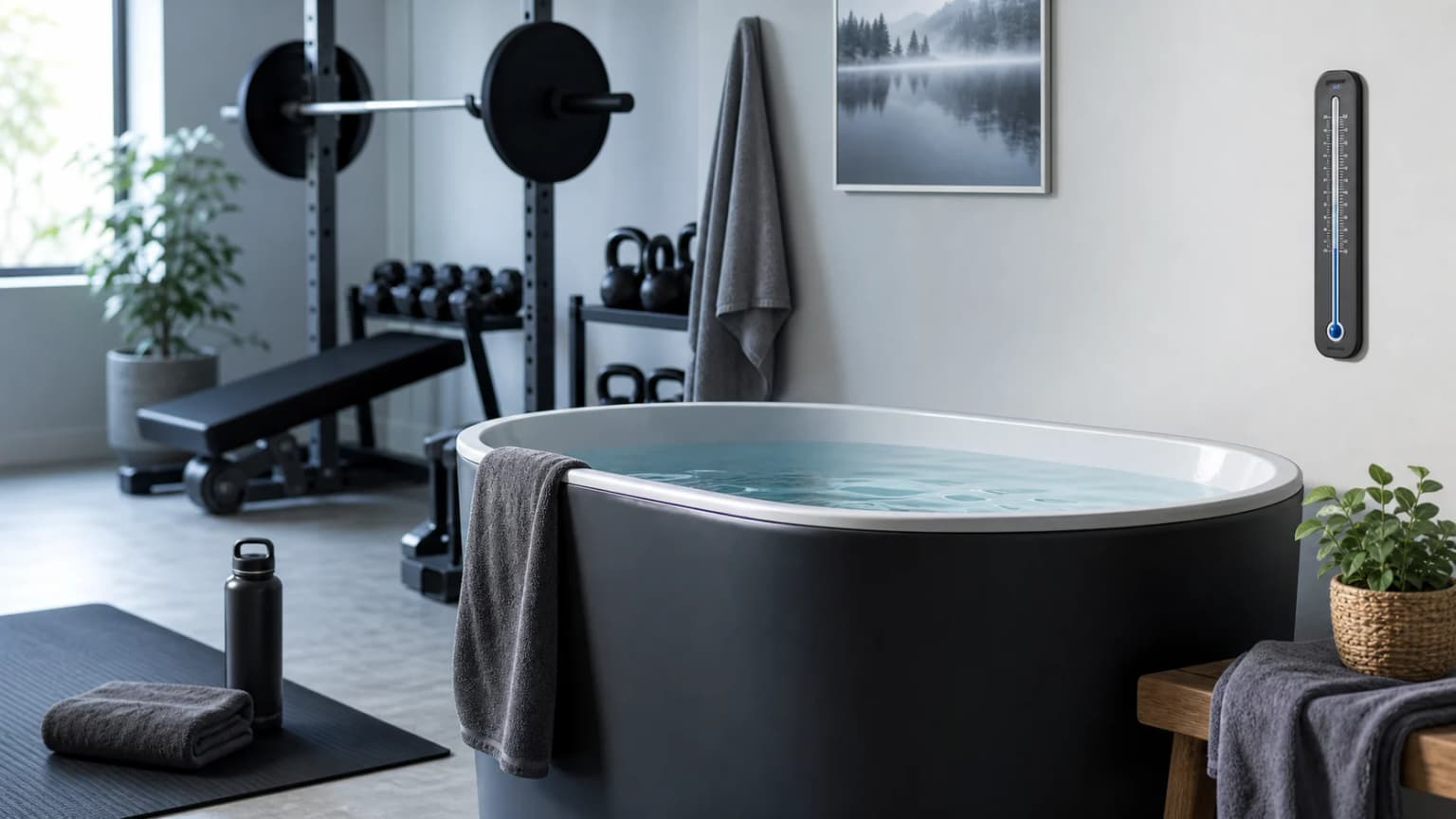
Cold Plunge Protocol: How Cold, How Long, How Often
A safe cold plunge protocol: what temperature to start at, how long to stay in, weekly frequency, timing around lifting, and what cold does not do.
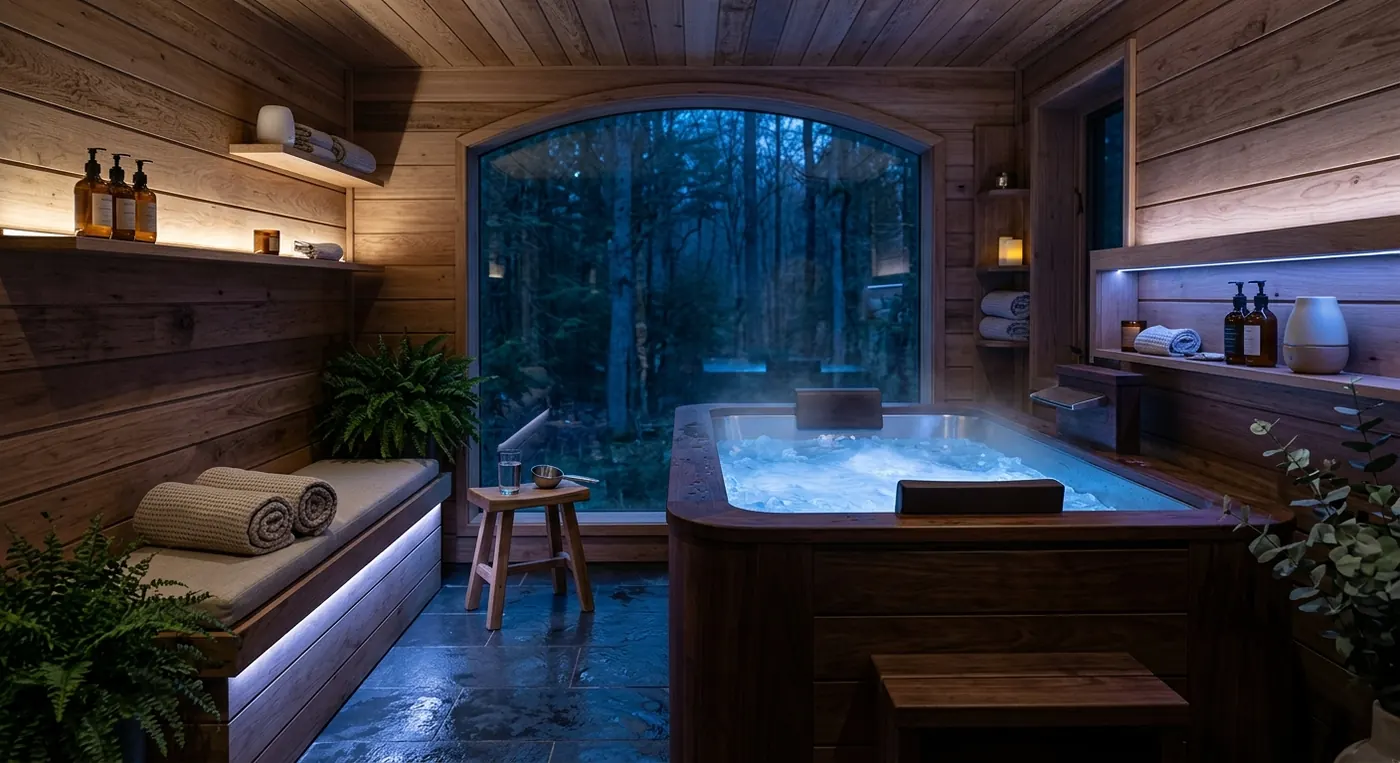
Best Cold Plunges for Home Use
Plunge wins best home cold plunge on its full stack; Ice Barrel on price, Renu Therapy on premium build. Five tubs scored on cooling, hygiene, footprint.
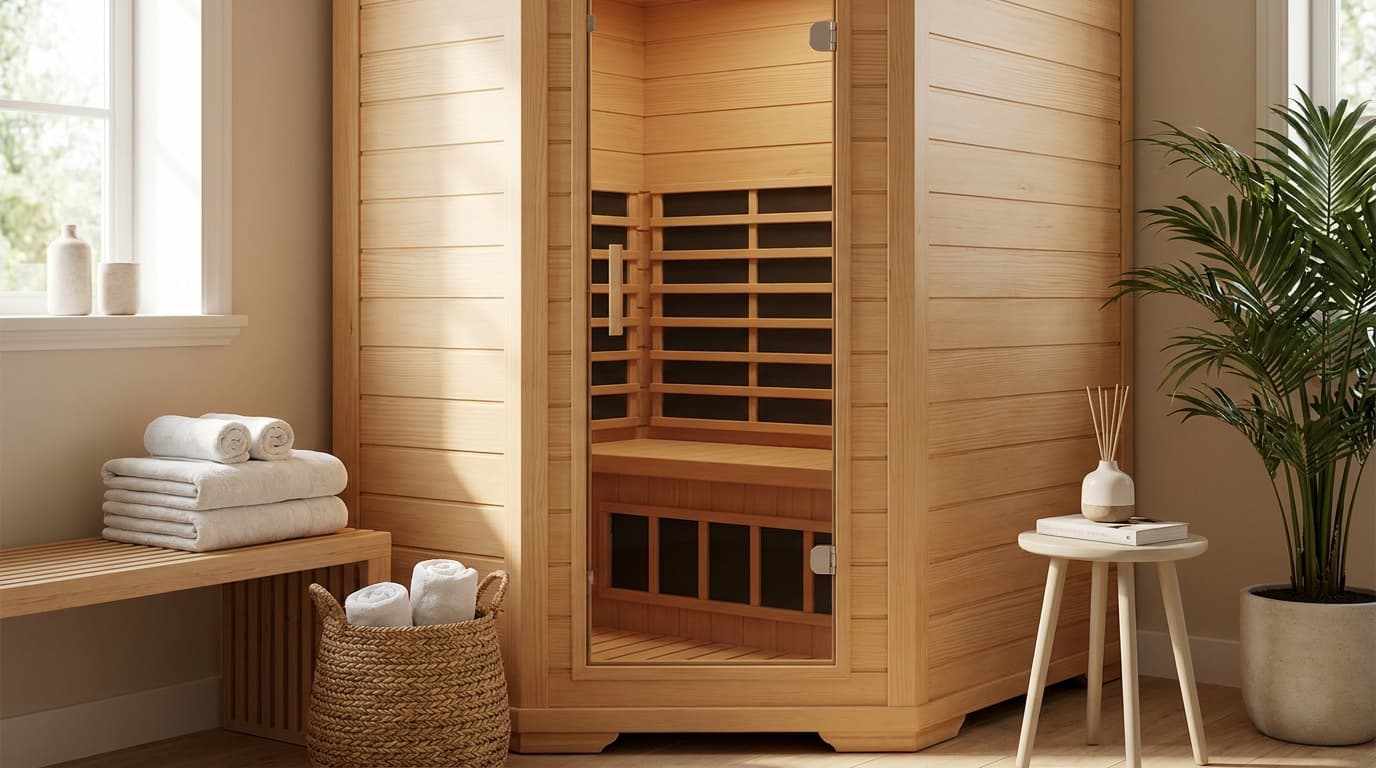
Best Infrared Sauna for Home Use in 2026: HigherDOSE Wins
The HigherDOSE V4 blanket is the best infrared sauna for apartments; the Dynamic Saunas Elite is our 1-person cabin pick. Compared on heat, EMF and build.
Hilly Shore Labs
Editorial teamThe independent product research team behind GymScored. Every recommendation is researched, never hands-on tested — rankings come from manufacturer specifications, published standards, and aggregated buyer sentiment.
161 products scored across 26 home gym categories, each on the same 5-dimension Gym Score formula.
See the scoring methodology and who we are.
Affiliate disclosure: GymScored is a participant in the Amazon Services LLC Associates Program. We earn from qualifying purchases at no extra cost to you. Full disclosure →