Used Home Gym Equipment: What to Buy and Avoid
Used home gym equipment, component by component: what is safe to buy secondhand, what needs a careful inspection, and what is usually smarter to buy new.
The best used home gym buys are simple items whose condition you can see: iron plates, fixed dumbbells, kettlebells, and undamaged steel racks. Inspect barbells, benches, cable machines, and cardio equipment in person. Skip anything with a cracked weld, bent shaft, frayed cable, unstable frame, swollen battery, missing safety hardware, or an account lock the seller cannot remove.
How GymScored is paid: Amazon Associates commission plus brand-direct affiliate (Rogue / REP / Titan when approved). No sponsored placements, no paid reviews, no pay-to-rank. Picks are ranked by the Gym Score formula and nothing else. Read the full disclosure.
Buy simple steel used; be cautious with moving parts; buy hidden wear and safety-critical soft goods new. Plates, fixed dumbbells, kettlebells, and sound racks are usually the safest secondhand bets. Benches, cable machines, and cardio equipment need a hands-on inspection. Frayed cables, cracked welds, bent barbells, damaged lithium batteries, and locked subscription hardware are walk-away conditions, not negotiating points.
Used-equipment risk map
The deciding variable is not age. It is whether wear is visible before the equipment is loaded or moving.
| Equipment | Default call | Deal-breaker |
|---|---|---|
| Iron plates, dumbbells, kettlebells | Buy used | Cracks, loose heads, sharp damage |
| Power racks and squat stands | Buy used after inspection | Cracked welds, bent uprights, missing safeties |
| Barbells | Inspect first | Bent shaft, sleeves that bind, severe rust at bushings |
| Benches | Inspect first | Frame movement, torn pad over damaged plywood, failed adjustment pin |
| Cable machines | Inspect first or budget for service | Frayed cable, cracked pulley, missing guards |
| Treadmills and smart cardio | Usually buy new or refurbished | Error codes, belt slip, battery damage, account lock |
| Bands, straps, collars, safety spotter arms | Buy new | Hidden fatigue or incomplete safety hardware |
The 10-minute pickup inspection
Decide by your situation, not the generic ranking.
| If | You want | Pick |
|---|---|---|
| Frame | Load it lightly, rock it, and inspect every weld in bright light | No cracks, movement, or fresh paint hiding a repair |
| Moving parts | Run every setting through its full range | No binding, grinding, belt slip, or error code |
| Wear parts | Inspect cables, straps, pads, pulleys, pins, and bushings | Replacement parts are available and the price still works |
| Electronics | Cold-start it and complete a short workout without the seller's phone | Console, controls, and resistance work independently |
| Ownership | Check serial number, recall status, app transfer, and included hardware | Seller can transfer the account and identify every missing part |
Used gym equipment can stretch a budget further than almost any sale. But secondhand value is not simply retail price minus depreciation. The real question is whether you can see the part that will fail before you put your body under it. That produces a clean rule: buy visible wear used; treat hidden wear as a repair bill; buy safety-critical soft goods new.
Start with the risk map, not the discount
| Category | The part that fails | Verdict |
|---|---|---|
| Plates, dumbbells, kettlebells | Cracks at the hub, loose heads, sharp gouges — all visible | Buy used |
| Simple racks | Bent uprights, suspect welds, missing safeties — visible | Buy used if complete |
| Barbells, benches, cable machines | Bent shafts, cracked pad bases, frayed cable strands | Inspect before you buy |
| Bands, suspension straps, fabric safeties | Fatigue inside the material — invisible | Buy new |
| Cardio and connected machines | Slipping belts, error codes, account-locked software | Inspect hard, or skip |
The table above sorts equipment by failure visibility. A chipped iron plate is obvious and mostly cosmetic. Fatigue inside a resistance band is not. A rack's missing J-cup is easy to price; a treadmill that slips only after 20 minutes is harder. The bigger the hidden failure and the higher its replacement cost, the less a dramatic discount means.
That is why plates, dumbbells, kettlebells, and uncomplicated racks are the first places to shop used when following a home gym budget.
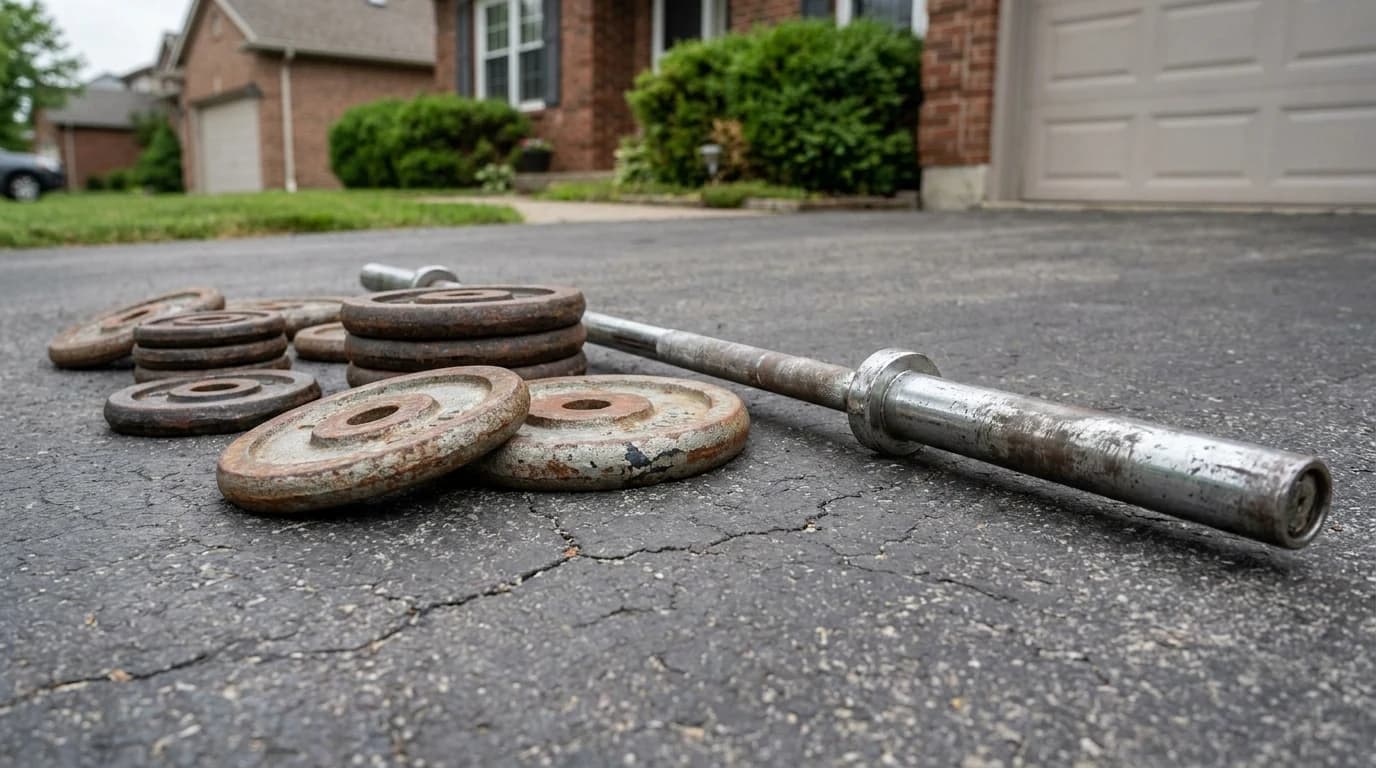
Cosmetic, ignore it:
- Rubber smell and faded logos.
- Scuffed powder coat.
- Light orange surface film on iron, which can often be cleaned.
Ends the deal:
- Cracks, sharp gouges, or bent uprights.
- Loose dumbbell heads or questionable welds.
- Deep pitting, flaking near a weld, or corrosion inside a sleeve.
Buy used: simple iron and sound steel
Plates, dumbbells and kettlebells
For plates, place each one on a flat surface and look for cracks around the hub. Confirm the stated diameter and hole size match your bar. On fixed dumbbells, twist and pull each head; any movement ends the deal. Kettlebell handles should be smooth enough not to cut a hand, with no crack where the handle meets the bell.
Racks
A rack can be an excellent secondhand buy if the uprights are straight, the welds are intact, and the original safeties and fasteners are present. Assemble it according to the manufacturer's layout rather than copying the seller's setup. A rack without compatible spotter arms or straps is not complete, however cheap the frame looks.
Worth knowing: surface rust alone is not a verdict. If your gym lives in a garage, our rust prevention guide explains the maintenance you are accepting.
Inspect first: bars, benches, and cable machines
Roll a barbell shaft on a flat surface and watch the sleeves. A visible wobble suggests a bend. Spin both sleeves, check the collars seat, and inspect the knurling for damage rather than discoloration. A bar used for rack pulls can look fine in photos and still be bent.
On a bench, sit, lie back, and apply force from several angles. The frame should not rock, the adjustment pin should seat fully, and the pad base should be solid beneath the vinyl. Replacing upholstery is manageable; trusting cracked plywood under a heavy press is not.
Cable machines deserve the brightest flashlight
Life Fitness tells owners to inspect the full cable length and replace a cable at the first sign of wear. Pull it slowly through every pulley, looking for broken strands, flattened sections, cracked pulley edges, and missing guards. A smooth demo does not cancel visible damage. Price the replacement parts before agreeing to collect it.
Usually buy new: hidden fatigue and locked electronics
Bands, suspension straps, and fabric safety straps can fail after damage that is difficult to see. The savings are small relative to the consequence, so these belong in the buy-new column, along with mismatched collars and improvised rack safeties.
The connected-machine checklist
Cardio and connected machines are not automatic rejects, but the inspection burden rises.
- Cold-start the console and run every speed or resistance setting.
- Use it under your own body weight long enough to expose slipping, noise, and error messages.
- Confirm the model still has parts support, then search the CPSC recall database before pickup.
- Make the seller remove it from their account and prove setup works without their phone.
- Reject swollen batteries or a seller who cannot explain ownership transfer.
A screen can power on while the training features stay tied to an expired service. Read what happens when a smart-gym company shuts down before paying a premium for its software.
Make the offer after the test
Ask for model, serial number, age, reason for sale, and a photo of the machine powered on before driving. At pickup, use the 10-minute inspection matrix above. Add missing hardware, transport, cleaning, and wear-part replacement to the price. If the used total approaches a refurbished unit with a warranty, the bargain has disappeared.
The trap: urgency, mystery, and a giant percentage-off claim are not equipment features. The best used purchase is boring — known model, visible condition, complete hardware, and a seller happy to let you test it.
If the used market comes up empty and you end up buying new, the Black Friday home gym deals guide explains how to tell a real discount from an anchored one.
Frequently Asked Questions
What home gym equipment is safest to buy used?+
Simple, non-moving iron is the safest category: plates, fixed dumbbells, kettlebells, and sound steel racks. Their useful condition is mostly visible. You still need to reject cracks, loose dumbbell heads, bent rack members, damaged welds, and missing safety hardware.
Is surface rust on used weights a problem?+
Light surface rust on plates or a rack is usually cosmetic and removable. Deep pitting, flaking metal, rust inside barbell sleeves, or corrosion around welds and fasteners is different because it can hide damage or make moving parts bind. Price cosmetic cleanup; reject structural uncertainty.
Should I buy a used treadmill?+
Only if you can test it under load, obtain the exact model and serial number, confirm parts support, and leave enough savings for belt, deck, or motor service. If the seller will not let you walk or run on it, the console shows errors, the belt slips, or the model is under recall, walk away.
How do I check whether used gym equipment was recalled?+
Search the US Consumer Product Safety Commission recall database using the manufacturer and exact model name, then compare the serial number range when a recall exists. Do this before pickup, especially for treadmills, connected equipment, and products with batteries.
Sources & Research
Your next step
Buying new instead? Start here.
Related reviews
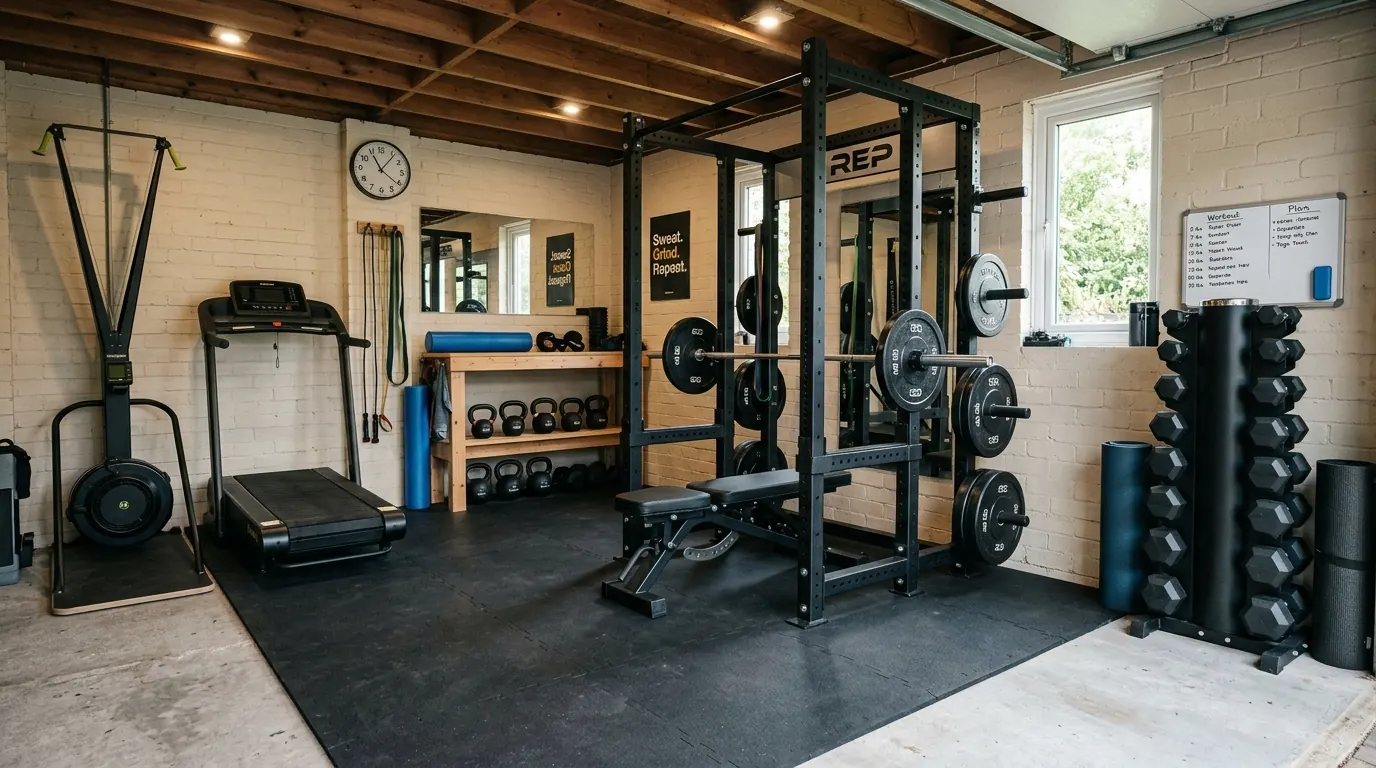
How to Build a Home Gym on Any Budget
Five complete home gym builds at $500, $1,500, $3,500, $7,500, and $15,000 - what to buy first, what to add later, and what to skip at every budget level.
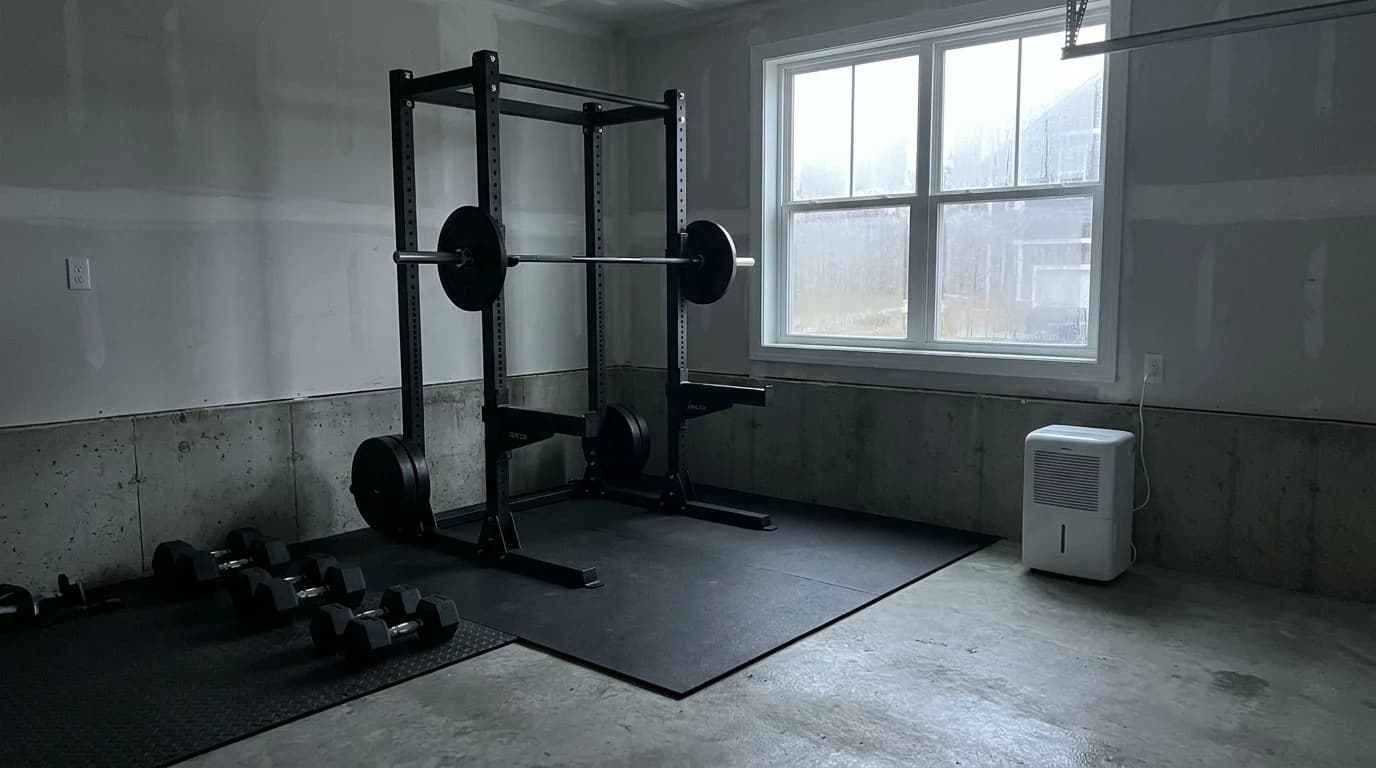
How to Protect Garage Gym Equipment From Rust
Garage gym equipment rusts when the air crosses a humidity threshold, not because the steel is cheap. The line that matters and 5 fixes ranked by payoff.

What Happens to Your Smart Gym Machine If the Company Shuts Down?
When a smart gym machine's maker shuts down or the servers die, some machines keep working and some brick. How to tell which yours is before it happens.
Hilly Shore Labs
Editorial teamThe independent product research team behind GymScored. Every recommendation is researched, never hands-on tested — recommendations draw on manufacturer specifications and available published research. Category order is editorial; the Gym Score is a separate comparison aid.
161 listed products across 26 home gym categories. Scores use category criteria, value and owner-rating inputs; missing evidence limits what a score can tell you.
See the scoring methodology and who we are.
Affiliate disclosure: GymScored is a participant in the Amazon Services LLC Associates Program. We earn from qualifying purchases at no extra cost to you. Full disclosure →