How to Choose a Walking Pad for Home (Not Your Desk)
Choosing a walking pad for home cardio, not desk work: the specs that matter, why run-capable pads are a trap, and which features earn their footprint.
Choose a walking pad for how far you will walk, not how fast. For home cardio, prioritize deck length for your height (48 inches or more if you are tall), a continuous-duty motor rated for daily hours, quiet operation for shared floors, and easy folding. Ignore 'up to 7.5 mph' and steep-incline claims: a running stride needs about a 55-inch deck and walking pads run closer to 43, so treat one as a step-accumulation machine, not a budget treadmill.
How GymScored is paid: Amazon Associates commission plus brand-direct affiliate (Rogue / REP / Titan when approved). No sponsored placements, no paid reviews, no pay-to-rank. Picks are ranked by the Gym Score formula and nothing else. Read the full disclosure.
A walking pad earns its place if you want to convert sitting time into steps, quietly, in a small space. Buy it to walk, not to run: the short deck that makes it foldable also makes 'run-capable' claims a safety trap. Match the deck length to your height, the motor rating to daily use, and the noise to your floor plan, and skip the incline and top-speed numbers you will never use.
Match the pad to how you'll use it
Pick specs by use case, not by the longest feature list. Most home buyers overspend on speed and incline and underspend on deck length and a duty-rated motor.
| Use case | Deck + speed to target | What to skip |
|---|---|---|
| Home cardio / step-banking | 46 in+ deck, 3.5-4 mph top speed, remote or app | Steep incline, 6+ mph 'run' modes |
| Under a standing desk | 40-44 in deck, 0-2.5 mph, ultra-quiet motor | Handrails, high top speed, incline |
| Shared floor or apartment | Low-noise motor, cushioned belt, rubber feet | Loud high-speed models, hard thin decks |
| Taller user (6 ft+) | Longest deck you can fit, 48 in or more | Compact 40 in pads, short-belt 2-in-1s |
Walking pad spec check: signal vs marketing
Decide by your situation, not the generic ranking.
| If | You want | Pick |
|---|---|---|
| Deck length | Long enough for your stride at your usual pace (42-44 in for average height, 48 in+ if tall) | 'Run-ready up to 7.5 mph' printed on a 42-inch deck the stride won't fit |
| Motor rating | A continuous-duty motor rated for the hours you'll actually walk | Peak-horsepower numbers that only hold for a few seconds |
| Weight capacity | Your body weight plus a comfortable margin, since the rating is a ceiling | A capacity that exactly matches your weight with no headroom |
| Noise | Quiet enough for your floor and anyone below or beside you | 'Whisper-quiet' claims measured at 1 mph, not your real pace |
| Portability | Folds or rolls to where it will actually live between uses | A pad so heavy it stays out and becomes a clothes rack |
Walking pads sell a simple promise: steps without a gym, a commute, or a full-size treadmill eating your living room. The promise is real — but most buying advice pushes the wrong specs, and a lot of "3-in-1, run-capable" models are quietly the wrong machine for a home. Here is how to choose one for actual home use, where the goal is a habit you keep, not a number on a box.
What a walking pad is actually for
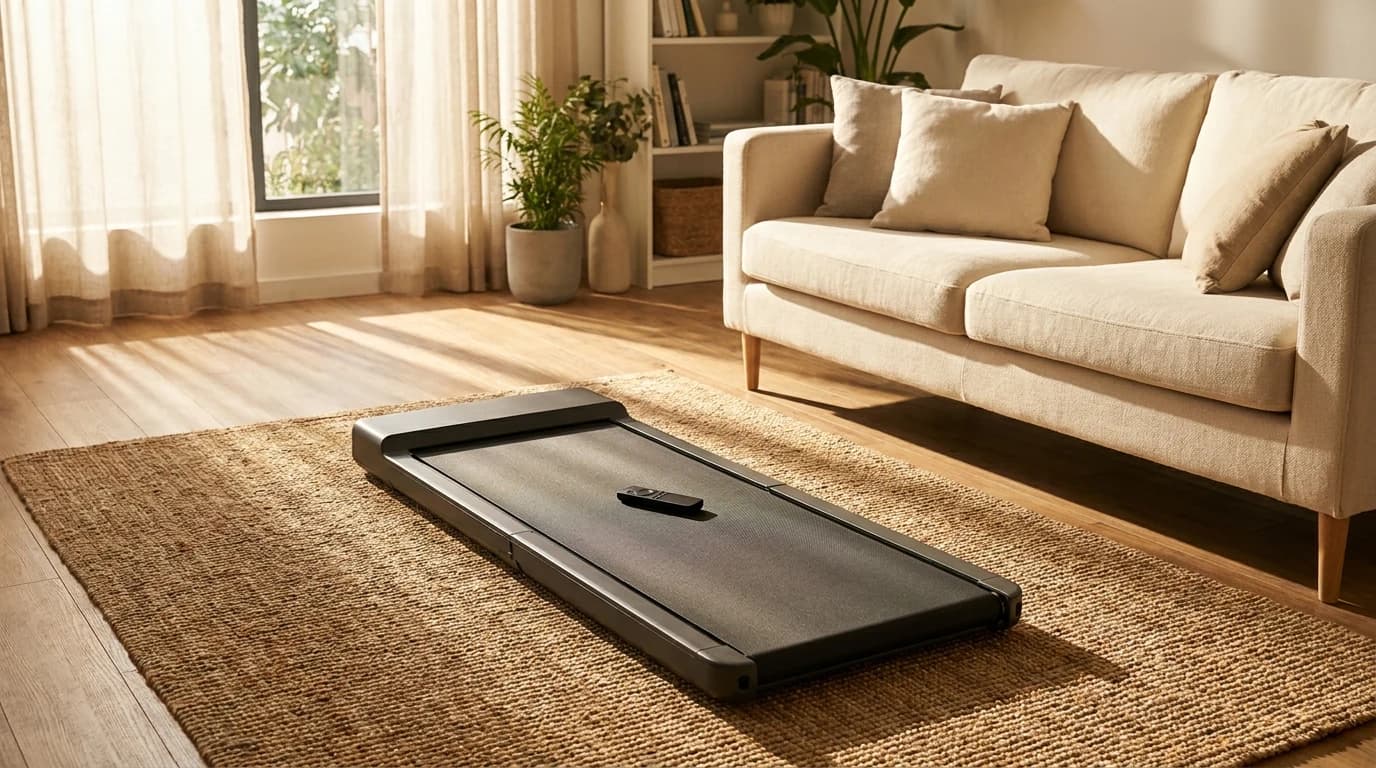
A walking pad is a step-accumulation machine. Its entire value is turning hours you'd otherwise spend sitting into steps, indoors, on the days weather or your schedule kills a real walk.
Steps, not pace, are what the research rewards
A 2022 meta-analysis in Lancet Public Health pooling 15 international cohorts found all-cause mortality risk kept falling with more daily steps up to roughly 6,000–8,000 steps a day for adults 60 and older and 8,000–10,000 for adults under 60, with clear benefit well below the folklore 10,000. Step intensity added little once total volume was accounted for.
Worth knowing: a slow indoor pad that lets you bank a few thousand extra steps on a desk-bound day is doing the real work. You do not need speed. You need a machine you'll step onto without thinking about it.
The one we would buy: the WalkingPad C2 at $449.00 for a flat pad that stores under a sofa, or the WalkingPad Z1R at $359.00 from our walking pad roundup if you want a handrail and a lower price.
The spec that rules most buyers out: deck length
Here is the line most listings bury: a walking pad is not a budget treadmill, and you cannot really run on one.
What a running deck actually measures
Garage Gym Reviews, which has tested more than 50 treadmills, pegs a standard running deck at 55 inches long; walking pads and under-desk treadmills average a belt surface of about 43 inches, because walkers have a much shorter stride than joggers. Their testers found safety problems — catching the front motor hood — specifically "when using shorter-than-average treadmill decks for faster running workouts, such as those found on under-desk treadmills and walking pads." Dick's buying guide is blunter: walking pads "don't usually support running speeds or incline options."
The trap: the "up to 7.5 mph, run-capable" figure printed on a 42-inch deck is marketing. You can jog on one in a pinch; you should not buy one to run.
If running is even a maybe, buy a treadmill instead. And if you're over about six feet, hunt for the longest deck you can fit — 48 inches or more — because a deck sized for an average walker will feel cramped and unsafe for you at any real pace.
Use the two tables above to turn this into a shortlist: the spec check separates real signal from marketing, and the use-case table maps your situation to the deck, speed, and noise you should target.
Home cardio and desk walking want different pads
Two jobs, two spec sheets
This is where buyers go wrong most often: they read desk-treadmill advice and buy a desk pad for living-room cardio, or the reverse.
Buying it to live under a desk:
- Flat, near-silent, and 0–2.5 mph — anything faster wrecks typing accuracy.
- We break down the exact speeds in Walking Pad + Standing Desk.
- The best desk-specific models are in our under-desk roundup, and its fit check tests them against your desk height and weight.
Buying it for home cardio:
- A longer deck and a 3.5–4 mph top end.
- A remote or app for simple intervals.
- Still no serious incline or "run" mode.
Buying one pad for both jobs is fine; just size the deck and motor for the more demanding one (home cardio) and keep the noise low enough for desk use.
What most people get wrong
The specs that decide month two
They overbuy speed and incline and underbuy the two specs that decide whether the pad survives past month one:
- Deck length, for comfort and safety at your height.
- A continuous-duty motor rating, for the daily hours you'll actually log — peak-horsepower numbers only hold for seconds.
- Weight capacity as a ceiling, not a target. Leave a margin.
- Somewhere for it to go. A pad only counts if it folds or rolls to where it lives between uses; the heaviest "premium" models quietly become clothes racks.
Get those right and a walking pad is one of the highest-adherence pieces of home cardio gear you can buy. Compare the current field on our walking pads category page.
Frequently Asked Questions
Can you run on a walking pad?+
Not safely for most people. A running stride needs roughly a 55-inch deck, while walking pads average about 43 inches, so a running gait risks stepping onto the front motor hood. Treat 'run-capable, up to 7.5 mph' claims as marketing, and buy a treadmill if you want to run.
How long a deck do I need for my height?+
For average height, a 42-44 inch deck is fine for walking. If you are around six feet or taller, look for the longest deck you can fit, 48 inches or more, because a short deck forces a cramped, less safe stride at any real pace.
Is slow walking on a pad actually enough exercise?+
For general health, the step count matters more than the speed. A 2022 Lancet Public Health meta-analysis found mortality risk kept dropping up to about 6,000-8,000 steps a day for adults 60 and older and 8,000-10,000 for younger adults, with intensity adding little once total steps were counted. A pad that adds a few thousand slow steps on a sedentary day is doing real work.
Walking pad, under-desk treadmill, or full treadmill: which do I need?+
Choose by top speed and deck. A walking pad or under-desk treadmill suits walking at 0-4 mph in a small footprint. A full treadmill, with a longer deck and continuous-duty motor, is what you need if you will ever jog or run.
Sources & Research
- Lancet Public Health (PubMed Central) — Daily steps and all-cause mortality: a meta-analysis of 15 international cohortsresearch
- WalkingPad — WalkingPad C2 — published specifications (47.2 x 15.7 in walking area, 32.5 x 20.4 x 5.4 in folded)manufacturer
- Dick's Sporting Goods — How to Choose the Right Treadmillreview
Your next step
Skip to the ranked pads.
Related reviews
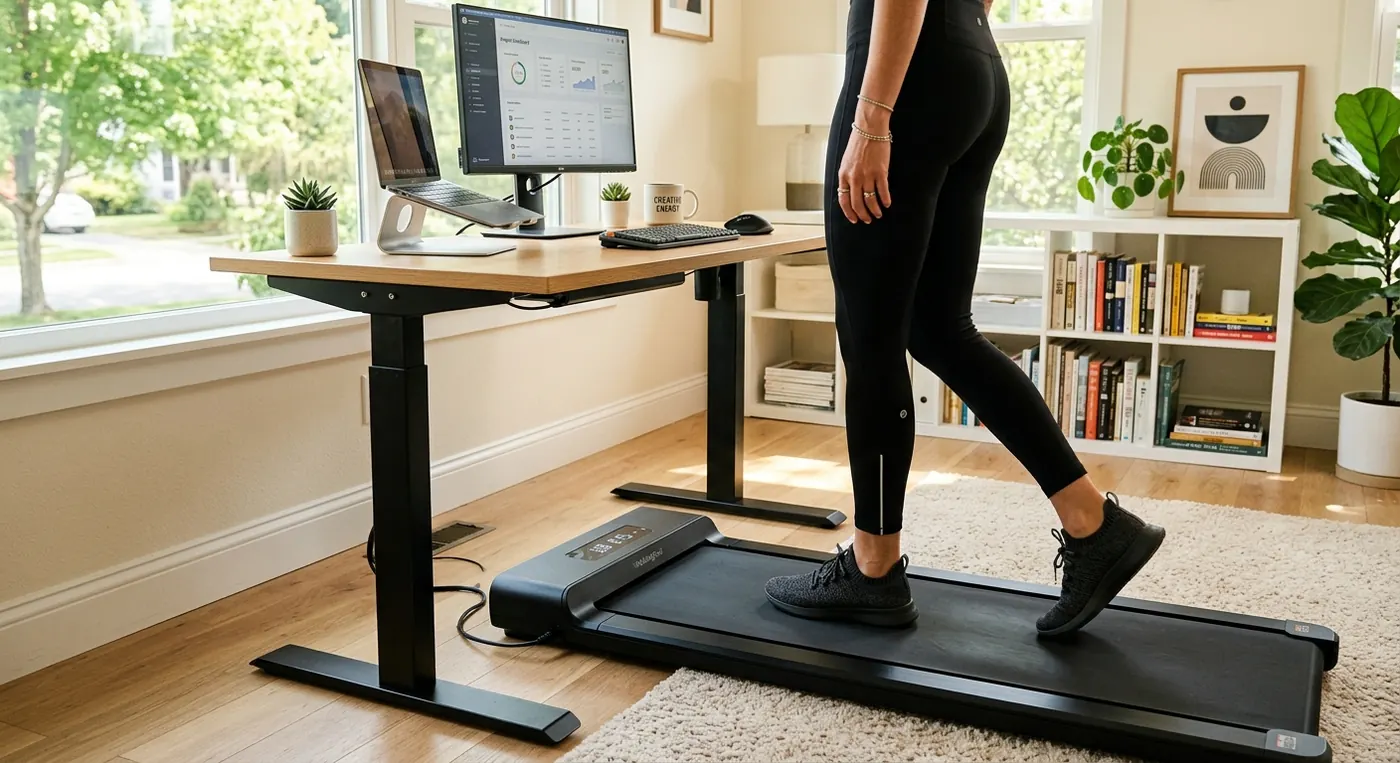
Best Walking Pads to Use Under a Standing Desk
The WalkingPad C2 is the best under-desk walking pad for its fold-in-half design; the Abonow is the budget pick. Four pads compared on height and belt.
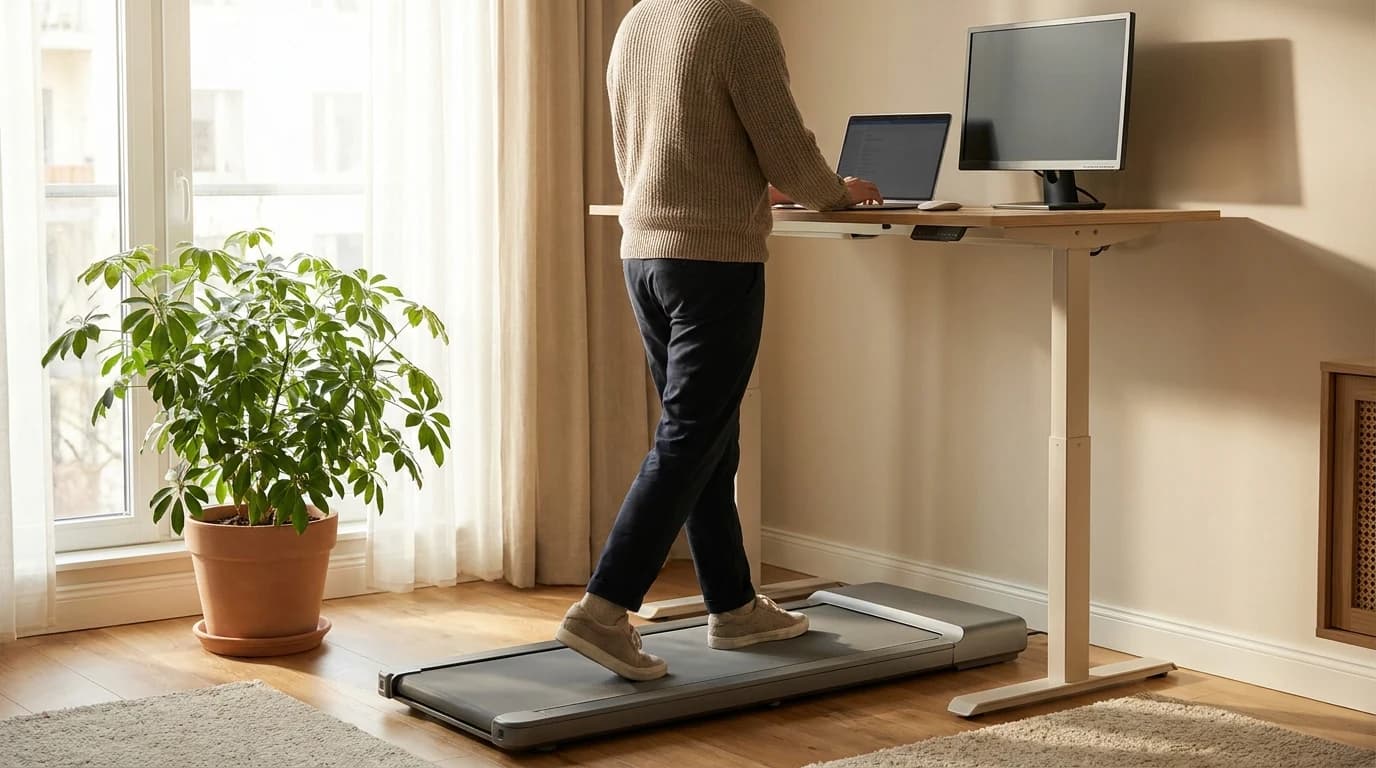
Walking Pad + Standing Desk: Speeds That Don't Wreck Work
Typing drops about 13 WPM at 1.5 mph on a walking pad - comprehension doesn't. The task-by-speed map, desk height, and a walk-stand-sit rotation.
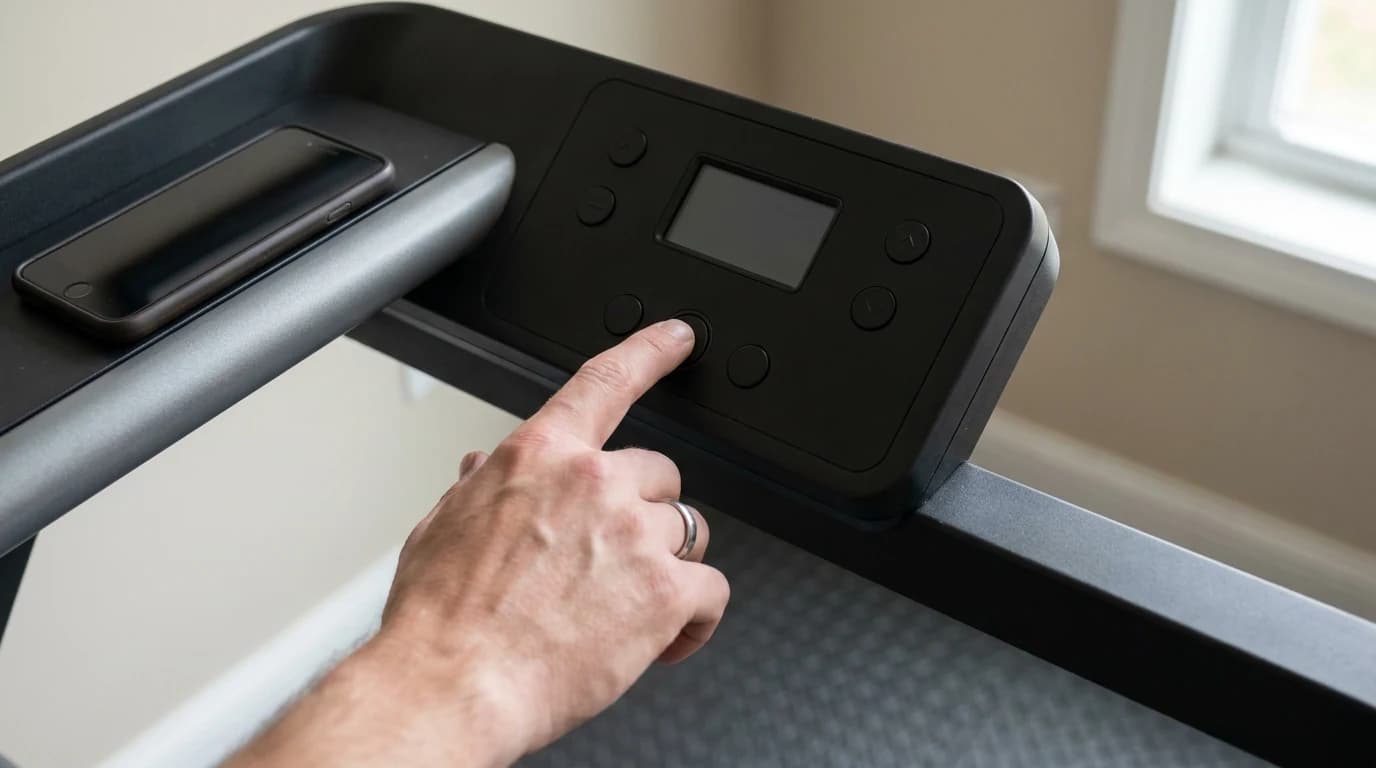
Does Your Treadmill Need an App to Work? Three Tiers
Treadmills split into three tiers: standalone, account-to-activate, and membership-gated. No subscription does not mean no app - check before you buy.
Hilly Shore Labs
Editorial teamThe independent product research team behind GymScored. Every recommendation is researched, never hands-on tested — rankings come from manufacturer specifications, published standards, and aggregated buyer sentiment.
161 products scored across 26 home gym categories, each on the same 5-dimension Gym Score formula.
See the scoring methodology and who we are.
Affiliate disclosure: GymScored is a participant in the Amazon Services LLC Associates Program. We earn from qualifying purchases at no extra cost to you. Full disclosure →