Should You Warm Up Before Lifting at Home? (And How)
Static stretching before a heavy set costs you strength. The 5-minute dynamic warm-up that works before lifting at home, and what most get wrong.
Yes, warm up before you lift, but warm up by moving, not by holding stretches. Spend two to three minutes on light cardio, one to two minutes on dynamic mobility (leg swings, walking lunges, arm circles), then ramp into your working weight with two or three progressively heavier sets of the lift itself. The one common mistake to drop is static stretching right before a heavy set: a meta-analysis of 104 studies found it reduced maximal strength about 5.4 percent, and a separate review found dynamic stretching slightly improved performance while static stretching slightly hurt it. Save long static holds for after training or rest days. Scale the warm-up to the load: heavy squats and deadlifts deserve the full sequence and several ramp-up sets; light accessory work needs only a quick general warm-up and one feeder set.
How GymScored is paid: Amazon Associates commission plus brand-direct affiliate (Rogue / REP / Titan when approved). No sponsored placements, no paid reviews, no pay-to-rank. Picks are ranked by the Gym Score formula and nothing else. Read the full disclosure.
Warm up by moving, not by stretching. A few minutes of light cardio and dynamic mobility, then two to three progressively heavier sets of the lift itself, prepares you to train far better than sitting on the floor holding stretches. The one thing to avoid is long static holds right before a heavy set, which research shows can slightly cut the strength you are about to need. Save the long stretches for after your session or for rest days, scale the warm-up to how heavy and how cold the lift is, and treat the ramp-up sets as the most useful five minutes of your workout.
A 5-minute pre-lift warm-up
Move through these in order; the ramp-up sets are the part that matters most. Save long static stretches for after the session.
| Phase | What to do | Why it's there |
|---|---|---|
| General (2-3 min) | Easy bike, row, brisk walk, or jumping jacks until lightly breathing | Raises core temperature and blood flow |
| Dynamic mobility (1-2 min) | Leg swings, walking lunges, arm circles, hip openers through full range | Opens joints without the strength cost of long holds |
| Movement prep (1 min) | A few bodyweight reps of the pattern you're about to load | Grooves the movement and wakes the right muscles |
| Ramp-up sets | 2-3 sets of the lift itself, building toward your working weight | Rehearses the lift and primes force production |
The short version
Yes, you should warm up before you lift, and the warm-up that helps is not the one most people do. A few minutes of light movement plus a couple of progressively heavier sets of the lift itself will prepare you better than sitting on the floor holding stretches. A good warm-up raises your core temperature, gets blood to the muscles, and improves joint range of motion, which lets you produce force faster and move through a full range under load.
The wrinkle, and the part most home lifters get backwards, is static stretching. Holding a long stretch right before a heavy set can slightly reduce the strength you have available for that set. The fix is simple: save the long holds for after, and warm up by moving.
Key takeaways
- Warm up by moving, not by holding stretches. Light cardio, mobility drills, and a few ramp-up sets prepare you to lift; long static holds beforehand do not, and can cost you a little strength.
- A static stretch before a heavy set is a small tax, not a catastrophe. The strength drop is real but modest (a few percent), and it shrinks when holds are short. Just don't make it your whole warm-up.
- The most useful warm-up is the lift itself, lighter. Two or three progressively heavier sets of the exact movement you're about to do is the highest-value part of the whole routine.
- What most people get wrong: they either skip the warm-up entirely and load up cold, or they spend it static-stretching, which is the one warm-up activity research suggests can hurt the strength they're about to need.
The static-stretching myth
For decades the standard advice was: stretch before you train. The research on actually lifting has pushed the other way. A meta-analysis pooling 104 studies found that pre-exercise static stretching reduced maximal strength by about 5.4% on average, with the smallest deficits when holds were kept to 45 seconds or less. A separate systematic review comparing stretch types found static stretching nudged performance down about 3.7%, while dynamic stretching nudged it up about 1.3%.
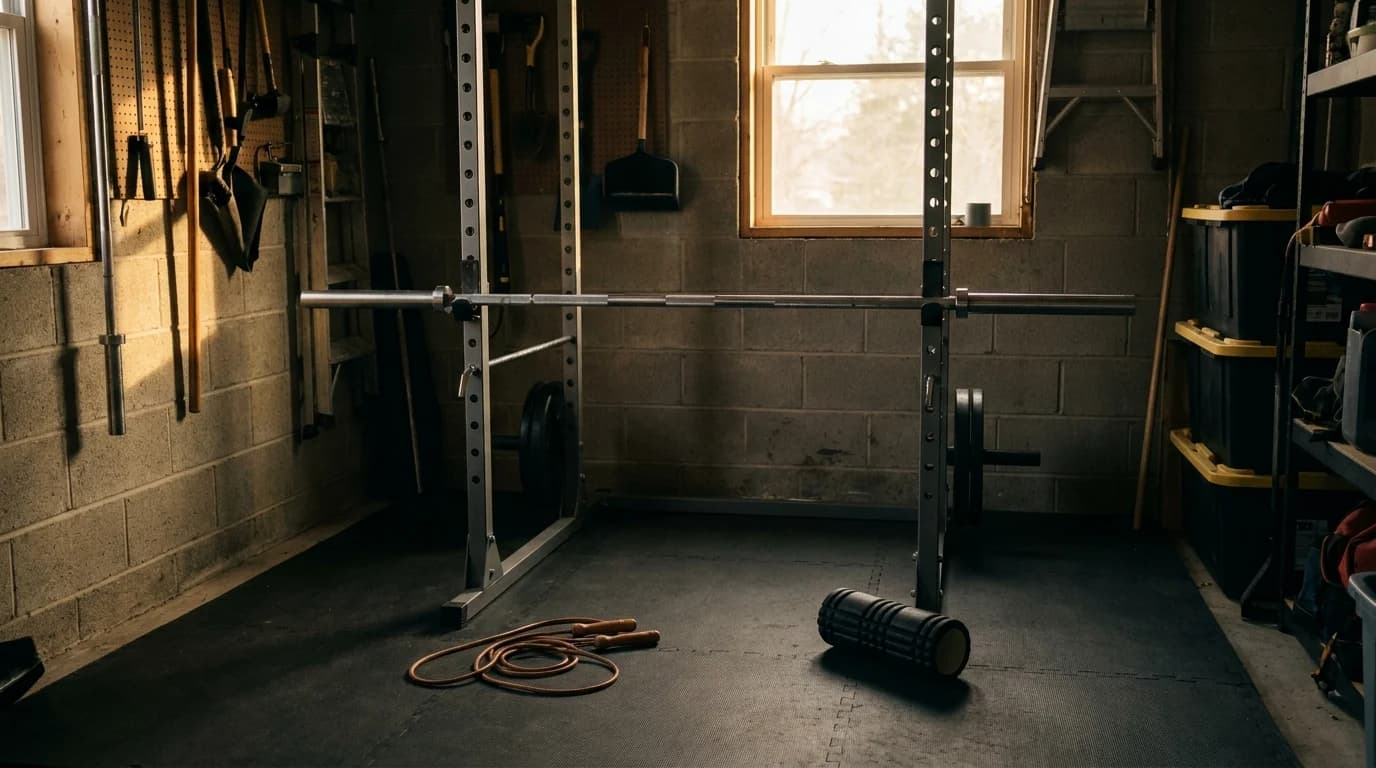
Two different jobs, two different times
That's the whole case for changing what you do. Static stretching isn't bad, it's just the wrong tool right before a heavy set.
Do this before a heavy set:
- Light cardio until you're warm and lightly breathing.
- Dynamic mobility through a full range.
- A few bodyweight reps of the pattern you're about to load.
- Progressively heavier sets of the lift itself.
Save this for after, or a separate session:
- Minute-long static holds.
- Flexibility work you're doing to build range, not to prepare.
- Anything that leaves a muscle feeling loose right before you ask it for force.
The strength-and-conditioning consensus is now that a warm-up and stretching are two different activities with two different jobs: a warm-up prepares you to perform, while long-hold stretching is for building flexibility, which is better done on its own or at the end of a session.
Worth knowing: a quick mobility move that briefly takes a joint to end range is not forbidden. The thing to avoid is making minute-long static holds the bulk of your pre-lift routine when your next set is heavy.
A 5-minute warm-up that actually helps
The four phases
You don't need a long ritual. The goal is warm muscles, open joints, and a nervous system that's awake, in about five minutes, then ramp into the working weight with the lift itself.
| Phase | What to do | Why it's there |
|---|---|---|
| General (2-3 min) | Easy bike, row, brisk walk, or jumping jacks until you're warm and lightly breathing | Raises core temperature and blood flow so muscles contract faster |
| Dynamic mobility (1-2 min) | Leg swings, walking lunges, arm circles, hip openers through a full range | Improves active range of motion without the strength cost of long holds |
| Movement prep (1 min) | A few bodyweight reps of the pattern (air squats before squats, band pull-aparts before pressing) | Grooves the exact movement and wakes the right muscles |
| Ramp-up sets | 2-3 sets of the lift itself, light to moderate, building toward your working weight | The single most useful part: rehearses the lift, primes force production |
Why the ramp-up sets carry the routine
The ramp-up sets are not optional padding. If your working set is a 185 lb squat, you might do the empty bar, then 95, then 135, then 165 for low reps before your first real set. Each one is part of the warm-up, and it's the part that maps most directly to what you're about to do.
How to scale it to the lift
Match the effort to the load
Not every session needs the same warm-up. Match the effort to the load:
- Heavy compound lifts (squat, deadlift, press, row): Do the full sequence and several ramp-up sets. The heavier and more technical the lift, the more ramp-up sets you want, because they double as technique rehearsal at lower risk.
- Lighter accessory work (curls, lateral raises, band work): A general warm-up plus one light feeder set is usually enough. You don't need to ramp up to a 20 lb dumbbell the way you do to a max-effort deadlift.
- Pure conditioning (intervals, carries): Two to three minutes of easy movement that becomes the activity itself. The first round at low intensity is the warm-up.
Rule of thumb: the colder your space and the heavier your first working set, the more warm-up you need. A garage gym at 50 degrees in winter earns a longer general warm-up than a 72-degree spare room.
What the research does NOT say
- It does not say warming up will prevent injury with certainty, or that skipping a warm-up guarantees one. The injury-prevention evidence for warm-ups is mixed and study-dependent, and a systematic review of upper-body warm-ups found effects on performance and injury ranged from positive to neutral to negative depending on the protocol.
- It does not say static stretching is harmful in general. The evidence is specifically about doing long static holds immediately before a strength or power effort. Stretch all you want on a rest day or after training.
So warm up because it reliably improves how you move and perform, and because it costs five minutes, not because a citation promises it will keep you injury-free.
The bottom line
Spend five minutes getting warm and moving, then ramp into your working weight with the lift itself, and skip the long pre-lift stretches. That sequence is supported by the research, costs almost nothing, and prepares you to actually move the weight, which is the whole point. Pair it with training each major muscle group on two or more days a week, per CDC physical-activity guidance, and the warm-up becomes a small, repeatable habit that quietly protects every session that follows.
Frequently Asked Questions
Is it bad to stretch before lifting weights?+
Long static stretches held right before a heavy set are not ideal: a meta-analysis of 104 studies found pre-exercise static stretching reduced maximal strength by about 5.4 percent on average. The deficit is modest and shrinks when holds are kept under 45 seconds, so a quick stretch is not a disaster, but it should not be your whole warm-up. Use dynamic mobility instead, and save long static stretches for after your session or for rest days.
How long should a warm-up before lifting be?+
About five minutes for most sessions: two to three minutes of light cardio to raise your temperature, one to two minutes of dynamic mobility, then two or three progressively heavier ramp-up sets of the lift itself. Heavier and more technical lifts, or a cold workout space, earn a longer warm-up; light accessory work needs only a quick general warm-up and one feeder set.
What is the difference between a warm-up and stretching?+
They do different jobs. A warm-up is preparatory movement designed to raise body temperature, increase blood flow, and improve active range of motion so you can perform, while stretching is primarily about building flexibility. Strength-and-conditioning guidance treats them separately, which is why the modern recommendation is to warm up with dynamic movement and ramp-up sets, and to do long static stretching at a different time.
Does warming up prevent injury?+
It may help, but the evidence is mixed rather than guaranteed. A systematic review of upper-body warm-ups found effects on performance and injury ranged from positive to neutral to negative depending on the protocol. The reliable reason to warm up is that it improves how you move and produce force in the session ahead. Treat injury reduction as a possible bonus, not a promise.
Sources & Research
- Does pre-exercise static stretching inhibit maximal muscular performance? A meta-analytical review — Simic, Sarabon & Markovic, Scand J Med Sci Sports 2013 (PMID 22316148; static stretching reduced strength ~5.4%, smallest deficit at <=45s holds)
- Acute effects of muscle stretching on physical performance, range of motion, and injury incidence in healthy active individuals: a systematic review — Behm, Blazevich, Kay & McHugh, Appl Physiol Nutr Metab 2016 (PMID 26642915; static -3.7%, dynamic +1.3% performance)
- A systematic review of the effects of upper body warm-up on performance and injury — McCrary, Ackermann & Halaki, Br J Sports Med 2015 (PMID 25694615)
- Introduction to Dynamic Warm-Up — National Strength and Conditioning Association (a warm-up and stretching are two different activities; dynamic warm-up raises temperature, blood flow, and range of motion)
- Physical Activity Guidelines for Adults — CDC (muscle-strengthening on 2+ days a week, all major muscle groups)
Your next step
The kit that makes a warm-up quick.
Related reviews
Progressive Overload at Home Without Adding Weight
Progressive overload without adding weight: progress with reps, sets, tempo, range, and rest when the next dumbbell jump is too big. The full method.
How Often Should You Train Each Muscle at Home?
About twice a week per muscle, says the research - but once weekly volume is equal, frequency barely matters. How to set your volume and split at home.

Best Foam Rollers for Recovery in 2026: TriggerPoint Grid Wins
The TriggerPoint Grid is the best foam roller of 2026 for most people; the RumbleRoller suits very tight athletes. Rollers compared on density and texture.
Hilly Shore Labs
Editorial teamThe independent product research team behind GymScored. Every recommendation is researched, never hands-on tested — recommendations draw on manufacturer specifications and available published research. Category order is editorial; the Gym Score is a separate comparison aid.
170 listed products across 26 home gym categories. Scores use category criteria, value and owner-rating inputs; missing evidence limits what a score can tell you.
See the scoring methodology and who we are.
Affiliate disclosure: GymScored is a participant in the Amazon Services LLC Associates Program. We earn from qualifying purchases at no extra cost to you. Full disclosure →