Standard or Olympic Weight Plates: Check Barbell Fit
Standard vs Olympic weight plates: measure the loading sleeve and plate hole, match collars, and check adapters before buying weights for your home gym.
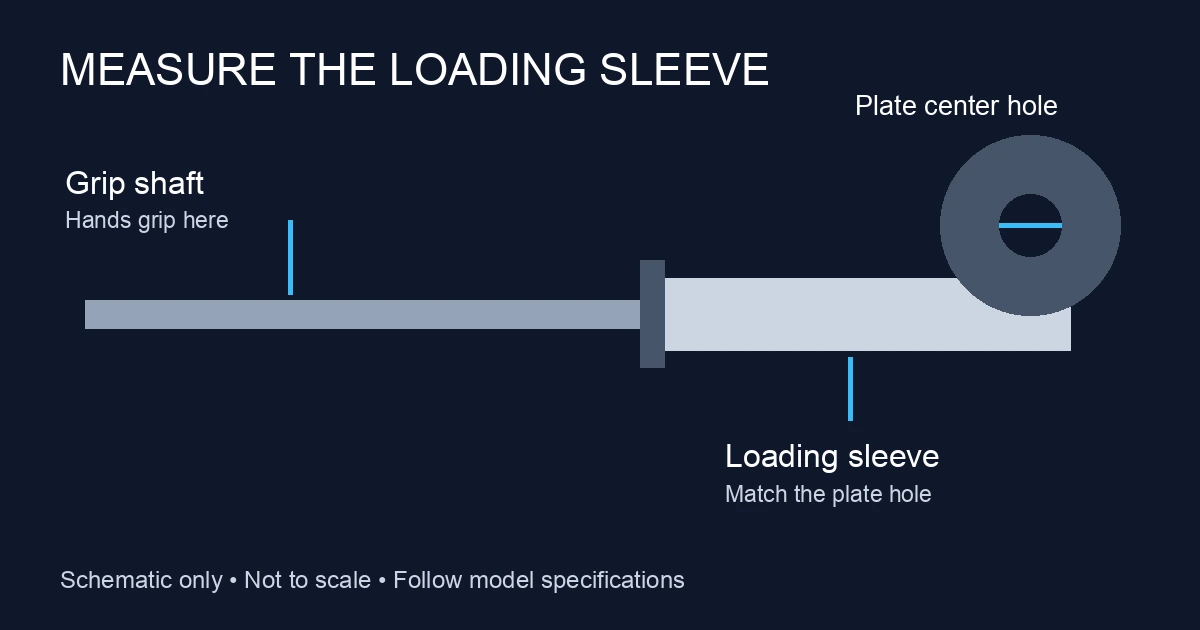
Standard weight plates commonly use a nominal 1-inch hole; Olympic plates use the larger nominal 2-inch system. Match the plate hole to the bar’s loading sleeve, not the shaft you grip. A smaller hole cannot fit a larger sleeve, while an oversized hole on a smaller bar is not a properly matched setup.
How GymScored is paid: Amazon Associates commission plus brand-direct affiliate (Rogue / REP / Titan when approved). No sponsored placements, no paid reviews, no pay-to-rank. Picks are ranked by the Gym Score formula and nothing else. Read the full disclosure.
Standard weight plates commonly use a nominal 1-inch hole; Olympic plates use the larger nominal 2-inch system. Match the plate hole to the bar’s loading sleeve, not the shaft you grip. A smaller hole cannot fit a larger sleeve, while an oversized hole on a smaller bar is not a properly matched setup.
Which measurement determines whether a plate fits?
The loading sleeve determines plate compatibility. Measure the part where the plates sit, then compare it with the plate's center hole. The grip shaft, overall bar length and plate's outside diameter answer different questions.
York sells standard plates for its 1-inch dumbbell handles. Barbell Standard’s FAQ separates nominal 1-inch standard plates from nominal 2-inch Olympic plates and advises against putting its Olympic plates on a 1-inch barbell. Both systems can exist in one home gym, but they are separate inventories.
| Plate system | Matched loading end | Mismatched loading end |
|---|---|---|
| Nominal 1-inch standard | Bar or handle specified for those plates | Cannot slide over an Olympic sleeve |
| Nominal 2-inch Olympic | Olympic loading sleeve | Oversized opening on a bare standard bar |
| Manufacturer-approved adapter system | Exact adapter, host bar and plate combination | An unspecified sleeve or homemade spacer |
Do not judge compatibility from the word standard in a listing alone. It can describe a plate system, ordinary product quality or a brand name. Barbell Standard sells Olympic plates. A seller saying standard Olympic plates has not told you that the hole is 1 inch.
Shaft diameter is the most expensive misread
Rogue lists a 29 mm shaft on its Ohio Power Bar, checked October 12, 2026. That specification describes the gripping section. It does not mean the bar takes plates with 29 mm holes. Product tables often put shaft diameter near sleeve length, so read the field label rather than extracting whichever number looks useful.
Our barbell and plate buying guide covers selection. Establish fit before comparing finishes or scores; a high-ranked plate in the wrong system is still the wrong purchase.
Measure the loading end: The sleeve and the hole must match. The grip diameter does not choose your plates.
Are 2-inch and 50 mm plate specifications identical?
Treat them as names for the Olympic ecosystem, not a promise of identical precision dimensions. Two inches converts to 50.8 mm, but manufacturers publish model-specific openings and tolerances. Do not round a spec yourself and use it as a guarantee.
For example, Rogue lists a 50.6 mm collar opening on its 12-sided urethane grip plates, checked October 12, 2026. That is a plate-hole specification. It is not the plate's outside diameter, and it does not imply that every other Olympic plate is manufactured to the same opening.
Ask for the actual specification when fit matters
If a plate binds on a bar it should fit, do not hammer it on or modify the hole as a troubleshooting shortcut. Confirm the model numbers, inspect for visible damage and ask the suppliers to establish compatibility. A nominal ecosystem match narrows the question; it does not settle a manufacturing defect or damaged component.
Keep a screenshot of the relevant specification before ordering. In a used listing, request a clear photo of the plate hole with a ruler and the bar's loading end. Calipers give a more precise measurement if available. A distant photo of the entire set rarely answers the fit question.
Can an adapter make Olympic plates fit a standard bar?
Only treat an adapter as a solution when the equipment manufacturer specifies the exact combination. A sleeve can change the loading interface; it cannot establish a higher load rating for the bar or machine underneath it. Retain the host equipment's limits and the adapter's instructions.
One real example illustrates why equipment-specific guidance matters: RitFit’s PSR05 support page says its Olympic bar uses 2-inch plates while the short plate-carriage sleeve accommodates both sizes. That is a statement about two interfaces on that machine, not permission to adapt every free barbell.
What an approved conversion must answer:
- Which host bar or loading horn it fits
- Which plate system it accepts
- How the adapter is retained
- Which collars work after conversion
- What load and use limitations remain
What does not establish compatibility:
- A larger plate hole sliding over a smaller bare bar
- A clamp collar apparently stopping sideways movement
- An adapter that looks similar to one in a video
- Another owner's report of lifting a heavy load once
A collar prevents movement along the loading end when used correctly; it does not fill the radial gap between incompatible components. Do not infer a matched system from the fact that the plates stay between the collars.
What else should you check before buying a used plate set?
Check the complete system, including collars and storage. A bargain bundle can contain two hole sizes even when the plates look alike. Our used home-gym equipment checklist covers condition and broader purchase checks; add these compatibility questions before arranging pickup.
- Separate the plates by stated system and measured hole.
- Confirm which plates fit each included bar or dumbbell handle.
- Check that collars match each loading end and its locking method.
- Count matching pairs rather than treating total weight as usable weight.
- Verify that your plate tree or storage pegs accept the same holes.
Photograph both plate groups if the set is mixed. A list saying 300 pounds of weights does not establish how much of that total you can use on your intended bar. Budget the matched system, not the pile.
Sleeve length is a separate capacity question
After diameter, check loadable sleeve length. Thick plates occupy more room than thin plates of the same weight, and collars need their prescribed space. A correct hole size does not guarantee that your target combination fits along the sleeve.
Rogue’s Ohio Power Bar page publishes its loadable sleeve length separately from shaft diameter. Use the exact bar and plate specifications to plan the stack, leaving the required collar space. Do not turn this space calculation into a load-rating claim; the manufacturer's rating remains a separate limit.
Should you replace a working standard set?
Keep a standard set when it fits your existing handles, supports your planned use within the documented limits, and is in good condition. York’s standard plate page explicitly positions those plates for compatible dumbbell handles and space-saving adjustable sets. Switching systems can mean replacing bars, collars, plates and storage together.
Choose Olympic equipment when it matches the bar or plate-loaded equipment you plan to add and you want one compatible inventory. That is a purchasing plan, not a claim that every Olympic component is superior. Our small-space equipment storage guide helps plan where either set goes.
We compared published compatibility specifications, not physical fit across every brand. Before checkout, you should be able to name the plate-hole system, loading-end diameter, collar type and intended equipment. If one is unknown, resolve it before buying another pair.
Worked example: a mixed used bundle
Suppose a listing includes a barbell, spinlock dumbbell handles and a stack of plates. The seller confirms that some plates have small holes and others use the Olympic system. Before totaling the bargain, create two lists: plates that match the intended bar and plates that match the handles. Ask which collars belong to each.
The smaller-hole group may still be useful for the handles, but it cannot complete the Olympic barbell set. Check whether the matched barbell group contains the pairs you need. If you need additional plates, collars or storage, include those purchases in the decision. A mixed bundle is acceptable when you intend to maintain both systems; it is inconvenient when you wanted one interchangeable set.
Frequently Asked Questions
Will Olympic plates fit a standard bar?+
They may slide over a smaller bare bar, but the oversized opening is not a matched loading interface. Use only a manufacturer-approved adapter combination or choose plates that match the bar.
Will 1-inch plates fit an Olympic bar?+
A nominal 1-inch plate hole cannot pass over an Olympic loading sleeve. Buy matching plates rather than forcing or modifying them.
Does a 29 mm bar take 29 mm plates?+
On an Olympic bar, 29 mm usually describes the center grip shaft. Check the loading sleeve specification to select plates.
Sources & Research
- York Barbell — Standard plate compatibility with 1-inch handlesmanufacturer
- Barbell Standard — Olympic versus standard compatibility FAQmanufacturer
- Rogue Fitness — Ohio Power Bar shaft and sleeve specificationsmanufacturer
- Rogue Fitness — Urethane plate opening specificationmanufacturer
- RitFit — PSR05 loading interface compatibilitymanufacturer
Related reviews
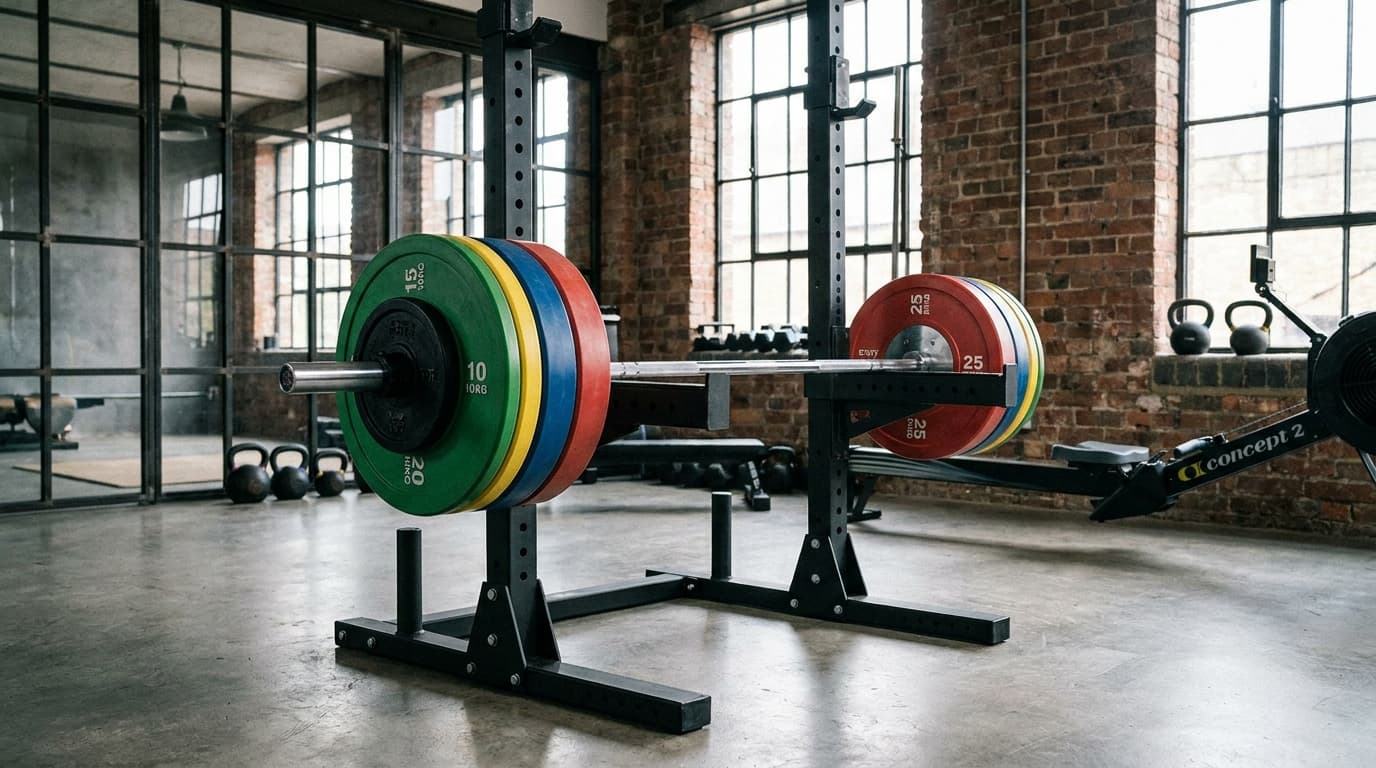
Best Barbell and Plates for Home Gyms 2026: Rogue Ohio Wins
The Rogue Ohio Bar is the best barbell for home gyms in 2026, and Rep V2 bumpers are the plate standard. Plus when a trap bar wins, and bumper vs iron.
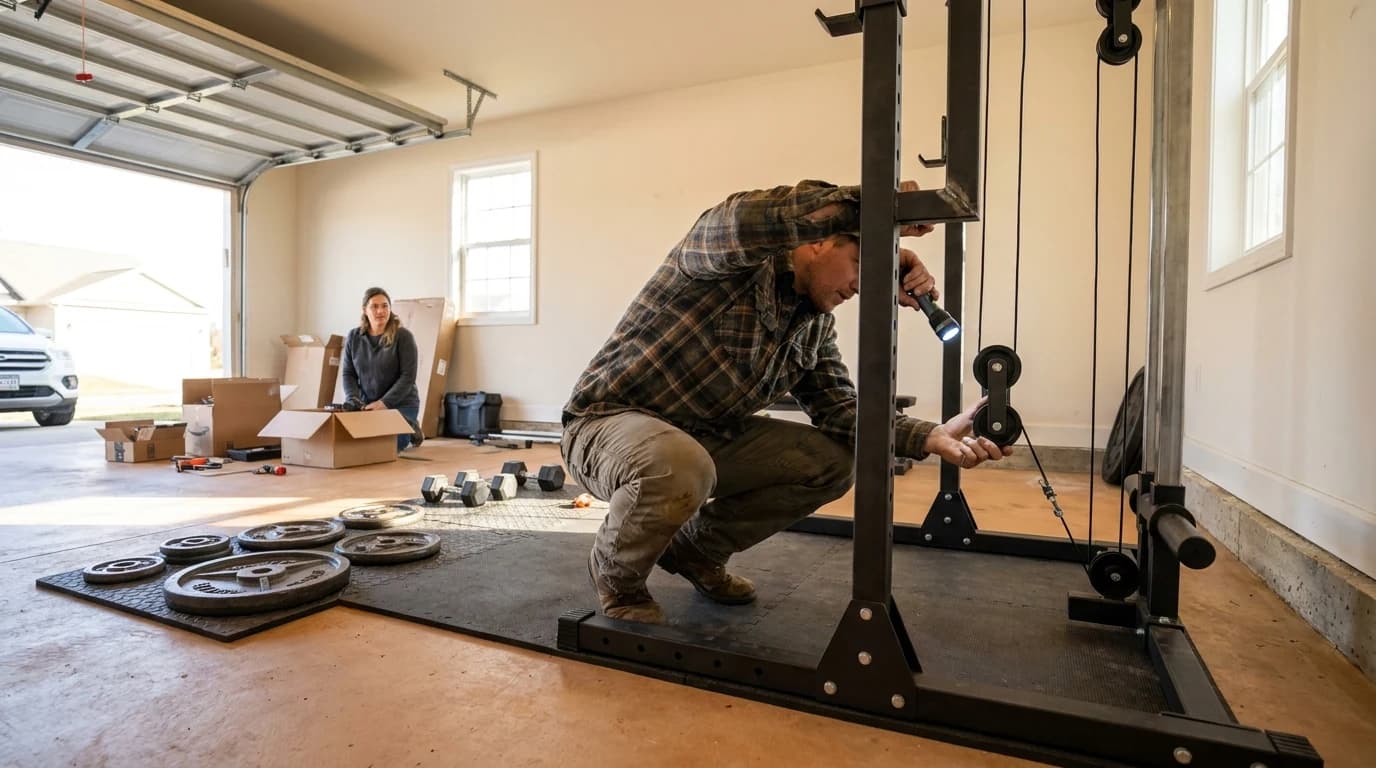
Used Home Gym Equipment: What to Buy and Avoid
Used home gym equipment, component by component: what is safe to buy secondhand, what needs a careful inspection, and what is usually smarter to buy new.
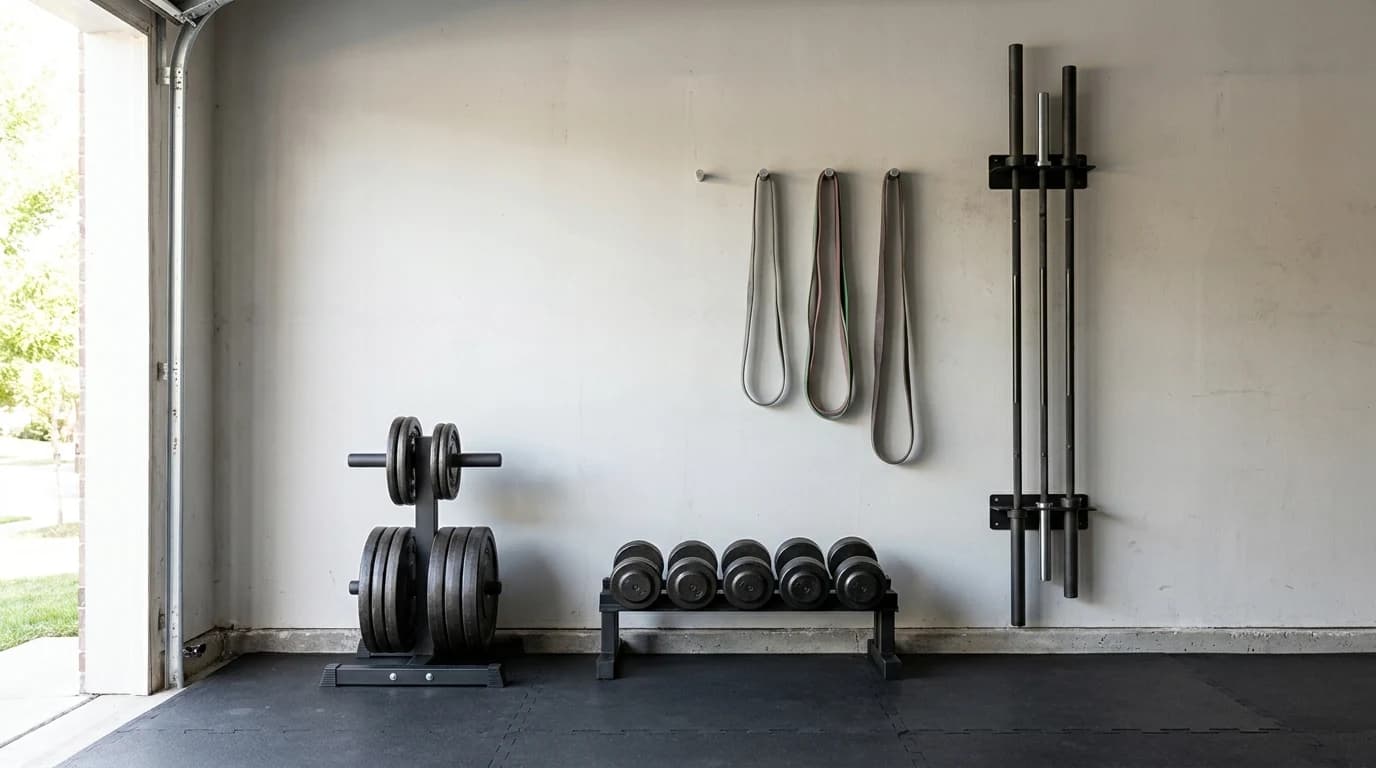
Home Gym Storage: Where to Put Plates, Bars, and Dumbbells
Store home gym gear by weight, not type: heavy stays low, bars and bands go vertical. Where plates, dumbbells, and accessories belong in a small space.
Hilly Shore Labs
Editorial teamThe independent product research team behind GymScored. Every recommendation is researched, never hands-on tested — recommendations draw on manufacturer specifications and available published research. Category order is editorial; the Gym Score is a separate comparison aid.
161 listed products across 26 home gym categories. Scores use category criteria, value and owner-rating inputs; missing evidence limits what a score can tell you.
See the scoring methodology and who we are.
Affiliate disclosure: GymScored is a participant in the Amazon Services LLC Associates Program. We earn from qualifying purchases at no extra cost to you. Full disclosure →