 Best Budget
Rank #4 in Foam Rollers & Mobility Tools
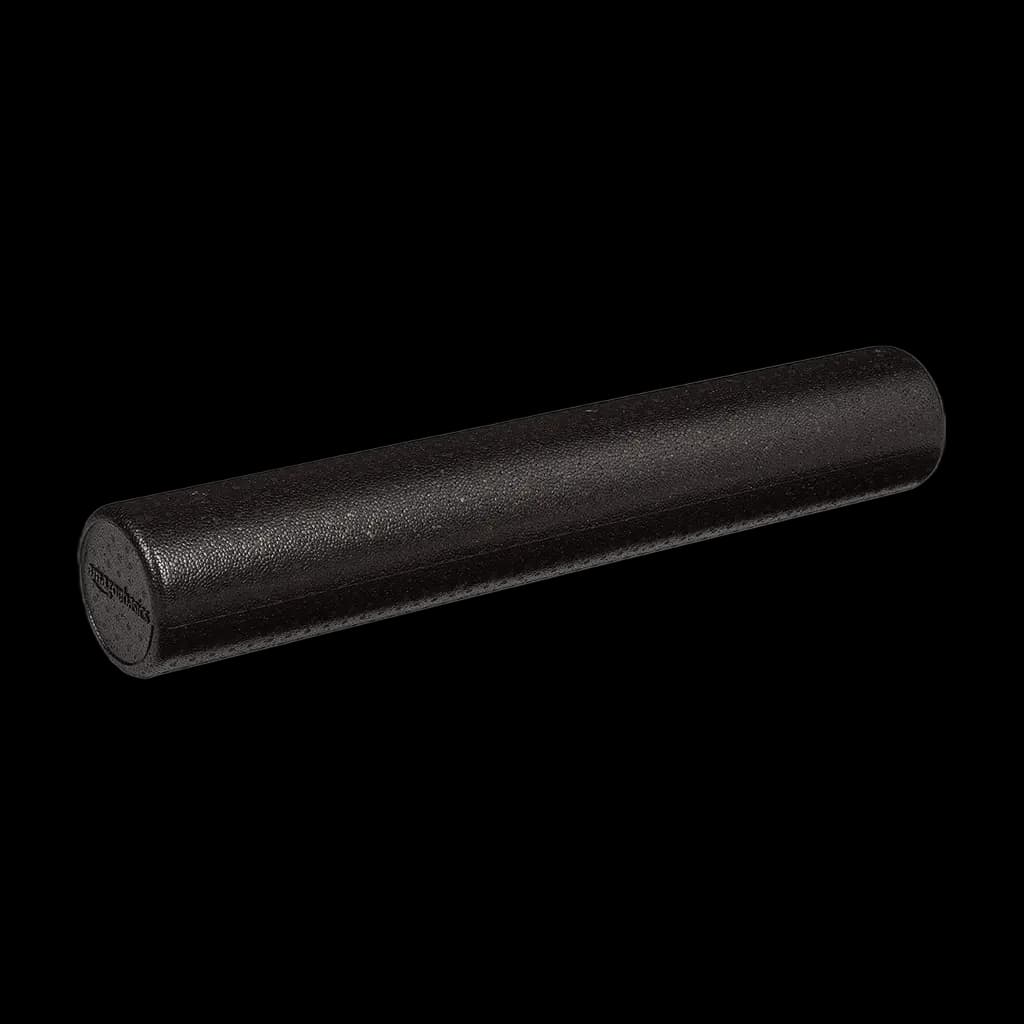
Amazon Basics High-Density Foam Roller
by Amazon BasicsOptional
Score
The cheapest roller that doesn't compress flat. Plain high-density EPP foam, no surface texture, available in 12-36" lengths. Not the best, but the floor for 'actually works.'
- First-time users testing whether they will actually roll regularly
- Budget setups where a $30 GRID is not justified
- Spare rollers for guest rooms, secondary spaces, or office desks
- Lower-back-safe rolling on lats and glutes (gentler than the GRID surface)
- Users who specifically prefer smooth-surface rolling over textured patterns
- You will use a roller daily long-term (the cheaper EPP foam wears faster than EVA)
- You weigh over 250 lb (compression risk on solid foam)
- You want trigger-point or targeted pressure (this is smooth all the way through)
- You are pregnant and have not cleared rolling with your OB
- You have osteoporosis or unexplained back pain
A 4 by 6 foot floor space. Stores in a 6-inch diameter footprint.
none — No assembly. Ready out of the box.
Same as any smooth foam roller: useful as a 5-10 minute warm-up activation or as a post-lift cool-down. No documented downside to pre-lift use.
Strengths
- ↑Cheapest decent roller
- ↑Multiple lengths available
- ↑EPP doesn't compress permanently
Weaknesses
- ↓No surface texture
- ↓Not as durable as branded EVA
What owners actually complain about
Synthesized from owner reviews and community threads. Paraphrased, not quoted.
- Foam compresses faster than premium EVA; lifespan around 1-3 years vs 5-10 for GRID
- Surface is too soft for users with dense, tight tissue
- No surface texture means no targeted pressure work
- Quality varies batch to batch; some units arrive softer than advertised
- Color options are limited and the cheaper colors look obviously low-rent in a home gym
Buyer sentiment
Based on 5,055 user mentionsBuyers praise quality, functionality, back support and value for money. Mixed feedback on firmness.
Verdict: The cheap, smooth EPP roller you buy to test whether a foam-rolling habit will actually stick before upgrading to a GRID.
Specs that matter
| Spec | Value |
|---|---|
| Material | EPP (expanded polypropylene) foam |
| Lengths | 12 to 36 inches |
| Surface | Smooth, no texture or core |
| Lifespan | 1-3 years daily use |
| Price | ~$20 |
What you get
- EPP foam — bounces back from compression, unlike cheap EVA that crushes flat
- Length variety — 36-inch is great for full thoracic-spine mobility work
- Gentle feel — smooth surface suits sensitive tissue better than an aggressive GRID
What you give up
- Durability — loads everything onto the foam; heavy/daily users compress it within a year
- Targeted pressure — no texture, so no trigger-point work
Buy it if you're a first-time or occasional roller. Skip it if you're a committed daily user (get the GRID for lifetime value).
The Mayo Clinic notes foam rolling is generally safe in healthy adults; never roll the lumbar spine or bony landmarks.
Full specs
- Length
- 12-36"
- Diameter
- 6"
- Material
- EPP foam
Common questions
Full buying guide
Best Foam Rollers for Recovery in 2026: TriggerPoint Grid Wins
Read the full ranking →Related Foam Rollers & Mobility Tools guides
Other foam rollers & mobility tools we rate
Ranked alternatives from the same category, with our score and the current price.
The benchmark hollow-core EVA roller. Multi-density surface mimics thumbs/fingertips/palms, hollow core makes it lighter, and the build outlasts decade-old usage reports. The default starting roller for a reason.
Vibrating foam roller with three speed settings. The vibration meaningfully reduces pain tolerance during release work and improves short-term ROM more than static rolling alone. Battery lasts 2 hours.
Spiked-surface roller for users who want aggressive trigger-point work. The bumps mimic finger pressure and reach deeper than smooth rollers. Polarizing — beloved or painful, no in-between.
The PT-clinic standard. Closed-cell foam, 36" length covers full-spine alignment work. Softer density than TriggerPoint — used in physical therapy because beginners and post-surgery patients tolerate it.
Two regulation lacrosse balls for trigger-point work on glutes, pecs, and feet. Does what no roller can — concentrated point pressure. The single best $10 in the recovery category.