 Best Budget
Rank #5 in Foam Rollers & Mobility Tools
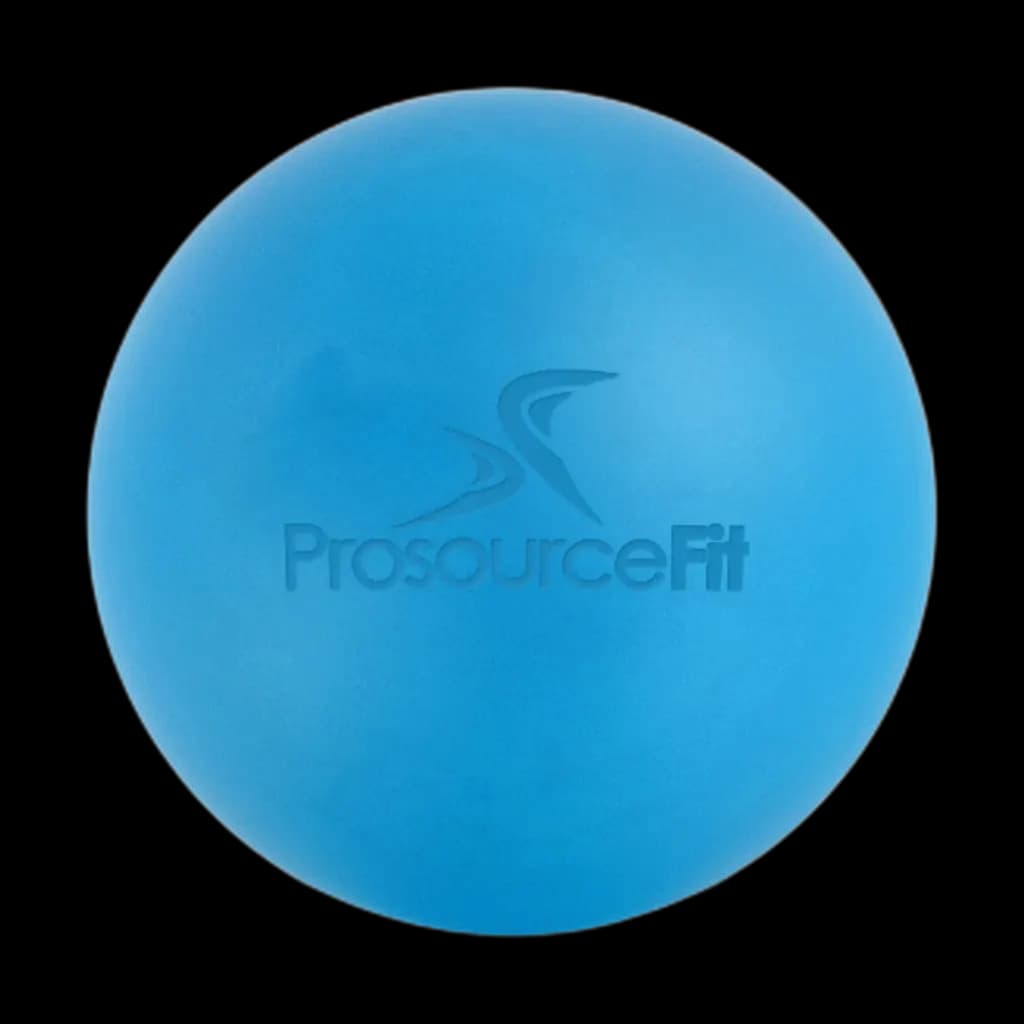
ProsourceFit Lacrosse Massage Balls (2-pack)
by ProsourceFitBuy later
Score
Two regulation lacrosse balls for trigger-point work on glutes, pecs, and feet. Does what no roller can — concentrated point pressure. The single best $10 in the recovery category.
Currently unavailable on Amazon
See how it compares against the picks you can buy today — Compare all Foam Rollers & Mobility Tools picks →
- Trigger-point work on glutes, pecs, feet, and forearms where a roller can't apply concentrated pressure
- Lifters with plantar fasciitis using the ball under the arch each morning
- Desk workers chasing thoracic and pec-minor tightness against a wall
- Travel kits where two balls weigh nothing and survive checked baggage
- Pairing into a peanut (taped together) for paraspinal release along the spine
- You have a known disc bulge, spondylolisthesis, or recent spinal fusion , direct pressure on lumbar spinous processes is contraindicated; consult a physical therapist first
- You bruise easily or are on anticoagulants (warfarin, apixaban) , concentrated pressure can cause deep contusions
- You're treating acute injury within 48-72 hours; the AAOS guidance is RICE first, soft-tissue work later
- You have a vascular condition (DVT history, varicose veins) in the target area
Effectively zero. The balls live in a sock or pouch and need a 4x6 foot section of clean floor or a clear wall section. Use against a doorframe for pec-minor work or under a chair leg to stabilize for forearm release.
easy — No assembly. Out of the package and into use in 30 seconds. The 2.5-inch regulation size is the standard adopted by physical therapists; no break-in period.
Trigger-point balls are the final layer of a recovery setup, added after a foam roller and percussive gun are already in place. Owners who buy balls first usually find them too aggressive and shelf them until they have foundational mobility work in routine.
Strengths
- ↑Reaches Glutes/Pecs/Feet
- ↑Cheap And Indestructible
- ↑Pair Functions As
Weaknesses
- ↓Painful For Beginners
- ↓Smaller Surface Area
What owners actually complain about
Synthesized from owner reviews and community threads. Paraphrased, not quoted.
- Too aggressive for beginners , first sessions can produce next-day soreness similar to deep-tissue massage
- Hard rubber doesn't grip well on tile or hardwood; balls roll out from under you mid-release
- The 2-pack arrives bagged together and the bag tears within a few uses
- Faint rubber smell for the first day out of packaging
- No instruction insert , first-time users guess at placement and over-pressure the wrong tissue
Buyer sentiment
Based on 25 user mentionsBuyers praise Reaches Glutes/Pecs/Feet and Cheap And Indestructible. Some flag Painful For Beginners.
Verdict: The highest-leverage $10 in recovery — reaches the point trigger points no foam roller can.
Specs that matter
| Spec | Value |
|---|---|
| Price | Under $10 (2-pack) |
| Diameter | 2.5 in |
| Core | Solid rubber, regulation NCAA weight |
| Includes | Carrying bag |
What you get
- Point pressure — glutes, piriformis, pec minor, plantar fascia
- Solid rubber — transmits force directly, unlike soft foam shells
- Travel-ready — two balls, gym + bag
What you give up
- Slips on hard floors — work against a wall or on a mat
- Learning curve — over-aggressive week-one use causes soreness
Buy it if you want the cheapest deep-tissue recovery tool. Skip it if you only need broad-muscle rolling (a foam roller pairs with it).
Mayo Clinic and AOFAS guidance both list ball or roller work as a self-care pillar for plantar fasciitis; stay 1–2 in off the spine midline — direct pressure on a spinous process is contraindicated.
Full specs
- Diameter
- 2.5"
- Material
- Solid rubber
- Quantity
- 2 balls
Common questions
Is a lacrosse ball safe to use on my lower back?
Yes for the paraspinal muscles (the bands running parallel to the spine), no for the spine itself. Place the ball 1 to 2 inches off the midline against a wall, never directly on a vertebra. If you have a known disc issue, get clearance from a physical therapist first. Sharp shooting pain, numbness, or tingling means stop immediately and reassess.
How long should I hold pressure on a trigger point?
Research on self-myofascial release converges on 30 to 90 seconds per point, with diminishing returns past 2 minutes. Breathe through it. If pain rises above a 7 out of 10 you're either on the wrong spot or pressing too hard. Move 1 inch and try again.
Lacrosse ball or peanut for back work?
Peanut wins for thoracic spine extension because the gap between the two balls clears the spinous processes and lets each ball work the muscle on either side. A single lacrosse ball is better for glutes, lats, and pecs where you want a single concentrated point. Tape two of these balls together with athletic tape to make your own peanut.
Why does mine smell like rubber?
Solid rubber off-gasses for 1 to 3 days out of packaging. Wipe with mild soap and warm water, leave them out of the bag for a day, and the smell fades. It's the same off-gassing curve as new tires or a yoga mat , peaks in the first 72 hours and tapers from there.
Can I use these on my plantar fascia?
Yes, and many owners report this is the single best use. Roll the ball under the arch slowly for 1 to 2 minutes each morning before getting fully out of bed. Frozen water bottle works similarly but the ball lets you target specific tender spots. Stop if you have heel pain that radiates or worsens , that pattern can indicate a stress fracture, not fasciitis.
Sources & references
- ResearchSelf-Myofascial Release: Update on a Self-Applied Technique (peer-reviewed)— NIH / NCBI PMC
- ResearchPlantar Fasciitis , diagnosis and self-care— Mayo Clinic
- ResearchMyofascial Release Therapy , clinical overview— Cleveland Clinic
- ProsourceFit Lacrosse Massage Balls , owner reviews— r/homegym community consensus
- Best Lacrosse Balls for Mobility , buyer guide— Garage Gym Reviews
Full buying guide
Best Foam Rollers for Recovery in 2026: TriggerPoint Grid Wins
Read the full ranking →Related Foam Rollers & Mobility Tools guides
ProsourceFit Lacrosse Massage Balls (2-pack) is currently unavailable on Amazon.
See our full ranking of Foam Rollers & Mobility Tools — including the picks you can buy today.
Other foam rollers & mobility tools we rate
Ranked alternatives from the same category, with our score and the current price.
The benchmark hollow-core EVA roller. Multi-density surface mimics thumbs/fingertips/palms, hollow core makes it lighter, and the build outlasts decade-old usage reports. The default starting roller for a reason.
Vibrating foam roller with three speed settings. The vibration meaningfully reduces pain tolerance during release work and improves short-term ROM more than static rolling alone. Battery lasts 2 hours.
Spiked-surface roller for users who want aggressive trigger-point work. The bumps mimic finger pressure and reach deeper than smooth rollers. Polarizing — beloved or painful, no in-between.
The cheapest roller that doesn't compress flat. Plain high-density EPP foam, no surface texture, available in 12-36" lengths. Not the best, but the floor for 'actually works.'
The PT-clinic standard. Closed-cell foam, 36" length covers full-spine alignment work. Softer density than TriggerPoint — used in physical therapy because beginners and post-surgery patients tolerate it.