 Premium Pick
Rank #2 in Foam Rollers & Mobility Tools
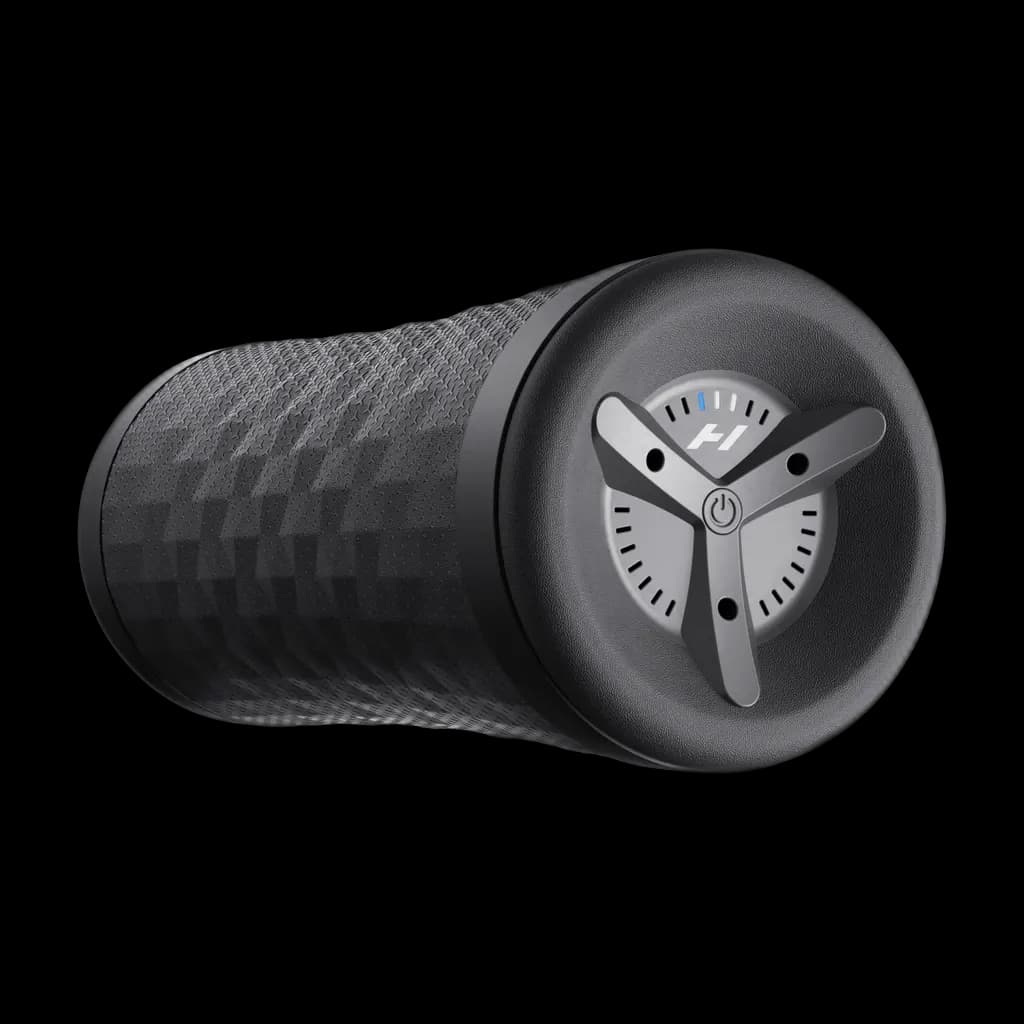
Hyperice Vyper 3
by HypericeOptional
Score
Vibrating foam roller with three speed settings. The vibration meaningfully reduces pain tolerance during release work and improves short-term ROM more than static rolling alone. Battery lasts 2 hours.
- Users with chronic tight tissue that does not respond to static rolling
- Athletes wanting genuinely faster pre-lift ROM gains
- Recovery routines on glutes, IT band, quads, and lats
- Buyers who already love foam rolling and want a meaningful upgrade
- People who train cold (cool garage, early morning) and need extra warm-up
- You are pregnant and have not consulted your OB (vibration is unstudied in pregnancy)
- You have a pacemaker or implanted medical device without physician clearance
- You have peripheral nerve sensitivity, neuropathy, or active radiculopathy
- You have osteoporosis or fragile bone density
- You want a one-and-done $30 solution rather than a $200+ specialty tool
A 4 by 6 foot floor space for active rolling. Stores in a 12 by 6 inch slot. Battery charger needs an outlet within reach.
none — Charge before first use. One button, three speed presses. Ready to use out of the box.
Vibration rolling fits pre-lift especially well: research suggests it produces faster ROM gains than static rolling without negatively affecting strength output. Post-lift is also fine.
Strengths
- ↑3 Vibration Speeds
- ↑Genuinely Improves Pain Tolerance
- ↑2-Hour Battery
Weaknesses
- ↓10X The Price
- ↓Charge Cycle Dependency
What owners actually complain about
Synthesized from owner reviews and community threads. Paraphrased, not quoted.
- Charge cycle adds a step that static rollers do not require
- Heavier than the TriggerPoint GRID (around 4 lb vs 1 lb)
- Top vibration setting can feel too intense on smaller muscle groups
- Battery degrades over years; not user-replaceable
- Costs roughly 10x what a static roller of similar effectiveness costs
Buyer sentiment
Based on 25 user mentionsBuyers praise 3 Vibration Speeds and Genuinely Improves Pain Tolerance. Some flag 10X The Price.
Verdict: The premium vibrating foam roller — real but modest benefits that only justify ~10x the price if you roll daily.
Specs that matter
| Spec | Value |
|---|---|
| Vibration | 3 speeds, 45–58 Hz |
| Material | Firm EVA over powered core |
| Weight / length | ~4 lb / 12 in |
| Battery | Non-replaceable (capacity loss in 3–5 yrs weekly use) |
What you get
- Faster release — vibration helps you stay on stubborn tissue (IT band, lats, glute)
- Less bruising — distributes pressure vs aggressive static rolling
- Solid build — decent warranty record
What you give up
- Charging friction — most-cited reason it ends up unused on a shelf
- Price — overkill for easy tissue and occasional rollers
Buy it if you roll daily and want more on stubborn spots. Skip it if you roll occasionally — start with a $30 GRID.
Avoid with pacemakers, active neuropathy, or in pregnancy (cautioned, largely unstudied). A 2019 NIH-summarized study found vibration rolling produced larger short-term ROM gains than static rolling.
Full specs
- Length
- 12"
- Diameter
- 6"
- Speeds
- 3 (45-58Hz)
- Battery
- 2 hours
Common questions
Is vibration meaningfully better than a static roller?
A 2019 study summarized by the NIH found vibration rolling produced faster ROM gains than static rolling at the same effort. For most users this is a small but real advantage. Whether it justifies 10x the price depends on how much you roll.
Will the vibration affect my heart or nervous system?
Not in healthy users. Vibration at the frequencies the Vyper produces (45-58 Hz) is well below medical-grade therapeutic vibration and is not associated with cardiovascular or neurological risks in healthy adults. If you have an implanted medical device, pacemaker, or active peripheral neuropathy, consult your physician first.
Is 2 hours of battery enough?
For most users yes, since rolling sessions are 5-15 minutes. Heavy daily users will recharge weekly.
How does it compare to the Vyper Go?
The Go is a half-size travel version at lower price. Less powerful, shorter battery, smaller diameter. For home use the full Vyper 3 is the better pick. For travel, the Go.
Will it bruise me?
Not typically. The vibration distributes pressure across the muscle and actually reduces perceived pain, making over-pressing less likely than with a hard static roller.
Sources & references
Full buying guide
Best Foam Rollers for Recovery in 2026: TriggerPoint Grid Wins
Read the full ranking →Related Foam Rollers & Mobility Tools guides
Other foam rollers & mobility tools we rate
Ranked alternatives from the same category, with our score and the current price.
The benchmark hollow-core EVA roller. Multi-density surface mimics thumbs/fingertips/palms, hollow core makes it lighter, and the build outlasts decade-old usage reports. The default starting roller for a reason.
Spiked-surface roller for users who want aggressive trigger-point work. The bumps mimic finger pressure and reach deeper than smooth rollers. Polarizing — beloved or painful, no in-between.
The PT-clinic standard. Closed-cell foam, 36" length covers full-spine alignment work. Softer density than TriggerPoint — used in physical therapy because beginners and post-surgery patients tolerate it.
Amazon Basics High-Density Foam Roller
The cheapest roller that doesn't compress flat. Plain high-density EPP foam, no surface texture, available in 12-36" lengths. Not the best, but the floor for 'actually works.'
ProsourceFit Lacrosse Massage Balls (2-pack)
Two regulation lacrosse balls for trigger-point work on glutes, pecs, and feet. Does what no roller can — concentrated point pressure. The single best $10 in the recovery category.