Best Walking Pad With Incline: What Grade Actually Buys
Most walking pad with incline claims are a fixed wedge or a stack of books. What a real 12% grade does to calorie burn, and the pads that offer it.
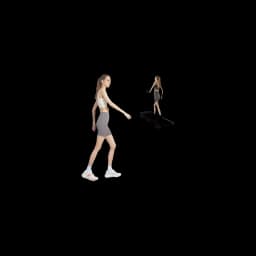
- 9-level auto incline to 12%, per the manufacturer
- Incline raises intensity without needing more speed or space
- Manufacturer states a 450 lb capacity
Evidence snapshot · Updated October 9, 2026
The evidence-backed answer
TRAILVIBER Walking Pad with Auto Incline is our default pick for the scope of this guide: The only pad here with a powered incline you can change mid-walk: nine levels to a manufacturer-stated 12 percent, which takes a 2 mph walk from about 100 net calories an hour to roughly 370.
Scope: 3 shortlisted products compared using published specifications, owner-feedback signals, value and category-specific performance. The matched catalog records represent 3,925 owner ratings. This is research synthesis, not hands-on testing.
The side-by-side comparison below carries each shortlisted product's owner rating, price context, pros, cons and buy state in one actionable view.
How GymScored is paid: Amazon Associates commission plus brand-direct affiliate (Rogue / REP / Titan when approved). No sponsored placements, no paid reviews, no pay-to-rank. Picks are ranked by the Gym Score formula and nothing else. Read the full disclosure.
Only one pad here has a motor that changes the grade while you walk, and the reason to want it is arithmetic: 12 percent at 2 mph costs roughly four times what the same speed costs on the flat.
| Product | Owner rating | Key specs | Pros | Cons | Price | Buy |
|---|---|---|---|---|---|---|
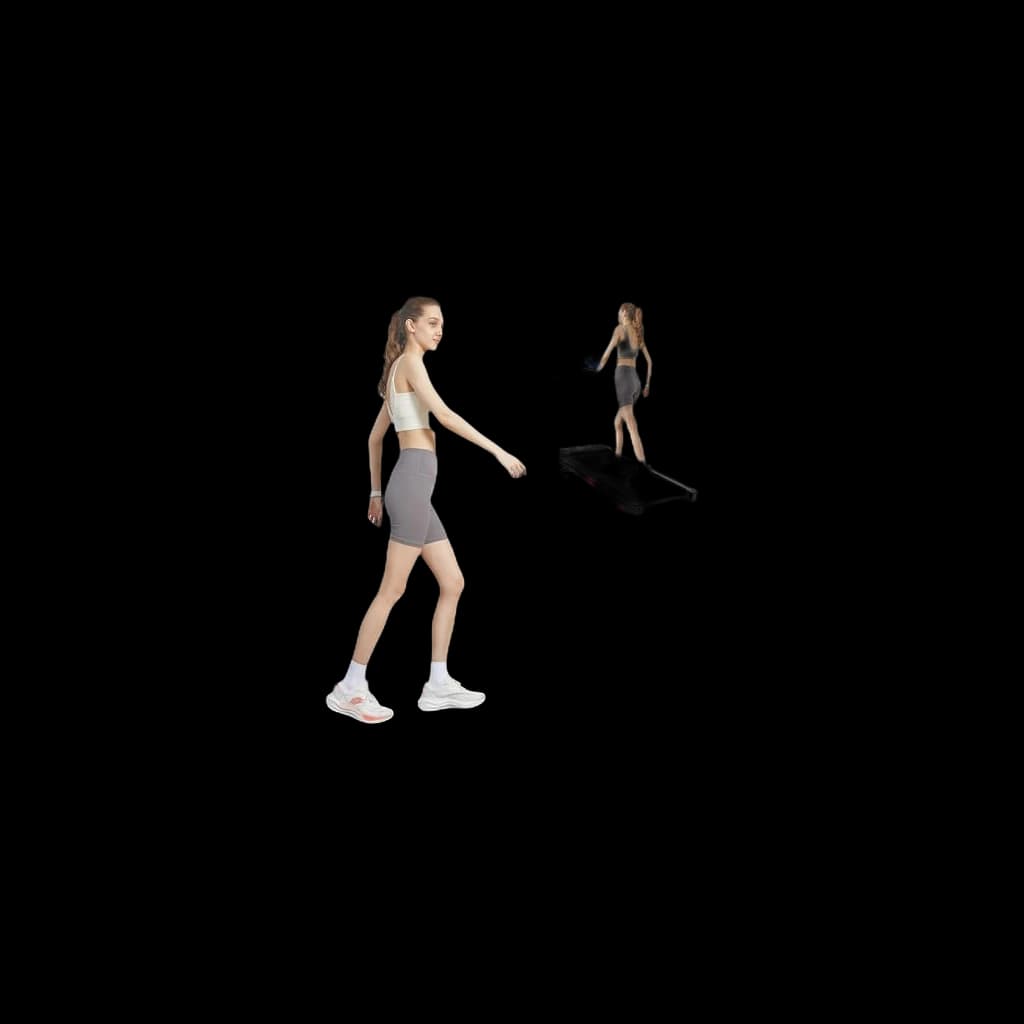 The only powered incline here: nine levels to a stated 12%, which is what moves the calorie math. | Owner rating Gym Score 75Amazon listing rating, checked August 26, 2026 (about 1,100 ratings). Not a GymScored test result. | Key specs
| Pros
| Cons
| $279.00 | Buy on Amazon |
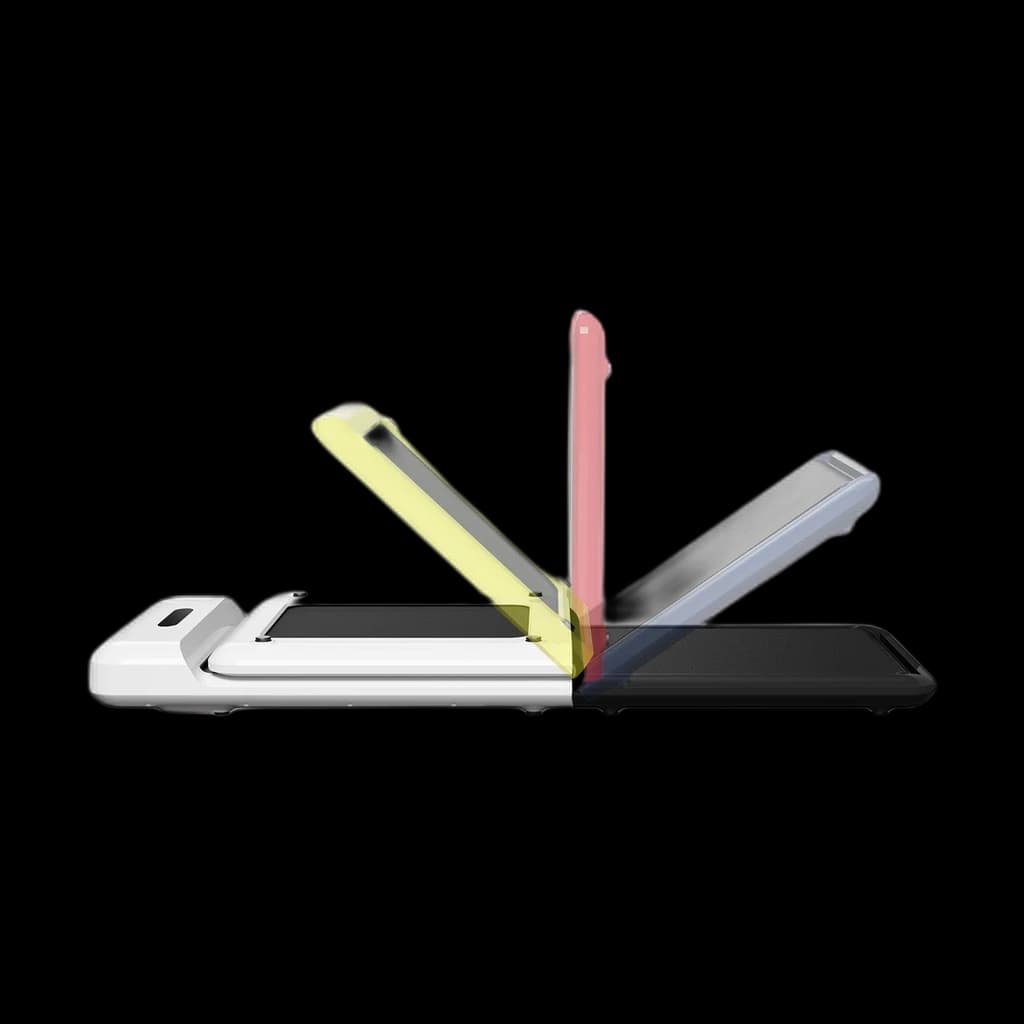 No incline, the best flat deck: 47-inch belt and it folds in half. | Owner rating Gym Score 74Amazon listing rating from our catalog record, not a GymScored test result. | Key specs
| Pros
| Cons
| $449.00 | Buy on Amazon |
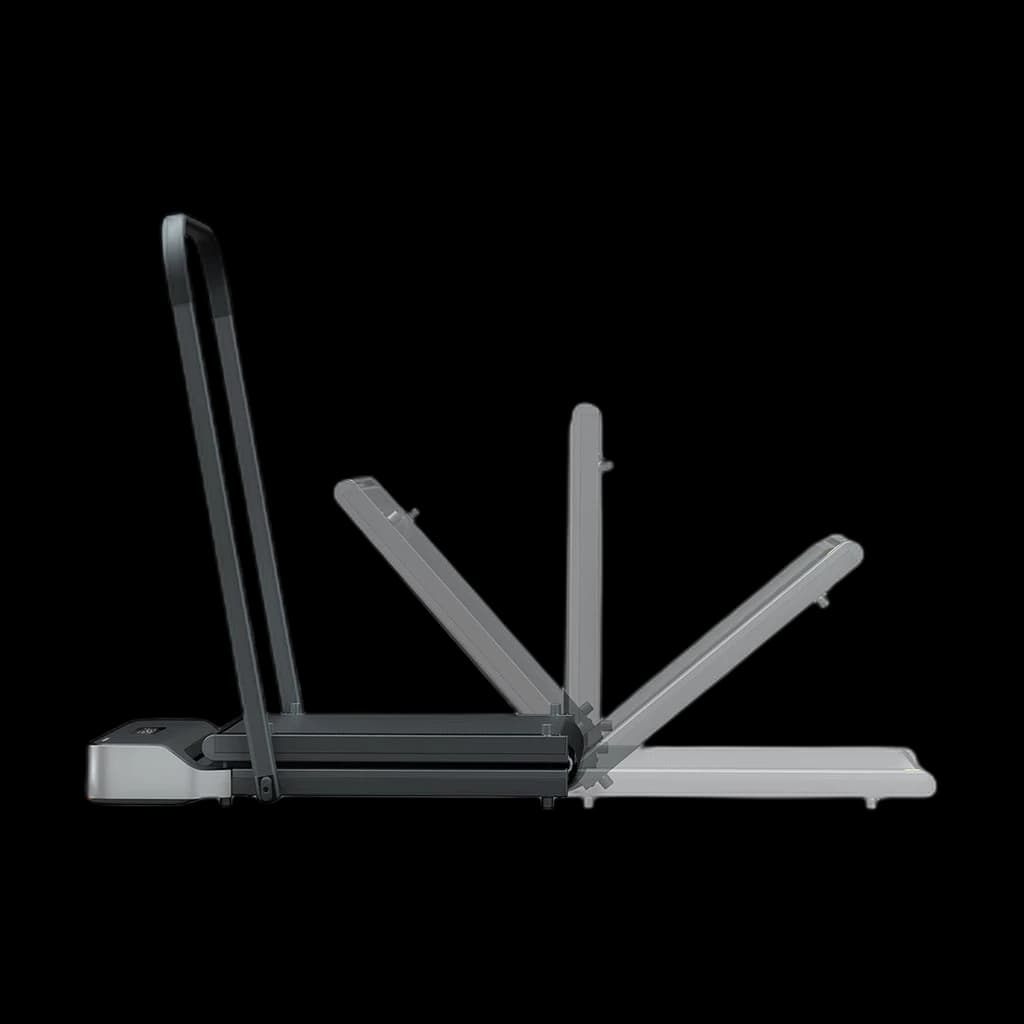 No incline either — the C2's flat deck with a removable handlebar and a slightly higher speed ceiling. | Owner rating Gym Score 72Amazon listing rating from our catalog record, not a GymScored test result. | Key specs
| Pros
| Cons
| $359.00 | Buy on Amazon |
Amazon prices checked Sep 2, 2026. Amazon prices change often — the listing is authoritative.
What grade does to the energy cost of a 2 mph walk
METs from the ACSM walking equation (VO2 = 3.5 + 0.1 x speed + 1.8 x speed x grade, speed in m/min), as stated in the 2024 European Journal of Sport Science validation study. Net kcal/h is (METs - 1.3) x body mass in kg, using 82 kg (180 lb); 1.3 METs is the Compendium value for seated computer work. These are model estimates, not measurements.
| Speed | Grade | METs | Net kcal/h over sitting (180 lb) |
|---|---|---|---|
| 1.5 mph | 0% | 2.15 | ~70 |
| 1.5 mph | 12% | 4.63 | ~273 |
| 2.0 mph | 0% | 2.53 | ~101 |
| 2.0 mph | 5% | 3.91 | ~214 |
| 2.0 mph | 8% | 4.74 | ~282 |
| 2.0 mph | 12% | 5.84 | ~372 |
| 2.5 mph | 12% | 7.05 | ~472 |
Which kind of incline, if any, you should buy
Decide by your situation, not the generic ranking.
| If | You want | Pick |
|---|---|---|
| You want more burn from the same desk hours | A flat pad and more hours, not incline | Three hours at 2 mph flat beats one incline session you schedule and skip |
| You want cardio intensity without impact | Powered auto incline | At equal calories, high-incline walking produced about half the peak impact acceleration of level jogging in a 19-adult study |
| You want to work while you walk | Zero grade, whatever the pad offers | At 12 percent your breathing and typing both change; incline and focused work do not share a session |
| You are tempted to prop the front on blocks | Don't treat it as a rated feature | No manufacturer publishes a grade limit for a propped pad, and the roller housing was not designed for it |
| You are 6 feet or taller | Deck length before grade | A short belt forces a cramped stride, and incline lengthens the stride rather than shortening it |
Every walking pad sold with the word "incline" in its title is making one of three different promises, and only one of them is a motor that raises the deck while you are standing on it. The other two are a wedge that was built into the frame at the factory and can never change, and nothing at all — a flat pad whose owners prop the front end on a couple of books.
That distinction matters more than any spec on the box, because incline is the one adjustment that changes what a walking pad is. Flat, at typing speed, a pad adds roughly a hundred calories an hour over sitting and asks nothing of you. At a 12 percent grade it stops being furniture and becomes a piece of cardio equipment — with the intensity, the sweat and the interruption to your workday that implies.
Three different things get sold as a walking pad with incline
| What you're buying | How it works | What you can change mid-session |
|---|---|---|
| True auto incline | A motor lifts the front of the deck; a remote or app selects a level | Grade, any time, without stepping off |
| Fixed factory grade | The frame is built with a permanent tilt, usually a few degrees | Nothing — the grade is the pad |
| Risers under the front feet | Owners stack books, blocks or a board under the front | Only by stopping and rebuilding the stack |
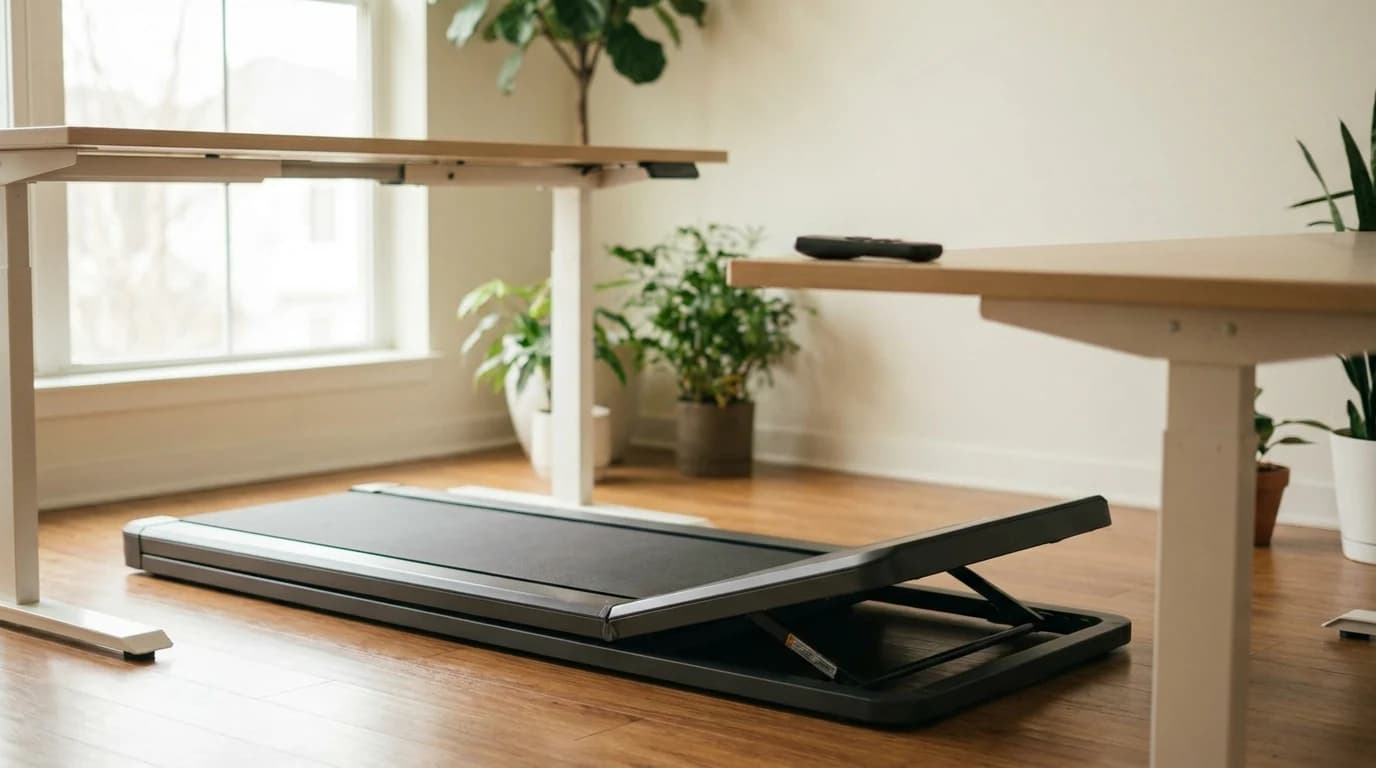
Only the first is what a treadmill buyer means by incline. The second is a design decision made for you, and it is genuinely useful for some people and quietly punishing for others: the Egofit Walker Pro M1 is built around a permanent grade, and its own owners describe a full workday on it as far more taxing than a flat pad. There is no "off" switch on a wedge.
The third is the one nobody sells and plenty of people do. It is cheap and it works in the trivial sense that the belt is now tilted. It is also entirely unrated: no manufacturer publishes a grade limit for a pad propped on blocks, the front roller housing was not designed to carry load at an angle, and the stack is exactly as stable as you built it. We are not going to tell you it's fine, because nobody has tested whether it is.
Our pick
The only pad here with a powered incline you can change mid-walk: nine levels to a manufacturer-stated 12 percent, which takes a 2 mph walk from about 100 net calories an hour to roughly 370.
What incline actually buys, tagged by the evidence
Energy cost — strong evidence, and it is arithmetic. The oxygen cost of walking has a published equation with three terms: a resting term, a horizontal term for speed, and a vertical term that is speed multiplied by grade. Run it at walking-pad speeds and the vertical term dominates almost immediately.
| Speed | Grade | METs (ACSM equation) | Net kcal/h over sitting, 180 lb |
|---|---|---|---|
| 1.5 mph | 0% | 2.15 | ~70 |
| 1.5 mph | 12% | 4.63 | ~273 |
| 2.0 mph | 0% | 2.53 | ~101 |
| 2.0 mph | 5% | 3.91 | ~214 |
| 2.0 mph | 8% | 4.74 | ~282 |
| 2.0 mph | 12% | 5.84 | ~372 |
The whole case, in one comparison: at the same 2 mph, a 12 percent grade takes the net cost from about a hundred calories an hour to roughly 370 — close to four times the flat number, with your feet moving at exactly the same speed.
That is the entire case for an incline pad in one row, and it holds up against an independent reference: the Adult Compendium of Physical Activities assigns 5.0 METs to climbing hills at a 5 to 20 percent grade at a very slow pace, which is the same neighbourhood the equation lands in.
The equation's own error bars — worth knowing. A 2024 European Journal of Sport Science study put 38 young adults through treadmill walking at four speeds against laboratory indirect calorimetry and found no agreement between measured oxygen uptake and the estimates the standard equations produced; the bias grew with intensity, reaching 2.6 mL/kg/min at the fastest walk in the best-performing comparison. Treat the table above as the right shape and the wrong decimal place. The ratio between the rows is trustworthy. The absolute numbers are a model.
Muscle recruitment — moderate evidence, consistent direction. A 2024 study of 22 sedentary adults compared high-incline walking at a 20 percent grade with low-incline jogging and recorded increased activation across essentially the whole posterior chain on the incline: gluteus maximus and vastus lateralis each up by roughly two-thirds, soleus by about half, biceps femoris and erector spinae also higher. Twenty percent is steeper than any walking pad offers, so read this as direction rather than dose — grade recruits hip and calf musculature that flat walking barely touches, and 12 percent gets you part of the way there.
Joint load — supported, one study, and the most interesting finding. The same research group matched high-incline walking against level-grade jogging at equal calorie burn in 19 inactive adults and measured impact accelerations. Walking uphill produced roughly half the peak acceleration at the foot and at the sacrum that jogging did for the same energetic cost. If the goal is a real cardiovascular stimulus from a machine that fits under a desk, incline is the way to get it without the impact — which is the honest reason to want one.
"Tones and sculpts your glutes" — weak, and not what the research says. Higher activation during a session is not evidence of a shape change over months. No study we opened followed incline walkers to a body-composition outcome.
| Claim | Evidence strength | What we would say on the page |
|---|---|---|
| Grade multiplies energy cost | Strong, and arithmetic | Roughly four times the net burn at 2 mph and 12 percent |
| Grade recruits the posterior chain | Moderate, one direction-consistent study | Measured at 20 percent grade; read 12 percent as partway there |
| Grade gives cardio at low impact | Supported, one study | About half the peak acceleration of calorie-matched jogging |
| Grade tones or sculpts | Weak | Nothing we opened followed walkers to a body-composition outcome |
The cost that isn't on the price tag
You cannot work at 12 percent. At a grade that quadruples your energy cost, your breathing changes, your typing accuracy goes and calls become obvious.
That is not a knock on any particular pad. An incline pad is two machines sharing one footprint: a flat desk pad during the workday, and a hill session you schedule the way you would schedule any other workout.
It is also physically taller. The auto-incline pad here measures about 6 inches high at its resting position against roughly 4 inches for a flat pad, and the incline mechanism has to go somewhere. Measure the gap between your floor and the underside of your standing desk at its normal height, then subtract the deck, then subtract you. A pad that fits flat may not fit once it is raised.
The picks
TRAILVIBER Walking Pad with Auto Incline — the only real auto incline here
Nine powered levels to a stated 12 percent, at $279.00 — verified in stock with a live price on August 26, 2026. The rest of the manufacturer's claims:
- 450 lb capacity, 2.5 HP motor — the horsepower is listed as a maximum rather than a continuous rating, which is standard in this category and should be read as a peak.
- About 48 by 21 by 6 inches, 44 lb — the 6-inch figure is the resting height, before the deck rises.
- 4.6 stars across roughly 1,100 ratings on the listing.
Every incline specification on this page is the manufacturer's claim; we did not measure a grade.
The reason to buy it is the table above. Nothing else in this category converts a walking pad into something that raises heart rate without also demanding speed and deck length you don't have.
Egofit Walker Pro M1 — the fixed-grade case, currently unbuyable
The M1 builds the grade into the frame permanently. Three things to understand about it:
- The published grade contradicts itself. Egofit's listing copy describes a 5-degree ergonomic incline while the structured specification field on the same page reads 5 percent. Those are not the same number, and the discrepancy is the manufacturer's.
- You get the grade constantly. Owners who spend a full working day on it report a genuine fatigue cost a flat pad does not impose, and there is no switch.
- The belt is short and narrow. Worth knowing if you are 6 feet or taller.
We are not linking it: as of August 26, 2026 the listing reads "currently unavailable" with no restock date, which is the only signal we treat as dead. It stays on the page because the design idea is worth understanding before you buy a wedge you cannot switch off.
If you don't need incline, buy a better flat pad instead
Most people asking for incline actually want more burn, and more hours is the cheaper way to get it. Two flat pads earn that money:
- WalkingPad C2 at $449.00 — a 47 by 16 inch belt, 4 mph, 220 lb capacity, and it folds in half, which is the spec that decides whether a pad lives under your desk or in a closet. It is the pick in our best under-desk walking pads guide.
- WalkingPad Z1R at $359.00 — a 47.6 by 15.7 inch walking area, a 5 mph ceiling and a removable handlebar, which is the thing to hold when you step onto a moving belt. No incline at all. (The UREVO E4W we used to list here is back in stock but now costs about as much as the TRAILVIBER incline pad, so we no longer list it; our UREVO walking pad review stays up for reference.)
To compare the flat pads with the incline pick against your desk height and weight, use the walking pad fit check.
The test that settles it: a flat pad walked for three hours beats an incline pad used twice a week, and costs less. The incline pad wins only if you will genuinely schedule the hill.
Before you buy, measure three things
- Desk clearance minus deck height. An incline pad's resting height is the number to use, not the folded one.
- Ceiling and step-off room. Raising the front of a deck raises you. Add the incline height to your standing height.
- What you will do at 12 percent. If the answer is "nothing, I'll leave it at zero" — buy the flat pad and put the difference toward hours on the belt.
Everything above is drawn from published manufacturer specifications, the peer-reviewed sources listed below, and live listing checks made on August 26, 2026. We do not test equipment, and we say so wherever a number is somebody else's claim. For the wider spec argument — deck length, motor duty rating, noise — start with how to choose a walking pad, or browse every pad we score in walking pads. If your interest in incline is really an interest in intensity without speed, the same logic drives how heavy a weighted vest should be.
Frequently Asked Questions
Do walking pads with incline actually burn more calories?+
Yes, and the effect is large. By the ACSM walking equation, 2 mph on the flat costs about 2.5 METs while 2 mph at a 12 percent grade costs about 5.8 — for a 180 lb adult that is roughly 100 net calories an hour versus roughly 370. The equation is a model with real error bars, but the ratio between flat and incline is the reliable part.
Is a fixed incline the same as auto incline?+
No. A fixed grade is built into the frame and cannot be turned off, so every minute on the pad is uphill whether you want it or not. Auto incline uses a motor to change the grade while you are walking, which is what lets one machine serve both desk walking and a hill session.
Can I just put blocks under the front of my walking pad?+
People do, and the belt is genuinely tilted afterwards. It is also unrated: no manufacturer publishes a safe grade for a propped pad, the front roller housing was not designed to carry load at an angle, and the stack is only as stable as you built it. We cannot tell you it is safe, because nobody has published a test.
Does incline walking build glute muscle?+
It recruits the glutes far more than flat walking — a 2024 study measured gluteus maximus activation up by roughly two-thirds at a 20 percent grade versus a shallow one. Higher activation during a session is not the same as a body-composition change over months, and no study we read followed incline walkers to that outcome.
Will an incline walking pad still fit under my standing desk?+
Check the resting height, not the folded height. The auto-incline pad here is listed at about 6 inches tall against roughly 4 inches for a flat pad, and raising the deck raises you with it. Measure floor to desk underside at your normal standing height, then subtract the deck and your own height.
Sources & Research
- International Journal of Exercise Science — Krieger et al., 2025 - Accelerations and EMG differences between isocaloric high-incline walking (20% grade) and level-grade jogging in 19 inactive adults: peak foot acceleration 10.48 vs 22.14 m/s squared, sacrum 12.58 vs 27.21research
- International Journal of Exercise Science — Kundu et al., 2024 - Treadmill type and incline slope, 22 sedentary adults: integral EMG rose at 20% grade vs 1% for gluteus maximus (about +69%), vastus lateralis (+68%) and soleus (about +49%)research
- European Journal of Sport Science — Clavero-Jimeno et al., 2024 - Whole-body oxygen consumption while walking: agreement between measured and estimated values; 38 adults, no agreement between indirect calorimetry and the ACSM equation, bias growing to 2.6 mL/kg/min at the fastest walkresearch
- 2024 Adult Compendium of Physical Activities — Walking category - code 17032, climbing hills with no load at a 5 to 20 percent grade, very slow pace: 5.0 METs; level walking rows 17151 (2.3) and 17152 (2.8)research
Related reviews
Best Walking Pads to Use Under a Standing Desk
The WalkingPad C2 is the best under-desk walking pad for its fold-in-half design; the Abonow is the budget pick. Four pads compared on height and belt.
How to Choose a Walking Pad for Home (Not Your Desk)
Choosing a walking pad for home cardio, not desk work: the specs that matter, why run-capable pads are a trap, and which features earn their footprint.
How Many Calories Does a Walking Pad Burn? The Real Math
A 13-study meta-analysis puts a walking pad at about 105 extra calories an hour over sitting. Here is the MET math by speed and body weight, and what the research doesn't show.
Hilly Shore Labs
Editorial teamThe independent product research team behind GymScored. Every recommendation is researched, never hands-on tested — rankings come from manufacturer specifications, published standards, and aggregated buyer sentiment.
161 products scored across 26 home gym categories, each on the same 5-dimension Gym Score formula.
See the scoring methodology and who we are.
Affiliate disclosure: GymScored is a participant in the Amazon Services LLC Associates Program. We earn from qualifying purchases at no extra cost to you. Full disclosure →