Weighted Vest for Walking: How Heavy Should It Be, by Goal
How heavy should a weighted vest be for walking? The 5-10% chart every brand publishes traces to no study. What the research actually loaded, by goal.
It depends on the activity, and the published research spreads far wider than the 5-to-10% rule the vest industry prints. For running, a 2024 study of trained trail runners found an extra 5% of body mass produces no noticeable physiological or mechanical change while 10% shortened time to exhaustion by 6%, so 5% is the defensible ceiling there. For walking, US Army researchers measured people at 22, 44 and 66% of body mass and top sustainable pace fell only about 4% at 22%, which makes 10% a mild load rather than a limit; UCLA Health's conservative starting point for a new walker is about 5%. For weighted pull-ups and dips, percent of body weight is the wrong unit: pick the load that puts you in your target rep range, progress it by 2 to 10% per the ACSM position stand, and respect your bar's rated capacity, which is body weight plus vest combined. If bone density is the goal, the load is not the variable that decides the outcome.
How GymScored is paid: Amazon Associates commission plus brand-direct affiliate (Rogue / REP / Titan when approved). No sponsored placements, no paid reviews, no pay-to-rank. Picks are ranked by the Gym Score formula and nothing else. Read the full disclosure.
There is no single correct weighted-vest load, and the 5-to-10%-of-body-weight chart that every vest brand publishes traces back to no study. Take the number from the activity instead. For running, a 2024 trail-running trial found 5% of body mass changes nothing measurable while 10% cut time to exhaustion 6%. For walking, US Army researchers loaded people to 22% of body mass and top sustainable pace fell only about 4%, so 10% is conservative rather than risky. For loaded pull-ups and dips, percent of body weight is the wrong unit entirely: work from your rep max, progress in the 2-to-10% steps ACSM publishes, and check your bar's rated capacity, which counts your body weight plus the vest as one number. For bone density, the load is not the lever at all.
| Product | Owner rating | Key specs | Pros | Cons | Price | Buy |
|---|---|---|---|---|---|---|
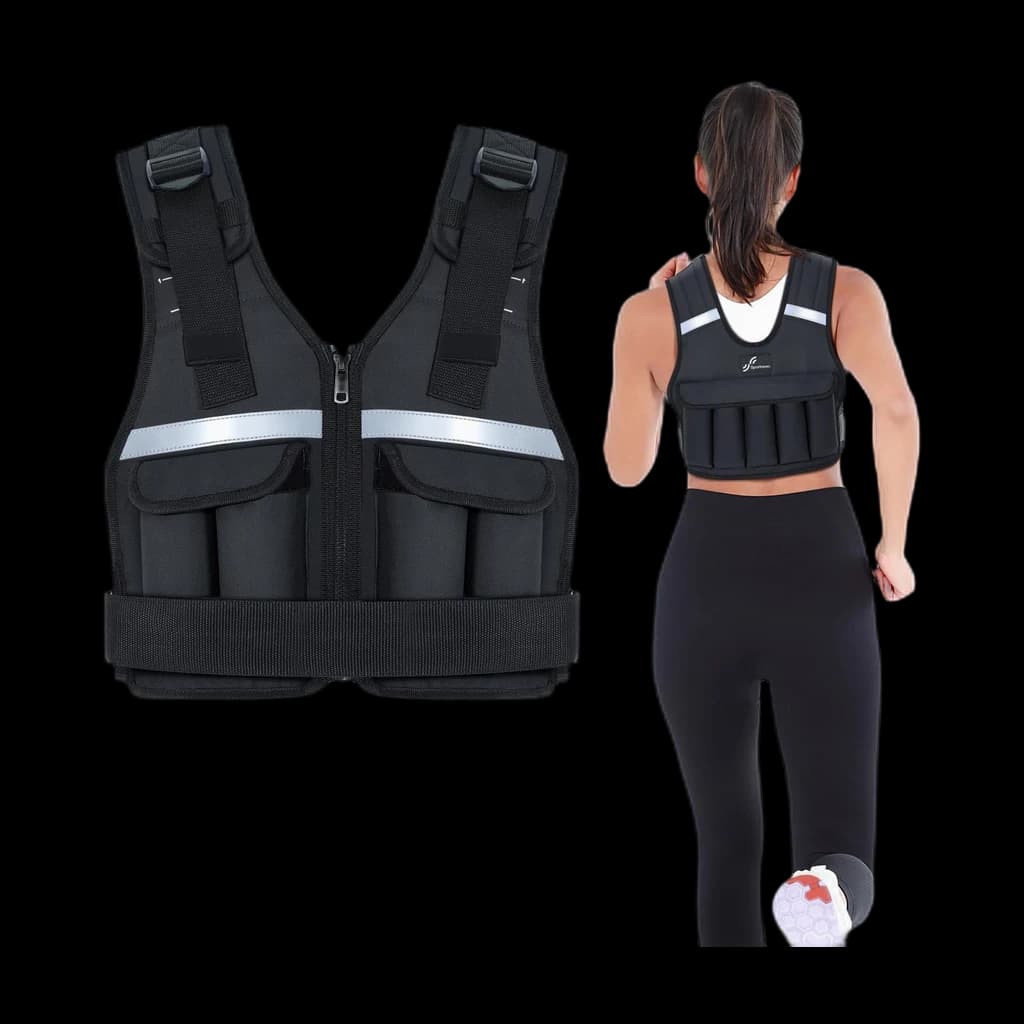 Eight 2 lb packs plus a 1 lb pack, and shoulder and waist locks that adjust separately. The walking vest of the group. ↑ Adjustability↑ Comfort↓ HeatBased on 1,434 buyer mentions | Owner rating Gym Score 90 | Key specs
| Pros
| Cons
| $59.99 | Buy on Amazon |
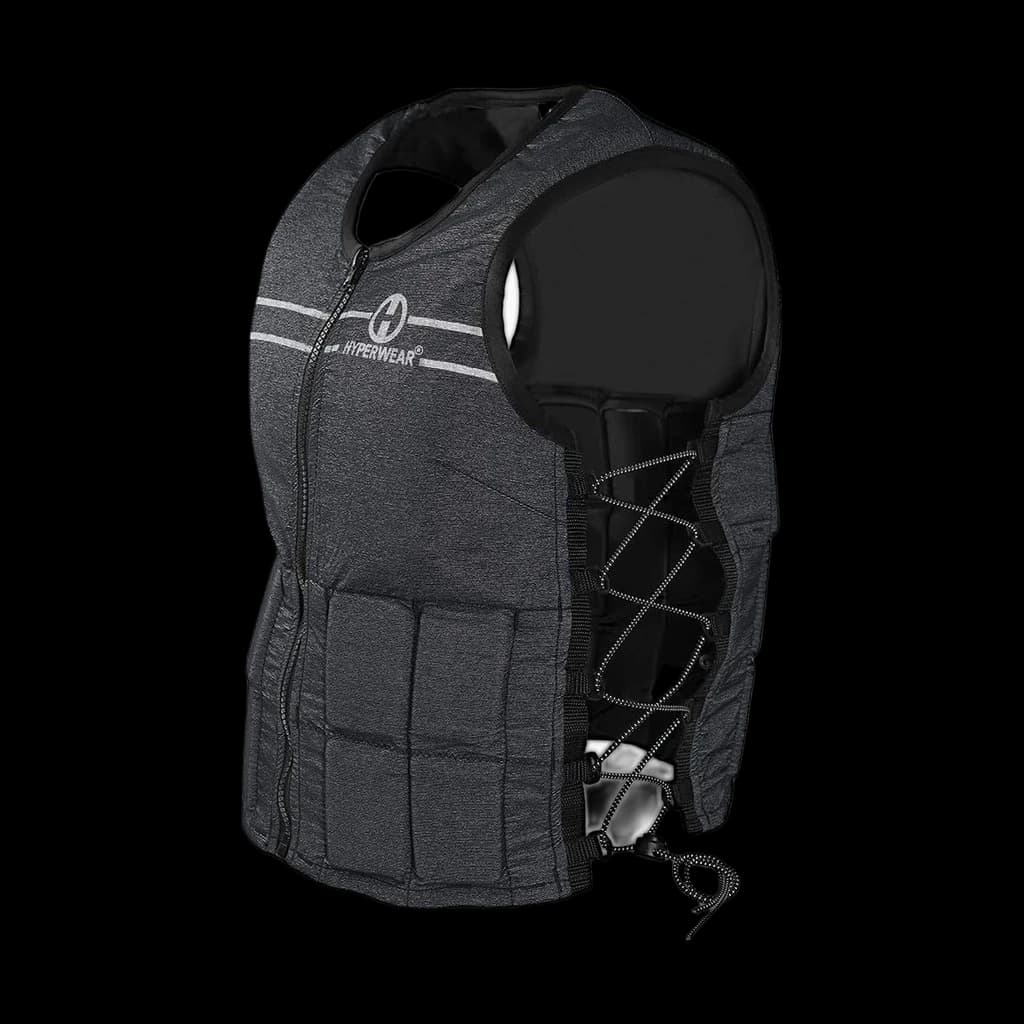 Half-pound removable weights, no load over the chest, and a machine-washable shell cut for a shorter torso. The ceiling is 10 lb. ↑ Fit↑ Comfort↓ PriceBased on 557 buyer mentions | Owner rating Gym Score 90 | Key specs
| Pros
| Cons
| $114.95 | Buy on Amazon |
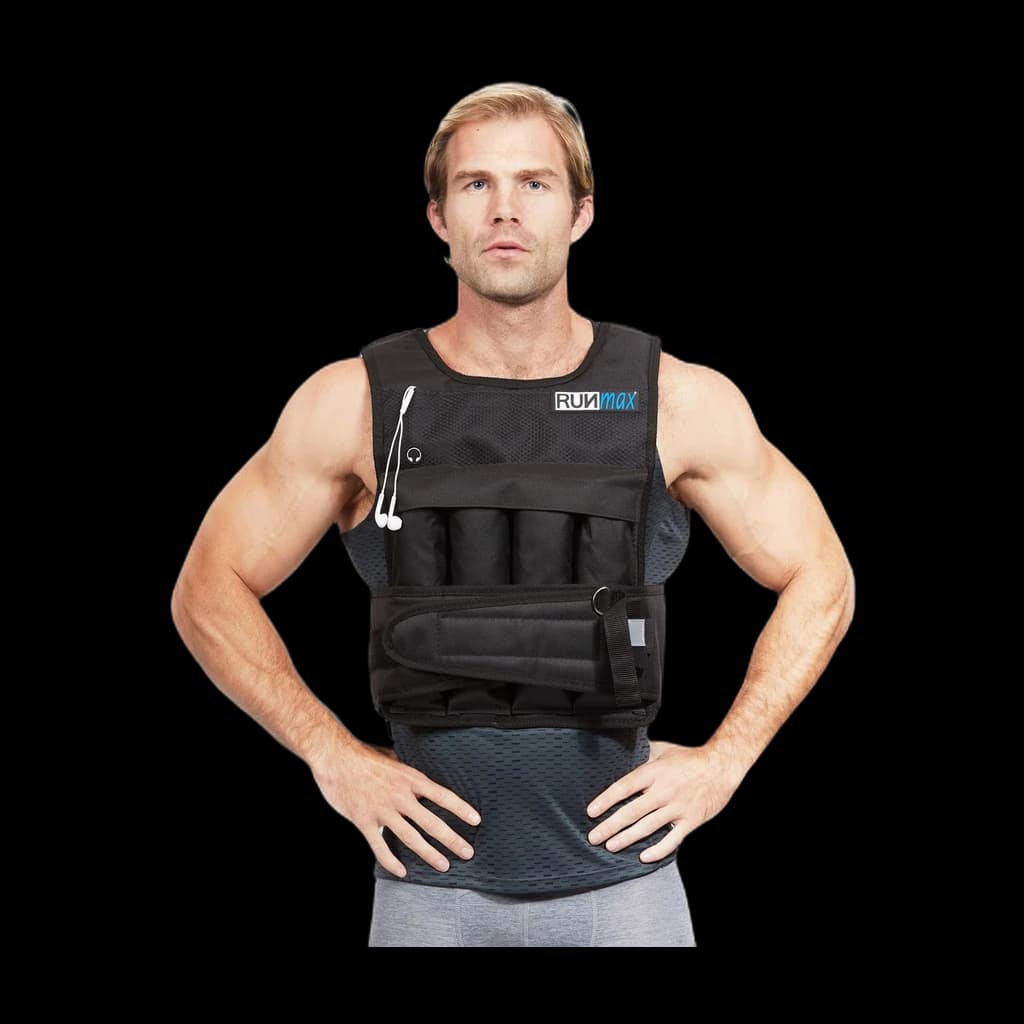 A padded nylon shell with removable packs, sold from 12 lb to 60 lb. Bulky to walk in, right for loaded carries and pull-ups. ↑ Adjustability↑ Value for Money↓ BulkBased on 136 buyer mentions | Owner rating Gym Score 85 | Key specs
| Pros
| Cons
| $54.01 | Buy on Amazon |
Amazon prices checked Sep 19, 2026. Amazon prices change often — the listing is authoritative.
What the published research actually loaded
Every load figure is quoted from the study or doctrine that used it, read August 2026. The loads range from one pound to 66% of body mass and were each chosen for a specific measurement. None of these sources publishes 5-to-10% of body weight as a general weighted-vest prescription; the most conservative clinical figure in circulation is UCLA Health's roughly 5% starting point for a new walker.
| Source | Who and how long | Vest load used | What it was measuring | Headline result |
|---|---|---|---|---|
| Snow et al., J Gerontol 2000 (Oregon State) | 18 postmenopausal women, average age 66, over 5 years | Vests weighted with 1 to 10 lb | Squats, lunges, step-ups and sit-to-stand; the jumping was done without the vests | Exercisers +1.54% femoral neck BMD, controls -4.43% |
| INVEST trial, JAMA Network Open 2025 | 150 older adults, about 75% women, 12 months | Loaded to replace lost weight, up to 10% of baseline body weight | Passive wear, a mean 7.1 hours a day during weight loss | No hip bone-density advantage over weight loss alone |
| Looney et al., Med Sci Sports Exerc 2024 (US Army USARIEM) | 20 physically active military-age adults, treadmill | 0, 22, 44 and 66% of body mass | Metabolic rate of walking by indirect calorimetry | Top sustainable pace fell 1.96 to 1.55 m/s across the range |
| Sports (MDPI) 2024, trail runners | 13 well-trained male trail runners, one maximal test | 0, 5 and 10% of body mass | Running performance and blood-gas markers | 5% changed nothing noticeable; 10% cut time to exhaustion 6.0% |
| US Army FM 21-18, Foot Marches | Conditioned soldiers, field doctrine | Fighting load up to 48 lb; approach march up to 72 lb, about 45% of body weight | Carrying capacity on the march, not training adaptation | Six-hour march distance drops about 2 km per 10 lb over 40 lb |
| ACSM position stand on progression, 2009 | Healthy adults, resistance training | No vest figure published at all | How fast to add load to any resistance exercise | Raise load 2 to 10% once you beat the target reps by one or two |
Pick the load from the activity, not the chart
Decide by your situation, not the generic ranking.
| If | You want | Pick |
|---|---|---|
| You want a flat walk to feel like more work | More metabolic cost without changing how you move | Start near 5% of body weight, then add minutes and hills before plates |
| You are rucking or hiking in the vest | Carrying capacity rather than pace | Loads well above 10% are documented, but budget for a slower route and a shorter one |
| You are running in it | A training stimulus that does not wreck the session | 5% of body mass, the load the trail-running data found changes nothing measurable |
| You are doing weighted pull-ups, dips or push-ups | Progressive overload you can keep adding to | The load that lands you in your target rep range, then 2 to 10% steps |
| Your pull-up bar or tower is close to its rating | The hardware to outlive the training block | Subtract your body weight from the rated capacity first, and stay off kipping |
| Bone density is the actual goal | The outcome the trend advertises | A different plan; the vest load is not the deciding variable here |
The number everyone publishes, and nobody sources
Search this question and a chart comes back: start at 5 to 10% of body weight, never exceed 20%. It appears on nearly every vest maker's blog in almost the same words — the pages selling vests are the pages setting the number.
Chase it to a study and the trail goes cold. Vest-loading research exists in quantity; it just does not say that. It used loads from one pound to 66% of body mass, each chosen for whatever was being measured. The table above is what the papers actually strapped onto people.
The answerable question is not how heavy but how heavy, for what — and the four reasons people buy a vest have four different answers.
The one-line version: percent of body weight is a sizing label, not a training variable. Take the load from the activity, then check it against what your hardware, your gait and your joints will actually take.
Walking: the load costs you pace long before anything else
The best data here is not from a fitness publisher. In 2024 the US Army Research Institute of Environmental Medicine walked 20 physically active adults on treadmills in vests loaded at 0, 22, 44 and 66% of body mass, measuring metabolic rate by indirect calorimetry for Medicine & Science in Sports & Exercise.
The clearest finding is a pace ceiling. Top sustainable speed fell from 1.96 m·s⁻¹ unloaded to 1.89 at 22%, 1.75 at 44% and 1.55 at 66% — roughly 4.4 mph down to 3.5 mph. Note where 22% sits: double the internet's rule, for about 4% of pace.
Two more things that paper settles:
- Vest-borne load is metabolically cheaper than the same weight in a backpack — the authors cite an earlier study where splitting a load front and back cut metabolic demand 9% versus a pack.
- The cost curve is non-linear, so doubling the load does not double the work.
For a new walker, UCLA Health's published starting point is about 5% of body weight, and it names back or neck injury and arthritis in the hips, knees or ankles as reasons to ask a doctor first. That is the most conservative figure any medical source here publishes — half what the vest industry starts at.
Picking a weighted vest for walking
Load is only half the answer. The other half is what the vest does to your gait, and a vest that slides changes your stride more than the weight does. Cinching it tighter to stop the bounce is how a vest ends up unworn in a cupboard.
| What to look for on a walking vest | Why it matters at walking pace |
|---|---|
| Increments of 1-2 lb | 5% of body weight is a starting load, so the next honest step up is small |
| Load carried low on the torso | A chest-heavy vest pulls the shoulders forward over a long walk |
| Shoulders and waist that adjust separately | One strap solving two problems is where side-to-side shift comes from |
| Removable weights, washable shell | A vest worn for hours is a garment, and smells like one |
Three from the weighted vest picks that suit walking specifically:
| Vest | Price | Load range | Why it fits a walk |
|---|---|---|---|
| Sportneer Adjustable Weighted Vest | $59.99 | 2-18 lb in 1-2 lb steps | Fine increments, front zip, and the load comes out for washing |
| Hyperwear Hyper Vest FIT | $114.95 | Up to 10 lb in half-pound steps | Half-pound steps and no weight over the chest, cut for a shorter torso |
| RUNmax Pro Weighted Vest | $54.01 | 12-60 lb by model | The one to buy if the walk is a warm-up for carries and loaded pull-ups |
Fit test before the first walk: load it and jog three steps on the spot. If the vest lands after you do, it is loose, not heavy.
Rucking: the only institution that publishes real limits
For load numbers drawn from measured field data rather than a product page, there is one place to look: the US Army's foot-march manual.
FM 21-18, Foot Marches, dated 1990, caps a conditioned soldier's fighting load at 48 lb and the approach march load at 72 lb, and states that soldiers fit to the Army's standard "can carry loads that are 45 percent of their body weight (average 72 pounds) at 4 kph for eight-hour approach marches." Emergency loads to 120 lb are called carryable for days.
It also prices every extra pound, which no vest blog does:
| What the doctrine measures | The published cost |
|---|---|
| Distance marched in six hours | Drops about 2 km for every 10 lb carried over 40 lb |
| Obstacle-course completion time | Rises 10 to 15% for every 10 lb of equipment carried |
| Training progression | "Loads should be light and distances short at the beginning of training" |
Three caveats: that is a rucksack, and a vest rides closer to your centre of mass; doctrine describes what a soldier must carry for a job, not what is optimal for a fitness walk; and newer foot-march doctrine exists. Treat it as the ceiling nobody else publishes, not a target.
Running: 5% is where the measurement changes
Running is the one activity with a clean threshold in the literature. A 2024 study in Sports ran 13 well-trained male trail runners through one maximal protocol at 0%, 5% and 10% of body mass.
Time to exhaustion: 2,117 s unloaded, 2,065 s at 5% (−2.5%), 1,989 s at 10% (−6.0%). The authors' conclusion is the quotable part — an extra load of 5% does not induce noticeable physiological or mechanical changes, but 10% does.
What that is and isn't: 13 trained men on one test protocol. It is a real measured threshold for running economy, not a general safety limit — and it says nothing about walking, where 22% barely touched pace.
Weighted pull-ups: percent of body weight is the wrong unit
For loaded calisthenics the framing breaks entirely. What matters is total load against your rep max, not what fraction of you the vest weighs. The ACSM position stand on progression gives the applicable rule: raise load 2 to 10% once you can do the current workload for one to two reps past target, novices working in an 8–12 rep-max range.
There is also a ceiling nobody warns you about. Pull-up bar capacity ratings are total system load — body weight plus vest, in one number.
| Bar | Rated capacity | Room for a vest |
|---|---|---|
| Sportsroyals Power Tower | 450 lb | Widest headroom here — a 220 lb lifter plus a 25 lb vest, no flex |
| ProsourceFit Multi-Grip Bar | 300 lb, doorway-dependent (~250 lb practical) | Thin, because the doorway becomes the weak link |
| Stamina Full Body Power Tower 735 | 250 lb total system load | A hard ceiling once a vest or dip belt is added |
| Iron Gym Total Upper Body Bar | Not rated for weighted pull-ups | Owner failures reported past 30–40 lb added |
Every rating assumes controlled static reps. If loaded pull-ups are the plan, that constraint belongs in the pull-up bar decision first.
Bone density: the one goal where load is not the lever
Briefly, because this site covers it in full elsewhere: the two studies the trend rests on bracket the 10% rule, and neither supports it as a bone dose.
- Snow, 2000 (Oregon State). The five-year program that preserved hip bone used vests weighted with one to 10 pounds for squats, lunges and step-ups — and the jumping, the part carrying the bone signal, was done without the vests.
- INVEST, 2025. Vests loaded to 10% of baseline body weight, worn a mean 7.1 hours a day for a year, produced no hip bone-density advantage over weight loss alone.
The full read, including who a vest genuinely helps, is in weighted vests and bone density.
What should actually set your number
Set the load from these:
- The activity — 5% is a real threshold for running and an unnecessary brake on walking
- Your gait: if stride, posture or breathing change, the load is too heavy for that activity today
- The rated capacity of whatever you hang from, counted as body weight plus vest
- The plate increment your vest allows, because 2 to 10% steps need small plates
- Any back, neck or arthritic joint issue, which overrides every number above
Not from these:
- A percentage on a size chart with no study behind it
- What a fit soldier can carry, which is a job requirement rather than a dose
- The 20% "never exceed" ceiling, which is likewise unsourced and, for walking, contradicted by measurement
Buy for the load you will actually use, in the smallest increments the vest offers, and progress it a little at a time. The chart was never the answer.
Frequently Asked Questions
Is 10% of body weight a safe weighted vest load?+
For most healthy adults walking on the flat it is a mild load, not a risky one. US Army researchers walked people in vests at 22, 44 and 66% of body mass and the top sustainable pace fell from 1.96 m/s unloaded to 1.89 m/s at 22%, roughly a 4% drop at more than double the popular rule. The caveat is the activity: in the running study, 10% of body mass was the point at which measurable changes appeared, while 5% did not. Nobody publishes 10% as a threshold derived from data, and UCLA Health's stated starting point for a new walker is about 5%.
Where does the 5 to 10% weighted vest rule come from?+
We could not trace it to any study, position stand or clinical guideline. It appears almost verbatim across vest manufacturers' blogs, alongside a companion claim that you should never exceed 20% of body weight, which is likewise unsourced and is contradicted for walking by measurements taken at 22, 44 and 66% of body mass. The honest description is that it is a reasonable-sounding retail convention, not a research finding. Treat it as a starting suggestion rather than a limit.
How heavy should a weighted vest be for running?+
About 5% of body mass, based on the only clean threshold in the literature. A 2024 study in Sports ran 13 well-trained male trail runners through the same maximal protocol unloaded, at 5% and at 10% of body mass. Time to exhaustion was 2,117 seconds unloaded, 2,065 seconds at 5% and 1,989 seconds at 10%, and the authors concluded that an extra load of 5% does not induce noticeable physiological or mechanical changes while 10% does. That is 13 trained men on one protocol, so read it as a running-economy threshold rather than a universal safety limit.
How much weight can I add for weighted pull-ups?+
Two limits apply and neither is a percentage of your body weight. The training limit is your rep max: pick the load that puts you in your target rep range, and follow the ACSM progression rule of raising load 2 to 10% once you can perform the current workload for one or two reps past target. The hardware limit is your bar's rating, which is a total system load counting body weight plus the vest. Across this site's pull-up bar catalog those ratings run from 450 lb on the Sportsroyals tower down to the Iron Gym doorway bar, which is not rated for weighted pull-ups at all. Every rating assumes controlled static reps.
Does a heavier vest build bone faster?+
The evidence does not support that. The five-year Oregon State program that preserved hip bone density used vests weighted with only one to 10 pounds, and the jumping that carried the bone signal was done without the vests on. The 2025 INVEST trial went the other way, loading vests to as much as 10% of baseline body weight and having participants wear them a mean 7.1 hours a day for a year, and hip bone density showed no advantage over weight loss alone. Load is not the variable that decides this outcome.
Sources & Research
- Medicine & Science in Sports & Exercise (US Army USARIEM) — Looney et al., Metabolic Costs of Walking with Weighted Vests, 2024: 20 adults walked in vests at 0, 22, 44 and 66% body mass; final sustainable speeds 1.96, 1.89, 1.75 and 1.55 m/s; vest-borne load modelled as metabolically cheaper than backpack loadresearch
- Sports (MDPI) — Effect of Weighted Vest at 0%, 5% and 10% of Body Mass on Gasometry Biomarkers and Performance during a Rectangular Test in Trained Trail Runners, 2024: time to exhaustion 2,117 s / 2,065 s / 1,989 s; an extra load of 5% does not induce noticeable physiological or mechanical changes, but 10% doesresearch
- US Army FM 21-18, Foot Marches — 1 June 1990 edition, Chapter 5, Soldier's Load Management: fighting load not to exceed 48 lb and approach march load 72 lb; APFT-fit soldiers can carry 45 percent of their body weight (average 72 pounds) at 4 kph for eight-hour approach marches; six-hour march distance decreases about 2 km for every 10 pounds carried over 40 poundsauthority
- American College of Sports Medicine (PubMed) — Position stand, Progression Models in Resistance Training for Healthy Adults, 2009: a 2-10% increase in load is recommended when the individual can perform the current workload for one to two repetitions over the desired number; novices train in an 8-12 RM rangeauthority
- Oregon State University Newsroom — OSU study finds elderly women can halt bone loss: the five-year Snow program used resistance exercises wearing vests weighted with one to 10 pounds, and participants jumped about 50 times a day without the weighted vestsresearch
- JAMA Network Open — INVEST randomized clinical trial, 2025: vest weight adjusted weekly to match weight lost, up to 10% of baseline weight, worn a mean 7.1 h/d for 12 months, with no treatment difference in total hip bone density versus weight loss aloneresearch
- UCLA Health — Should you walk with a weighted vest? The general recommendation is to start with a vest that's about 5% of your body weight, with caution advised for back or neck injury and for arthritis in the hips, knees or anklesauthority
Related reviews

Weighted Vest for Women: Fit, Load and the Bone-Density Question
A weighted vest for women is a fit decision before it is a bone decision: what differs on a short torso, how heavy to start, and what the research shows.
Progressive Overload at Home Without Adding Weight
Progressive overload without adding weight: progress with reps, sets, tempo, range, and rest when the next dumbbell jump is too big. The full method.
Best Pull-Up Bars for Home Gyms in 2026: Sportsroyals Wins
The Sportsroyals Power Tower is the best freestanding pull-up bar; the SELEWARE 48-inch bar wins wall-mount. Six bars scored on stability, span and install.
Hilly Shore Labs
Editorial teamThe independent product research team behind GymScored. Every recommendation is researched, never hands-on tested — rankings come from manufacturer specifications, published standards, and aggregated buyer sentiment.
161 products scored across 26 home gym categories, each on the same 5-dimension Gym Score formula.
See the scoring methodology and who we are.
Affiliate disclosure: GymScored is a participant in the Amazon Services LLC Associates Program. We earn from qualifying purchases at no extra cost to you. Full disclosure →