Best Weighted Vests for Walking, Rucking and Home Workouts
A weighted vest is the cheapest way to make a walk, a push-up or a set of step-ups harder without buying another piece of equipment or another square foot of floor.
Prices and availability verified Oct 17, 2026
Most people should buy an adjustable vest in the low-to-mid range rather than a fixed one - the RUNmax Pro if the vest is for training sessions, the Sportneer if it is mainly for walking. Start near 5% of body weight and add distance before plates.
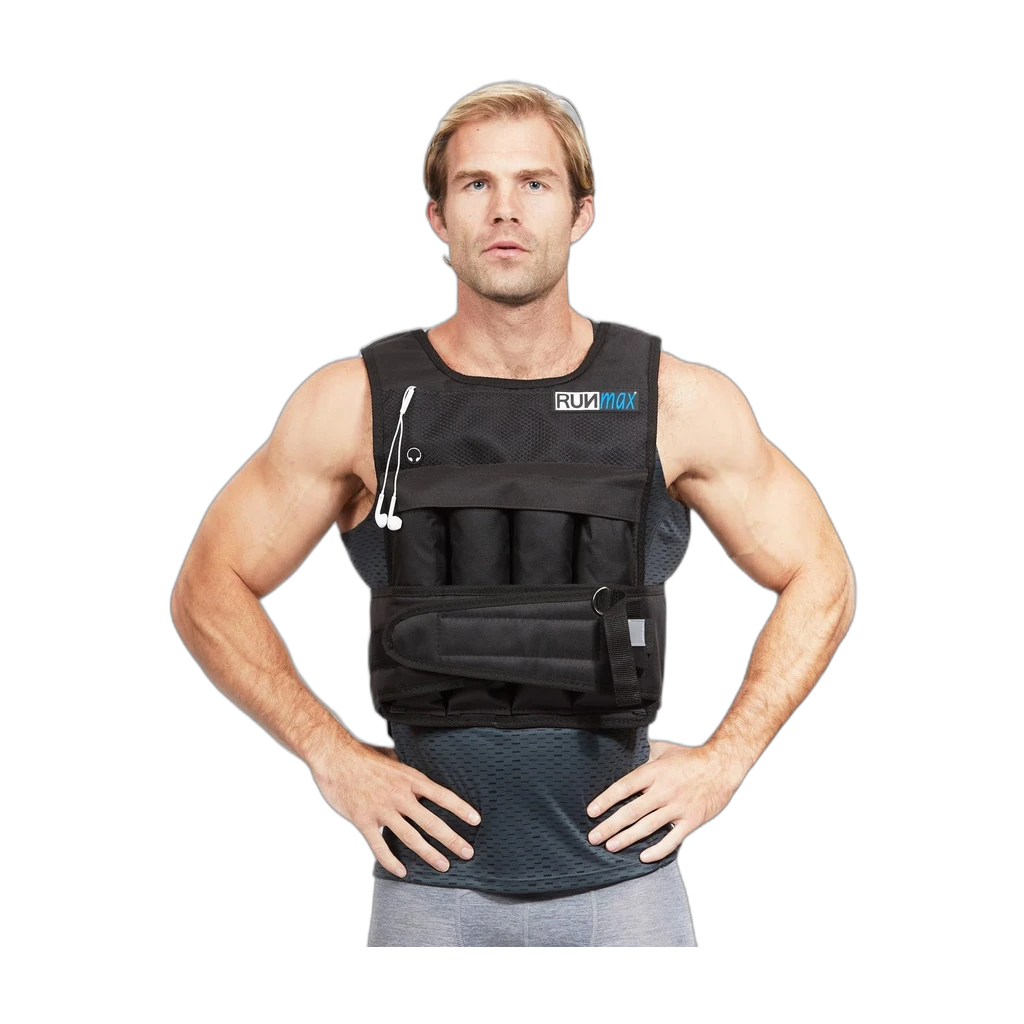
One padded shell with removable packs, sold from 12 lb to 60 lb, so the ceiling is a purchase decision rather than a limit you hit in a season.
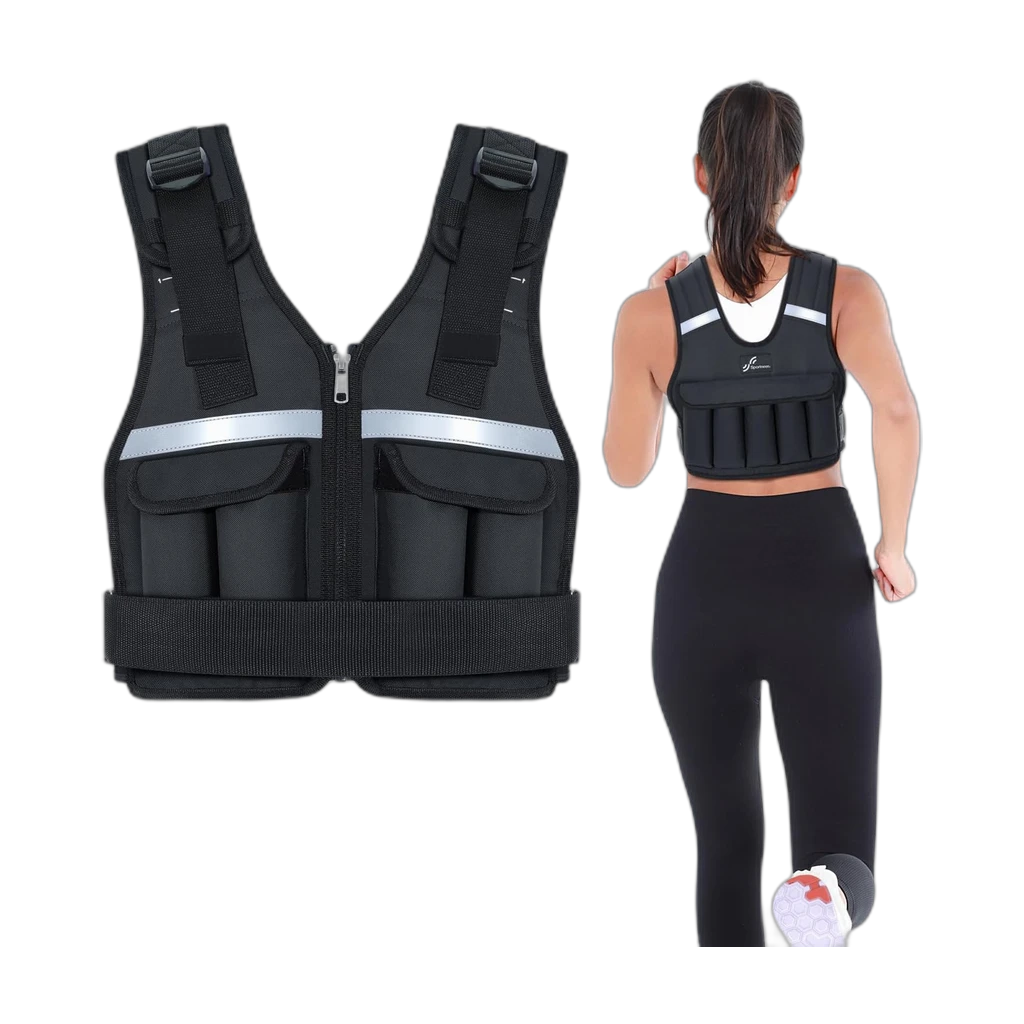
Eight 2 lb packs plus a 1 lb pack, independent shoulder and waist locks, and a load that comes out for washing - the walking vest of the group.
The cheapest honest way to find out whether you will actually wear a vest, as long as you accept the weight can never change.
The weight cannot change, so the vest is either too light within months or too heavy on day one, and the fill cannot be removed - which means the shell cannot be washed and a seam failure ends the vest with no repair.
Price per pound of load varies several-fold across the six picks. Almost none of that spread is steel - it is fit, adjustment increment and whether the shell can be washed.
The 5-to-10%-of-body-weight rule that every vest brand publishes traces back to no study. The measured numbers are far wider and far less alarming: US Army researchers walked people in vests at 22, 44 and 66% of body mass and top sustainable pace fell only about 4% at 22% - double the popular rule. In the other direction, a 2024 trail-running study found 5% of body mass changed nothing measurable while 10% cut time to exhaustion by 6%. The load that is conservative for walking is the load that is aggressive for running.
Across r/homegym, r/bodyweightfitness and r/Rucking the split is by use, not by brand. In r/bodyweightfitness the recurring advice is to avoid sand-cylinder vests because they are awkward to adjust between exercises, and to prefer metal plates or thin rods; plate-loaded vests are described as a good idea that turns unwieldy in practice past a certain load, with several people keeping a block-weight vest for rucking and a dip belt for pull-ups. r/homegym threads keep returning to fit and bulk rather than weight - a vest you have to over-tighten to stop the bounce is a vest you stop wearing - and long-standing recommendations there point at short-cut vests for anyone who found a full-length one riding up. In r/Rucking the consensus is that a plate carrier keeps the load high and close to the back, a genuinely different distribution from a torso vest, and people who own both switch between them mid-route to move the load off tired shoulders.
- Hyperwear Hyper Vest PRO — The compression fit and 2.25 oz steel weights are the reference for a vest you can run in without it moving; nothing cheaper here comes close on bounce.
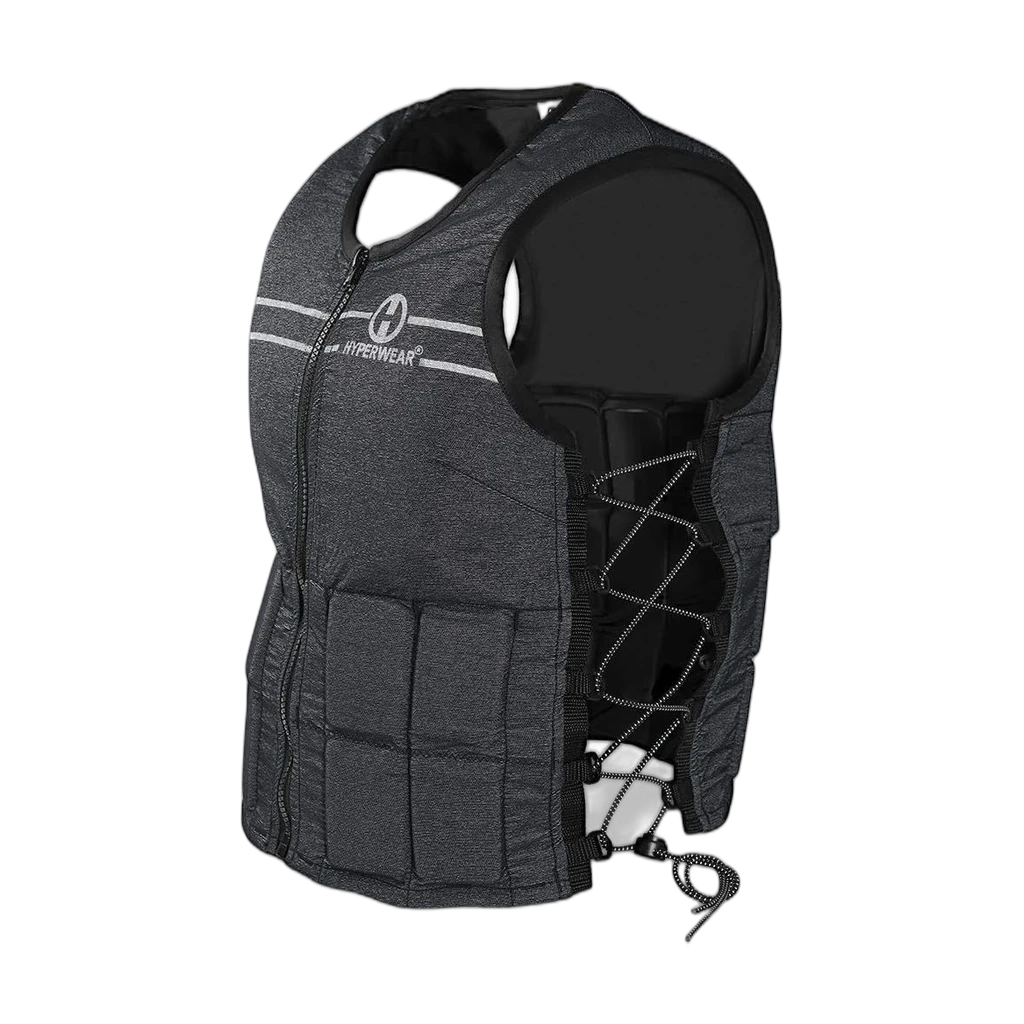
- Hyperwear Hyper Vest FIT — Half-pound increments and a panel that keeps the load off the chest - the only pick built around a short torso rather than shrunk from a men's pattern.
- One-size neoprene vests with a single front strap — One strap has to solve two different problems - shoulder height and rib circumference - and on a narrow or a broad frame it solves neither, which is where side-to-side shift and one-shoulder chafing come from.
- Ankle and wrist weights used as a substitute — Load at the end of a limb changes your gait and your joint torques in a way a torso load does not; a vest distributes the same weight through your centre of mass instead.
- ✓Removable weight packs, so the load is adjustable rather than fixed
- ✓Sold in ladders from 12 lb to 60 lb on one shell design
- ✓Padded shoulder yoke option makes heavy loads bearable on carries
- −Bulky through the chest — poor choice for running or all-day wear
- −Adjustment is a single front strap, so the fit is coarse
- ✓Half-pound removable weights, the finest progression in this list
- ✓No weights over the chest; the load sits low on the torso
- ✓Machine-washable shell, which matters for a vest worn for hours
- −10 lb ceiling — this is not a loaded-calisthenics vest
- −Costs several times a basic neoprene vest of the same weight
- ✓Eight 2 lb packs plus a 1 lb pack, so genuine 1-2 lb progression steps
- ✓Shoulder and waist adjust independently, which controls side-to-side shift
- ✓Weights come out completely, so the shell can be cleaned
- −Neoprene holds heat; it is a cool-weather vest outdoors
- −18 lb ceiling on the standard version
- ✓Carrier plus plates in one purchase, so it is usable out of the box
- ✓Front-and-back plate split loads the traps and posture like a pack does
- ✓Adjustable at both shoulders and waist, one size covering XS to XL
- −Bulky and hot; a poor choice for gym work in a crowded space
- −Plate steps are coarse — this is not a fine-progression tool
- ✓Lowest cost of entry by a wide margin
- ✓Simple neoprene shell with double-stitched seams to resist sand leaks
- ✓Reflective strips on both sides for early-morning or evening walks
- −Fixed weight — no progression without buying another vest
- −Iron sand cannot be removed, so the vest cannot be washed
Amazon prices checked Oct 17, 2026. Amazon prices change often — the listing is authoritative.
Our ranked picks
Scored on 5 dimensions. How we score →
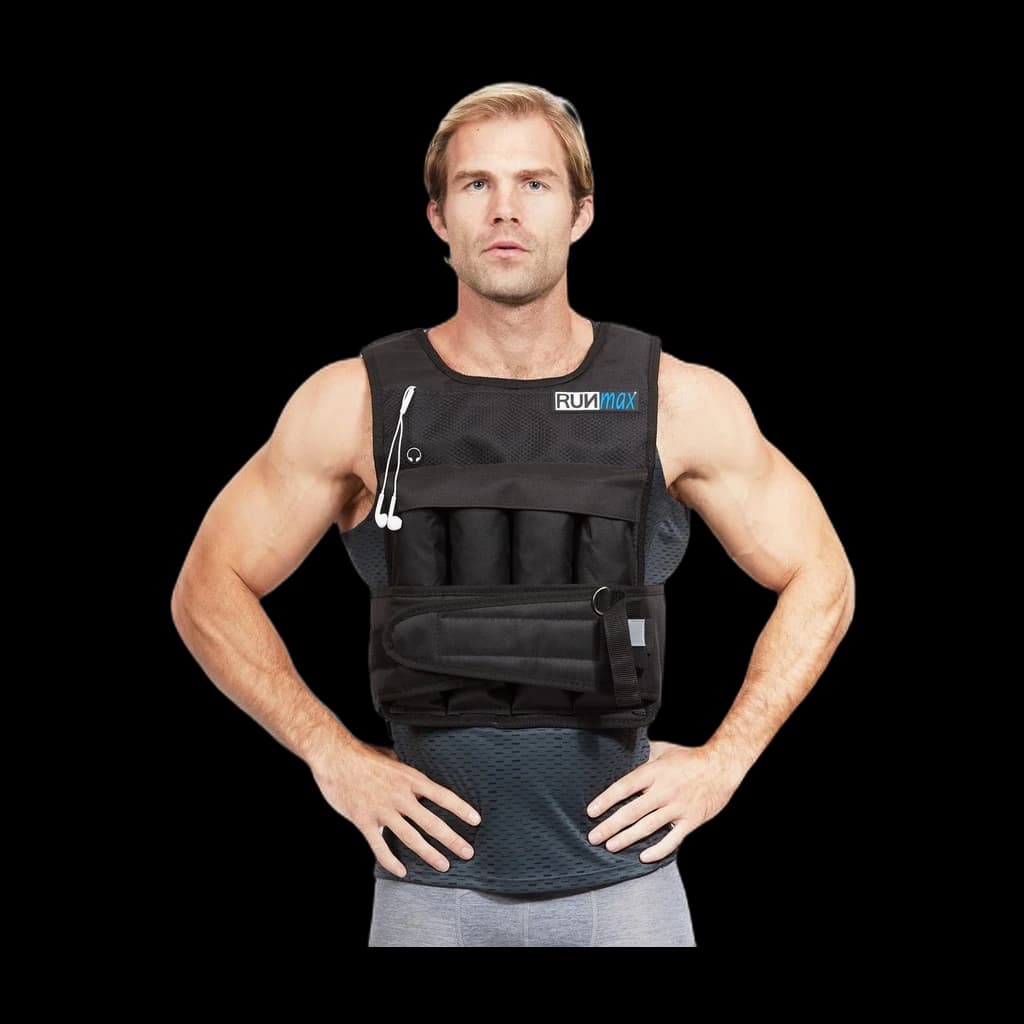
The RUNmax Pro is the vest to buy if you want one shell that grows with you for years. It is a shoulder-padded nylon carrier with removable weight packs, sold from 12 lb up to 60 lb, so the decision you make at checkout is a load ceiling rather than a fixed number. That matters more than it sounds: the single most common regret in weighted-vest threads is buying a fixed 20 lb vest and outgrowing it in a season. The trade is bulk. This is a training vest, not a garment — it sits proud of the chest, it is warm, and it is not the thing you wear to walk the dog in July. For loaded carries, step-ups, push-ups and weighted pull-ups, the padded yoke is the part you will be grateful for.
- + Removable weight packs, so the load is adjustable rather than fixed
- + Sold in ladders from 12 lb to 60 lb on one shell design
- + Padded shoulder yoke option makes heavy loads bearable on carries
- + Tear-resistant nylon shell with a lifetime warranty from the maker
- − Bulky through the chest — poor choice for running or all-day wear
- − Adjustment is a single front strap, so the fit is coarse
- − Weight packs are chunky, so the smallest honest step is a few pounds
- − No women's-specific cut
- Loading
- Removable weight packs
- Load Range
- 12-60 lb depending on model
- Shell
- Tear-resistant nylon
- Adjustment
- Front strap, one size fits most
- Shoulder Pads
- Optional on most sizes
- Warranty
- Lifetime limited (maker's claim)
Gym Score breakdown ▸
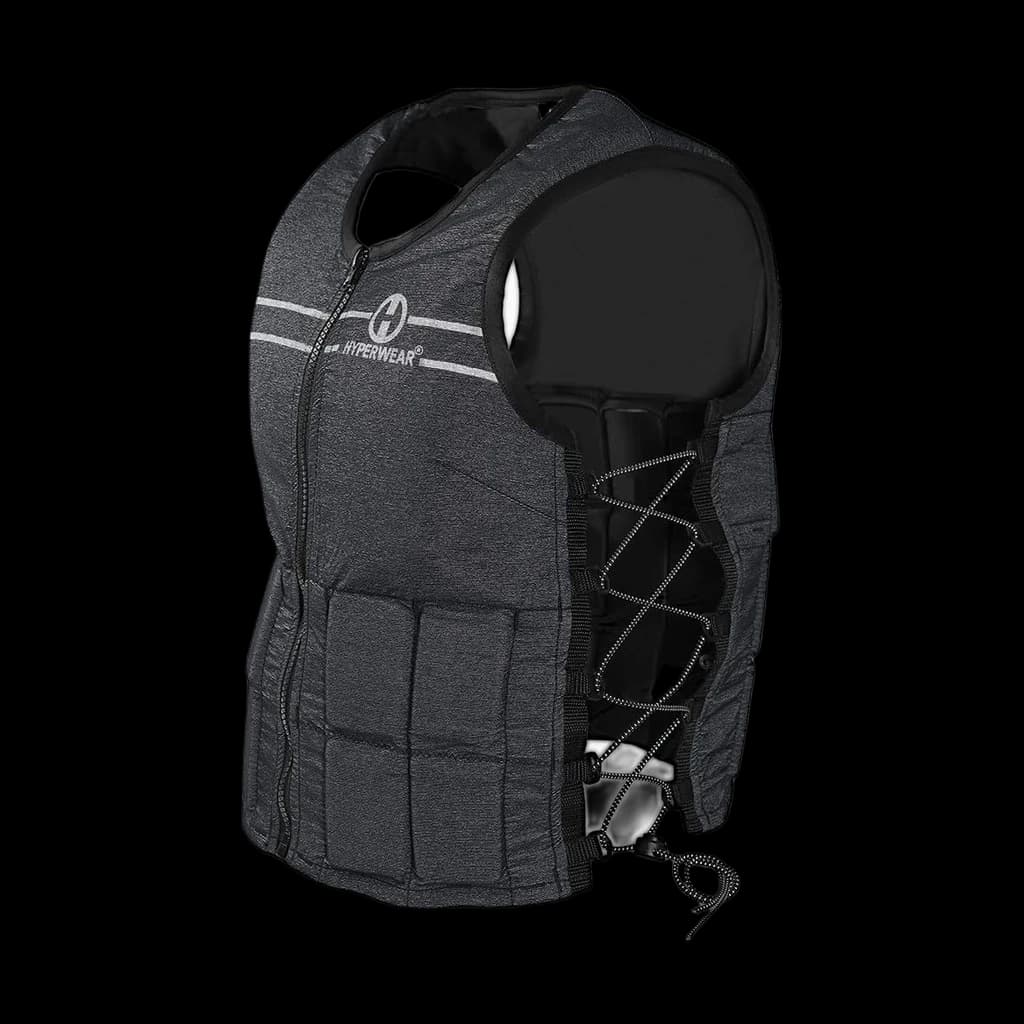
The Hyper Vest FIT is the only pick here designed around a short torso rather than shrunk from a men's pattern. Hyperwear states the load is carried in half-pound removable containers of steel shot, with no weights over the chest, up to 10 lb total, in a machine-washable Cordura shell with elastic side lacing. Every one of those choices answers a specific complaint women make about unisex vests: the load riding up onto the collarbone, the front panel sitting over the bust, jumps of five pounds when you wanted one, and a vest that cannot be washed after being worn for hours. The ceiling is the catch — 10 lb is a walking and daily-wear load, not a loaded-pull-up load. Buy it for the fit and the increments, and buy something else when you outgrow it.
- + Half-pound removable weights, the finest progression in this list
- + No weights over the chest; the load sits low on the torso
- + Machine-washable shell, which matters for a vest worn for hours
- + Three sizes plus elastic side lacing rather than one-size-fits-most
- − 10 lb ceiling — this is not a loaded-calisthenics vest
- − Costs several times a basic neoprene vest of the same weight
- − Front zipper and lacing take longer to put on than a buckle
- − Sizing runs to fit, so a size chart read is genuinely required
- Loading
- 0.5 lb removable steel-shot containers
- Load Range
- Up to 10 lb
- Shell
- Machine-washable Cordura with satin lining
- Fit
- Women's cut, no weights over the chest
- Sizes
- Small, Medium, Large
- Closure
- Front zip with elastic side lacing
Gym Score breakdown ▸
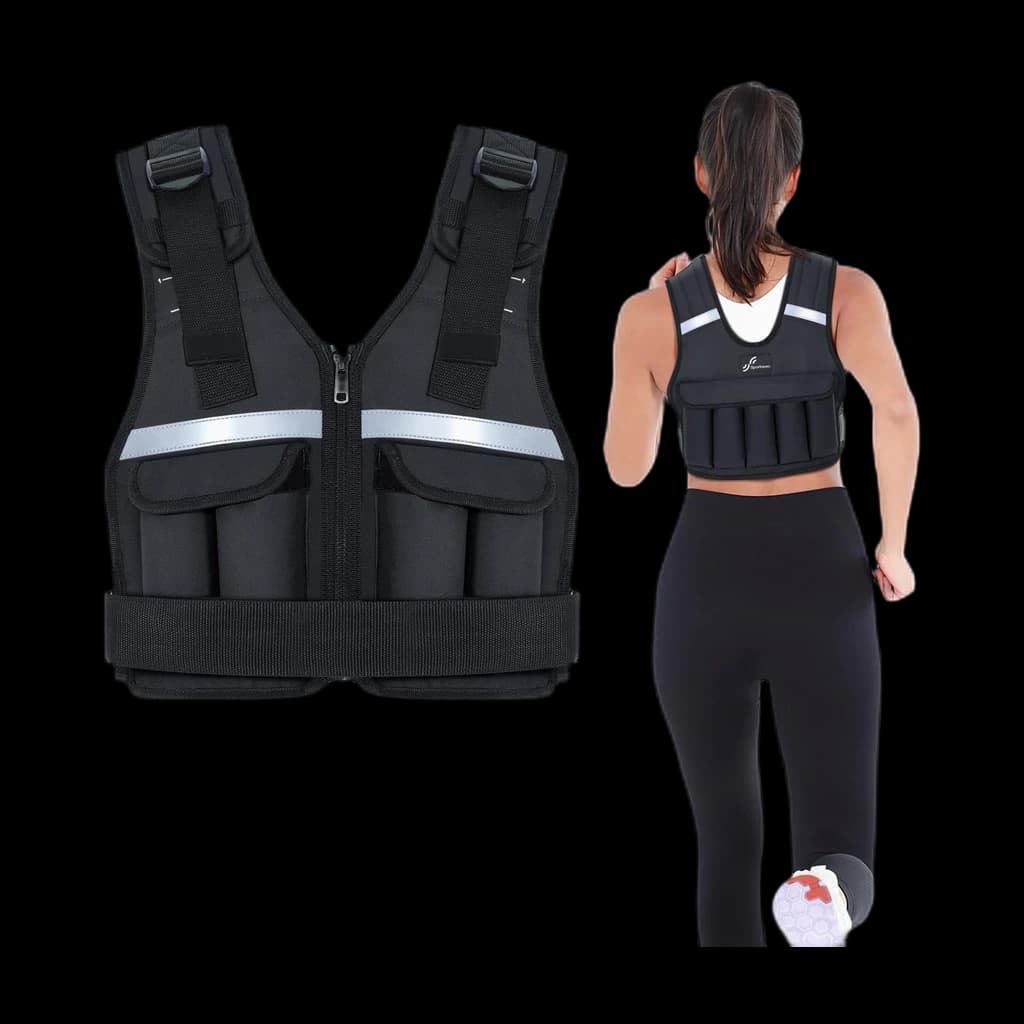
For walking specifically, this is the most sensible shape in the list. Sportneer supplies eight 2 lb packs and one 1 lb pack, so the vest runs anywhere from 2 to 18 lb and steps in one-pound increments at the bottom of the range — which is exactly where a new walker should be living. It zips at the front rather than pulling over the head, the weights come out for washing, and the shoulders and waist lock independently, which is the single feature that stops a vest sliding side to side on a narrower frame. It is neoprene, so it holds heat and it is not the vest for a July afternoon. But at a walking load, on a body that a one-size unisex vest does not fit well, the independent locks matter more than the fabric.
- + Eight 2 lb packs plus a 1 lb pack, so genuine 1-2 lb progression steps
- + Shoulder and waist adjust independently, which controls side-to-side shift
- + Weights come out completely, so the shell can be cleaned
- + Front zip and reflective strips front and back for early or late walks
- − Neoprene holds heat; it is a cool-weather vest outdoors
- − 18 lb ceiling on the standard version
- − Packs must be balanced by hand each time you change load
- − The shell is fitted enough that the size details need reading before you order
- Loading
- 8 x 2 lb packs plus 1 x 1 lb pack
- Load Range
- 2-18 lb (2-30 and 2-42 lb versions exist)
- Shell
- Neoprene, weights fully removable
- Adjustment
- Independent shoulder and waist locks
- Closure
- Front zip
- Visibility
- Reflective strips front and back
Gym Score breakdown ▸
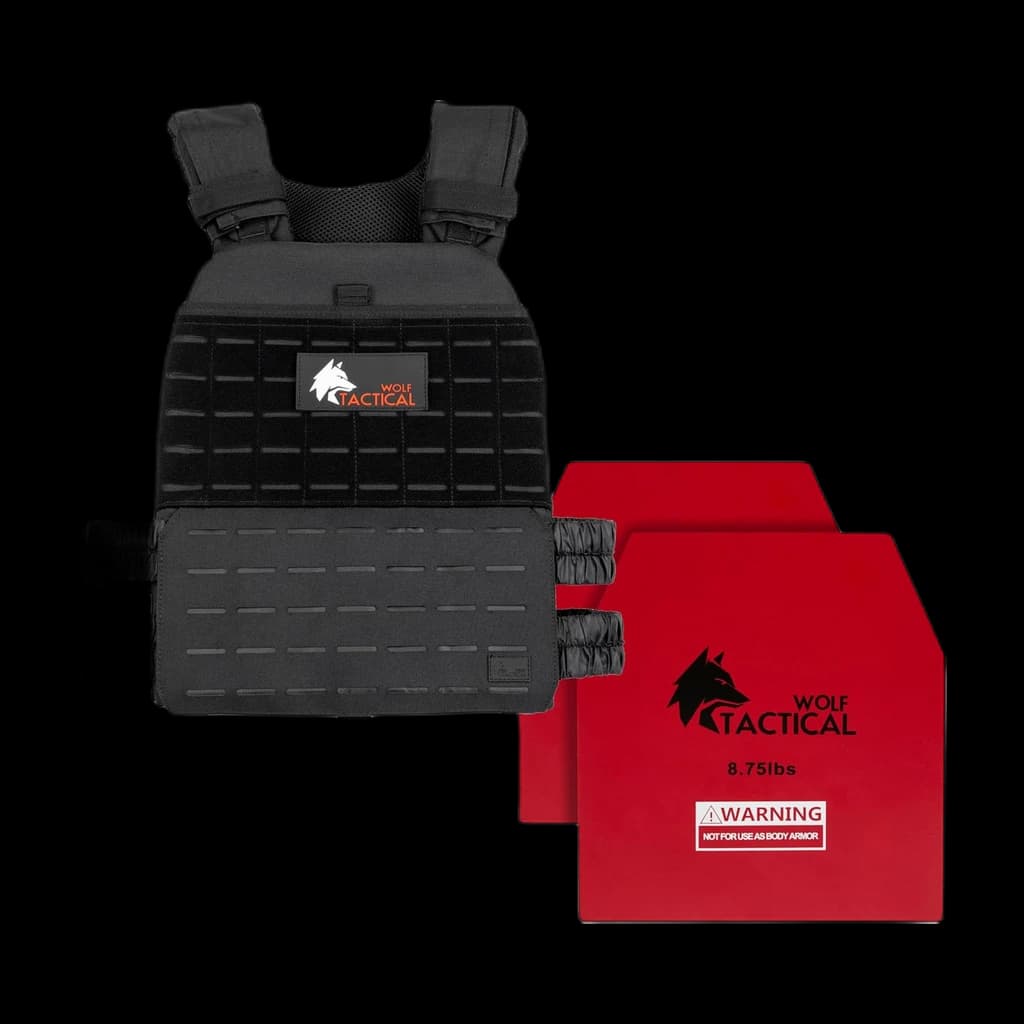
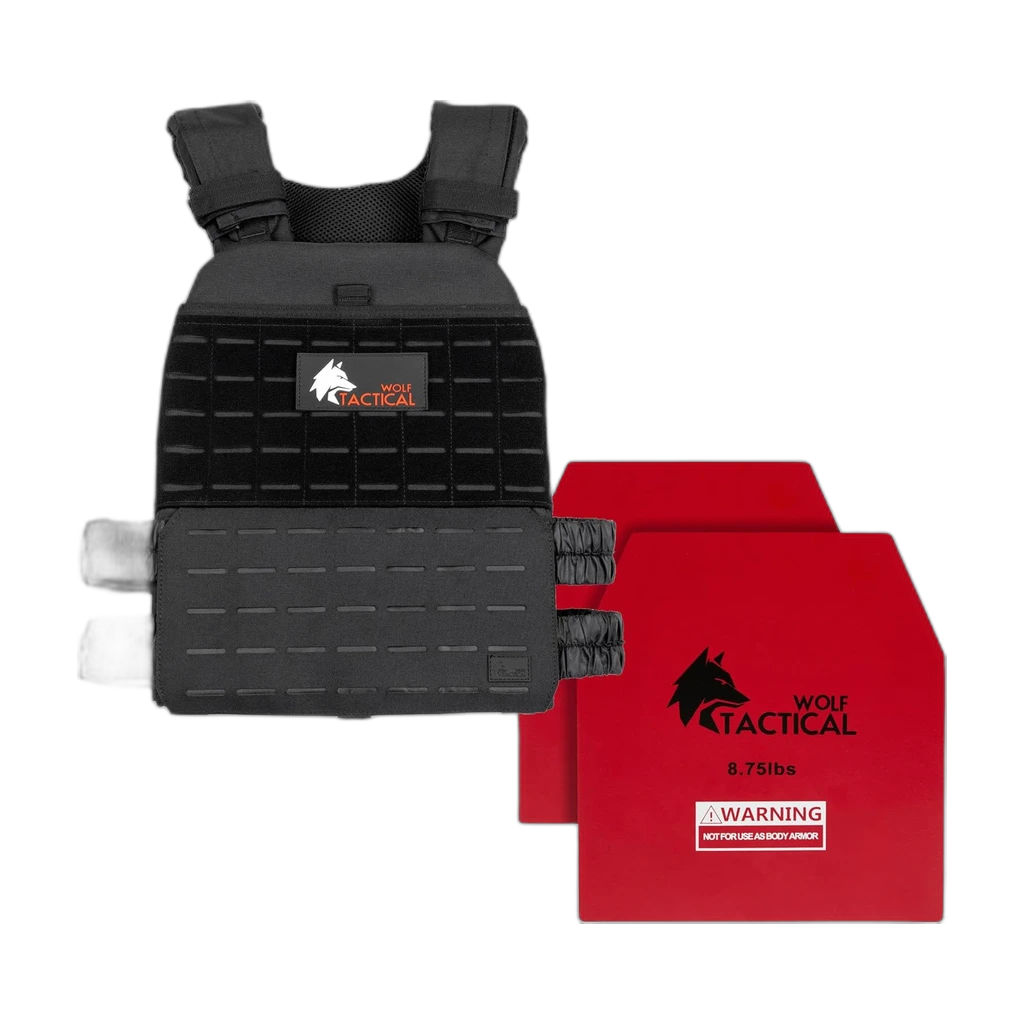
This is the plate-carrier answer rather than the vest answer, sold as a carrier plus a pair of plates so it arrives usable. The distinction is real: a carrier splits the load into two slabs, front and back, sitting high and close, which is much nearer to what a loaded pack does to your posture than a torso-hugging vest is. Ruckers who have tried both describe exactly that difference, and it is why plate carriers keep turning up in rucking discussions rather than in walking ones. WOLF TACTICAL states 600D construction, adjustable shoulder and waist straps, one size fits most from XS to XL, and support for medium and large plates in 14, 20, 31 or 42 lb configurations. It is warm, it is bulky, and it is the right tool if the goal is loaded distance rather than a discreet daily walk.
- + Carrier plus plates in one purchase, so it is usable out of the box
- + Front-and-back plate split loads the traps and posture like a pack does
- + Adjustable at both shoulders and waist, one size covering XS to XL
- + Takes larger plates later, so the load ladder goes well past the included pair
- − Bulky and hot; a poor choice for gym work in a crowded space
- − Plate steps are coarse — this is not a fine-progression tool
- − Cummerbund and strap setup takes a session to get right
- − Costs more than a simple neoprene vest of similar weight
- Loading
- Front and back plate pockets
- Included Plates
- 8.75 lb pair
- Plate Support
- Medium and large plates, 14/20/31/42 lb configurations
- Shell
- 600D construction
- Sizing
- One size fits most (XS-XL)
- Adjustment
- Shoulder and waist straps
Gym Score breakdown ▸
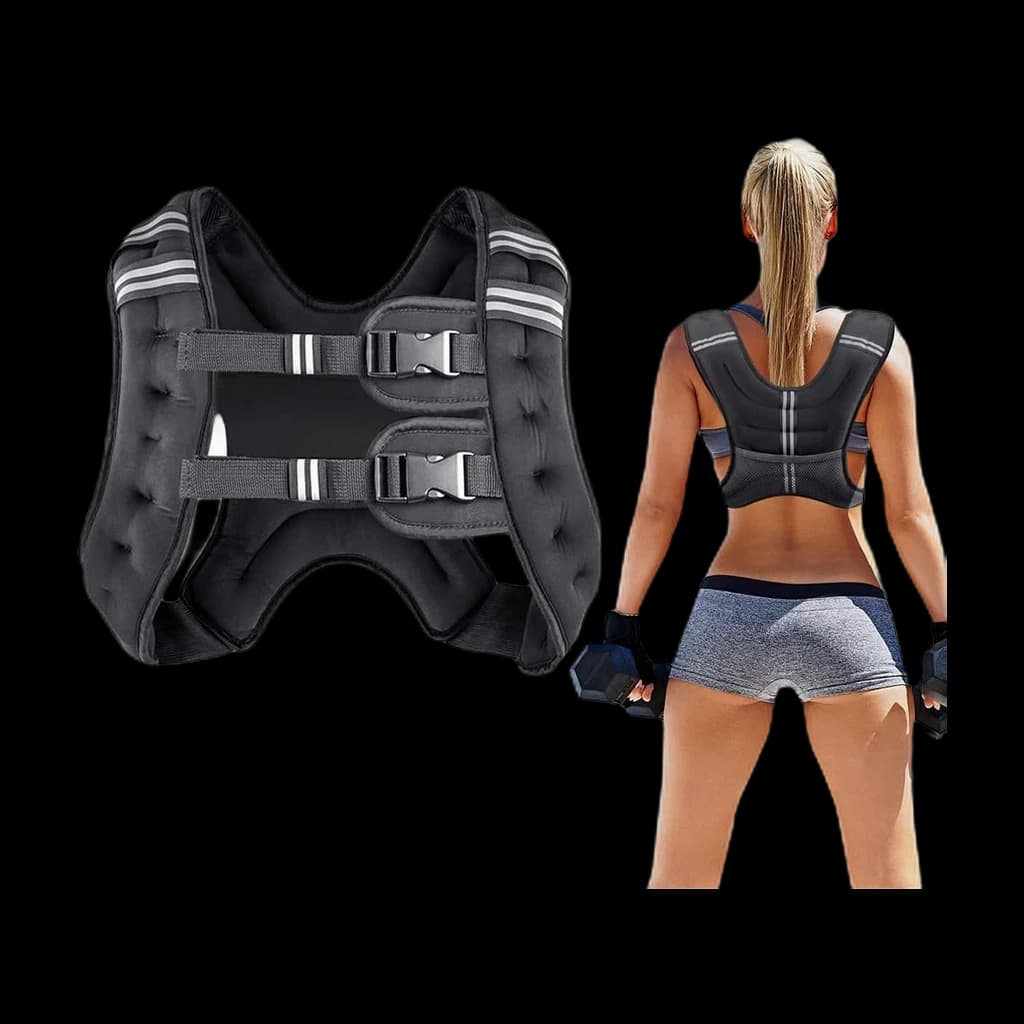
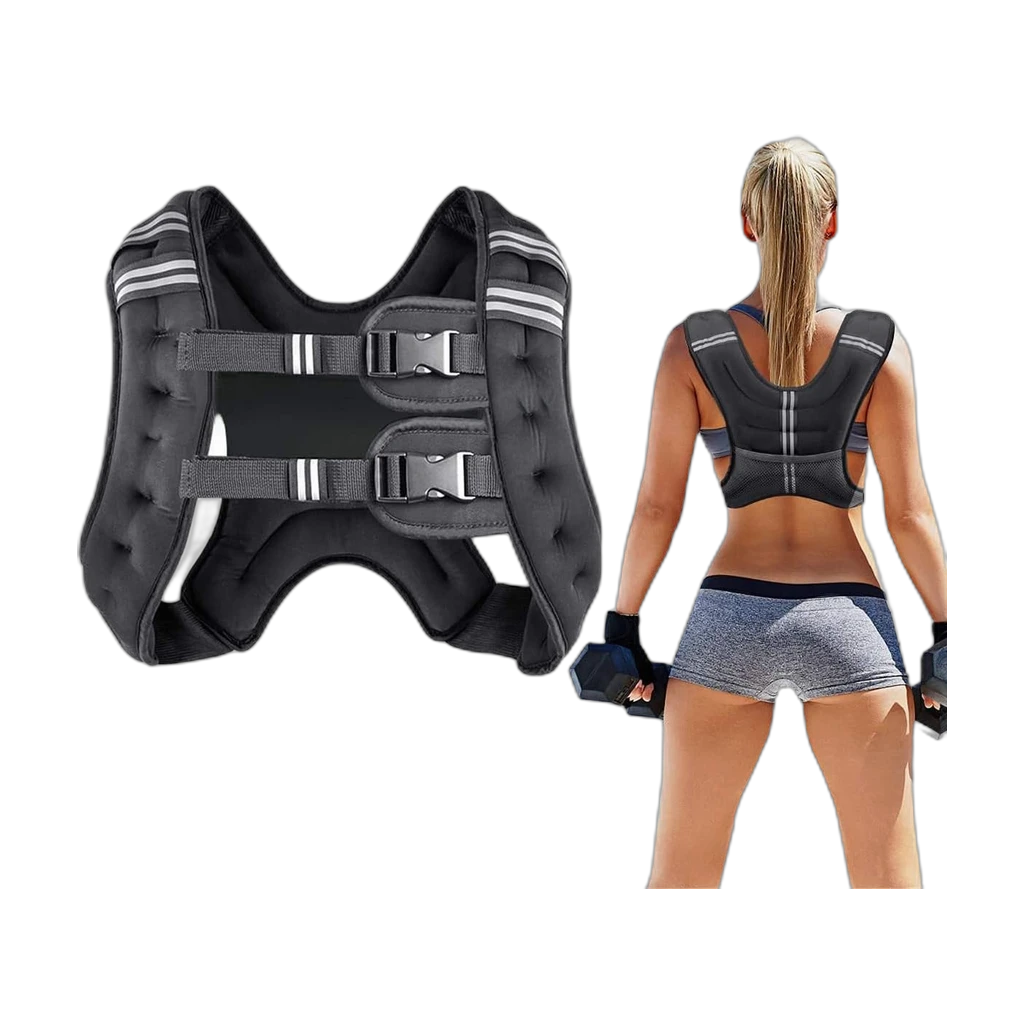
The cheapest honest way to find out whether you will actually wear a weighted vest. It is a fixed-weight neoprene shell filled with iron sand, sold in 8, 12, 16, 20, 25 and 30 lb versions, with a double buckle strap sized for a 35 to 45 inch bust and reflective strips on both sides. Fixed weight is the whole trade: you cannot start at 5% of body weight and work up, you buy the number and live with it, and if you guess high the vest sits in a cupboard. Iron-sand vests also cannot be emptied, so they cannot be washed and they do eventually smell. As a one-month test of whether weighted walking fits your life, that is a defensible way to spend very little. As the vest you own in two years, it is not.
- + Lowest cost of entry by a wide margin
- + Simple neoprene shell with double-stitched seams to resist sand leaks
- + Reflective strips on both sides for early-morning or evening walks
- + Sold in six fixed weights, so you can match a known target
- − Fixed weight — no progression without buying another vest
- − Iron sand cannot be removed, so the vest cannot be washed
- − One strap sizing means a narrow or broad frame gets a coarse fit
- − Seams are the failure point; a leak ends the vest
- Loading
- Sewn-in iron sand, not removable
- Load Range
- Fixed 8, 12, 16, 20, 25 or 30 lb
- Shell
- Neoprene (chloroprene rubber)
- Adjustment
- Double buckle strap, 35-45 in bust
- Visibility
- Reflective strips both sides
- Washable
- No
Gym Score breakdown ▸
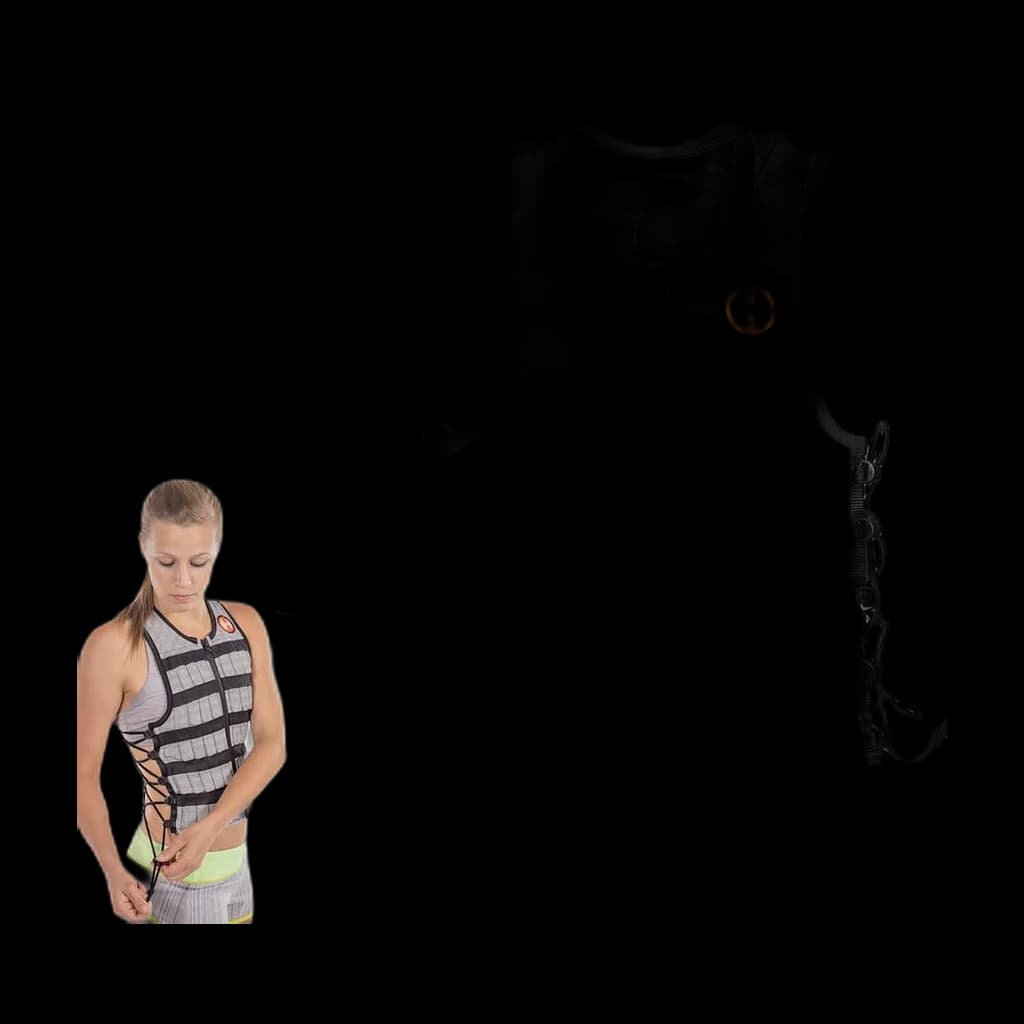
The Hyper Vest PRO is the one vest here you could wear under a jacket and the one that will not move when you run. Hyperwear states the load is carried in individual 2.25 oz galvanized steel weights only a quarter of an inch thick, distributed across a stretch compression shell with a front zip and side lacing, with maximum loads by size of 20 lb small, 25 lb medium, 30 lb large and 40 lb extra-large. Those tiny increments are the argument: a 2.25 oz step is finer than any progression rule needs, which means you can follow the load rather than jump to the next available number. It is expensive, and it is not a rucking tool — the load hugs your ribs rather than sitting high like a plate carrier. For running, HIIT and daily wear it is the reference.
- + 2.25 oz steel weights, the finest load increments available anywhere here
- + Compression fit with side lacing; genuinely does not bounce when running
- + Thin enough to wear under clothing, which changes how often it gets used
- + Max load scales with size, up to 40 lb on the largest
- − The most expensive pick here by a wide margin
- − Loading dozens of small weights the first time is genuinely tedious
- − Not a rucking tool — the load hugs the torso rather than sitting high
- − Extra weights beyond the shipped set are a separate purchase
- Loading
- 2.25 oz galvanized steel weights, 0.25 in thick
- Load Range
- Max by size: 20 lb S, 25 lb M, 30 lb L, 40 lb XL
- Shell
- Patented stretch compression fabric
- Closure
- YKK front zip with side lacing
- Fit
- Unisex, four sizes
- Profile
- Thin enough to wear under clothing
Gym Score breakdown ▸
Buying guide
Three decisions, in order. First, adjustable or fixed: a sewn-in iron-sand vest is cheap and cannot be progressed, while a vest with removable packs or plates lets you follow a load rather than jump to the next size. Second, how the load is carried: small distributed weights hug the torso and stay put when you run, while a plate carrier splits the load into two slabs front and back and loads your posture more like a pack does. Third, fit, which decides whether the vest gets worn at all - torso length, shoulders and waist that adjust independently, and a shell that either can or cannot be washed after a few hours of wear. Load comes last, and it comes from the activity: about 5% of body weight is the published starting point for a new walker, and percent of body weight is the wrong unit entirely for loaded pull-ups.
Weighted vests for men: fit, torso length and load
Picking a weighted vest for men comes down to three checks rather than a separate product line, because most vests here are cut unisex.
- Torso length. If a full-length vest rides up on you, the long-standing r/homegym advice is a short-cut vest. A plate carrier is the other answer: it keeps the load high and close to the back.
- Chest and shoulders. A one-size vest with a single front strap has to solve shoulder height and rib circumference at once, and on a broad frame it solves neither, which is where side-to-side shift and one-shoulder chafing come from. Look for independent shoulder and waist adjustment, like the Sportneer's locks or the WOLF TACTICAL carrier's straps, or a sized vest: the Hyper Vest PRO comes in four unisex sizes. The fixed Prodigen's double-buckle strap is sized for a 35 to 45 inch chest, so measure before you buy it.
- Load ceiling. For weighted pull-ups, rucking or loaded carries, the ceiling matters more than it does for walking. The RUNmax Pro is sold up to 60 lb, the WOLF TACTICAL carrier supports 14, 20, 31 or 42 lb plate configurations, and the Hyper Vest PRO tops out at 40 lb in XL. The Hyper Vest FIT is a women's cut with a 10 lb ceiling, so it is not the vest for a broad frame.
The starting load does not change: about 5% of body weight for a new walker, whoever is wearing it.
Frequently Asked Questions
How heavy should a weighted vest be for walking?+
About 5 percent of body weight is the published starting point for a new walker. Add distance before you add plates.
Adjustable or fixed weighted vest?+
Adjustable. A sewn-in iron-sand vest is cheap but cannot be progressed, so it is either too light within months or too heavy on day one, and because the fill cannot be removed, the shell cannot be washed.
What is the best weighted vest for men?+
Most vests here are cut unisex, so fit matters more than a men's label. For a broad frame, choose independent shoulder and waist adjustment or a sized vest: the Hyper Vest PRO comes in four unisex sizes up to a 40 lb maximum in XL, the RUNmax Pro is sold up to 60 lb, and the WOLF TACTICAL plate carrier supports 14, 20, 31 or 42 lb configurations for rucking.
Weighted vest or plate carrier for rucking?+
A plate carrier splits the load into two slabs front and back that sit high and close to the back, much like a loaded pack. A vest hugs the torso. Ruckers who own both switch between them mid-route to move load off tired shoulders.
Is a weighted vest better than ankle or wrist weights?+
Yes. Load at the end of a limb changes your gait and joint torques in a way a torso load does not, while a vest distributes the same weight through your centre of mass.
Weighted Vests guides
In-depth reads to go with the rankings above.
- What Is Rucking? A 4-Week Start Plan, and Pack or VestRucking is walking with weight on your back. A 4-week starter plan built from GORUCK's own load and pace guidance, plus when a vest beats a pack.
- Weighted Vest Walking Benefits: What Studies Actually ShowWeighted vest walking benefits, claim by claim: what each study measured, in whom, and which of the seven usual claims survive the evidence.
- Weighted Vest for Women: Fit, Load and the Bone-Density QuestionA weighted vest for women is a fit decision before it is a bone decision: what differs on a short torso, how heavy to start, and what the research shows.
- Weighted Vest for Walking: How Heavy Should It Be, by GoalHow heavy should a weighted vest be for walking? The 5-10% chart every brand publishes traces to no study. What the research actually loaded, by goal.
What we didn’t pick
Popular home-gym options we evaluated and passed on, with the specific reason each one fell short of our top picks.
- 5.11 Tactical TacTec plate carrier and TacTec Trainer weight vest
Both listings were checked live on 2026-09-01 and both showed the unavailable state on the main product block with no purchase control at all, so neither could be linked honestly. They remain the most-cited premium rucking carriers and would be the obvious re-add if stock returns.
- Aduro Sport Adjustable Weighted Vest
The listing is live and in stock, but three independent checks on 2026-09-01 all resolved to a non-US storefront and returned a non-US price, so no price we could show would be one we had verified. Excluded rather than quoted from a price we could not confirm.
- Ankle and wrist weights as a vest substitute
Loading the ends of the limbs alters gait and joint torque in a way a torso load does not, and UCLA Health specifically frames a vest's even distribution as the safer option next to hand or ankle weights. Different product, different risk profile - not a cheaper version of this category.
Your next step
Want the long-form reasoning behind these picks?
- UCLA Health - Should you walk with a weighted vest?
- Looney et al., Metabolic Costs of Walking with Weighted Vests (US Army USARIEM), 2024
- Weighted vest at 0%, 5% and 10% of body mass in trained trail runners, Sports (MDPI) 2024
- INVEST randomized clinical trial, JAMA Network Open 2025
- ACSM position stand, Progression Models in Resistance Training for Healthy Adults