What Is Rucking? A 4-Week Start Plan, and Pack or Vest
Rucking is walking with weight on your back. A 4-week starter plan built from GORUCK's own load and pace guidance, plus when a vest beats a pack.
Rucking is walking with weight on your back, in any backpack. GORUCK's starter guidance is to begin with 10 to 25 lb (10 to 20 lb when in doubt), walk at about 17 to 20 minutes per mile, ruck once or twice a week if you are new to training, and add roughly 5 lb a week only while you can keep good posture for the whole walk. Its ceiling is a third of your body weight. Pack the weight high and close to your back, and consider a vest or plate carrier if you want the load split front and back.
How GymScored is paid: Amazon Associates commission plus brand-direct affiliate (Rogue / REP / Titan when approved). No sponsored placements, no paid reviews, no pay-to-rank. Picks are ranked by the Gym Score formula and nothing else. Read the full disclosure.
Rucking is loaded walking, and the only equipment it truly needs is a backpack you already own. Start at the bottom of GORUCK's 10 to 25 lb beginner range, add about 5 lb a week only while your posture holds for the entire walk, and stop at a third of body weight. Pack the load high and tight to your back. If balance or back-loading worries you, or you plan to go heavy, a vest or plate carrier that splits the weight front and back is the better carry.
| Product | Rating | Pros | Cons | Price | |
|---|---|---|---|---|---|
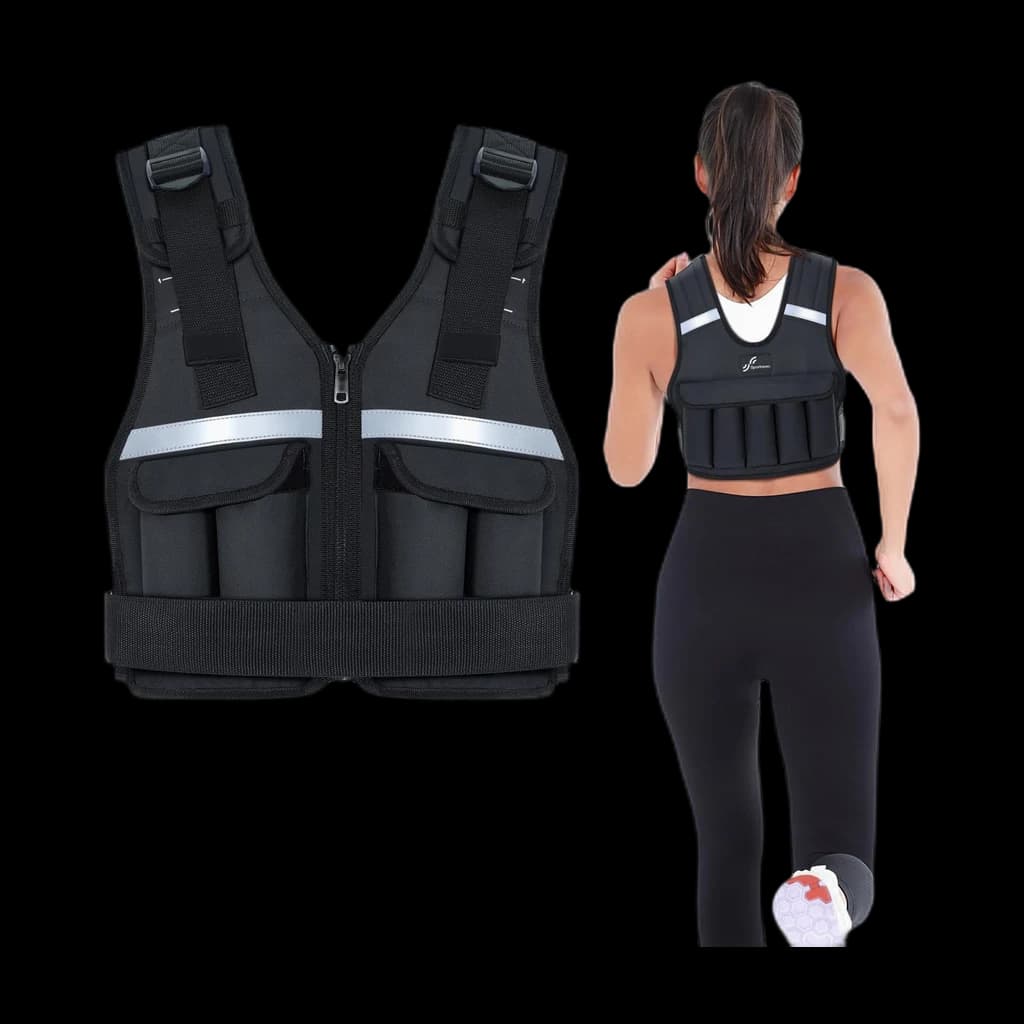 Eight 2 lb packs plus a 1 lb pack, 2 to 18 lb, with shoulder and waist locks that adjust separately. The small-step start for a new rucker. | 4.6 Gym Score 90 | Pros
| Cons
| $59.99 | Buy on Amazon |
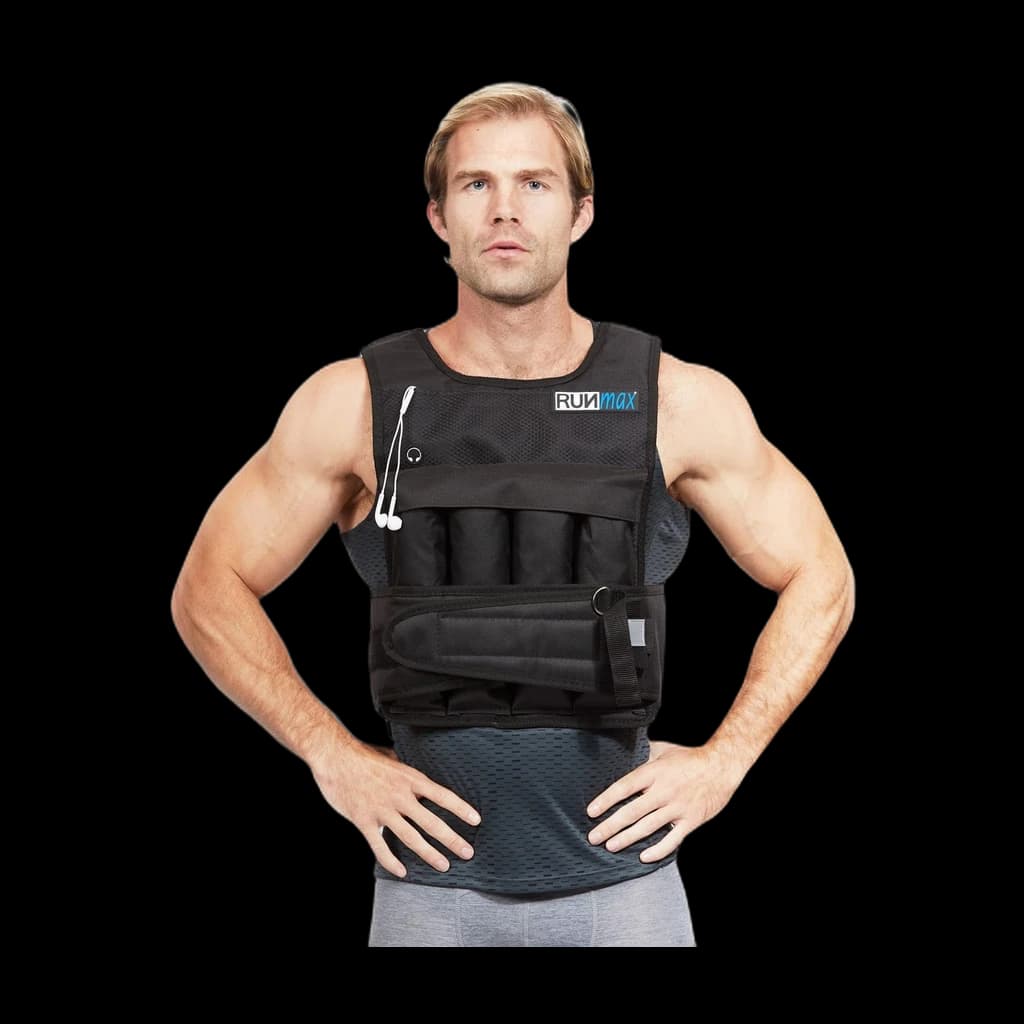 A padded nylon shell with removable packs, sold from 12 lb to 60 lb. Right for loaded walks and carries. | 4.4 Gym Score 85 | Pros
| Cons
| $54.01 | Buy on Amazon |
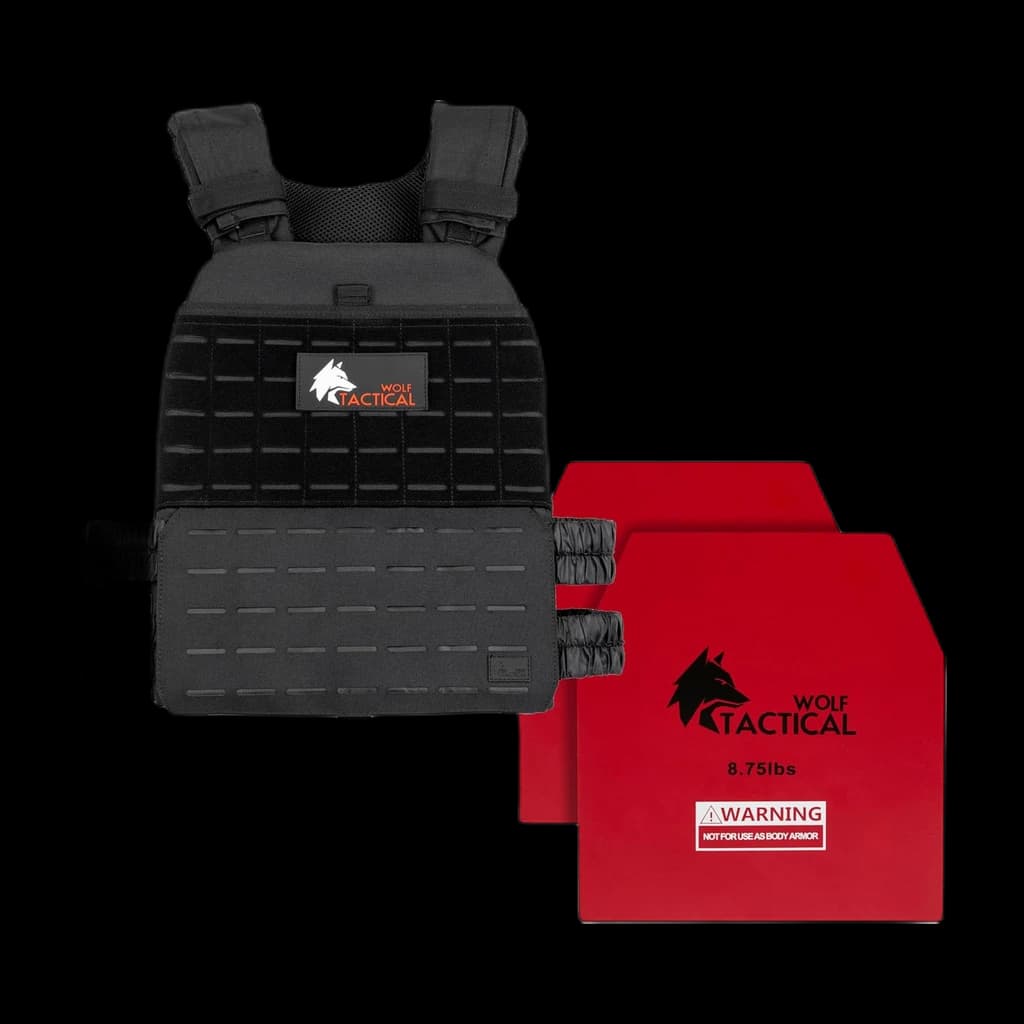 A plate carrier sold with a pair of plates. The front-and-back split loads your posture like a pack, which is why it suits loaded distance. | 4.6 Gym Score 88 | Pros
| Cons
| $190.89 | Buy on Amazon |
Amazon prices checked Sep 19, 2026. Amazon prices change often — the listing is authoritative.
What the load-carriage studies measured
Four papers behind the packing and pack-vs-vest advice in this guide, as their abstracts report them. Three are small lab studies in young adults; the fourth reviews soldiers carrying far heavier loads than a beginner should.
| Study | What it compared | What it found |
|---|---|---|
| Ergonomics, 2004 (10 women) | 25% of body weight carried high, central or low in an internal-frame pack | Oxygen cost and perceived effort significantly lower with the load high than low; heart rate not significantly different |
| Work, 2020 (150 young adults) | A fixed 5% load held at three distances behind the back | Load position changed external measures of head and neck posture |
| Ergonomics, 2019 (20 young adults) | 30% of body weight in a backpack vs split front and back, before and after a 10-minute walk | Backpack reduced postural stability; the front-and-back split showed no significant change |
| Int J Injury Control and Safety Promotion, 2014 (review) | Injuries reported in soldier load carriage | Lower limbs the most frequent injury site; blisters common; stress fractures, knee and foot pain, shoulder nerve and low back injuries also reported |
Which carry, by how you plan to ruck
Decide by your situation, not the generic ranking.
| If | You want | Pick |
|---|---|---|
| You want to try it this week | Zero cost to start | Any backpack you own, 10-20 lb wrapped tight |
| You also carry water and layers | Room for gear alongside the load | A backpack, weight packed high |
| Balance or back-loading worries you | Load split front and back | A vest with removable packs, such as the Sportneer or RUNmax Pro |
| You want a pack-like carry that can go heavier later | Load split front and back, high and close | WOLF TACTICAL plate carrier |
| You want removable packs and a padded yoke | Adjustable load in one shell | RUNmax Pro Weighted Vest |
| You mostly run or wear it all day | A load that hugs the torso | A compression vest, not a rucking setup |
Rucking is walking with weight on your back. That is the whole definition GORUCK, the company that popularised the word, gives on its Get Started Rucking page. Any backpack works. The hard part is not the gear: it is choosing a starting load small enough that your posture survives the whole walk, then adding weight slower than feels necessary.
- 10-25 lb GORUCK's beginner starting load, by fitness and body weight. When in doubt, 10-20.
- +5 lb The weekly step GORUCK suggests, "or as you see fit".
- 17-20 min/mi GORUCK's benchmark pace for someone just starting out.
- 1/3 GORUCK's ceiling: work up to a third of body weight, not past it.
Source: GORUCK, Get Started Rucking (starter FAQ). Linked in full at the foot of this page.
Where the numbers come from
Most rucking advice you will read traces back to one brand's FAQ, so it is worth knowing what that FAQ does and does not say. GORUCK gives a load range, a weekly step, a benchmark pace and a frequency: one to two rucks a week if you are new to working out, three to four if you already train. It gives no starting distance or duration, and it does not tell you what terrain to begin on.
Its one hard rule is about posture. If you cannot keep good posture for the entire ruck, GORUCK says, lower the weight. The ceiling of a third of body weight comes from Colonel S.L.A. Marshall's 1950 book on the soldier's load, which GORUCK cites as its basis.
A four-week start, built only from what is sourced
The table follows GORUCK's own arithmetic: begin at the bottom of its range and add its suggested 5 lb a week. Where no source gives a number, the cell says so rather than inventing one.
| Week | Load | Distance/time | Terrain | Cue |
|---|---|---|---|---|
| 1 | 10 lb | Your choice: keep it easy | Your choice: keep it easy | 1-2 rucks if you are new to training. Lighter and longer beats heavier and shorter |
| 2 | 15 lb | Your choice: keep it easy | Your choice: keep it easy | Weight high and stable, close to your back |
| 3 | 20 lb | Your choice: keep it easy | Your choice: keep it easy | Benchmark pace 17-20 min/mile, not faster |
| 4 | 25 lb | Your choice: keep it easy | Your choice: keep it easy | Top of the beginner range. Hold here until posture holds for the whole walk |
Repeating a week is not failing it. GORUCK's step is "5 pounds each week, or as you see fit", and it adds that you can make a ruck harder with speed and distance instead of load. For an intensity target that does not depend on the pack, our guide to heart-rate zones for home cardio is the better dial, and a chest strap such as the Polar H10 reads it while you walk.
Rule of thumb: posture is the progress test. If it slips, the load goes down, whatever week it is.
How to pack the weight
Load placement is where the research earns its place, because it is measurable and free to fix.
Before the first ruck
- Wrap whatever you are carrying (plates, dumbbells, books) so it cannot shift. GORUCK asks for padding and stability.
- Pack the weight high. In 10 women carrying 25% of body weight, oxygen cost and perceived effort were significantly lower with the load high in the pack than low.
- Keep it tight to your back. In 150 young adults, moving a fixed 5% load further from the back changed measures of head and neck posture.
- Tighten straps before you walk, not a mile in, so the load does not sway.
The high-load finding is a single small treadmill study at a fixed 25% of body weight. Heart rate did not differ significantly between positions; oxygen cost and perceived effort did. Treat it as a strong hint, not a law.
Pack or vest: where the load sits decides it
A backpack puts everything behind you. A vest or plate carrier splits it front and back. That difference has been measured: after a 10-minute walk with 30% of body weight, 20 young adults showed significantly reduced postural stability in a backpack, and no significant change carrying the same load split front and back.
Choose your carry
Choose a pack if
- You want to start today with a bag you already own
- You also need to carry water, a jacket and keys
- Your loads will stay near GORUCK's beginner range for a while
Choose a vest or carrier if
- Balance matters to you, or back-loading bothers you
- You plan to work toward heavier loads, where the split carry held stability better
- You want the weight on your torso rather than on the shoulder straps
Kit for this, from our catalog
- Sportneer Adjustable Weighted Vest: 2 lb and 1 lb packs from 2 to 18 lb, so it covers the bottom of GORUCK's starting range in small steps.
- RUNmax Pro Weighted Vest: removable packs on a shell sold from 12 lb to 60 lb, with a padded yoke option, so it has room to grow toward the one-third ceiling.
- WOLF TACTICAL Weighted Vest and Plates: a plate carrier sold with an 8.75 lb pair of plates, taking larger plates later. The load sits front and back, high and close, which is the nearest thing here to a loaded pack.
- Hyperwear Hyper Vest PRO: a compression vest built for running and daily wear. Its load hugs the ribs rather than sitting high, so pick it for those, not for rucking.
Rucking vs weighted-vest walking
They are the same activity with the load in a different place, and the evidence on vest walking is already collected in what weighted-vest walking studies actually show. How heavy to go in a vest, including the military foot-march data, is in how heavy a weighted vest should be. If bone health is why you are loading up, read weighted vests for women and bone density before you buy anything.
What goes wrong, and where
The best-studied rucking population is soldiers, who carry far heavier loads than a beginner should. A 2014 narrative review of soldier load carriage found the lower limbs were the most frequent site of injury.
Before you add the next 5 lb
- Finish the whole ruck with the same upright posture you started with.
- Hold GORUCK's 17-20 min/mile benchmark without pushing.
- Check your feet: a blister is a reason to repeat the week.
- Recover before the next one. GORUCK's frequency guidance exists so the body gets time between rucks.
Get those four right for a week and the next plate is earned. Skip them and the fastest progression is the one that ends in the injury list above.
Frequently Asked Questions
How much weight should a beginner ruck with?+
GORUCK recommends starting with 10 to 25 lb depending on your fitness and body weight, and 10 to 20 lb when in doubt. It suggests lighter weight and longer distance for the first few rucks, and lowering the weight if you cannot keep good posture for the entire ruck.
How fast should you ruck?+
GORUCK says to go at your own pace, and gives 17 to 20 minutes per mile as a benchmark for someone just starting out. It names the Army minimum standard of 15 minutes per mile as a longer-term goal, not a starting point.
How often should you ruck?+
GORUCK suggests one to two rucks a week if you are new to working out, and three to four if you already train, building up from there and leaving time to recover between rucks.
Is a weighted vest better than a backpack for rucking?+
It depends on the load and on you. The small lab study covered above found that a heavy load split front and back held balance better than the same load in a backpack. A backpack is still the easiest way to start and carries water and layers too.
What is the most weight you should ruck with?+
GORUCK's rule of thumb is not to carry more than a third of your body weight, a limit it traces to S.L.A. Marshall's 1950 book on the soldier's load. It suggests adding speed or distance, not load, once you reach that ceiling.
Sources & Research
- GORUCK — Get Started Rucking: starting load, weekly progression, benchmark pace, frequency and the one-third body-weight ceilingauthority
- Ergonomics (EuropePMC) — Effect of load position on physiological and perceptual responses during load carriage with an internal frame backpack, 2004: 10 women carrying 25% of body weight; oxygen cost and perceived exertion significantly lower with the load high than lowresearch
- Work (EuropePMC) — The effect of backpack load position on photographic measures of craniovertebral posture in 150 asymptomatic young adults, 2020research
- Ergonomics (EuropePMC) — Effects of backpack and double pack loads on postural stability, 2019: 20 young adults carrying 30% of body weight; backpack reduced postural stability after a 10-minute walk, double pack did notresearch
- International Journal of Injury Control and Safety Promotion (EuropePMC) — Soldier occupational load carriage: a narrative review of associated injuries, 2014research
Related reviews
Weighted Vest Walking Benefits: What Studies Actually Show
Weighted vest walking benefits, claim by claim: what each study measured, in whom, and which of the seven usual claims survive the evidence.
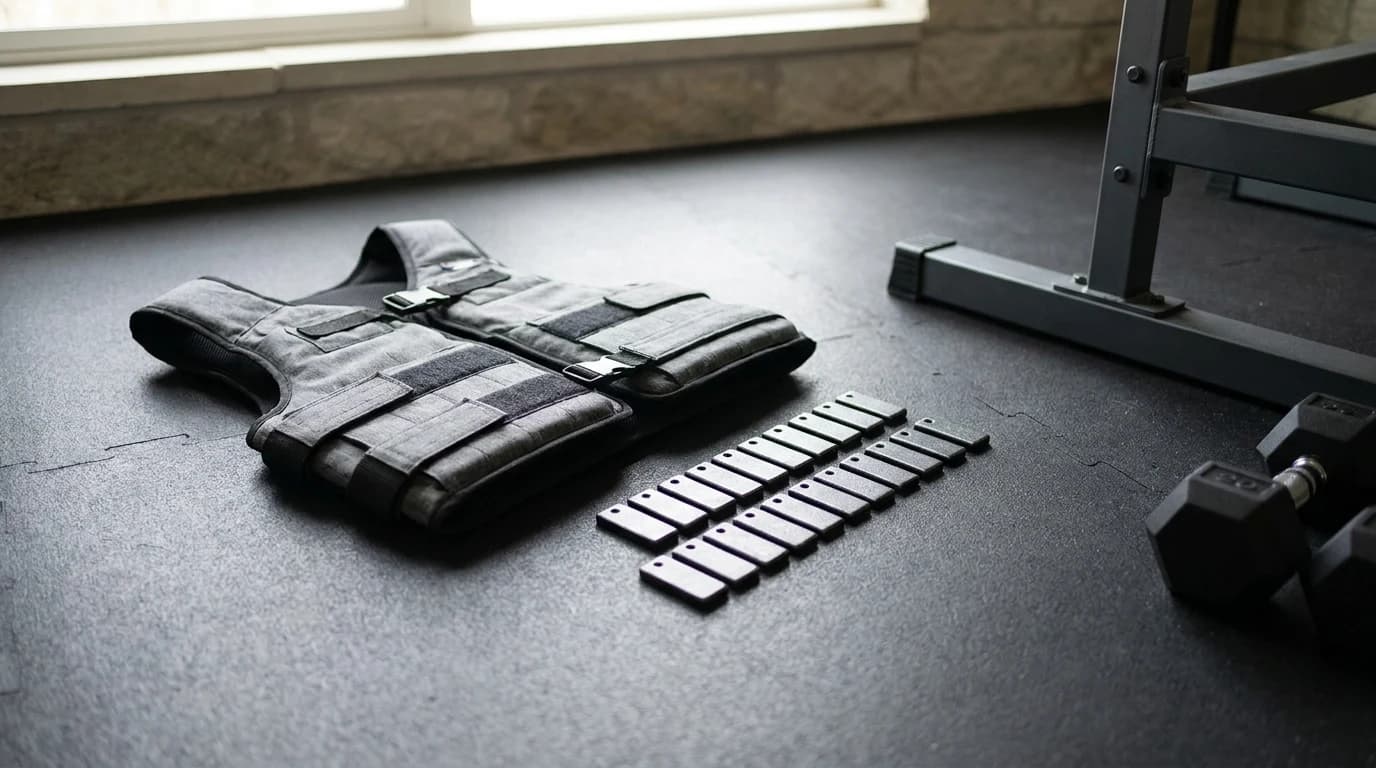
Weighted Vest for Walking: How Heavy Should It Be, by Goal
How heavy should a weighted vest be for walking? The 5-10% chart every brand publishes traces to no study. What the research actually loaded, by goal.
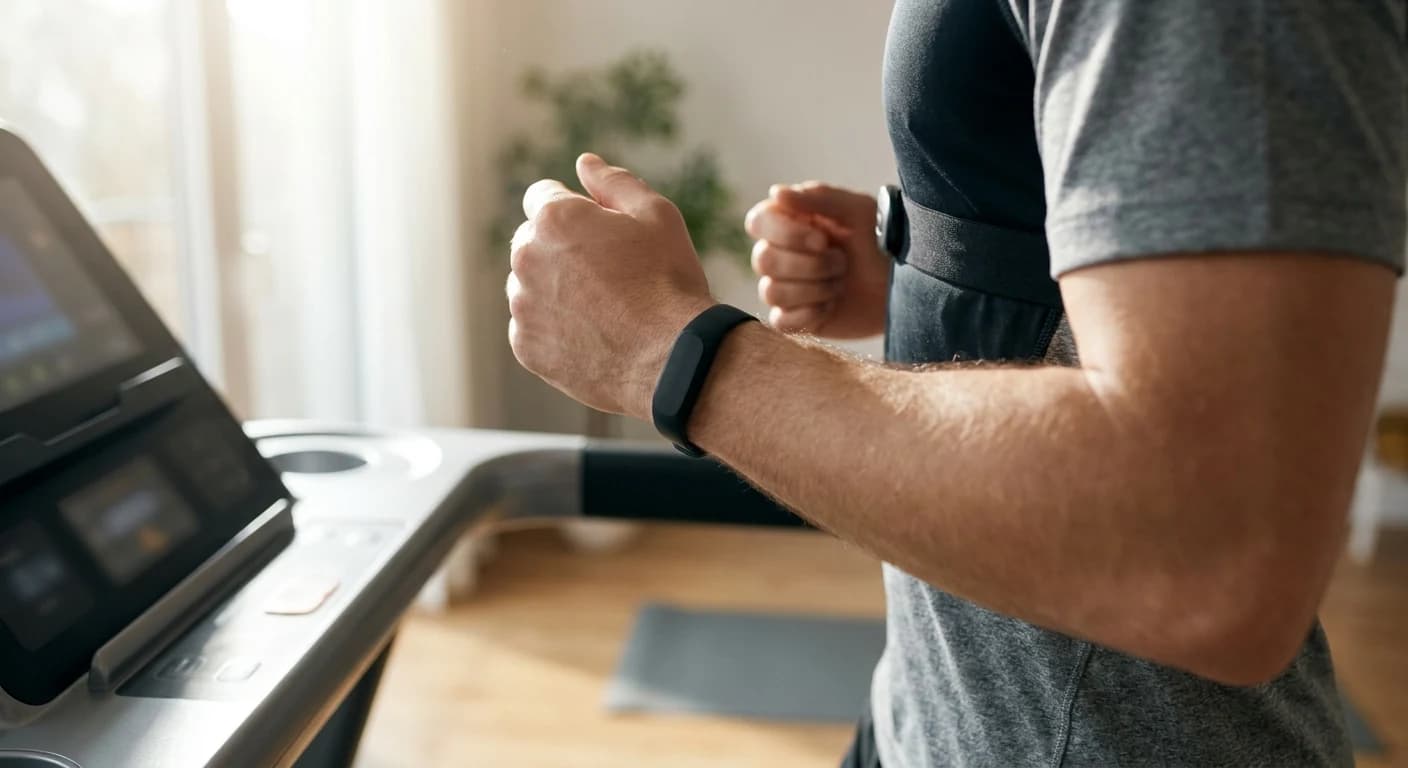
How to Use Heart Rate Zones for Home Cardio (the Right Way)
Set heart rate zones from your max HR, spend most home cardio time moderate with some vigorous work, and skip the fat-burning-zone myth. The simple system.
Hilly Shore Labs
Editorial teamThe independent product research team behind GymScored. Every recommendation is researched, never hands-on tested — rankings come from manufacturer specifications, published standards, and aggregated buyer sentiment.
161 products scored across 26 home gym categories, each on the same 5-dimension Gym Score formula.
See the scoring methodology and who we are.
Affiliate disclosure: GymScored is a participant in the Amazon Services LLC Associates Program. We earn from qualifying purchases at no extra cost to you. Full disclosure →