Cable Machine 2:1 vs 1:1 Pulley Ratio Explained
2:1 vs 1:1 pulley ratio, explained: on a 2:1 cable machine, 100 lb selected is about 50 lb at the handle. The conversion, and which ratio to buy.
On an ideal 2:1 cable system, selecting 100 pounds produces about 50 pounds of resistance at one handle, and moving that handle 24 inches lifts the stack about 12 inches. On a 1:1 system, 100 selected pounds produces about 100 pounds at the handle and 24 inches of handle travel lifts the stack about 24 inches. Real machines add cable, attachment, friction, and tolerance effects, so treat the ratio as the conversion rule, not a laboratory force reading.
How GymScored is paid: Amazon Associates commission plus brand-direct affiliate (Rogue / REP / Titan when approved). No sponsored placements, no paid reviews, no pay-to-rank. Picks are ranked by the Gym Score formula and nothing else. Read the full disclosure.
A 2:1 pulley ratio makes a 100-pound stack feel roughly like 50 pounds at one handle, while giving you about twice as much cable travel. A 1:1 ratio makes the selected stack weight feel roughly like the same load and moves the stack about as far as the handle. Choose 2:1 for small jumps, long travel, and adjustable functional-training movements; choose 1:1 when heavy rows and pulldowns matter more than fine increments.
Pulley ratio math at a glance
Idealized values for one active handle. Check the manual because dual-handle and combined-cable modes can change the effective ratio.
| Selected stack | 2:1 resistance | 1:1 resistance |
|---|---|---|
| 20 lb | About 10 lb | About 20 lb |
| 50 lb | About 25 lb | About 50 lb |
| 100 lb | About 50 lb | About 100 lb |
| 150 lb | About 75 lb | About 150 lb |
| 200 lb | About 100 lb | About 200 lb |
Choose the ratio by what you train
Decide by your situation, not the generic ranking.
| If | You want | Pick |
|---|---|---|
| Cable flyes, raises, curls | Fine load jumps and long, smooth handle travel | 2:1 |
| Rotations and athletic patterns | More cable speed and room to move away from the tower | 2:1 |
| Heavy lat pulldowns | More usable resistance from a compact stack | 1:1 |
| Heavy low rows | Direct stack loading matters more than extra travel | 1:1 |
| One machine for both jobs | Independent functional handles plus a dedicated heavy pull station | Selectable or hybrid |
The number on a cable-machine stack is not always the resistance in your hand. If a 100-pound selection feels surprisingly light, the machine may be doing exactly what it was designed to do. The pulley ratio tells you how the stack's force and movement are converted at the handle.
The short version: 1:1 preserves load; 2:1 trades half the load for roughly twice the cable travel. Neither is automatically better. They solve different training problems.
| At one handle | 1:1 | 2:1 |
|---|---|---|
| Select 100 lb, you feel | ~100 lb | ~50 lb |
| Pull the handle 2 ft, the stack rises | ~2 ft | ~1 ft |
| Effective jump per 10 lb selector plate | ~10 lb | ~5 lb |
| Best at | Pulldowns, rows, belt squats | Flyes, raises, chops, presses |
What 2:1 and 1:1 actually mean
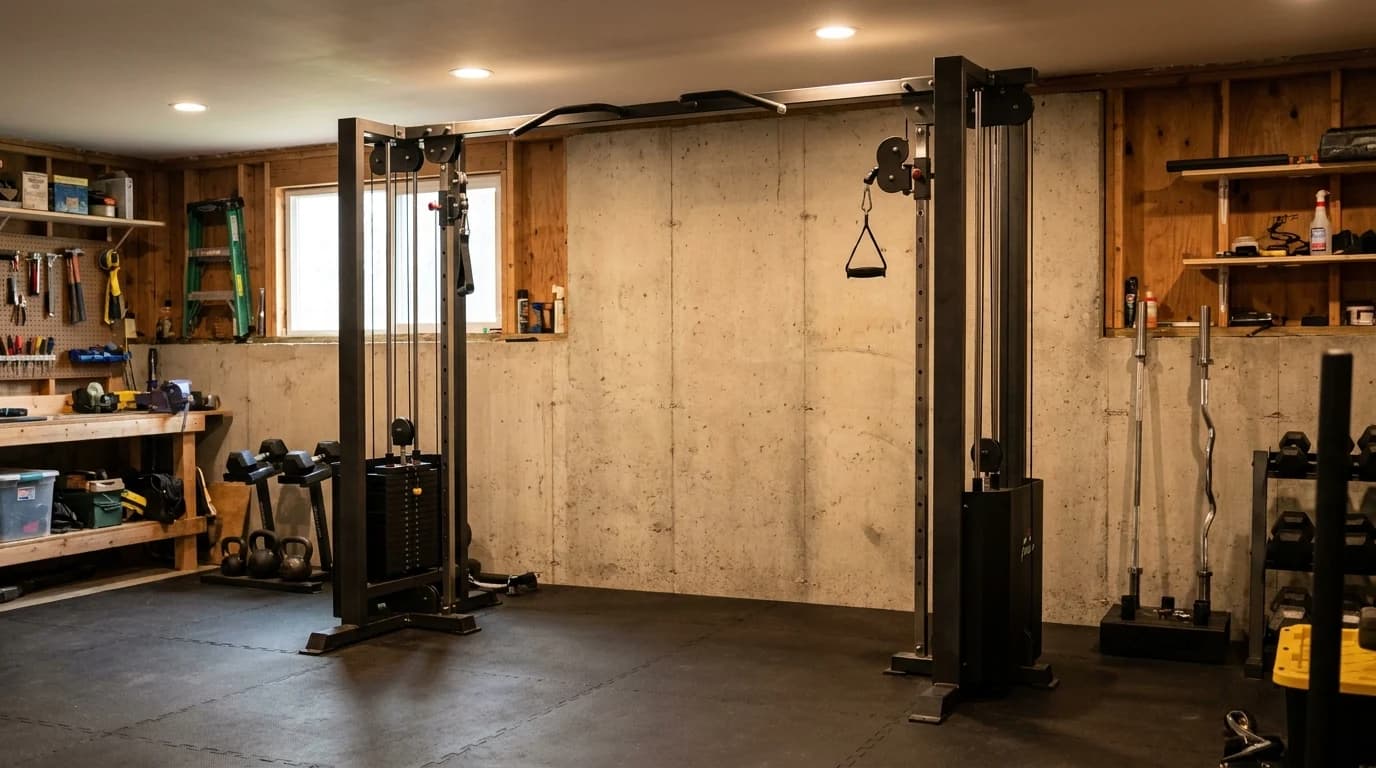
1:1 — what you select is what you pull
On a 1:1 system, the handle and weight stack move approximately the same distance. Pull the handle one foot and the stack rises about one foot. Ignoring friction and the weight of the cable and attachment, 100 pounds selected means roughly 100 pounds of resistance at the handle.
2:1 — half the force, double the travel
On a 2:1 system, two cable segments support the moving load. Each segment carries part of that load, so the handle needs roughly half the force. Select 100 pounds and one handle gives you about 50 pounds. Pull the handle two feet and the stack rises about one foot.
Worth knowing: that is mechanical advantage, not a dishonest label. The machine cannot give away work — what you gain in reduced force, you pay back in distance.
REP Fitness states the practical conversion directly: 20 pounds on a 1:1 cable feels like 20, while 20 pounds on a 2:1 cable feels like 10. Force USA likewise specifies that 100 pounds loaded on its 2:1 MyRack crossover produces 50 pounds of resistance.
The conversion you can use in the gym
For one active handle, start with these idealized formulas:
- 2:1 effective resistance = selected weight ÷ 2
- 1:1 effective resistance = selected weight
- 2:1 stack travel = handle travel ÷ 2
- 1:1 stack travel = handle travel
So a 200-pound stack on a 2:1 adjustable pulley tops out around 100 pounds at that handle. A 200-pound 1:1 lat pulldown gives roughly the full 200. This is why comparing stack size without ratio is useless. A 300-pound 2:1 functional trainer does not offer the same single-handle resistance as a 300-pound 1:1 pulldown.
The caveat: this is a buying comparison, not a calibrated force measurement. Pulleys introduce friction, cable and handles have weight, and some machines counterbalance their trolleys. For exercise logging, stay consistent with the same machine and setup instead of translating every cable number into free-weight pounds.
Why functional trainers usually use 2:1
Adjustable functional trainers favor 2:1 because the extra travel is useful. Cable flyes, lateral raises, chops, presses, and athletic steps can move through long paths without the stack hitting the top. The reduced effective increment also makes progression finer: a 10-pound selector jump becomes about a 5-pound change at the handle, which matters on single-arm raises and rehab-style movements.
The tradeoff is the ceiling
A stack that looks substantial can run out quickly on rows, pulldowns, belt squats, and other heavy patterns. If your strongest cable movement already approaches half the advertised stack, a 2:1-only machine may need an upgrade stack or a different output.
This is also why the space needed around a functional trainer is more than its cabinet footprint. Long cable travel invites you to step away from the tower; plan for the movement arc that makes 2:1 useful.
Why pulldown and low-row stations favor 1:1
A dedicated lat pulldown or low row needs less roaming distance and more resistance. A 1:1 path makes the entire stack available without requiring a physically enormous stack. The stack also moves farther for the same handle motion, so the machine needs enough guide-rod height and travel for the intended exercise.
Ratio should follow the job, not a marketing preference
Hybrid machines combine both ideas. Rogue's CTM-1, for example, specifies 2:1 at the functional-trainer trolley and 1:1 at the lat-pulldown and low-row stations from one weight source. That layout is a useful clue when comparing cable machines for a home gym.
The dual-handle trap
Two handles do not tell you the ratio. A machine can have two independent 2:1 stacks, two handles sharing one stack, or a system that reaches 1:1 only when specific cable ends are joined. Pulling both handles on a dual-stack functional trainer may simply give two separate 2:1 loads.
Before buying, find the manual or manufacturer spec and answer four questions:
- Is the listed ratio per handle?
- Does each side have its own stack?
- Can the cables be joined, and with which attachment?
- Is there a dedicated 1:1 pulldown or row?
If the product page gives only stack weight, the most important resistance specification is missing.
Which ratio should you buy?
Choose 2:1 if this is your training:
- Adjustable-height work at varied angles
- Unilateral exercises and single-arm raises
- Smooth, long movement paths
- Small progression jumps that a 10-pound plate would overshoot
Choose 1:1 if this is your training:
- Heavy pulldowns and rows
- Belt-squat loading
- Any pattern where you want maximum resistance per pound of stack
For a one-machine gym, the strongest design is often hybrid: 2:1 adjustable handles plus a 1:1 heavy-pull station. To see how this plays out on real machines, our cable machine and functional trainer rankings list each pick's stack and ratio — the Body-Solid GDCC210's two 160 lb stacks, for example, work out to about 80 lb at each 2:1 handle. But a well-sized 2:1 trainer can still cover an entire program, and a simple 1:1 tower can be excellent if your exercises fit its fixed path.
What most people get wrong is treating a lower felt number as lower quality. Ratio changes the unit you are reading. Compare effective resistance, cable travel, increment size, and outputs together. The biggest printed stack is not necessarily the strongest machine in your hand.
Frequently Asked Questions
Does a 2:1 pulley ratio make 100 pounds feel like 50?+
Yes, approximately, when one handle is supported by two cable segments in a true 2:1 setup. The ideal conversion is selected weight divided by two. Friction, cable and attachment weight, manufacturing tolerances, and machine geometry can make the felt load differ slightly.
Is a 1:1 cable machine better for building muscle?+
Not inherently. Muscle responds to the tension and progression you create, not the number printed on the stack. A 1:1 system provides more maximum resistance from a given stack. A 2:1 system provides smaller effective jumps and more travel, which can be better for isolation and unilateral exercises.
Why does a 2:1 cable travel farther?+
The moving pulley is supported by two cable segments. Pulling two feet of cable through the handle shortens those supporting segments by a combined two feet, so the stack rises roughly one foot. You trade force for distance: half the handle resistance, about twice the handle travel.
Can one cable machine have both 2:1 and 1:1 resistance?+
Yes. Hybrid machines can route adjustable functional-trainer handles at 2:1 while using dedicated lat-pulldown and low-row outputs at 1:1. Some selectable designs change ratio by connecting one or two cable ends. Follow the exact machine manual rather than assuming two handles always equal 1:1.
Sources & Research
Your next step
Know the ratio you want? Compare the machines.
Related reviews
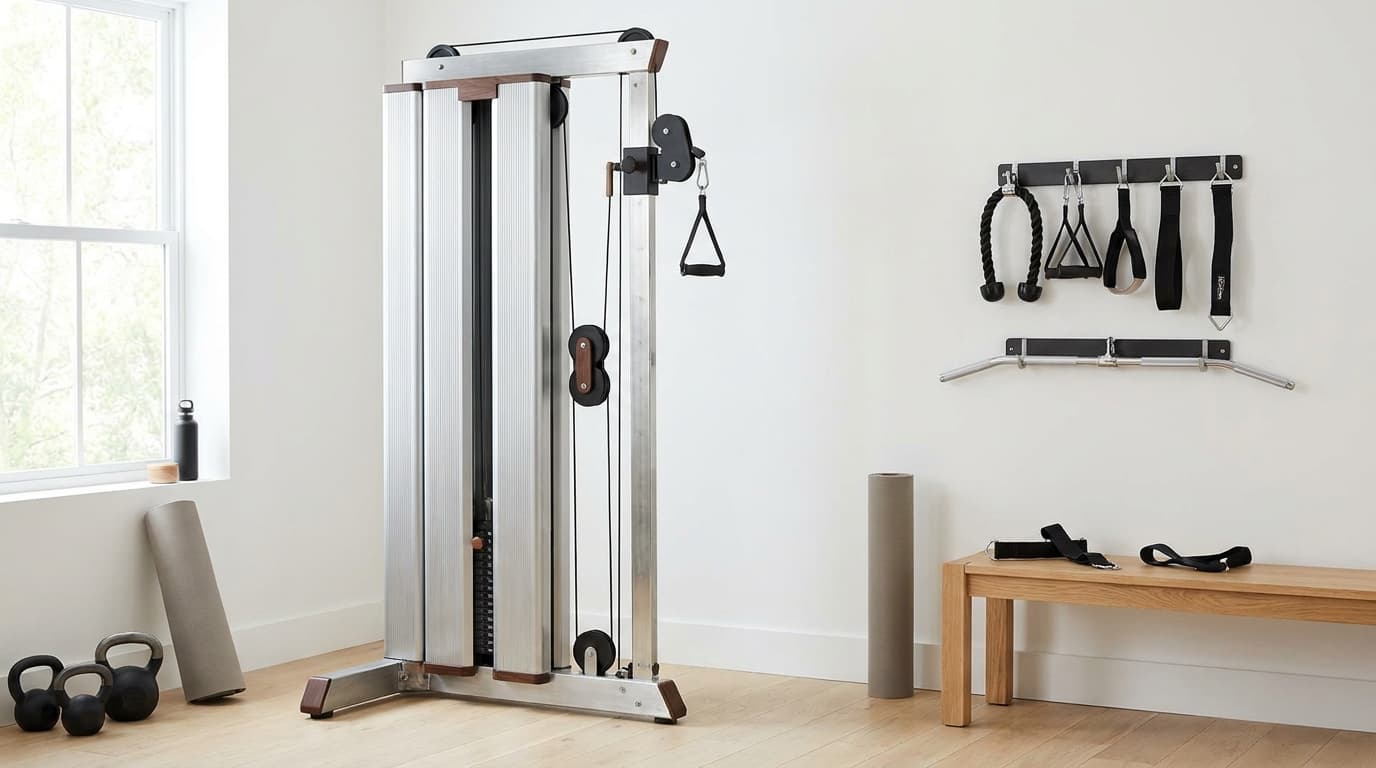
Best Cable Machines for Home Gyms in 2026: Marcy Wins
The Marcy MWM-988 is our top cable machine for home gyms in 2026. Six cable stations scored on movement quality, footprint, and value.
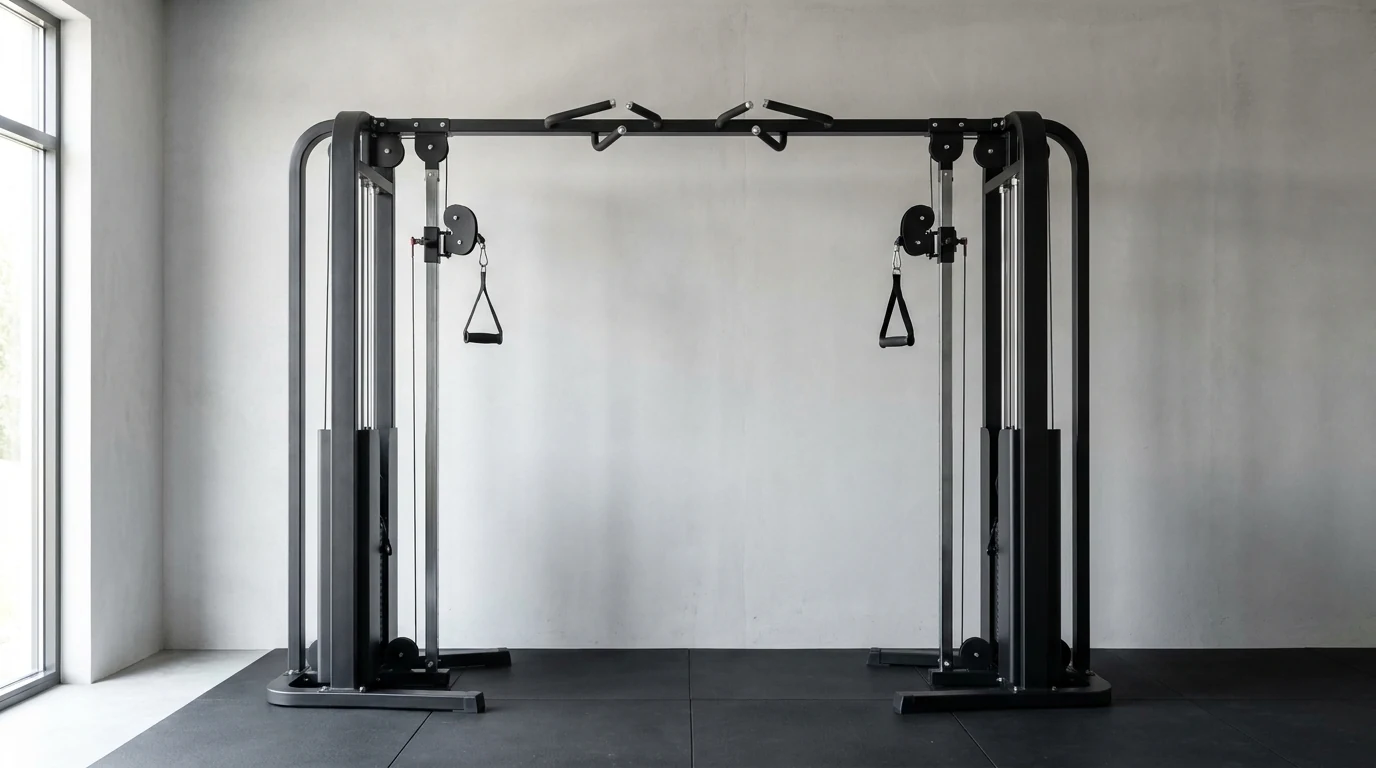
How Much Space Does a Functional Trainer Need?
A functional trainer needs working clearance, not just its footprint: budget an 8x10 ft floor, the cable arc, and ceiling height before you buy.
Best All-in-One Home Gyms in 2026
The Major Fitness Drone2 Smith machine is the best all-in-one home gym you can buy today; the Force USA G3 is the editorial pick but backordered.
Hilly Shore Labs
Editorial teamThe independent product research team behind GymScored. Every recommendation is researched, never hands-on tested — recommendations draw on manufacturer specifications and available published research. Category order is editorial; the Gym Score is a separate comparison aid.
170 listed products across 26 home gym categories. Scores use category criteria, value and owner-rating inputs; missing evidence limits what a score can tell you.
See the scoring methodology and who we are.
Affiliate disclosure: GymScored is a participant in the Amazon Services LLC Associates Program. We earn from qualifying purchases at no extra cost to you. Full disclosure →